Sport Bike Insurance Cost (Why So High)
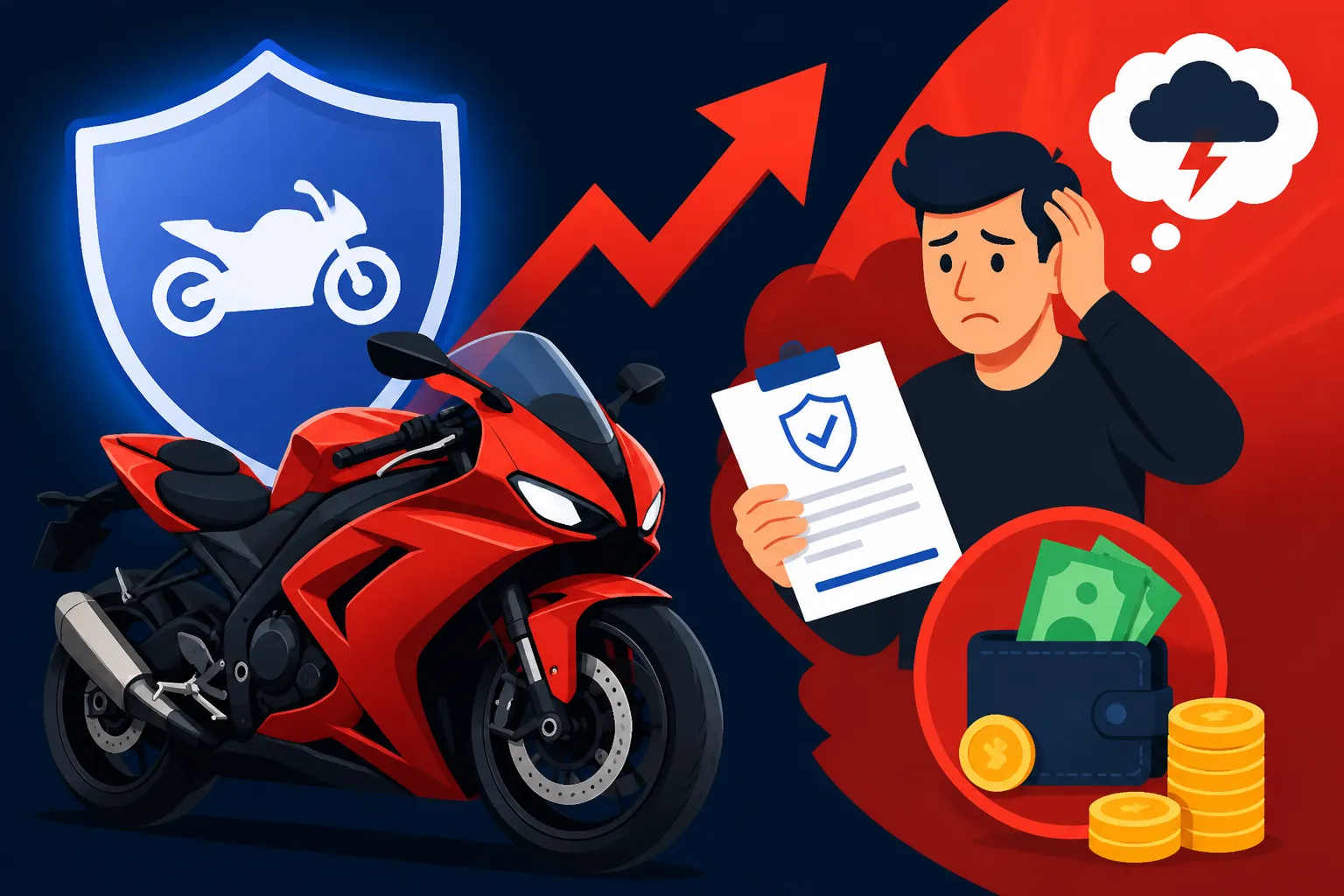
You just signed the papers for that sleek, neon-green Kawasaki Ninja or that aggressive Yamaha R1. The adrenaline is pumping, but then you get the insurance quote and your heart drops. You realize the monthly premium is nearly as much as the bike payment itself. This guide dives into why sport bike insurance is notoriously expensive and how you can navigate these high costs without going broke.
The Raw Reality of Sport Bike Insurance Premiums
If you have ever wondered why a 600cc sport bike costs three times as much to insure as a 1200cc cruiser, you are not alone. The insurance industry views "sport bikes" as high-risk assets, and their math is based on decades of actuarial data that paints a very specific picture. When you use a comparison tool like The Zebra, you immediately see the staggering delta between different motorcycle styles. It is not just about the speed; it is about the intersection of high-performance engineering and the statistical likelihood of a total loss.
Insurance companies categorize bikes based on their power-to-weight ratio and their intended use. A sport bike is essentially a street-legal racing machine. These bikes are designed to lean over at 45-degree angles, accelerate from 0 to 60 in under three seconds, and reach speeds that exceed the legal limit in a matter of heartbeats. From an insurer's perspective, this is a recipe for expensive claims. They aren't just looking at the bike; they are looking at the probability of you needing a massive payout for medical bills or a complete bike replacement.
Furthermore, the mechanical vulnerability of sport bikes plays a massive role. Unlike a rugged adventure bike or a steel-framed cruiser, a sport bike is draped in expensive, fragile aerodynamic fairings. Even a "gentle" low-side slide at 15 miles per hour can result in thousands of dollars in cosmetic damage. When you factor in the high cost of OEM parts and the specialized labor required to fix these machines, the How Much Is Full Coverage Motorcycle Insurance? question becomes a bit easier to answer, even if the answer is painful to your wallet.
High Performance Engineering and Financial Risk
The engineering that makes a sport bike so thrilling is the same thing that makes it a financial nightmare for insurance carriers. These bikes utilize lightweight materials like magnesium, carbon fiber, and high-grade aluminum. While these components allow for razor-sharp handling, they are not designed to be repaired; they are designed to be replaced. If you dent a tank on a Harley, it might be fixable. If you crack the subframe or scuff the swingarm on a Ducati Panigale, that bike is often heading straight to the salvage yard.
This "replace, don't repair" reality means that sport bikes reach the "total loss" threshold much faster than other vehicles. An insurance company will total a bike if the repair costs exceed a certain percentage of its value, usually around 70% to 80%. Because sport bike parts are so pricey, a relatively minor accident can lead to a total loss payout. This is why What Happens When Your Motorcycle Is Totaled? is such a common topic among sport bike enthusiasts; it happens more often than anyone likes to admit.
Additionally, the performance capabilities mean that when things go wrong, they go wrong at higher speeds. Kinetic energy increases with the square of speed, meaning a crash at 60 mph is four times as destructive as a crash at 30 mph. Insurers have to account for the massive medical liability that comes with high-speed sport bike accidents. They are covering not just the bike, but the potential for multi-million dollar medical claims, which is a primary driver behind Why Is My Motorcycle Insurance So Expensive? for this specific category.
The Statistics of Speed and Theft
Beyond the crash statistics, sport bikes are the primary targets for motorcycle theft. They are relatively light, easy to load into the back of a van, and have a massive market for "street" parts. A stolen sport bike can be stripped down to its frame and engine in a couple of hours, and the fairings, wheels, and electronics can be sold on secondary markets with very little trail. This high theft rate is baked into your comprehensive coverage premiums.
In cities like Los Angeles, Miami, or Houston, sport bike theft is so rampant that some insurers may even refuse to offer comprehensive coverage or will charge a premium that reflects the high risk of the bike vanishing overnight. If you live in an apartment complex without a secured garage, your rates will skyrocket. The industry data is cold and calculated: sport bikes are simply more likely to be stolen than a 900-pound touring bike that requires a small crane to move.
When you look at Motorcycle Theft Claim: How It Works, you see the administrative burden these thefts place on companies. This is another reason why using a site like The Zebra to compare different zip codes can show such drastic price swings. If you move from a rural area to a high-crime urban center, your sport bike insurance might double even if your driving record stays perfect. The bike is simply a more "active" liability in the eyes of the underwriters.
How Engine Displacement and Bike Type Drive Prices
One of the biggest shocks for new riders is how much the "cc" (cubic centimeters) of the engine influences the rate. In the world of sport bikes, the difference between a 300cc beginner bike and a 1000cc "liter bike" is an order of magnitude in insurance costs. The insurance companies use these displacement numbers as a proxy for the rider's intent and the bike's potential for mayhem.
The way a bike is classified in an insurer’s database can also be the difference between an affordable premium and a mortgage-sized payment. Some bikes look like sport bikes but are classified as "sport-touring" or "standard." For example, a Kawasaki Ninja 650 (a parallel-twin) is often much cheaper to insure than a Kawasaki ZX-6R (an inline-four), even though they have similar engine displacements. The ZX-6R is a race-replica, whereas the Ninja 650 is a commuter with fairings. Understanding these nuances is key to finding the Cheapest Motorcycle to Insure: Top Picks for your lifestyle.
The Jump from 600cc to 1000cc
There is a legendary "tax" on liter bikes. Once you cross into the 1000cc territory with bikes like the BMW S1000RR or the Suzuki GSX-R1000, you are entering a category that many insurers consider "uninsurable" for certain demographics. These bikes produce 200+ horsepower and are capable of speeds that are essentially unmanageable on public roads. The actuarial tables for these bikes are grim, showing a high correlation between liter-bike ownership and high-severity claims.
If you are looking at Does Engine Size (CC) Affect Insurance Cost?, you will see that the jump from a middleweight sport bike to a superbike is often the point where premiums become irrational. For a 25-year-old rider, the difference in annual premium between a 600cc and a 1000cc bike can be several thousand dollars. This is because the margin for error on a liter bike is nearly zero. A split-second whiskey-throttle moment on a 1000cc bike can result in a catastrophic accident, whereas a smaller bike might be more forgiving.
Furthermore, the "liter bike" category attracts a specific type of rider profile that insurers find risky. Even if you are a responsible rider, you are being grouped with everyone else who owns that specific model. If that model has a high history of accidents within your age bracket, your individual skill doesn't matter much to the computer algorithm setting your rate. This is the frustrating reality of Motorcycle Insurance Cost by Bike Type; you are often paying for the sins of other riders who own the same machine.
Super Sport vs Sport-Touring Classification
If you love the look of a sport bike but hate the insurance rates, the "sport-touring" or "naked" categories are your best friends. A bike like the Yamaha MT-09 or the Honda CBR650R provides plenty of thrills but often falls into a lower insurance tier because they aren't classified as "Super Sport" machines. These bikes usually have more upright ergonomics, which insurers associate with more mature riding styles and fewer high-speed stunts.
Insurance companies look at the VIN (Vehicle Identification Number) to determine the exact model and its corresponding risk tier. A "Super Sport" designation is essentially a red flag. These are bikes designed for the track with minimal concessions for street comfort. On the other hand, a "Sport-Touring" bike like the Kawasaki Ninja 1000SX is designed for longer rides and carries a completely different risk profile. Even though it has a 1000cc engine, the insurance might be significantly lower than a 600cc race-replica.
Comparing these classes is vital. You can use The Zebra to run quotes on a few different styles of bikes before you buy. You might find that a bike with 90% of the performance of a super-sport costs 50% less to insure. This is one of the most effective ways to manage Average Motorcycle Insurance Cost by State fluctuations, as the classification of the bike remains a constant factor regardless of where you live.
| Bike Model | Category | Approx. Annual Premium (Est) | Key Price Driver |
|---|---|---|---|
| Kawasaki Ninja 400 | Entry Sport | $500 – $800 | Low CC, Beginner Friendly |
| Yamaha YZF-R6 | Super Sport | $1,800 – $2,800 | High Revving, High Theft |
| Honda CBR1000RR | Liter Bike | $3,000 – $5,000+ | Extreme Power, High Risk |
| Kawasaki Ninja 650 | Sport-Touring | $700 – $1,100 | Commuter Focus, Two-Cylinder |
| Suzuki Hayabusa | Hyper-Sport | $2,500 – $4,000 | Massive Displacement, Speed |
The Influence of Rider Demographics and History
It is no secret that who you are matters just as much as what you ride. For sport bike insurance, your age, marital status, and credit score are scrutinized heavily. A 19-year-old on a Suzuki GSX-R 750 is the "perfect storm" of risk for an insurance company. You have a high-performance machine paired with a rider who, statistically, has the least experience and the highest propensity for risk-taking behavior.
Your geographic location also plays a massive role. Riding a sport bike in a densely populated area like New York City or Miami involves far more environmental hazards than riding in rural Montana. Higher traffic density means more opportunities for multi-vehicle accidents, and as we discussed, higher population centers mean higher theft rates. This is why Does Where You Live Affect Motorcycle Insurance? is a critical factor in your final monthly bill.
Why Young Riders Face the Steepest Rates
If you are under 25, you are essentially "guilty until proven innocent" in the eyes of motorcycle insurers. The data is overwhelming: young riders on sport bikes have the highest accident rates of any group in the motorized world. This leads to premiums that can sometimes exceed the value of the motorcycle in just two or three years of coverage. It is a harsh reality that leads many to search for How Much Is Motorcycle Insurance for an 18 Year Old? only to be met with four-digit quotes.
The reason for this is two-fold: lack of "road craft" and biological risk-taking. Younger riders haven't spent decades developing the "sixth sense" needed to anticipate when a car is going to pull out in front of them. On a sport bike, where things happen very fast, this lack of experience is magnified. Furthermore, insurers know that the prefrontal cortex—the part of the brain responsible for impulse control—doesn't fully develop until the mid-20s. To a computer, a teenager on a rocket ship is an unacceptable risk without a massive premium to buffer the inevitable claim.
To mitigate this, young riders should look into Motorcycle Insurance Cost for Young Riders Under 25 strategies, such as staying on a parent's policy or opting for a lower-displacement bike for the first few years. Demonstrating a clean record on a 300cc or 400cc bike can help "season" your insurance history, making that 600cc bike much more affordable once you turn 25 or 26.
The Impact of Moving Violations and Tickets
Sport bikes are "ticket magnets." Their styling, the sound of their high-revving engines, and their natural cruising speed often draw the attention of law enforcement more than a quiet touring bike. One or two speeding tickets on a sport bike can cause your insurance rates to skyrocket, or even lead to your policy being canceled. Insurers view a speeding ticket on a sport bike as a "near miss" crash.
If you have a history of violations, you might find yourself needing high-risk coverage. This is where you might see the How Much Does SR-22 Increase Motorcycle Insurance? question pop up. An SR-22 is a certificate of financial responsibility required by the state after certain violations, like a DUI or driving without insurance. It signals to the insurer that you are a high-risk client, and when combined with a sport bike, the costs can be astronomical.
Even a single "improper lane change" or "failure to signal" can strip away your "good rider" discounts. For sport bike owners, maintaining a spotless driving record is the single most important thing you can do to keep your long-term costs down. If you do get a ticket, fighting it in court or taking a defensive driving course to keep the points off your license is often worth the legal fees just to save the money on your insurance premiums over the next three years. Check out How Much Is Motorcycle Insurance After a Speeding Ticket? to see the long-term financial impact of a lead foot.
Practical Ways to Lower Your Sport Bike Insurance Bill
While the deck is stacked against sport bike riders, you aren't completely powerless. There are several levers you can pull to bring that premium down into a manageable range. It requires being proactive and sometimes making trade-offs in how you use and store your bike. One of the easiest first steps is using a platform like The Zebra to see which carriers are currently "hungry" for motorcycle business, as rates can change quarterly.
Beyond just shopping around, how you present yourself and your bike to the insurer matters. Are you a weekend warrior or a daily commuter? Do you store the bike in a locked garage or on the street? Do you have other policies you can bundle? These small details can add up to hundreds of dollars in annual savings. For those truly struggling with the cost, How to Get Cheap Motorcycle Insurance offers a broad look at these strategies, but for sport bikes, we have to get even more specific.
Leveraging Safety Courses and Security
Almost every major insurer offers a discount if you complete a Motorcycle Safety Foundation (MSF) or equivalent state-certified safety course. For a sport bike rider, this is a "must-do." Not only does it teach you life-saving maneuvers like emergency swerving and threshold braking, but it also signals to the insurance company that you take your hobby seriously. The discount is usually between 5% and 15%, which, on a $2,000 sport bike policy, is a significant chunk of change. You can read more about this at Does a Motorcycle Safety Course Lower Insurance?.
Security measures are another big factor. If you can prove that your bike is stored in a locked garage and equipped with a GPS tracker or a high-quality alarm system, some insurers will offer a "theft recovery" or "secure storage" discount. Given that theft is such a large part of the sport bike premium, anything you do to reduce that risk is viewed favorably. Be sure to keep receipts for your locks and trackers, as you may need to provide proof to your agent.
Some riders also opt for "lay-up" or seasonal policies if they live in colder climates. If you know you won't be riding your bike from November to March, you can switch to a policy that only provides comprehensive coverage (for fire and theft) while the bike is in storage. This can drastically reduce your annual cost. Check out How to Suspend Motorcycle Insurance for Winter for a step-by-step on how to manage this without letting your coverage lapse completely, which can cause its own set of problems.
Choosing Higher Deductibles Wisely
One of the fastest ways to lower your monthly premium is to increase your deductible—the amount you pay out of pocket before insurance kicks in. For sport bikes, many riders choose a $1,000 or even a $2,500 deductible. While this means you are on the hook for smaller repairs, it can drop your annual premium by 20% or more. This is essentially "self-insuring" for the minor stuff.
However, you must be realistic. If you have a $1,000 deductible and you have a minor tip-over that costs $1,200 to fix, you are only getting $200 from the insurance company, and your rates will likely go up because you filed a claim. Many sport bike owners choose to carry high deductibles and simply pay for "cosmetic" repairs themselves to keep their insurance record clean. This strategy is part of the broader How to Lower Your Motorcycle Insurance Premium toolkit.
Before you go this route, ensure you actually have the cash set aside in an emergency fund. There is nothing worse than crashing your bike and having it sit in the garage for six months because you can't afford the $1,000 deductible to get it fixed. It is a balancing act between monthly savings and "event-day" readiness. If you are financing your bike, your lender might also have a maximum allowable deductible (usually $500 or $1,000), so check your loan agreement before making the switch.
Is Full Coverage Always Worth the Price for a Sport Bike?
This is the million-dollar question for owners of older or high-mileage sport bikes. If you have a 10-year-old Yamaha R6 that is worth $5,000 on the open market, and your full coverage insurance is $1,500 a year, you are essentially "buying" the bike from the insurance company every three years. At some point, the math for full coverage stops making sense.
However, if your bike is financed, you don't have a choice—the bank will require full coverage to protect their asset. But for those who own their bikes outright, a move to liability-only coverage can be a tempting way to save money. You have to weigh the risk of losing the entire value of the bike in a crash or theft against the guaranteed savings on your premium. This is a core part of the Liability-Only vs Full Coverage Cost debate.
Analyzing Actual Cash Value vs Premium Costs
Most standard motorcycle policies pay out based on "Actual Cash Value" (ACV). This means if your bike is totaled, the insurer will look at what similar bikes are selling for in your area, subtract depreciation, and cut you a check. For sport bikes, which depreciate quickly and are often ridden hard, the ACV can be disappointingly low. If you have added $3,000 in aftermarket exhaust, rear-sets, and carbon fiber bits, you likely won't see a dime of that back unless you have specific Accessories & Custom Parts Coverage Explained on your policy.
If your annual premium for collision and comprehensive is more than 20% of the bike's total value, you are in the "red zone." For example, if your bike is worth $4,000 and you are paying $1,000 a year for the "full coverage" portion of your bill, you might be better off putting that $1,000 into a dedicated savings account. In four years, you've saved enough to buy a replacement bike yourself, regardless of whether you crash or get it stolen.
Of course, this requires the discipline not to touch that savings account. Many riders prefer the "peace of mind" that comes with a policy, even if the math is slightly unfavorable. But for the budget-conscious rider, analyzing the Average Monthly Cost of Motorcycle Insurance against the bike's actual resale value is the only way to make a rational financial decision.
When Liability-Only Makes Sense
Liability-only coverage is the bare minimum required by law in most states. It covers damage you do to other people and their property, but it doesn't pay a cent for your bike if you crash it or if it gets stolen. For a young rider on a sport bike, this might be the only way to afford to ride at all. By stripping away collision and comprehensive, you can often drop a $300 monthly bill down to $50.
This is a viable strategy if you are riding a "cheap" sport bike—perhaps an older Ninja 250 or a high-mileage CBR500R. If the bike is only worth $2,500, and you are a skilled mechanic who can fix minor damage yourself, liability-only makes a lot of sense. You are essentially taking the "theft and total loss" risk on your own shoulders. You can see the minimum requirements for your area in the Motorcycle Insurance Requirements by State (2026 Guide).
The danger of liability-only is the "total loss" scenario. If you are hit by an uninsured driver or if your bike is swiped from your driveway, you are out of luck. This is why many riders compromise by keeping Comprehensive (theft/fire) but dropping Collision (crashing). This "Comp only" approach protects you from the bike vanishing while significantly lowering the cost compared to a full-blown policy. Every rider has a different risk tolerance, so it is worth playing with the numbers on The Zebra to see where your personal "sweet spot" lies.
Motorcycle Insurance Disclaimer
This guide is provided for informational purposes only and does not constitute legal, financial, or professional insurance advice. Insurance laws, coverage options, and pricing vary significantly by state, individual driving record, and specific motorcycle model. Always consult with a licensed insurance agent or broker and read your policy documents thoroughly before making any changes to your coverage. The "average" costs mentioned are estimates based on 2026 market trends and may not reflect the actual quotes you receive.