How to Suspend Motorcycle Insurance for Winter
As the colder months creep in, many motorcycle riders face the same internal debate: "My bike's going into storage, why am I still paying full insurance premiums?" It's a completely valid frustration! Leaving your beloved machine tucked away in the garage for weeks or even months while continuing to pay for liability coverage you won't use feels like throwing money away. This comprehensive guide will walk you through exactly how to navigate suspending your motorcycle insurance for winter, what it entails, and what you need to consider before making that call.
The Annual Winter Dilemma: To Insure or Not to Insure?
When the days shorten, the temperatures drop, and road conditions become less than ideal for two wheels, most riders reluctantly park their motorcycles for the season. This "winter slumber" often lasts several months, leading to a common and understandable question: should you keep paying for full motorcycle insurance coverage during this period? The thought of saving a significant chunk of change by altering your policy is incredibly appealing, but it's crucial to understand both the benefits and the potential risks involved.
The Cost Burden of Year-Round Coverage
For many, especially those in regions with harsh winters like the Northeast or Midwest, riding simply isn't an option for a good portion of the year. Imagine living in a state like Minnesota or Wisconsin, where snow and ice can dominate the landscape from November through March or even April. Paying for collision, uninsured motorist, and liability coverage when your bike is securely locked away, not touching asphalt, can feel like a financial drain. Motorcycle insurance premiums, while often lower than car insurance, still represent a notable expense, and any opportunity to reduce that burden is naturally attractive. This is particularly true if you're on a tighter budget or if your policy is already on the higher side due to factors like your bike type, age, or riding history.
Consider a rider in upstate New York with a sportbike. Their premiums might be substantial due to the higher risk associated with that class of motorcycle and the state's insurance climate. If they know their bike won't see daylight for five months, the idea of reducing that recurring cost is a powerful motivator. This is where the concept of adjusting your policy for the off-season truly comes into play, offering a path to savings without leaving your investment entirely unprotected.
The Temptation of Seasonal Savings
The primary allure of "suspending" your motorcycle insurance for winter is, without a doubt, the potential for significant cost savings. By removing coverage elements like liability and collision, which are only relevant when the bike is actively being ridden, you can drastically reduce your monthly or annual premium. For many riders, this means trimming hundreds of dollars from their insurance expenses over the course of the winter. This saved money could go towards winter bike maintenance, gear upgrades, or simply easing the financial load during a season when other expenses might be higher.
However, this temptation comes with a necessary dose of realism. While suspending certain coverages can save you money, it doesn't mean you should cancel your policy entirely. An uninsured bike, even if stored, is still vulnerable to unforeseen circumstances. We'll delve into the specific types of coverage you should consider keeping to protect your motorcycle against non-riding-related risks, ensuring that while you save money, you're not opening yourself up to a much larger financial hit should something unexpected happen while your bike is in storage. The goal is smart savings, not reckless abandonment of protection.
Understanding "Suspension": What It Really Means for Your Motorcycle Policy
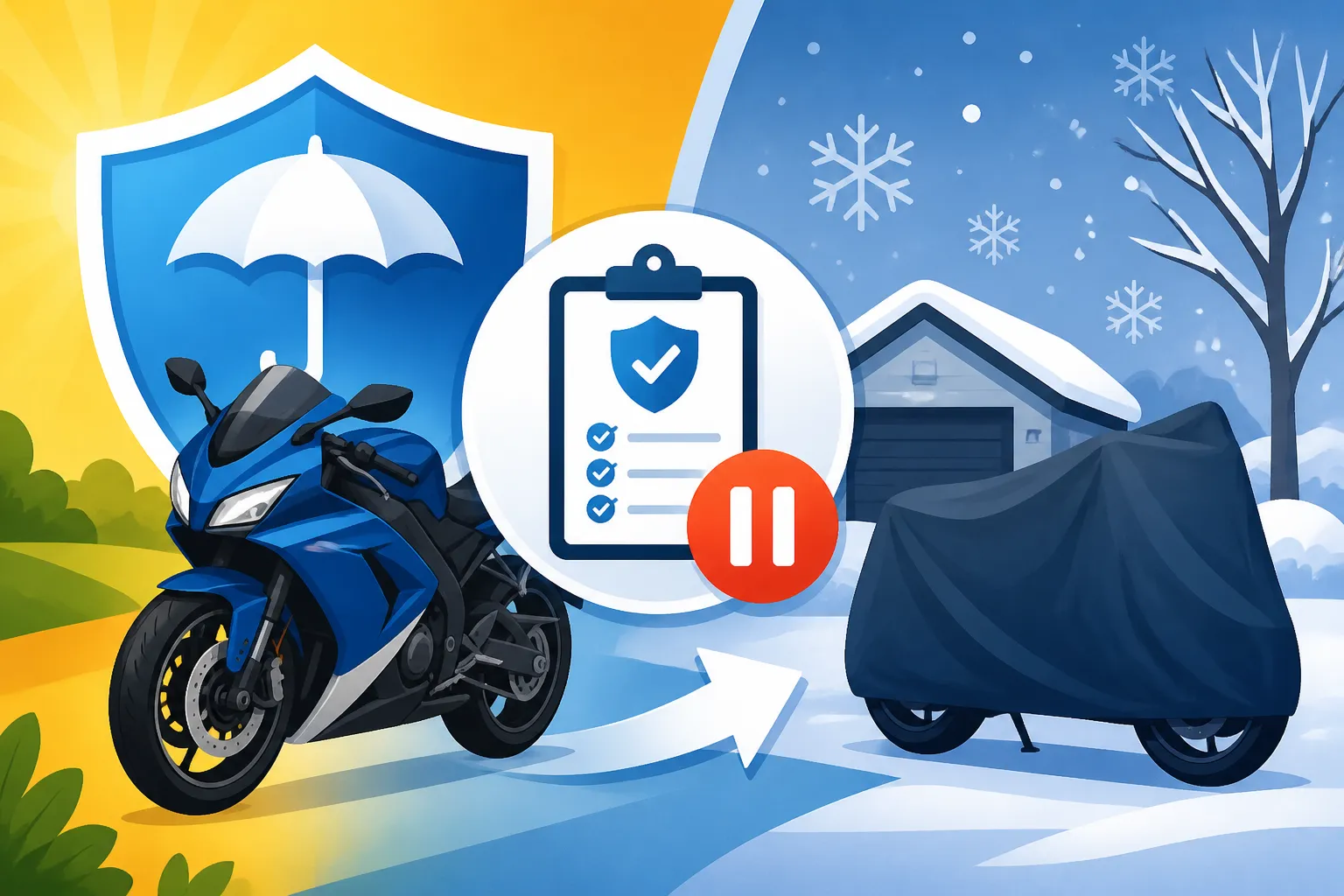
When we talk about "suspending" motorcycle insurance for the winter, it's not quite the same as completely canceling your policy. Instead, it usually refers to altering it to a "storage" or "lay-up" status, or specifically reducing it to comprehensive-only coverage. This keeps your policy active but adjusts what it covers, and consequently, what you pay. It’s a smart move that recognizes your bike isn't on the road, but still needs protection from other common risks.
The "Lay-Up" or "Storage" Option
Many insurance companies, understanding the seasonal nature of motorcycling, offer specific "lay-up" or "storage" coverage options. This isn't a full cancellation; rather, it’s a policy modification designed for periods when your motorcycle is off the road and stored. When you choose this option, you're typically maintaining coverage for non-collision-related incidents.
What does this mean in practice? Imagine your bike is nestled in your garage for the winter. With lay-up coverage, you're still protected if:
- Theft: Someone breaks into your garage and steals your motorcycle. This is a terrifying scenario no one wants to face, and unfortunately, it's a real possibility even when a bike is stored.
- Fire: A fire breaks out in your garage or storage unit, damaging or destroying your bike.
- Vandalism: Your motorcycle is defaced or damaged by vandals while in storage.
- Natural Disasters: Your garage floods during a heavy storm, or a tree falls on it, causing damage to your motorcycle.
- Other non-collision events: Things like hitting a deer while riding are covered by comprehensive, but in storage, this would encompass other non-moving risks like wind damage or falling objects.
The crucial part to remember is what lay-up coverage doesn't include. It typically removes collision coverage (because you're not riding to collide with anything) and, most importantly, liability coverage. This means if your bike somehow causes damage to someone else's property or injures another person while it's in "storage mode" (an unlikely but technically possible scenario if, say, someone unauthorized takes it), you wouldn't be covered. This distinction is vital for understanding what risks you're still carrying and what savings you're actually getting. It's a balanced approach that protects your investment without charging you for road risks that aren't present.
If you're wondering, "Do You Need Insurance to Store a Motorcycle?", the answer is generally yes, at least comprehensive or lay-up coverage, to safeguard against these storage-specific perils.
The Comprehensive-Only Strategy
Another common approach to winter insurance reduction is to switch your policy to comprehensive-only coverage. This is very similar to the lay-up option but might be the default wording or structure for some insurers. With comprehensive coverage, your motorcycle is protected against a wide range of non-collision events, regardless of whether it's actively being ridden or stored.
Here’s a breakdown of what comprehensive coverage typically includes:
- Theft: As mentioned before, if your bike is stolen, comprehensive coverage will help you recover its value. This is a major concern for any bike owner, regardless of the season.
- Fire: Protection against fire damage, whether it’s a garage fire or a mechanical fire (though less likely when stored).
- Vandalism: Costs for repairs if your bike is intentionally damaged.
- Falling Objects: Damage from things like hail, tree branches, or other debris.
- Animal Strikes: While usually an on-road risk, if an animal somehow damages your stored bike, it could fall under comprehensive.
- Natural Disasters: Flood, windstorm, earthquake damage.
By opting for comprehensive-only, you eliminate the need for collision coverage (which covers damage to your bike in an accident) and liability coverage (which covers damage or injury you cause to others). This significantly lowers your premium because you're stripping away the most expensive parts of a full coverage policy. For example, a rider with a financed motorcycle might need to maintain full coverage year-round as per their loan agreement. But if your bike is paid off and you choose to go comprehensive-only for winter, you're still protecting your asset against the most common non-riding related risks without paying for active road use. This strategy works well for those who understand that even a parked motorcycle isn't immune to danger. Many riders find that keeping this basic protection while their bike is garaged for months, especially if they have valuable accessories or custom parts, is well worth the reduced cost.
The Step-by-Step Process of Temporarily Altering Your Policy
So, you've decided that reducing your insurance for the winter is the right move for your budget and peace of mind. Great! But how do you actually go about it? It's not as simple as just stopping payments, which could lead to a lapse in coverage and serious penalties. There's a proper way to do it that involves direct communication with your insurer.
Initiating Contact with Your Insurance Provider
The very first and most crucial step is to pick up the phone and talk to your current motorcycle insurance provider. Do not, under any circumstances, simply stop paying your premiums or assume your policy will automatically adjust for winter. Insurance is a contract, and changes need to be formally recorded and agreed upon.
When you call, be clear about your intentions. Explain that you're storing your motorcycle for the winter season and would like to explore options for reducing your coverage during this period. Ask specifically about "seasonal lay-up coverage," "storage insurance," or switching to "comprehensive-only" for your motorcycle. Different companies might use slightly different terminology, but they'll understand what you mean.
It's a good idea to have your policy number, bike's VIN, and the exact dates you expect to store and then resume riding handy. The insurance agent will be able to tell you exactly what options are available based on your state's regulations and their company's policies. For instance, some states might have specific requirements even for stored vehicles, or your insurer might have certain stipulations. Don't be afraid to ask questions. Inquire about the exact coverages that will remain, what risks will no longer be covered, and most importantly, what the new premium will be.
Companies like Progressive, for example, are generally quite familiar with seasonal adjustments for motorcycle policies and can walk you through their specific process. Even if you initially got your quote through a comparison site like The Zebra, you'll still need to go directly to your chosen insurer to make these changes. They are the ones holding your policy and can enact the official changes.
Gathering Necessary Information and Documentation
While you won't need a mountain of paperwork to change your policy for the winter, having certain information readily available will make the process much smoother. When you contact your insurance agent, they will likely ask for:
- Your Policy Number: This is standard for any policy inquiry.
- Motorcycle's VIN (Vehicle Identification Number): To ensure they are adjusting the correct vehicle's policy.
- Desired Start Date for Reduced Coverage: When do you want the winter adjustment to begin? Be realistic about when you'll truly stop riding.
- Desired End Date for Reduced Coverage (or estimated date): When do you anticipate wanting full coverage reinstated for spring riding? You can often provide an estimate and adjust it later.
- Storage Location Details: Where will the motorcycle be stored? (e.g., "in my locked garage at my home address," "at a secure off-site storage facility"). Some insurers might factor this into their assessment of risk, especially for comprehensive claims like theft.
Additionally, it's wise to take photos of your motorcycle in its stored condition, noting the date. While usually not required, this can serve as documentation of its condition before the storage period, should any damage or theft occur during the winter. Always keep a record of the conversation, including the name of the agent you spoke with, the date and time, and a brief summary of what was agreed upon. This can be invaluable if there's any confusion later.
Confirming Your Policy Changes
This is the step that most riders overlook, and it's where misunderstandings can happen. After you've spoken with your agent and agreed upon the changes, do not hang up until you've received clear confirmation.
Ask your agent to send you:
- An Updated Policy Declaration Page: This document will clearly outline the new coverages, limits, and the adjusted premium. It's your official proof of the change.
- A Confirmation Email or Letter: Something in writing that reiterates the changes made, the effective dates, and the new cost.
Review these documents carefully! Check that the effective dates for the reduced coverage are correct and that the specific coverages you discussed (e.g., comprehensive-only) are accurately reflected. Make sure the premium reduction matches what was quoted. If anything looks incorrect or unclear, call them back immediately. You want absolute certainty that your policy is set up as intended before winter fully takes hold. Without this written confirmation, if something happens to your bike and you need to file a claim, you might find yourself in a very difficult position. This is how you ensure that your decision to alter your policy is officially recognized by your insurer, protecting both your bike and your wallet.
Critical Considerations and Potential Pitfalls of Winter Suspension
While adjusting your motorcycle insurance for winter can be a smart financial move, it's not without its potential downsides and crucial considerations. It's easy to focus solely on the savings, but a responsible rider understands the risks involved and plans accordingly. Ignoring these pitfalls could lead to significant financial loss and a heap of headaches come spring.
The Risks of Minimal or No Coverage
The biggest risk associated with reducing your coverage to a bare minimum (like comprehensive-only) or suspending it entirely is, quite simply, being underinsured or completely uninsured for certain events. While your bike is in storage, you're essentially betting that nothing will happen to it that falls outside your remaining coverage.
Consider these scenarios:
- Accidental Damage in Storage: What if you, or someone else, accidentally knocks your motorcycle over in the garage? If you've stripped down to comprehensive-only, this type of accidental damage (which would typically fall under collision coverage) would likely not be covered. You'd be on the hook for repairs, which could be hundreds or even thousands of dollars.
- The "Unexpected Ride": We all know that sudden warm spell in January or February. The sun is shining, the roads are clear, and the temptation to take your bike out for a quick spin is immense. If you succumb to that temptation with only comprehensive coverage or a suspended policy, you are riding without liability and collision. If you get into an accident, even a minor one, you could be facing astronomical costs for property damage, injuries to others, and damage to your own bike. This is a common and dangerous pitfall, as outlined in guides like "What Happens If You Get Caught Riding Without Insurance?"
- Damage from an Uninsured Party: While less common for a stored bike, imagine a neighbor's car somehow rolls down a driveway and impacts your garage, damaging your bike. If their insurance is insufficient or they are uninsured, and your policy only has comprehensive, you might not be fully protected depending on the specifics. This highlights why some riders opt to keep Uninsured & Underinsured Motorist Coverage (UM/UIM).
Before reducing your coverage, carefully weigh the potential for these "what if" scenarios against the amount you'll save. Sometimes, the peace of mind that comes with maintaining a slightly higher level of coverage for a few extra dollars is worth it.
Legal and Financial Ramifications
Beyond the immediate risks to your motorcycle, there are also broader legal and financial consequences to consider when altering your insurance policy for winter.
- Financed Motorcycles: If you have a loan on your motorcycle, your lender will almost certainly require you to maintain full coverage (including collision and comprehensive) year-round. This is non-negotiable, as the bank has a financial interest in your bike. Attempting to reduce coverage on a financed motorcycle could put you in breach of your loan agreement, leading to serious repercussions, potentially including forced-place insurance (which is usually much more expensive) or even repossession. Always check your loan documents and speak to your lender before making any changes.
- Lapses in Coverage: If you completely cancel your policy instead of suspending or reducing it, you create a "lapse" in coverage. Insurance companies view lapses negatively, as it suggests you're a higher risk. When you go to reinstate coverage in the spring, you might find your rates have increased significantly. Some insurers may even refuse to offer you a policy for a period. This is a crucial point discussed in "What Happens if You Let Coverage Lapse Then Restart?".
- Proof of Insurance: Even if your state doesn't require insurance for a stored vehicle, you might still need to provide proof of insurance for registration purposes. While you don't need "full coverage to register a motorcycle," you often need some form of valid insurance. If your policy is fully canceled, you might run into issues when renewing your registration in the spring.
It's critical to remember that minimum liability insurance requirements vary by state. Even if you're not riding, if your state has a financial responsibility law, you might still need to maintain some level of coverage, or face Penalties for Riding Without Insurance if caught, even if you just moved the bike in the driveway. Always confirm the specific regulations in your state.
Reinstatement Headaches
One often-overlooked pitfall is the hassle and potential delay in reinstating your full coverage in the spring. You might be eager to hit the road on that first warm day, only to find that getting your insurance back up to full speed takes longer than expected.
- Processing Time: While many insurance companies are efficient, it can still take a day or two for a policy change to fully process and become active. If you wait until the last minute, you could miss out on prime riding weather.
- Underwriting Review: In some cases, especially if there were significant changes or a long period of minimal coverage, your insurer might require a brief underwriting review before reinstating full coverage. This could involve confirming your current address, mileage, and even a quick check of your driving record, potentially delaying your ride.
- Forgotten Steps: It's easy to forget to reinstate your policy, especially if you set the reduction for an indefinite period. Imagine pulling your bike out, doing all your pre-season checks, and then realizing you're still only covered by comprehensive. This puts you at immense risk.
To avoid these headaches, it's always best to plan your reinstatement in advance. Mark your calendar for a few weeks before you anticipate riding again and initiate the process early. Communication is key, and confirming the exact reinstatement date and new policy details will save you stress when riding season truly begins. This proactive approach ensures you're fully covered the moment your wheels hit the pavement again. For a deeper dive, check out "How to Reinstate Coverage After Lay-Up Season".
Alternatives to Full Suspension: Finding Smart Savings for Winter Riders
Suspending most of your coverage for winter isn't the only way to save money when your motorcycle is parked. Sometimes, maintaining a more robust year-round policy with strategic discounts or adjustments can offer comparable savings and greater peace of mind. It’s about finding the balance that works best for your situation and your riding habits.
Exploring Seasonal Discounts and Multi-Policy Bundles
Before you rush to strip down your policy, talk to your insurance provider about potential discounts you might be missing. Many insurers offer ways to reduce your premium that don't involve minimizing your coverage to an extreme.
- Seasonal Usage Discounts: Some companies automatically factor in seasonal use for motorcycles, or offer specific discounts for riders who can demonstrate they only ride for a certain number of months out of the year. While not a "suspension," it acknowledges the reduced risk profile.
- Multi-Policy Bundling: This is one of the most effective ways to save money. If you have auto insurance, homeowner's, or renter's insurance with the same provider, bundling your motorcycle policy can lead to significant discounts across all your policies. For example, if you insure your car with Progressive, adding your motorcycle policy to the same bundle could net you a substantial reduction. You could save a percentage on each policy, making the year-round cost more palatable. This is a great strategy for many households.
- Motorcycle Safety Course Discounts: If you haven't already, completing an approved motorcycle safety course can often qualify you for a discount that remains on your policy year-round. This demonstrates to insurers that you are a safer rider, reducing your perceived risk.
- Anti-Theft Device Discounts: Installing an alarm system, GPS tracker, or even a robust chain lock can sometimes qualify you for a discount, as it reduces the risk of a theft claim, which is relevant even during storage.
It's always worth asking your agent directly, "What Motorcycle Insurance Discounts You're Missing?" They can often uncover savings you didn't even know existed, allowing you to keep broader coverage without breaking the bank.
Maintaining Basic Coverage for Peace of Mind
For some riders, the slight increase in premium to maintain basic liability and collision, even during winter, is a worthwhile investment for unparalleled peace of mind. The "what if" scenarios discussed earlier—an accidental tip-over in the garage, an unexpected warm day ride, or even someone else moving your bike without permission—can be completely mitigated with a year-round, albeit slightly higher, coverage level.
Consider these benefits:
- No Lapses, No Reinstatement Hassles: You avoid the risk of increased rates due to coverage lapses and the administrative work of reinstating your policy every spring. Your coverage is simply there, ready when you are.
- Always Legally Ready to Ride: If that perfect unseasonable riding day suddenly appears, you don't have to scramble to call your insurance company. You're legally good to go, as long as your registration is current.
- Protection Against All Accidental Damage: Even minor garage mishaps that would be out-of-pocket expenses with comprehensive-only coverage are typically covered under a full policy. If you have an expensive bike or one with Accessories & Custom Parts Coverage Explained, this could be a big deal.
- Simplicity: For some, the sheer simplicity of having a consistent policy year-round outweighs the modest savings from seasonal adjustments. You set it and forget it, knowing you're always protected.
This option might be particularly appealing if the difference in premium between comprehensive-only and a full policy for your storage months isn't drastically high. You can even consider adjusting your deductibles for collision during winter storage to find a middle ground. By increasing your collision deductible for a few months, you might see a small reduction in cost while still maintaining the coverage. This approach ensures that you're never in a grey area when it comes to protection, whether your bike is parked or cruising down the highway.
Reactivating Your Policy for Spring Riding
Just as important as putting your motorcycle to bed for the winter is the process of waking it up and ensuring it's fully covered for the riding season ahead. Many riders get excited about the first warm days and forget to properly reinstate their full coverage, which can lead to disastrous consequences if an accident occurs. Don't let your excitement overshadow prudence!
Planning for a Smooth Transition Back to Full Coverage
To avoid any last-minute stress or, worse, riding uninsured, it's crucial to plan your policy reactivation well in advance. Think of it like booking your bike's first spring service: you schedule it ahead of time.
- Mark Your Calendar: As soon as you decide to suspend or reduce your coverage for winter, make a note on your calendar for when you intend to reinstate it. Give yourself a buffer of at least 1-2 weeks before your anticipated first ride. If you typically start riding in mid-April, aim to contact your insurer by the last week of March.
- Revisit Your Needs: Before calling, take a moment to consider if your coverage needs have changed. Have you added any new custom parts or accessories over the winter? Have you moved to a new address? Do you plan to ride more or less than last year? This is also a good time to reconsider if Do You Need Gap Insurance on a Motorcycle? is relevant if you have a financed bike.
- Gather Information: Have your policy number, VIN, and the specific date you want full coverage to resume ready when you call.
- Confirm, Confirm, Confirm: Just like when you initially reduced your coverage, insist on receiving an updated policy declaration page or an email confirmation outlining your full reinstated coverage and the new premium. Review it thoroughly to ensure everything is correct and active. You don't want any surprises when you're out on the road.
This proactive approach ensures that when that perfect spring day arrives, you can swing your leg over your bike with complete confidence, knowing you're fully protected. Many companies, including The Zebra's partner insurers, make this process quite streamlined, but the initiative still falls on you.
Verifying Your Coverage Before Your First Ride
The absolute final step, and one you should never skip, is to verify your coverage before you actually take your motorcycle out for its first ride of the season. Don't just assume it's done because you made the call.
- Check Your Documentation: Review the updated policy documents you received. Ensure the effective date for full coverage has passed and all necessary coverages (liability, collision, etc.) are active.
- Proof of Insurance: Make sure you have valid proof of insurance on hand. This could be a physical ID card, a digital copy on your phone, or access to your insurer's app. Remember that Proof of Insurance & Registration for Motorcycles is required in almost every state when you're operating the vehicle.
- Double-Check State Requirements: Briefly refresh your memory on your state's minimum motorcycle insurance requirements. Has anything changed since last year? Are your current liability limits sufficient? For example, riders in California might want to double-check their specific needs beyond just the minimum for California Motorcycle Insurance Requirements.
By taking these steps, you safeguard yourself against the legal and financial repercussions of riding without adequate insurance. The last thing you want is to be involved in an accident, only to discover your policy was still in "winter storage" mode. A few minutes of verification can save you from a world of trouble and allow you to fully enjoy the open road after a long winter's wait. Remember, when Riding Across State Lines: Insurance & Helmet Rules, your insurance needs to be active and valid in your home state to provide coverage elsewhere.
Table of Winter Insurance Options Comparison
To help you visualize the different approaches to insuring your motorcycle during the winter months, here's a quick comparison of typical coverage scenarios:
| Coverage Type | Key Coverage Provided | Typical Cost Relative to Full Coverage | Risks Covered by This Option (Winter) | Risks NOT Covered by This Option (Winter) | Best For |
|---|---|---|---|---|---|
| Full Coverage | Liability, Collision, Comprehensive, UM/UIM, MedPay | 100% (Highest) | Theft, fire, vandalism, natural disaster, accidental tip-over, on-road collision, damage to others. | Minimal (covers almost everything while active). | Riders with financed bikes, high-value bikes, peace of mind, frequent impromptu rides. |
| Comprehensive-Only (Lay-Up/Storage) | Theft, fire, vandalism, natural disaster, falling objects. | 30-50% (Significantly Reduced) | Theft, fire, vandalism, natural disaster, falling objects. | On-road collision, accidental tip-over in storage, damage to others/property. | Riders with paid-off bikes, secure storage, no intention to ride. |
| No Coverage (Canceled Policy) | None | 0% (Lowest) | None | Theft, fire, vandalism, natural disaster, accidental tip-over, on-road collision, damage to others. | Very old/low-value bikes, those willing to accept significant risk. (Generally NOT Recommended) |
This table illustrates the trade-offs between cost savings and risk exposure for each option. The comprehensive-only or lay-up option is often the sweet spot for many riders during winter.
Disclaimer
This article is for general informational purposes only and does not constitute professional advice. Laws, prices and regulations vary by location and change over time. Consult a qualified professional for guidance on your specific situation.