Motorcycle Insurance Cost for Young Riders Under 25
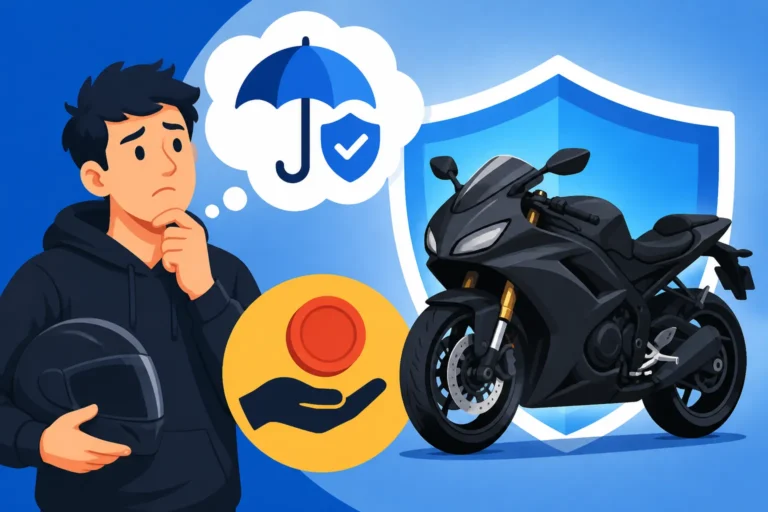
Walking into a dealership at 19 or 20 years old and picking out your dream bike is an incredible feeling, right until you get the insurance quote. Many young riders find themselves staring at a premium that costs nearly as much as the motorcycle's monthly payment itself. This guide breaks down why under-25 rates are so high and provides actionable strategies to lower those costs without sacrificing the coverage you actually need.
Why Being Under 25 Is a Financial Headache for Riders
The insurance industry is built entirely on the concept of risk and probability. When an actuary sits down to look at the numbers for a rider under the age of 25, the data paints a very specific, albeit frustrating, picture. Statistical evidence shows that younger riders are more likely to be involved in high-speed incidents, more likely to ride without adequate safety gear, and more likely to overestimate their ability to handle a bike in a crisis situation. This isn't a personal attack on your skills, but rather a cold look at the Motorcycle Insurance Cost by Age that reflects decades of claim history.
When you are young, you lack what insurance companies call a "demonstrated history of responsible operation." In the eyes of a provider, every month you ride without an accident is a tiny bit of proof that you are a lower risk. Until you hit that magic age of 25, you are essentially paying for the mistakes of every other young rider who came before you. It is a collective punishment of sorts, where the high frequency of claims in your age bracket dictates your individual premium.
Another layer to this headache is the "inexperience multiplier." If you are 21 and have only had your motorcycle endorsement for six months, you represent a much higher risk than a 21-year-old who has been riding dirt bikes since they were ten and has held a street license for three years. Carriers look at the length of time you have been licensed specifically for motorcycles, not just how long you’ve been driving a car. This is why it’s often helpful to look at How Much Is Motorcycle Insurance for an 18 Year Old? to understand just how steep the climb is when you are starting from zero.
The Statistics of Risk: Experience vs. Age
There is a subtle but important difference between being a young rider and being an inexperienced rider, though insurance companies often conflate the two to your disadvantage. A 24-year-old who has just finished their first safety course is technically more "risky" than a 22-year-old with four years of street experience. However, age-based brackets are the primary tool used to set baseline rates. They assume that younger brains are more prone to impulsivity, leading to higher rates of "excessive speed" citations and "single-vehicle accidents," which is insurance-speak for sliding out in a corner.
Furthermore, the severity of accidents involving younger riders tends to be higher. When a 50-year-old on a touring bike has a mishap, it’s often a low-speed tip-over in a parking lot. When a 20-year-old on a sportbike has a mishap, it frequently involves high speeds and significant medical costs. Because the potential payout for a medical claim is so high, the premium must rise to compensate. You can see this reflected clearly in the Average Motorcycle Insurance Cost by State, where states with higher medical costs see even higher premiums for the youth demographic.
How Insurance Companies Categorize Young Riders
Most major carriers use a tiered system. The "Ultra-High Risk" tier usually encompasses anyone under 21. If you fall into this group, you are likely seeing the highest rates of your life. The "High Risk" tier typically covers the 21 to 24 age range. Once you hit 25, you generally move into a "Standard" risk category, provided your driving record is clean. This age-based cliff is legendary in the riding community because the day you turn 25, you might see your premium drop by 20% or more overnight.
Companies like The Zebra often highlight how these categories shift based on the type of bike you choose during these years. For example, a 22-year-old on a 300cc cruiser might be categorized similarly to an older rider because the bike itself suggests a more conservative riding style. Conversely, a 19-year-old on a 600cc supersport is the "perfect storm" for an insurance company's risk model. They see a high-performance machine paired with a high-risk age bracket, and the price reflects that fear.
Average Costs and Pricing Factors for Gen Z Motorcyclists
It is difficult to pin down a single "average" because the variables are so vast, but for a rider under 25, you can generally expect to pay anywhere from $800 to $3,000 per year depending on your bike and location. If you are financing a high-end sportbike in a major city like Miami or Los Angeles, those numbers can even climb higher. Understanding the Motorcycle Insurance Cost by Bike Type is the first step in realizing why your friend with a Honda Rebel pays a fraction of what you pay for your Kawasaki Ninja.
Pricing isn't just about your age; it’s about the "loss cost" of the specific motorcycle you are sitting on. If a specific model of motorcycle is stolen frequently or is involved in a high number of total-loss accidents, the insurance company will raise the rates for that model across the board. For young riders, this is a double whammy: you are high-risk, and the bikes you typically want—sporty, fast, and stylish—are also high-risk.
Engine Displacement and Policy Pricing
The "CC" of your engine is one of the biggest levers in determining your rate. In the insurance world, displacement is often viewed as a proxy for speed and danger. A 1000cc bike is not just twice as powerful as a 500cc bike in the eyes of an underwriter; it might be five times as dangerous. For a young rider, staying under the 600cc mark can save hundreds, if not thousands, of dollars annually. Using comparison tools like The Zebra can show you the literal dollar-for-dollar difference between insuring a 400cc beginner bike versus a 600cc race-replica.
It’s also worth noting that the "type" of engine matters. A 1200cc Harley-Davidson Sportster might actually be cheaper to insure for a 23-year-old than a 600cc Yamaha R6. Why? Because the Sportster is a cruiser with a different power delivery and a demographic of riders who, statistically, crash less often. The R6 is a high-strung track machine that is frequently stolen and frequently crashed. When choosing your first or second bike, looking into the How Much Is Motorcycle Insurance for a Beginner? guide can help you avoid a bike that is uninsurable on a budget.
The Location Factor: Urban vs. Rural Rates
Where you park your bike at night is just as important as how old you are. If you live in a high-density urban area, your risk of theft and "vandalism" skyrocketed in the eyes of the insurer. If you are a 22-year-old living in an apartment complex in downtown Chicago, your bike is a target. If you are the same 22-year-old living in a rural part of Wisconsin with a locked garage, your rates will be significantly lower.
Insurance companies use zip codes to track "frequency of loss." If your zip code has a high rate of motorcycle thefts or a high number of intersection accidents, you pay more. Young riders often move to cities for school or early career opportunities, unknowingly moving into the most expensive insurance territories in the country. Before you sign a lease, it's worth checking How Much Is Motorcycle Insurance in California or whatever state you are moving to, as the local environment might dictate your entire riding budget.
Breaking Down Coverage Types for the Under-25 Crowd
When you see a quote that looks too good to be true, it's usually because it's a "liability-only" policy. For many young riders on a budget, this is the only way they can afford to ride, but it comes with massive risks. Understanding the Liability-Only vs Full Coverage Cost is essential before you hit the road. Liability only covers the damage you do to others; it does absolutely nothing for your own bike if you slide on some gravel or if someone kicks your bike over in a parking lot.
If you are under 25 and riding a bike that is worth more than a couple thousand dollars, you are in a difficult position. One small mistake can result in a "total loss," leaving you with no bike and no money to buy a new one. This is why many veteran riders suggest that young people buy older, cheaper bikes that they can afford to insure with liability-only coverage while they build up their "insurance resume."
Liability-Only vs. Full Coverage: The Young Rider's Dilemma
The dilemma is simple: full coverage (which includes Comprehensive and Collision) is often three to four times more expensive than liability-only for a young rider. If your bike is worth $5,000 and the insurance company wants $2,000 a year for full coverage, you are essentially "re-buying" your bike every two and a half years just in insurance premiums. At that point, many riders ask, Is Liability Coverage Worth It on a Motorcycle? and decide to self-insure the physical damage to the bike.
However, if you have a loan, you don't have a choice. Banks require full coverage to protect their investment. This is why financing a bike as a young rider is often a bad financial move. You are forced to pay the highest insurance rates possible because the bank owns the title. If you find yourself in this situation, you must also look into Motorcycle Insurance Requirements for Financed Bikes to ensure you aren't violating your loan agreement, which could lead to "force-placed insurance" that is even more expensive.
Add-ons Worth Considering: Roadside and Gear
While you are trying to save money, there are two add-ons that are usually quite cheap and incredibly valuable for younger riders: Roadside Assistance and Gear Coverage. Many young riders are on older bikes that might have mechanical issues, or they haven't yet mastered the art of "not running out of gas." A roadside assistance add-on often costs less than $20 a year and can save you a $200 towing bill.
Gear coverage is also vital because a good helmet, jacket, and boots can easily cost $1,000. If you are in an accident, your standard policy might not cover your protective gear unless you specifically add it. Given how expensive quality safety gear is, this small addition to your premium is a smart move. Companies like The Zebra can help you filter for policies that include these small but critical protections without bloating the overall cost.
Practical Ways to Slash Your Premiums
The good news is that you aren't completely powerless. There are several levers you can pull to convince an insurance company that you are one of the "good ones." The most effective way to do this is through education and licensing. If you simply show up with a permit and a bike, you are a red flag. If you show up with a full endorsement, a completed safety course certificate, and a clean driving record, you are a much more attractive customer.
Comparison shopping is the other "secret weapon." Rates for young riders vary wildly between companies. One company might have had a bad year with claims from 20-year-olds and raised their rates to push that demographic away, while another company might be looking to grow its market share in that exact group. You won't know unless you shop around, which is why How to Get Cheap Motorcycle Insurance remains the most searched-for advice for riders under 25.
The Power of Safety Courses and Licensing
Taking a Motorcycle Safety Foundation (MSF) course or a state-approved equivalent is the single best thing you can do for your premium and your life. Most insurance companies offer a discount ranging from 5% to 15% just for passing the class. More importantly, it often allows you to bypass the riding portion of the DMV test, getting you your full endorsement faster.
Beyond the immediate discount, many riders wonder, Does a Motorcycle Safety Course Lower Insurance? over the long term. The answer is yes, because the skills you learn help you avoid the "minor" accidents that lead to small claims. A clean claim history is the most powerful tool for lowering your rates as you approach 25. By investing a weekend in a safety course, you are signaling to the insurer that you take the risks of riding seriously.
Strategic Bike Selection for Lower Rates
If you haven't bought a bike yet, listen closely: the bike you choose is the biggest factor in your insurance cost. Avoid the "RR" bikes (Race Replicas). A Honda CBR600RR will be significantly more expensive to insure than a Honda CBR500R, even though they look similar to a non-rider. The "RR" designation tells the insurance company that the bike is designed for the track and high-speed maneuvers.
Consider "standard" or "naked" bikes. Models like the Yamaha MT-03 or the Kawasaki Z400 offer plenty of fun and style but are often classified differently than their fully-faired sportbike siblings. Because they lack expensive plastic fairings that shatter in a simple tip-over, the insurance company sees them as cheaper to repair. You can find more advice on this in our guide on the Cheapest Motorcycle to Insure: Top Picks. Choosing a bike with a smaller engine and less plastic is the fastest way to drop your premium by $500 or more.
Bundling and Multi-Policy Discounts
If you already have car insurance, your first call should be to that provider. Bundling a motorcycle policy with an existing auto or renters policy is one of the easiest ways to get a "multi-policy discount." Even if the motorcycle policy itself isn't the absolute cheapest on the market, the discount it applies to your car insurance might make the total package the best deal.
Many young riders also live at home or with roommates. Some companies allow "multi-vehicle" discounts if you and a roommate or family member are both on the same policy. While this can get complicated with "named insured" rules, it’s a conversation worth having with an agent. Using a comparison site like The Zebra allows you to see how these bundles stack up against stand-alone motorcycle policies from specialty insurers like Dairyland or Markel.
State-Specific Nuances and Legal Requirements
Where you live doesn't just change the price; it changes the law. Every state has different minimum requirements for liability, and some states have very specific rules regarding young riders and helmets that can actually affect your insurance eligibility. For example, if you are in a state that requires helmets for those under 21 and you are caught riding without one, a single ticket can cause your insurance to be canceled or your rates to double.
Understanding the Motorcycle Insurance Requirements by State is crucial. Some states, like Florida, have notoriously complex rules regarding when you actually "need" insurance, but riding without it is a massive financial gamble for a young person with their whole financial future ahead of them. Even if the state doesn't require it to register the bike, the first time you are at fault in an accident, you will wish you had it.
High-Cost States for Young Motorcyclists
If you are riding in Michigan, you are dealing with a unique "no-fault" system that can make motorcycle insurance incredibly expensive regardless of your age. If you are under 25 in Michigan, you might find that your rates are the highest in the nation. Similarly, states with long riding seasons like California, Texas, and Florida often have higher rates because the "exposure" is higher—you are on the road 12 months a year instead of six.
In these high-cost states, it is even more important to look at How Much Is Motorcycle Insurance for a Sport Bike? before you buy. In a state like New York, the combination of high density, high theft, and a high-risk bike can lead to quotes that are simply unaffordable for someone on an entry-level salary. In these cases, your only real option is to choose a bike that the insurance company "likes," such as a small-displacement cruiser or a vintage bike.
Understanding Minimum Liability Limits
Most states require a "split limit" policy, often represented as three numbers like 25/50/25. This stands for $25,000 in bodily injury per person, $50,000 in bodily injury per accident, and $25,000 in property damage. For a young rider, these minimums are often dangerously low. If you hit a modern SUV and total it, $25,000 won't even cover the replacement cost of the vehicle, let alone the medical bills of the people inside.
While it sounds counterintuitive to tell a young rider to pay more for higher limits, the jump from state minimums to "100/300/50" is often surprisingly cheap—sometimes only $10 or $15 more per month. This extra coverage protects you from being sued and having your wages garnished for years to come. You can find a deeper explanation of these numbers in our Minimum Liability Insurance Explained guide.
| Factor | Estimated Impact on Premium | Strategy to Mitigate |
|---|---|---|
| Age (Under 21) | 50% – 100% Increase | Wait until 21 or choose a 250cc bike. |
| Bike Type (Supersport) | 80% – 150% Increase | Choose a "Naked" or "Standard" bike. |
| Safety Course | 10% – 15% Discount | Take the MSF course before buying insurance. |
| Clean Record | 20% Baseline Discount | Avoid speeding tickets and small claims. |
| High Deductible | 15% – 25% Discount | Keep an emergency fund for repairs. |
| Urban Location | 30% – 50% Increase | Use a garage and anti-theft devices. |
| Policy Type | Best For | Estimated Annual Cost (Age 20) |
|---|---|---|
| Liability Only | Older bikes owned outright. | $400 – $900 |
| Full Coverage | New or financed motorcycles. | $1,500 – $3,500 |
| Storage/Lay-up | Riders in snowy climates. | $100 – $300 (Off-season) |
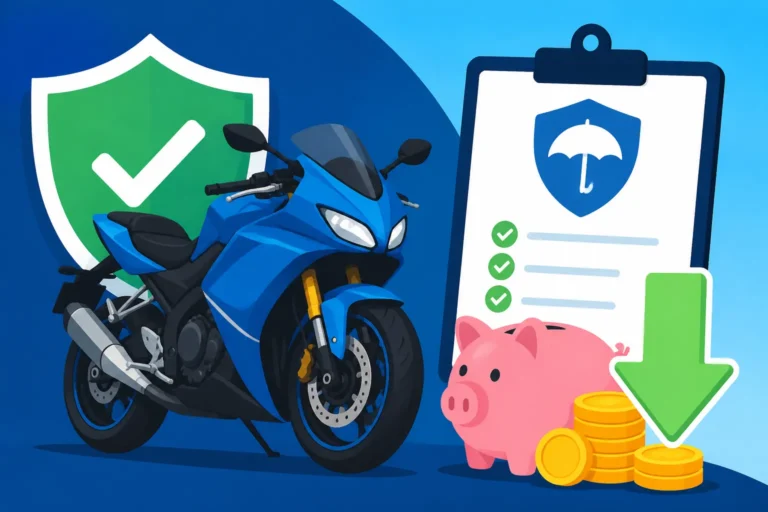
Being a young rider is a test of patience, both on the road and in your bank account. By making smart decisions about the bike you ride, the way you train, and how you shop for coverage using tools like The Zebra, you can weather the high-cost years until you hit 25. Remember, insurance is a temporary hurdle, but the skills you build and the record you keep clean today will pay dividends for the rest of your riding life. Stay safe, keep the rubber side down, and don't let a high quote keep you from the joy of the ride.
Disclaimer
This guide is provided for informational purposes only and does not constitute professional financial, legal, or insurance advice. Motorcycle insurance rates and laws vary significantly by state, provider, and individual circumstances. Always consult with a licensed insurance agent or legal professional before making decisions regarding your coverage or operating a motor vehicle. Prices mentioned are estimates based on general market trends and are not a guarantee of actual quotes.