How Much Is Motorcycle Insurance for an 18 Year Old?
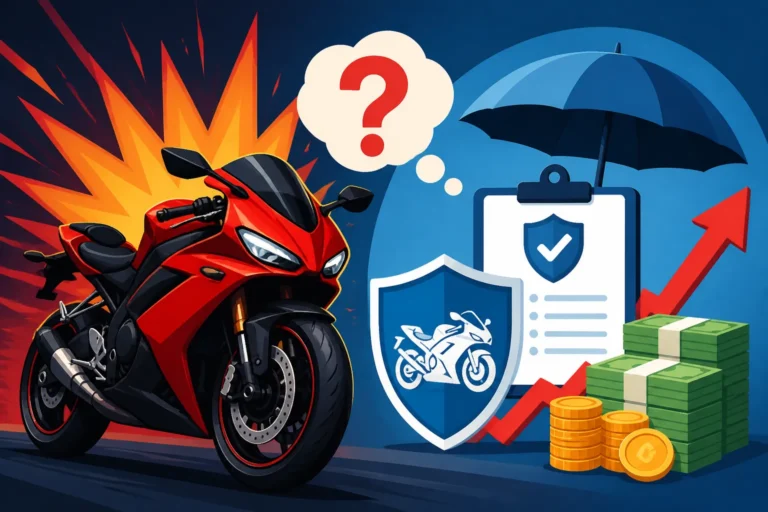
Starting out on two wheels at 18 is an incredible rite of passage, but the first time you pull up an insurance quote, that dream can feel like it is hitting a brick wall. Most young riders face staggering premiums because insurers view them as high-risk liabilities. This guide breaks down exactly what you will pay, why it is so expensive, and the realistic steps you can take to bring those numbers down.
Why 18-Year-Olds Pay More for Motorcycle Insurance
When you are 18, you are likely feeling the most capable and alert you have ever been, but insurance companies see something entirely different on their spreadsheets. To an actuary, an 18-year-old rider represents a combination of high energy and low experience. They look at historical data showing that younger riders are statistically involved in more frequent and more severe accidents than any other age group. This isn't a personal attack on your riding skills; it is a numbers game where the house usually wins by charging higher entry fees.
The Statistics of Risk and Brain Development
It is a tough pill to swallow, but scientific data regarding brain development plays a role in your premium. Research often suggests that the prefrontal cortex—the part of the brain responsible for impulse control and long-term risk assessment—isn't fully developed until the mid-20s. Insurance companies use this data to justify higher rates, assuming that an 18-year-old might take a corner a bit too fast or succumb to peer pressure during a group ride.
In a city like Austin or Nashville, where traffic is dense and unpredictable, these risks are magnified. If you are riding in a high-traffic environment, the insurer assumes that your reaction time, while fast, may not be seasoned enough to anticipate a distracted driver merging into your lane. This perceived lack of "road sense" is a primary driver for the How Much Is Motorcycle Insurance for an 18 Year Old? question that haunts many new riders.
Lack of Riding Experience
Experience is the only thing you cannot buy, and unfortunately, being 18 means you simply haven't had the time to accumulate it. Even if you have been riding dirt bikes since you were six, most insurance companies only care about your "street years." They look at the date you received your Motorcycle Endorsement vs Motorcycle License and start the clock there.
If you have zero years of licensed street riding, you are categorized as a "novice." This label stays with you for a few years, and during this time, you'll see a significant surcharge on your policy. Many riders try to bypass this by not getting their endorsement immediately, but that is a mistake. The sooner you get licensed, the sooner that "years of experience" counter starts ticking up, which is the only way to naturally How Much Does Motorcycle Insurance Go Down at 25? over time.
High-Risk Motorcycle Choices
The bike you choose is just as important as your age. An 18-year-old on a 300cc cruiser is viewed very differently than an 18-year-old on a 600cc or 1000cc supersport. High-performance bikes are designed for speed and agility, and in the hands of a teenager, insurers see a recipe for a total loss claim. If you have your heart set on a race-replica, prepare for quotes that might actually exceed the value of the bike itself.
This is why many veteran riders suggest starting on something like a Honda Rebel Insurance Cost profile. A smaller, more manageable bike suggests to the insurer that you are taking a measured approach to learning the craft. Picking a "insurance-friendly" bike is often the difference between a $100 monthly payment and a $500 one. Tools like The Zebra can help you see how swapping one bike model for another instantly changes your projected costs.
Average Costs and What to Expect in 2026
Pricing in 2026 has been affected by inflation, the rising cost of medical care, and the increasing complexity of motorcycle parts. For an 18-year-old, the "average" cost is a wide range. You might see anything from $1,200 a year for basic liability in a rural area to over $5,000 a year for full coverage on a sportbike in a major city. It is vital to realize that "average" is just a starting point; your specific zip code and bike choice will move that needle more than anything else.
National Averages vs State Reality
While national averages help for context, they are often useless for your personal budget. For instance, California Motorcycle Insurance Requirements are vastly different from those in the Midwest. In states with longer riding seasons, like Florida or Arizona, you might pay more because you are on the road for 12 months out of the year, increasing the window of time for an accident to occur.
Conversely, if you live in a state like Ohio or Michigan, your "seasonal" nature might be reflected in the rate, but you still have to deal with high-density traffic risks. Using a comparison site like The Zebra allows you to plug in your specific zip code to see how your local laws and local accident rates are influencing the quotes you receive.
Liability-Only vs Full Coverage Pricing
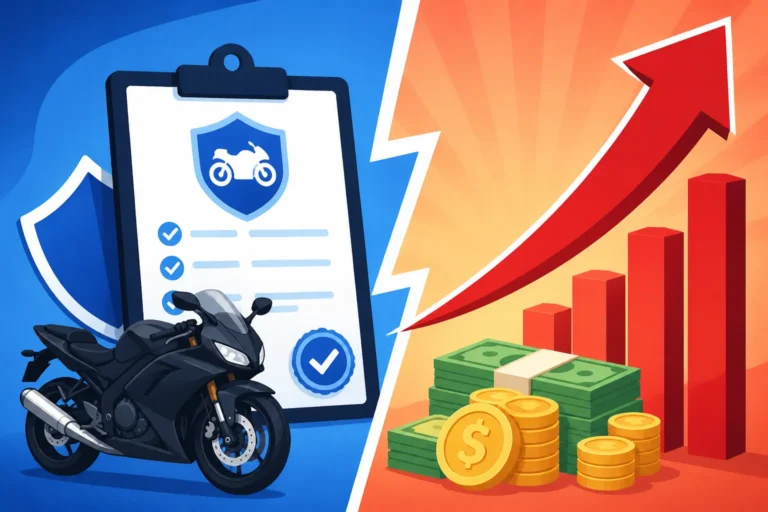
As a young rider, you'll be tempted to go with liability-only coverage to save money. This covers damage you cause to others but nothing for your own bike. For an 18-year-old, liability might cost $800 a year, while full coverage (including collision and comprehensive) could jump to $2,500. It is a massive gap, but you have to ask yourself: if you drop your bike tomorrow, can you afford to fix it out of pocket?
Most 18-year-olds are riding on a tight budget. If your bike is financed, you won't have a choice—the lender will require full coverage. If you own the bike outright, you have the flexibility to choose, but weighing Liability-Only vs Full Coverage Cost is a critical financial decision. A single low-side slide can result in thousands of dollars in fairing damage, often making that higher premium worth it in the long run.
| Coverage Type | Estimated Annual Cost (18yo) | What It Covers |
|---|---|---|
| Liability Only | $700 – $1,200 | Damage to others, legal fees |
| Liability + Comprehensive | $1,100 – $1,800 | Theft, fire, vandalism, animal strikes |
| Full Coverage (Incl. Collision) | $2,200 – $4,500+ | All of the above + damage from crashes |
| Add-ons (Roadside/Gear) | +$100 – $300 | Towing, helmets, riding jackets |
Hidden Fees and Surcharge Variables
Beyond the base rate, 18-year-olds often get hit with "new policy" fees or surcharges for having a limited credit history. In many states, your credit-based insurance score heavily influences your premium. At 18, you likely haven't had enough time to build a "Good" or "Excellent" score. This lack of financial data often results in a "Neutral" rating, which unfortunately isn't as cheap as a "Good" rating.
Furthermore, if you have any marks on your record from when you were 16 or 17—like a speeding ticket in your parents' car—those will follow you. Insurers look at your entire motor vehicle record (MVR), not just your motorcycle-specific history. If you're trying to figure out Why Is My Motorcycle Insurance So Expensive?, your teenage driving habits are often the culprit.
Key Factors That Influence Your Premium
It isn't just your age that matters; it is the ecosystem you live and ride in. Insurance companies look at everything from where you park your bike at night to how many miles you plan to commute. For an 18-year-old, every little detail is magnified because the "base" risk is already so high.
Geographic Location and Theft Rates
If you live in an apartment complex in a high-crime area of Los Angeles or Miami, your comprehensive coverage will be significantly higher than if you live in a rural town in Vermont. Theft is a massive concern for insurers when it comes to motorcycles, which are much easier to steal than cars. If you are 18 and living in a dorm or an apartment without a locked garage, the insurer assumes the bike is sitting ducks for thieves.
Providing proof of a locked garage or a high-quality GPS tracking device can sometimes help, though not all insurers offer a direct discount for this. It is worth checking How Much Is Motorcycle Insurance in California? or your specific state's data to see if your city is a "theft hotspot."
Credit History and Financial Responsibility
While it may seem unfair, insurance companies believe that how you handle your money correlates with how you handle your motorcycle. At 18, your credit file is likely thin. This "thin file" status can actually hurt you in states where credit-based insurance scoring is legal. To combat this, some young riders focus on building their credit through small, well-managed credit cards, though the impact on insurance premiums won't be immediate.
If you are worried about how your financial standing affects your rates, using a platform like The Zebra can help you identify which carriers are more "forgiving" toward riders with limited credit history. Some companies weight credit less heavily than others, preferring to focus on your actual riding record.
The Impact of Your Driving Record
One of the biggest misconceptions 18-year-olds have is that their "car record" is separate from their "bike record." It isn't. If you got a "Failure to Yield" ticket in your Toyota Corolla when you were 17, that ticket is visible to the motorcycle insurance company. For a young rider, even a single minor infraction can cause a 20% to 30% spike in premiums.
If you have a clean record, protect it at all costs. Avoiding even a single Penalty for No Motorcycle Insurance in Texas or California is vital, as a "lapse in coverage" or a "operating without insurance" violation can make you nearly uninsurable for several years. High-risk riders often end up needing an SR-22 for Motorcycles: When It's Required, which adds even more cost to an already expensive situation.
How to Lower Your Rates as a Young Rider
Just because you are 18 doesn't mean you are powerless. There are several strategic moves you can make to slash your premiums, sometimes by hundreds of dollars a year. It requires a bit of effort and perhaps some sacrifice in the type of bike you ride, but the savings are real.
Bundling and Multi-Policy Discounts
If you already have a car insurance policy, the easiest way to save is to add your motorcycle to that existing policy. Many insurers offer a "multi-vehicle" or "bundling" discount that can shave 5% to 15% off the total bill. Even if the motorcycle insurance itself is a bit more expensive with your current car insurer, the overall savings on both policies often makes it the cheapest option.
You can also look into Bundling Motorcycle and Auto Insurance: Worth It? strategies where you move both your car and bike to a new carrier. Using a comparison engine like The Zebra is perfect for this, as it allows you to see the combined cost of both policies across multiple brands simultaneously, rather than checking them one by one.
The Power of Safety Courses
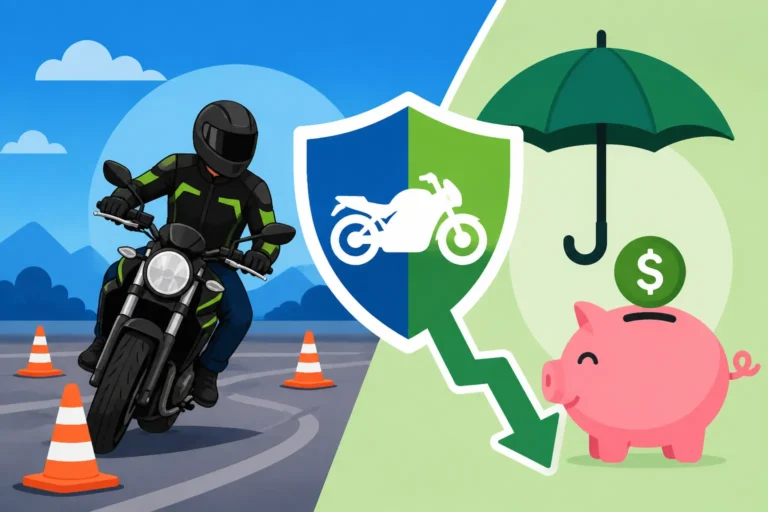
Taking a Motorcycle Safety Foundation (MSF) course or a state-approved equivalent is the single most effective thing an 18-year-old can do to lower their rate. Not only does it teach you life-saving skills, but most insurers offer a 5% to 10% discount just for completing the class. In some states, passing the course even waives the riding portion of the DMV test.
Beyond the immediate discount, a safety course tells the insurer that you are a "student of the craft." It signals maturity and a willingness to learn, which can help move you out of the "reckless teenager" stereotype in the eyes of the underwriter. It is one of the most common Motorcycle Insurance Discounts You're Missing.
Strategic Bike Selection
We touched on this earlier, but it cannot be overstated: the bike makes the premium. If you are 18, stay away from "R" designated bikes (like the GSX-R, YZF-R6, or CBR600RR). These are categorized as supersports, and the insurance rates are punishing. Instead, look at "naked" bikes or small-displacement cruisers.
For example, compare the Average Motorcycle Insurance Cost by Bike Type. A 400cc naked bike like a Kawasaki Z400 will likely be significantly cheaper to insure than its sportier sibling, the Ninja 400, simply because of how the insurance industry categorizes them. You get nearly the same performance with a much smaller insurance bill.
Comparing the Best Insurers for 18-Year-Olds
Not all insurance companies want your business. Some "preferred" carriers prefer older riders with 20 years of experience and will quote you an astronomical "go away" price. Others specialize in high-risk or young riders and offer much more competitive rates.
Specialist vs Big-Name Carriers
Mainstream companies like State Farm or Allstate can sometimes be great if you already have a car with them, but often, specialist companies like Dairyland or Markel are more competitive for 18-year-olds. These companies have different "risk appetites." While a big-name carrier might see you as a threat to their loss ratios, a specialist might see you as a long-term customer they can grow with.
It is always worth checking a Progressive Motorcycle Insurance Review alongside smaller, niche players. You might find that the specialist is willing to give you a break on the premium if you agree to a higher deductible or if you have a clean riding record.
Utilizing Comparison Tools
The biggest mistake you can make at 18 is taking the first quote you get. Because the price variance for young riders is so extreme, you need to see at least five or six different options. This is where The Zebra becomes your best friend. Instead of spending three hours on six different websites, you can get a side-by-side look at who actually wants to insure you.
Comparing quotes allows you to see which companies are charging you a "young rider surcharge" and which ones are giving you credit for things like your safety course or your good grades. Many insurers offer a "Good Student" discount for riders under 25 who maintain a B average or higher.
Managing Deductibles for Lower Premiums
If the monthly payment is still too high, look at your deductible. A deductible is the amount you pay out of pocket before the insurance kicks in. Most people start with a $500 deductible. If you raise that to $1,000, your annual premium could drop by 15% or more.
However, you have to be realistic. As an 18-year-old, do you have $1,000 sitting in a savings account? If not, a high deductible could leave you with a broken bike that you can't afford to fix even after the insurance payout. Weigh the Motorcycle Insurance Cost for Young Riders Under 25 against your actual liquid savings before making this jump.
Motorcycle Insurance Disclaimer
This guide is for informational purposes only and does not constitute legal or financial advice. Motorcycle insurance laws, requirements, and pricing variables change frequently and vary significantly by state and individual circumstances. Always consult with a licensed insurance agent and review your specific policy documents to understand your coverage limits, exclusions, and legal obligations. Riding a motorcycle involves inherent risks; ensure you are properly licensed and insured before operating any motor vehicle.