How Much Is Full Coverage Motorcycle Insurance?
You finally found the perfect bike, but the excitement quickly fades when you see the insurance quote for full coverage. It feels like you're being penalized for wanting to protect your investment, especially when that premium rival’s the monthly payment on the motorcycle itself. This guide breaks down exactly what you’ll pay for full coverage, why prices vary so wildly, and how to find a rate that doesn't break the bank.
Defining Full Coverage for a Motorcycle
The first thing any veteran rider will tell you is that "full coverage" isn't actually a legal term. If you walk into an agency in downtown Austin or a small office in rural Maine and ask for full coverage, the agent knows you want a package that protects your bike, not just the other person’s car. While state laws only require a bare minimum of liability, full coverage is the safety net that ensures you aren't out thousands of dollars if your bike is stolen from your apartment complex or if you slide out on a patch of gravel during a weekend ride.
Collision Coverage and the Role of Deductibles
Collision coverage is the workhorse of a full coverage policy. It pays for damage to your motorcycle when you are involved in an accident, regardless of who is at fault. Imagine you’re navigating a tight turn in the Blue Ridge Mountains and you lose traction, laying the bike down. Without collision, you are paying for those fairings, the handlebars, and the exhaust out of your own pocket.
The cost of this portion of your premium is heavily dictated by your deductible. This is the amount you agree to pay upfront before the insurance company kicks in a dime. If you choose a $500 deductible, your monthly premium will be higher, but a $1,000 deductible can significantly lower your annual cost. However, you have to be realistic about your finances. There is no point in having a $1,000 deductible if an accident would leave you unable to scrape that much cash together to get your bike back on the road.
Comprehensive Coverage for Theft and Vandalism
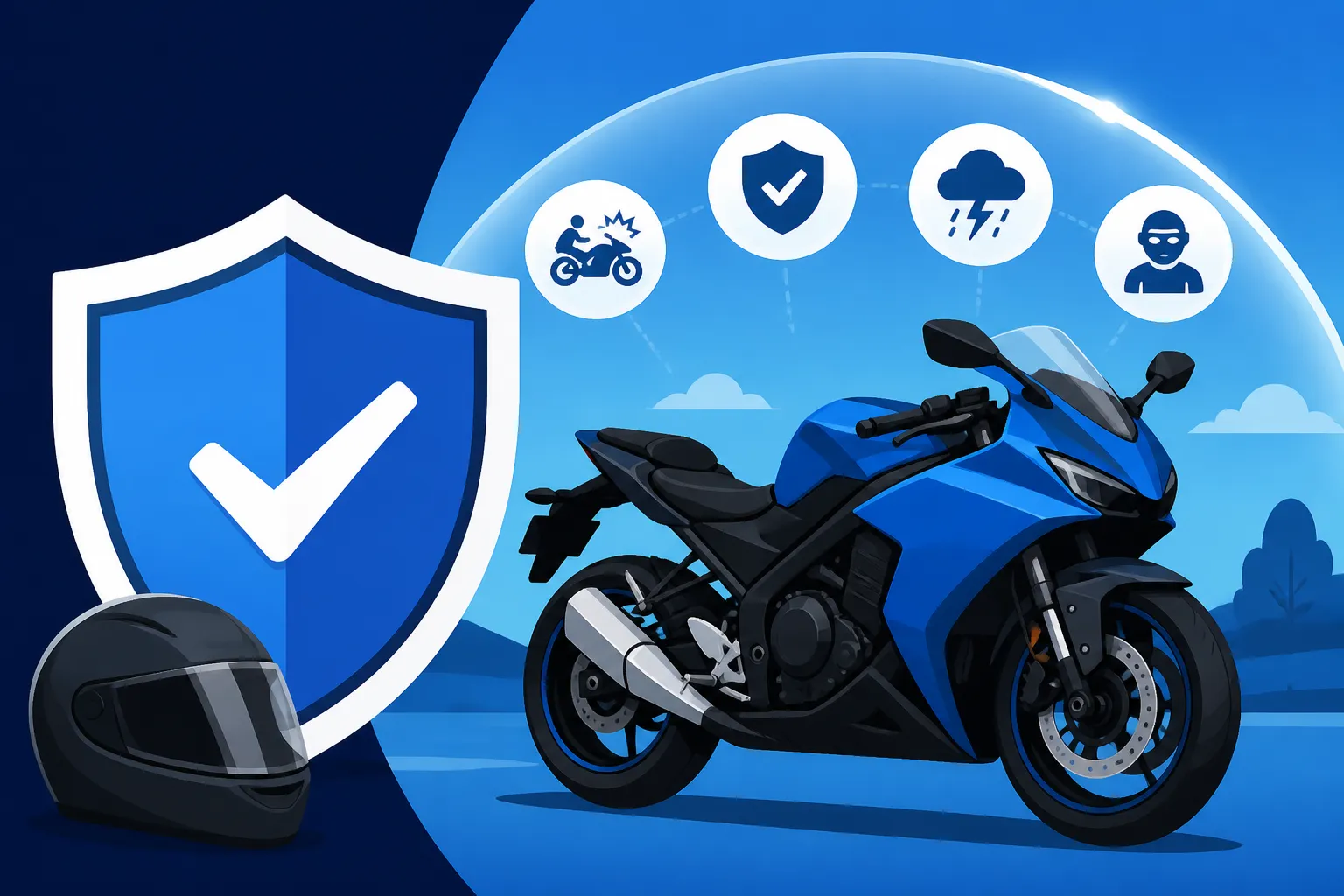
Comprehensive coverage handles almost everything that isn't a "collision." For many riders, especially those in urban areas like Los Angeles or Chicago, this is the most vital part of the policy. Motorcycle theft is a massive problem because two people with a van can disappear with your bike in under sixty seconds. Comprehensive coverage protects you against theft, fire, vandalism, and even "acts of God" like a tree limb falling on your bike during a summer storm.
When you're looking at How Much Is Full Coverage Motorcycle Insurance? it’s often the comprehensive portion that fluctuates the most based on your zip code. If you live in an area with high crime rates, your insurance company sees a much higher statistical likelihood that they will have to pay out a total loss claim. This is where the "vetting" of your storage situation comes in; telling your insurer that the bike is kept in a locked, monitored garage can sometimes shave a few dollars off this specific line item.
Uninsured and Underinsured Motorist Protection
While not always grouped into the basic definition of full coverage, most riders consider Uninsured Motorist (UM) and Underinsured Motorist (UIM) coverage to be essential components. The reality of the road is that many drivers carry only the absolute minimum liability, or worse, no insurance at all. If a driver hits you and they don't have enough coverage to pay for your medical bills or your bike's repairs, UM/UIM steps in to fill that gap.
This is especially critical for motorcyclists because our injuries tend to be much more severe than those of someone in a car. A simple "fender bender" for a sedan can mean a week in the hospital for a rider. Ensuring your full coverage policy includes robust UM/UIM limits is the difference between a controlled recovery and financial ruin.
Average Costs and Pricing Factors in 2026
Pricing a motorcycle policy is a complex game of variables. In 2026, the average cost for full coverage can range anywhere from $300 a year for an experienced rider on a small cruiser to over $3,000 for a teenager on a liter-class sport bike. It’s a wide spectrum because insurance companies are essentially trying to predict the future based on your history and the machine you choose to ride.
Age and Riding Experience Impact
In the eyes of an actuary, a 19-year-old on a motorcycle is a walking (or riding) liability. Statistics show that younger riders are more likely to take risks and less likely to have the muscle memory required to avoid a crisis. Consequently, Motorcycle Insurance Cost for Young Riders Under 25 remains some of the highest in the industry.
Experience matters just as much as chronological age. A 40-year-old who just got their endorsement yesterday might pay more than a 30-year-old who has been riding dirt bikes since they were ten and has had a street license for a decade. Insurers look for "years of licensed experience." If you’re returning to riding after a long break, you might find that your rates are higher until you can prove a few years of claim-free riding. Tools like The Zebra can help you see how these age brackets change your specific quotes across multiple carriers.
Regional Differences and Urban vs Rural Costs
Where you park your bike at night is one of the biggest factors in your premium. If you live in a rural part of Iowa, your chances of a collision with another vehicle are lower, and the likelihood of professional thieves scouting your driveway is nearly zero. However, if you're riding in Miami or Las Vegas, you are surrounded by traffic, distracted tourists, and a much higher rate of vehicle theft.
Regional weather also plays a role. In states where you can ride year-round, like Arizona or Florida, you are on the road more often, which statistically increases your exposure to risk. Conversely, riders in the North often see slightly lower annual rates because the bikes are tucked away for four to five months of the year. You can get a better sense of these geographic swings by checking the Average Motorcycle Insurance Cost by State to see where your home base falls on the national average.
The Bike Factor Displacement and Style
The insurance company doesn't just see a "motorcycle"; they see a risk profile based on the bike's displacement (CCs) and its intended use. A 1,600cc cruiser is heavy and built for stability, whereas a 600cc sport bike is light, twitchy, and built for speed. Paradoxically, the 600cc sport bike is often much more expensive to insure because of the "squid factor"—the high frequency of accidents associated with high-performance machines.
The cost to repair parts also factors in. A European bike like a BMW or Ducati often carries a higher full coverage premium than a Honda or Yamaha because the parts are more expensive and the specialized labor required for repairs costs the insurance company more in the event of a claim.
| Bike Category | Estimated Annual Full Coverage Cost | Primary Risk Factor |
|---|---|---|
| Beginner (250cc-500cc) | $300 – $600 | Low speed, affordable parts |
| Cruiser (800cc-1500cc) | $500 – $1,200 | Heavier weight, moderate repair costs |
| Touring / Baggers | $800 – $1,500 | High value, many accessories |
| Sport Bike (600cc+) | $1,200 – $3,500+ | High theft rate, high accident frequency |
| Dual Sport / Adventure | $400 – $900 | Durable but high tech |
Comparative Cost Breakdown by Motorcycle Category
To truly understand How Much Is Full Coverage Motorcycle Insurance? you have to look at how specific bike types are handled by the algorithms. The bike you choose dictates your baseline, and everything else—your credit score, your age, your location—adjusts that baseline up or down.
Sport Bikes and SuperSports: The Expensive End
If you have your heart set on a Yamaha R6 or a Kawasaki Ninja ZX-10R, prepare for some serious sticker shock. These bikes are frequently stolen, frequently crashed, and extremely expensive to fix when the plastic fairings get scratched. For a rider under 25, the cost of full coverage on a SuperSport can sometimes exceed the annual depreciation of the bike itself.
Insurers see these bikes as "high-performance" risks. Even a minor low-side in a parking lot can result in thousands of dollars in damage because the fairings are structural and the frames are sensitive. Because of this, How Much Is Full Coverage on a Sport Bike? is a question that often leads riders to reconsider their purchase or opt for a "naked" bike (like a Yamaha MT-07) which offers similar performance with much lower insurance premiums due to the lack of expensive plastic bodywork.
Cruisers and Touring Bikes: The Middle Ground
Cruisers like the Harley-Davidson Softail or the Indian Scout tend to be the "safe bet" for insurance companies. The people who buy these bikes are statistically older, more experienced, and less likely to be caught doing wheelies on the interstate. As a result, full coverage for a cruiser is often very reasonable, even for larger displacements.
Touring bikes, however, can get pricey for a different reason: value. A fully loaded Honda Gold Wing or a Harley Ultra Limited can cost as much as a luxury SUV. Full coverage on these bikes has to account for the massive replacement cost, as well as the thousands of dollars in chrome, luggage, and electronics. Many riders of these bikes find that using a comparison platform like The Zebra is the only way to find a carrier that specializes in high-value touring machines rather than treating them like standard street bikes.
Commuters and Beginner Bikes: The Budget Option
If your goal is to save money, the "small displacement" category is your best friend. Bikes like the Honda Rebel 500 or the Kawasaki Z400 are the darlings of insurance companies. They are easy to ride, cheap to repair, and generally aren't the primary targets for professional theft rings.
For many beginners, the Motorcycle Insurance Cost for a Beginner on one of these machines is surprisingly affordable, often under $50 a month for full coverage. This allows new riders to build up their "licensed years of experience" without being crushed by high premiums, eventually making it cheaper to insure a larger bike a few years down the road.
Strategies to Lower the Cost of Full Coverage
You aren't necessarily stuck with the first quote you receive. There are several proactive steps you can take to bring that full coverage number down to a manageable level. Insurance companies love "reduced risk," and if you can prove you are a lower risk than the average person in your demographic, they will often reward you with a discount.
Safety Courses and Endorsements
One of the easiest ways to get an immediate discount is to complete a recognized safety course, such as those offered by the Motorcycle Safety Foundation (MSF). Not only does this teach you the skills to stay alive, but most insurers will offer a 5% to 15% discount on your premium for three years after you complete the course.
Taking the time to answer Does a Motorcycle Safety Course Lower Insurance? with a "yes" on your application shows the insurer that you are serious about your craft. In some states, completing this course also allows you to bypass the riding portion of the DMV test, which gets your full endorsement on your license faster. Having that official "M" endorsement is a prerequisite for many of the best rates in the industry.
Bundling and Multi-Policy Strategies
If you already have a car insurance policy or a renters/homeowners policy, your first call should be to that carrier. Bundling is the most effective way to drop your rates across the board. Most major companies will give you a "multi-policy" discount that can be quite significant.
However, don't assume your auto insurer is the best for motorcycles. Some car insurance companies don't actually want to insure bikes, so they price their motorcycle policies high to discourage you. This is why it is essential to use a service like The Zebra to compare your bundled rate against standalone policies from specialty motorcycle insurers like Dairyland or Markel. Sometimes, two separate policies are actually cheaper than one bundled policy if the auto insurer isn't "bike-friendly."
Shopping Around and Using Comparison Tools
The insurance market is incredibly volatile. A company that was the cheapest for you last year might have changed their underwriting guidelines this year, leading to a surprise price hike. Veteran riders know that you should shop your rate at least once a year, or whenever you move or buy a new bike.
When you start looking for How to Get Cheap Motorcycle Insurance, don't just stick to the "Big Four" insurers. There are many regional players and specialty companies that offer better coverage for specific types of riders. Using a comparison tool allows you to see these options side-by-side. You might find that a smaller company offers better "accessory coverage" for your custom parts or a lower deductible for the same price you're currently paying.
Is Full Coverage Always the Right Choice?
As a veteran rider, I've seen many people struggle with the decision of whether to keep full coverage on an older bike. There is a tipping point where the cost of the insurance starts to outweigh the potential payout. If you are paying $800 a year to insure a bike that is only worth $2,000, it only takes a few years of premium payments to have effectively "bought" the bike again.
Assessing Your Bike’s Actual Cash Value
Most standard policies pay out "Actual Cash Value" (ACV) in the event of a total loss. This means the insurer takes the market value of your bike and subtracts depreciation. If you have a ten-year-old Suzuki Boulevard, the ACV might be shockingly low.
Before committing to a high full coverage premium, look up your bike's value on NADA or Kelly Blue Book. If the bike is worth less than $3,000 and you have a $1,000 deductible, your maximum payout in a total loss is only $2,000. In these cases, many riders choose to drop to "Liability + Comprehensive" (to protect against theft) but skip the "Collision" portion to save money.
Understanding Total Loss Scenarios
You also have to consider how easily a motorcycle is totaled. Unlike cars, where a dented door is a simple fix, a motorcycle can be "totaled" by a scratched frame or a bent fork. Insurance adjusters are notorious for totaling bikes because the labor costs to strip a bike down and verify frame integrity are often higher than the bike's value.
If you are riding a bike with high sentimental value or a rare vintage machine, you should look into "Agreed Value" coverage rather than standard full coverage. This ensures that if the worst happens, you get a check for the amount you and the insurer agreed the bike was worth, rather than a depreciated market value that leaves you unable to replace your ride.
Motorcycle Insurance Disclaimer
This guide is intended for informational purposes only and does not constitute legal or financial advice. Insurance laws and requirements vary significantly by state and are subject to change. Always consult with a licensed insurance professional or your state's Department of Motor Vehicles to ensure you are in compliance with local regulations and have the appropriate coverage for your specific situation. Rates and discounts mentioned are estimates based on general market trends and may not reflect your actual quotes.