Is Motorcycle Insurance Cheaper Than Car Insurance?
Staring at a monthly car insurance bill can feel like watching your hard-earned money vanish into a black hole, especially when you start wondering if a life on two wheels would be more kind to your bank account. Many people consider switching to a motorcycle to save on gas and insurance, but the reality is more nuanced than a simple yes or no. This guide breaks down the complex math, hidden risks, and surprising benefits to determine if motorcycle insurance is truly cheaper than car insurance for your specific lifestyle.
Comparing the Average Costs: Motorcycle vs. Auto
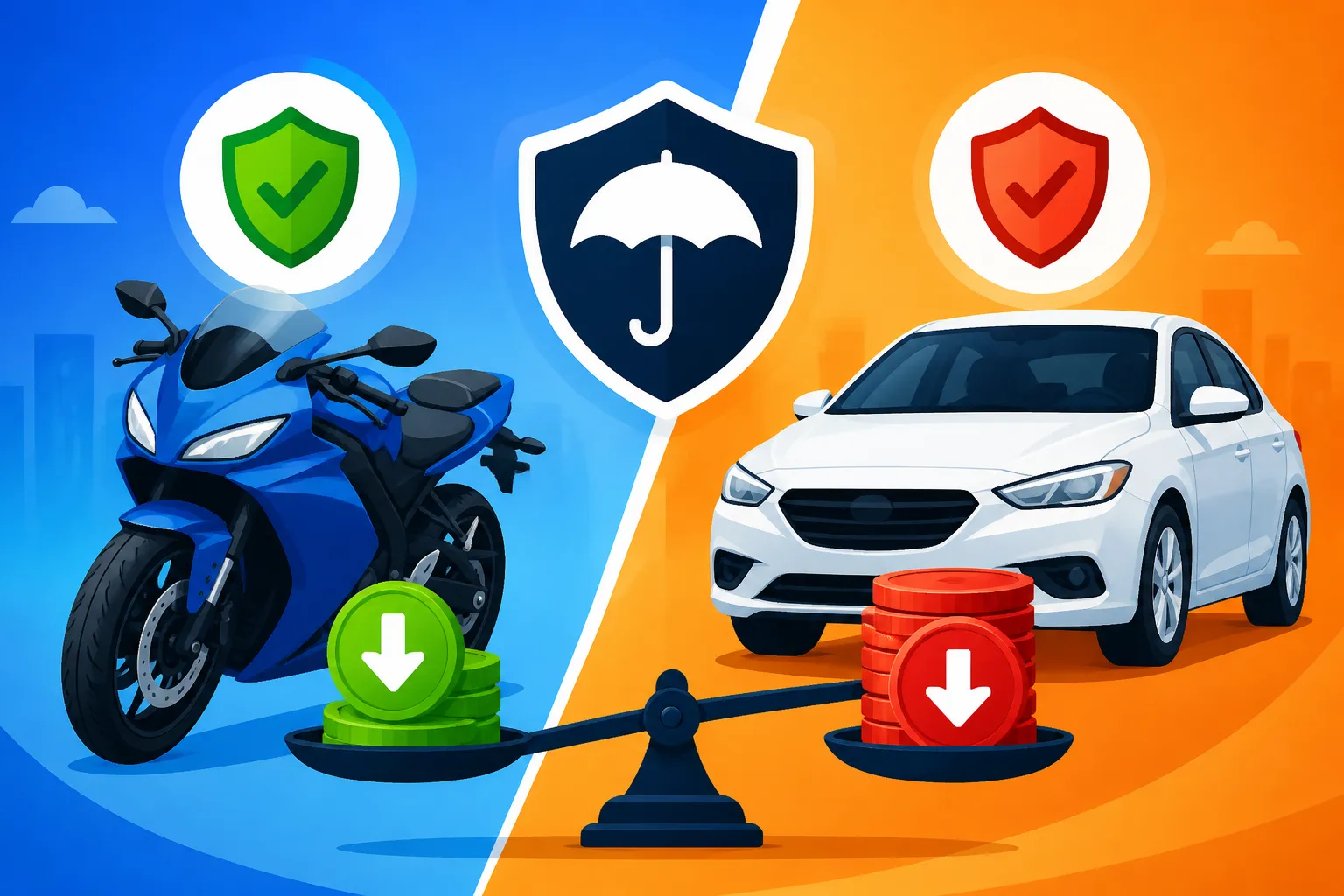
When you first look at the raw data, the answer seems obvious. On a national level, the average annual cost for motorcycle insurance tends to hover significantly lower than the average cost for a standard passenger vehicle. Most riders are looking at a yearly premium between $500 and $800, whereas car owners often find themselves shelling out $1,800 to $2,500 for a similar level of protection. However, these averages can be incredibly misleading if you don't account for the type of machine you are piloting or the state you call home.
The National Averages and Reality
The "average" price is a bit of a ghost because it combines the weekend cruiser on a 20-year-old Honda with the daily commuter on a brand-new Ducati. Generally, though, the baseline entry for a motorcycle policy is lower because the vehicle itself represents a smaller financial risk to the insurance company in terms of property damage. If you are comparing a standard sedan to a mid-sized cruiser, you will likely see a lower number on the motorcycle quote.
To get a true sense of the landscape, you should check out the How Much Is Motorcycle Insurance? 2026 Cost Guide to see how these averages have shifted recently. Insurance companies like those found on The Zebra often highlight that the primary reason for the lower baseline is the simple fact that a motorcycle cannot cause the same amount of structural damage to a building or another vehicle as a 4,000-pound SUV can.
Why the Gap Exists in Premium Pricing
The gap exists because insurance is a game of probability and severity. Car insurance premiums are high because cars are driven more often, in worse weather, and are involved in thousands of "fender benders" every day. These small claims add up. Motorcycles, on the other hand, are often viewed as secondary vehicles. They spend more time in garages and less time in heavy stop-and-go traffic where most minor accidents occur.
Furthermore, the liability risk for a motorcycle is weighted differently. While a biker is more likely to be injured, they are less likely to cause a multi-car pileup that results in millions of dollars of property damage. This lower "damage potential" keeps the liability portion of the premium relatively modest compared to a heavy truck or a luxury car.
Regional Price Fluctuations
Where you live arguably matters more than what you ride. In states like California or Florida, where riding is a year-round activity, premiums are naturally higher because the exposure to risk is constant. Conversely, in a state like Ohio or Maine, the riding season is short. Insurers in these regions often bake "off-season" discounts into the policy, knowing the bike will be parked for four months of the year.
If you are curious about how your local laws affect these rates, looking into the Average Motorcycle Insurance Cost by State will show you that a rider in Miami might actually pay more for their bike than a driver in rural Iowa pays for their car. Using a comparison tool like The Zebra can help you navigate these regional spikes by showing you multiple carriers at once.
Factors That Make Motorcycles Cheaper to Insure
There are several structural reasons why your motorcycle agent might give you a better deal than your auto agent. Most of these come down to the physical characteristics of the bike and how it is typically used by the average owner.
Lower Vehicle Replacement Value
Let’s be realistic: a very high-end motorcycle might cost $30,000, while a mid-range SUV easily clears $45,000. For most of us, a solid, reliable motorcycle like a Honda Rebel or a Kawasaki Vulcan can be picked up for under $10,000. If that bike is totaled, the insurance company is only on the hook for that $10,000.
Because the "Actual Cash Value" of motorcycles is generally lower than cars, the collision and comprehensive portions of the policy—which cover damage to your own vehicle—are significantly cheaper. You can explore more about how the machine itself changes your rate in our breakdown of Motorcycle Insurance Cost by Bike Type.
Reduced Damage Potential to Others
Think about the physics of a collision. If a 500-pound motorcycle hits a brick wall at 30 mph, the motorcycle is destroyed, but the wall probably stays standing. If a 5,000-pound electric vehicle hits that same wall at the same speed, the wall is coming down, and anyone inside the building is at risk.
Liability insurance covers the damage you do to others. Because motorcycles are less likely to cause massive property destruction, insurers can afford to charge less for high liability limits. This is a core component of Liability-Only vs Full Coverage Cost comparisons; the "base" layer of protection is simply less expensive for a rider.
Seasonal Usage and Lay-Up Policies
One of the best "hacks" in the motorcycle insurance world is the lay-up policy. Many car owners have to pay full price for insurance year-round because their car is their primary mode of transport. However, riders in northern climates often take advantage of Seasonal Lay-Up & Winter Storage Insurance.
This allows you to maintain comprehensive coverage (against theft or fire) while your bike is in the garage, but suspend the liability and collision portions while there is snow on the ground. This drastically reduces the annual cost, often making the yearly total a fraction of a car's annual premium.
Why Motorcycle Insurance Can Sometimes Cost More Than a Car
Despite the advantages mentioned above, there are scenarios where a motorcycle policy will actually make your car insurance look like a bargain. This usually happens when the "risk to human life" outweighs the "cost of the metal."
The High Risk of Injury and Medical Costs
This is the grim reality of riding. In a car, you have airbags, crumple zones, and a steel cage. On a bike, you have your gear and your wits. When a motorcycle accident happens, the medical bills are almost always higher than those resulting from a minor car crash.
If you live in a state where you are required to carry Personal Injury Protection or if you opt for high levels of Medical Payments coverage, your premium will skyrocket. The insurance company knows that a trip to the ER for a rider can easily cost $50,000 or more. This is why many wonder, What Is Medical Payments (MedPay) for Riders? and whether the cost is worth the protection.
Theft Rates and Comprehensive Claims
Motorcycles are tragically easy to steal. Two people with a van and a ramp can vanish with your pride and joy in under sixty seconds. Because of this, comprehensive coverage—which covers theft—can be quite pricey in urban areas like New York City, Chicago, or San Francisco.
If you live in a high-theft ZIP code and own a highly desirable bike, your comprehensive premium might actually be higher than it would be for a mid-sized sedan with a modern anti-theft system. Understanding how a Motorcycle Theft Claim: How It Works can help you decide if you need to invest more in physical security to lower those rates.
Performance and Sport Bike Penalties
If you are 22 years old and you want to insure a 1000cc "liter bike," prepare for sticker shock. The insurance industry views high-performance sport bikes as high-speed risks. The stats show that these bikes are involved in more high-speed accidents and are stolen more frequently than any other category.
In many cases, insuring a sport bike can cost three to four times more than insuring a cruiser with the same engine displacement. For some young riders, the Sport Bike Insurance Cost (Why So High) is so prohibitive that it actually costs more to insure the bike for a year than it did to buy the bike itself.
Understanding Coverage Differences and Their Price Tags
To truly compare the two, you have to look at what you’re actually buying. A "full coverage" car policy and a "full coverage" motorcycle policy aren't always apples to apples.
Liability Limits and Minimum Requirements
Every state has a minimum amount of insurance you must carry to be legal. These are often represented by three numbers, like 25/50/25. This covers bodily injury per person, bodily injury per accident, and property damage. You can find a deeper explanation of these in our guide on Minimum Liability Insurance Explained (The Three Numbers).
While the requirements are often the same for both cars and bikes, the "risk profile" of the rider means that even at the same limit, the bike might be cheaper—until you add a passenger. Adding passenger liability can sometimes close the price gap between the two vehicle types.
Full Coverage vs. Liability-Only
For an older car that's paid off, many people drop down to liability-only to save money. Riders do the same, but the stakes are different. If you drop collision on a bike and have a minor tip-over, you're looking at hundreds, if not thousands, of dollars in plastic fairing damage out of pocket.
The decision between the two is a major factor in the Liability-Only vs Full Coverage Cost debate. Many riders find that "full coverage" on a bike is still cheaper than "liability-only" on a luxury car, but it’s a tight race depending on the bike's age.
Specialized Add-ons for Riders
Motorcycle policies often include or offer things car policies don't. For example, Accessories & Custom Parts Coverage Explained is vital for riders who have added $5,000 worth of chrome or aftermarket exhaust systems to their bikes.
Standard car insurance usually covers the car "as it left the factory." Motorcycle insurance is much more flexible, allowing you to insure your helmet, your leathers, and even your custom paint job. These add-ons provide better protection but do add to the monthly cost, narrowing the gap between bike and car premiums.
| Feature | Typical Car Insurance | Typical Motorcycle Insurance |
|---|---|---|
| Average Annual Cost | $1,500 – $2,500 | $500 – $900 |
| Replacement Value | High ($20k – $60k+) | Low to Mid ($5k – $25k) |
| Medical Risk | Lower (Safety features) | Much Higher (Exposure) |
| Theft Risk | Moderate | High (Easily moved) |
| Seasonal Options | Rarely available | Common (Lay-up policies) |
| Liability Impact | High potential for property damage | Lower potential for property damage |
Demographics and How They Impact Your Premium
Your personal profile often dictates the price more than the machine itself. An insurance company isn't just insuring a bike; they are insuring you.
The Age Factor: Young Riders vs. Mature Drivers
If you are under 25, the insurance world views you as a walking (or riding) risk. For young people, motorcycle insurance can be shockingly expensive because of the lack of experience. However, once you hit 30 or 40, those rates drop off a cliff—much faster than they do for car insurance.
Mature riders with a clean record are the "gold standard" for insurers. You can see how the numbers shift in our guide on Motorcycle Insurance Cost by Age. In your 40s, you might find that insuring a beautiful touring bike costs less than a fancy dinner out once a month.
Driving Record and Incident History
One speeding ticket in a car might raise your auto insurance by 10%. That same ticket can sometimes raise your motorcycle insurance by 20% or more. Why? Because insurers believe that if you are willing to speed in a car, you are likely taking even greater risks on a bike where the consequences are more severe.
If you have a history of accidents, you might be required to file an SR-22. This is a common headache for high-risk drivers and riders alike. Understanding How Much SR-22 Increases Motorcycle Insurance is crucial if you've had a few run-ins with the law.
Location and Urban vs. Rural Risks
Living in a rural area is a massive win for motorcycle insurance. Fewer cars to hit, lower theft rates, and less congestion mean your premiums will be rock bottom. In contrast, an urban rider faces a gauntlet of distracted drivers and the constant threat of their bike being lifted into a van.
The ZIP code factor is huge. Using a site like The Zebra to compare rates between your work address and home address can sometimes reveal surprising differences. For more on this, check out Does Where You Live Affect Motorcycle Insurance? to see if moving ten miles down the road could save you $200 a year.
How to Maximize Savings on Your Motorcycle Policy
If you’ve decided that a motorcycle is the right move, there are several ways to ensure your insurance stays in the "cheaper than a car" category.
Bundling and Multi-Policy Discounts
The easiest way to save is to keep all your eggs in one basket. Most major carriers offer a significant discount if you insure your car, your home, and your motorcycle with them. This "multi-policy" discount can often take 15% to 25% off your total bill.
Before you sign up for a standalone policy, ask yourself, Bundling Motorcycle and Auto Insurance: Worth It? Usually, the answer is a resounding yes. It also makes managing your bills much simpler since you only have one login and one renewal date to worry about.
Safety Courses and Endorsements
In the eyes of an insurance company, a rider who has taken a safety course is a much better bet than one who hasn't. Completing a Motorcycle Safety Foundation (MSF) course not only makes you a better rider, but it can also trigger a permanent discount on your premium.
Many states actually require these courses for younger riders to get their license, but even if you're a veteran, a refresher course can pay for itself in insurance savings within a year or two. See how much you can save in our article on Does a Motorcycle Safety Course Lower Insurance?.
Shopping Around and Using Comparison Tools
Loyalty rarely pays in the insurance world. Rates change every year based on the company's "loss ratios," which have nothing to do with you personally. The company that was the cheapest last year might be the most expensive this year.
This is where The Zebra comes in handy. By plugging in your details once, you can see how dozens of companies view your risk profile. It’s the single most effective way to answer the How to Get Cheap Motorcycle Insurance question for your specific situation.
Real-World Scenarios: Car vs. Bike Cost Breakdown
Let’s look at how this plays out in the real world with three common types of people.
The Daily Commuter Scenario
Meet Sarah. She lives in Austin, Texas, and commutes 15 miles to work. Her 2022 Toyota RAV4 costs her $160 a month to insure. She decides to buy a Honda NC750X (a very sensible commuter bike) to save on gas.
Because she’s 35 with a clean record, her motorcycle insurance quote comes back at $45 a month for full coverage. Even with the cost of gear and maintenance, she is saving over $1,000 a year on insurance alone by using the bike for most of her commuting.
The Weekend Warrior Scenario
Then there’s Mark in Chicago. He has a luxury SUV for his daily needs, which costs $220 a month to insure. He buys a Harley-Davidson Street Glide for weekend trips. Since he only rides it 2,000 miles a year and stores it in a secure garage, his insurance is incredibly low.
By using Seasonal Lay-Up & Winter Storage Insurance, Mark only pays about $400 a year for the Harley. For him, the bike is significantly cheaper to insure than the car, primarily because of the limited mileage and seasonal use.
The Young Driver Scenario
Finally, we have 19-year-old Jake in Los Angeles. Jake wants a Kawasaki Ninja 636. His 2015 Honda Civic costs $250 a month to insure (being a teen driver is tough). When he gets a quote for the Ninja, it comes back at $350 a month.
Wait—the bike is more expensive? Yes. Because Jake is young, in a high-traffic city, and wants a high-performance sport bike, the insurance company sees a massive risk of a high-speed accident. In Jake's case, the motorcycle is the more expensive option. He might want to look into How to Get Cheap Motorcycle Insurance for Young Riders before making the leap.
Final Thoughts on Choosing Between Two and Four Wheels
So, is motorcycle insurance cheaper than car insurance? For the vast majority of people—especially those over 25 who ride cruisers, standards, or touring bikes—the answer is a clear yes. You can often protect a motorcycle for a third of the cost of a car.
However, if you are chasing high speeds on a sport bike or you are a younger rider in a crowded city, you might find that the "motorcycle savings" are a myth. The key is to be realistic about your bike choice and your riding habits. Using tools like The Zebra and researching specific costs for your age and location will give you the clarity you need to make an informed decision.
Motorcycle Insurance Disclaimer
This guide is for informational purposes only and does not constitute legal or financial advice. Insurance rates, coverage options, and state requirements are subject to change and vary significantly by provider and location. Always consult with a licensed insurance agent or professional before purchasing or changing your insurance policy to ensure you meet all legal requirements and have adequate protection for your specific needs.