What Documents Do You Need to Insure a Motorcycle?
Getting ready to ride should be the best part of your week, but standing in line at a local DMV or getting stuck halfway through an online application because you’re missing a random serial number is a total buzzkill. This guide walks you through every single piece of paper and digital record you need to secure coverage quickly so you can get back to what actually matters: the road.
Personal Identification and Rider History
The very first hurdle in the insurance process is proving who you are and, more importantly, how you handle a bike. Insurance companies aren't just looking at your name; they are looking at the risk you represent on two wheels. I have seen so many riders get frustrated when their premium jumps up mid-application because they forgot about a minor speeding ticket from three years ago in a different state.
Government Issued ID and Driver License
You obviously need a valid form of identification, but for a motorcycle policy, your standard driver's license needs to be specific. Most states require you to have either a Class M endorsement or a dedicated motorcycle license. If you are sitting in a state like California or New York, the agents will verify this immediately against the state database.
If you're currently in the process of getting licensed, you might wonder if Motorcycle License, Endorsement & Insurance are all required simultaneously. Generally, you need the license first, or at the very least, a learner's permit. When you use a platform like The Zebra to compare rates, they will ask for your license number upfront to pull your specific driving history. This allows them to give you an accurate price rather than a generic estimate that changes later.
Motorcycle Endorsements and Safety Course Certificates
Do not leave your MSF (Motorcycle Safety Foundation) certificate in a drawer somewhere. This piece of paper is essentially a discount coupon. Most insurers view riders who have completed a certified safety course as lower risk. In states like Texas or Florida, completing a course can sometimes even waive parts of the state’s riding test, but for insurance, it’s all about the premium reduction.
Make sure the certificate is recent. Some companies only honor the discount if the course was taken within the last three years. If you're a new rider, having this document ready can significantly offset the higher rates typically seen for beginners. When searching for coverage, you’ll find that Do You Need a Motorcycle Endorsement to Get Insurance? is a common question, and while some companies allow a grace period, having the endorsement and the course certificate together is the gold standard.
Driving Record and History
While you don't necessarily need a physical copy of your driving record (the insurer will pull it electronically), you do need to know what's on it. You should have a list of any accidents, claims, or moving violations from the last three to five years. If you’ve had a lapse in coverage, you should be prepared to explain why.
If your record is a bit "colorful," you might be required to file specific financial responsibility forms. For example, if you've had a DUI or multiple major violations, you might be looking for SR-22 for Motorcycles: When It's Required. Having your case numbers or previous policy cancellation dates handy will make the conversation with an agent much smoother. Using a comparison tool like The Zebra can help you see which companies are more "friendly" toward riders with a few marks on their record.
Detailed Motorcycle Information
Once you’ve proven who you are, the insurer needs to know exactly what they are covering. A "blue Honda" isn't enough information for an underwriter. They need the specifics that define the bike's value, its performance capabilities, and its likelihood of being stolen.
The Vehicle Identification Number
The VIN is the most critical piece of data. It is a 17-digit code that tells the insurer everything from the factory it was built in to the specific engine type it carries. You can usually find this stamped on the steering neck of the frame or on a sticker located on the frame rails.
The insurance company uses the VIN to check the National Insurance Crime Bureau (NICB) database to ensure the bike hasn't been reported stolen or totaled previously. This is especially important if you are buying a used bike. If you are trying to figure out Motorcycle Registration Without Insurance: Possible?, the answer is almost always no, and the VIN is the bridge between those two requirements. Always double-check that the VIN on your physical bike matches the VIN on the title before you even call for a quote.
Make Model Year and Engine Size
You need the exact specs of your machine. A 600cc sport bike and a 600cc cruiser carry vastly different risk profiles. Insurance companies look at the "cc" (cubic centimeters) of the engine to determine power-to-weight ratios. I’ve talked to riders who were shocked that a 1000cc bike cost triple the price of a 750cc bike, but that’s the reality of the math.
If you are looking at Does Engine Size (CC) Affect Insurance Cost?, you’ll see that the specific sub-model matters too. An "R" version of a bike often implies higher performance and higher repair costs. Have your registration or the bill of sale in front of you so you don't accidentally misidentify a base model for a premium one, or vice versa, which could lead to a claim being denied later.
Modifications and Custom Parts
This is where most people skip a step and regret it later. If you have added $3,000 worth of Chrome, a custom Vance & Hines exhaust, or high-end Ohlins suspension, your standard policy might not cover it. You need a detailed list of these modifications and, ideally, the receipts for them.
Standard policies usually include a small amount of "Accessory Coverage" (often $1,000), but if you’ve gone all out, you’ll need to declare the value. This relates directly to Does Motorcycle Insurance Cover Aftermarket Exhaust/Mods?. If you don't have the documentation to prove the value of these parts, the insurance company will only pay out the "Actual Cash Value" of a stock bike if it gets totaled. Keep a digital folder of your receipts and photos of the bike from all angles.
Current Insurance and Financial Information
The final piece of the puzzle involves your financial relationship with the bike. Whether you own it outright or are still paying it off changes the type of coverage you are legally required to carry.
Previous Policy Details and Lapse History
If you are switching companies to save money, have your current "Declarations Page" ready. This page lists your current coverage limits (like 25/50/25), your deductibles, and your premium. It allows a new insurer to give you an apples-to-apples comparison.
Also, be aware that insurers hate gaps in coverage. Even if you weren't riding because it was winter, a lapse in insurance can make you look like a high-risk customer. If you’ve used a "lay-up" policy, have that documentation ready. If you are moving, you might need to look into Riding Across State Lines: Insurance & Helmet Rules to see how your requirements change from one jurisdiction to another.
Loan or Lease Information
If your bike is financed through a bank like Eaglemark or a local credit union, you must have their name and address handy. They are the "Lienholder." The bank will require you to carry "Full Coverage" (Comprehensive and Collision), and they will often specify the maximum deductible you are allowed to have—usually $500 or $1,000.
Missing this info will delay your policy issuance. The insurer needs to list the lienholder on the policy so the bank gets paid first in the event of a total loss. This is a big part of Motorcycle Insurance Requirements for Financed Bikes. If you don't provide this, your lender might "force-place" insurance on you, which is incredibly expensive and offers you almost zero protection.
Title and Registration Documents
Lastly, you need to prove ownership. If you just bought the bike, a Bill of Sale is usually sufficient for a 14-day "grace period" with many insurers, but you’ll eventually need the title or the registration card. The address on your registration should match the address where the bike is "garaged" (stored). If you live in a high-theft area of a city but tell the insurer the bike is kept at your parents’ house in the suburbs, that is considered insurance fraud, and they will deny your claims.
| Document Category | Specific Item Needed | Why It Is Mandatory |
|---|---|---|
| Identity | Driver's License w/ M Endorsement | Proves legal right to operate the vehicle. |
| The Bike | 17-Digit VIN | Identifies the specific machine and theft history. |
| The Bike | Odometer Reading | Used to determine annual mileage and wear. |
| Ownership | Title or Bill of Sale | Proves you have an insurable interest in the bike. |
| Financials | Lienholder Name/Address | Required for financed bikes to protect the lender. |
| Discounts | MSF Course Certificate | Direct way to lower your monthly premium. |
| History | Previous Policy Dec Page | Ensures continuity of coverage and rate matching. |
Practical Tips for a Smooth Experience
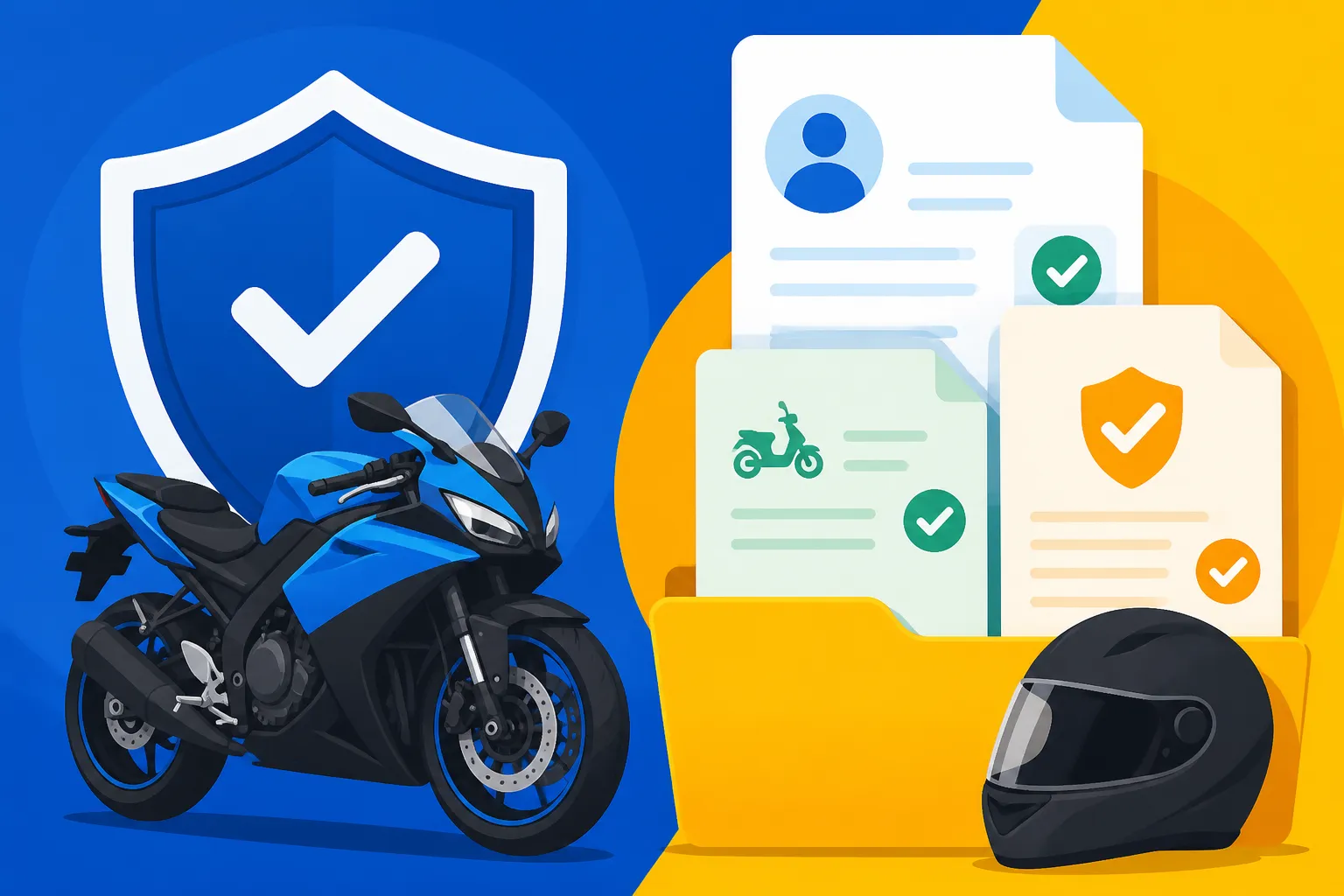
To make this process as painless as possible, I always recommend creating a "Digital Rider Folder." Scan your license, your title, and your MSF certificate, and take a clear photo of your VIN. Keep these in a secure cloud folder. This way, whether you are at home or on a mobile device using a site like The Zebra to shop around, you have everything at your fingertips.
When you finally get your policy, make sure you know how to show Proof of Insurance: Digital vs Paper for Riders. Most states now accept digital ID cards on your phone, but it’s always smart to keep a paper copy tucked into your riding jacket or a waterproof compartment on the bike. If you get pulled over in a rural area with no cell service, that paper copy is a lifesaver.
If you are still in the shopping phase, don't just grab the first quote you see. The documents you've gathered will allow you to get very specific. Ask the agent about Minimum Liability Insurance Explained (The Three Numbers) to ensure you aren't just buying the bare legal minimum if you actually need more protection for your assets.
Lastly, if you're buying a bike today, remember that you usually need insurance before you can even ride it off the lot. Having your documents ready beforehand means you can call from the dealership, add the bike to a policy, and ride home legally. No one wants to spend their first day of ownership dealing with Penalties for Riding Without Insurance or a towed bike.
Disclaimer
This guide is for informational purposes only and does not constitute legal or professional insurance advice. Insurance requirements and state laws are subject to change. Always consult with a licensed insurance agent or your state's Department of Motor Vehicles to verify specific documentation requirements for your situation.