Motorcycle License, Endorsement & Insurance
One of the biggest headaches for any aspiring or seasoned rider is the tangled web of rules surrounding your motorcycle license, the all-important endorsement, and, of course, the ever-present need for insurance. It can feel like you need a law degree just to understand what paperwork to carry and what courses to take before you can even hit the open road. This guide is here to untangle that knot, walking you through everything you need to know to get licensed, endorsed, and properly insured, no matter where your two-wheeled adventures take you.
Understanding the Basics: License vs. Endorsement
Before we even think about turning a key, let's clear up some common confusion. Many new riders, and even some experienced ones, get hung up on the difference between a "motorcycle license" and a "motorcycle endorsement." While the terms are often used interchangeably in casual conversation, legally, they signify distinct things that are crucial to understand.
The Motorcycle License: More Than Just a Permit
When you talk about a "motorcycle license," what most states actually refer to is a motorcycle endorsement added to your existing driver's license. There are very few states that issue a standalone "motorcycle-only" license if you don't already possess a standard automobile driver's license. Typically, your base driver's license (Class C in most states) proves you've passed the general knowledge and road tests for operating a car. It demonstrates your understanding of basic traffic laws, road signs, and safe driving principles that apply to all vehicles. Without this foundational license, getting permission to operate a motorcycle becomes a significantly more complex, if not impossible, endeavor in most jurisdictions. Think of it as your entry ticket to the road system.
The Endorsement: Your Green Light to Ride
The motorcycle endorsement, often denoted as an "M" or "M1" class on your driver's license, is the specific authorization that grants you the legal right to operate a motorcycle on public roads. It's the state's way of saying, "Okay, you know how to drive a car, but now you've proven you also have the specific skills and knowledge required to safely operate a motorcycle." This isn't just a formality; it means you've typically passed a written knowledge test specific to motorcycles (covering things like specific hazards, maneuvering, and passenger rules) and, crucially, a practical riding skills test. This riding test evaluates your ability to handle a motorcycle in various scenarios, from low-speed maneuvers like weaving cones and making U-turns to demonstrating emergency braking and hazard avoidance.
Different Classes and Restrictions
Just like with cars, motorcycles can have different classifications, and your endorsement might come with certain restrictions, especially if you're a new rider or tested on a smaller bike. For instance, some states might have an M1 endorsement for all motorcycles and an M2 for mopeds or motorized bicycles. If you take your riding test on a scooter or a motorcycle with an engine displacement below a certain cubic centimeter (cc) threshold, your endorsement might restrict you to only riding similar smaller-displacement bikes. This is pretty common and designed to ensure riders aren't jumping onto a powerful sportbike after only proving they can handle a small cruiser. Always double-check your state's specific classifications and any restrictions noted on your license to ensure you're riding legally and within your approved capabilities.
Navigating State-Specific License and Endorsement Requirements
It would be too easy if every state had the same rules, wouldn't it? Unfortunately, when it comes to getting your motorcycle license and endorsement, each state has its own specific set of hoops you need to jump through. What works in California might not fly in Texas, and vice versa. This patchwork of regulations is precisely why so many riders find themselves scratching their heads, wondering if they're truly compliant.
General Requirements Across the Board
Despite the differences, there are some common threads you'll find woven through most state requirements. Generally, you'll need to be at least 16 years old, though some states might require you to be 18 to obtain a full, unrestricted motorcycle endorsement. You'll almost always need a valid automobile driver's license as a prerequisite. Beyond that, the typical process involves passing a written knowledge test, which focuses on motorcycle-specific traffic laws, safe riding practices, and hazard perception. Many states will then issue a temporary learner's permit, allowing you to practice riding under certain restrictions (like no passengers, no nighttime riding, or staying off major highways). The final hurdle is usually a practical riding skills test, where you'll demonstrate your ability to safely operate a motorcycle in a controlled environment. This test assesses maneuvers like turning, stopping, shifting, and obstacle avoidance.
Divergent State Rules: A Deep Dive
Here's where things get interesting, and a little frustrating. Take, for example, states like Florida and California. In Florida, you must complete a Basic RiderCourse (BRC) from an authorized Motorcycle Safety Foundation (MSF) provider to get your motorcycle endorsement, and passing this course waives the riding skills test at the DMV. It’s a pretty streamlined process if you take the course. However, if you're in California, while an MSF course can waive the riding test, it's not strictly mandatory for adults over 21; you still have the option to take the written and riding tests at the DMV directly.
Then you have states like Michigan, which operates under a unique no-fault insurance system, and their motorcycle licensing process might have different nuances. For a detailed breakdown of how states handle these requirements, it's always best to consult your local Department of Motor Vehicles (DMV) or equivalent agency. Knowing the ins and outs of your specific state's rules is absolutely critical for a smooth journey to getting your M-endorsement. For a deeper look at the varying requirements, check out our guide on Motorcycle License, Endorsement & Insurance.
Motorcycle Safety Courses: The Fast Track
One of the best ways to navigate these requirements, and honestly, to become a better rider, is by taking a motorcycle safety course. Programs like the Motorcycle Safety Foundation (MSF) Basic RiderCourse are widely recognized and often endorsed by state DMVs. Not only do these courses teach you fundamental riding skills, hazard perception, and emergency maneuvers in a safe, controlled environment, but completing one can often fast-track your endorsement process. Many states, including popular riding destinations like Florida and Maryland, will waive the dreaded DMV riding skills test if you present a certificate of completion from an approved course.
Beyond the convenience, these courses also often lead to significant discounts on your motorcycle insurance premiums. Insurance companies recognize that trained riders are safer riders, and they're usually willing to reward that proactive approach with lower rates. So, it's a win-win: you become a more confident and skilled rider, you simplify the licensing process, and you save some cash on insurance.
The Critical Link: Motorcycle Insurance and Your License
Alright, you've got your shiny new endorsement, or you're well on your way. Now, let's talk about the piece of the puzzle that often causes the most anxiety: motorcycle insurance. It's not just a legal requirement in most places; it's your financial safety net, protecting you from the potentially devastating costs of an accident. And yes, your license and endorsement play a huge role in how this all works.
Is a License Required to Get Insurance?
This is a question that pops up a lot, and the answer, generally, is a resounding "yes!" Most reputable insurance providers will require you to hold a valid motorcycle endorsement (or at least a valid learner's permit, with stipulations) before they'll issue you a policy. Think about it from their perspective: they're assessing risk. Someone who hasn't proven their ability to legally operate a motorcycle presents a much higher, unquantifiable risk than someone who has passed the state's required tests.
If you're still on a learner's permit, some insurers like Progressive or Dairyland might offer coverage, but often with higher premiums and specific limitations. For instance, the policy might only cover you if you're riding under the supervision of a fully endorsed rider, or it might not cover passengers. It's really about proving you're taking the necessary steps to be a responsible and legal rider. Without some form of official authorization to ride, getting insurance is nearly impossible, and riding without it can lead to severe penalties. This is why understanding Do You Need a Motorcycle Endorsement to Get Insurance? is so important.
How Your License Type Affects Your Premiums
Believe it or not, the type of license or endorsement you hold can directly impact what you pay for motorcycle insurance. Here’s how:
- Learner's Permit: As mentioned, if you're on a permit, your rates will likely be higher. Insurers see permit holders as having less experience and therefore posing a greater risk. The lack of a full endorsement means you haven't yet proven your full riding competency.
- Full Endorsement: Once you have that full "M" endorsement, your rates will typically decrease compared to a permit. You've demonstrated competence, and that reduces your risk profile in the eyes of the insurer.
- Experience Level: Beyond just having the endorsement, the length of time you've held it matters. New riders, even with a full endorsement, often face higher rates for the first few years. Insurance companies correlate riding experience with lower accident rates. Someone who has held their motorcycle endorsement for 10 years and has a clean record is generally seen as a much lower risk than a rider who just got their endorsement last month.
- Driving Record: This applies to your overall driving record, not just your motorcycle record. Any speeding tickets, accidents (even in a car), or DUIs will significantly increase your motorcycle insurance premiums, regardless of how clean your motorcycle-specific record is. An SR-22 filing for motorcycles, for instance, can drastically hike up your costs.
Penalties for Riding Without the Right Credentials
This is where the rubber meets the road, quite literally. Riding without a valid motorcycle endorsement or without proper insurance is a recipe for serious trouble. The consequences vary by state but can range from hefty fines to impoundment of your bike, suspension of your driver's license, and even jail time.
Imagine this scenario: you're cruising down a scenic highway, feeling the wind in your hair, when a routine traffic stop turns into a nightmare because you forgot to get your M-endorsement, or worse, you let your insurance lapse. You could be facing tickets for driving without an endorsement, riding without insurance, and possibly other violations. The bike could be towed, leaving you stranded and with an expensive impound fee. If you cause an accident while uninsured, you're personally liable for all damages and injuries, which can easily climb into the hundreds of thousands of dollars, completely bankrupting you.
Even in states with financial responsibility laws that allow for alternatives to traditional insurance, the burden of proof and the potential costs if something goes wrong are immense. Understanding the Penalties for Riding Without Insurance is crucial to avoid these situations. Always ensure you have your valid endorsement and up-to-date proof of insurance with you, whether in paper or digital format, whenever you ride.
Types of Motorcycle Insurance Coverage Explained
Navigating the world of motorcycle insurance can feel like learning a whole new language. Between liability, comprehensive, collision, and a host of other terms, it's easy to get lost. But understanding these coverage types isn't just about fulfilling legal requirements; it's about making sure you're adequately protected in case of an unforeseen event.
Mandatory Minimum Liability Coverage
At its core, almost every state requires some form of liability insurance for motorcycles. This is the absolute bare minimum you need to ride legally in most places. Liability coverage is designed to protect other people and their property if you are at fault in an accident. It typically comes in two parts:
- Bodily Injury Liability: This covers medical expenses, lost wages, and pain and suffering for anyone you injure in an accident. States usually express this with two numbers, like $25,000/$50,000. The first number ($25,000) is the maximum your insurance will pay for one person's injuries, and the second ($50,000) is the maximum it will pay for all injuries in a single accident.
- Property Damage Liability: This covers damage to other people's property (like their car, fence, or house) if you're responsible for an accident. This is usually the third number in the sequence, such as $25,000.
While satisfying the legal minimums might seem like a way to save money, it's important to realize that these minimums are often woefully inadequate in the event of a serious accident. Medical bills can skyrocket quickly, and if your coverage runs out, you're on the hook for the rest. Many seasoned riders will tell you that increasing your liability limits beyond the state minimum is one of the smartest investments you can make. You can learn more about this in our guide on Minimum Liability Insurance Explained The Three Numbers.
Beyond the Basics: Comprehensive and Collision
For true peace of mind and protection for your own motorcycle, you'll want to look beyond just liability. This is where comprehensive and collision coverage come into play, often referred to as "full coverage" when combined.
- Collision Coverage: This pays for damages to your motorcycle if it collides with another vehicle or object, regardless of who is at fault. So, if you hit a car, a tree, or even lay your bike down on a gravel road, collision coverage will help pay for the repairs (after your deductible). If your bike is totaled, this coverage will pay out its actual cash value, or potentially a replacement value depending on your policy.
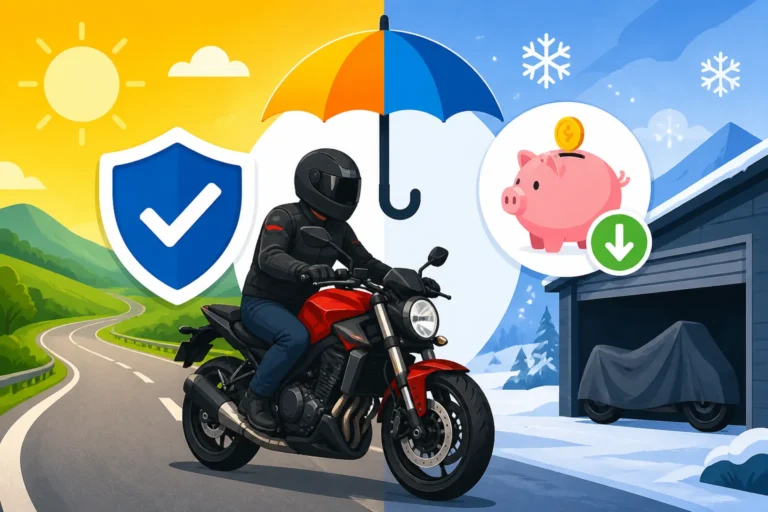
- Comprehensive Coverage: This is your "non-collision" damage protector. It covers incidents that are typically out of your control. Think theft, vandalism, fire, natural disasters (like hail or floods), or hitting an animal. If your bike is stolen from your garage or gets damaged by a falling tree branch, comprehensive coverage is what steps in. Many riders opt for comprehensive-only coverage during the winter months when their bike is stored, as it protects against these static risks without the higher cost of collision. To understand more, check out What Is Comprehensive Motorcycle Insurance?.
These two coverages often come with a deductible, which is the amount you agree to pay out of pocket before your insurance kicks in. A higher deductible usually means a lower premium, and vice-versa.
Essential Add-Ons for Riders
Beyond the core coverages, many insurance companies offer a suite of additional protections specifically tailored for motorcycle riders. These can make a huge difference in an emergency or when facing unexpected costs.
- Uninsured/Underinsured Motorist (UM/UIM) Coverage: This is incredibly important given the number of uninsured drivers on the road. If an uninsured or underinsured driver hits you and causes injury or damage, UM/UIM steps in to cover your medical bills, lost wages, and potentially damage to your bike, up to your policy limits. Without it, you could be left footing those bills yourself. This is a must-have for any rider. We delve deeper into this in Uninsured & Underinsured Motorist Coverage UM/UIM.
- Medical Payments (MedPay) or Personal Injury Protection (PIP): These cover medical expenses for you and your passengers, regardless of who is at fault in an accident. MedPay is generally more flexible, covering immediate medical costs, while PIP can cover a broader range of expenses like lost wages and rehabilitation, depending on the state.
- Accessories and Custom Parts Coverage: If you've invested heavily in chrome, a custom paint job, upgraded exhaust, saddlebags, or any other aftermarket parts, standard policies might only cover a small amount, if anything. This add-on ensures your custom investments are protected.
- Roadside Assistance and Towing: Picture this: you're miles from home, and your bike breaks down. This coverage will get your motorcycle towed to the nearest qualified repair shop, saving you from a potentially very expensive, out-of-pocket towing bill.
- Trip Interruption Coverage: If your bike breaks down far from home during a trip, this can cover expenses like lodging, alternative transportation, and food while your bike is being repaired.
- New Bike Replacement Coverage/Gap Insurance: If your new bike is totaled shortly after you buy it, traditional insurance might only pay its depreciated actual cash value, which could be less than what you owe on a loan. New bike replacement coverage or Do You Need Gap Insurance on a Motorcycle? can pay for a brand-new identical model or cover the "gap" between what you owe and what the insurance pays.
These add-ons might seem like extra expenses, but many riders find them invaluable when they're truly needed. It's about building a policy that reflects your riding habits, your bike's value, and your personal risk tolerance.
Common Roadblocks and How to Overcome Them
Starting your motorcycle journey is exciting, but let's be real, it's not always a smooth ride. There are often hurdles to clear, from age and experience restrictions to navigating the unique challenges of getting insurance with provisional licenses. Knowing what to expect and how to tackle these roadblocks head-on can save you a lot of frustration.
Age and Experience Barriers
One of the most frequent challenges new riders face is their age and lack of experience. Insurance companies are all about risk assessment, and unfortunately, young riders (typically under 25) are statistically more prone to accidents. This translates directly into higher insurance premiums. It can feel unfair, especially if you're a responsible young adult, but it's a reality of the insurance world.
Beyond age, a lack of riding experience also contributes to higher rates. If you just got your M-endorsement last week, you're considered a higher risk than someone who's been riding for five years with a clean record. This isn't meant to discourage you, but rather to prepare you.
How to Overcome:
- Take a Safety Course: We've mentioned it before, but completing an MSF-approved motorcycle safety course can't be stressed enough. It not only makes you a safer rider but often earns you an insurance discount, immediately offsetting some of those higher new-rider costs.
- Start with a Lower-Powered Bike: Opting for a smaller, less powerful motorcycle (e.g., a 250cc to 500cc cruiser or standard bike) for your first few years can significantly reduce your insurance rates. Sportbikes, especially high-performance models, are notoriously expensive to insure for young or inexperienced riders.
- Maintain a Clean Driving Record: This is paramount. Avoid traffic violations, both in your car and on your bike. A clean record will be your best friend when it comes to keeping insurance costs down as you gain experience.
- Bundle Policies: If you have car insurance, homeowner's, or renter's insurance, try bundling your motorcycle policy with the same provider. Companies like Geico or Progressive often offer multi-policy discounts that can help.
- Shop Around: Don't just go with the first quote you get. Different insurers weigh risk factors differently. What might be expensive with one company could be more affordable with another.
Navigating Rider Training Challenges
Sometimes, the challenge isn't just about age, but accessing the training itself. Finding a convenient and affordable motorcycle safety course can be a barrier for some. Depending on your location, especially in rural areas, courses might be few and far between, requiring significant travel. The cost of these courses, typically a few hundred dollars, can also be a deterrent for some.
How to Overcome:
- Plan Ahead: Look up MSF or state-approved training centers well in advance of when you plan to get your endorsement. Courses often fill up quickly, especially during peak riding season.
- Utilize State Resources: Many states subsidize motorcycle safety courses, making them more affordable. Check with your state's DMV or Department of Transportation for a list of approved courses and potential discounts or grants.
- Consider Local Community Colleges: Some community colleges partner with MSF or offer their own accredited rider training programs. These can sometimes be more affordable or accessible.
- Factor in the Savings: Remember that the cost of a safety course is often recouped through insurance discounts and avoided re-test fees at the DMV. View it as an investment in your safety and your wallet.
Insurance Hurdles with Provisional Licenses
When you're riding on a learner's permit or provisional license, you're often subject to specific restrictions. These can include not carrying passengers, avoiding nighttime riding, or being prohibited from certain highways. These restrictions can complicate insurance coverage, as an accident that occurs while violating a permit restriction could potentially lead to a claim denial or other issues.
How to Overcome:
- Be Transparent with Your Insurer: Always inform your insurance provider if you're riding on a learner's permit. Hiding this information could invalidate your policy. They need to know your exact licensing status to provide appropriate coverage.
- Understand Permit Limitations: Know your state's specific permit restrictions inside and out. Never violate them. Not only is it illegal, but it creates a huge liability if you're in an accident.
- Progress Quickly to a Full Endorsement: The sooner you get your full M-endorsement, the sooner you can shed those restrictions and potentially see your insurance rates stabilize or even decrease. Focus on getting enough practice rides in to pass your practical test promptly.
- Review Your Policy Carefully: When you get insurance with a learner's permit, read every detail of the policy. Make sure you understand any clauses or limitations related to provisional licenses. If in doubt, ask your insurance agent for clarification.
Maintaining Compliance and Staying Insured
Getting your license, endorsement, and initial insurance policy is just the beginning. The world of motorcycle riding, like driving a car, comes with ongoing responsibilities to ensure you remain legal and protected. It's not a set-it-and-forget-it deal; staying on top of renewals and understanding how life changes impact your coverage is essential.
Renewing Your Endorsement and Policy
Your motorcycle endorsement, just like your standard driver's license, isn't permanent. It will expire and needs to be renewed periodically, typically every few years, depending on your state. Missing this deadline could mean riding illegally, with all the associated penalties. Similarly, your motorcycle insurance policy is usually a 6-month or 12-month contract that also requires renewal.
How to Stay on Top of It:
- Calendar Reminders: Set digital reminders well in advance of both your license and insurance renewal dates. Many states and insurance companies will send you notices, but sometimes these get lost in the mail or filtered into spam.
- Combine with Other Renewals: If possible, try to align your motorcycle endorsement renewal with your car license renewal to simplify things.
- Review Your Policy Annually: Don't just blindly renew your insurance. Take the time each year to review your coverage. Have your riding habits changed? Has the value of your bike decreased? Are there new discounts you qualify for? Shopping around for new quotes every year or two can ensure you're still getting the best rate. Even if you love your current insurer, comparing quotes can give you leverage for better rates. This is why it's a good idea to understand How Often Should You Shop Motorcycle Insurance?.
What Happens During a Lapse in Coverage or Endorsement
A lapse in either your endorsement or your insurance coverage can lead to significant problems.
- Lapsed Endorsement: If your endorsement expires and you continue to ride, you're essentially driving without a license. If caught, you could face fines, license suspension, and potentially have your motorcycle impounded. More critically, if you're in an accident, your insurance company could deny your claim, leaving you personally responsible for all damages and injuries, as you were operating the vehicle illegally.
- Lapsed Insurance: Letting your motorcycle insurance lapse, even for a day, is incredibly risky. Most states have mandatory insurance laws, so riding uninsured is illegal. Beyond the fines and potential impoundment, a lapse in coverage looks bad to future insurers. They might view you as a higher risk, leading to higher premiums when you try to get a new policy. Furthermore, if you get into an accident while uninsured, you're facing financial ruin. This is covered in more detail in What Happens if You Let Coverage Lapse Then Restart?.
It's a huge headache and completely avoidable. If you're going through financial hardship or simply won't be riding for an extended period (like winter storage), talk to your insurer about options like "lay-up" or "storage" coverage rather than canceling your policy outright.
Riding Across State Lines with Confidence
One of the great joys of motorcycling is the freedom to explore, often crossing state lines without a second thought. But what about your license, endorsement, and insurance? Do they hold up in different states?
- License and Endorsement Reciprocity: Generally, your valid motorcycle endorsement from your home state is recognized in all other U.S. states and often in Canada and Mexico, thanks to reciprocity agreements. So, if you're legally endorsed in Arizona, you're legal to ride in New Mexico or Colorado. However, if you move to a new state permanently, you'll typically need to transfer your license and endorsement within a certain timeframe (usually 30-90 days) to comply with your new state's laws.
- Insurance Coverage: Your motorcycle insurance policy usually covers you throughout the United States and its territories, as well as Canada. Always double-check your specific policy documents for any geographical restrictions, especially if you plan to ride internationally. The key is that your policy must meet the minimum liability requirements of the state you're riding in. Most policies are designed to automatically adjust to the higher of your home state's minimums or the state you're visiting. For instance, if your home state requires lower liability limits than a state you're passing through, your policy should automatically provide the higher minimum coverage temporarily. For more on this, check out Riding Across State Lines Insurance & Helmet Rules.
Before any big road trip, it’s a good idea to quickly review your policy or call your agent to confirm coverage and understand any nuances. Being prepared means you can enjoy the ride without unnecessary worry.
Advanced Riding and Special Scenarios
The world of motorcycles is incredibly diverse, from classic cruisers to high-tech electric bikes, and this diversity extends to how they're licensed and insured. As you gain experience or consider different types of rides, you'll encounter specific scenarios that require unique considerations for your credentials and coverage.
Insuring Custom Bikes and Modified Motorcycles
Many riders love to personalize their bikes, adding custom paint, performance parts, unique exhausts, or bespoke lighting. These modifications, while making your bike truly yours, can create challenges when it comes to insurance. Standard policies often have very limited coverage for "accessories and custom parts," sometimes only covering a few hundred or a couple of thousand dollars. If your custom work costs significantly more, you could be underinsured.
Key Considerations:
- Dedicated Custom Parts Coverage: This is an absolute must-have for any modified bike. Companies like Markel, Progressive, and Dairyland often offer specific add-on coverages for accessories and custom parts. You'll typically need to provide an itemized list of your modifications and their values. This ensures that if your unique pipes or custom fairing are damaged, you're adequately reimbursed.
- Agreed Value vs. Actual Cash Value: For highly customized or vintage bikes, discuss "agreed value" coverage with your insurer. Unlike "actual cash value" (which factors in depreciation), agreed value means you and the insurer agree on a specific value for your bike before the policy is issued. This eliminates disputes over value if your cherished custom bike is totaled. Our article on Agreed Value vs Stated Value vs Actual Cash Value explores this in depth.
- Documentation: Keep meticulous records of all custom work, including receipts, photos, and appraisals. This documentation will be invaluable in the event of a claim.
Off-Road and Dirt Bike Considerations
Hitting the trails on a dirt bike or off-road motorcycle offers a different kind of thrill, but it also comes with different rules. Most dirt bikes are not street legal, meaning they don't require traditional registration, license plates, or standard street insurance. However, that doesn't mean they're exempt from all regulations or risks.
Key Considerations:
- Specialized Insurance: While street legal insurance isn't needed, you might want specialized off-road vehicle insurance. This can cover damage to your dirt bike from accidents (even if you're the only one involved), theft, fire, and sometimes even liability if you injure someone or damage property while riding on private land or designated off-road areas.
- Land Use Regulations: Even without a street license, many states require permits or registration for off-road vehicles operated on public lands or designated trail systems. Always check with your local Department of Natural Resources or equivalent agency.
- Homeowner's Policy Limitations: Don't assume your homeowner's policy will cover your dirt bike if it's stolen or damaged. Most homeowner's policies have specific exclusions for motorized vehicles.
- Trailer Coverage: If you transport your dirt bike on a trailer, ensure your auto policy (or the off-road policy) covers damage to the bike while in transit.
For more information, consider our guide on Off-Road & Dirt Bike Insurance Requirements.
Licensing for Scooters, Mopeds, and Trikes
The lines between motorcycles, scooters, mopeds, and three-wheeled vehicles (trikes) can get blurry, and so can their licensing and insurance requirements. It's easy to assume a smaller engine means fewer rules, but that's often not the case.
- Scooters: In many states, if a scooter has an engine larger than 50cc and can exceed a certain speed (e.g., 30 mph), it's classified as a motorcycle and requires a motorcycle endorsement, registration, and insurance. Smaller scooters (50cc or less) might sometimes be exempt from an endorsement but could still require registration or insurance depending on state law. Don't assume; always verify with your state's DMV.
- Mopeds: Mopeds, typically defined by having an engine 50cc or less and pedals, often have the most lenient requirements. Many states allow you to operate a moped with just a standard driver's license (no motorcycle endorsement needed). However, some still require registration, and while insurance isn't always mandatory, it's highly recommended for liability protection.
- Trikes and Three-Wheelers: This category is a mixed bag. Some states treat trikes exactly like two-wheeled motorcycles, requiring a standard M-endorsement. Other states have specific "three-wheel vehicle" endorsements (sometimes M-class with a restriction) or even allow operation with just a standard driver's license. The rules vary wildly here. Insurance for trikes is readily available and usually follows similar principles to motorcycle insurance, though rates can differ based on vehicle type and safety features.
It's critical not to generalize. Always check your specific state's definition and requirements for mopeds, scooters, and trikes, as falling outside the legal definition could put you in a bind. Our articles on Moped & Scooter Insurance Requirements by State and Do You Need Insurance for a 50cc Scooter? can provide further clarity.
Making Smart Choices for Your Ride
Riding a motorcycle is about freedom and exhilaration, but true peace of mind comes from knowing you've made smart, informed choices about your licensing, training, and insurance. It's about being prepared for whatever the road throws at you, ensuring that you can always pick yourself up, or at least have the financial backing to do so.
Comparing Insurance Providers and Policies
You wouldn't buy the first motorcycle you saw, would you? The same logic applies to insurance. Premiums and coverage options can vary dramatically between companies, and what's best for one rider might not be ideal for another.
Tips for Smart Comparison:
- Get Multiple Quotes: This is the golden rule. Don't settle for just one quote. Reach out to at least 3-5 different providers, including major national carriers like Progressive, Geico, and State Farm, as well as specialized motorcycle insurers like Dairyland or Markel. You'll be surprised at the range of prices and options.
- Compare Apples to Apples: When comparing quotes, ensure you're looking at identical coverage limits, deductibles, and add-ons. A cheaper quote might just be offering less coverage. Ask for a breakdown of each policy's components. Our guide on How to Compare Motorcycle Insurance Quotes can walk you through the process.
- Look Beyond Price: While cost is important, don't make it your only factor. Consider customer service reputation, ease of filing claims, and financial stability of the insurer. Read online reviews and check ratings with consumer advocacy groups.
- Ask About Discounts: Always, always ask about available discounts. Common ones include multi-policy, motorcycle safety course completion, good rider, anti-theft devices, mature rider, and paid-in-full discounts.
Disclaimer
This article is for general informational purposes only and does not constitute professional advice. Laws, prices and regulations vary by location and change over time. Consult a qualified professional for guidance on your specific situation.