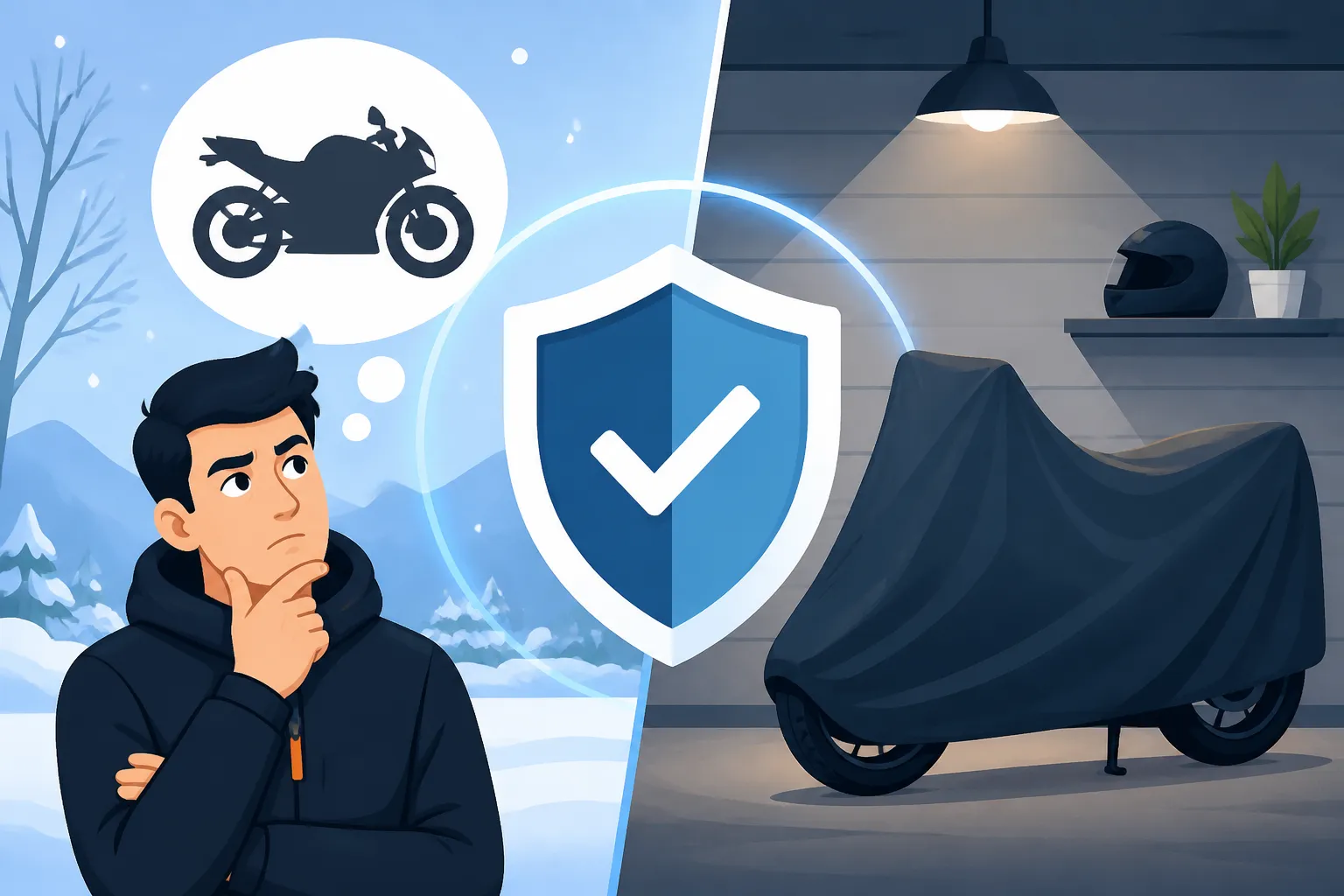
Do You Need Motorcycle Insurance in Winter if Not Riding?
Many riders face the frustration of watching their bank account take a hit for motorcycle insurance premiums during the months when their bike is tucked away under a cover in a freezing garage. It feels like throwing money into a snowbank. This guide solves the dilemma of whether you can legally and safely pause your coverage during the winter off-season.
The Legal Reality of Storing a Motorcycle
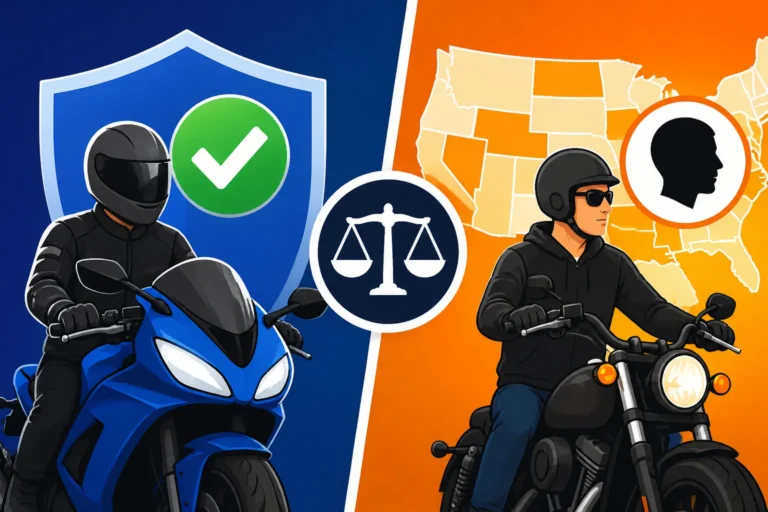
When the temperature drops in places like Milwaukee or Denver, the temptation to cancel your insurance policy until April is incredibly high. However, the legalities of motorcycle ownership don't always pause just because the kickstand is down. In the vast majority of states, if your motorcycle is registered with the DMV and has a valid license plate, the state requires you to maintain at least a minimum level of liability coverage.
State computers are increasingly sophisticated. Many jurisdictions have automated systems that cross-reference registration databases with insurance carrier records. If a carrier notifies the state that your policy has been canceled, you might receive a "notice of suspension" for your registration in the mail before the first blizzard even hits. You should check Is Motorcycle Insurance Required? State-by-State to see how your specific local laws handle parked vehicles. In some areas, the only way to legally stop paying for insurance is to surrender your license plate and cancel the registration entirely, which is a massive administrative headache to undo once spring arrives.
Furthermore, even if you aren't on the road, you are still technically a vehicle owner. If a neighbor's kid wanders into your garage and tips the bike over on themselves, or if a fire starts in your workshop and spreads to a neighbor's property, your liability coverage is what stands between you and a devastating lawsuit. Navigating these requirements can be tricky, which is why using a comparison tool like The Zebra can help you find a policy that satisfies the state’s minimums without costing a fortune during the dormant months.
Financing Obligations and the Lenders Perspective
If you are still making monthly payments on your bike, the choice to drop insurance is likely not yours to make. Lenders view your motorcycle as collateral for their loan. They have a vested interest in making sure that collateral is protected 365 days a year, regardless of the weather in Ohio or Maine. Almost every financing contract includes a "continuous coverage" clause that requires you to maintain both collision and comprehensive insurance.
If you cancel your policy, the lender will be notified. To protect their investment, they may engage in what is known as "force-placed insurance." This is a policy the lender buys on your behalf, and trust me, it is significantly more expensive than anything you would find on your own. They will simply add the premium to your monthly loan payment. This type of insurance usually only protects the lender’s interest and provides zero liability protection for you.
Before making any changes, it is vital to understand Motorcycle Insurance Requirements for Financed Bikes. Even if the bike is sitting on a front-and-rear stand in a locked shed, the lender fears the "what ifs"—the shed collapsing under snow, a theft, or a garage fire. If you’re looking for a way to lower those costs without violating your loan agreement, platforms like The Zebra allow you to compare different carriers that might offer lower rates for riders who live in traditional "snow belt" states.
Why a Total Lapse in Coverage is a Costly Mistake
Many riders think they are being savvy by canceling their policy in November and starting a "fresh" one in March. In reality, this is one of the quickest ways to ensure your premiums skyrocket over the long term. Insurance companies use your insurance history as a primary factor in determining your risk level. A gap in coverage, even for a few months, flags you as a "high-risk" individual in their algorithms.
When you go to restart your policy in the spring, you will likely find that you no longer qualify for the "continuous coverage" discount. Even worse, some carriers might refuse to insure you altogether, or they might require you to file an SR-22, depending on your state’s rules regarding lapses. You can read more about the fallout of this decision in our guide on What Happens if My Motorcycle Insurance Lapses?.
Beyond the administrative penalties, you also lose out on loyalty rewards and accident forgiveness programs that require a certain number of years of uninterrupted service. The amount you "save" over four months of winter is often eclipsed by the higher premiums you'll pay for the next three years. It’s often better to look for a specialized "lay-up" policy. Using a resource like The Zebra can help you identify which insurers in your area reward long-term stability rather than penalizing you for the changing seasons.
Understanding Lay-Up Policies and Seasonal Coverage
A "lay-up" policy is the middle ground that most veteran riders choose. Instead of canceling your insurance entirely, you work with your agent to suspend the "road" portions of your coverage—like collision and liability—while keeping the "comprehensive" portion active. This is often referred to as "storage insurance." This keeps your policy active in the eyes of the DMV and your lender, but significantly reduces the monthly cost.
Comprehensive coverage is essential during the winter. Think about the risks that don't involve a highway:
- Theft: Professional thieves often target garages in the winter when they know bikes aren't being moved frequently.
- Vandalism: If someone breaks into your storage unit, comprehensive covers the damage.
- Weather Damage: A roof collapsing from heavy snow or a pipe bursting and flooding your garage.
- Rodent Damage: Mice love nesting in airboxes and chewing through expensive wiring harnesses during cold snaps.
By maintaining Seasonal Lay-Up & Winter Storage Insurance, you protect against these "acts of God" while saving money. Most lay-up periods are defined in your policy—for example, from November 1st to April 1st. During this time, the bike is not covered if you take it out for a "quick spin" on a freakishly warm February day. If you crash during the lay-up period, you have zero coverage.
| Coverage Type | Active in Winter? | Protects Against | Impact on Premium |
|---|---|---|---|
| Liability | Often Required | Damage to others/property | Moderate |
| Collision | Optional (if paid off) | Crashing into objects | High |
| Comprehensive | Highly Recommended | Theft, Fire, Rodents, Storms | Low |
| Uninsured Motorist | Optional | Hit and run in storage (rare) | Minimal |
Preparing for the Spring Transition
One of the most common mistakes riders make is forgetting to "reactivate" their full coverage on the first nice day of spring. If you have a lay-up policy, your liability and collision coverage may not automatically kick back in just because you pulled the bike out of the garage. You must call your insurer or update your status online to ensure you are legal before hitting the pavement.
Before that first ride, it is also a good time to review Do You Need a Motorcycle Endorsement to Buy Insurance?. If your license expired over the winter or if you were planning on getting your endorsement this year, make sure your paperwork is in order. Riding with a lapsed license and a lay-up policy is a recipe for a denied claim and a permanent spot on the high-risk registry.
When you are ready to get back on the road, don't just stick with your old "winterized" rate. Use the transition as an opportunity to shop around. Tools like The Zebra can provide a fresh look at the market. Maybe a different carrier has introduced a better multi-bike discount since last autumn, or perhaps your credit score has improved, qualifying you for a better tier of pricing.
Comparing Your Options for Winter Protection
If you aren't sure which path to take, look at your specific bike's value and your local climate. A rider in Southern California might never need to worry about Do You Need Motorcycle Insurance in Winter if Not Riding? because they can ride year-round. However, a rider in upstate New York with a vintage Ducati has very different needs.
| Strategy | Pros | Cons |
|---|---|---|
| Full Continuous Coverage | No risk of forgotton reactivation; keeps all discounts. | Most expensive option during non-riding months. |
| Lay-Up/Storage Only | Protects against theft/fire; lower premiums; no "lapse." | No coverage for "freak warm day" rides; must remember to call in spring. |
| Full Cancellation | Zero cost for 4-5 months. | Major "lapse" penalties; high spring rates; no theft protection; legal risks. |
If you have multiple bikes, the math changes again. You might find that Adding a Rider or Second Bike to Your Policy actually makes the winter months more affordable on a per-bike basis than trying to juggle multiple lay-up schedules. Platforms like The Zebra are designed to handle these complexities, showing you how different combinations of coverage affect your bottom line across various top-rated carriers.
Final Advice for the Off-Season
Ultimately, your goal should be to balance cost-savings with risk management. Most veteran bloggers and long-time riders will tell you that the small savings found by completely canceling a policy are rarely worth the headache. Between the DMV's watchful eye, the lender's requirements, and the very real threat of winter garage fires or theft, keeping at least a "Comprehensive Only" or "Storage" policy is the smartest move.
If you are feeling the pinch of high rates, don't just cut your protection. Instead, look for ways to lower the base cost. Check if you qualify for a discount by completing a safety course during the winter or see if Bundling Motorcycle and Auto Insurance: Worth It? for your specific situation. Taking ten minutes to run your info through The Zebra can often find you a year-round rate that is lower than what you’re currently paying for "seasonal" coverage elsewhere.
Stay safe, keep the battery on a tender, and make sure that when the birds start chirping in March, you and your bike are fully protected and ready to roll without any legal or financial baggage holding you back.
Disclaimer
This guide is for informational purposes only and does not constitute legal or financial advice. Insurance requirements and state laws regarding vehicle registration and continuous coverage are subject to change. Always consult with a licensed insurance agent or your state's Department of Motor Vehicles to verify current regulations in your specific jurisdiction before canceling or modifying your insurance coverage.