Does Motorcycle Insurance Cover Aftermarket Exhaust/Mods?
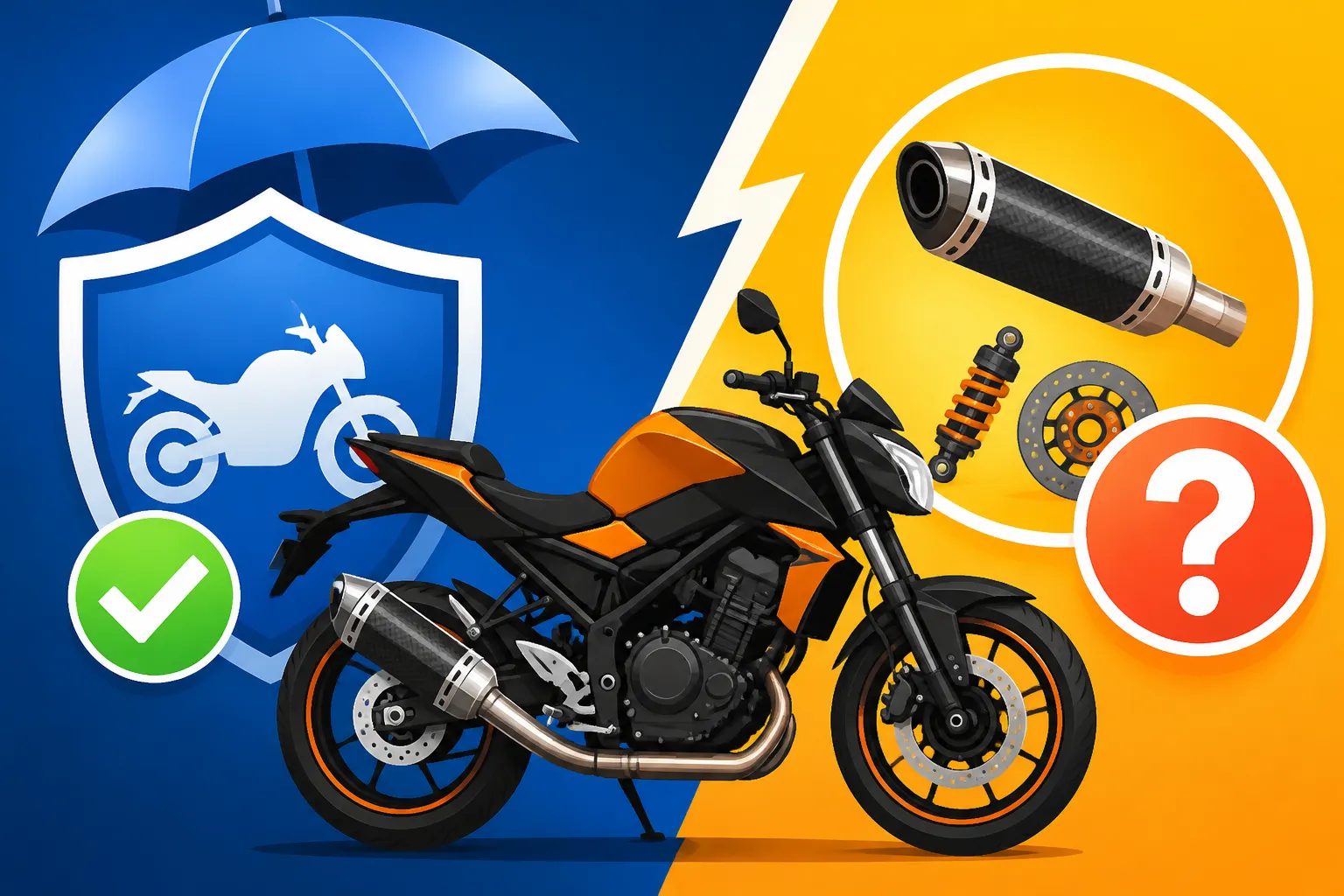
It’s a tale as old as time for motorcyclists: you get a new bike, and almost immediately, your mind starts racing with all the ways you’ll make it truly yours. From that rumble-inducing aftermarket exhaust to a sleek custom paint job, new suspension, or performance upgrades, these modifications are a huge part of the riding experience. But here’s the kicker – will your motorcycle insurance company actually cover these expensive, personalized additions if something goes wrong? It’s a frustrating question that can keep many a rider up at night, and this guide is here to unravel the complexities, giving you peace of mind about protecting your custom investment.
The Standard Coverage Conundrum: Why Stock Is Different
When you first get a motorcycle insurance policy, it’s designed to cover your bike in its factory-issued state. This makes sense from an insurer’s perspective; they know the exact value of a stock Harley-Davidson Street Glide or a Kawasaki Ninja 400. However, the moment you start adding your personal touch, you enter a different realm of valuation, and that’s where many riders get caught off guard.
Understanding Actual Cash Value and Stock Parts
Most standard motorcycle insurance policies, especially if you only carry liability or basic collision/comprehensive, will determine payouts based on what’s known as the Actual Cash Value (ACV) of your motorcycle. What does that mean for your shiny new ride? Well, ACV accounts for depreciation. If your bike is totaled, the insurance company will assess its market value right before the incident, considering its age, mileage, condition, and, crucially, what it would cost to replace it with a stock model.
So, if you bought a brand new Honda Rebel for $6,000, and two years later it gets stolen, a standard ACV policy might only pay out $4,500 because of depreciation. This payout would be based on what a used, stock Honda Rebel of that age and mileage is worth, not what you originally paid for it. The frustration truly begins when you realize this base valuation doesn't even begin to factor in the thousands you've poured into making it unique. It’s a harsh reality for many riders who assume their premium covers everything on their bike, only to find out it stops at the factory gate.
The Gap Between Factory and Custom
This brings us to the core issue: standard policies generally do not automatically cover aftermarket parts and custom modifications. Why? Because insurers price policies based on known risks and values. A stock exhaust pipe costs a certain amount to replace. A custom, titanium, hand-welded exhaust system could cost ten times that, and the insurer wouldn't know to account for that without you telling them.
Imagine you've installed a Vance & Hines exhaust, a custom seat from Saddlemen, upgraded your suspension with Ohlins components, and slapped on a unique paint job that cost more than some used bikes. If you’re involved in an accident and your bike is totaled, your standard policy will likely ignore the value of all those additions. The payout would still be for the depreciated value of a stock motorcycle. It's a bitter pill to swallow to lose not only your beloved bike but also all the hard-earned money and passion you invested in personalizing it. This is why understanding the limitations of basic coverage and seeking out specialized options is paramount for any rider with a modified bike.
Dedicated Coverage for Your Custom Creations
The good news is that you're not doomed to ride unprotected if you've customized your bike. Insurance companies understand that personalization is a huge part of motorcycle culture, and they offer specific solutions to bridge that gap. This is where dedicated coverage for accessories and custom parts comes into play.
Accessories and Custom Parts Coverage Explained
This specialized coverage is often referred to as an "endorsement" or "add-on" that you can purchase to supplement your standard motorcycle insurance policy. Essentially, it allows you to declare the value of your aftermarket parts and modifications, ensuring they are protected against the same perils covered by your comprehensive and collision policies, such as theft, vandalism, fire, or accident damage. If you're wondering What Does Full Coverage Motorcycle Insurance Mean?, it typically means having comprehensive and collision, and adding this endorsement elevates that coverage to include your mods.
What exactly falls under "accessories and custom parts"? The list is pretty extensive and can vary slightly between providers, but generally includes:
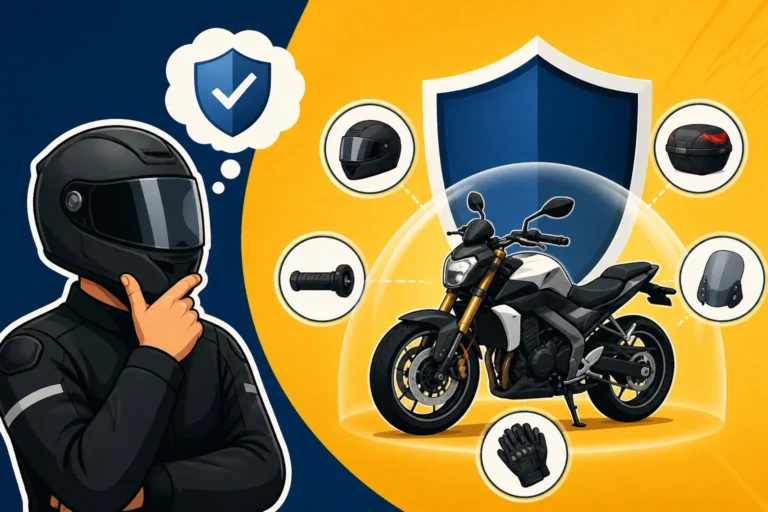
- Performance Upgrades: Aftermarket exhaust systems, engine modifications, upgraded carburetors or fuel injection systems, performance air filters, and tuning.
- Suspension and Handling: Upgraded shocks, forks, swingarms, custom wheels, and brake components.
- Aesthetic Modifications: Custom paint jobs, chrome plating, extended or custom fairings, unique handlebars, custom seats, saddlebags, luggage racks, and LED lighting kits.
- Safety and Convenience Add-ons: GPS units, communication systems, backrests, crash bars, and security systems.
The key is that these are items not installed by the factory. When you talk to your insurer, or use a comparison tool like The Zebra, you’ll be looking for specific coverage for these items. It's vital to clearly understand Accessories & Custom Parts Coverage Explained to ensure every penny you've invested in your bike is protected.
How Limits and Valuation Work
Once you decide to add custom parts coverage, you'll need to specify a coverage limit. This is the maximum amount the insurance company will pay out for your modifications in the event of a covered loss. Common limits can range from a few thousand dollars (e.g., $3,000 or $5,000) for minor modifications, up to much higher amounts (e.g., $10,000, $20,000, or even more) for heavily customized bikes. You'll need to accurately estimate the total value of all your aftermarket additions to choose an appropriate limit. It’s always better to err on the side of slightly overestimating than underestimating.
Beyond the limit, how the insurance company values your custom parts is equally important. This is where terms like Actual Cash Value (ACV), Stated Value, and Agreed Value become critical.
- Actual Cash Value (ACV): As discussed, this is the depreciated value. While a base policy might use ACV for the bike itself, some custom parts coverage might still apply ACV to your modifications, which means your expensive exhaust might only be valued at its depreciated worth at the time of loss, not what you paid for it.
- Stated Value: This is a value you "state" to the insurance company, but it’s still subject to ACV at the time of a claim. It sets an upper limit on what they might pay, but doesn't guarantee that amount. This can be misleading and lead to disappointment after a loss.
- Agreed Value: This is the gold standard for custom bikes. With Agreed Value coverage, you and the insurer agree on a specific value for your motorcycle (including all its modifications) before the policy is issued. If a total loss occurs, you receive that agreed-upon amount, no questions asked about depreciation. This provides immense peace of mind, especially for truly unique or high-value custom builds.
Understanding the differences is crucial. For detailed insights, check out our guide on Agreed Value vs Stated Value vs Actual Cash Value. Many riders find that getting Agreed Value coverage, even if it comes with a slightly higher premium, is invaluable for protecting their passion project.
The Process of Insuring Your Mods: Steps and Documentation
Securing proper insurance for your custom motorcycle isn't a "set it and forget it" task. It requires proactive communication with your insurance provider and diligent record-keeping. Skipping these steps can lead to heartache when you need to file a claim.
Declaring Your Aftermarket Parts
The most critical step is to explicitly tell your insurance company about every single aftermarket part and modification you've made or plan to make. This isn't something that happens automatically. When you initially get a quote, you're usually asked about the bike's make, model, year, and often its estimated value. If you don't mention your mods at this stage, or soon after they're installed, the insurer will only underwrite a policy based on a stock bike.
Many riders, eager to save a few bucks on their premium, might "forget" to declare their modifications. This is a huge gamble. If you have a significant claim and the insurance adjuster discovers undeclared custom parts, they might deny the claim entirely or significantly reduce the payout. This happens because failing to disclose material facts can be seen as misrepresentation, impacting the validity of your policy. For example, if you replace a standard exhaust with a high-performance one, that changes the risk profile of the bike, and the insurer needs to know. You can use comparison sites like The Zebra to easily input details about your custom parts when getting quotes, making sure that your potential insurers are aware of the full value of your machine from the start. This ensures you receive accurate quotes that reflect the true value of your motorcycle.
Essential Documentation for a Smooth Claim
Once you've declared your modifications, the next crucial step is meticulous documentation. Think of it as building a bulletproof case for your bike's value before anything happens. When you file a claim, especially for a total loss, the insurance adjuster will ask for proof of your modifications and their value. Without proper documentation, it becomes your word against theirs, and that's a battle you're likely to lose.
Here's a breakdown of the essential documents you should keep:
- Detailed Receipts: This is perhaps the most important. Keep every receipt for every aftermarket part purchased and every service or installation performed. These receipts prove ownership, the cost of the part, and often, the date of purchase. For custom paint or fabrication work, ensure you get an itemized invoice.
- Photographs: Take clear, high-resolution photos of your motorcycle from all angles, showcasing every modification. Take close-up shots of specific custom parts like the exhaust, wheels, custom seat, and paint details. Date-stamped photos (many smartphones do this automatically) are even better, showing when the modifications were present. Consider having photos both before and after major installations.
- Professional Appraisals: For truly unique or high-value custom builds, a professional appraisal from a reputable motorcycle valuation specialist can be invaluable. This provides an independent, expert assessment of your bike's value, including all custom work. This is particularly useful for classic bikes with modern upgrades or one-off custom choppers.
- Service Records: If a professional shop installed your parts, keep their service records. This not only proves the installation but can also confirm the quality of the work, which might be relevant in some claim scenarios.
- Serial Numbers: If any of your aftermarket parts have serial numbers (e.g., high-end suspension, performance ECUs), record them. This can help in cases of theft recovery.
Keep all this documentation in a safe, accessible place – a dedicated folder, a cloud storage service like Google Drive or Dropbox, or even email them to yourself. Having this ready not only speeds up the claims process but significantly increases the likelihood of a fair payout. For more information on navigating the claims process, our guide on How to File a Motorcycle Insurance Claim offers comprehensive advice.
Impact on Premiums and What to Expect
It's natural to wonder how all these extra steps and specialized coverages will impact your bottom line. Let's be realistic: adding coverage for your valuable modifications will increase your insurance premium. However, the peace of mind and financial protection it offers are often well worth the investment.
How Mods Influence Your Insurance Cost
When you add custom parts and accessories coverage, you are increasing the total insurable value of your motorcycle. More value equals more risk for the insurance company, and thus, a higher premium. The exact increase will depend on several factors:
- Total Value of Modifications: The more expensive your mods, the higher your coverage limit needs to be, and consequently, the higher your premium. A $2,000 exhaust system will have less impact than $15,000 worth of engine upgrades, custom paint, and high-end suspension.
- Type of Modifications: Performance-enhancing modifications, like engine tuning or turbochargers, often carry a higher risk perception than purely aesthetic changes like custom seats or LED lights. Insurers might view performance mods as encouraging more aggressive riding, which can translate to a higher premium. This is similar to how Does Engine Size (CC) Affect Insurance Cost? – more power often means more risk.
- Your Riding Profile: Your driving record, age, location, and other personal factors still play a significant role. A young rider with performance mods might see a much higher increase than an experienced, clean-record rider with similar modifications.
- Insurer Specifics: Different insurance companies have varying appetites for risk regarding custom motorcycles. Some might specialize in it, offering better rates, while others might be more conservative. This is why shopping around is so important.
It's important to remember that this premium increase isn't just an arbitrary charge; it’s directly tied to the added protection you're receiving for your unique investment. Without it, you’d be on the hook for the full replacement cost of your custom parts out of your own pocket. If you're looking for ways to mitigate costs, exploring How to Lower Your Motorcycle Insurance Premium can offer some valuable strategies.
Finding the Right Balance: Cost vs. Protection
The goal is to find the sweet spot where your custom parts are adequately protected without breaking the bank on premiums. This involves a bit of homework and strategic decision-making.
First, be realistic about the value of your modifications. Do you truly need a $20,000 coverage limit if you've only added a $3,000 exhaust and a new seat? Over-insuring can lead to unnecessary premium costs. Conversely, under-insuring leaves you exposed. Use your receipts and documentation to calculate an accurate total.
Second, don't just accept the first quote you get. Insurance rates for custom bikes, like all motorcycle insurance, can vary wildly between providers. It’s highly recommended to How to Compare Motorcycle Insurance Quotes from several different companies. Look at specialized motorcycle insurers like Dairyland or Markel, as they often have more flexible and comprehensive options for custom bikes than some mainstream auto insurers. Comparison tools like The Zebra are incredibly useful here; you can input your bike's details, including your aftermarket parts, and get multiple quotes tailored to your specific needs. This helps you see which companies offer the best rates and coverage for your unique situation.
Finally, consider your deductible. A higher deductible will lower your premium, but means you'll pay more out-of-pocket if you need to make a claim. For custom bikes, a balance might be a moderate deductible that keeps premiums manageable while not presenting an insurmountable cost if a claim arises. Remember, the goal isn't just cheap insurance, but smart insurance that truly protects your investment. This careful consideration helps avoid the pitfall of wondering Why Is My Motorcycle Insurance So Expensive? down the line.
Here's a quick comparison of standard vs. custom parts coverage:
| Feature | Standard Motorcycle Insurance (Basic Collision/Comp) | Accessories & Custom Parts Coverage (Add-on) |
|---|---|---|
| What it covers | Factory-installed parts and components | Aftermarket exhausts, custom paint, performance upgrades, chrome, accessories etc. |
| Valuation Method (Common) | Actual Cash Value (ACV) – depreciated | ACV, Stated Value, or ideally Agreed Value (depending on policy & insurer) |
| Cost | Included in base premium for collision/comp | Additional premium beyond base policy |
| Documentation Needed | Not usually required for stock components | Crucial: Receipts, photos, appraisals for every mod |
| Claim Payout | Covers replacement/repair of stock bike | Covers replacement/repair of declared custom parts up to specified limit |
| Automatic Inclusion | Yes, for OEM parts | No, must be explicitly added by the rider |
Common Scenarios and Important Considerations
Beyond the basics of getting the right coverage, there are several nuances to consider when insuring a modified motorcycle. These scenarios can sometimes lead to unexpected challenges if you're not prepared.
Performance Enhancements and Their Risks
One of the most popular reasons to modify a motorcycle is to enhance its performance. This could mean a full engine build, a turbocharger, a supercharger, or even just an advanced ECU tune. While these mods can be incredibly exhilarating, they often come with increased scrutiny from insurance providers. Insurers may perceive performance enhancements as increasing the likelihood of accidents due to higher speeds or more aggressive riding.
Because of this perceived risk, coverage for high-performance modifications can be more expensive or, in some rare cases, even harder to obtain if the modifications are extreme and significantly alter the bike's intended use (e.g., turning a street bike into a dedicated track machine). Some companies might offer specific policies for highly modified or high-performance bikes, while others might decline coverage altogether if the mods push the vehicle too far outside its original design parameters. It’s imperative to be completely transparent about any performance upgrades with your insurer to avoid claim denials. Always confirm that your specific policy covers these types of alterations, as some might have exclusions for engine internals or certain racing-related modifications, which might be addressed in a policy like What Motorcycle Coverage Do You Actually Need?.
DIY vs. Professional Installation
Many riders are incredibly handy and prefer to install aftermarket parts themselves. There’s a huge satisfaction in knowing you’ve put your own sweat and skill into your machine. However, when it comes to insurance claims, professional installation often carries more weight. A receipt from a reputable shop proves not only the cost of the part but also the cost of professional labor. This documentation helps solidify the overall value of the modification.
If you’re a skilled DIYer, you can absolutely install your own parts. Just make sure to keep all purchase receipts for the parts themselves. In the event of a claim, the insurance company will primarily look at the cost of the parts to determine their value. While they generally won't refuse coverage just because you installed something yourself, having professional installation records can streamline the valuation process, especially for complex systems where labor costs are significant. If your DIY work is questioned for quality or safety during a claim investigation, it could potentially complicate things, though this is rare for minor aesthetic changes. The key, as always, is thorough documentation.
What's Not Typically Covered Even with an Add-on
While custom parts coverage is fantastic, it's not a magic bullet for every conceivable issue. There are still some things that motorcycle insurance, even with add-ons, generally won't cover. Understanding these exclusions is just as important as knowing what is covered.
Common exclusions often include:
- Normal Wear and Tear: Your custom grips or aftermarket tires will still wear out over time. Insurance doesn't cover routine maintenance, deterioration, or parts that simply age out.
- Mechanical Breakdown: If your aftermarket engine upgrade simply fails due to an internal mechanical issue, that's typically not covered by a standard insurance policy. This usually falls under a manufacturer's warranty (if applicable) or your responsibility.
- Damage from Improper Maintenance: If a custom part fails or causes damage because you didn't maintain it correctly, the claim might be denied.
- Track Day/Racing Damage: Most standard and even custom parts policies explicitly exclude damage sustained during organized racing events, track days, or off-road competitions. If you're into track riding, you'll need specialized track-day insurance, which is a completely separate product.
- Certain types of modifications that aren't street-legal or safe: While rare, if a modification makes your bike unsafe or illegal for road use, an insurer may decline coverage related to that specific modification.
Always review the terms and conditions of your specific policy, and especially your custom parts endorsement, to be fully aware of any exclusions. When in doubt, call your insurance provider and ask direct questions. Being proactive now can save you a world of trouble later. Our guide on What's Not Covered by Motorcycle Insurance? provides even more detailed insights into common exclusions.
Disclaimer
Please remember, this guide provides general information about motorcycle insurance and aftermarket modifications. Insurance policies can vary significantly by state, insurer, and individual circumstances. It is crucial to consult directly with a licensed insurance agent or review your specific policy documents to understand your coverage, limitations, and exclusions. Insurance laws and offerings change, so always verify the most current information for your situation.