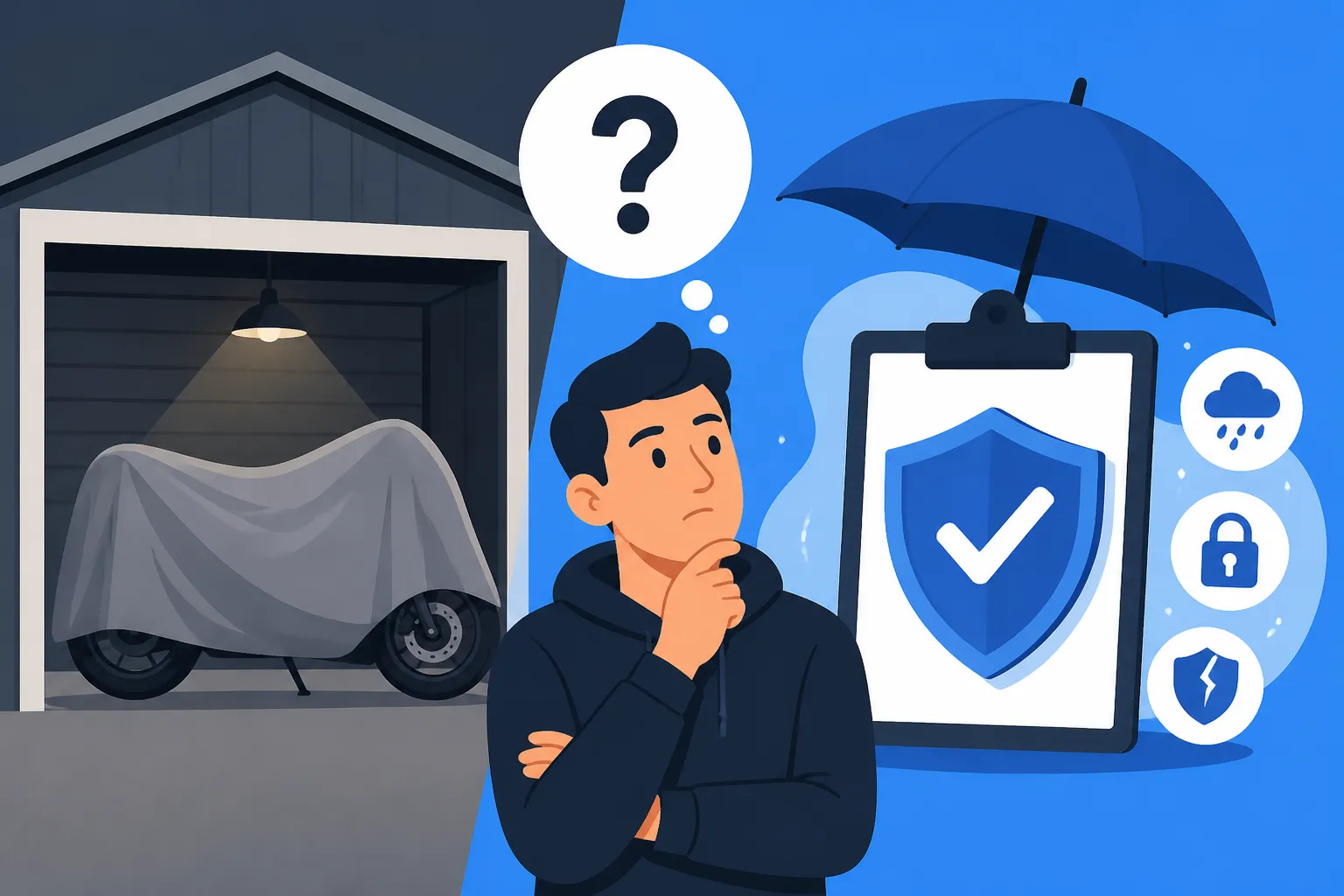
Do You Need Insurance to Store a Motorcycle?
It's a common dilemma for riders: you've tucked your motorcycle away for the off-season, or maybe you're just taking a break from riding, and you start to wonder, "Do I really need to keep my insurance active while it's just sitting there?" It feels counterintuitive to pay for full coverage when your bike isn't even touching the pavement. This guide is here to untangle that question, exploring the nuances of motorcycle insurance for stored bikes, what coverages actually make sense, and how to protect your beloved machine even when it's not racking up miles.
The Core Question: Is Motorcycle Storage Insurance Mandatory?
The short answer is: it depends. While most states legally require you to carry at least basic liability insurance to ride a motorcycle on public roads, the rules get a little fuzzy once your bike is parked indefinitely. This is where understanding the difference between legal mandates and practical, common-sense protection becomes incredibly important. You might not legally have to carry a certain type of coverage, but going without it could leave you in a world of financial pain if something goes wrong.
Legal Requirements vs. Practical Wisdom
Legally speaking, if your motorcycle is not registered for road use and is officially in "storage" (meaning it won't be ridden at all), some states might allow you to suspend certain parts of your insurance, particularly liability coverage. Liability insurance is designed to cover damages or injuries you might cause to others while operating your vehicle, so if you're not operating it, it seems logical that you wouldn't need it. However, the exact rules can vary significantly from one state to another, so what's okay in, say, New Hampshire, might land you in hot water in California. It's crucial to check your state's specific regulations, and if you're unsure, a quick call to your Department of Motor Vehicles or insurance agent can clear things up.
But here's the kicker: just because you can suspend liability doesn't mean you should suspend all coverage. Your bike is still a valuable asset, even when it's just sitting in your garage or a storage unit. It's still vulnerable to things like theft, fire, vandalism, or even falling over. This is where practical wisdom kicks in. Many riders choose to maintain certain "off-road" coverages, like comprehensive, even when their bike isn't being ridden. It's about balancing potential savings on premiums with the peace of mind that comes from knowing your investment is protected against non-collision misfortunes. Think about it: a stolen motorcycle is just as devastating whether it's taken from your driveway or a parking lot.
State-Specific Nuances
Every state has its own set of rules regarding motorcycle insurance, and these rules often extend to how vehicles are handled when they're not in active use. For instance, some states might have specific requirements if your motorcycle is still registered, even if it's stored. If you're wondering about your specific region, diving into resources like our guide on Motorcycle Insurance Requirements by State (2026 Guide) can give you a clear picture.
Consider a scenario in Florida, where many riders store their bikes for the hurricane season. While you might not be riding, a strong storm could cause flood damage to your garage. If you've dropped all your coverage, you'd be entirely on the hook for those repairs. In states like Michigan, with its no-fault insurance system, the nuances can be even more complex, even for stored vehicles, so understanding your local laws is paramount. Always remember that merely suspending liability coverage doesn't mean you're free from all obligations, especially if your bike is still legally registered.
Understanding "Storage" in the Eyes of Insurance
The word "storage" can mean different things to different people, but when it comes to insurance, it has a pretty specific connotation. It's not just about parking your bike in the garage; it's about its intended use and whether it's actively posing a risk on public roads. Knowing how your insurer defines "stored" versus "active" is key to making smart decisions about your policy.
What Constitutes a Stored Motorcycle?
For insurance purposes, a stored motorcycle is generally one that is not being ridden and is typically kept in a secure, private location, such as a garage, shed, or dedicated storage facility. The key here is not being ridden. If you're just parking it for a few weeks because you're busy, but you still plan to hop on and take it for a spin every now and then, it's not truly "stored" in the insurance sense. It's still considered actively in use, and you'd need your regular, road-legal coverage.
True storage usually implies a longer period, often during the winter months in colder climates, or when a rider is simply taking an extended break. During this time, the motorcycle is off the road, not accumulating mileage, and not exposed to the risks of traffic accidents. This distinction allows insurers to offer modified policies or temporary reductions in coverage because the primary risk — a collision with another vehicle or pedestrian — is significantly reduced. They might also consider whether the motorcycle is registered or unregistered during this period. An unregistered bike that's genuinely stored is often treated differently than a registered one that could theoretically be ridden at any moment.
The Difference Between Stored and Laid-Up Coverage
This is where it gets interesting and a little bit specific, but it's important to differentiate. "Laid-up" coverage is a specific type of policy or endorsement that some insurers, like Dairyland or Markel, offer for motorcycles during periods of non-use, typically in the off-season. It’s designed precisely for riders who store their bikes and want to reduce their premiums without completely sacrificing protection against non-driving related risks.
With laid-up coverage, you essentially suspend your liability and collision coverages because you won't be riding. However, you maintain comprehensive coverage, which protects your motorcycle from perils like theft, vandalism, fire, natural disasters (think hail or floods), and even damage from falling objects. Some policies might also include Roadside Assistance & Towing for Motorcycles as a separate add-on, which could still be useful if you need to move a stored bike for repairs, though typically less critical than when actively riding. This type of coverage is often a fantastic middle-ground solution, allowing you to save money while still ensuring your investment is safe. It's definitely something to discuss with your insurance provider when you're planning to put your bike away for an extended period. Our article on How to Suspend Motorcycle Insurance for Winter goes into more detail about this practical option.
Types of Coverage to Consider for a Stored Motorcycle
When your motorcycle is in storage, the risks it faces shift dramatically. You're no longer worried about hitting a deer on the highway or getting T-boned at an intersection. Instead, your concerns move to the things that can happen to a stationary object. This is why certain types of coverage become more, not less, important.
Comprehensive Coverage: Your Best Friend Off the Road
Without a doubt, comprehensive coverage is the superhero for a stored motorcycle. While liability protects others and collision protects your bike in an accident, comprehensive steps in for pretty much everything else. Think of it as your "Act of God and Other Mishaps" coverage. It’s designed to cover damages to your motorcycle that aren't caused by a collision with another vehicle or object while riding.
This includes things like:
- Theft: Sadly, motorcycles are a common target for thieves, even when stored securely. Motorcycle Theft Claim: How It Works can be a lifesaver here.
- Vandalism: Someone decides to scratch your paint, slash your tires, or otherwise intentionally damage your bike.
- Fire: A garage fire, an electrical short, or even a wildfire in the area could damage or destroy your motorcycle.
- Natural Disasters: Hail storms, floods, tornadoes, or other severe weather events can cause significant damage.
- Falling Objects: A tree branch falls on your garage roof, or something tumbles off a shelf onto your bike.
- Animal Damage: A rodent decides your wiring looks like a tasty snack, or a deer crashes through your shed.
When your bike is laid up for the winter, for example, maintaining comprehensive coverage means you're still protected against these common and often expensive incidents. It's peace of mind for a relatively small cost, especially when compared to the value of your bike. Many riders find that the premium savings from dropping collision and liability during storage outweigh the cost of keeping comprehensive. For a deeper understanding, check out What Is Comprehensive Motorcycle Insurance?.
Fire, Theft, and Vandalism: Why They Matter in Storage
While technically parts of comprehensive coverage, it's worth highlighting fire, theft, and vandalism specifically because these are arguably the most significant risks to a stored motorcycle. Even if your bike is kept in a locked garage, these dangers are ever-present.
Imagine you've stored your prized Harley-Davidson in a shared storage unit in a less-than-ideal part of town. While you're away, the unit is broken into, and your bike vanishes. Without comprehensive coverage, you're out a significant investment. Or perhaps your garage catches fire due to an unrelated electrical issue. The bike is totaled. Again, without comprehensive, you're looking at a total loss out of your own pocket. Even something as frustrating as finding your paint job keyed by a disgruntled neighbor or a random act of mischief can lead to costly repairs. These aren't far-fetched scenarios; they happen to riders all the time. Being proactive with your coverage ensures that if these unfortunate events occur, you have a financial safety net rather than a devastating bill.
Additional Protections for Stored Bikes
Beyond comprehensive, there are a couple of other coverages that might be worth considering, depending on your motorcycle and your personal situation:
- Accessories & Custom Parts Coverage: If your motorcycle has been customized with aftermarket parts, a custom paint job, or expensive accessories like saddlebags, upgraded exhaust, or a premium stereo system, your standard comprehensive coverage might only cover the bike's factory value. Many insurers offer specific Accessories & Custom Parts Coverage Explained as an add-on. This is absolutely critical for riders who've invested heavily in personalizing their machines. Imagine your custom Harley being stolen, and insurance only pays out for a stock model. Ouch.
- Agreed Value vs. Stated Value Coverage: This is particularly relevant for vintage, classic, or highly customized motorcycles. Standard policies typically pay out based on "Actual Cash Value" (ACV), which means the replacement cost minus depreciation. For a classic bike that appreciates in value or a custom build where parts are irreplacable, ACV can be a huge disappointment. Agreed Value vs Stated Value vs Actual Cash Value explores this in depth. Agreed Value coverage means you and the insurer agree on a specific value for your motorcycle before anything happens, and that's the amount you'll receive if it's totaled or stolen. Stated Value is similar but often has caveats. For a precious stored bike, agreed value can be invaluable.
- Emergency Roadside Assistance: While your bike is stored, you might not think this is necessary. However, if you need to move the bike from storage to a repair shop, or even home, due to comprehensive damage (e.g., after a fire or vandalism), having roadside assistance or towing can be incredibly helpful. Some policies offer limited towing even if you're not actively riding.
When Can You Consider Reducing or Suspending Coverage?
Deciding to reduce or suspend your motorcycle insurance coverage is a big step, and it's not one to take lightly. While there can be significant savings involved, you need to be fully aware of the potential downsides and what risks you're truly willing to take. It's a calculation that should balance your desire to save money with the value of your motorcycle and your personal financial resilience.
Factors to Weigh Before Adjusting Your Policy
Before you call your insurance agent to strip down your policy, take a moment to consider these crucial factors:
- Your State's Laws: As mentioned, some states have specific laws about maintaining minimum coverage even for unregistered, stored vehicles, or if the vehicle is still registered. Always confirm this first. You don't want to inadvertently incur Penalties for Riding Without Insurance simply because you thought your stored bike was exempt from all requirements.
- Lienholders and Financing: If you have a loan on your motorcycle, your lender will absolutely require you to maintain full coverage (liability, collision, and comprehensive) until the loan is paid off. This is non-negotiable. Reducing coverage without their consent would be a breach of your loan agreement, and they could force-place insurance at a much higher rate or even repossess the bike. Our guide on Motorcycle Insurance Requirements for Financed Bikes explains this in detail.
- Storage Location Security: Where is your bike stored? Is it in a locked, private garage with surveillance, an attached shed, or a rented storage unit accessible to many? The more secure the location, the lower the risk of theft or vandalism, which might make you more comfortable reducing coverage. A flimsy shed in a high-crime area is a much higher risk than a fortified, alarmed private garage.
- Value of Your Motorcycle: Is it a brand new sport bike, a vintage classic, or an older, less valuable machine? The higher the value, the more you stand to lose if something happens. For a low-value bike, the cost of comprehensive might almost equal the bike's worth over several years, making the risk-reward calculation different.
- Your Financial Situation: Could you afford to replace your motorcycle out of pocket if it were stolen or totaled by fire? If not, maintaining comprehensive coverage is a no-brainer. If you have significant savings and the bike isn't your primary mode of transportation, you might be able to absorb the loss.
The Risks of Going Liability-Only or No Coverage
Choosing to go liability-only for a stored bike, or worse, dropping all coverage entirely, is a gamble. While you might save a few bucks on your monthly premium, the potential financial fallout can be catastrophic.
If you drop collision and comprehensive:
- Theft: Your bike gets stolen, and you get nothing. You're left with no motorcycle and no insurance payout.
- Fire: Your garage burns down, taking your bike with it. Again, zero payout.
- Vandalism/Natural Disaster: Your bike is damaged by hail, flood, or a vandal. You pay for all repairs yourself.
- Accidental Damage: Even in storage, accidents can happen. A shelf could collapse, a vehicle could back into your garage door, or the bike could simply tip over. Without collision or comprehensive, you're responsible for the repair bill.
Dropping all coverage is an even bigger risk, especially if your bike is still registered. If you somehow ride it even once without insurance, the consequences can be severe, including hefty fines, license suspension, impoundment of your bike, and even jail time in some states. Check out What Happens If You Ride Without Insurance? for a stark look at those repercussions. Even if you're certain it won't be ridden, the peace of mind that comes from knowing it's protected from non-driving perils is often worth the modest cost of comprehensive.
How to Adjust Your Motorcycle Insurance for Storage
So, you've decided that reducing your coverage for the storage period is the right move for you. Great! Now, how do you actually go about it without creating headaches or leaving yourself exposed? It's not as simple as just stopping your payments. You need to communicate effectively with your insurance provider.
Communicating with Your Insurance Provider
The absolute first step is to pick up the phone and talk to your insurance agent or a representative from your provider. Do not, under any circumstances, just stop paying your premiums or assume that your policy will automatically adjust because your bike is off the road. This can lead to your policy lapsing, which can create a whole host of problems down the line, including higher rates when you try to get new insurance, as well as potential legal issues if you live in a state where continuous coverage is required.
When you contact them, clearly explain your situation:
- State that your motorcycle will be going into storage for a specific period (e.g., "from November 1st to April 30th").
- Clarify that it will not be ridden during this time.
- Ask about options for "laid-up" coverage or suspending specific coverages like liability and collision while maintaining comprehensive.
- Inquire about any potential grace periods or specific requirements for reinstating your coverage when you're ready to ride again.
- Get everything in writing! Always request confirmation of any changes to your policy, including the dates the changes are effective and the specific coverages that are being adjusted.
Many major insurers, like Progressive, Geico, and State Farm, are familiar with seasonal motorcycle storage and have established procedures for these situations. They'll be able to guide you through the process and ensure you don't accidentally void your policy or leave yourself unprotected.
What to Ask Your Agent
When you're speaking with your insurance agent, don't be afraid to ask detailed questions. This isn't just about saving money; it's about protecting your asset and understanding your policy. Here’s a checklist of questions to consider:
- "What specific coverages can I suspend while my motorcycle is in storage?"
- "What is the exact name of the coverage that protects against fire, theft, and vandalism while my bike is not being ridden?" (This is typically comprehensive).
- "What are the premium savings if I only keep comprehensive coverage during the storage period?"
- "Are there any administrative fees for making these changes?"
- "What is the process and timeline for reinstating full coverage when I'm ready to ride again?"
- "Will reducing my coverage for storage affect my continuous coverage record or my eligibility for discounts in the future?"
- "If I have custom parts or accessories, will they still be covered under comprehensive during storage, and what are the limits?"
- "What proof of storage or non-use, if any, do you require?"
- "Can you send me an updated policy declaration page showing the changes?"
Being prepared with these questions will not only help you make an informed decision but also ensure that you and your agent are on the same page, preventing any misunderstandings down the road.
Reinstating Coverage After Storage
The riding season is back, the sun is shining, and you're ready to get your bike back on the road! But hold on a second – just as you deliberately reduced your coverage for storage, you need to be just as deliberate about reinstating it. Don't make the mistake of assuming it automatically kicks back in or that a quick phone call the day you want to ride is sufficient.
Planning Ahead for Riding Season
Just like you planned for storage, you need a plan for un-storing your bike and getting your full coverage back in place. Most insurance companies recommend contacting them at least a few days, or even a week, before you intend to ride. This gives them ample time to process the changes, recalculate your premiums, and send you updated policy documents.
Imagine this: You wake up on a beautiful Saturday morning, pull your bike out, and realize you forgot to reinstate your liability and collision. You decide to "just take it for a quick spin" to the gas station. If, by some terrible stroke of luck, you get into an accident on that ride, you could face severe penalties for riding without insurance, not to mention being personally responsible for all damages and injuries. This is a scenario no rider ever wants to be in.
The best practice is to set a reminder on your calendar for a week or two before your anticipated first ride. Use that time to call your insurer, confirm the reinstatement of your full policy, and ensure you have up-to-date proof of insurance. This foresight ensures a smooth transition from storage back to the open road. Our article on How to Reinstate Coverage After Lay-Up Season offers more practical advice for this transition.
Potential Pitfalls of Lapsed Coverage
A lapsed policy is when your insurance coverage has expired or been canceled due to non-payment or an intentional decision to drop all coverage without proper suspension. This can cause more than just a temporary inconvenience.
- Higher Premiums: Insurers view a lapse in coverage as a higher risk. When you go to get new insurance or reinstate an old policy, you'll likely face significantly higher premiums. They see you as someone who has operated a vehicle without protection, or who is less reliable with payments.
- SR-22 or FR-44 Requirements: In some situations, especially if you were caught riding without insurance, you might be required to file an SR-22 or FR-44 form. This is a certificate of financial responsibility that your insurance company files with the state, proving you have the minimum required coverage. It's typically required for high-risk drivers and can dramatically increase your insurance costs for several years. Our guide on SR-22 for Motorcycles: When It's Required delves into this.
- Registration Issues: Many states require proof of active insurance to register your motorcycle. If your coverage lapses, you could find your registration suspended or revoked, leading to further fines and complications.
- Coverage Gap: Even a short lapse means you're completely unprotected. If something happens to your stored bike during that brief gap, you're entirely on your own.
This table summarizes the typical considerations for motorcycle insurance during active riding versus storage:
| Feature | Active Riding Coverage (Standard Policy) | Storage Coverage (Laid-Up/Reduced Policy) |
|---|---|---|
| Legal Requirement | Mandatory in almost all states for registered bikes on public roads | Varies by state; liability often not required if unregistered/not ridden |
| Primary Risk Covered | Accidents, collisions, injuries to others | Theft, fire, vandalism, natural disasters, falling objects |
| Key Coverages Included | Liability, Collision, Comprehensive, UM/UIM, MedPay | Comprehensive (focus), sometimes limited Roadside Assistance |
| Premium Cost | Higher, covers active road risks | Significantly lower, as collision & liability are often suspended |
| Proof of Insurance | Required to carry while riding | Not required if not ridden, but policy documents confirm comprehensive |
| Impact on Loan/Lease | Full coverage typically required by lender | Full coverage still required by lender; cannot be reduced without consent |
| Ideal For | Daily commuting, leisure rides, any on-road activity | Off-season storage, extended periods of non-use in secure locations |
| Action to Take | Maintain full, active policy | Contact insurer to discuss "laid-up" or comprehensive-only options |
Common Scenarios and Considerations
Beyond the basics, there are a few specific situations that often lead riders to ask about storage insurance. These scenarios come with their own unique considerations and sometimes, different solutions.
Financed Motorcycles and Storage Insurance
This is a critical point that cannot be stressed enough: if your motorcycle is financed, you do not have the freedom to reduce your insurance coverage significantly, even if it's stored. The lender (bank or financial institution) has a vested interest in the motorcycle because they technically own a portion of it until your loan is paid off. To protect their investment, they will explicitly require you to maintain "full coverage" – typically meaning liability, collision, and comprehensive insurance – for the entire duration of the loan.
If you reduce your coverage without their written consent (which is highly unlikely for a financed vehicle), you'll be in breach of your loan agreement. The lender can then take several actions: they might "force-place" insurance on your bike, which is usually much more expensive than what you'd find on your own and only covers their interest, not yours. They could also charge you fees, or in extreme cases, even repossess the motorcycle. So, if you're still making payments, unfortunately, you'll need to continue paying for full coverage, regardless of whether your bike is in storage or actively being ridden. This makes sense from their perspective, as they need to ensure their asset is protected against all potential damage or loss.
Vintage, Classic, and Custom Bikes in Storage
For riders who own vintage, classic, or heavily customized motorcycles, the considerations for storage insurance are even more important. These bikes often hold significant sentimental value, can be difficult or expensive to repair with original parts, and may even appreciate in value over time. Standard insurance policies often use "Actual Cash Value" (ACV) which accounts for depreciation, and this can be a huge disadvantage for a bike that is rare or has custom work.
This is where specialized coverages like Agreed Value or Stated Value become paramount. With Agreed Value, you and your insurer agree on the motorcycle's worth upfront, and that's the payout you'll receive if it's totaled or stolen. This protects your investment against undervaluation. For a stored classic, this is far superior to standard ACV. You don't want your one-of-a-kind chopper to be stolen and then find out your policy only covers a fraction of its true value. Many insurance providers that specialize in classic vehicles or motorcycles, such as Hagerty or Markel, offer these types of policies. They understand the unique value these bikes hold and tailor coverage accordingly. It’s well worth exploring these options to ensure your precious ride is adequately protected even when it's under wraps.
Storing Your Bike Long-Term vs. Seasonally
The duration of your storage can also influence your insurance decisions.
- Seasonal Storage: This is the most common scenario for riders in colder climates. You store your bike for a few months during winter and then bring it out again in spring. In this case, opting for laid-up or comprehensive-only coverage is often the most cost-effective and practical solution. It allows for significant premium reductions while maintaining protection against non-collision risks, and the process of suspending and reinstating coverage is usually straightforward.
- Long-Term Storage (Indefinite or Years): If you're storing your motorcycle for an extended, indefinite period—perhaps you're moving overseas, dealing with an injury, or simply taking a long break from riding—you might consider different approaches. If the bike will truly not be ridden for years, you might de-register it. This often means you're only required to carry comprehensive coverage. However, if your intent is to eventually ride it again, ensure you understand the process for re-registration and full insurance reinstatement when that time comes. Also, consider the storage environment: long-term storage introduces risks like pests, dust, and gradual deterioration that a short-term comprehensive policy might not fully address in terms of maintenance.
Regardless of the duration, the fundamental principle remains: assess the risks your stored motorcycle faces and ensure your insurance adequately covers those specific perils, always keeping your financial obligations (like a loan) in mind.
Disclaimer
Please note that this guide provides general information about motorcycle insurance for stored motorcycles. Insurance laws and policy specifics can vary significantly by state, insurer, and individual circumstances. It is essential to consult with a qualified insurance professional and review your specific policy documents to understand your coverage and obligations. This content is not legal or financial advice.