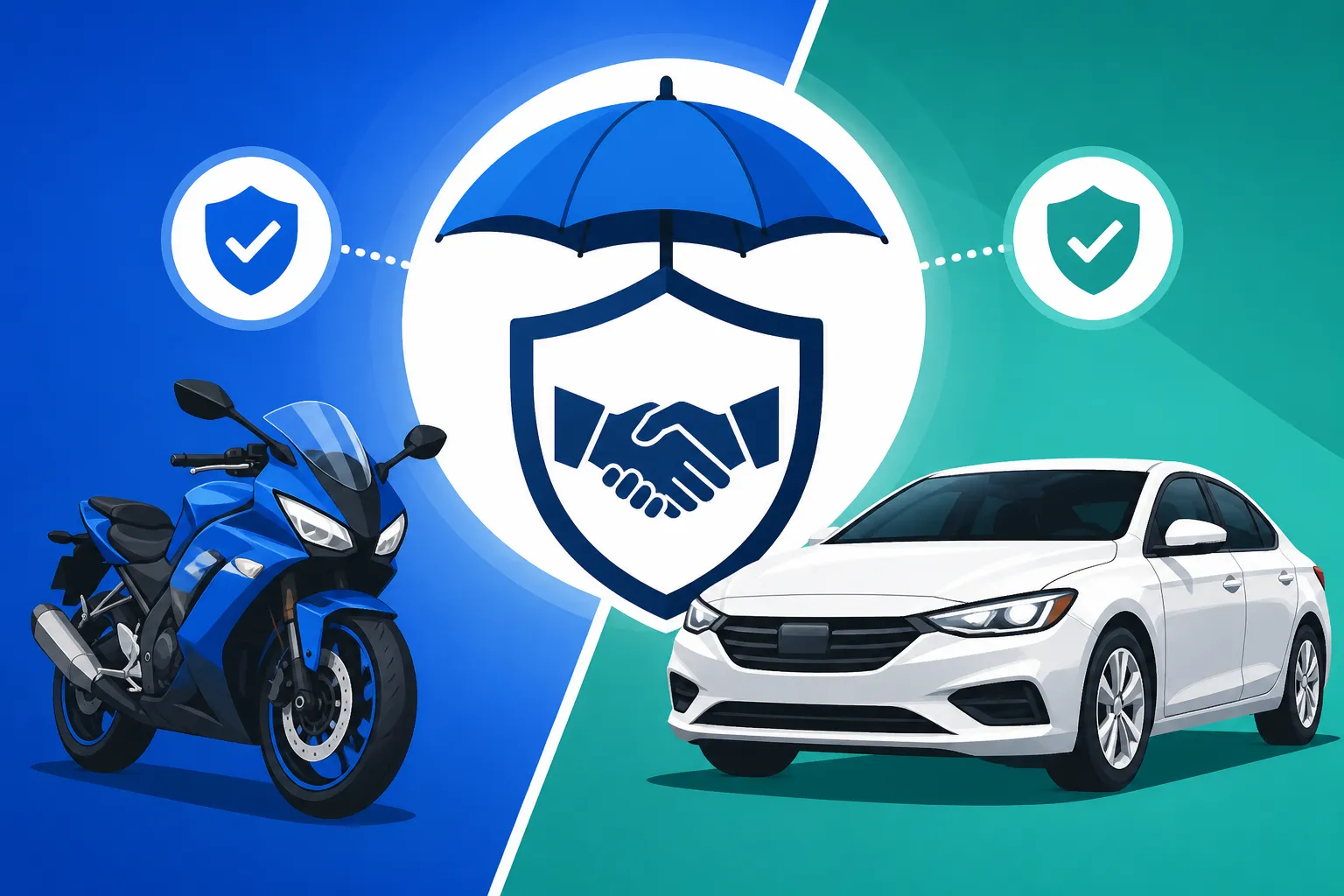
Can You Share Motorcycle Insurance With Your Car Policy?
You just bought your dream bike, and now you are staring at a stack of paperwork, wondering why on earth you have to manage two separate insurance premiums. It is a common frustration: you already have a reliable car policy, so why can't you just add the bike and be done with it? This guide explores the realities of combining coverage and how to streamline your protection.
Understanding the Difference Between Car and Motorcycle Policies
One of the most frequent questions new riders ask is whether their existing auto insurance automatically extends to a motorcycle. The short and often frustrating answer is no. Standard personal auto policies are specifically written for four-wheeled vehicles. Because motorcycles carry a significantly higher risk profile—including a higher likelihood of injury in an accident and a higher rate of theft—they require a dedicated motorcycle insurance policy.
When you look at Motorcycle Insurance vs Car Insurance Requirements, you will see that the actuarial data used to calculate your rates is fundamentally different for each vehicle. A car offers a protective metal cage, airbags, and stability. A motorcycle offers none of those things, which means your medical payments and liability needs are unique. Even if you use the same insurance company for both, they are usually treated as two distinct contracts. This is because the legal language required to cover a "passenger vehicle" does not legally encompass a "two-wheeled motorized vehicle" in most states.
Furthermore, the liability limits you choose for your sedan might not be the same ones you want for your cruiser. If you are riding in a state with complex laws, such as what you find in Michigan Motorcycle Insurance (No-Fault) Explained, you will realize that the "sharing" of a policy is less about the document itself and more about the relationship with the provider. You are essentially managing two different sets of risks under one roof.
How Bundling Works Instead of Sharing
While you cannot typically "share" a single policy document, you can absolutely bundle them. Bundling is the industry term for having multiple policies with the same provider, which usually triggers a significant discount. Most major carriers will allow you to link your car and motorcycle accounts so that you see them on the same mobile app and pay them through a single monthly statement. This creates the illusion of a shared policy while maintaining the legal distinction required by state regulators.
When you decide to bundle, you are often rewarded with a multi-policy discount that can range from 5% to 15% off both premiums. If you are trying to figure out if Bundling Motorcycle and Auto Insurance: Worth It?, the answer is almost always yes from a financial perspective. However, it is important to check if the company actually provides quality motorcycle coverage or if they are just a "car company" that happens to write bike policies as an afterthought.
Using a comparison platform like The Zebra can help you see which companies offer the best multi-policy rates. Sometimes, a company that is cheap for your Ford F-150 might be incredibly expensive for your Yamaha R6. In those cases, "sharing" the same insurance company might actually cost you more than having two separate, specialized providers. The Zebra allows you to plug in both vehicles to see the total household cost, which is the number that actually matters at the end of the month.
The Mechanics of Multi-Vehicle Accounts
When you add a bike to your household's insurance portfolio, the insurer will likely create a "companion policy." Here is what that looks like in a real-world scenario:
- Unified Billing: You receive one invoice for the total amount due for the car and the bike.
- Cross-Policy Discounts: The "Multi-Car" or "Multi-Policy" discount is applied to both the auto and the motorcycle portions.
- Single Point of Contact: You call the same agent or use the same app to file a claim, regardless of which vehicle was involved.
- Deductible Savings: Some elite "shared" bundles offer a single deductible. If a storm hits your garage and damages both your car and your bike, you might only have to pay one deductible instead of two.
Comparing Bundled vs. Separate Motorcycle Insurance
| Feature | Bundled (Shared Carrier) | Separate (Specialty Carrier) |
|---|---|---|
| Total Cost | Generally lower due to multi-policy discounts. | Might be higher, but specialized for the bike. |
| Paperwork | One account, one login, one bill. | Two separate accounts and payment dates. |
| Coverage Depth | Standard; might lack specialty bike add-ons. | Excellent for custom parts and gear. |
| Claims Process | Single point of contact for all vehicles. | Must contact different adjusters for different vehicles. |
| Ease of Use | High convenience for the average commuter. | Lower convenience, higher customization. |
Why Some Riders Prefer Separate Policies
Even though bundling sounds like the perfect solution for the "sharing" problem, veteran riders often steer clear of it. The reason is that standard auto insurers often lack the nuanced coverage options that a biker truly needs. For instance, if you have spent thousands of dollars on aftermarket exhaust systems or custom chrome, a standard car insurance company might only cover the "factory" value of the bike.
In these cases, you might want to look into Accessories & Custom Parts Coverage Explained to see how much you could lose in a claim with a generic car-focused company. Specialty insurers understand that a motorcycle is often more than just transportation; it is a specialized machine with expensive gear. If your helmet and leathers are damaged in a slide, a specialty motorcycle policy will often cover them, whereas a car-focused policy might ignore them entirely.
If you are riding a high-value or unique machine, you should also investigate Agreed Value vs Stated Value vs Actual Cash Value. Car insurance almost always uses "Actual Cash Value," which accounts for heavy depreciation. If you have a vintage bike that is appreciating in value, "sharing" a policy with your car could result in a massive financial loss if the bike is totaled. You want a policy that agrees on the value of the bike before the accident happens.
State Requirements and Legal Nuances
Your ability to "share" or bundle coverage is also heavily dictated by where you live. Each state has its own minimum liability requirements. For example, California Motorcycle Insurance Requirements might differ slightly from the auto requirements in the same state regarding how Uninsured Motorist coverage is applied. You cannot simply assume that because your car is "legal," your bike is too.
If you are a rider in a state that does not strictly require insurance—though this is rare and usually ill-advised—you still face financial responsibility laws. You can learn more about States That Don't Require Motorcycle Insurance to see the high stakes involved in riding unprotected. In most jurisdictions, the law requires you to carry a specific "Proof of Insurance" for the motorcycle that is separate from your car's insurance card. If a police officer pulls you over on your bike and you hand them your car's insurance card, you are likely going to receive a citation for Riding Across State Lines: Insurance & Helmet Rules or simply for lacking the correct documentation for that specific vehicle class.
Using The Zebra can help you navigate these state-specific hurdles by filtering companies that are licensed and knowledgeable about your local laws. This ensures that even if you are trying to keep things simple by sharing a provider, you are still meeting the strict legal definitions required for two-wheeled travel.
Common Mistakes When Mixing Car and Bike Coverage
- Assuming Guest Passenger Liability is included: Many car policies automatically cover passengers. On a motorcycle, you often need to specifically add Motorcycle Insurance Requirements for Passengers to ensure your friend on the pillion is protected.
- Neglecting the Endorsement: You might have the best insurance in the world, but if you don't have a motorcycle endorsement on your license, your "shared" insurance company might deny your claim. See Motorcycle License, Endorsement & Insurance for more details.
- Ignoring Lay-Up Periods: If you live in a cold climate, you might want Seasonal Lay-Up & Winter Storage Insurance. Car policies don't usually offer the option to "turn off" collision coverage for six months while the vehicle is in the garage, but many motorcycle policies do.
Strategic Tips for Getting the Best of Both Worlds
If your goal is to minimize the headache of multiple policies while maximizing your savings, start by gathering your current auto insurance declarations page. Take a look at your liability limits. Then, use The Zebra to run a quote for a "multi-policy" bundle. This will give you a baseline of what your current car insurer will charge to add the bike.
Next, run a separate quote for just the motorcycle through a specialty carrier. Sometimes the "specialty" rate is so much lower that it beats the bundled discount of the car insurer. For example, if you are a young rider, you might find that Motorcycle Insurance Cost for Young Riders Under 25 is prohibitively expensive with a standard auto carrier but surprisingly affordable with a company that specializes in sportbikes.
Ultimately, "sharing" insurance is about the relationship between your various risks. Whether you keep them on one bill or two, the goal is to ensure that a single mistake on the road doesn't result in a total financial meltdown. By understanding the Minimum Liability Insurance Explained (The Three Numbers), you can set your limits appropriately across all your vehicles, ensuring that your car, your bike, and your bank account are all equally protected.
Disclaimer
This guide is provided for informational purposes only and does not constitute legal or financial advice. Insurance requirements and policy structures vary significantly by state and individual provider. Always consult with a licensed insurance professional and review your specific state laws to ensure you are fully compliant and adequately covered before operating a motorcycle.