What Happens If You Ride Without Insurance?
It's a chilling thought for any rider: what happens if you're out on the open road, enjoying the freedom, and something goes wrong – all without a stitch of motorcycle insurance? Many riders might think they're saving a few bucks by skipping coverage, but let me tell you, that short-term "saving" can quickly turn into a financial and legal catastrophe. This comprehensive guide will walk you through the very real and often severe consequences of riding your motorcycle uninsured, from immediate penalties to devastating long-term financial impacts.
The Immediate Legal Repercussions of No Insurance
When a law enforcement officer pulls you over or you're involved in an accident, the first thing they'll ask for, right after your license and registration, is proof of insurance. If you don't have it, prepare for an immediate headache, and a lot of cascading problems.
Fines and Penalties by State
The penalties for riding without motorcycle insurance vary significantly from state to state, but none of them are minor. This isn't just a slap on the wrist; it can be a substantial financial hit right out of the gate. For instance, in a state like California, a first offense for operating a motorcycle without insurance can result in a fine of up to several hundred dollars, plus additional fees and penalty assessments that can easily push the total well over a thousand dollars. Texas can hit you with fines ranging from a few hundred to over a thousand dollars for repeat offenses. In Florida, the fines can be steep, and you might also face impoundment of your motorcycle.
It's not just the base fine; many states add court costs, administrative fees, and surcharges that quickly multiply the initial penalty. Imagine getting pulled over for a simple traffic stop and walking away with a bill larger than your monthly rent, all because you didn't have a piece of paper (or a digital ID) showing coverage. It's a rude awakening that can leave you scrambling to pay bills you never anticipated. The state doesn't care if you "forgot" or "couldn't afford it" – the law is the law. For a deeper dive into what your state requires, check out our guide on Motorcycle Insurance Requirements by State (2026 Guide).
License and Registration Suspension
Beyond the immediate financial drain, riding without insurance often carries the threat of losing your riding privileges. Many states, including New York and Virginia, implement strict license and registration suspension policies for uninsured motorists. If you're caught without insurance, your driver's license (or motorcycle endorsement) could be suspended for a period, sometimes for several months or even a year or more. This isn't just a temporary inconvenience; it means you cannot legally operate any motor vehicle, not just your motorcycle.
Think about the domino effect: no license means no legal commuting to work, no picking up groceries, no spontaneous weekend rides. Your motorcycle registration can also be suspended, making it illegal to even have your bike on public roads, even if it's just parked. Reinstating these privileges typically involves not only paying significant reinstatement fees but also providing proof of future financial responsibility, which often means getting an SR-22 filing – a costly, high-risk insurance certificate that we'll discuss more later. You might even find yourself asking, "What Happens If You Ride Without Insurance?" in a more serious way, as the consequences mount.
Vehicle Impoundment and Storage Fees
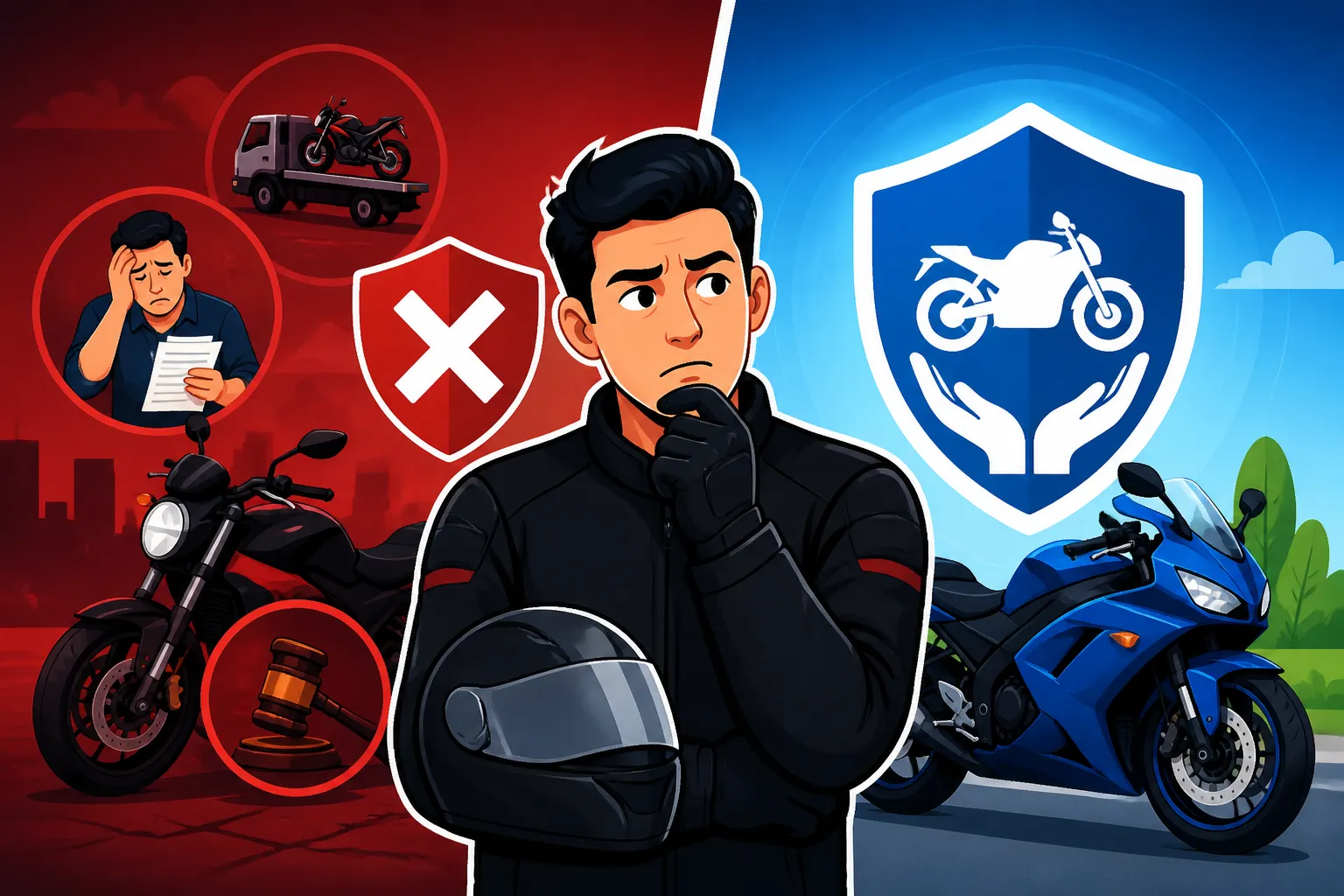
One of the most immediate and frustrating consequences of riding uninsured, especially in states like Florida or Arizona, is the possibility of your motorcycle being impounded on the spot. Law enforcement has the authority to seize your vehicle if it's being operated illegally. This isn't just a temporary hold; it means your prized possession will be towed to an impound lot, and the meter starts running on storage fees immediately.
Impoundment fees can stack up shockingly fast. Daily storage rates, towing fees, administrative charges – these can quickly amount to hundreds, if not thousands, of dollars. Before you can even think about getting your bike back, you'll likely need to show valid proof of insurance and pay all outstanding fines and fees. If you can't come up with the money promptly, those fees can escalate to the point where they exceed the value of your motorcycle, leaving you with the devastating choice of abandoning your bike or paying an exorbitant amount just to get it out. It's a nightmare scenario that many uninsured riders have faced firsthand.
Financial Fallout After an Accident
Let's be brutally honest: accidents happen, and when you're on a motorcycle, the stakes are incredibly high. If you're riding without insurance and you get into a crash, the legal fines and impoundment fees will seem like small potatoes compared to the financial devastation that can follow.
Personal Liability for Damages
If you're found at fault in an accident while riding uninsured, you are personally on the hook for every single penny of the damages you cause. This isn't just hypothetical; this is real life, and it can be ruinous. Imagine you accidentally T-bone a brand new SUV, causing tens of thousands of dollars in damage to the vehicle. Or, worse, you injure someone else, leading to extensive medical bills, lost wages, and pain and suffering.
Without liability insurance, the financial burden falls squarely on your shoulders. The other driver's insurance company will pay their client, but then they'll come after you to recoup those costs. This could mean lawsuits, wage garnishments, liens on your property, and even bankruptcy. A minor fender-bender could mean years of financial struggle, erasing savings, impacting your credit, and generally turning your life upside down. Our article on Liability Coverage for Motorcycles Explained details just how crucial this protection truly is. This is why having at least the minimum liability insurance is not just a legal requirement but a fundamental safeguard against financial ruin.
Out-of-Pocket Medical Bills
Motorcycle accidents, even minor ones, often result in injuries to the rider. If you're riding uninsured and you get hurt, guess what? All those medical bills are yours alone. Emergency room visits, ambulance rides, x-rays, surgeries, rehabilitation – these are incredibly expensive, and without health insurance or MedPay coverage through your motorcycle policy, you could be facing hundreds of thousands of dollars in debt.
And it's not just your own injuries. If you cause an accident and injure a passenger on your bike or another motorist, their medical expenses will also become your responsibility, in addition to property damage. When you're in excruciating pain, the last thing you want to worry about is how you're going to pay the hospital. This is a cold, hard truth of riding uninsured; the perceived savings vanish instantly when confronted with the crushing reality of healthcare costs. Think about a simple broken bone – easily thousands of dollars. A serious injury could be a lifetime of payments.
Repair or Replacement Costs for Your Bike
It's easy to focus on the damage you might do to others, but what about your own ride? If your motorcycle is damaged or even totaled in an accident, and you don't have collision coverage, you're looking at footing the entire repair or replacement bill yourself. This is particularly painful if your motorcycle is a newer model or a custom build.
Many riders invest thousands in their bikes, from aftermarket parts to custom paint jobs. Without comprehensive and collision coverage, that investment can vanish in an instant. A minor tip-over could mean a cracked fairing, bent handlebars, or a scraped engine casing – repairs that can easily run into the thousands. A more serious crash could mean your bike is totaled, leaving you with no way to replace it and still owing money on a loan if it's financed. Our post on Collision vs Comprehensive Motorcycle Coverage really breaks down how these coverages protect your bike. It's a harsh reality that many riders only truly understand after they've lost their beloved bike and have no insurance to fall back on.
Long-Term Consequences and Increased Costs
The repercussions of riding without insurance don't just stop with the immediate fines and accident costs. They can follow you for years, making future financial stability and even simple insurance much harder and more expensive to obtain.
Higher Insurance Rates and SR-22 Requirements
Getting caught without insurance, or being involved in an accident while uninsured, flags you as a high-risk driver in the eyes of insurance companies. This leads to significantly higher premiums when you finally do get coverage. It's not uncommon for your rates to double, triple, or even quadruple. Insurers view you as a much greater risk, and they price that risk accordingly.
Beyond just higher rates, many states will require you to obtain an SR-22 certificate (or sometimes an FR-44 in Florida or Virginia) for a period, typically three to five years. An SR-22 is not an insurance policy itself, but a certificate of financial responsibility that your insurance company files with the state DMV, proving you carry the minimum required liability coverage. This designation acts as a red flag, further driving up your insurance costs, as fewer companies are willing to insure SR-22 riders, and those that do charge a premium. If you're curious about this, our article on SR-22 for Motorcycles: When It's Required provides a deep dive. The cost of an SR-22 filing alone, combined with increased premiums, can easily make that initial "saving" look incredibly foolish.
Difficulty Obtaining Future Coverage
Once you have a history of riding without insurance, or worse, have been involved in an accident as an uninsured motorist, securing coverage in the future can become incredibly challenging. Many standard insurance companies might outright refuse to offer you a policy. They see you as too great a risk, a liability they'd rather avoid.
You might find yourself relegated to non-standard or "high-risk" insurance carriers, which, while they offer coverage, do so at significantly inflated rates. These policies often come with higher deductibles and more restrictive terms. This isn't just about finding the cheapest motorcycle insurance; it's about finding any insurance at all. The ease of getting a quote online or over the phone disappears, replaced by a frustrating and often expensive search for a company willing to take you on. Your past actions essentially blacklist you from the mainstream market, limiting your options and increasing your costs indefinitely.
Impact on Your Driving Record
Riding without insurance doesn't just impact your motorcycle record; it often puts a black mark on your overall driving record, which can affect your ability to insure cars or other vehicles as well. Most states share information about uninsured motorists, and traffic violations often transfer across different vehicle types. A conviction for driving without insurance on your motorcycle can show up when you try to renew your car insurance, leading to higher premiums for all your vehicles.
This record can also impact other areas of your life. Some employers, particularly those requiring driving, may run background checks that reveal your driving history. A poor driving record, especially one marred by serious infractions like driving uninsured, could potentially jeopardize job opportunities or increase your cost for other types of insurance, like life insurance. It paints a picture of irresponsibility that extends beyond just your riding habits. Your driving record is like your financial credit score for the road, and an uninsured incident can severely ding it for years.
Understanding Your State's Financial Responsibility Laws
Every state in the U.S. has some form of financial responsibility law, meaning you must be able to pay for damages and injuries you cause in an accident. For most riders, this means carrying motorcycle insurance. Ignoring these laws is not an option.
Minimum Coverage Requirements
It's not enough to simply have insurance; you need to meet your state's minimum coverage requirements. These minimums usually refer to liability coverage, which pays for damages and injuries you cause to others in an accident. The common format for these requirements is a series of three numbers, like 25/50/25, which stands for:
- $25,000 for bodily injury liability per person
- $50,000 for total bodily injury liability per accident
- $25,000 for property damage liability per accident
Some states have different numbers, like California's 15/30/5, or Maryland's 30/60/15. These are the absolute bare minimums to legally ride. Anything less, and you're considered uninsured. Even if you think you have coverage, if it doesn't meet these specific numbers, you could still face penalties for riding without proper insurance. For a breakdown of these numbers, our article on Minimum Liability Insurance Explained (The Three Numbers) is an excellent resource. It's crucial to know exactly what your state mandates, not just assume any policy will do.
Proof of Insurance
Even if you have the best motorcycle insurance policy in the world, it's useless if you can't prove you have it when asked. Most states require you to carry proof of insurance while riding. This can typically be in the form of a physical insurance card issued by your insurer or, increasingly, digital proof on your smartphone.
Failing to provide proof of insurance can lead to fines, even if you are actually insured. While these fines are usually less severe than riding genuinely uninsured, they're still an unnecessary hassle and expense. Always make sure you have your current insurance card or digital access readily available, perhaps stored securely in your jacket or a dedicated compartment on your bike. Don't give an officer any reason to question your legality on the road. Remember, Proof of Insurance: Digital vs Paper for Riders discusses the nuances of what's acceptable.
States with "No-Fault" or Specific Rules
While most states operate under an "at-fault" system where the responsible party's insurance pays, a few states, like Michigan, have "no-fault" insurance laws that can complicate things, especially for motorcyclists. In a pure no-fault system, your own insurance would typically pay for your medical expenses regardless of who caused the accident. However, for motorcycles, it's often more complex.
Michigan, for example, is a no-fault state for cars, but motorcycles are largely excluded from many of its no-fault benefits. This means if a motorcyclist is injured in an accident involving a car, the motorcyclist may still have to seek compensation from the at-fault driver's car insurance policy. If you're riding uninsured in a state with these nuanced rules, the consequences can be even more confusing and financially devastating. Understanding these specific state laws, especially in places like Michigan, is critical to avoid major pitfalls. Our detailed guide on Michigan Motorcycle Insurance (No-Fault) Explained sheds more light on this unique situation.
| State | First Offense Penalty | License/Registration Impact | Vehicle Impoundment Potential | SR-22 Requirement |
|---|---|---|---|---|
| California | Fine of $100-$200 + court fees, typically totaling $400-$800. | Suspension for 4 years if involved in accident. | Yes | Yes |
| Texas | Fine of $175-$350 + court costs. Repeat offenses up to $1,000. | Suspension until proof of insurance provided. | Yes | Yes |
| Florida | Fine of $150 minimum + reinstatement fees of $150-$500. | Suspension for 3 years, sometimes longer. | Yes | FR-44 |
| New York | Fine of $150-$1,500, possibility of jail up to 15 days. | License revocation for at least one year. | Yes | Yes |
| Ohio | Fine of $100-$1,000 + court costs. | Suspension for 90 days (first offense). | Yes | Yes |
Note: Penalties are subject to change and may vary based on specific circumstances and jurisdiction. This table is for illustrative purposes only.
Why Taking the Risk Isn't Worth It
Given the litany of potential problems, from immediate fines to long-term financial ruin, it becomes abundantly clear that riding without motorcycle insurance is a gamble with incredibly high stakes. The perceived savings are simply not worth the immense risk.
The Illusion of Saving Money
It's tempting, especially for young riders or those on a tight budget, to skip motorcycle insurance to save a few hundred dollars a year. Many think, "I'm a safe rider, I won't get into an accident," or "I'll just deal with it if something happens." This is a dangerous gamble. The upfront cost of an annual policy, which can range from a few hundred to a couple of thousand dollars depending on your bike, age, and riding history, pales in comparison to the potential costs of riding uninsured.
Consider this: a simple liability-only policy might cost you a few hundred dollars a year. Compare that to a single traffic ticket for no insurance (potentially $500+), impoundment fees ($100s per day), or, God forbid, an at-fault accident resulting in property damage and injuries (potentially $100,000+). The "savings" are an illusion, a dangerous bet against astronomical odds. It’s far cheaper and wiser to invest in even the most basic coverage than to face the crushing debt that can come from being uninsured. For tips on reducing costs, look into How to Get Cheap Motorcycle Insurance.
Peace of Mind and Protection
Beyond the financial and legal aspects, having motorcycle insurance provides an invaluable, often overlooked benefit: peace of mind. Knowing that you're protected, that your family won't be burdened by your financial liabilities in an accident, allows you to truly enjoy the freedom and exhilaration of riding.
When you're insured, you can focus on the road, on the curves, and on the wind in your face, rather than worrying about what might happen if an uninsured driver hits you, or if you accidentally cause damage. It's a safety net that lets you embrace the passion of motorcycling without the constant underlying stress of catastrophic financial risk. This peace of mind extends to knowing that if your bike is stolen, or if a tree falls on it in a storm, your comprehensive coverage will help you get back on two wheels.
Legal vs. Smart Riding
Many states only require liability insurance, and some riders might think meeting the bare minimum is "smart." While it fulfills the legal requirement, truly smart riding goes beyond simply avoiding a ticket. Liability coverage protects others if you're at fault, but it does little for you or your bike.
Considering additional coverages like collision (for damage to your bike), comprehensive (for theft, vandalism, weather), uninsured/underinsured motorist (for when others are uninsured), and medical payments (for your own injuries) is what truly constitutes smart riding. These additional protections safeguard your investment, your health, and your future. Think about it this way: your motorcycle is an asset, and your well-being is priceless. Insurance is there to protect both. Don't just ride legally; ride smartly and protect yourself comprehensively. Our article on What Motorcycle Coverage Do You Actually Need? can help you decide.
Disclaimer
This article is for general informational purposes only and does not constitute professional advice. Laws, prices and regulations vary by location and change over time. Consult a qualified professional for guidance on your specific situation.