Motorcycle Helmet Laws by State
Riding a motorcycle offers an unparalleled sense of freedom, but that freedom comes with immense responsibility, especially concerning safety and legal compliance. One of the most common and often confusing aspects for riders across the United States is navigating the patchwork of motorcycle helmet laws that vary dramatically from state to state. Whether you're a seasoned cross-country tourer or a new rider sticking to local roads, understanding these regulations is absolutely critical – not just to avoid tickets, but to protect yourself and ensure your insurance coverage remains valid. This guide will meticulously break down every facet of motorcycle helmet laws, helping you ride legally and safely, no matter where your journey takes you.
Understanding Motorcycle Helmet Laws: A National Overview
It's easy to assume that helmet laws are uniform across the country, but that couldn't be further from the truth. The United States has a diverse legal landscape when it comes to motorcycle helmets, leading to a complex set of rules that can be a real headache for riders. This isn't just about a simple "yes" or "no" to wearing a helmet; it delves into age restrictions, specific types of helmets, and how these laws are enforced.
The Federal Standard vs. State Laws
While individual states legislate their own helmet requirements, there's an overarching federal standard that plays a significant role in helmet safety: the Department of Transportation (DOT) certification. This isn't a law that dictates if you must wear a helmet, but rather a standard that dictates what type of helmet is considered safe and legal if a helmet is required by state law. Every helmet sold in the U.S. that claims to offer protection for motorcycling is supposed to meet this standard, indicated by a DOT sticker on the back. It's designed to ensure helmets can withstand impact, offer peripheral vision, and have adequate chin straps.
The federal government, through the National Highway Traffic Safety Administration (NHTSA), has long encouraged states to adopt universal helmet laws, often tying highway funding incentives to these regulations. This push is rooted in extensive research demonstrating the effectiveness of helmets in reducing fatalities and severe injuries. However, states retain the autonomy to decide their specific laws, leading to the variations we see today. So, while the DOT sets the benchmark for helmet quality, it's your state's legislature that decides whether you need to wear one.
The Evolution of Helmet Legislation
The history of motorcycle helmet laws in the U.S. is a winding road, often influenced by public safety campaigns, rider advocacy groups, and federal incentives. In the late 1960s, most states adopted universal helmet laws, largely due to a federal mandate under the Highway Safety Act of 1966, which threatened to withhold highway funds from states that didn't comply. This led to a dramatic increase in helmet use and a corresponding drop in rider fatalities.
However, over time, many states repealed or modified these universal laws, often under pressure from rider rights organizations arguing for individual freedom of choice. This shift primarily occurred in the late 1970s and early 1980s, creating the current fragmented system where some states maintain universal laws, others have partial laws (usually based on age), and a few have no specific helmet law at all for adult riders. This ever-changing landscape means that what was legal a decade ago might not be today, underscoring the importance of staying informed.
Universal Helmet Law States: What Riders Need to Know
When a state has a universal helmet law, it means that all motorcycle riders and passengers, regardless of age or experience, are legally required to wear a DOT-compliant helmet whenever they're on the road. These laws are typically the most straightforward, leaving little room for interpretation, but they come with their own set of considerations.
The List of Universal Helmet States
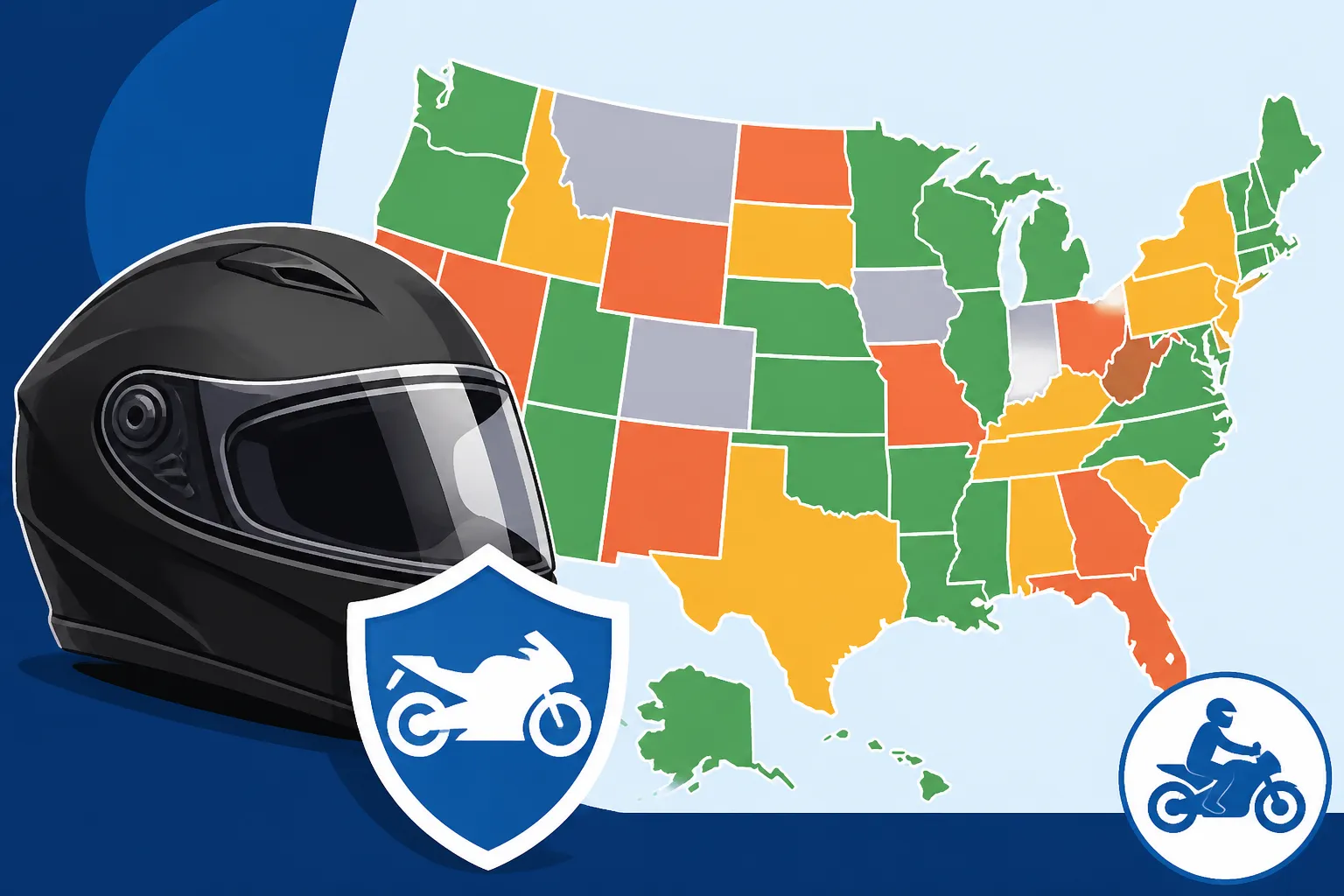
Currently, a significant portion of states, along with Washington D.C., enforce universal helmet laws. These include states like Alabama, California, Georgia, Maryland, Massachusetts, Mississippi, Missouri, Nebraska, Nevada, New Jersey, New York, North Carolina, Oregon, Tennessee, Vermont, Virginia, Washington, and West Virginia. Some other states like Delaware, Florida, and Pennsylvania also have universal helmet laws, but with specific nuances, particularly regarding insurance coverage for riders over a certain age if they choose not to wear a helmet, though these are rare exceptions to the universal rule.
For example, in California, every single rider, from the greenest newbie to the most seasoned veteran, must wear a helmet. There are no exceptions based on age or insurance coverage. If you're riding through Los Angeles on your classic Harley or carving canyons in Malibu on your sportbike, that helmet needs to be strapped on and DOT-compliant. This clear-cut approach aims to maximize safety for all riders on their roads. Similarly, New York's law is equally strict, requiring helmets for all. For a deeper dive into these specific regulations, you might want to check out our detailed guide on Motorcycle Helmet Laws by State.
Benefits and Criticisms of Universal Laws
The primary benefit of universal helmet laws is demonstrably increased safety. Studies by organizations like the Insurance Institute for Highway Safety (IIHS) consistently show that states with universal helmet laws have significantly lower motorcycle fatality rates compared to states with weaker or no laws. Helmets are proven to reduce the risk of head injury by 69% and death by 37% in motorcycle crashes. This translates to fewer severe injuries, lower healthcare costs, and a reduced burden on emergency services.
However, these laws face criticism from some rider groups who argue that they infringe upon personal freedoms. They contend that adult riders should have the right to choose whether or not to wear a helmet, citing arguments about impaired peripheral vision (which is largely unsubstantiated with modern DOT helmets) or simply the desire for the "wind in their hair" experience. While these arguments highlight a philosophical debate about personal liberty, the scientific evidence overwhelmingly supports the safety benefits of helmet use.
Partial Helmet Law States: Nuances and Age Restrictions
The majority of U.S. states fall into the "partial helmet law" category. This is where things get considerably more complicated, as the requirements are not uniform and often hinge on a rider's age, sometimes with additional stipulations.
Age-Based Requirements and Exemptions
In most partial helmet law states, riders under a certain age are legally mandated to wear a helmet, while adult riders (typically those 18 or 21 and older) may have the option to ride without one, or under certain conditions. Common age cut-offs are 18 or 21 years old. For instance, in Texas, riders under 21 must wear a helmet. However, riders 21 and older can ride without a helmet if they have successfully completed a motorcycle safety course or carry medical insurance that covers at least $10,000 in injuries. This isn't just a suggestion; it's a specific legal requirement to be exempt from helmet use.
Other states, like Arizona, also have age-based requirements. In Arizona, riders and passengers under 18 must wear a DOT-compliant helmet. Once you hit 18, you generally have the choice, assuming you meet any other local ordinances. This means a rider from Phoenix heading north to Sedona could legally take off their helmet once they turn 18, but a younger rider would be breaking the law. It’s a classic example of how laws can feel inconsistent, but they are rooted in the legislative idea of protecting younger, less experienced riders while allowing adults more personal choice.
Other Conditions and Waivers
Beyond age, some partial helmet states introduce other conditions or "waivers" that allow adult riders to forgo a helmet. As mentioned with Texas, proof of medical insurance coverage is a common one. The logic here is that if you choose not to wear a helmet, you should be able to cover your own medical bills in the event of an accident, rather than burdening public healthcare systems or uninsured motorist funds. In Florida, riders 21 and older can ride without a helmet if they are covered by an insurance policy providing at least $10,000 in medical benefits for injuries incurred in a motorcycle crash. This effectively links helmet choice to financial responsibility.
It's also worth noting that specific types of vehicles might have different rules. For instance, while traditional motorcycles are subject to these laws, some states might have distinct rules for mopeds, scooters, or three-wheeled vehicles. Always double-check the precise wording of your state's Vehicle Code, because sometimes a technicality can make all the difference. For more details on what counts as proof of insurance, you can check out our article on Proof of Insurance & Registration for Motorcycles.
Riding in States with No Helmet Laws: The Reality
While most states have some form of helmet law, a small number currently do not impose any statewide helmet mandate for adult riders. This can sound appealing to those who champion complete freedom on two wheels, but it comes with a unique set of considerations and risks that are important to fully understand.
The "No Law" States and What It Means
As of early 2026, there are only a few states that have no statewide motorcycle helmet laws for adult riders, meaning all riders 18 and older can legally choose whether or not to wear a helmet. Iowa and New Hampshire are two prominent examples. In New Hampshire, the state motto "Live Free or Die" seems to extend to motorcycle helmet choices, as there's no law requiring adult riders or passengers to wear helmets, though it is still strongly recommended for safety.
This doesn't mean safety is disregarded entirely. Many riders in these states still choose to wear helmets for their own protection. It simply shifts the legal decision-making from the state to the individual. For riders from universal or partial helmet law states, it's crucial to understand that while you might not be required to wear a helmet in these specific states, the general principles of safe riding, including the use of protective gear, remain paramount.
Risks and Ramifications of Helmet-Free Riding
Choosing to ride without a helmet, even where legally permissible, carries significant risks. The primary and most obvious risk is the heightened chance of severe head injury or fatality in a crash. Helmets are designed to absorb impact, preventing or mitigating traumatic brain injuries (TBIs) that can have devastating, life-altering consequences. Without a helmet, even a low-speed fall can result in a fatal head injury. Hospitals in states with no helmet laws often see a higher incidence of severe motorcycle-related head trauma.
Beyond personal injury, there can be financial and legal ramifications. While not mandated by law, your motorcycle insurance company might view riding without a helmet as increasing your risk. In some instances, if you are involved in an accident without a helmet, even if it's not legally required, the insurance company could potentially argue negligence, which could impact your claim payout for injuries or medical expenses. This is particularly relevant if your policy has specific clauses related to reckless behavior or failure to mitigate risk. Understanding the intricacies of Motorcycle Insurance Requirements by State (2026 Guide) can help you navigate these potential issues.
Helmet Standards and Safety: Beyond the Law
Even if your state doesn't require a helmet, or if you're riding in a partial law state and are old enough to choose, understanding helmet standards and prioritizing safety is crucial. Not all helmets are created equal, and simply having "a helmet" isn't enough; it needs to be the right kind of helmet.
DOT, Snell, and ECE Certifications
When we talk about "DOT-compliant" helmets, we're referring to helmets that meet the minimum safety standards set by the U.S. Department of Transportation. This certification means the helmet has been tested to withstand certain impacts, absorb energy, and provide adequate coverage and peripheral vision. Always look for the DOT sticker on the back of any helmet you purchase.
Beyond DOT, you'll often see other certifications:
- Snell (Snell Memorial Foundation): This is a non-profit organization that sets even more rigorous testing standards than DOT. Snell certification is often sought by racers and riders who want the highest level of protection. Snell-certified helmets typically undergo more intense impact tests, including multiple impacts in the same spot, and offer superior penetration resistance.
- ECE (Economic Commission for Europe): This is a widely recognized international standard, particularly prevalent in Europe. ECE 22.05 (and newer 22.06) is an excellent standard, often considered comparable to or exceeding DOT standards in many aspects, particularly in terms of penetration resistance and retention system strength. Many high-quality helmets sold globally will carry an ECE certification.
Choosing a helmet with multiple certifications, like DOT and Snell or DOT and ECE, offers an enhanced level of assurance regarding its protective capabilities. Don't be fooled by "novelty" helmets that might look cool but offer little to no real protection; they typically lack DOT certification and are illegal to wear in states with helmet laws.
Choosing the Right Helmet Type and Fit
Selecting the correct helmet involves more than just checking for certifications; it's also about the type of helmet and its fit.
- Full-Face Helmets: These offer the most comprehensive protection, covering your entire head, face, and chin. They are widely considered the safest option.
- Modular (Flip-Up) Helmets: These offer the convenience of a flip-up chin bar for communication or quick breaks, but provide nearly full-face protection when closed.
- Open-Face (3/4) Helmets: These cover the top, back, and sides of your head, but leave your face exposed. Goggles or a face shield are recommended.
- Half Helmets: These cover only the top of your head and ears, offering the least protection. They are usually chosen for maximum airflow and minimal obstruction, but the safety trade-off is significant.
Regardless of the type, the fit is paramount. A helmet should feel snug all around your head without being uncomfortably tight or causing pressure points. It shouldn't move freely when you shake your head. The chin strap must be securely fastened, as a loose helmet is a useless helmet in a crash. Always try on several helmets and consult sizing guides, as different brands fit differently. Think of your helmet as an investment in your well-being, not just a legal requirement.
Penalties and Consequences of Non-Compliance
Ignoring helmet laws, whether universal or partial, can lead to a host of unpleasant consequences beyond the obvious safety risks. These penalties can vary by state but typically involve fines, points on your license, and even impoundment of your motorcycle in some extreme cases.
Fines, Tickets, and License Points
The most immediate consequence of riding without a legally required helmet is a traffic citation. Fines for helmet law violations can range from nominal amounts in the lower double digits to several hundred dollars, depending on the state and jurisdiction. For instance, in California, a helmet violation typically comes with a fine and potentially a point on your driving record. Accumulating too many points can lead to increased insurance premiums or even license suspension.
Some states might also consider riding without a helmet as a secondary offense, meaning you wouldn't be pulled over solely for that reason, but it could be added to another violation. However, in universal helmet law states, it's almost always a primary offense, and law enforcement can pull you over just for the lack of a helmet. It's an easily avoidable infraction that can quickly become costly. You can learn more about these consequences by reading our guide on Penalties for Riding Without Insurance.
Impact on Insurance Claims and Liability
This is where the financial stakes get really high. While not wearing a helmet might not directly invalidate your insurance policy, it can significantly impact how your insurance claim is handled after an accident. If you're involved in a crash in a state where a helmet is legally required, and you weren't wearing one, the insurance company or the opposing party's legal team might argue that your injuries, particularly head injuries, were exacerbated by your non-compliance. This is often referred to as the "comparative negligence" or "contributory negligence" defense.
In states with comparative negligence laws, if you are found partially at fault for your injuries due to not wearing a helmet, your compensation could be reduced proportionally. For example, if a jury determines you are 20% responsible for the severity of your head injuries because you weren't wearing a helmet, your award could be cut by 20%. In states with stricter contributory negligence laws (which are few), you might be barred from recovering any damages if you contributed even slightly to your injuries through non-compliance. This makes adhering to helmet laws not just about avoiding a ticket, but about protecting your financial future in the event of an accident.
How Helmet Laws Affect Your Motorcycle Insurance
It's natural to wonder how something as fundamental as a helmet law might interact with your motorcycle insurance policy. The connection is multi-faceted, influencing everything from the availability of coverage to how claims are processed.
Underwriting and Risk Assessment
Insurance companies are all about assessing risk. Riders who consistently follow safety laws, including helmet mandates, are generally perceived as lower risk. While most insurers don't offer a direct "helmet use discount" like they might for a motorcycle safety course, consistent compliance with traffic laws (which includes helmet laws) contributes to a clean driving record, which does lead to lower premiums. A history of violations, including helmet tickets, can flag you as a higher-risk rider, potentially increasing your rates or even making certain insurers less willing to offer you coverage.
Some insurers, while not explicitly offering a discount, might factor in a rider's state of residence and its helmet laws when calculating premiums. In states with universal helmet laws, the overall risk profile of riders might be slightly lower due to higher helmet usage, which can subtly influence regional average rates. Conversely, in states with weaker laws, insurers might price in the higher potential for severe injuries.
Claim Payouts and Subrogation
As discussed, non-compliance with helmet laws can create significant headaches during a claim. If you suffer a head injury in a crash while not wearing a legally required helmet, your insurance company might still cover your medical expenses under your Personal Injury Protection (PIP) or Medical Payments (MedPay) coverage, depending on your policy and state. However, they might also seek to limit their payout for other damages if they can successfully argue your injuries were made worse by your choice not to wear a helmet.
Furthermore, if the other driver was at fault and their insurance company is paying your claim, they will almost certainly use your non-compliance with helmet laws as leverage to reduce their payout, especially for head-related injuries. This is called subrogation, where they try to shift some of the financial responsibility back to you. It creates a complicated legal battle where you could end up footing a larger portion of your medical bills than if you had simply worn a helmet. This makes understanding your liability coverage for motorcycles explained crucial for every rider.
| State Type | Helmet Requirement | Typical Penalties | Potential Insurance Impact |
|---|---|---|---|
| Universal Law States | All riders & passengers | Fines, points, potential impound | May affect claim payouts if non-compliant; general lower risk profile. |
| Partial Law States | Age-based (e.g., under 18/21), sometimes with insurance/course waivers | Fines, points for non-compliant age groups or unmet waivers | Similar to universal for non-compliant age groups; may affect claim for adults not meeting waiver requirements. |
| No Helmet Law States | None (for adults) | None | May still affect claim payouts if negligence is argued, even if legal. |
Navigating Helmet Laws When Riding Across State Lines
One of the great joys of motorcycling is the freedom to explore, often crossing state borders without a second thought. However, this freedom comes with the responsibility of understanding that the helmet laws in your home state might not apply just a few miles down the road. This requires a proactive approach to stay legal and safe.
The Importance of Researching Your Route
Before embarking on any multi-state motorcycle trip, it's absolutely essential to research the helmet laws of every state you plan to ride through. What's perfectly legal in Texas (for an adult with insurance) could get you a hefty ticket the moment you cross into Louisiana, which has a universal helmet law. Similarly, if you start your ride in New Hampshire without a helmet, but plan to pass through Massachusetts, you'll need to secure and wear a DOT-compliant helmet before entering the Bay State.
Many experienced riders maintain a small, easily stowable helmet for passengers or for themselves in case they cross into a universal helmet law state. The safest and simplest advice is always to wear a DOT-compliant helmet, regardless of the state's specific law. This eliminates any confusion, keeps you legal, and most importantly, protects you. Understanding Riding Across State Lines: Insurance & Helmet Rules is vital for any rider planning a road trip.
Reciprocity and Enforcement Considerations
Generally, when you ride into another state, you are subject to that state's traffic laws, including their helmet laws. There isn't a widespread "reciprocity" agreement where your home state's rules automatically apply. Law enforcement officers in any given state will enforce their state's laws, not those of your originating state. So, arguing that you're from a "no helmet law" state won't get you out of a ticket if you're caught without one in a universal helmet state.
Furthermore, police officers can be particularly vigilant with out-of-state riders, as they're often aware that tourists might not be familiar with local laws. This means an out-of-state license plate might attract more attention if you're not complying with local helmet mandates. The bottom line is, ignorance of the law is rarely an acceptable defense, and it's your responsibility as a rider to know and follow the rules of the road wherever you go. Stay informed, stay safe, and enjoy the ride!
Disclaimer
Please note that motorcycle laws, including helmet requirements, are subject to change. While we strive to provide the most current and accurate information, it is always advisable to consult your local Department of Motor Vehicles (DMV) or equivalent state agency for the most up-to-date regulations before riding. This guide is for informational purposes only and does not constitute legal or insurance advice.