Texas Motorcycle Insurance Requirements
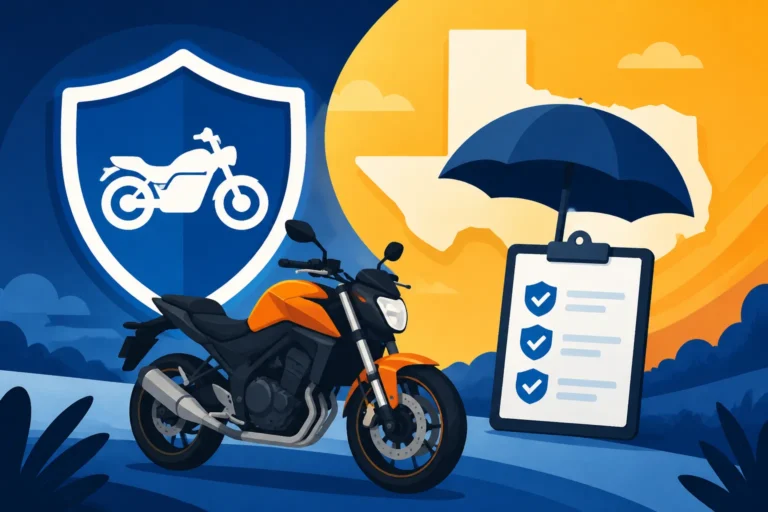
Riding a motorcycle in the Lone Star State brings a unique sense of freedom, but it also comes with crucial responsibilities, not least of which is understanding the ins and outs of motorcycle insurance. It can feel like a maze, trying to figure out exactly what coverage you need to legally hit the open road and protect yourself from unexpected financial burdens if an accident or incident occurs. This guide is here to untangle the complexities, offering a deep dive into Texas’s specific motorcycle insurance requirements and helping you navigate the options available to keep you riding confidently and legally.
The Mandate to Ride Covered
Texas, like most states, doesn’t mess around when it comes to financial responsibility on the road. It’s not just about protecting other drivers; it’s about ensuring that if you’re involved in an accident, there are funds available to cover the damages or injuries you might inflict on others. For motorcyclists, this mandate is just as stringent as it is for cars, ensuring everyone on two wheels (or three, in some cases!) carries their fair share of responsibility. Without proper coverage, you’re not just risking legal penalties; you’re exposing yourself to potentially ruinous out-of-pocket costs.
Protecting Yourself and Others on the Road
Think about it: a motorcycle offers less protection than a car in an accident. While we all strive for safe riding, the reality is that mishaps can happen, often due to factors beyond our control. Having the right motorcycle insurance in Texas isn’t just a legal checkbox; it’s a critical safety net. It safeguards you against the financial fallout of property damage to someone else’s vehicle or injuries to another person, allowing you to focus on recovery rather than crushing debt. It’s a fundamental part of being a responsible rider in a state known for its wide-open spaces and sometimes equally wide-open traffic.
Minimum Liability Coverage in Texas
When we talk about the absolute bare minimum you need to ride legally in Texas, we’re talking about liability insurance. This isn’t coverage for your bike or your injuries; it’s designed to pay for the damages and injuries you might cause to other people in an accident where you are at fault. The state sets specific amounts for this, often referred to as “split limits,” and it’s essential to know these numbers inside and out.
Decoding the 25/50/25 Rule
In Texas, the minimum liability coverage for motorcycles (and cars) is often expressed as “25/50/25.” What in the world do those numbers mean? Well, let’s break it down, because it’s super important.
- $25,000 for bodily injury liability per person: This is the maximum amount your insurance company will pay for medical expenses, lost wages, and pain and suffering for one person injured in an accident where you are at fault. So, if you hit another vehicle and injure the driver, your policy will pay up to $25,000 for their expenses.
- $50,000 for bodily injury liability per accident: This is the absolute maximum your policy will pay for all medical expenses, lost wages, and pain and suffering for everyone injured in a single accident where you are at fault, regardless of how many people are hurt. If there are three injured parties, and one person’s bills hit $25,000, and the other two have $15,000 each in bills, your policy would pay out $25,000 to the first person and then divide the remaining $25,000 ($50,000 total minus the first $25,000 payout) between the other two, potentially leaving them with out-of-pocket costs.
- $25,000 for property damage liability per accident: This is the maximum your policy will pay for damage to other people’s property (like their vehicle, a fence, or a building) in an accident where you are at fault. So, if you T-bone a brand new Ford F-150, your policy will cover up to $25,000 of the repair or replacement cost.
Understanding these numbers is key, and you can learn more about what the Minimum Liability Insurance Explained (The Three Numbers) really mean in practical terms. It’s also crucial to remember that these are just the minimums. Many seasoned riders and even state officials will tell you that these amounts might not be enough to cover serious accidents in today’s world of rising medical costs and expensive vehicle repairs. If you cause an accident and the damages exceed these limits, you’re personally responsible for the rest.
What Liability Coverage Actually Pays For
As we just discussed, motorcycle liability insurance in Texas is all about protecting you financially when you’re found responsible for an accident that impacts someone else. It’s not about patching up your bike or paying for your own hospital stay. Specifically, it covers:
- Medical bills for injured parties: If the driver or passengers in another vehicle, or even a pedestrian, are hurt in an accident you cause, your bodily injury liability will help pay for their emergency care, hospital stays, doctor visits, medications, and rehabilitation.
- Lost wages for injured parties: If someone you injure can’t work due to their injuries, this part of your coverage can compensate them for their lost income.
- Pain and suffering: While harder to quantify, this also falls under bodily injury liability and can cover the non-economic damages an injured party experiences.
- Damage to other vehicles: If you ding a fender or total another car, your property damage liability kicks in to cover the costs of repairing or replacing their vehicle.
- Damage to other property: This isn’t just about cars. If you somehow run into a mailbox, a fence, or even a storefront, your property damage coverage would help pay for those repairs.
It’s a foundational piece of your financial protection as a rider. Without it, even a minor fender bender could turn into a major financial nightmare. For a broader overview of coverage types, checking out a guide on Types of Motorcycle Insurance Coverage Explained can be really helpful.
Understanding Texas’s Financial Responsibility Laws
Texas law makes it clear: if you operate a vehicle, including a motorcycle, on public roads, you must be able to prove financial responsibility. Most people satisfy this requirement by purchasing a liability insurance policy. However, it’s not the only way, though it is by far the most common and practical for the vast majority of riders.
How Insurance Fulfills Financial Responsibility
For most of us, “proof of financial responsibility” is synonymous with “proof of insurance.” When you buy a motorcycle liability insurance policy that meets the state’s minimum 25/50/25 requirements, you’ve essentially satisfied the legal mandate. Your insurance card, or an electronic version on your phone, serves as your official documentation that you’re covered. This makes traffic stops, vehicle registration, and other administrative tasks much smoother.
It’s crucial to understand that even if you have a pristine riding record, carrying this basic insurance is non-negotiable. The state wants assurance that if you were to make a mistake on the road, there’s a mechanism in place to compensate those affected without them having to sue you personally for every dime you own. This is especially relevant in Texas, where the state operates under an at-fault system, meaning the person who causes the accident is responsible for the resulting damages. You can delve deeper into Financial Responsibility Laws for Riders to understand how these frameworks apply across different scenarios.
Alternatives to Traditional Insurance
While insurance is the go-to, Texas law does offer a few alternative ways to demonstrate financial responsibility. These are far less common for individual motorcyclists due to their stringent requirements and the significant capital outlay involved.
- Self-Insurance Certificate: This isn’t just for anyone. To qualify, you generally need to own more than 25 vehicles and provide a bond or cash deposit with the Texas Department of Public Safety (DPS) that meets the minimum liability requirements. For a single rider, this is almost certainly not an option.
- Cash Deposit: You could deposit $55,000 in cash or a cashier’s check with the county judge where you reside. This covers the minimum 25/50/25 bodily injury and property damage amounts ($25,000 + $50,000 + $25,000 = $100,000, but often a lower combined figure like $55,000 is accepted as a minimum for this method, though specific numbers can vary and require verification with current state statutes). This money would then be used to pay for any damages you cause in an accident. Once again, this is a hefty sum and not a practical solution for most everyday riders.
- Surety Bond: You could obtain a surety bond filed with the county clerk. This is essentially a contract from another party (the surety company) guaranteeing payment up to a certain amount if you are found liable for an accident. However, these bonds can be difficult and expensive to acquire for individuals, as the surety company would demand significant collateral to protect themselves.
For these reasons, purchasing a motorcycle insurance policy remains the overwhelmingly preferred and most accessible method for Texas riders to comply with financial responsibility laws. It’s also important to note that Motorcycle Registration Without Insurance: Possible? is generally not the case when meeting state financial responsibility requirements.
Proof of Insurance and Penalties for Non-Compliance
Alright, so you know you need insurance. But what do you do with it once you have it? And what happens if you, for whatever reason, find yourself without it on the road? Texas takes this seriously, and the consequences for non-compliance can range from inconvenient to downright costly.
What Documents You Need to Carry
Gone are the days when you absolutely had to carry a physical paper insurance card. While still perfectly acceptable, Texas law now allows for electronic proof of insurance. This means you can keep an image of your insurance card on your smartphone or other electronic device. However, there are a few important caveats:
- Readily available: The proof must be “readily available” for inspection by a law enforcement officer. This means you can’t be fumbling through your phone’s photo library for ten minutes or dealing with a dead battery.
- Officer’s discretion: An officer cannot demand to physically hold your phone or scroll through other apps. They must simply be able to view the proof of insurance.
- Valid information: The proof must clearly show your policy number, effective dates, vehicle description, and coverage limits.
Whether paper or digital, you always need valid Proof of Insurance & Registration for Motorcycles. It’s smart to have both: a digital copy on your phone and a small, laminated card tucked away in your wallet or motorcycle jacket for those “just in case” moments when technology fails.
Consequences of Riding Uninsured in Texas
Getting caught riding without the proper motorcycle insurance in Texas can lead to a cascade of unpleasant penalties. The state’s system is designed to deter uninsured driving, and the fines and associated costs can quickly dwarf the price of an insurance policy.
Here’s a breakdown of what you might face:
- First Offense:
- Fines ranging from $175 to $350.
- Court costs and state surcharges.
- Your motorcycle could be impounded.
- Subsequent Offenses:
- Fines ranging from $350 to $1,000.
- Possible suspension of your driver’s license and vehicle registration.
- Higher court costs and state surcharges.
- Your motorcycle could be impounded, and you might have to pay significant fees to get it back.
- You may be required to file an SR-22 certificate, which is a form filed by your insurance company with the state to prove you have at least the minimum liability coverage. This designation often means significantly higher insurance premiums for several years.
Beyond these legal penalties, the real financial risk comes if you cause an accident while uninsured. In that scenario, you would be personally responsible for all damages and injuries to other parties. This could mean tens or even hundreds of thousands of dollars out of your pocket, potentially leading to lawsuits, wage garnishment, and even bankruptcy. It’s simply not worth the gamble. For a more detailed look, check out our guide on the Penalties for Riding Without Insurance and What Happens If You Ride Without Insurance?.
| Offense | Fine Range | License/Registration Impact | Other Consequences |
|---|---|---|---|
| First | $175 – $350 | None typically | Court costs, possible impoundment |
| Second+ | $350 – $1,000+ | Possible suspension | Court costs, impoundment, SR-22 requirement, higher premiums |
Beyond the Minimum: Additional Coverage Options for Texas Riders
While Texas only requires liability insurance, any experienced rider will tell you that relying solely on the minimum is like wearing a t-shirt in a hailstorm. It offers little protection when you really need it. The smart move is to consider additional coverages that protect your bike, your well-being, and your financial future, especially in a state with diverse riding conditions and potentially high traffic.
Protecting Your Bike: Collision and Comprehensive
These two coverages are often bundled together as part of “full coverage” and are absolutely vital for safeguarding your investment, whether it’s a new sport bike or a beloved cruiser.
- Collision Coverage: This is what pays to repair or replace your motorcycle if it’s damaged in an accident, regardless of who is at fault. Whether you hit another vehicle, a stationary object like a guardrail, or even lay your bike down, collision coverage steps in. If you have a financed motorcycle, your lender will almost certainly require you to carry collision coverage to protect their investment.
- Comprehensive Coverage: This is your protection against non-collision incidents. Think theft, vandalism, fire, hail, floods, falling objects (like tree branches), or even hitting an animal. If your bike is stolen from your garage in Houston or damaged by a sudden Texas thunderstorm, comprehensive coverage has your back.
These coverages come with a deductible, which is the amount you pay out of pocket before your insurance kicks in. A higher deductible usually means a lower premium, but it also means a larger initial expense if you need to file a claim. A closer look at Collision vs Comprehensive Motorcycle Coverage can help you decide what’s right for you.
Protecting Yourself: Uninsured/Underinsured Motorist and Medical Payments
Even if you are fully insured, not everyone on the road is. These coverages are critical for personal protection against other drivers’ irresponsibility.
- Uninsured/Underinsured Motorist (UM/UIM) Coverage: This is a lifesaver in Texas, where a significant number of drivers operate without adequate insurance. If you’re hit by a driver who has no insurance (uninsured) or not enough insurance to cover your injuries and damages (underinsured), your UM/UIM policy will step in to cover your medical bills, lost wages, and even damage to your motorcycle, up to your policy limits. Texas law actually requires insurers to offer UM/UIM coverage, and you must formally reject it in writing if you don’t want it. Trust me, you want it. Learn more about Uninsured & Underinsured Motorist Coverage (UM/UIM) to understand its importance.
- Medical Payments (MedPay) Coverage: This coverage is designed to pay for medical expenses for you and any passengers on your motorcycle, regardless of who was at fault for the accident. It can cover things like ambulance fees, hospital stays, and doctor visits, usually up to a specific limit (e.g., $5,000 or $10,000). This is a “no-fault” coverage, meaning it pays out quickly without waiting for fault to be determined, which can be a huge relief in the immediate aftermath of an accident.
Extra Peace of Mind: Custom Parts and Roadside Assistance
Motorcycles are often more than just transportation; they’re passions, hobbies, and expressions of individuality. Many riders invest heavily in customizing their bikes, and standard insurance might not cover these upgrades.
- Accessories and Custom Parts Coverage: If you’ve tricked out your Harley-Davidson with custom chrome, a performance exhaust, or aftermarket saddlebags, standard comprehensive and collision coverage might only cover the factory-original value. This add-on coverage specifically protects your aftermarket parts and accessories, ensuring that your investment is covered if they’re damaged or stolen. You can often choose a specific limit for this coverage, so make sure it reflects the true value of your modifications.
- Roadside Assistance and Towing: Breaking down on the side of a busy Texas highway is no fun, especially on a motorcycle. This coverage ensures that if your bike becomes inoperable due to a flat tire, mechanical failure, or running out of gas, your insurer will arrange and pay for towing services to the nearest repair shop. It often includes other perks like fuel delivery or lockout service. This small addition can save you a huge headache (and tow bill!) when you’re stranded.
When considering all your options, remember that the goal isn’t just to meet the Minimum Coverage to Ride Legally in Each State, but to secure comprehensive protection that genuinely reflects your riding habits, your bike’s value, and your personal risk tolerance.
Navigating Texas Roads: Helmet Laws and Their Impact
While not directly part of insurance requirements, Texas helmet laws are deeply intertwined with rider safety and can absolutely influence your insurance considerations and potential outcomes in an accident. It’s a topic that often sparks lively debate among riders, but understanding the law is crucial for everyone on two wheels.
Texas Helmet Law Specifics
Texas has a unique helmet law that falls somewhere between a universal mandate and a no-helmet-required approach. It’s often referred to as a “partial helmet law” or “optional helmet law” depending on context, but the specifics are what truly matter.
Here’s the deal in Texas:
- Riders under 21 years old: If you’re under the age of 21, you must wear a helmet when operating or riding on a motorcycle. No exceptions.
- Riders 21 years old and older: If you are 21 or older, you are generally not required to wear a helmet, provided you meet one of two conditions:
- You have successfully completed a motorcycle operator training and safety course approved by the Department of Public Safety (DPS).
- You are covered by an insurance policy that provides at least $10,000 in medical benefits for injuries incurred in a motorcycle accident.
So, for adult riders, it’s not a blanket “no helmet needed.” You either need to have taken a safety course or have specific medical payments coverage on your insurance policy. This nuance is why it’s so important to know the Motorcycle Helmet Laws by State. Always make sure you’re compliant, both for your safety and to avoid legal trouble.
How Helmet Use Might Affect Your Insurance
While wearing a helmet (or not) doesn’t change the requirement to have liability insurance, it can have significant implications for your claims and even your overall insurance experience.
- Injury Claims: In the unfortunate event of an accident, if you sustain a head injury and were not wearing a helmet when required (or even if not required, if a jury perceives negligence), it could potentially impact your ability to recover full damages for your injuries. While Texas law has provisions, insurance companies and courts often consider whether a rider took reasonable precautions. Not wearing a helmet when required could be used by the other party’s insurer to argue that your injuries were exacerbated by your own actions.
- Safety Course Discounts: Many insurance providers, like Progressive and Dairyland, offer discounts for riders who complete an approved motorcycle safety course. Since completing such a course is one way for adult riders in Texas to legally ride without a helmet, this creates a dual incentive: you fulfill a legal requirement (if you choose to forgo a helmet) and save money on your premiums. This is a win-win.
- Medical Payments Coverage: As mentioned, having at least $10,000 in medical benefits coverage is the other way for adult riders to legally go without a helmet in Texas. If you choose this route, ensure your policy explicitly states this medical benefits coverage amount. This is distinct from standard health insurance and specifically for motorcycle accident injuries.
Ultimately, whether you choose to wear a helmet when not legally required is a personal decision, but understanding the legal framework and potential insurance ramifications in Texas is crucial. Your safety should always be the top priority, and a helmet, regardless of the law, significantly reduces the risk of serious head injuries.
Disclaimer
Please remember that insurance laws and regulations, particularly those regarding minimum coverage and financial responsibility, can change. While I strive to provide the most current and accurate information, this guide is for informational purposes only and should not be considered legal or professional insurance advice. Always consult with a qualified insurance agent or legal professional to discuss your specific needs and to ensure compliance with the most up-to-date Texas laws.