Does Motorcycle Insurance Cover Rollaway Damage?
It’s happened to the best of us, hasn't it? You park your beloved bike, maybe on a slight incline or just a little too close to the edge of the driveway, and then, thud. Your heart sinks. It might have been a gust of wind, a wobbly kickstand, or simply a momentary lapse in judgment, but the result is the same: your motorcycle has tipped over or rolled away, leaving behind a nasty dent, a scraped fairing, or worse. The immediate question that flashes through your mind, after checking on your bike, is always, "Will my motorcycle insurance even cover this mess?" It’s a frustrating and often expensive situation, and understanding your policy is crucial. This guide is here to walk you through exactly what "rollaway damage" entails and how your motorcycle insurance might step up to cover the repair costs.
Understanding Rollaway Damage and Its Causes
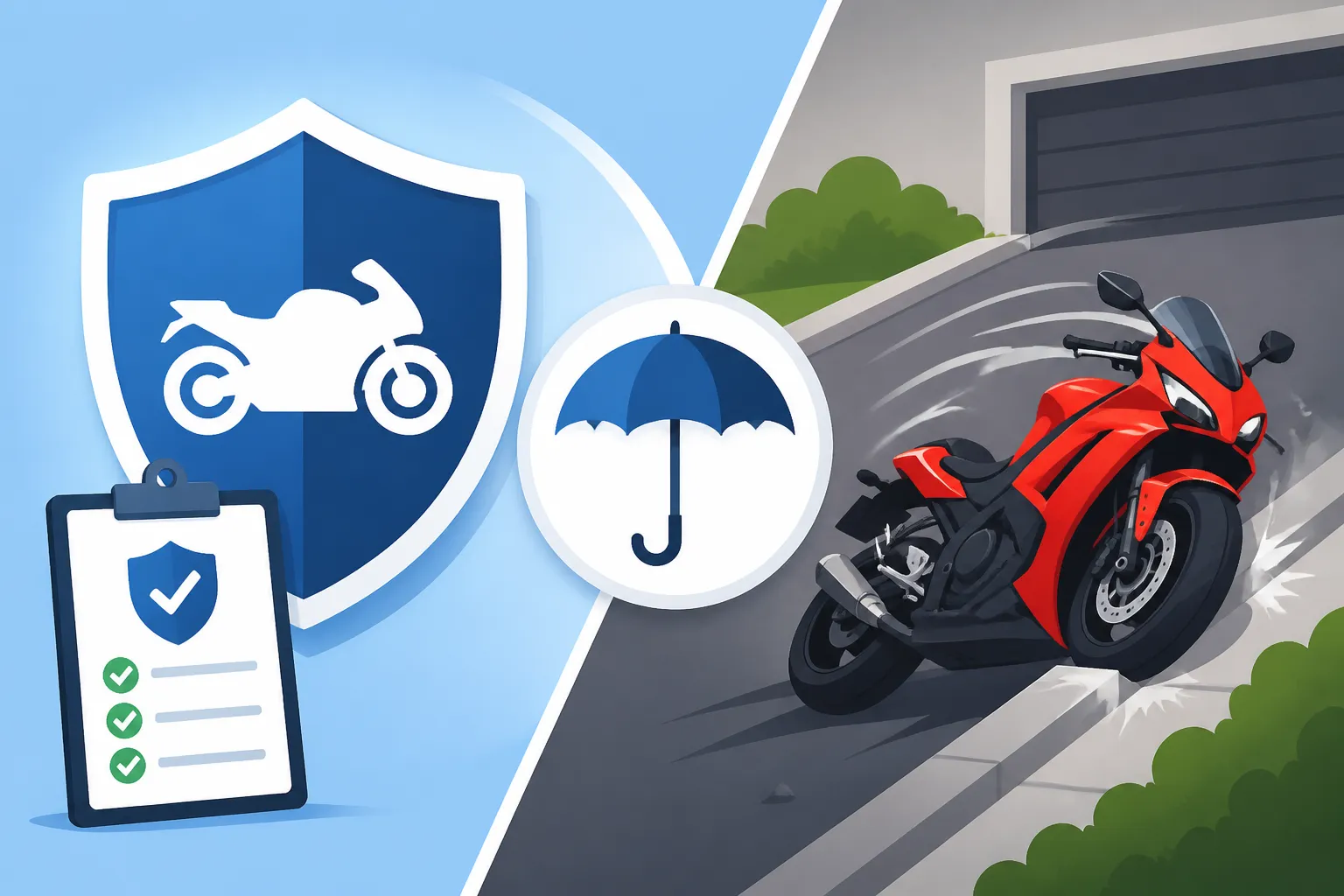
Before we dive into the nitty-gritty of insurance policies, let's get clear on what we mean by "rollaway damage." It's a term that covers a pretty specific, and frankly, heartbreaking, kind of incident. Imagine your motorcycle, parked securely (or so you thought), suddenly decides to take a tumble or roll forward/backward, striking something and causing damage. This isn't usually a crash while you're riding, nor is it always a stationary tip-over without any movement. It's that moment when your bike gains momentum on its own, usually due to gravity or an external force, and then impacts something.
What Constitutes Rollaway Damage?
At its core, rollaway damage refers to any physical damage your motorcycle sustains when it moves from its parked position without a rider, leading to a collision with another object or the ground. This isn't just a simple tip-over where the bike just falls in place. It implies some degree of movement, however slight, that results in an impact. For example, if your bike is parked on a hill, and the brake isn't set, or the transmission slips out of gear, and it rolls down, smashing into a mailbox or another car, that’s classic rollaway damage.
The damage could range from superficial scratches and bent levers, which are annoying but manageable, to a severely damaged frame or engine casing, which can be devastatingly expensive. The key differentiator for insurance purposes often comes down to the cause of the rollaway and whether it was preventable or an act of nature.
Common Scenarios Leading to Rollaway Incidents
There are a surprising number of ways a motorcycle can decide to go rogue when you're not on it. Each scenario comes with its own set of circumstances that your insurance provider will carefully examine when you file a claim.
- Gravity's Unforgiving Pull: This is probably the most common culprit. You might have parked on a seemingly flat surface that actually has a subtle incline. Over time, or with a slight nudge, the bike can begin to roll. If the kickstand isn't fully engaged, or if the bike is parked in neutral, gravity can take over. I remember a buddy who parked his Harley-Davidson Street Glide in what he thought was a level spot outside a diner in Asheville, North Carolina, only to come out and find it had slowly rolled backwards, tipping over and scraping the beautiful chrome pipes against the curb.
- Wobbly Kickstands and Uneven Surfaces: Sometimes, it's not the incline itself, but the surface. Soft asphalt on a hot day, loose gravel, or a slight depression can cause the kickstand to sink or shift, leading to a slow, inevitable lean and fall. A loose or damaged kickstand can also be a factor. This is why many riders carry a small kickstand pad, especially when traveling.
- External Forces: Wind, Vandalism, or Accidental Nudges: Imagine a powerful gust of wind catching a large touring bike with a full fairing, essentially turning it into a sail. This can easily push a parked motorcycle over, especially if it's already slightly off-balance. Vandalism, though less common, can also lead to a bike being knocked over or intentionally pushed to roll. Even an innocent bump from a careless passerby, a child's toy, or another vehicle maneuvering in a tight parking spot can initiate a rollaway. These "acts of God" or third-party actions are often treated differently by insurance companies than rider error.
- Mechanical Failure or Operator Error: While rarer, sometimes a parking brake might fail (if your bike has one), or the transmission might slip out of gear, especially if it wasn't fully engaged in the first place. More commonly, it's simple human error: forgetting to put the bike in gear, not fully extending the kickstand, or misjudging a parking spot's stability. While we all strive for perfection, these things happen, and the ensuing damage can be a real headache.
No matter the cause, the sight of your bike lying on its side, or having rolled into something, is a gut punch. The next step is always to figure out how to get it repaired without breaking the bank, and that's where your insurance policy comes in.
The Role of Your Motorcycle Insurance Coverage Types
When your motorcycle suffers rollaway damage, whether or not your insurance covers it really boils down to the specific types of coverage you have in your policy. It's not a one-size-fits-all answer, and understanding the nuances of each coverage type is absolutely vital. Many riders just opt for the bare minimum, but incidents like rollaway damage often highlight why certain optional coverages are so important.
Comprehensive Coverage
This is often the hero in rollaway damage scenarios, especially if the cause wasn't a collision with another vehicle or direct rider error. Comprehensive coverage is designed to protect your motorcycle from damage caused by events other than collisions. Think of it as your "Acts of God and Misfortune" coverage.
- What it covers: Typically, comprehensive will cover damage from things like theft, fire, vandalism, falling objects, natural disasters (like floods, hail, or even strong winds), and animal strikes. This is where rollaway damage often fits in. If a strong gust of wind blows your bike over while it's parked, or if someone vandalizes your bike by pushing it off its kickstand causing it to roll and hit a wall, your comprehensive coverage would likely kick in. It doesn't matter if your bike was stationary or moved a few feet before impact in these non-collision scenarios; the cause is the key.
- Scenario Example: You've parked your BMW GS in a hotel parking lot overnight. A massive thunderstorm rolls through, and a high wind advisory is issued. In the morning, you find your bike on its side, having rolled a few feet into a hedge, with a broken mirror and bent handlebars. This would almost certainly fall under comprehensive coverage because the cause was a weather event, not a collision with another vehicle or an accident while riding.
- Deductibles: Remember, even with comprehensive coverage, you'll still be responsible for your deductible. This is the amount you pay out of pocket before your insurance company starts paying. Choosing a higher deductible often lowers your premium, but means you pay more if you have to file a claim.
If you only carry liability insurance, which is the minimum required in most states, you'll be out of luck for your own bike's damages in a rollaway incident. Comprehensive coverage is a smart addition, especially for newer or more valuable bikes. Many riders find that getting What Does Full Coverage Motorcycle Insurance Mean? helps clarify the full scope of protection available.
Collision Coverage
While comprehensive handles non-collision damage, collision coverage steps in when your motorcycle hits another vehicle or object while in motion. You might think, "But my bike rolled away without me on it!" And you'd be right, but the impact is still a collision.
- When it applies: If your motorcycle rolls away and then strikes another vehicle, a pole, a fence, or anything else, collision coverage could be relevant. The distinction between comprehensive and collision can get a little fuzzy here, and it often depends on the specific wording of your policy and the insurer's interpretation of the "cause." Some insurers might classify a rollaway that strikes another object as a collision because an impact occurred, even if the bike wasn't being actively ridden.
- Scenario Example: You park your Ducati Scrambler on the street, put it in neutral, and forget to engage the parking brake. It slowly rolls backward down the street and crashes into the bumper of a parked car. In this instance, your collision coverage would likely cover the damage to your motorcycle, while your property damage liability (part of your liability coverage) would cover the damage to the other parked car.
- Rider Error: If the rollaway is clearly due to rider error (e.g., forgetting to put it in gear, not fully extending the kickstand), collision coverage is more likely to apply than comprehensive, as it's seen as an "at-fault" incident, even if you weren't physically on the bike.
Understanding the difference between Collision vs Comprehensive Motorcycle Coverage is key here. It's not always cut and dry, and sometimes a claim could potentially fall under either, depending on the specifics and your insurance company's guidelines.
Liability Coverage
This is where many riders get confused. Your liability coverage, which usually includes Bodily Injury Liability and Property Damage Liability, is designed to cover damages you cause to others.
- What it covers (and doesn't for your bike): If your motorcycle rolls away and damages another person's property (like their car, a fence, or a mailbox) or injures someone, your property damage liability or bodily injury liability would cover those costs. However, it absolutely does not cover any damage to your own motorcycle.
- Scenario Example: Your Triumph Bonneville rolls down a slight slope in a crowded parking lot and scrapes the side of a brand new Tesla. Your property damage liability would cover the repairs to the Tesla. But for the scratches and dents on your Bonneville, you'd need comprehensive or collision coverage. This highlights the importance of having more than just the minimum legal How Much Liability Coverage Should a Motorcyclist Carry? if you want to protect your own investment.
Personal Belongings and Custom Parts Coverage
If your bike sustains rollaway damage, it's not just the stock parts that might be affected. Many riders have invested heavily in aftermarket accessories, custom paint jobs, or even expensive riding gear that might be attached to the bike when it tips.
- Accessories Coverage: Most standard motorcycle insurance policies offer a basic level of accessories coverage, but it's often limited. If you have custom handlebars, a special exhaust, upgraded saddlebags, or a fancy GPS mount, you’ll want to ensure you have adequate Accessories & Custom Parts Coverage Explained. If your bike rolls over and damages these specific items, this add-on coverage would pay for their repair or replacement, above and beyond the stock value of the bike itself.
- Riding Gear: Some policies also offer coverage for your riding gear (helmet, jacket, pants, boots) if it's damaged in an insured incident. If your helmet was strapped to the bike and got crushed when it rolled over, this coverage could be a lifesaver.
It's always a good idea to review your policy with your agent, especially if you've put a lot of money into customizing your ride. A small additional premium can save you thousands if an incident like rollaway damage occurs.
Key Factors Affecting Rollaway Damage Claims
When you make a claim for rollaway damage, your insurance company won't just take your word for it and cut a check. They're going to investigate, and several factors will play a crucial role in how your claim is handled, what's covered, and how much you might receive. It's not always as straightforward as you'd hope, and anticipating these factors can help you navigate the process.
The "Cause" of the Rollaway: Intentional vs. Accidental vs. Act of Nature
This is arguably the most significant factor. The insurance company wants to know why your bike rolled away. Was it something you did (or didn't do), something someone else did, or something completely out of human control?
- Rider Error/Negligence: If the rollaway was due to something you overlooked – like forgetting to engage the kickstand, leaving it in neutral on a slope, or not setting a parking brake – this is generally considered an "at-fault" incident. In these cases, your collision coverage would be most likely to apply to your bike's damage, assuming you have it. Your rates could potentially be affected, similar to if you had a minor accident while riding.
- External Forces/Acts of Nature: If a strong wind gust topples your bike, or a tree branch falls on it, or even if an earthquake causes it to roll, these are typically covered under your comprehensive policy. Since these are not your fault, they generally don't impact your premium in the same way an at-fault collision would.
- Vandalism/Third-Party Action: If someone maliciously pushes your bike, causing it to roll and sustain damage, this would also fall under comprehensive coverage. You might need a police report in this scenario. If another vehicle bumps your parked motorcycle, causing it to roll, the other driver's property damage liability should cover your damages, but if they're uninsured or it's a hit-and-run, your uninsured motorist property damage or even your own collision/comprehensive might apply.
The Zebra, a popular insurance comparison site, often emphasizes how critical it is to document the scene of any incident, including rollaways, to clearly establish the cause for your insurer.
Deductibles and Their Impact
Every policy, whether it's comprehensive or collision, comes with a deductible. This is the amount you agree to pay out-of-pocket before your insurance coverage kicks in.
- How They Work: Let's say your bike suffers $1,500 in rollaway damage, and you have a $500 deductible. You'd pay the first $500 for repairs, and your insurance company would cover the remaining $1,000.
- Financial Decision: Choosing a higher deductible (e.g., $1,000) will typically lower your monthly or annual premium, making your insurance cheaper upfront. However, it also means you'll have a larger out-of-pocket expense if you need to file a claim. Conversely, a lower deductible means higher premiums but less to pay upfront for repairs. When considering What Is the Deductible on Motorcycle Insurance?, it's a balancing act between savings and risk.
- Claim Worth: For very minor rollaway damage (a few scratches, a bent lever that costs $100 to replace), it might not even be worth filing a claim if your deductible is $500 or more. You'd be paying for the repairs yourself anyway, and filing a claim, even a comprehensive one, could still appear on your claims history.
Policy Exclusions
Just as important as what your policy does cover is what it doesn't. Insurance policies are legal contracts, and they contain specific exclusions.
- Maintenance Issues: If the rollaway was due to a mechanical failure that could have been prevented by proper maintenance (e.g., a faulty kickstand that you knew was loose but didn't repair), your claim could potentially be denied. Insurers expect you to keep your vehicle in safe operating condition.
- Intentional Damage: This one is obvious, but if you intentionally cause your bike to roll away for any reason, your policy will not cover the damages.
- Illegal Activity: If the rollaway occurs while the bike is involved in illegal activity, coverage will almost certainly be denied.
- Racing/Track Use: Most standard policies exclude damage incurred during racing or track days. If your bike rolled away at a race track and was damaged, it would likely not be covered unless you have specialized track day insurance.
Always read your policy documents carefully, or ask your agent to clarify any exclusions related to how your bike is stored or used.
Actual Cash Value vs. Agreed Value
When your motorcycle is significantly damaged, or even declared a total loss from a severe rollaway incident, how much you get paid out depends on how your policy values your bike.
- Actual Cash Value (ACV): Most standard policies use ACV. This means the insurer pays out the replacement cost of your bike minus depreciation. For an older bike, even if it's in pristine condition, the ACV payout might be surprisingly low because of its age and mileage. This can be a rude awakening for riders who've put a lot of work into an older bike.
- Agreed Value: This is a better option, often available for classic, custom, or high-value motorcycles. With an agreed value policy, you and the insurer agree on a specific value for your bike before the policy is issued. If your bike is then totaled, you get that agreed-upon amount, no questions asked about depreciation. This can be invaluable for highly customized bikes where the "market value" doesn't reflect your investment.
- Stated Value: This is a bit of a tricky one. While it sounds like agreed value, stated value policies usually allow the insurer to pay the lesser of the stated value, the actual cash value, or the cost to repair. It's often not as protective as agreed value.
If you have a unique or custom motorcycle, it's really worth exploring Agreed Value vs Stated Value vs Actual Cash Value to ensure you're adequately protected. For many riders, the peace of mind knowing they'll get what their bike is truly worth is well worth a slightly higher premium.
Steps to Take After a Motorcycle Rollaway Incident
Finding your motorcycle damaged after a rollaway is a stressful experience. But taking the right steps immediately after the incident can make a huge difference in how smoothly your insurance claim proceeds and how quickly you can get your bike back on the road. Don't panic; follow these steps systematically.
Ensure Safety and Assess Any Injuries
First and foremost, check for any injuries, to yourself or anyone else, that might have occurred as a result of the rollaway. Even if you weren't on the bike, someone else might have been in the path of your rolling motorcycle. If anyone is injured, seek medical attention immediately. Once human safety is confirmed, then you can turn your attention to the bike and its surroundings.
Assess the scene for any immediate hazards. Is there spilled fuel? Are there sharp debris? If your bike is blocking traffic or in a dangerous spot, and it’s safe to do so, try to move it to a more secure location.
Document the Damage Thoroughly
This step is absolutely critical for any insurance claim. The more evidence you have, the better. Your smartphone is your best friend here.
- Take Photos and Videos: Get comprehensive visual documentation. Take pictures from multiple angles, capturing the overall scene, the position of the bike, and any objects it may have collided with. Zoom in on all damaged areas of your motorcycle—scratches, dents, broken parts, bent components. Don't forget to photograph the area where the bike was originally parked, especially if you suspect the surface or an incline contributed to the rollaway. Also, if there's damage to other property, photograph that as well.
- Note the Time and Location: Jot down the exact time and date of the incident, as well as the precise location (street address, specific parking spot, etc.).
- Witness Information: If anyone saw the rollaway happen, ask for their contact information. A neutral third-party account can be incredibly helpful to your insurer.
This detailed documentation helps your insurance company understand the extent of the damage and, crucially, the circumstances surrounding the incident, which impacts which type of coverage applies.
File a Police Report if Applicable
A police report isn't always necessary for a simple rollaway that only damages your own bike. However, it becomes vital in several situations:
- Damage to Other Property: If your motorcycle rolled into another vehicle, a fence, or any other private or public property, you should file a police report. This creates an official record of the incident and can be essential for liability claims.
- Vandalism or Theft: If you suspect your bike was intentionally pushed over or tampered with, a police report is a must. This helps establish the cause as vandalism, which would typically fall under comprehensive coverage. If parts were stolen during the rollaway, a police report is also needed for a Motorcycle Theft Claim: How It Works.
- Injuries: If anyone was injured, a police report is generally required.
Even if you're unsure, it's often better to err on the side of caution and contact local law enforcement, especially if the damage is significant or involves third parties.
Contact Your Insurance Provider
Once you've secured the scene and gathered your documentation, it's time to notify your insurance company. Don't delay this step; most policies require you to report claims within a reasonable timeframe.
- Gather Your Policy Information: Have your policy number readily available.
- Be Prepared to Explain: Clearly and factually describe what happened. Provide the date, time, location, and the cause of the rollaway to the best of your knowledge. Share all the documentation you collected (photos, videos, witness contacts, police report number).
- Be Honest: Always be truthful with your insurance company. Misrepresenting the facts can lead to a denied claim or even more severe consequences.
- Understand Your Coverage: This is where your understanding of Types of Motorcycle Insurance Coverage Explained comes into play. You can discuss with the claims adjuster whether comprehensive or collision coverage will apply based on the circumstances you describe. They'll guide you through the process, which will involve an adjuster inspecting the damage to confirm it matches your description and assess the repair costs.
Some companies like Progressive and Dairyland have online claim portals that can expedite the process, allowing you to upload photos and details directly. The Zebra also provides resources to help simplify the claims process, regardless of your insurer.
Arrange for Repairs or Towing
Depending on the extent of the damage, your bike might not be rideable.
- Towing: If your bike needs to be towed, check your policy. Many policies offer roadside assistance coverage as an add-on, which can cover towing costs. If you don't have it, you'll need to arrange and pay for towing yourself initially, though these costs might be reimbursed if they are part of a covered claim.
- Repairs: Once the claim is filed and approved, your insurer will typically provide a list of approved repair shops or allow you to choose your own. They will assess the damage and determine if it's repairable or if your motorcycle is deemed a What Happens When Your Motorcycle Is Totaled?.
Dealing with a damaged bike is never fun, but by following these steps, you can ensure your rollaway damage claim is handled as efficiently and favorably as possible.
Comparing Coverage for Rollaway Damage Scenarios
To help you visualize how different types of insurance coverage might apply to various rollaway scenarios, here's a handy table. This isn't exhaustive, as every policy and situation has unique nuances, but it offers a general guide.
| Scenario Description | Primary Coverage Likely Applied (for your bike) | Other Coverage Potentially Involved | Key Determining Factor |
|---|---|---|---|
| Bike rolls off kickstand, hits ground/curb | Collision (if deemed rider error) | Comprehensive (if no clear rider error, e.g. soft ground) | Cause: Rider error vs. external ground instability |
| Bike rolls into another parked vehicle | Collision | Property Damage Liability (for other vehicle) | Impact with another vehicle |
| Strong winds blow bike over, causes damage | Comprehensive | Cause: Weather/Act of Nature | |
| Vandal pushes bike over, causing it to roll/fall | Comprehensive | Cause: Vandalism (requires police report) | |
| Mechanical failure (e.g., parking brake), bike rolls | Collision (potentially) or Comprehensive (less likely) | Specific policy wording, investigation into failure | |
| Bike rolls down hill, hits a pole/tree | Collision (if rider error) or Comprehensive (if external factor) | Cause: Rider error (e.g., forgot gear) vs. external | |
| Bike rolls while being unloaded, hits ground | Collision (if accident during active process) | Active process vs. truly parked |
This table illustrates why understanding the nuances of your policy is so important. What seems like a clear-cut case of "my bike fell over" can have different interpretations by your insurer depending on how and why it happened.
Conclusion
Finding your motorcycle damaged after it’s rolled away on its own is a jarring experience, often accompanied by a sinking feeling and immediate financial worries. The good news is that, in many cases, your motorcycle insurance can and will cover rollaway damage. However, the specific type of coverage that kicks in—whether it’s comprehensive or collision—and the extent of that coverage, hinges entirely on the details of your policy and the exact circumstances of the incident.
Remember, a simple liability-only policy will protect others if your rogue bike causes damage, but it won't do a thing for your own precious ride. For your personal peace of mind and to protect your investment, having comprehensive and collision coverage is almost always a wise decision. These coverages are designed to handle those unexpected moments when your bike decides to go for a solo tumble.
Taking immediate action after a rollaway, like ensuring safety, documenting everything with photos, filing a police report if necessary, and promptly contacting your insurance provider like Progressive or Geico, will significantly streamline your claim. And don't forget to review your policy regularly, especially if you have custom parts or a high-value motorcycle, to ensure you have adequate coverage like Accessories & Custom Parts Coverage Explained or even an agreed-value policy. Knowledge is power when it comes to insurance, and understanding these details can save you a lot of heartache and money down the road.
Disclaimer
Please note that this article is intended for informational purposes only and does not constitute professional insurance advice. Insurance policies vary greatly by provider, state, and individual circumstances. It is crucial to consult directly with a licensed insurance professional or your specific insurance provider to understand the terms, conditions, exclusions, and limitations of your motorcycle insurance policy. Always read your policy documents thoroughly.