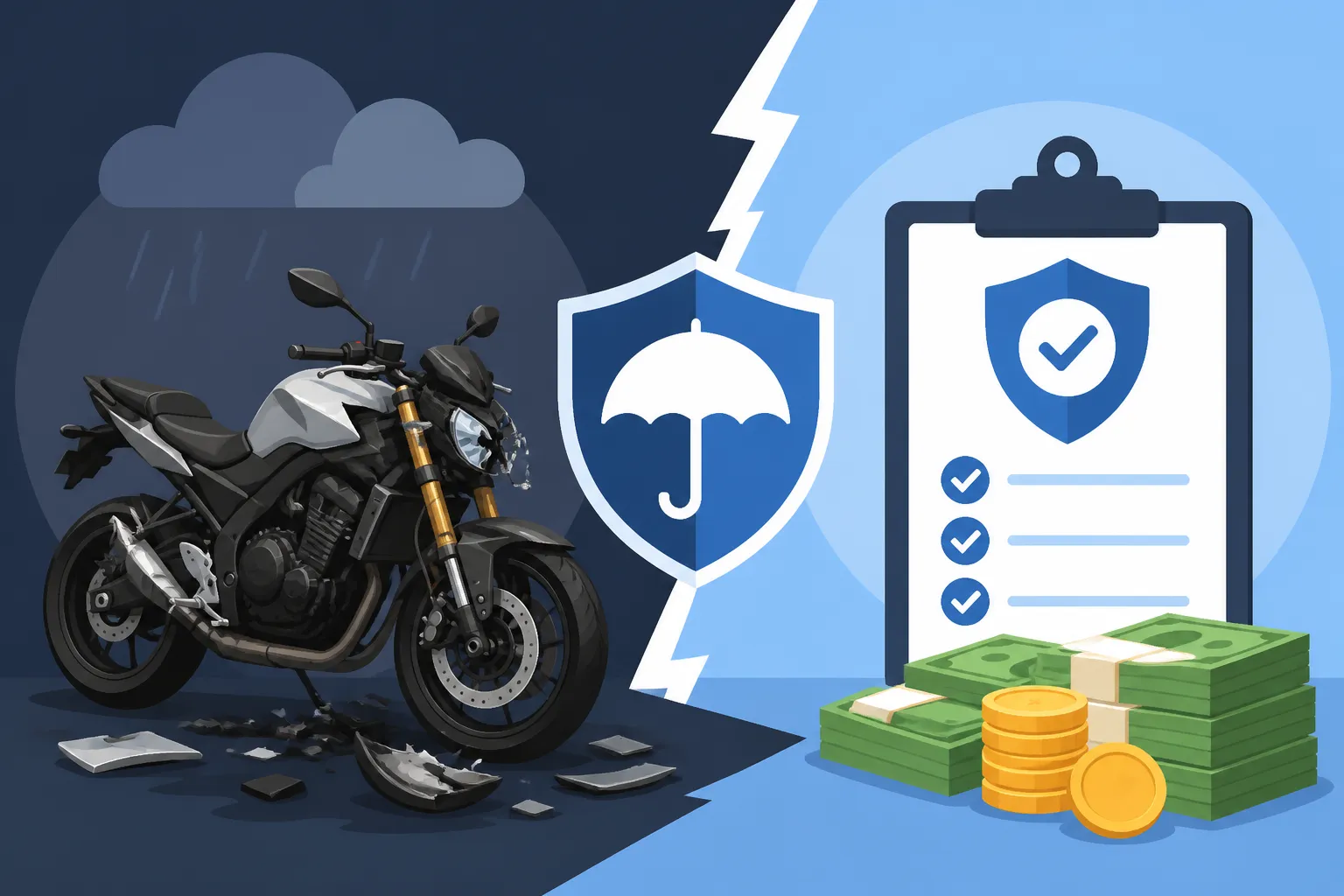
What Is Total Loss on a Motorcycle?
Hitting the open road on two wheels is freedom, pure and simple, but sometimes the worst happens, and your beloved motorcycle ends up seriously damaged after an accident or incident. The phrase "total loss" can feel like a punch to the gut, leaving you wondering what it actually means for your bike, your finances, and your ability to ride again. This guide is here to demystify what a total loss signifies in the world of motorcycle insurance, helping you understand the process, your options, and how to navigate this challenging situation.
Understanding What "Total Loss" Really Means for Your Motorcycle
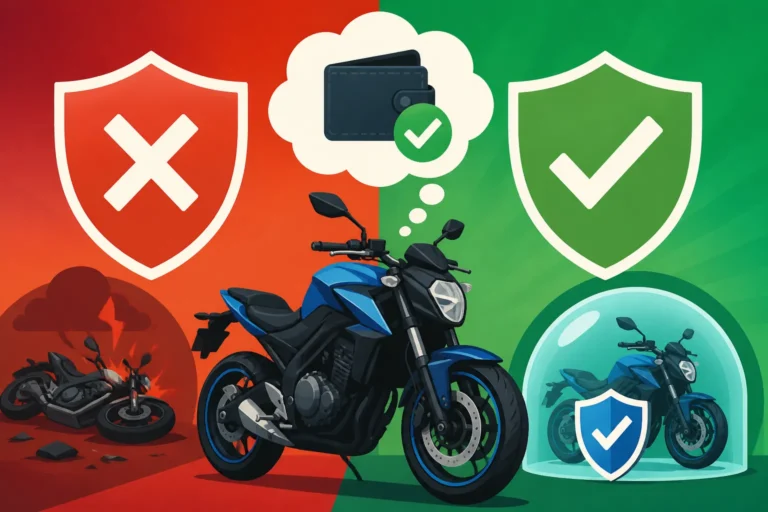
When an insurance company declares your motorcycle a "total loss," it doesn't necessarily mean it's been completely annihilated or is beyond repair in a literal sense. Instead, it's a financial designation. Essentially, the cost to repair your motorcycle to its pre-loss condition, plus any salvage value, exceeds a certain percentage of its actual cash value (ACV) or an agreed-upon value, depending on your policy. This threshold varies by state and insurer, but the core idea is that it's more economical for the insurance company to pay you for the bike's value rather than repair it.
It’s a tough pill to swallow when your pride and joy, which you might have poured time, money, and passion into, is deemed financially irreparable. You might look at your bike and see parts that could still be saved, or you might have a mechanic friend who says they can fix it for less. However, the insurance company's calculation takes into account not just the parts and labor, but also associated costs like towing, storage, and administrative fees, making the "repair vs. replace" decision a cold, hard numbers game.
The Financial Equation Behind a Total Loss Declaration
Insurance companies utilize a specific formula to determine if a motorcycle is a total loss. They assess the estimated cost of repairs, including parts and labor, and compare that to the vehicle's actual cash value (ACV) just before the incident. This ACV is a crucial factor, often derived from market data, recent sales of similar bikes, and factoring in depreciation for age, mileage, and condition. If the repair costs plus the salvage value (what the insurer could sell the damaged bike for) meet or exceed the state-mandated or company-specific total loss threshold, it's declared totaled.
For example, if your motorcycle had an ACV of $10,000, and the repair estimates come in at $8,000, but the state's total loss threshold is 70% (meaning repairs exceeding $7,000), your bike would likely be declared a total loss. Some states, like Texas, use a "total loss formula" (TLF) where a bike is totaled if the repair cost plus the salvage value equals or exceeds its actual cash value. Other states employ a "total loss threshold" (TLT), which is a fixed percentage (e.g., 75% in Florida). Understanding your state's specific rules can really help manage expectations during what's already a stressful time.
Why Your Sentimental Value Doesn't Factor In
This is where the rubber meets the road, or rather, where emotion meets economics. As riders, our motorcycles are often extensions of ourselves, filled with memories of epic rides, custom modifications, and countless hours spent tinkering. You might see your bike as priceless, but your insurance company is a business, and their calculations are strictly financial. The sentimental value, the custom paint job you spent hundreds on that isn't reflected in a standard valuation, or the bond you have with your machine, unfortunately, doesn't factor into the total loss equation.
This can be incredibly frustrating, especially if you have a vintage bike or one with unique customizations. That's why considering certain types of motorcycle insurance coverage, such as Agreed Value vs Stated Value vs Actual Cash Value, is so important before an incident occurs. While Actual Cash Value (ACV) is the most common, policies with agreed value or stated value might offer better protection for unique or highly modified bikes, ensuring that your bike's true worth (or at least a pre-agreed amount) is considered in a total loss scenario.
The Total Loss Threshold and How It's Determined
The "total loss threshold" is a key concept when your motorcycle is severely damaged. It’s the tipping point where the repair bill becomes too high for the insurance company to justify fixing your bike. This threshold isn't uniform across the board; it can vary significantly depending on where you live and the specific insurance company you're dealing with. Knowing how this is calculated can help you anticipate the outcome and understand the payout process.
Imagine you've just laid your bike down, and it's got significant damage to the fairing, forks, and perhaps the engine casing. You're hoping for repairs, but the insurance adjuster comes in, meticulously detailing every scratch and bend. Their job is to estimate the repair costs, and if those costs push past the total loss threshold, the bike is declared totaled. It's a pragmatic decision based on cost-effectiveness rather than the feasibility of bringing the bike back to life.
State-Specific Total Loss Laws and Regulations
Every state has its own set of rules governing total loss declarations, though they generally fall into one of two categories: the Total Loss Threshold (TLT) or the Total Loss Formula (TLF). In states using a TLT, there’s a specific percentage (e.g., 75% or 80%) of the vehicle's actual cash value that, if repair costs meet or exceed it, mandates a total loss declaration. For instance, in Alabama, if the cost of repairs equals or exceeds 75% of the fair retail value of the vehicle, it's totaled.
On the other hand, states utilizing the TLF, like Texas, compare the cost of repairs plus the salvage value of the damaged motorcycle to its actual cash value. If (Cost of Repair + Salvage Value) >= Actual Cash Value, then it’s a total loss. This means a bike could be totaled with lower repair costs if its salvage value is high enough. It's a complex dance of numbers, but the goal is always to prevent insurers from spending more to fix a bike than it's worth, or more than they'd get by simply paying out its value and selling the wreckage. It's a good idea to research your specific state's rules, as it can profoundly affect your outcome.
The Role of the Insurance Adjuster in Valuing Your Bike
The insurance adjuster is the person who will thoroughly inspect your damaged motorcycle and compile the repair estimates. They'll also be responsible for determining its actual cash value (ACV) before the incident occurred. This valuation process is critical, as it directly impacts your potential payout. Adjusters typically use industry-standard databases, such as the National Automobile Dealers Association (NADA) guides or Kelley Blue Book, to find comparable sales of motorcycles of the same make, model, year, and condition in your geographical area. They'll factor in mileage, condition, features, and even market demand.
It’s not uncommon for riders to feel their bike is worth more than the adjuster's initial valuation. This is where your own documentation becomes incredibly valuable. Keep records of all maintenance, upgrades, and any custom parts you've added. Photos of your bike in its pre-loss condition, receipts for aftermarket parts, and even advertisements for similar bikes for sale can serve as evidence to support a higher valuation. The Zebra, for instance, provides tools and resources that can help you understand market values, which can be useful when you need to negotiate with an adjuster. Knowing How to Negotiate a Motorcycle Total Loss Settlement is an important skill in these situations.
Navigating the Claims Process After a Total Loss
Being told your motorcycle is a total loss is upsetting, but it’s crucial to understand that it’s not the end of the road for your claim. The process that follows involves several steps, from receiving the declaration to settling your claim and, if you choose, acquiring a new ride. It’s a period that requires patience and clear communication with your insurance company. The goal is to reach a fair settlement that allows you to move forward.
The initial shock can be overwhelming, especially if your bike was your primary mode of transport or held deep personal significance. However, staying organized and informed can make a significant difference. Don't rush into agreements; take the time to understand all aspects of the offer and your rights as a policyholder. This is where having comprehensive coverage like What Does Full Coverage Motorcycle Insurance Mean? truly makes a difference, as it protects you against theft, vandalism, and accidents that lead to a total loss.
The Stages of a Total Loss Claim
Once your insurance company informs you that your motorcycle is a total loss, the claims process moves into a specific sequence of steps. First, the insurer will send you a formal declaration of total loss, along with their valuation of your motorcycle, typically based on its actual cash value (ACV) right before the incident. This initial offer will often be accompanied by a detailed report justifying their valuation. It’s important to review this report carefully and compare it to your own understanding of your bike's worth.
Next, you'll enter the negotiation phase. If you believe the valuation is too low, you'll need to provide documentation to support a higher figure. This could include receipts for recent repairs, upgrades, or even market listings for similar bikes in your area. Be prepared to present a strong case, showing why their offer doesn't reflect the true pre-loss value of your motorcycle. Once an agreement is reached, the insurer will pay out the agreed-upon amount, minus your deductible and any outstanding loan balance. If you've been wondering How to File a Motorcycle Insurance Claim, it always starts with gathering information and documenting everything.
Understanding Your Payout: Deductibles and Loan Payoffs
When your motorcycle is declared a total loss and you reach a settlement, the payout isn't always a straightforward check for the full agreed amount. Several factors come into play. First, your deductible will be subtracted from the settlement. If you have a $500 deductible, and your agreed payout is $10,000, you'll receive $9,500. This is the out-of-pocket amount you're responsible for before your insurance coverage kicks in.
Second, if you have a loan on your motorcycle, the insurance company will typically pay the lender directly for the outstanding balance. This is where things can get tricky. If your bike’s actual cash value (ACV) is less than what you owe on the loan, you could end up with a "gap." This "gap" is the difference between the payout and the remaining loan amount, which you would still be responsible for. This is precisely why many riders consider Do You Need Gap Insurance on a Motorcycle?. Gap insurance is a lifesaver in these scenarios, covering the difference between your bike's ACV and what you still owe, preventing you from being upside down on a loan for a motorcycle you no longer have.
Payout Methods: Actual Cash Value, Agreed Value, and Stated Value
The type of coverage you have on your motorcycle plays a monumental role in how your total loss claim is settled. This isn't just about whether you have "full coverage" but specifically how your policy determines the value of your bike at the time of a loss. Misunderstanding these terms can lead to significant disappointment when your payout arrives.
Many riders assume their policy will cover the cost of a brand-new replacement, but that's rarely the case with standard policies. Instead, policies usually operate on one of three valuation methods: Actual Cash Value (ACV), Agreed Value, or Stated Value. Each has its own implications for your wallet and your peace of mind. It’s one of the most crucial distinctions to grasp when you're selecting your insurance, especially for unique or valuable bikes.
Actual Cash Value (ACV) Explained
Actual Cash Value, or ACV, is the most common valuation method for motorcycle insurance. When your bike is totaled under an ACV policy, the insurance company pays you for the market value of your motorcycle at the time of the loss, minus depreciation. This means they'll determine what a similar bike of the same make, model, year, and condition would have sold for on the open market just before the accident. Depreciation, which accounts for the bike's age, mileage, wear and tear, and general market devaluation, is a significant factor here.
For a newer, common model, ACV might be fairly close to what you paid. However, for an older bike or one with high mileage, the ACV could be considerably lower than you expect. This can be especially frustrating if you’ve recently invested a lot in repairs or upgrades that don’t translate into a higher market value. The adjuster will look at various data points, including NADA guides, local listings, and past sales, to arrive at this figure. The Zebra, for example, provides resources that can help you understand how ACV is typically calculated, preparing you for the figures you might encounter.
Agreed Value Policies: Pre-Determined Peace of Mind
Agreed value coverage is a game-changer for many motorcycle owners, especially those with custom bikes, classics, or highly modified machines. With an agreed value policy, you and your insurance company agree on your motorcycle’s value before the policy is issued. This agreed amount is the exact sum you'll receive if your bike is declared a total loss, minus your deductible, regardless of its market value or depreciation at the time of the incident.
This eliminates much of the guesswork and potential for dispute that comes with ACV policies. For riders who have invested heavily in customizations, unique paint jobs, or rare parts, an agreed value policy ensures that their investment is protected. For instance, if you have a vintage Harley-Davidson with extensive custom work and you and your insurer agree on a value of $25,000, that's what you'll get in a total loss situation. Companies like Markel or Hagerty are well-known for offering agreed value coverage, catering specifically to the needs of classic and custom bike owners. It’s an upfront commitment that provides significant peace of mind.
Stated Value Policies: A Closer Look at the Nuances
Stated value coverage is sometimes confused with agreed value, but there's a crucial difference that riders need to understand. With a stated value policy, you declare a value for your motorcycle when you purchase the policy. However, in the event of a total loss, the insurance company will pay you either the stated value or the actual cash value (ACV) at the time of the loss, whichever is less.
This distinction is incredibly important. While you might state a high value, if the market value of your bike has depreciated significantly, or if the adjuster determines a lower ACV, your payout will be capped at that lower amount. Stated value policies can be deceptive for riders expecting an agreed value payout. They might seem more affordable upfront, but they carry a greater risk of a lower payout than anticipated. This coverage is often used for bikes that are difficult to value precisely but where the insurer wants a ceiling on their liability. Always confirm with your insurer whether you're getting true "agreed value" or "stated value" coverage, particularly if you have a custom or classic bike. This deep dive into What Is Stated Value Motorcycle Insurance? The Catch explains these nuances further.
| Valuation Method | Description | Payout in Total Loss (minus deductible) | Best For |
|---|---|---|---|
| Actual Cash Value | Market value at time of loss, minus depreciation (age, mileage, condition). | ACV at the time of the incident. | Newer, mass-produced motorcycles with readily available market data. |
| Agreed Value | You and insurer agree on specific value when policy is written. | The agreed-upon value, regardless of market fluctuations or depreciation. | Custom bikes, classic motorcycles, rare models, or highly modified bikes. |
| Stated Value | You declare a value, but payout is lesser of stated value OR actual cash value (ACV) at time of loss. | The lower amount between the stated value and the ACV at the time of loss. | Niche or slightly modified bikes where ACV might be hard to pin down precisely but still subject to market depreciation. |
Keeping Your Totaled Motorcycle: The Salvage Title
Even if your motorcycle is declared a total loss, the story doesn't necessarily end there. Many riders wonder if they can keep their damaged bike, perhaps to repair it themselves or salvage parts. The answer is often yes, but it comes with a significant caveat: a salvage title. This designation fundamentally changes your motorcycle's legal status and carries implications for its future registration and insurability.
The idea of letting go of your bike can be hard, especially if the damage isn't visually catastrophic, and you feel it could be a project. But choosing to retain a totaled motorcycle means you're stepping into a different realm of ownership, one that requires a thorough understanding of state regulations and potential future headaches.
The Implications of a Salvage Title
If you opt to keep your motorcycle after it's declared a total loss, the insurance company will typically subtract the bike's "salvage value" from your total loss payout. For example, if your bike was valued at $10,000 and the salvage value is $1,500, you'd receive $8,500 and get to keep the damaged bike. Once you take possession, your state's Department of Motor Vehicles (DMV) or equivalent agency will issue it a "salvage title."
A salvage title indicates that the vehicle has been declared a total loss by an insurance company. This isn't just a label; it's a permanent mark on the bike's record. It significantly reduces the bike's resale value and makes it incredibly difficult to sell later on. Furthermore, you cannot legally ride a motorcycle with a salvage title on public roads until it undergoes significant repairs and passes a rigorous inspection to be re-titled as "rebuilt" or "restored." This process can be lengthy, costly, and isn't guaranteed. Understanding What Is a Salvage Title After a Total Loss? is paramount before making this decision.
The Process to Rebuild and Re-Title a Salvage Motorcycle
Deciding to rebuild a motorcycle with a salvage title is a commitment of time, money, and effort. First, you'll need to meticulously repair all the damage that led to the total loss declaration. This means using legitimate parts, keeping detailed records of all purchases, and documenting every step of the repair process with photos. Many states require that you use licensed repair shops for certain types of work.
Once the repairs are complete, the motorcycle must pass a comprehensive inspection by state authorities. This inspection is incredibly thorough, designed to ensure the bike is safe to operate, meets all legal standards, and that no stolen parts were used in the rebuild. If it passes, the state will issue a new title, often designated as "rebuilt" or "restored." This rebuilt title allows you to register and insure the motorcycle, though some insurers might be hesitant to offer full coverage on a rebuilt title, and premiums could be higher. It's a journey, not a quick fix, and it's essential to research your specific state's requirements before embarking on such a project.
Strategies for a Smoother Total Loss Claim Experience
Dealing with a total loss claim can feel like an uphill battle, especially when you're emotionally attached to your motorcycle. However, armed with the right information and a proactive approach, you can significantly improve your experience and ensure you receive a fair settlement. It's about being prepared, persistent, and knowing your rights as a policyholder.
Don't let the insurance jargon or the complexity of the process intimidate you. By staying organized and seeking clarity at every turn, you can navigate this challenging situation with confidence. Think of it as another part of your riding journey – one that requires careful planning and execution.
Documenting Your Motorcycle's Value Before an Incident
One of the most powerful things you can do to protect yourself in a total loss scenario is to meticulously document your motorcycle's value before anything happens. This means keeping a comprehensive file on your bike. Take high-quality photos and videos of your motorcycle from all angles, showing its condition and any custom parts or upgrades. Keep every receipt for aftermarket parts, professional installations, and significant maintenance. Note down its mileage, any awards it has won, or unique features that enhance its value.
Having these records makes it much easier to justify a higher valuation during a total loss claim. If you've invested in a custom exhaust, upgraded suspension, or a special paint job, those receipts are your evidence. Without them, the insurance company might only value your bike as a stock model, leaving you significantly undercompensated. Think of it as building a robust portfolio for your motorcycle, proving its worth beyond standard book values.
Negotiating Your Total Loss Settlement
The first offer from an insurance company isn't always the final one. Many riders successfully negotiate a higher settlement by presenting compelling evidence. If you believe the initial Actual Cash Value (ACV) offered is too low, don't just accept it. Gather your documentation: your pre-loss photos, maintenance records, receipts for custom parts, and even listings of comparable motorcycles for sale in your area. Look for bikes of the same make, model, year, and similar condition that have recently sold or are currently listed at a higher price than the insurer's offer. This is where How to Prove Your Bike's Value in a Total Loss Claim becomes essential reading.
When you contact your adjuster, calmly present your evidence and explain why you believe their valuation is inaccurate. Be polite but firm. Sometimes, they may not have considered all your customizations or unique features. Companies like The Zebra often highlight the importance of being well-informed and assertive during these negotiations. If you're still not satisfied, you can request an appraisal from an independent appraiser, though this usually comes at your own cost. Remember, the goal is a fair settlement that allows you to replace your lost ride.
Considering Special Coverage for Customizations and Gear
For many riders, a motorcycle is more than just a vehicle; it's a canvas for personal expression. Custom paint, chrome accents, performance upgrades, and specialized riding gear can represent a significant financial investment. Standard motorcycle insurance policies often have limited coverage, if any, for these valuable additions. If your bike is declared a total loss, and you only have basic coverage, you could be out a lot of money for your custom parts and gear.
That's why it's crucial to consider additional coverage options. Many insurers offer "accessories and custom parts" coverage, which allows you to specify a higher limit for these items. Some policies even offer coverage for your riding gear, including your helmet, jacket, and boots. When discussing your policy with an agent, be upfront about all your customizations and the value of your gear. Don't assume standard coverage will protect these investments. Securing specific coverage for these items, as discussed in Types of Motorcycle Insurance Coverage Explained, can ensure that if a total loss occurs, you're not left to absorb these costs entirely out of pocket.
Frequently Asked Questions About Motorcycle Total Loss
It's natural to have a ton of questions when facing a total loss situation. The jargon can be confusing, and the process can feel overwhelming. Let's tackle some of the most common concerns riders have when their motorcycle is totaled.
What if I still owe money on a financed motorcycle?
If your motorcycle is financed and declared a total loss, your insurance company will pay the lender first. If your actual cash value (ACV) payout is less than your outstanding loan balance, you will be responsible for paying the "gap" amount. This is a common and financially crippling situation, often referred to as being "upside down" on your loan. This scenario is precisely why many riders consider Motorcycle Insurance Requirements for Financed Bikes and, more importantly, explore Gap insurance. Gap insurance is designed specifically to cover the difference between your bike's ACV and the remaining loan balance, ensuring you don't have to make payments on a motorcycle you no longer own.
How long does it take for a total loss claim to settle?
The timeline for settling a total loss claim can vary significantly, usually ranging from a few weeks to several months. Factors influencing this include the complexity of the accident investigation, the speed at which repair estimates are obtained, how quickly you and your insurer agree on the bike's valuation, and state regulations regarding claims processing. If there's a dispute over the valuation, negotiations can prolong the process. Providing all requested documentation promptly and staying in regular communication with your insurance adjuster can help expedite the process.
Can I get a rental motorcycle while my claim is processed?
Most standard motorcycle insurance policies do not include rental reimbursement coverage for a motorcycle. This is an optional add-on coverage that you typically need to specifically purchase. If you have rental reimbursement coverage on your policy, it would kick in to cover the cost of a rental vehicle while your motorcycle claim is being processed, up to your policy limits. Without it, you'd be responsible for the cost of a rental out of pocket. It’s a good idea to check your policy declarations page to see if you have this valuable coverage, especially if your motorcycle is your primary mode of transportation.
Does a total loss affect my insurance rates?
Yes, a total loss claim almost certainly affects your motorcycle insurance rates. Whether it's deemed an at-fault accident or not can impact the severity of the increase, but generally, any significant claim can lead to higher premiums. Insurance companies view total loss claims as a high-risk event. If you were at fault, expect a more substantial increase. If another party was at fault, your rates might still increase, albeit less dramatically, because you're now considered a higher risk for future claims. Your claims history is a significant factor in how insurers like Progressive or Geico calculate your premiums going forward. It's always a good idea to shop around for new quotes after a total loss to see if other companies offer more favorable rates.
Disclaimer
Please remember that this article is intended for informational purposes only and does not constitute professional financial or legal advice. Motorcycle insurance laws and policies can be complex and vary by state and insurer. It is always recommended to consult directly with a qualified insurance professional or legal expert for advice tailored to your specific situation.