Does Motorcycle Insurance Cover Aftermarket Wheels?
It's a question many riders ponder after spending a small fortune customizing their beloved machine: "Does my motorcycle insurance even cover these gorgeous aftermarket wheels I just put on?" You've invested time, money, and passion into making your bike uniquely yours, and the thought of losing those custom parts in an accident or theft, only to find out your insurance won't pay for them, is a frustrating and all-too-common worry. This guide will walk you through the nuances of motorcycle insurance for aftermarket wheels, helping you understand what's covered, what isn't, and how to properly protect your investment.
Understanding Standard Motorcycle Insurance Coverage
When you first get your motorcycle insurance policy, it’s easy to assume that everything on your bike is covered, especially if you opted for "full coverage." But the reality is a little more intricate, particularly when it comes to custom parts and accessories like those flashy aftermarket wheels.
What Comes Standard with Your Policy?
Typically, a standard motorcycle insurance policy is designed to cover your bike in its factory-issued condition. This means the original parts and components that came on your motorcycle when it rolled off the assembly line. Your basic coverage elements, such as liability, collision, and comprehensive, are primarily focused on this original equipment.
- Liability Coverage: This is the bedrock of any policy, covering damages and injuries you might cause to other people or their property in an accident where you are at fault. It doesn't do anything for your bike, or your aftermarket wheels, directly.
- Collision Coverage: This covers damage to your motorcycle if you hit another vehicle or object, or if it overturns. If your bike has stock wheels and they're damaged in a collision, this coverage would typically pay for their repair or replacement, minus your deductible, based on their Actual Cash Value (ACV).
- Comprehensive Coverage: This steps in for non-collision incidents like theft, vandalism, fire, natural disasters, or hitting an animal. Again, if your stock wheels are stolen or damaged in a flood, comprehensive coverage would typically respond.
The crucial point here is the emphasis on "stock" or "original equipment." Insurance companies base their initial premium calculations and claim payouts on the value of a standard model. Any deviation from that standard, especially valuable additions like aftermarket wheels, needs specific attention.
The Actual Cash Value Conundrum
Most standard motorcycle insurance policies use something called Actual Cash Value (ACV) when determining payouts for damages to your bike. ACV means the replacement cost of an item minus depreciation. Think about it like this: if your original factory wheels were damaged, the insurer would calculate how much those wheels were worth at the time of the loss, considering their age, wear, and tear.
Now, imagine you've replaced those factory wheels with a set of stunning, lightweight custom forged wheels that cost several thousand dollars. Under a standard ACV policy, if these custom wheels are damaged or stolen, the insurer might only pay out the depreciated value of the original factory wheels they replaced. Why? Because the policy didn't account for the increased value of your custom parts. This is where the frustration really sets in for riders who've invested heavily in their bikes, only to realize their "full coverage" isn't actually "full" for their unique customizations. It's a harsh reality that many learn the hard way during a claim. For more about this, you can explore the topic of Agreed Value vs Stated Value vs Actual Cash Value.
The Crucial Role of Accessories and Custom Parts Coverage
This is where the rubber meets the road for protecting your aftermarket wheels and any other modifications you've made to your motorcycle. Standard policies often leave a significant gap, and thankfully, insurers offer a solution.
What Is Accessories and Custom Parts Coverage?
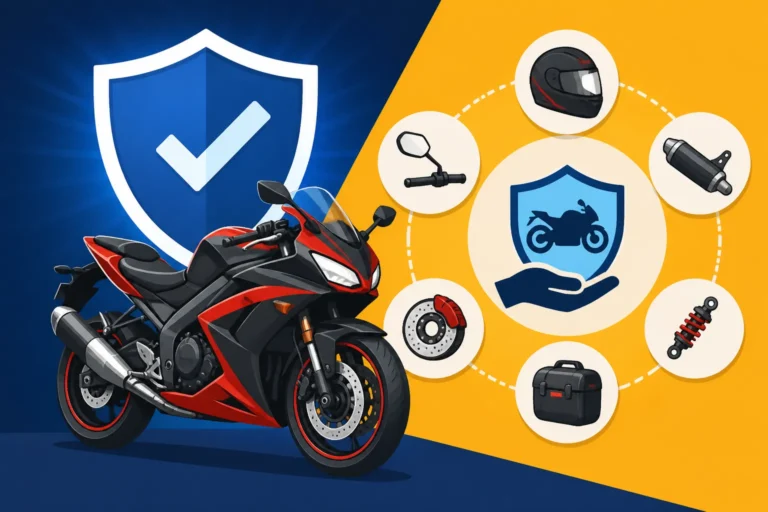
Accessories and Custom Parts Coverage (sometimes called "Custom Parts and Equipment" or "Optional Equipment" coverage) is a specific add-on or endorsement that you can purchase to extend your policy's protection beyond the factory-installed components. This coverage is absolutely vital for anyone who has invested in custom wheels, upgraded exhausts, custom paint jobs, modified handlebars, saddlebags, or any other non-factory addition.
How it works is fairly straightforward: you declare the total value of your custom parts to your insurer, and they add a corresponding amount of coverage to your policy. For example, if your new aftermarket wheels cost $3,000, you would add $3,000 in Custom Parts coverage. If you have other modifications, you'd add their value too, up to a certain limit. Many policies offer a small amount of this coverage automatically (e.g., $1,000-$3,000) for free, but for significant upgrades like premium wheels, you'll almost certainly need to purchase additional coverage to match your investment. This type of coverage is crucial, and you can learn more about it in depth by checking out our guide on Accessories & Custom Parts Coverage Explained.
For riders looking for competitive rates and good coverage options, companies like Progressive, Dairyland, and Markel are often highlighted as being friendly to custom bike owners. You might also use a comparison tool like The Zebra to see which insurers in your area offer the most comprehensive custom parts coverage for your specific modifications.
How to Insure Your Aftermarket Wheels Properly
Getting your aftermarket wheels properly covered isn't just about ticking a box; it's about being thorough and proactive. Here’s a step-by-step approach to ensure your investment is protected:
- Document Everything: This is perhaps the most critical step. Keep detailed records of all your aftermarket wheel purchases. This includes receipts, invoices, and any professional installation costs. Take clear, high-resolution photographs of the wheels installed on your bike, showing their condition and integration. If you have appraisals from a custom shop, include those too. This documentation proves ownership, value, and the existence of the modifications.
- Contact Your Insurer Immediately: Don't wait until renewal time. As soon as you install your aftermarket wheels (or any other significant modification), call your insurance provider. Inform them of the upgrades and provide them with the documented value. They will then help you add the appropriate Custom Parts and Equipment coverage. Be honest and comprehensive; underreporting the value could leave you underinsured, while overreporting is unnecessary.
- Understand Your Coverage Limits: Discuss with your agent the maximum amount of custom parts coverage available. Some insurers have limits (e.g., $10,000 or $30,000), while others are more flexible. Make sure the coverage amount you're adding adequately reflects the true replacement cost of your custom wheels and any other modifications.
- Review Your Policy Annually: Even if you've added coverage, it's a good practice to review your policy annually, especially if you continue to make modifications or if the value of your existing custom parts changes. Ensure your declared values are up to date. This also gives you a chance to compare rates and coverages, perhaps through a platform like The Zebra, to ensure you're still getting the best deal.
By following these steps, you're not just buying insurance; you're building a solid case for a smooth claims process should the unfortunate happen.
Factors Affecting Coverage for Aftermarket Wheels
Beyond just having "accessories coverage," how your aftermarket wheels are valued and whether your modifications are fully disclosed play a massive role in how a potential claim is handled.
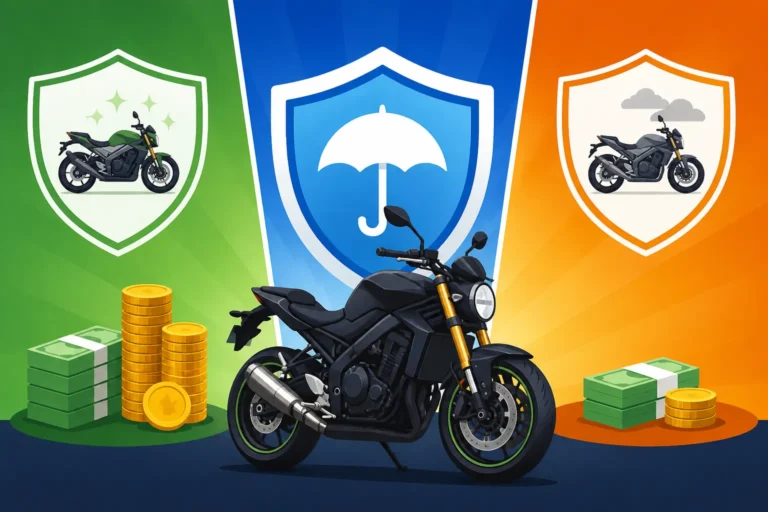
Valuation Methods: Agreed Value vs. Stated Value
When insuring highly customized motorcycles, especially those with expensive aftermarket wheels and other unique modifications, the method of valuation used by your insurer becomes incredibly important.
- Agreed Value: This is often considered the gold standard for custom bikes. With an agreed value policy, you and the insurance company agree on a specific value for your motorcycle and its custom parts (including those aftermarket wheels) before the policy is issued. If your bike is then declared a total loss or your custom wheels are stolen, the insurer pays out this agreed-upon amount, regardless of current market depreciation, minus your deductible. This eliminates disputes over value after an incident and provides much-needed peace of mind for riders with significant investments in their bikes. This type of coverage is especially beneficial for unique, high-value customizations and can be found with specialized motorcycle insurers.
- Stated Value: This is a bit trickier and can be easily misunderstood. With stated value, you declare a value for your motorcycle, but the insurer typically reserves the right to pay either the stated value or the actual cash value (ACV) at the time of loss, whichever is less. So, while you might state your custom wheels are worth $3,000, if their ACV (depreciated value) is lower at the time of a claim, the payout could be reduced. While it sounds good initially, stated value can still leave you exposed to depreciation, which is why it's critical to understand the fine print.
For riders with significant investments in their aftermarket wheels, aiming for an agreed value policy if available is often the best strategy to ensure full protection. Some insurers, like Markel or Dairyland, are well-known for offering good options for custom and classic bikes, including agreed value policies.
Documentation and Disclosure
You can't stress enough the importance of being completely transparent with your insurance provider about every modification you make, especially something as valuable as aftermarket wheels.
- Why Documentation is Critical: Imagine a scenario: your custom bike, complete with those expensive aftermarket wheels, is stolen from your garage. When you file a claim, the insurance adjuster will need to verify the existence and value of those wheels. Without receipts, detailed photos, or an appraisal, it becomes your word against the insurer's standard valuation. Your documentation serves as undeniable proof of your investment, significantly streamlining the claims process and ensuring you get a fair payout. This includes not just the purchase receipts for the wheels themselves, but also any professional installation invoices, as labor costs contribute to the overall value. Remember, you want to be able to show exactly what you paid and when you paid it.
- The Risks of Non-Disclosure: Failing to inform your insurer about significant modifications like aftermarket wheels can lead to severe consequences. At best, your insurer might deny coverage for the custom parts altogether, paying only for the original factory components. At worst, they could potentially deny the entire claim, arguing that you misrepresented your vehicle and violated the terms of your policy. This could leave you entirely out of pocket for both the bike and its custom parts. It's a risk simply not worth taking. Always disclose, always document. This attention to detail will be a huge help if you ever need to File a Motorcycle Insurance Claim.
Common Misconceptions and Real-World Scenarios
The world of insurance can be baffling, and misconceptions about "full coverage" and what it entails are rampant. Let's clear some of that up and look at how things play out in the real world.
"My Full Coverage Includes Everything, Right?"
This is perhaps the most common misconception among riders, and it’s one that often leads to disappointment and financial heartache after an incident. The term "full coverage" is a bit of a misnomer; it's an industry shorthand that generally refers to a policy that includes liability, collision, and comprehensive coverage. It does not inherently mean that every single modification, accessory, or custom part on your motorcycle is automatically covered at its full replacement value.
Think of "full coverage" as covering the bones of your bike – the standard factory components. If you want to cover the expensive jewelry you’ve added, like those custom aftermarket wheels, you absolutely need to purchase separate, explicit coverage for accessories and custom parts. Without it, your insurer will only consider the value of the original equipment the wheels replaced, if anything at all, often leaving you with a huge financial gap to replace your personalized upgrades. It's why understanding What Does Full Coverage Motorcycle Insurance Mean? is so important.
What Happens in a Claim Scenario?
Let’s walk through a couple of hypothetical, but very real, scenarios to illustrate the difference that proper coverage for aftermarket wheels makes.
Scenario A: Rider Without Proper Custom Parts Coverage
Imagine "Mike," a proud owner of a Harley-Davidson Softail, just spent $4,000 on a stunning set of custom billet aluminum wheels. He figures his "full coverage" policy with GEICO or Progressive has him squared away. One evening, his bike is unfortunately stolen from his apartment complex. Mike files a claim, heartbroken.
When the claims adjuster reviews his policy, they note that while Mike has comprehensive coverage for theft, he never added specific "Accessories & Custom Parts" coverage beyond the small, standard amount (say, $1,000) that came with his policy. The insurer will value his stolen Harley based on its Actual Cash Value with original factory wheels. They might offer the $1,000 for custom parts, but the remaining $3,000 loss on his wheels, plus any other custom parts not covered, will come directly out of Mike's pocket. He's left with a significant financial shortfall to replace his unique bike, despite having what he thought was "full coverage." This is a tough lesson learned, highlighting the importance of understanding the fine print and seeking out specialized policies that are custom parts-friendly.
Scenario B: Rider With Proper Custom Parts Coverage
Now consider "Sarah," who owns a custom Suzuki GSX-R with equally impressive aftermarket wheels that cost her $3,500. She, too, has "full coverage," but crucially, she proactively contacted her insurer, Dairyland, after installing her wheels. She provided them with receipts and photos and purchased an additional $3,500 in Custom Parts and Equipment coverage. She even opted for an agreed value clause on her policy because of her extensive modifications.
A few months later, Sarah is involved in an accident where her bike suffers significant damage, including her custom wheels. When she files her claim, the adjuster reviews her policy and sees the specific custom parts coverage for her wheels. Because she had an agreed value policy for her custom parts, the insurer promptly includes the full $3,500 for her wheels (minus her deductible, of course) in her total payout. Sarah can then confidently replace her damaged custom wheels without worrying about depreciation or fighting for their true value. She knew her Types of Motorcycle Insurance Coverage Explained and made sure her specific needs were met. This careful planning saved her thousands of dollars and a lot of stress.
These scenarios clearly show that "full coverage" isn't a magic bullet for all your custom modifications. You need to be specific and intentional about protecting your aftermarket wheels. Using a comparison site like The Zebra can help you identify insurers who are more flexible with custom parts coverage and offer suitable valuation methods.
Comparing Coverage: Standard vs. Dedicated Custom Parts
To help clarify the distinction, here’s a simple comparison table outlining how a standard policy typically treats aftermarket wheels versus a policy with specific custom parts coverage.
| Feature | Standard Motorcycle Policy (ACV) | Policy with Custom Parts Coverage (ACV or Agreed Value) |
|---|---|---|
| Aftermarket Wheels | Typically not covered, or covered only up to the depreciated value of the original factory wheels they replaced. | Covered up to the declared value (either ACV or Agreed Value, depending on the policy) |
| Valuation Method for Wheels | Actual Cash Value (ACV) of original equipment | Actual Cash Value (ACV) of custom parts, or Agreed Value for custom parts |
| Documentation Required | Not typically for non-stock parts | Highly recommended: receipts, photos, appraisals |
| Premium Impact | No additional premium for aftermarket parts | Higher premium due to increased coverage amount |
| Peace of Mind | Low, high risk of financial loss for custom parts | High, knowing your investment is protected |
| Claim Process | Potential disputes over custom part value | Smoother, as values are documented and agreed upon |
As you can see, investing a little more in dedicated custom parts coverage can make a world of difference if your aftermarket wheels are ever damaged or stolen. It’s a vital consideration for any rider who has personalized their bike. To help you navigate different options, tools like The Zebra can assist in finding insurers that best fit your custom bike needs. You might also want to look into how to Compare Motorcycle Insurance Quotes to find the best policy for your unique situation.
Disclaimer
Please remember, this information is intended for general guidance only and does not constitute professional insurance advice. Insurance policies vary significantly by provider, state, and individual circumstances. It is crucial to consult directly with a licensed insurance agent to discuss your specific needs and obtain accurate quotes and policy details for your motorcycle and any aftermarket modifications. Always read your policy documents carefully to understand your coverage.