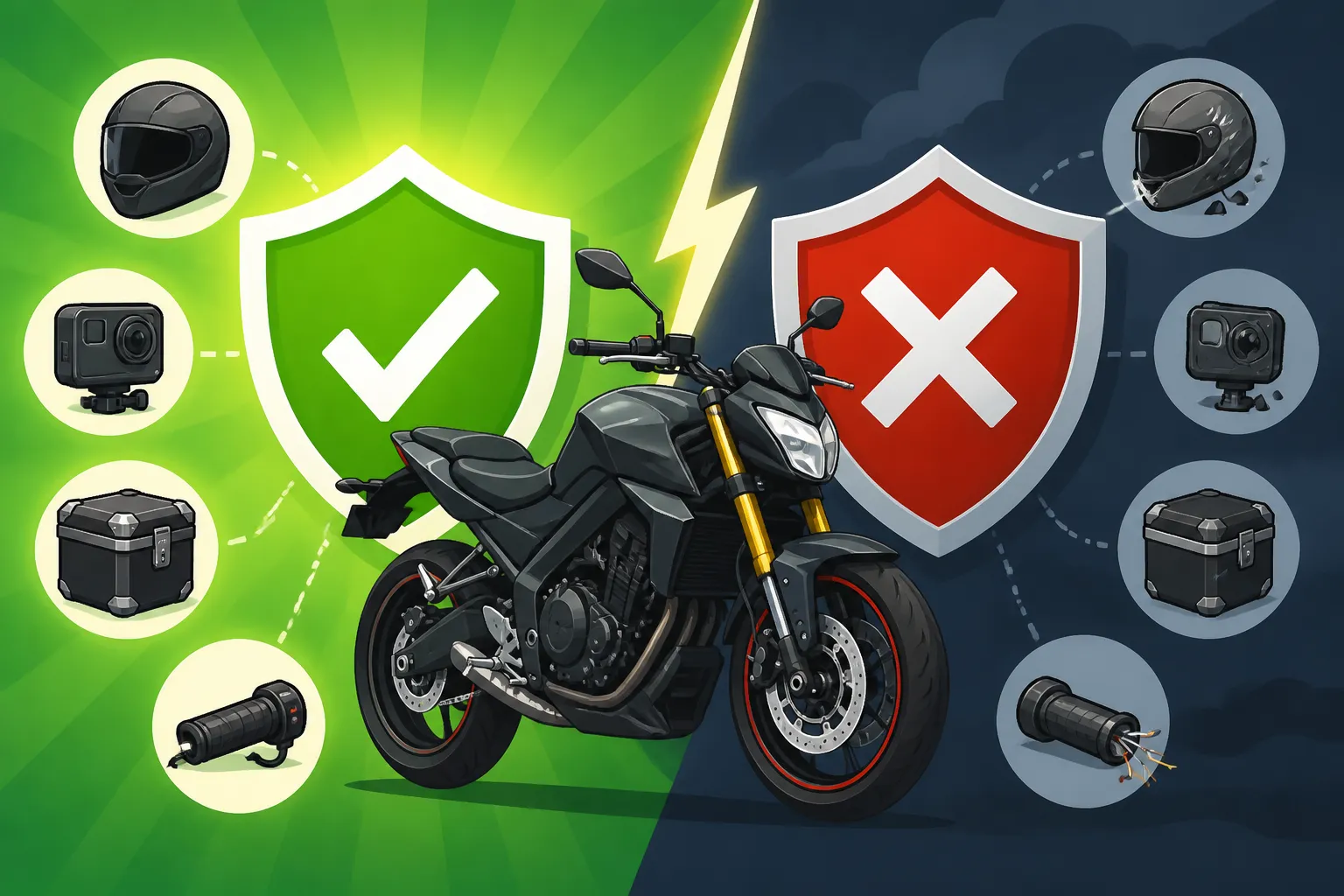
Is Accessories Coverage Worth It on a Motorcycle?
You've poured your heart (and often, a considerable amount of your hard-earned cash!) into making your motorcycle truly yours. Whether it's gleaming chrome, a performance exhaust, a custom paint job, or those perfect saddlebags, these additions reflect your personality and enhance your ride. But what happens if those precious accessories get damaged, stolen, or destroyed in an accident? This guide will dive deep into motorcycle accessories coverage, helping you understand what it is, how it works, and most importantly, if it's a worthwhile investment for your unique machine.
Understanding What Motorcycle Accessories Coverage Actually Is
When you first get a motorcycle insurance quote, you're usually looking at the basics: liability, comprehensive, and collision. These are fantastic for covering the core of your bike and any damage you might cause to others. But they often have a blind spot when it comes to the specific, often expensive, additions you've bolted on. That's where accessories coverage steps in – it's an optional add-on designed to protect those custom parts and enhancements that make your bike stand out.
Beyond the Factory Floor: What Qualifies as an "Accessory"?
The term "accessory" in the insurance world generally refers to anything that wasn't standard equipment when your motorcycle rolled off the factory line. It's essentially any non-OEM (Original Equipment Manufacturer) part or modification that enhances the look, performance, or functionality of your bike. This can be a huge category, encompassing a vast array of items.
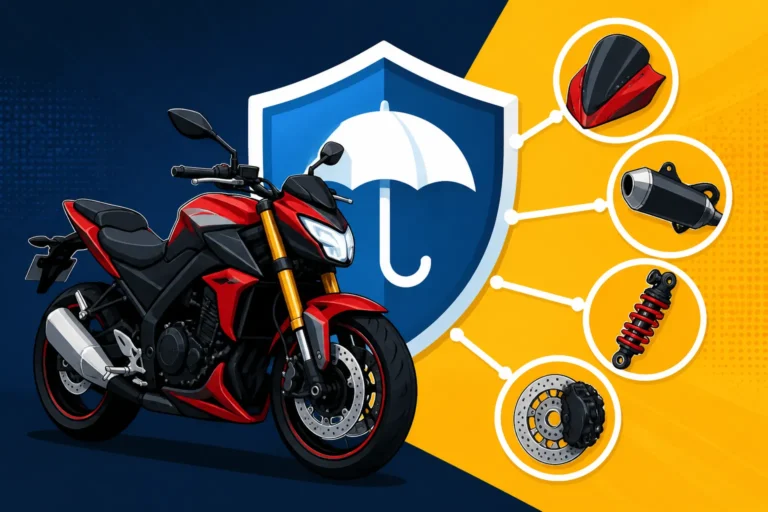
Think about it: that custom exhaust system you meticulously researched and installed, the upgraded handlebars that perfectly fit your riding style, the polished chrome engine guards, or even the integrated GPS system you rely on for navigation. All of these would typically fall under the umbrella of accessories. This also includes custom paint jobs, fairings, upgraded seats, aftermarket wheels, saddlebags, luggage racks, and even intricate LED lighting kits. The key is that these are additions you made after the initial purchase, or they came with the bike but were not factory standard for that specific model. Different insurers might have slightly different definitions, so it's always crucial to clarify with your provider exactly what they consider an accessory and what might be considered standard equipment, especially if you bought your bike used with existing modifications.
How Standard Policies Fall Short for Your Custom Ride
The biggest frustration for many riders who've invested in customizations is discovering that their standard motorcycle insurance policy provides little to no coverage for these beloved additions. A basic liability policy, which only covers damages and injuries you cause to others, certainly won't help if your custom pipes get scraped or your aftermarket fairing cracks. Even a full coverage policy, which typically includes comprehensive and collision, often comes with a very low, if any, default limit for accessories.
For example, a standard policy might include a token $500 or $1,000 for accessories. While this might cover a minor alteration or a small set of basic saddlebags, it's woefully inadequate if you've put thousands into a high-performance exhaust, custom chrome, or a bespoke paint job. If your bike is totaled or stolen, and you only have that minimal accessory coverage, you could be left footing a significant bill to replace everything you painstakingly added. The value of your bike as listed by the insurer, based on its factory specs and depreciated value, simply doesn't account for the unique, often non-depreciating, value of your custom work. This gap in coverage is precisely why understanding and opting for dedicated accessories coverage is so important for riders who truly personalize their machines.
The True Cost of Motorcycle Accessories and Why It Matters
It's easy to lose track of how much you've invested in your motorcycle's accessories, especially if you've added them over time. Each new piece might seem like a small splurge, but these costs quickly accumulate. Overlooking this cumulative investment is a common mistake that can lead to significant financial heartache if something goes wrong.
Adding Up the Investment: Beyond the Initial Purchase Price
The cost of motorcycle accessories isn't just the price tag of the part itself. It's the cost of the part, the shipping, and often, the professional installation. For example, a high-quality aftermarket exhaust system could easily run you anywhere from $800 to $2,500, not including the labor for proper installation and tuning. A custom seat for long-distance comfort might be $400-$1,000. Upgraded suspension components, performance air filters, LED lighting kits, infotainment systems, or even a professional custom paint job can add hundreds, if not thousands, to your bike's value and your personal investment.
Imagine a rider named Sarah who started with a stock Harley-Davidson Sportster. Over three years, she added a Vance & Hines exhaust, a custom Mustang seat, a detachable windshield, saddlebags, upgraded chrome covers, and a Kuryakyn Highway Pegs kit. Each item felt like a small, manageable purchase at the time, but if she were to tally it all up, she might find she's spent well over $4,000-$5,000 on these modifications alone. This is money that standard insurance often won't replace. Without adequate accessories coverage, Sarah's passion project could become a massive financial burden if her bike is stolen or damaged beyond repair. This is where dedicated coverage truly earns its keep, protecting the real monetary and emotional value you've built into your ride.
Risk Assessment: When Your Custom Parts are Most Vulnerable
Unfortunately, custom parts are often the first thing to bear the brunt of damage or become targets for theft. A minor tip-over in a parking lot, for instance, might just scratch your paint if your bike is stock, but for a customized machine, it could mean scraping a costly custom fairing, bending an upgraded chrome guard, or cracking an expensive aftermarket mirror. These seemingly minor incidents can quickly escalate into repair bills that far exceed any standard accessory coverage limits.
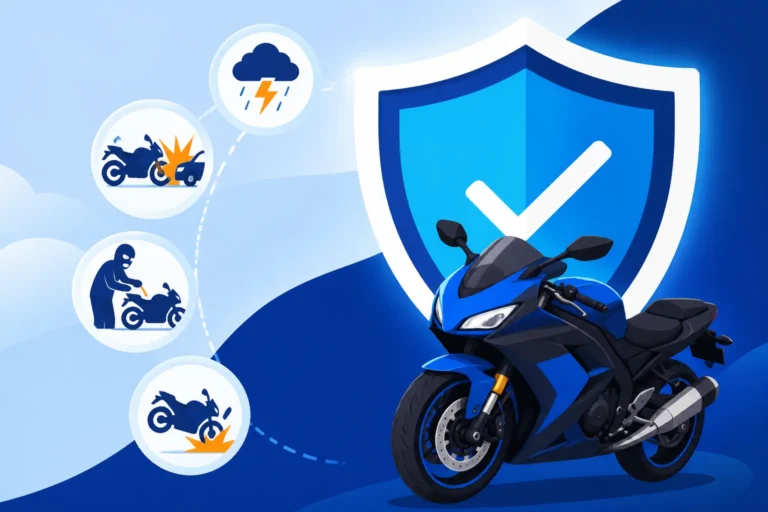
Beyond accidents, theft is a significant concern for motorcycle owners, and custom parts can make your bike even more attractive to thieves. While the entire bike might be stolen, sometimes individual, high-value components like custom wheels, performance exhausts, or premium infotainment systems are targeted. Imagine your beautifully crafted Harley-Davidson Street Glide, gleaming with its custom paint and polished engine, getting vandalized, or worse, having key components stripped away. Comprehensive coverage might cover the theft of the bike, but if the accessories coverage is insufficient, replacing those unique parts falls squarely on your shoulders. Natural disasters like hail storms, floods, or even garage fires can also indiscriminately damage or destroy custom additions. Knowing these risks, it becomes clear that relying solely on minimal default accessory coverage is a gamble many riders simply can't afford to take.
Diving Deep into Accessories Coverage Options
So, you're convinced that your custom parts need better protection. Great! Now, let's peel back the layers and understand the specifics of how accessories coverage works, because not all policies are created equal. This isn't just a simple yes/no decision; it involves understanding limits, deductibles, and how your insurer values those unique additions.
Decoding Coverage Limits and Deductibles
When you add accessories coverage to your policy, you'll typically choose a specific coverage limit. This is the maximum amount your insurance company will pay out to repair or replace your accessories if they're damaged or stolen. These limits can vary widely, often starting from an additional $1,000 or $2,000 and going up to $10,000, $20,000, or even more, depending on the insurer and the value of your modifications. For riders with significant investments, like those with extensive custom paint, high-end performance upgrades, or a trike conversion, a higher limit is absolutely essential.
Alongside the coverage limit, you'll also have a deductible. Just like with your comprehensive and collision coverage, this is the amount you'll pay out-of-pocket before your insurance kicks in. Some policies might have a separate deductible specifically for accessories, while others will apply your standard comprehensive or collision deductible. For instance, if you have a $500 deductible and your custom saddlebags worth $1,200 are stolen, you'd pay the first $500, and your insurer would cover the remaining $700. It's crucial to review your policy details carefully or discuss this with your agent. Companies like Progressive or Dairyland are known for offering robust accessory coverage options, allowing riders to tailor limits to their specific needs. When you're using a comparison tool like The Zebra, make sure to specify the desired accessory coverage amount to get accurate quotes.
Agreed Value vs. Actual Cash Value for Accessories
This is arguably the most critical distinction to understand when insuring custom parts, and it's where many riders get caught off guard.
Actual Cash Value (ACV) is the most common payout method for standard motorcycle parts. It pays the replacement cost of an item minus depreciation. For a stock part, this is often fine, but for custom work, it's a nightmare. Imagine you spent $3,000 on a custom paint job three years ago. With ACV, the insurer would factor in wear and tear, age, and market value depreciation, potentially offering you a fraction of what you originally paid, which would barely cover a fraction of a new custom paint job.
Agreed Value, on the other hand, is the gold standard for custom and vintage bikes. With an agreed value policy, you and the insurance company agree on the value of your motorcycle and its accessories before a loss occurs. This value is usually based on professional appraisals or detailed receipts and photos of your customizations. If your bike is then declared a total loss, the insurer pays you the agreed-upon amount, no questions asked about depreciation. This provides immense peace of mind, knowing that your unique investment is fully protected.
There's also Stated Value, which can be a bit tricky. While it sounds similar to agreed value, it's often not. A stated value policy might state a value for your bike, but still allow the insurer to pay out the lesser of the stated value or the actual cash value at the time of loss. Always clarify with your insurer if their "stated value" truly means "agreed value" or if depreciation will still be applied. For highly customized bikes, always push for true agreed value coverage on your accessories, even if it comes with a slightly higher premium. Knowing the difference here can literally save you thousands if your bike is ever What Happens When Your Motorcycle Is Totaled? with all its custom glory.
Personal Property vs. Attached Accessories
It's important to differentiate between accessories that are permanently attached to your motorcycle and personal property you might carry with you while riding. Accessories coverage is specifically designed for items that are bolted, wired, or painted onto the bike itself. This includes your custom fairings, exhaust, upgraded wheels, special lighting, performance parts, and custom paint.
However, your riding gear – things like your expensive helmet, jacket, gloves, and boots – are typically not covered under standard accessories coverage. These items are considered personal property. Some motorcycle insurance policies offer an optional "personal belongings" or "riding gear" coverage add-on that can protect these items in case of theft or damage in an accident. Similarly, items like a portable GPS unit you attach temporarily, your phone, or other personal effects in your saddlebags might also fall outside of traditional accessories coverage unless they are permanently integrated into the bike's electrical system or structure. Always check if your policy has specific provisions for Does Motorcycle Insurance Cover Riding Gear? as a separate item, beyond what's bolted to the bike, to ensure all your investments are protected.
Is It Worth It? Weighing the Pros and Cons
Deciding whether accessories coverage is "worth it" boils down to a personal assessment of your investment, your risk tolerance, and the potential financial impact of a loss. There's no one-size-fits-all answer, but understanding the upsides and downsides can help you make an informed decision for your unique situation.
The Peace of Mind and Financial Protection
The most compelling argument for accessories coverage is the profound peace of mind it offers. When you've invested significant time, effort, and money into customizing your motorcycle, the last thing you want is to lose it all in an unforeseen incident. This coverage acts as a financial safety net, ensuring that if your custom exhaust is bent in a low-speed tip-over, your unique paint job is scratched by vandalism, or your high-end audio system is stolen, you won't have to pay out-of-pocket to replace those expensive parts.
Consider hypothetical scenarios:
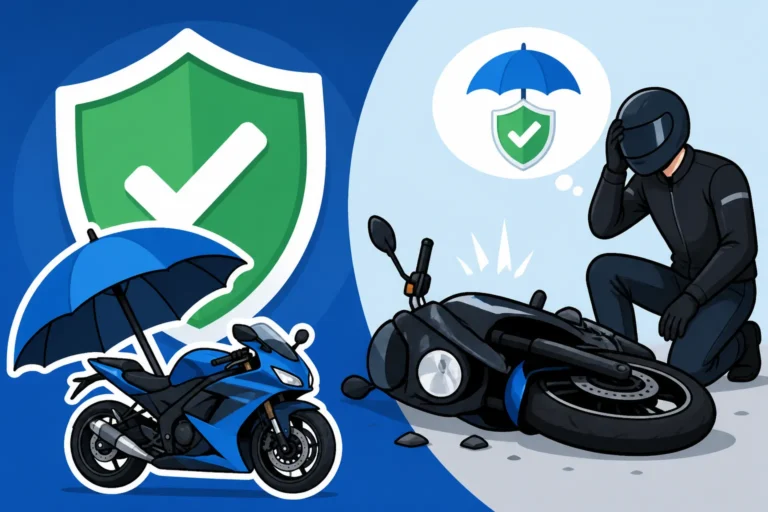
- The Parking Lot Mishap: You're parked at a coffee shop, and another car backs into your bike, knocking it over. Your custom engine guard is twisted, and your aftermarket saddlebags are scuffed. Without specific accessories coverage, you might only get minimal compensation for these damages, leaving you to pay hundreds or thousands for repairs or replacements. With coverage, your deductible is often all you pay.
- The Unfortunate Deer Strike: While cruising scenic backroads, a deer darts out. You manage to stay upright, but the front fairing, custom headlights, and front fender are extensively damaged. These aren't stock parts. Accessories coverage ensures you can replace them with similar quality items, rather than being forced back to basic factory parts or facing a huge personal expense.
- Theft of Valuables: Your motorcycle is stored in your garage, but thieves break in and strip it of high-value items like your chrome engine kit and infotainment system. While your primary comprehensive coverage might kick in for the bike's overall theft, specific accessories coverage is what directly addresses the replacement cost of those specialized components.
This coverage essentially helps maintain the true value of your motorcycle after an incident. It allows you to continue enjoying your unique ride without the constant underlying worry about the financial devastation if something goes wrong. For many riders, that sense of security is priceless. Understanding How to File a Motorcycle Insurance Claim is key, but having the right coverage is the first step.
The Extra Cost vs. Potential Savings
Of course, the primary downside to accessories coverage is that it adds to your overall motorcycle insurance premium. For some riders, especially those with minimal or inexpensive modifications, this added cost might feel unnecessary. If your "accessories" consist of a basic phone mount and a cheap handlebar bag, the premium increase might not justify the low potential payout.
However, for riders who have invested hundreds or thousands into their bike's aesthetics or performance, the added premium is often a small price to pay for substantial protection. The increase in your annual premium for accessories coverage typically depends on the amount of coverage you choose. For an additional $3,000 to $5,000 in accessory coverage, you might see your annual premium go up by as little as $50 to $150, or sometimes a bit more for very high limits. When you compare this to the cost of replacing even one major custom part, the value becomes clear.
Let's look at it this way: if you've spent $3,000 on an aftermarket exhaust system and a custom seat, an extra $100 per year on your premium for $3,000-$5,000 in accessory coverage means you're paying just over $8 a month for that protection. If those parts are ever damaged or stolen, that $100 annual investment could save you $3,000 out of pocket. That's a pretty good return on investment. Tools like The Zebra can help you compare How Much Is Motorcycle Insurance? 2026 Cost Guide and see how adding this specific coverage impacts your quote from various insurers. It allows you to weigh the exact cost against the potential catastrophic loss.
Here's a simplified table to help visualize the decision:
| Accessory Value Range | Typical Annual Add-on Cost (Estimate) | Is it Worth Considering? | Why or Why Not? |
|---|---|---|---|
| Under $500 | $10 – $30 | Possibly, if sentimental | Minimal financial risk, but if items hold significant personal value or are hard to replace, it might be worth the small cost. Otherwise, you might absorb the loss yourself. |
| $500 – $2,000 | $30 – $75 | Highly likely | This range often includes significant upgrades like quality saddlebags, basic exhaust systems, or custom lighting. The cost to replace these out-of-pocket can be substantial, making the coverage a smart financial move for most riders. |
| $2,000 – $5,000 | $75 – $150 | Absolutely | At this level, you've likely invested in major components like full exhaust systems, performance parts, advanced navigation, or a partial custom paint job. Losing these without coverage would be a serious financial blow. |
| Over $5,000 | $150+ | Essential | If your customizations exceed $5,000, you've essentially built a unique, high-value machine. Protecting this investment with dedicated coverage is paramount to avoid potentially crippling replacement costs in case of a major incident. |
Ultimately, the decision to invest in accessories coverage depends on how much you've customized your bike and your personal comfort level with risk. If your motorcycle is a reflection of your passion and hard work, and you've put a significant financial investment into its unique features, then accessories coverage is almost certainly a worthwhile expense. It’s about protecting the things you love and the money you’ve spent making your ride truly yours. Before settling on a policy, always check what Types of Motorcycle Insurance Coverage Explained are available to you and consider how they fit your riding lifestyle. You can also explore options like How to Get Cheap Motorcycle Insurance by bundling policies or looking for discounts, which can offset the cost of extra coverages.
Disclaimer
Please remember that insurance policies, laws, and regulations can change frequently. The information provided in this guide is intended for general informational purposes only and does not constitute professional financial or legal advice. Always consult with a licensed insurance professional to discuss your specific needs and obtain the most accurate, up-to-date information regarding motorcycle insurance policies and coverage options.