Collision vs Comprehensive Motorcycle Coverage
It’s a tale as old as time for us riders: you’re trying to make sense of your motorcycle insurance policy, and suddenly you’re staring at terms like "Collision" and "Comprehensive," wondering if they’re just fancy words for the same thing or if there’s a crucial difference you're missing. The truth is, these two types of coverage are distinct, vital, and often misunderstood, leading to serious headaches and unexpected expenses when an incident occurs. This guide is here to cut through the jargon, explain exactly what each covers, and help you decide what's right for your ride and your wallet.
The Bare Minimum: Why Liability Isn't Enough for Your Bike
Before we even dive into Collision and Comprehensive, it’s important to acknowledge the foundation of almost every motorcycle insurance policy: liability coverage. You see, most states in the U.S. require some form of liability insurance, and for good reason. It’s designed to protect other people and their property if you’re found at fault in an accident. Think of it as your legal safety net, ensuring that if you cause a fender bender with another car, or God forbid, injure someone, your insurance steps in to cover their medical bills and property damage up to your policy limits.
Understanding the "Other Guy's" Damage
Liability coverage is typically broken down into two main components: bodily injury liability and property damage liability. Bodily injury liability steps in when you cause physical harm to another person in an accident. This could mean covering their ambulance ride, hospital stay, lost wages from missing work, and even legal fees if they decide to sue. It’s not just about covering a simple cut or bruise; serious accidents can result in astronomical medical costs, and your liability coverage helps shield you from that financial ruin. For example, if you accidentally cut off a car on the highway and they swerve into a ditch, injuring the driver, your bodily injury liability would be the primary coverage for their injuries.
Then there's property damage liability, which covers the cost of repairing or replacing another person's property if you damage it. This isn't just limited to other vehicles; it could be a fence you swerve into, a mailbox you clip, or even a storefront window if things go really wrong. Imagine you’re trying to squeeze your bike into a tight parking spot and accidentally scrape the side of a shiny new pickup truck. Your property damage liability would kick in to pay for the repairs to the truck. While absolutely necessary and legally mandated in most places – you can learn more about specific requirements in our guide on Motorcycle Insurance Requirements by State (2026 Guide) – liability coverage does absolutely nothing for your bike or your injuries. This is where Collision and Comprehensive step in.
The Financial Risk of Liability-Only Coverage
Relying solely on liability coverage might seem like a smart way to save a few bucks on your premium, but it leaves you incredibly exposed. If you’re ever involved in an accident that’s your fault, or even a single-vehicle incident like hitting a deer or dropping your bike, you’ll be on the hook for all the repair costs to your own motorcycle. For a brand new Harley-Davidson Street Glide or a Ducati Panigale, those repair bills can easily run into the thousands, often quickly surpassing the annual savings you might have gained by skipping collision and comprehensive. It's a gamble many riders regret taking, especially when they find themselves staring at a bent frame or shattered fairings with no insurance safety net for their own beloved machine. Understanding the various Types of Motorcycle Insurance Coverage Explained is crucial to making an informed decision.
What Exactly is Collision Coverage?
Alright, let’s talk about Collision coverage. This is the big one for protecting your own motorcycle when things go wrong on the road. Simply put, collision coverage is designed to pay for the damage to your motorcycle if it collides with another vehicle, an object, or if it overturns. It doesn't matter who was at fault in the accident; if your bike suffers damage from a collision, this coverage is there for you.
Scenarios Where Collision Coverage is Your Best Friend
Collision coverage steps up in a variety of situations that are unfortunately common for riders. Let’s say you’re cruising down a busy street, and a car suddenly cuts you off, forcing you to lay your bike down to avoid a direct hit. Even if you don't hit the car, but your bike skids and suffers damage, collision coverage would cover the repairs. Or maybe you're navigating a tricky curve, misjudge it, and your bike slides into a guardrail. That's a collision with an object, and your coverage will apply.
Another common scenario: you’re at a stop light, and the car behind you doesn’t see you and rear-ends your motorcycle. Even if the other driver is at fault, their insurance company might drag their feet, or they might not have enough coverage. In such cases, your collision coverage can pay for your repairs, and your insurance company will then pursue reimbursement from the at-fault driver’s insurer (this is called subrogation). This way, you don't have to wait around with a damaged bike while two insurance companies argue. This coverage is absolutely non-negotiable if you have a loan on your bike, as lenders almost always require it to protect their investment.
The Role of Your Collision Deductible
When you purchase collision coverage, you'll choose a deductible. This is the amount of money you agree to pay out-of-pocket before your insurance company starts paying for the repairs. Common deductibles range from $250, $500, or $1,000. For instance, if you have a $500 deductible and your bike sustains $3,000 worth of damage in a collision, you would pay the first $500, and your insurance company would cover the remaining $2,500.
Choosing your deductible is a balancing act. A higher deductible typically leads to a lower premium, because you're taking on more of the financial risk yourself. Conversely, a lower deductible means you'll pay less out-of-pocket if you file a claim, but your monthly or annual premiums will be higher. It's essential to pick a deductible you can comfortably afford to pay at a moment's notice, because an accident is rarely something you can plan for. Think about your emergency fund; if you don't have $1,000 readily available, a $1,000 deductible might not be the wisest choice, even if it saves you a bit on the premium. You want your insurance to be there when you truly need it without creating more financial stress.
Diving Deep into Comprehensive Coverage
Now, let’s shift gears and talk about Comprehensive coverage. While Collision handles those unfortunate events where your bike crashes into something (or itself), Comprehensive coverage is all about protecting your motorcycle from virtually everything else that isn’t a collision. It’s the "Acts of God" and the "Acts of Mischief" coverage that can save you a world of hurt.
The "Other Stuff" Comprehensive Handles
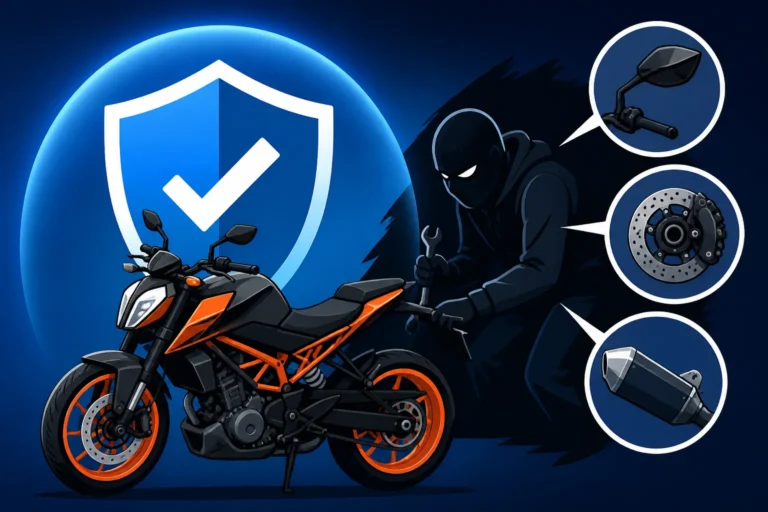
Comprehensive coverage is incredibly broad and covers a myriad of non-collision related incidents. Picture this: you park your bike outside your favorite coffee shop, come back, and it’s gone. Theft is a gut-wrenching experience, but if you have comprehensive coverage, your insurance company will work to reimburse you for the actual cash value of your stolen motorcycle. You can delve deeper into this specific coverage in our article, Does Motorcycle Insurance Cover Theft?.
But it’s not just theft. Comprehensive coverage also steps in for things like fire damage, perhaps if your garage catches fire or your bike has an electrical malfunction. Vandalism, too, is covered – imagine waking up to find someone keyed your tank or slashed your tires. Environmental damage is another big one: hail storms, floods, falling objects like tree branches, or even strong winds can cause significant damage, and comprehensive has your back. Another common, and often traumatic, scenario for riders is hitting an animal, particularly deer, which are a major hazard in many rural and even suburban areas. If you hit a deer and damage your bike, that would fall under comprehensive, not collision, because it's considered an unforeseen "other peril" rather than a collision with another vehicle or stationary object. It's a critical distinction many riders miss until it's too late.
Your Comprehensive Deductible and Its Impact
Just like with collision coverage, comprehensive coverage also comes with a deductible. This deductible works in the exact same way: it's the amount you pay out-of-pocket before your insurance kicks in. If your bike is stolen, and you have a $500 comprehensive deductible, your insurer will pay the actual cash value of your bike minus that $500.
Again, the choice of deductible directly influences your premium. A higher comprehensive deductible will generally lead to lower premiums, and a lower deductible will result in higher premiums. Many riders opt for a higher comprehensive deductible than their collision deductible, reasoning that "Acts of God" or theft are less frequent occurrences than minor collisions or tip-overs. However, it's still crucial to choose a deductible you can comfortably afford, especially considering the high cost of replacing a stolen motorcycle or repairing extensive storm damage. You want to ensure that if the worst happens, you're not left in a deeper financial hole trying to recover your ride.
Key Differences: Collision vs. Comprehensive at a Glance
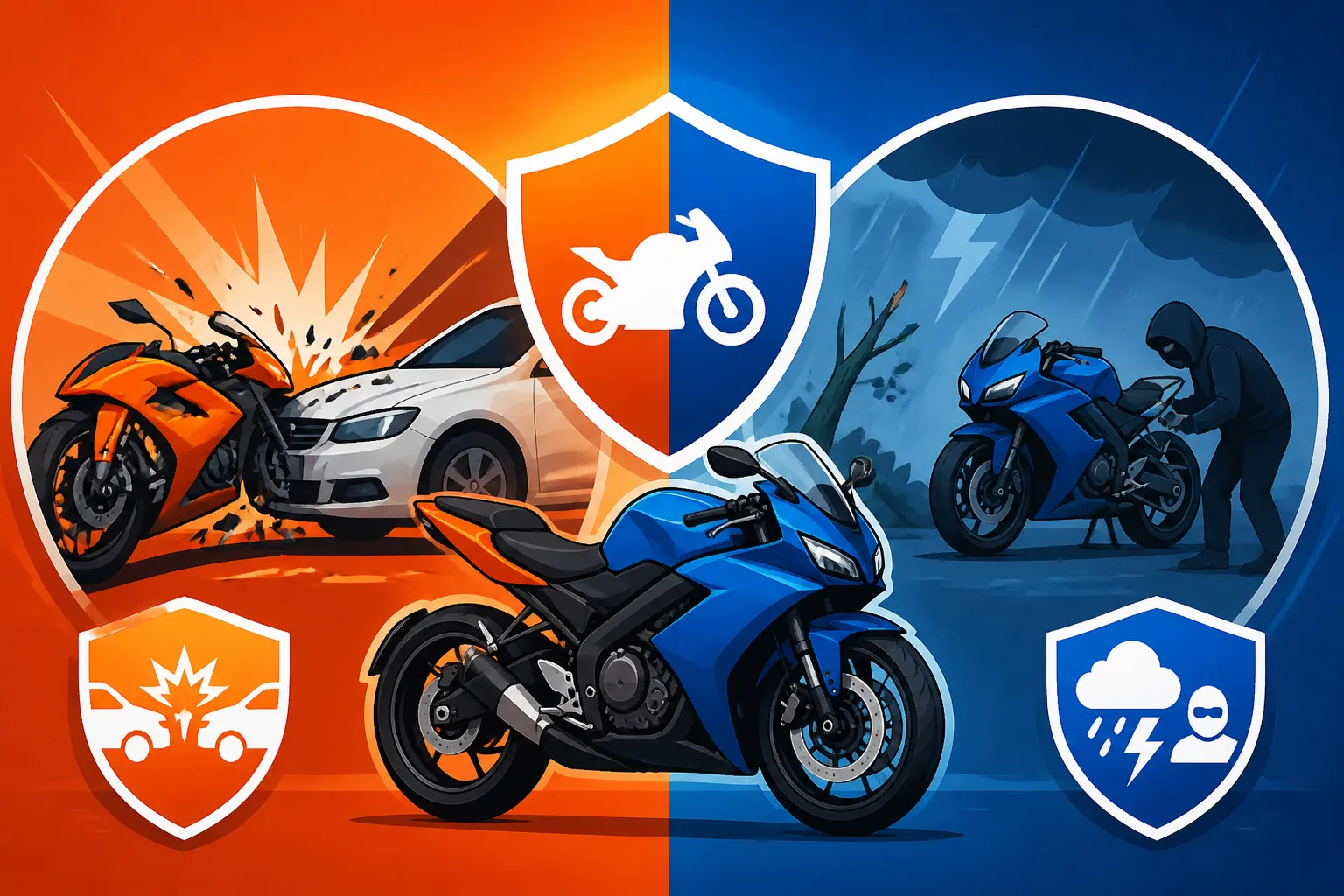
So, we've walked through both types of coverage, but sometimes it helps to see them side-by-side to really solidify the differences. The most straightforward way to remember it is this: Collision is for when your bike hits something or flips over, and Comprehensive is for when something happens to your bike that isn't a direct collision. This distinction is paramount because misinterpreting which coverage applies can lead to frustration when filing a claim.
The "Who Caused It" and "What Happened" Divide
One way to think about it is causality. Collision coverage typically deals with events where your actions, or the actions of another driver, directly cause your bike to collide with something. This includes single-vehicle accidents where you might lose control and hit a tree, or multi-vehicle incidents where another driver runs into you. The common thread is the impact that damages your motorcycle.
Comprehensive, on the other hand, steps in for events that are largely out of your control or aren't related to the act of riding and colliding. It's the unexpected, the random, the unfortunate incidents that happen when your bike is parked, or you're simply unlucky enough to be caught in a natural disaster. It's less about the "who" and more about the "what kind of event." If a drunk driver smashes into your parked bike, it's comprehensive because your bike was stationary and not involved in a collision while being ridden. If you hit the drunk driver while riding, it's collision. See the subtle but critical difference?
Here’s a quick breakdown to help you visualize the core distinctions:
| Feature | Collision Coverage | Comprehensive Coverage |
|---|---|---|
| Primary Purpose | Covers damage to your bike from impacts/overturns. | Covers damage to your bike from non-collision events. |
| Examples of Events Covered | – Colliding with another vehicle – Hitting a stationary object (pole, fence, tree) – Laying your bike down – Overturning/rolling the bike – Pothole damage that leads to a crash |
– Theft – Vandalism – Fire – Hail, flood, wind, earthquake – Falling objects (tree branches, rocks) – Hitting an animal (deer, elk, etc.) – Riot or civil commotion |
| Deductible Applies | Yes | Yes |
| Fault | Applies regardless of fault (your own or another driver's) | Not related to fault in a collision scenario |
| When It's Essential | Financed bikes, expensive bikes, peace of mind on the road | All bikes (especially in high-theft/weather-risk areas), financed bikes |
This table serves as a handy reference, but remember, the nuances of your specific policy and the exact circumstances of an event will always be the determining factors. Always check your policy documents or speak with your insurance agent for clarification.
Beyond the Black and White: Grey Areas and Overlaps
While the table above clearly delineates many situations, there can be some grey areas. For example, what if a tree branch falls on your bike while you're riding it? Most likely, this would still fall under comprehensive because the damage resulted from a falling object, not a collision with another vehicle or object in the context of you riding and crashing. However, if you swerved to avoid the falling branch and hit a guardrail, the damage from hitting the guardrail would be collision. It truly depends on the primary cause of the damage.
Another area of confusion can be with uninsured or underinsured motorist coverage. If an uninsured driver hits your bike and totals it, your uninsured motorist property damage might cover it, or your collision coverage would kick in, with your insurer then attempting to recover from the at-fault party. The key takeaway is that both Collision and Comprehensive are crucial pieces of the puzzle when it comes to safeguarding your investment in your motorcycle from the vast majority of risks.
When Do You Absolutely Need Both?
Many riders grapple with the decision of whether to carry both collision and comprehensive coverage. It's not always a clear-cut choice, but there are definitely situations where having both is not just smart, it's often a requirement or simply provides invaluable peace of mind. For a deeper dive into the overall value, check out our guide on What Does Full Coverage Motorcycle Insurance Mean?.
The Financed or Leased Bike Mandate
This is probably the most common and non-negotiable scenario: if your motorcycle is financed or leased, your lender will require you to carry both collision and comprehensive coverage. Why? Because until you pay off that loan, the bank or financing company legally owns a significant portion of your bike. They want to protect their investment, and if your bike is damaged beyond repair or stolen, they want to ensure they don't lose money. Without these coverages, if something happened to your bike, you'd still be on the hook for the loan payments even though you no longer have a ride. This is especially true for brand new bikes or those with high MSRPs, where the financial stake is considerable. Ignoring this requirement can lead to your lender force-placing expensive insurance on you, or even repossessing the bike, so it’s definitely not something to mess around with.
Protecting Your Investment: High-Value Motorcycles
Even if your bike is paid off, if you own a high-value motorcycle, like a custom-built chopper, a top-of-the-line touring bike such as a Honda Gold Wing, or a powerful sport bike like a Ducati Panigale, comprehensive and collision coverage are incredibly wise investments. The cost of repairing significant damage or replacing the bike outright can be crippling if you're paying out-of-pocket. Imagine dropping your fully customized Harley-Davidson Road Glide and needing a new tank, fairings, and engine work – that could easily be $10,000 or more. Without the right coverage, that financial hit could be enough to make you consider giving up riding altogether.
For these bikes, the annual premium for full coverage often pales in comparison to the potential repair or replacement costs. It’s not just about the initial purchase price, either. Many riders put significant money into aftermarket parts, custom paint jobs, and performance upgrades. While standard policies may have limitations, many insurers offer specific Accessories & Custom Parts Coverage Explained to protect these valuable additions, which would fall under your collision or comprehensive claims depending on the incident.
Peace of Mind and Risk Assessment
Beyond the financial mandates and the value of your asset, carrying both collision and comprehensive coverage provides an unparalleled sense of peace of mind. Riding a motorcycle inherently comes with risks, and while we all strive to be safe and skilled, accidents and unforeseen events can and do happen. Knowing that if you accidentally drop your bike in a parking lot, get T-boned by an inattentive driver, or find your bike gone from your garage, you won't be left with a massive bill can be incredibly reassuring.
Think about your personal risk tolerance. Do you live in an area with high vehicle theft rates? Is your bike parked outside frequently? Do you ride year-round, increasing your exposure to various road conditions and other drivers? Are you prone to solo trips where a mechanical issue or an animal strike could leave you stranded and vulnerable? These are all scenarios where comprehensive and collision coverage provide a critical safety net. While you can save money with liability-only coverage, that peace of mind is often worth the extra premium for many riders, allowing them to enjoy their time on two wheels without the constant worry of catastrophic financial loss.
Factors Influencing Your Decision
Deciding on the right level of coverage, particularly whether to opt for both collision and comprehensive, isn't a one-size-fits-all answer. Several factors specific to you, your bike, and your riding habits will play a significant role in this important choice. It’s all about weighing the costs against the potential risks and your comfort level with those risks.
Bike Value, Age, and Type
The inherent value and age of your motorcycle are huge determinants. For a brand new sportbike, cruiser, or touring model that costs tens of thousands of dollars, both collision and comprehensive coverage are almost always recommended, if not required by a lender. The potential repair or replacement costs are simply too high to self-insure. Our guide on Motorcycle Insurance Cost by Bike Type goes into detail about how different models affect rates.
However, if you're riding an older, fully paid-off motorcycle that's perhaps worth only a couple of thousand dollars, the equation changes. The annual premium for collision and comprehensive might start to approach, or even exceed, the bike's actual cash value over a few years. In such a case, paying for these coverages might not be the most economical decision. You might decide that if the bike is totaled, you'd rather put the money you saved on premiums towards a down payment on a new-to-you used bike rather than collecting a small payout from your insurer. It's a pragmatic financial calculation based on depreciated value.
Where and How You Ride and Store Your Bike
Your geographical location, how often you ride, and where you store your motorcycle also weigh heavily. If you live in a dense urban area known for high vehicle theft rates, comprehensive coverage becomes extremely valuable. Parking your bike on the street in a busy city like Los Angeles or New York puts it at a higher risk of vandalism or theft compared to storing it in a locked garage in a quiet rural town.
Similarly, if you ride year-round, commuting daily, you're on the road more often and exposed to more traffic, increasing your collision risk. Conversely, if you only ride seasonally, or keep your bike tucked away in a secure garage for a good portion of the year, your risks might be lower. However, even during storage, comprehensive coverage remains important to protect against fire, flood, or theft. For those who park their bike for the colder months, considering Do You Need Insurance to Store a Motorcycle? is a smart move. If you're riding across state lines, understanding Riding Across State Lines: Insurance & Helmet Rules is also vital.
Your Financial Situation and Risk Tolerance
Ultimately, your personal financial health and how much risk you're comfortable assuming play the biggest role. Can you easily afford to replace your motorcycle out-of-pocket if it's totaled, or pay for extensive repairs? If the answer is no, then full coverage (collision and comprehensive) is likely a necessity. For many riders, the monthly premium, while an expense, is a small price to pay for the financial security it offers, knowing that a single unfortunate incident won't derail their finances.
Consider what you'd do if your motorcycle was suddenly gone or unrideable. Would you be able to quickly replace it? Or would you be without a bike for a long time, struggling to save up for repairs or a new purchase? For those who rely on their motorcycle for transportation, or for whom it represents a significant portion of their discretionary spending, opting for more robust coverage makes perfect sense. It’s about being realistic about your ability to absorb a significant, unexpected financial shock.
How Deductibles and Limits Impact Your Payouts
Understanding deductibles and coverage limits is crucial because they directly affect how much you pay out of pocket and how much your insurance company will pay when you file a claim. These aren't just arbitrary numbers; they're key components that shape both your premium and your financial exposure.
Choosing the Right Deductible Amount
We've touched on deductibles for both collision and comprehensive coverage, but let's dive a bit deeper into the strategy of choosing the right amount. As a reminder, the deductible is what you pay first before your insurer pays the rest. A higher deductible means you pay less in premiums but more out-of-pocket for a claim. A lower deductible means higher premiums but less out-of-pocket for a claim.
The "right" deductible isn't universal. For someone who has a significant emergency fund and is confident they can cover a $1,000 or $2,500 expense without blinking, a higher deductible might be a smart way to lower their overall annual premium. They're essentially self-insuring for smaller incidents. However, for a rider who lives paycheck to paycheck or doesn't have a robust savings account, a $250 or $500 deductible might be more appropriate. Imagine a minor tip-over in the garage that causes $1,500 in damage. With a $1,000 deductible, you're paying two-thirds of the repair bill yourself. With a $250 deductible, you're only paying a small fraction. It’s about finding that sweet spot where your premium is manageable, and your out-of-pocket cost in an accident won't cause financial hardship.
Decoding Your Coverage Limits
Beyond deductibles, coverage limits are equally important. These are the maximum amounts your insurance company will pay for a covered loss. For collision and comprehensive, this limit is typically the actual cash value (ACV) of your motorcycle at the time of the loss, minus your deductible. This "actual cash value" is critical to understand. It's not what you paid for the bike originally, or even what it would cost to buy a brand new one today. It’s the replacement cost minus depreciation, factoring in the bike's age, mileage, condition, and market value.
This is where the concept of a "total loss" comes into play. If your motorcycle is damaged to the point where the cost of repairs exceeds a certain percentage of its actual cash value (this percentage varies by state and insurer, but is often around 70-80%), the insurance company will declare it a total loss. In this scenario, they will pay you the ACV of the bike, minus your deductible. You can learn more about this in our guide on What Happens When Your Motorcycle Is Totaled?.
For riders with custom bikes or significant aftermarket modifications, the standard ACV coverage might not be enough. If you’ve invested thousands in custom paint, engine upgrades, or specialized accessories, you'll want to ensure you have specific Accessories & Custom Parts Coverage Explained with adequate limits to cover these additions. Otherwise, in a total loss scenario, you might only get paid for the value of a stock motorcycle, leaving you considerably short on funds to replace your unique ride. Some policies also offer "agreed value" or "stated value" options, which are worth exploring for highly customized or vintage bikes, as they can provide a more accurate and pre-determined payout.
The Interplay with Premiums and Future Rates
Your chosen deductibles and limits have a direct impact on your annual premiums. Lower deductibles and higher limits (like increased accessory coverage) generally translate to higher premiums. It's a trade-off: you pay more upfront for greater protection and less risk of out-of-pocket expenses later.
Furthermore, filing a claim, particularly a collision claim where you are at fault, can sometimes lead to an increase in your future insurance rates. While comprehensive claims (like theft or hitting an animal) are often viewed more favorably and might not impact your rates as severely, any claim can potentially affect your "claim-free" discount. It's another reason why choosing a deductible that makes sense for your potential losses is important; you don't want to file a claim for minor damage that's only slightly above your deductible if the subsequent rate increase might cost you more in the long run. Strategic management of your deductibles and understanding What Affects Your Motorcycle Insurance Rate? are key to long-term savings.
The Cost Factor: How Premiums Are Determined
The big question often on every rider’s mind, once they understand what collision and comprehensive cover, is: "How much is this actually going to cost me?" Motorcycle insurance premiums, especially for robust coverage like collision and comprehensive, are highly individualized. There’s no single price tag; instead, a complex algorithm of factors determines your specific rate.
Bike Type, Rider Age, and Location
Let's start with the obvious: your motorcycle itself plays a huge role. Sport bikes, especially high-performance models like a Kawasaki Ninja or a Yamaha R1, are often more expensive to insure due to their higher theft rates, higher repair costs, and statistical likelihood of being involved in accidents. Cruisers, touring bikes, and standard models typically have lower premiums. Newer, more expensive bikes also cost more to insure than older, cheaper models because the potential payout in a claim is higher. Our article on How Much Is Motorcycle Insurance? 2026 Cost Guide breaks down many of these factors.
Your age and riding experience are also critical. Younger riders (especially those under 25) generally face higher premiums because they are statistically more prone to accidents. As you gain more riding experience and age gracefully, your rates tend to decrease, assuming you maintain a clean driving record. Your geographical location also matters significantly. Living in a densely populated urban area, particularly one with high accident rates, vehicle theft, or severe weather patterns (like frequent hailstorms in places like Denver or tornado activity in Oklahoma City), will almost certainly result in higher premiums for both collision and comprehensive coverage compared to living in a quiet, rural town.
Your Riding History and Claims Record
This one is pretty straightforward: a clean driving record is your best friend when it comes to insurance rates. Any tickets for moving violations (speeding, reckless driving), at-fault accidents, or DUIs on your record will almost certainly increase your premiums for years to come. Insurance companies view these as indicators of higher risk. The fewer incidents you have, the more likely you are to qualify for discounts and receive lower rates.
Conversely, a history of claims, particularly at-fault collision claims, can also cause your rates to climb. Insurance companies use your claims history to predict future risk. While comprehensive claims (like theft or hitting an animal) might not impact your rates as severely as at-fault collisions, frequent claims of any type can signal a higher risk profile. Maintaining a clean record and being a safe, responsible rider is one of the most effective ways to keep your motorcycle insurance costs down over the long term.
Smart Shopping and Finding the Best Rates
Given the multitude of factors that influence premiums, shopping around is not just a suggestion – it’s a necessity to find the best rates for your collision and comprehensive coverage. Different insurance companies have different underwriting models, risk appetites, and discount programs. What might be expensive with one insurer could be significantly cheaper with another, even for the exact same coverage.
Don't settle for the first quote you receive. Obtain quotes from at least three to five different providers. This allows you to compare not just the prices, but also the nuances of their coverage options, customer service, and claims handling processes. Online comparison tools, like those offered by The Zebra, can be incredibly helpful for this, allowing you to input your information once and receive multiple quotes from various carriers quickly. Companies like Progressive, Geico, Dairyland, and Markel are popular choices for motorcycle insurance, and comparing them side-by-side can reveal substantial savings. You can find more tips in our guide on How to Get Cheap Motorcycle Insurance.
Remember to ask about all available discounts. Many insurers offer discounts for completing a motorcycle safety course, bundling your motorcycle policy with your auto or home insurance, having multiple motorcycles, being a veteran or active military, or even having an anti-theft device installed on your bike. Every little bit helps to chip away at the total cost of your premium, making comprehensive collision coverage more affordable. Comparing what different companies offer for full coverage is explored in depth in How to Compare Motorcycle Insurance Quotes.
Final Considerations and Maximizing Your Coverage
Choosing between or combining collision and comprehensive coverage is a significant decision for any motorcycle rider. It directly impacts your financial security and peace of mind on the road. It’s not about finding the absolute cheapest policy, but rather the right policy that provides adequate protection without breaking the bank.
Regular Review of Your Policy
Your motorcycle insurance needs aren't static; they evolve over time. It’s a good practice to review your policy at least once a year, or whenever significant life changes occur. Did you pay off your loan? You might decide to drop collision and comprehensive if the bike's value has depreciated significantly. Did you add expensive custom parts? You’ll want to ensure your accessory coverage limits are updated. Did you move to a new area? Your rates might change, and different risks (like higher theft rates) might become more relevant. Staying on top of your policy ensures you're always adequately covered and not overpaying for coverage you no longer need. If you're considering a switch, our guide on Selling or Buying a Motorcycle: Insurance Steps can help with the transition.
Don't Overlook Other Vital Coverages
While collision and comprehensive are crucial for your bike, remember that a truly robust policy includes other important coverages. Uninsured/Underinsured Motorist (UM/UIM) coverage is incredibly important, as many drivers on the road don't carry adequate insurance. If you're hit by one of these drivers, UM/UIM can cover your medical bills and even property damage if their liability limits aren't enough or non-existent. Medical Payments (MedPay) or Personal Injury Protection (PIP) can cover your own medical expenses regardless of fault. Roadside assistance can be a lifesaver if your bike breaks down far from home. These add-ons might seem small, but they contribute significantly to a complete safety net. You can explore these further in What Motorcycle Coverage Do You Actually Need?.
Ultimately, the goal is to make informed decisions that protect both your passion for riding and your financial well-being. Don’t hesitate to reach out to a trusted insurance agent or use reputable online resources like The Zebra to get multiple quotes and discuss your specific needs. They can help you navigate the complexities and find a policy that fits you, your bike, and your lifestyle perfectly. Ride safe out there!
Disclaimer
This article is for general informational purposes only and does not constitute professional advice. Laws, prices and regulations vary by location and change over time. Consult a qualified professional for guidance on your specific situation.