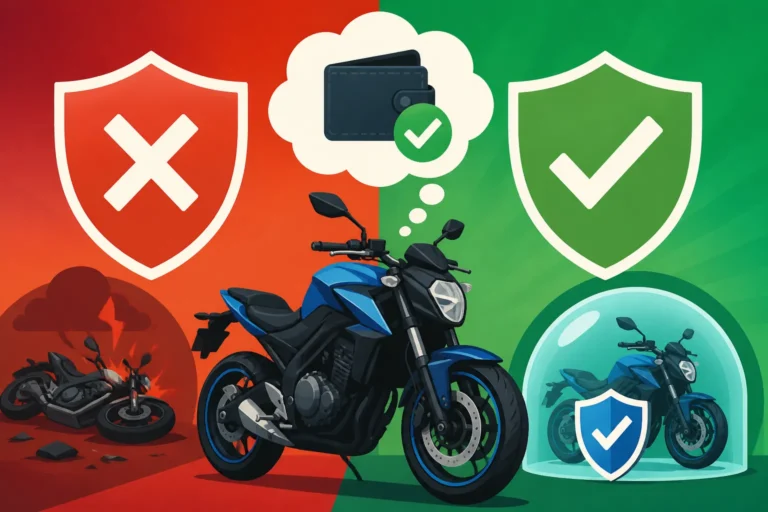
What Is Stated Value Motorcycle Insurance? (The Catch)
It’s a common frustration for motorcycle owners, especially those with custom builds, vintage beauties, or highly modified bikes: how do you properly insure something that’s not "off the lot"? Many riders hear the term "stated value" and think it's the silver bullet for protecting their unique investment, only to discover a harsh reality when it comes time to file a claim. This comprehensive guide will peel back the layers of stated value motorcycle insurance, reveal its critical limitations, and help you understand the true best way to protect your beloved two-wheeled machine.
Understanding Stated Value Motorcycle Insurance
When you've poured your heart, soul, and considerable funds into a motorcycle, simply trusting an insurer to understand its worth can feel like a gamble. That's where valuation methods come into play, and "stated value" often pops up in discussions. But what does it truly signify in the eyes of your insurance carrier, and more importantly, in the event of a total loss?
What Stated Value Truly Means
At its core, stated value motorcycle insurance allows you, the policyholder, to declare a specific monetary value for your motorcycle when you purchase the policy. You might think, "Great! I'll just tell them what my custom chopper is worth, and that's what I'll get if it's totaled." In theory, it sounds like you're setting the bar for the maximum payout you could receive. You provide documentation, receipts for custom parts, appraisals, and explain why your bike is special, and the insurer agrees to list that value on your policy.
However, the crucial nuance, the "catch," if you will, is that while this stated value represents the maximum amount the insurance company might pay out, it doesn't guarantee you'll receive that full amount. This is a critical distinction that many riders misunderstand until it's too late. The insurer still reserves the right to determine the bike's actual cash value (ACV) or fair market value at the time of loss, and they will pay whichever is less: your stated value or their determined ACV. Imagine you’ve stated your vintage Harley-Davidson is worth $30,000, and that figure is on your policy. If a claim arises, the insurance company might assess its market value at $22,000 due to various factors. In this scenario, you would only receive $22,000, not the $30,000 you stated.
This approach primarily exists for vehicles that deviate significantly from standard production models, making it difficult for an insurer to quickly assign a "book value." Think heavily customized bikes, rare imports, or meticulously restored classics. It allows a framework for insuring these unique assets, but it places a significant burden on the owner to continually prove and justify that value, both at policy inception and, more critically, at the time of a claim.
How It Differs from Other Valuation Methods
To truly grasp the limitations of stated value, it helps to understand how it stacks up against other common valuation methods: Actual Cash Value (ACV) and Agreed Value. Each has distinct implications for your potential payout after a loss.
Actual Cash Value (ACV) is the most common valuation method for standard motorcycle insurance policies. With ACV, if your bike is totaled or stolen, the insurance company will pay you the replacement cost of the bike minus depreciation. Depreciation takes into account factors like age, mileage, wear and tear, and market conditions. So, a brand-new bike loses value the moment it's ridden off the lot, and that loss of value is factored into an ACV payout. For a five-year-old Kawasaki Ninja, for example, an ACV policy would pay what a similar five-year-old Ninja with comparable mileage and condition would sell for in the current market, regardless of what you originally paid for it. Most basic liability and full coverage policies use ACV unless otherwise specified.
Agreed Value, on the other hand, is the gold standard for unique, custom, or classic motorcycles. With an agreed value policy, you and the insurance company agree upon a specific value for your motorcycle before the policy is issued. This agreed-upon amount is then written into the policy, and if your bike is totaled or stolen, that is the exact amount the insurance company will pay out (minus your deductible, of course). There's no negotiation, no recalculation of depreciation at the time of loss, and no "whichever is less" clause. This method requires a thorough appraisal process upfront, often involving a professional appraiser and extensive documentation of custom work, receipts, and photographs. Once that value is established and agreed upon, it's locked in, providing immense peace of mind. You can learn more about these distinctions in our guide on Agreed Value vs Stated Value vs Actual Cash Value.
Ideal Scenarios for Stated Value Coverage
When does stated value insurance seem like a good idea, and why do some riders opt for it? Often, it’s chosen out of convenience or a misunderstanding of its true mechanics. Riders might assume that since they've stated a high value, the insurer is implicitly agreeing to it.
For some, especially those with modestly customized bikes that still have a fairly identifiable make and model, stated value might be offered as a simpler alternative to the often more rigorous appraisal process required for an agreed value policy. An insurer might allow you to state a value slightly above the ACV for a few custom touches without demanding a full-blown professional appraisal. It can feel like a middle ground, providing a bit more coverage than standard ACV but without the commitment of agreed value.
However, even in these scenarios, the inherent "catch" remains. The convenience factor can quickly turn into a significant financial disappointment if the insurer's post-loss assessment comes in lower than your stated value. It truly becomes an "ideal" scenario only when the stated value closely mirrors or is slightly below the actual market value, which defeats the purpose for highly unique bikes whose value exceeds standard market metrics. For most riders who own something truly special, the perceived ease of stated value can mask a substantial risk.
The Critical "Catch" of Stated Value Policies
This is where the rubber meets the road, or more accurately, where your optimism about stated value might collide with the stark reality of an insurance claim. The "catch" isn't a hidden clause designed to trick you, but rather a fundamental operational difference that many policyholders don't fully internalize until they're in a stressful situation.
The Insurance Company's Discretion in a Payout
The most significant "catch" of stated value insurance is the insurance company's unwavering right to pay the lesser of two amounts: the stated value on your policy or the motorcycle's actual cash value (ACV) at the time of loss. This isn't a negotiation tactic; it's how the policy is structured. What this means for you, the rider, is that even if your policy clearly lists a stated value of $40,000 for your one-of-a-kind custom chopper, the insurer will send their adjusters to determine what a similar bike would realistically sell for on the open market today.
If their assessment comes back at $28,000, you will receive $28,000, not the $40,000 you stated. The stated value simply acts as a ceiling. It's the maximum they could pay, but not a guaranteed payout. This discretion is exercised through a post-loss appraisal process, where factors like recent sales of comparable bikes, general market demand, and the condition of your bike (pre-accident, of course) are all weighed. This can be particularly frustrating for owners of unique motorcycles where "comparable sales" are virtually non-existent, leaving much more room for interpretation by the adjuster.
Real-World Implications for Riders
Imagine this scenario: you've lovingly restored a classic 1970s cafe racer, sourcing rare parts and putting in hundreds of hours of labor. You've got receipts for parts totaling $15,000, plus the original purchase price of $5,000, and you’ve conservatively valued your time and effort. You state a value of $25,000 with your insurer, and it's printed on your policy documents. Life feels good, you’re covered. Then, one day, an unfortunate incident leaves your bike totaled.
When you file a claim, the insurance company initiates its own appraisal. They might find that due to market fluctuations, or their own internal metrics for vintage bikes, a comparable restored cafe racer might only fetch $18,000 on the market right now. Despite your $25,000 stated value, and all your hard work, you'll receive $18,000. This leaves you with a $7,000 gap that you're personally responsible for, effectively losing money on an asset you believed was fully protected.
This isn't just about custom bikes. Even a late-model sportbike with significant aftermarket modifications (exhaust, fairings, performance upgrades) can face this issue. While you might add the cost of these parts to your stated value, the insurer might only recognize a fraction of that in their ACV assessment, particularly if the modifications don't significantly increase the bike's market desirability or if they perceive them as common upgrades that don't add dollar-for-dollar value. This is why understanding Accessories & Custom Parts Coverage Explained is crucial.
Why Your Stated Value Might Not Be Your Payout
The fundamental reason your stated value often doesn't equal your payout is rooted in the insurance principle of indemnity. Insurance is generally designed to put you back in the financial position you were in just before the loss, not to allow you to profit from a loss. While this principle is sound for standard items, it becomes complex with unique vehicles.
When you state a value, the insurer sees it as your opinion of the bike's worth. They're willing to cap their maximum liability at that figure, but they still retain the right to conduct their due diligence to ensure they're paying a fair market rate, consistent with the indemnity principle. If the market value is lower than your stated value, paying the stated value would arguably put you in a better financial position than you were before the loss, by essentially overcompensating you.
Furthermore, it’s not always easy to definitively prove the "true" market value of a custom or vintage motorcycle. The market is subjective, driven by trends, scarcity, and buyer demand. While you might have an emotional attachment or a deep understanding of the craftsmanship involved, an insurance adjuster relies on more objective (or as objective as possible) data points. This discrepancy in how value is perceived and calculated is the breeding ground for dissatisfaction when a stated value policy doesn't deliver the expected payout.
Comparing Stated Value to Actual Cash Value (ACV)
Most standard motorcycle insurance policies default to Actual Cash Value (ACV) for physical damage coverage. While it might sound simpler, it's equally important to understand its nuances, especially when considering more specialized valuation methods like stated value.
Depreciation's Role in ACV
The cornerstone of Actual Cash Value is depreciation. Simply put, depreciation is the decrease in value of an asset over time due to wear and tear, age, and obsolescence. For a motorcycle, this means that from the moment you ride it off the dealership lot, its value begins to decline. This isn't just about mechanical parts wearing out; it's also about newer models coming out, technological advancements, and shifting market demand.
When an insurance company calculates the ACV of your motorcycle, they look at several factors:
- Original Purchase Price: The starting point.
- Age: How old is the bike? Older bikes generally depreciate more.
- Mileage: Higher mileage often means more wear and tear, and thus, lower value.
- Condition: Was the bike well-maintained? Any pre-existing damage?
- Market Conditions: What are similar bikes selling for in your area right now? Websites like Kelley Blue Book, NADAguides, and even recent auction results for specific models are used as benchmarks.
For example, if you bought a new Suzuki SV650 for $7,500 three years ago and it now has 15,000 miles, an ACV appraisal might determine its current market value, after depreciation, to be $4,500. If your bike is totaled, you would receive that $4,500 (minus your deductible). This can be a rude awakening for riders who still feel their bike is "worth" what they paid, or close to it, especially if they've kept it in pristine condition.
When ACV is the Standard for Motorcycles
Actual Cash Value is the standard for the vast majority of motorcycles on the road. If you're insuring a new or relatively new production model with no significant modifications, an ACV policy is typically what you'll be offered, and it often makes perfect sense. These bikes have readily available market data, making it straightforward for insurers to calculate their value accurately.
Think about a standard commuter motorcycle, a popular cruiser, or an adventure bike that’s a few years old. Their values are predictable, and there's usually a robust market of similar bikes for sale, providing clear benchmarks for depreciation. If your bike is financed, the lender will typically require comprehensive and collision coverage, which will almost always be based on ACV. This protects their investment by ensuring that if the bike is totaled, they'll recover most, if not all, of the outstanding loan amount. Our article on What Does Full Coverage Motorcycle Insurance Mean? goes into more detail about these components.
Most riders are implicitly covered by ACV policies without even realizing it. Unless you specifically discuss other valuation methods with your insurer and qualify for them, your policy will almost certainly be an ACV policy. It's cost-effective for the insurer because it limits their exposure to the constantly changing market value of standard assets.
The Hidden Risks of Choosing ACV for Custom Bikes
While ACV works well for standard bikes, it presents significant "hidden" risks if you have a custom, classic, or heavily modified motorcycle. The fundamental problem is that ACV doesn't adequately account for the unique value added by customization, restoration, or rarity.
When an insurance adjuster calculates ACV for a custom bike, they'll often start with the base model's value and then may add a small percentage for modifications, but rarely the full cost of your upgrades. For example, if you install a $3,000 custom exhaust system, new wheels, a bespoke paint job, and performance engine work on a base model that's now worth $8,000, the insurer might only add $1,000-$2,000 to the ACV for all those modifications. They're looking at the market for similar custom bikes, which might be very limited, rather than simply tallying your receipts. This means you could be left significantly underinsured, unable to rebuild or replace your unique machine with the payout.
This disconnect is why riders with special bikes often seek alternatives to ACV. The "hidden risk" isn't that the policy won't pay out, but that the payout will be far less than what you believe your motorcycle is truly worth, leaving you in a financial bind and with the heartbreaking loss of your one-of-a-kind ride. This is where stated value seems to offer a solution, but as we’ve seen, it also has its own significant limitations.
Stated Value vs. Agreed Value: A Crucial Distinction
This comparison is perhaps the most important for owners of high-value, custom, or classic motorcycles. While both stated value and agreed value policies involve you putting a number on your bike, their underlying mechanics and, critically, their outcomes in a claim, are vastly different.
The Binding Promise of Agreed Value
Agreed value insurance is exactly what it sounds like: you and the insurance company agree on the value of your motorcycle before the policy is issued. This agreement is then explicitly documented in your policy. The key difference from stated value is that this agreement is binding. If your motorcycle is totaled or stolen, the insurer is contractually obligated to pay you that agreed-upon amount, minus any applicable deductible. There's no further negotiation about the bike's market value at the time of loss.
To secure an agreed value policy, you typically need to provide significant evidence of your bike's value. This often includes:
- Professional appraisal from a certified appraiser specializing in motorcycles.
- Detailed receipts for all custom work, modifications, and high-value parts.
- Extensive photographs documenting the bike's condition and unique features.
- History of the bike, including restoration logs or provenance for vintage models.
This upfront work ensures that both you and the insurer are on the same page regarding the bike's worth, eliminating surprises down the line. It's a clear, straightforward contract: we agree it's worth X, we pay X if it's a total loss. This predictability is why agreed value policies are highly sought after by collectors and serious custom builders.
Why Agreed Value is Often Preferred for Unique Bikes
For motorcycles that truly stand apart—think a meticulously crafted custom chopper, a rare vintage European import, or a highly modified performance machine—agreed value is almost universally preferred over stated value. The peace of mind it offers is unparalleled. You know exactly what you'll receive if the worst happens, allowing you to plan for replacement or rebuilding without financial guesswork.
Consider a rider with a custom Triumph Bonneville built by a renowned shop. They've invested $25,000 in the build. With an agreed value policy, after an appraisal, the insurer might agree to cover it for $25,000. If that bike is later totaled, the rider receives the agreed $25,000. Under a stated value policy, they might state $25,000, but if the insurer's post-loss ACV assessment comes in at $18,000, that's what the rider gets. The difference is substantial.
Agreed value removes the subjective element from the claims process regarding valuation. When you're already dealing with the emotional toll of a damaged or stolen motorcycle, having a clear, predetermined payout figure simplifies recovery and reduces stress. This is particularly important for bikes where the market for direct comparisons simply doesn't exist, and an ACV assessment would be a speculative exercise for any insurer. Many specialty motorcycle insurance providers like Markel or Dairyland specialize in offering agreed value options.
Here's a quick comparison of the three main valuation types:
| Feature | Actual Cash Value (ACV) | Stated Value (SV) | Agreed Value (AV) |
|---|---|---|---|
| Valuation Method | Market value minus depreciation | Policyholder states max value | Insurer & policyholder agree |
| Payout Guarantee | No, based on market at loss | No, lesser of SV or ACV | Yes, guaranteed agreed amount |
| Primary Use Case | Standard, newer production bikes | Modestly customized, unique bikes (often misunderstood) | High-value custom, vintage, rare bikes |
| Appraisal Req. | Generally no | Often minimal upfront documentation | Professional appraisal required |
| Risk to Rider | Depreciation lowers payout | Payout can be lower than stated | Low, highest peace of mind |
| Premium Impact | Lower | Moderate | Higher |
How to Secure an Agreed Value Policy
Getting an agreed value policy isn't as simple as checking a box, but it's well worth the effort for the right bike. The process usually involves a few key steps:
- Gather Documentation: Collect all receipts for the bike's purchase, custom parts, accessories, and labor for modifications or restorations. Document the bike's history, including any previous ownership, awards, or unique stories. High-quality photographs of every angle, including close-ups of custom work, are essential. If you have custom coverage, remember to consult our guide on Does Motorcycle Insurance Cover Custom Parts?.
- Professional Appraisal: For most true agreed value policies, especially for high-dollar machines, a professional appraisal from a qualified, independent appraiser specializing in classic or custom vehicles will be required. This isn't just an estimate; it's a detailed report justifying the bike's value based on market data, condition, rarity, and craftsmanship.
- Choose a Specialty Insurer: Not all insurance companies offer true agreed value policies. Many major carriers like Progressive and Geico primarily deal in ACV for their standard motorcycle policies, though they may have specialty divisions. Companies like Hagerty, Markel, and Grundy are known for their expertise in classic and custom vehicle insurance and are more likely to offer agreed value. It’s a good idea to compare options through a platform like The Zebra to see which carriers in your state offer these specialized coverages.
- Review and Agree: Submit all your documentation and the appraisal to the insurer. They will review it and, if satisfied, propose an agreed value. Once you both agree, that value is locked into your policy.
Remember, the agreed value should be reviewed periodically, especially if you make further significant modifications or if market conditions for your specific type of bike change substantially. Re-appraising every few years can ensure your coverage remains adequate.
Is Stated Value Ever a Good Option?
After highlighting the significant "catch," you might wonder if stated value insurance has any practical use. While it's certainly not the ideal for high-value, unique motorcycles, there are very specific, niche circumstances where it might make sense, or at least be a stepping stone.
Niche Cases Where It Might Make Sense
There are a few niche scenarios where stated value might be considered, though always with a clear understanding of its limitations.
- Slightly Modified Standard Bikes: If you have a relatively new, standard production motorcycle with a few minor, bolt-on modifications (e.g., aftermarket exhaust, new handlebars, small cosmetic changes) that push its value slightly above a pure ACV, an insurer might offer stated value as an easy way to account for these without a full agreed value process. In this case, your stated value might be only a couple of thousand dollars above the standard ACV, and the risk of a significant disparity is smaller.
- Interim Coverage: Sometimes, if you're in the process of getting a professional appraisal for an agreed value policy, but need immediate coverage, a stated value policy might serve as a temporary solution. This is risky and should only be done for a very short period with a clear plan to transition to agreed value as soon as possible.
- Low-Cost Vintage Project Bikes: For a vintage bike that isn't highly collectible but has some sentimental value and minimal investment, where the cost of a full appraisal for agreed value isn't justified, a stated value might be chosen to provide a slightly higher payout than pure ACV would allow. However, even here, the "catch" applies, and you're still relying on the insurer's post-loss assessment.
In all these cases, the decision to opt for stated value should be made with eyes wide open, fully aware that the stated figure is a ceiling, not a floor, and certainly not a guaranteed payout.
What to Discuss with Your Agent
If you're considering a stated value policy or if it's the only option presented to you, having a candid conversation with your insurance agent is paramount. Don't assume anything.
Ask these direct questions:
- "If my bike is totaled, how exactly will the payout be determined? Will it be the stated value, the actual cash value, or the lesser of the two?"
- "What criteria do you use to calculate the actual cash value of a customized or vintage motorcycle?"
- "What documentation will I need to provide at the time of a claim to support my stated value?"
- "Are there specific situations where you would pay the full stated value, or is it always subject to ACV assessment?"
- "Is there any way to convert this to an agreed value policy, or is that not an option for my bike/with your company?"
The answers to these questions will clarify the insurer's stance and help you understand the real risk. If your agent is hesitant or unclear, that’s a red flag. A good agent will be transparent about the policy's limitations and guide you toward the best coverage for your specific motorcycle. Sometimes, this might mean looking at different carriers who specialize in classic or custom bikes. Online comparison tools like The Zebra can help you quickly compare different policy types and providers side-by-side.
Steps to Mitigate Risks with Stated Value
If, for whatever reason, a stated value policy is your only or chosen path, there are steps you can take to mitigate the inherent risks, though they won't eliminate the "catch" entirely.
- Document Everything, Extensively: Keep meticulous records. Every receipt for parts, every labor invoice, every appraisal or valuation you've received. Take high-resolution photos and videos of your bike from all angles, documenting its condition and all custom work. Store these records digitally (cloud storage) and physically. The more evidence you have to support your stated value, the stronger your argument will be during a post-loss ACV assessment. This is crucial for proving your bike’s value if you ever need to How to File a Motorcycle Insurance Claim.
- Be Realistic (or Even Conservative) with Your Stated Value: Don't just pull a number out of thin air or inflate it excessively. Try to arrive at a value that is genuinely defensible as a market price, even if it includes your custom work. If your stated value is wildly unrealistic, it's almost guaranteed to be lowered to ACV. Using current market data for similar (even if not identical) bikes, plus receipts, will give you a stronger footing.
- Review Annually: Market values change, and so does the condition of your bike. Review your stated value annually with your agent. Have new modifications been added? Has the market for your type of bike increased or decreased? Adjust your stated value and submit updated documentation as needed.
- Explore All Agreed Value Options: Before settling for stated value, exhaust all possibilities for securing a true agreed value policy. Consult specialty insurers. The slightly higher premium for agreed value is often a worthwhile investment for the peace of mind and guaranteed payout.
By taking these proactive steps, you can at least strengthen your position if you ever need to file a claim under a stated value policy, even though the fundamental discretion of the insurer will remain.
Navigating Your Motorcycle's Value for Insurance
Understanding the different valuation methods is one thing, but actively navigating the process to ensure your bike is properly covered is another. This involves a combination of thorough documentation, smart shopping, and ongoing policy management.
Documenting Your Bike's Worth
Whether you ultimately pursue an ACV, stated value, or agreed value policy, comprehensive documentation of your motorcycle's worth is your best friend. This is especially true for anything beyond a bone-stock, current-year model.
For custom or modified bikes:
- Detailed build sheets: If a professional shop did the work, get a full breakdown of parts and labor.
- Itemized receipts: Keep every single receipt for aftermarket parts, paint jobs, engine work, chrome, and accessories. Organize them chronologically or by category.
- Photos and videos: Before and after shots of modifications. High-resolution images of all angles, including close-ups of unique features or bespoke craftsmanship. Video walkthroughs can also be incredibly helpful.
- Appraisals: Even if not required for stated value, a professional appraisal can provide a solid benchmark and third-party validation of your bike's value.
For vintage or classic bikes:
- Restoration logs: Document every step of a restoration, including parts sourced (especially rare ones), labor hours, and professional work performed.
- Provenance: Records of previous ownership, any awards won, or notable history associated with the bike.
- Mileage and condition records: Documenting original mileage (if verifiable) and ongoing maintenance.
- Market research: Keep an eye on auction results, classic bike sales platforms, and enthusiast forums to understand the current market for similar bikes.
This extensive paper trail isn't just for your insurance company; it's also valuable for resale and for your own peace of mind. It’s a core component of being able to prove your bike’s value in the event of a total loss.
Shopping for the Right Coverage
Don't just stick with your auto insurer out of habit, especially if you have a unique motorcycle. Many general insurance companies are geared towards standard vehicles and may not offer the specialized valuation methods or coverage options that custom or classic bikes require.
- Seek Specialty Insurers: Look for companies that specialize in motorcycle insurance, particularly those known for classic, custom, or collector vehicle policies. These insurers often have adjusters and underwriters who understand the nuances of these bikes and are more likely to offer agreed value. Brands like Hagerty, Markel, and Grundy are examples often cited in the classic vehicle space, while Dairyland and Progressive also have strong motorcycle programs with various coverage options.
- Compare Quotes Diligently: Don't get just one quote. Get several, and make sure you're comparing apples to apples regarding coverage limits, deductibles, and, most importantly, the valuation method. A platform like The Zebra can be incredibly useful here, allowing you to input your bike's details and get multiple quotes from different carriers, including those specializing in unique motorcycles. This helps you see a broader range of options and understand what each insurer offers in terms of valuation. Remember, comparing quotes is key to finding the Cheapest Motorcycle Insurance Companies that also provide adequate coverage.
- Ask About Additional Coverages: Beyond the core valuation, ask about other essential coverages for unique bikes, such as:
- Custom Parts and Accessories Coverage: This specifically covers modifications you've made.
- Lay-Up Coverage: If you store your bike for winter, this can save you money while maintaining comprehensive coverage. You can read more about Do You Need Insurance to Store a Motorcycle?.
- Roadside Assistance: Essential for older bikes or long tours.
- Trip Interruption: For those cross-country adventures.
Regular Policy Reviews
Your motorcycle, your riding habits, and the insurance market are not static. To ensure your coverage remains appropriate and cost-effective, regular policy reviews are crucial.
- Annual Check-ins: At least once a year, ideally before your renewal, sit down with your agent or review your policy yourself. Has your bike's value changed? Have you added new modifications? Has your riding mileage decreased, potentially qualifying you for lower rates?
- Life Changes: Any significant life event warrants a policy review. Did you move to a new state? Did you get married? Did you complete a certified motorcycle safety course? These factors can impact your rates and coverage needs. For instance, moving to a state like Florida might change your insurance requirements significantly, as highlighted in Motorcycle Insurance Requirements by State (2026 Guide).
- Market Awareness: Stay informed about the market for your specific motorcycle. If your vintage bike suddenly spikes in collector value, your current agreed or stated value might need to be adjusted upwards. Conversely, if values drop, you might consider adjusting your coverage to save on premiums.
- Shop Around Periodically: Even with the best insurer, it’s wise to shop your policy every few years. New companies enter the market, and existing ones change their underwriting guidelines and pricing. Using tools like The Zebra allows you to quickly see if you're still getting the best value and coverage for your unique ride. You might discover that another carrier now offers a better agreed value policy or more competitive rates for your specific bike.
By taking an active role in managing your policy, you ensure that your treasured motorcycle remains adequately protected, regardless of how unique it may be.
Disclaimer
Please note that this content is intended for informational purposes only and does not constitute financial or legal advice. Insurance policies and regulations vary by state and individual circumstances. Always consult with a licensed insurance professional to discuss your specific needs and obtain personalized recommendations. Policy terms and conditions can change, and it's essential to read your specific policy documents carefully.