Does Motorcycle Insurance Cover Animal Strikes?
Riding your motorcycle can be an exhilarating experience, but there's a unique terror that many riders dread: the sudden, unavoidable collision with an animal. Whether it's a deer leaping out at dusk on a country road, a dog darting into traffic in a suburban neighborhood, or even a bird unexpectedly crossing your path, these incidents happen fast and can leave you shaken, injured, and with a seriously damaged bike. One of the first thoughts that often crosses a rider's mind, after the initial shock, is "Will my motorcycle insurance even cover this?" This comprehensive guide is here to shed light on exactly how motorcycle insurance handles animal strikes, outlining the crucial coverages you need and what steps to take.
The Critical Role of Comprehensive Coverage
When it comes to the unpredictable and often unavoidable chaos of hitting an animal with your motorcycle, there's one specific type of insurance coverage that truly stands as your best friend: comprehensive coverage. Without it, you're likely facing the full financial burden of repairs or even replacing your bike entirely.
What Comprehensive Coverage Actually Is
Let's break down what comprehensive coverage means because it’s often misunderstood, especially when compared to collision coverage. Think of comprehensive as protection for nearly everything that isn't a collision with another vehicle or an object while you're moving. It's designed to cover damages to your motorcycle that are beyond your control and not directly related to a crash with another vehicle or a single-vehicle accident caused by you, like losing control and hitting a tree.
For instance, if your bike is stolen from your garage overnight, comprehensive coverage steps in. If a nasty hailstorm pummels your ride and leaves dents, comprehensive is there. And yes, if a deer suddenly decides to play chicken with your front wheel, that's firmly in comprehensive's domain. It's truly a safety net for those "acts of God" or other non-collision events that can still wreak havoc on your beloved machine. Many riders often get confused between collision and comprehensive, but understanding the distinction is key to knowing what protects you in various scenarios. A detailed look into Collision vs Comprehensive Motorcycle Coverage can clarify these differences further.
Why Comprehensive is Your Go-To for Animal Incidents
The reason comprehensive coverage is so vital for animal strikes boils down to how these incidents are categorized by insurance companies. They’re generally not considered "at-fault" collisions in the traditional sense, where you collide with another vehicle or object due to your own driving actions. Instead, an animal darting into your path is typically seen as an unforeseen external event, much like a tree falling on your parked bike or vandalism.
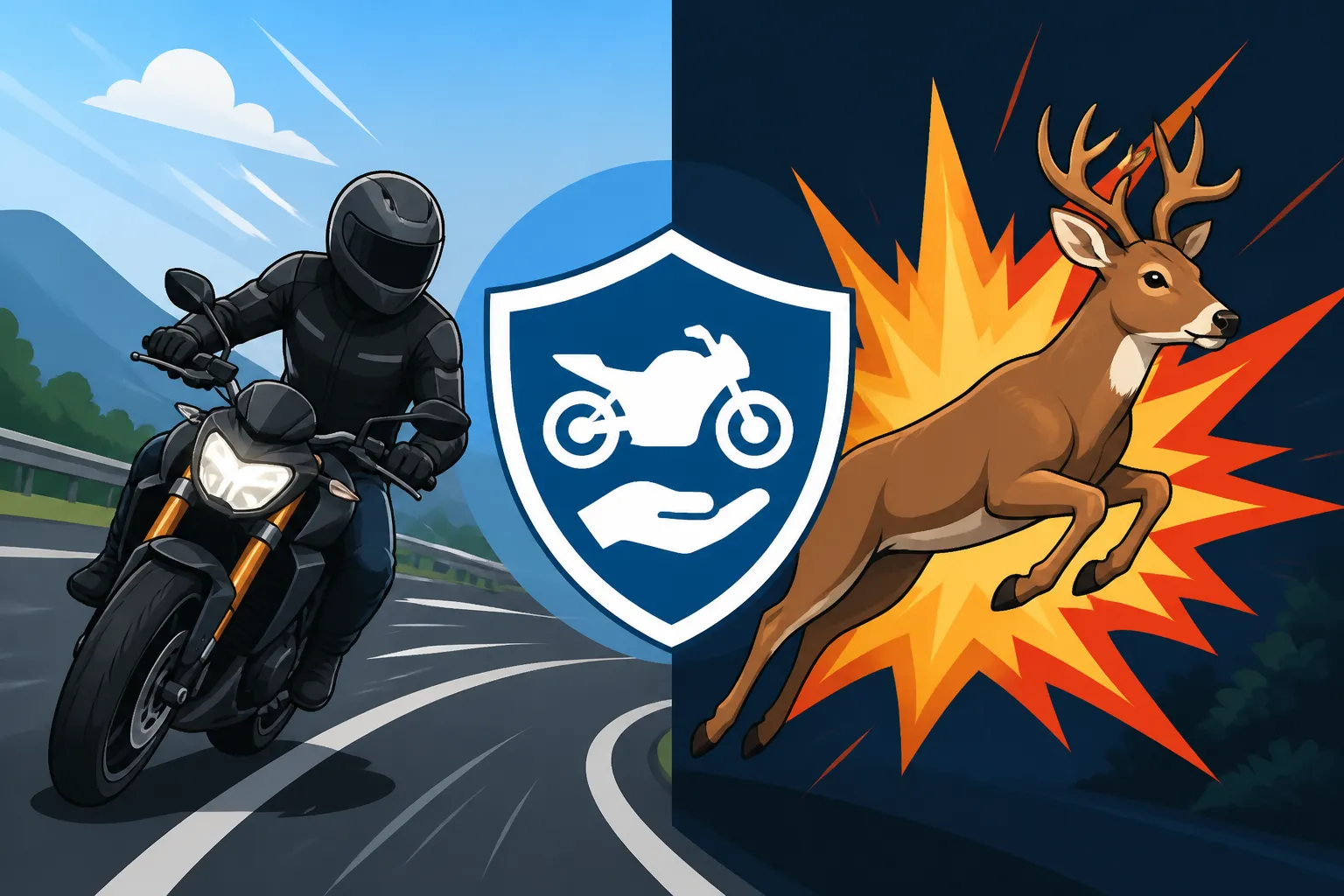
Imagine you're cruising down a scenic highway in upstate New York, enjoying the ride, when a majestic buck leaps out from the tree line. You have mere seconds, if that, to react. Even if you manage to swerve and avoid direct impact but still crash, or if you hit the animal head-on, your comprehensive coverage is specifically designed to cover the resulting damage to your motorcycle. It doesn’t matter if it was a squirrel, a coyote, or a full-grown moose; the principle remains the same. This protection is invaluable, as the cost of repairing a motorcycle after such an impact, especially if the forks, fairings, or engine casing are damaged, can easily run into thousands of dollars.
Common Misconceptions About Animal Strike Coverage
It’s easy to get tangled up in the "what ifs" when dealing with animal strikes, and some common misconceptions can leave riders feeling uncertain. A big one is whether coverage applies if you swerved to avoid an animal and crashed, but didn't actually hit it. In many cases, if the direct cause of your crash was an attempt to avoid an animal, comprehensive coverage can still kick in. The key is proving that the animal was the proximate cause of the accident, even if there was no direct contact.
However, proving this can sometimes be tricky. If there's no physical evidence of an animal (no fur, no impact marks on the bike consistent with an animal, no witnesses), an insurance adjuster might classify it as a single-vehicle collision, which would fall under your collision coverage, not comprehensive. This means your collision deductible would apply, and it could potentially be viewed differently on your record. Always document the scene thoroughly, even if you just swerved, to provide the clearest picture for your insurer. For a broader understanding of various protections, checking out Types of Motorcycle Insurance Coverage Explained can be very helpful.
Understanding the Nitty-Gritty of Your Policy
Knowing you have comprehensive coverage is a great start, but the devil, as they say, is in the details of your actual policy. How much will it pay out? What's your out-of-pocket expense? These are critical questions for any rider.
The "Act of God" Principle and Your Insurer
Insurance companies often categorize animal strikes under what’s sometimes loosely referred to as an "Act of God" or "Other Than Collision" (OTC) events. This is why it falls under comprehensive coverage. The damage wasn't caused by a collision with another vehicle or an intentional action on your part, but rather an unpredictable event outside of human control. This distinction is important because it means that typically, an animal strike claim under comprehensive coverage is considered a "no-fault" claim.
What does "no-fault" mean for you? It generally means that your insurance premiums are less likely to skyrocket compared to an at-fault collision claim where you hit another car or object. While any claim can affect your rates, comprehensive claims usually have a milder impact because they're viewed as unavoidable. This is a huge relief for many riders, knowing that an unfortunate encounter with wildlife won't necessarily brand them as a "risky" driver by their insurer.
Deductibles and How Payouts Work
Even with robust comprehensive coverage, you won't get off scot-free without paying anything. That's where your deductible comes into play. Your comprehensive deductible is the amount of money you've agreed to pay out of pocket before your insurance company starts covering the rest of the repair costs. If your deductible is $500 and the damage to your motorcycle from an animal strike is $3,000, you'll pay the first $500, and your insurer will cover the remaining $2,500.
It's crucial to select a deductible that you're comfortable with and can afford to pay without hesitation. A higher deductible usually means a lower monthly premium, but it also means a larger out-of-pocket expense if you file a claim. Conversely, a lower deductible means higher premiums but less to pay upfront after an incident. When you're shopping for motorcycle insurance, a platform like The Zebra can help you compare policies from various providers, allowing you to see how different deductibles impact your premiums and overall coverage.
The Grim Reality of Liability-Only Coverage
Now, let's talk about the situation many riders unfortunately find themselves in: only carrying liability coverage. If you only have What Does Motorcycle Liability Insurance Cover, an animal strike will leave you entirely responsible for all damages to your motorcycle. Liability insurance is designed to cover damages and injuries you cause to other people and their property in an accident where you are at fault. It does absolutely nothing to cover damage to your own bike or your own medical bills.
Imagine a rider in Florida with just liability coverage hits a wild hog. The bike is totaled. Their insurance company will not pay a single dime for the damage to their motorcycle. This can be a financially devastating situation, potentially costing thousands of dollars out of pocket to repair or replace the bike. This is why, while liability is essential and legally required in most states, it often falls short of providing true peace of mind for your own asset. It’s a common frustration that many riders experience when they realize the limitations of minimum coverage, especially when facing an unpredictable event like an animal collision.
Beyond the Immediate Impact: Additional Coverages to Consider
An animal strike can do more than just damage your bike; it can also injure you and leave you stranded. Savvy riders consider additional coverages to ensure they're fully protected in these scenarios.
Medical Payments and Uninsured Motorist Bodily Injury
While comprehensive coverage handles the damage to your bike, what about you? Hitting an animal, especially at speed, can easily throw you from your bike, leading to serious injuries. This is where coverages like Medical Payments (MedPay) or Personal Injury Protection (PIP, depending on your state) come into play. MedPay can help cover your medical expenses resulting from an accident, regardless of fault. This includes things like ambulance rides, hospital stays, doctor visits, and even rehabilitation.
Additionally, while not directly related to an animal strike, if you swerve to avoid an animal and then collide with another vehicle whose driver is uninsured or underinsured, Uninsured & Underinsured Motorist Coverage (UM/UIM) becomes incredibly important for your own bodily injury claims. Even if the incident primarily started with an animal, the ripple effect can bring other drivers into the mix. Thinking about What Is Medical Payments MedPay for Riders is a smart move for any rider's comprehensive protection strategy.
Accessories and Custom Parts Coverage
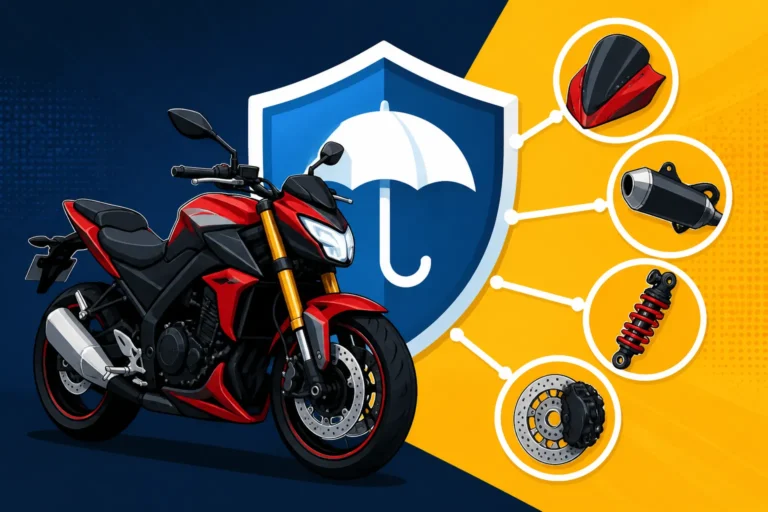
Many riders invest significant money, time, and love into customizing their motorcycles. From aftermarket exhausts and custom paint jobs to upgraded fairings and navigation systems, these additions can dramatically increase your bike's value. Standard comprehensive coverage typically only covers the factory-installed parts of your motorcycle. So, if your custom chrome engine guard gets bent or your expensive LED headlight assembly is smashed by a deer, your base policy might not cover the full replacement cost.
This is where Accessories & Custom Parts Coverage Explained becomes indispensable. This add-on allows you to specify a certain amount of coverage for your custom modifications. When comparing policies, particularly through services like The Zebra, make sure you explicitly ask about this coverage and ensure the limit is high enough to cover the true value of all your aftermarket additions. Don't let an animal strike cost you thousands in custom parts you meticulously installed!
Roadside Assistance and Towing
After an animal strike, especially if it's significant enough to damage your bike, you're often left stranded on the side of the road. Your motorcycle might be unridable, and you could be far from home. Trying to arrange a tow, especially for a motorcycle that might have specific towing needs (like a flatbed or specialized cradle), can be a logistical nightmare and an unexpected expense.
This is where adding Roadside Assistance & Towing for Motorcycles to your policy really pays off. This coverage will arrange for your bike to be towed from the scene of the accident to a repair shop or your home. It often covers a certain mileage, and it can be a lifesaver in a stressful situation. It’s one of those small additional costs that can save you a huge headache and significant money when you're in a vulnerable position.
What to Do Immediately After an Animal Strike
Being prepared can make a huge difference in the aftermath of an animal strike. Knowing these steps can help ensure your safety and streamline the insurance claim process.
Prioritize Safety Above All Else
Your immediate safety, and the safety of others, is the absolute priority. If you've been involved in an animal strike, even if you feel okay at first, pull over to a safe location if it's possible and safe to do so. Get your bike off the main roadway to avoid further collisions. Turn on your hazard lights. If you're injured, or if your bike is blocking traffic and you can't move it, call 911 immediately. Don't try to move a severely damaged bike or yourself if you suspect serious injury.
Even if you think you're fine, take a moment. Adrenaline can mask pain and injuries. Check yourself over carefully, and if there are any signs of injury, seek medical attention. The animal itself might be injured or deceased. Approach with caution, if at all. An injured animal can be unpredictable and dangerous.
Document the Scene Thoroughly
Once you've ensured your safety, documenting the scene is crucial for your insurance claim. This is not the time to rush. Take photos and videos with your phone from multiple angles. Get close-ups of the damage to your motorcycle – every dent, scratch, broken component. Also, take wider shots that show the general area, the road conditions, and any relevant landmarks.
Crucially, photograph the animal if it's present and safe to do so. This provides undeniable proof of the incident. Note the time, date, and exact location (cross streets, mile markers, GPS coordinates). If there were any witnesses, get their contact information. All this evidence will be invaluable when you file your claim. This diligent documentation is a core component of What to Do After a Motorcycle Accident Insurance Steps.
Filing Your Claim and Working with Your Insurer
After you've handled the immediate aftermath and sought any necessary medical attention, it's time to contact your insurance company. The sooner you report the incident, the better. Have all the information you gathered ready: photos, location details, witness contacts (if any), and a clear, factual account of what happened.
You’ll typically speak with a claims adjuster who will guide you through the process. Be honest and thorough. They may ask for more details or send an appraiser to inspect your motorcycle's damage. Remember, this is why you have comprehensive coverage – to protect you in these unexpected situations. Don't hesitate to ask questions about your deductible, repair options, and the timeline for your claim. For more detailed instructions, review How to File a Motorcycle Insurance Claim. Providers like Progressive or Dairyland are known for their specific motorcycle claim processes, so understanding their steps can be beneficial.
Coverage Comparison for Animal Strikes
To summarize how different coverage types interact with an animal strike, let's look at this table:
| Coverage Type | Covers Damage to Your Motorcycle from Animal Strike? | Covers Your Injuries from Animal Strike? | Covers Damages to Other Vehicles/Property? | Impact on Premiums for Claim? |
|---|---|---|---|---|
| Comprehensive | YES (Primary coverage for your bike) | NO | NO | Minimal/None (No-fault claim) |
| Collision | NO (Typically not for direct animal impact) | NO | NO | Possible (If swerved and hit object) |
| Liability | NO | NO | NO (Only covers damage you cause to others) | N/A (Doesn't cover this type of incident) |
| Medical Payments | NO | YES (Your medical bills) | NO | Minimal/None |
| Uninsured Motorist | NO | NO (Unless hit by uninsured driver after swerving) | NO | Minimal/None |
| Accessories Coverage | YES (For custom parts beyond stock) | NO | NO | Minimal/None (Part of Comp.) |
| Roadside Assistance | NO (But covers towing of damaged bike) | NO | NO | N/A (Service, not damage cover) |
This table clearly illustrates why comprehensive coverage is the cornerstone of protection against animal strikes for your motorcycle itself.
The Broader Context: Protecting Yourself on Two Wheels
Riding a motorcycle is about freedom and the open road, but it also comes with inherent risks. Animal strikes are a stark reminder of the unpredictable nature of riding, especially in certain regions and during specific times of year. For instance, states like Pennsylvania, Michigan, and Wisconsin have notoriously high rates of deer-related accidents, particularly during dawn, dusk, and the fall mating season. Knowing your local wildlife patterns can help, but ultimately, adequate insurance coverage is your best defense.
When you're out there, whether you're taking a long touring trip or just commuting to work, you want to be confident that you've got the right protection. It’s not just about meeting the Minimum Coverage to Ride Legally in Each State, but about truly safeguarding yourself and your investment. Exploring other vital protections like What Does Full Coverage Motorcycle Insurance Mean can help you decide if you have enough to cover all potential incidents.
Don't wait until you're stranded on the side of the road with a damaged bike and a rapidly beating heart to figure out your coverage. Take the time now to review your policy. If you find yourself with only liability coverage, seriously consider upgrading to a policy that includes comprehensive coverage. It’s an investment in your peace of mind and your financial security. Platforms like The Zebra offer a streamlined way to compare quotes and understand what each policy entails, so you can tailor your coverage to your specific needs and riding habits.
Disclaimer
Please remember that this information is for educational purposes only and does not constitute professional insurance or legal advice. Insurance policies vary by provider and state. Always review your specific policy documents or consult with a licensed insurance agent to understand your coverage, limitations, and deductibles. Laws and regulations regarding motorcycle insurance can change, so stay informed and ensure your coverage meets current requirements.