What to Do After Motorcycle a Fork Bender for Insurance
It’s a heart-dropping moment when you realize your beloved motorcycle has sustained a "fork bender" – that agonizing front-end damage that often means bent forks, crumpled handlebars, or worse. Whether it was a mishap with a hidden pothole, an unexpected collision, or even just a stationary tip-over that went really wrong, the sinking feeling is universal. This guide is here to walk you through the essential steps to take for insurance purposes after your motorcycle has suffered front-end damage, helping you navigate the claim process with clarity and confidence.
Understanding What a "Fork Bender" Means for Your Bike
When we talk about a "fork bender," we're not just being dramatic; it's a very real and often devastating type of damage for a motorcycle. The front end of your bike, encompassing the forks, triple trees, handlebars, and front wheel assembly, is incredibly complex and crucial for both steering and suspension. Damage here can compromise everything from your bike's handling to its structural integrity, making it unsafe to ride.
Common Causes of Front-End Damage
Front-end damage, unfortunately, can come from a variety of sources, some more common than others. It's not always a high-speed collision, which often surprises riders who find their bike damaged after what seemed like a minor incident.
One of the most obvious causes is a direct frontal impact, such as a head-on collision or hitting the rear of another vehicle. In these scenarios, the forces involved are immense, often telescoping the forks, bending the frame at the neck, and destroying the triple clamps. Even a low-speed fender bender can result in surprisingly extensive front-end damage due to the delicate balance and mechanics of a motorcycle.
Beyond direct impacts, hitting large potholes or road debris at speed can put an incredible strain on your front suspension. While designed to absorb bumps, a sharp, sudden impact can cause fork tubes to bend, seals to blow, or even crack a wheel. Imagine hitting a deep, unseen pothole on a dark road in rural Ohio; the jolt alone could be enough to throw your front end out of whack.
Finally, and often most frustratingly, dropping the bike, especially if it falls over onto its side with the front wheel turned, can easily lead to a "fork bender." The handlebars can twist, the fork tubes can bend from the leverage, or the triple trees can be damaged. Parking lot mishaps, a sudden loss of balance at a stoplight, or even pushing the bike in the garage and losing your footing can all be culprits. It’s those seemingly innocuous moments that can cause major headaches.
Visual Cues of a Damaged Front End
Knowing what to look for can help you assess the situation immediately after an incident. While some damage might be subtle, a true "fork bender" usually makes itself known quite clearly.
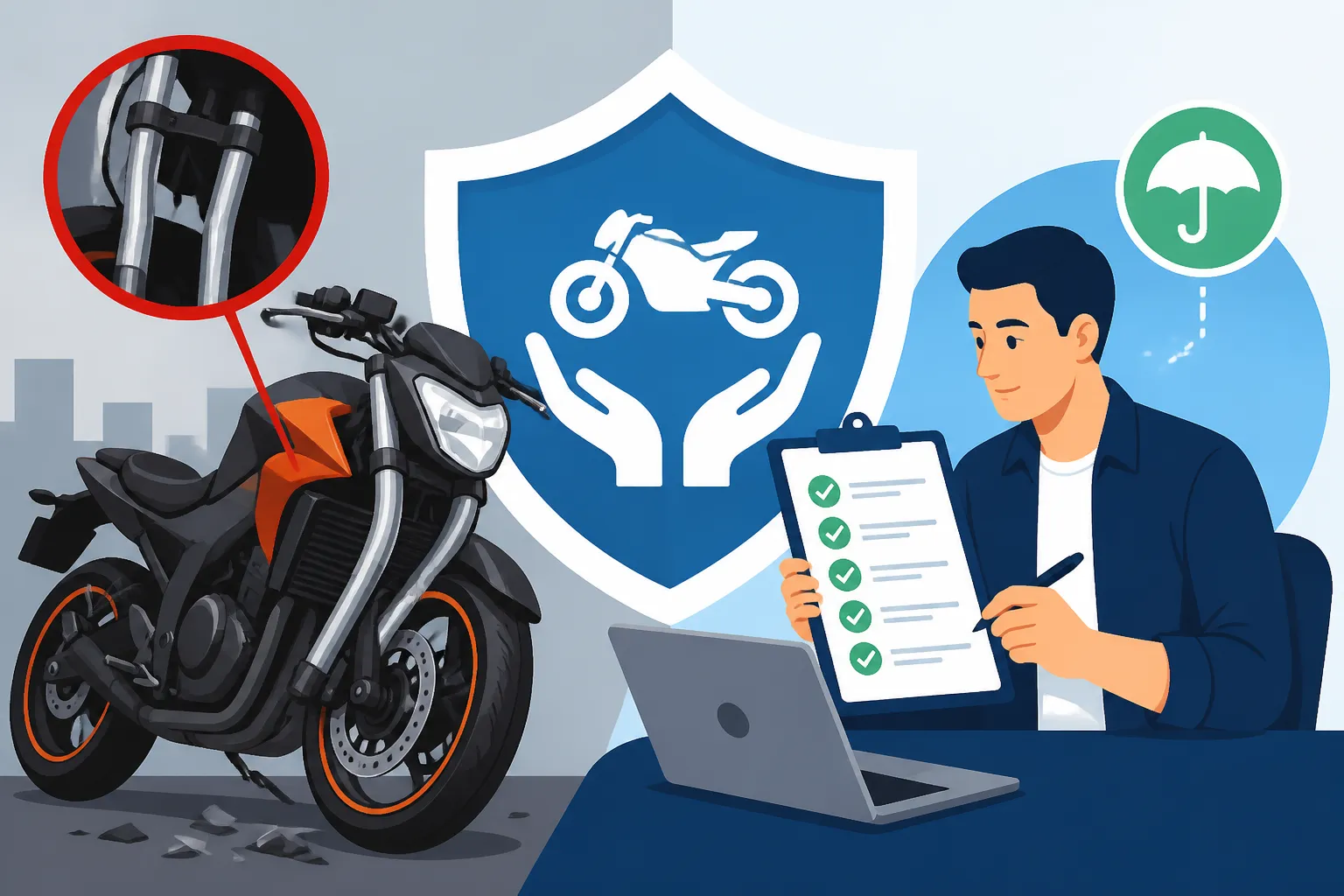
The most obvious signs include bent fork tubes. These are the chrome or black cylinders that extend down from the handlebars to the front wheel. If they appear noticeably bowed, creased, or uneven, that's a red flag. You might also notice leaking fork seals, indicated by oil streaks down the fork tubes, which signals internal damage or misalignment that’s allowing fluid to escape. This isn't just a messy problem; it severely impairs your front suspension's ability to function properly.
Another tell-tale sign is misaligned handlebars or a twisted front wheel. If your handlebars appear crooked when the wheel is pointing straight, or vice versa, it's a strong indication of issues with your triple trees (the clamps that hold the forks to the frame) or the forks themselves. The front wheel might also not track perfectly straight or could even be visibly skewed within the forks. Trying to ride a bike with a misaligned front end is not only incredibly difficult but also extremely dangerous. You might find the bike constantly pulling to one side, or the steering feeling heavy and unresponsive, a clear indicator that something is seriously amiss up front. Always prioritize safety and do not attempt to ride a bike with suspected front-end damage.
Immediate Steps After a Front-End Accident
When you've just experienced a "fork bender," whether it's a minor drop or a full-blown collision, the moments immediately following the incident are crucial. What you do right away can significantly impact your insurance claim and, more importantly, your safety and the safety of others.
Prioritizing Safety and Scene Management
Your absolute first priority, before even thinking about your bike, is your own safety and the safety of anyone else involved. Check yourself for injuries thoroughly. Even if you feel fine, adrenaline can mask pain, so take a moment to do a quick self-assessment. If anyone is injured, or if there's significant damage, call 911 immediately. Emergency services can ensure everyone gets the medical attention they need and that the scene is secured.
If you are able and it's safe to do so, move your motorcycle (and yourself) out of the flow of traffic. This prevents further accidents and keeps you safe from passing vehicles. Use flares, reflective triangles, or even your phone's flashlight if it's dark to alert other drivers to your presence. Once you're in a safe spot, it's time to document everything. Whip out your phone and take copious photos and videos. Capture the position of your bike, the other vehicles (if any), road conditions, skid marks, and, crucially, the damage to your motorcycle's front end from multiple angles. Don't forget to photograph any injuries, even minor ones, and any debris on the road.
If another party was involved, exchange information politely and thoroughly. Get their name, contact number, insurance company and policy number, driver's license number, and license plate number. Do not admit fault, even if you suspect you might be. Stick to the facts. If there were witnesses, ask for their contact information too; their unbiased account could be invaluable to your claim. If police responded, make sure to get the police report number so you can obtain a copy later. This detailed record-keeping is vital, as it forms the backbone of your insurance claim and can make the process much smoother. For more detailed steps on handling an accident, refer to our guide on What to Do After a Motorcycle Accident Insurance Steps.
Notifying Your Insurance Company Promptly
Once the immediate safety and documentation steps are handled, your next crucial move is to contact your motorcycle insurance company. Seriously, don't delay. Even if you're feeling overwhelmed, or you're unsure if you'll even file a claim, it's always best to notify them as soon as reasonably possible. Most policies have specific timelines for reporting incidents, and delaying can potentially jeopardize your claim.
When you call, be prepared to provide a clear, concise account of what happened. You'll need to share the date, time, and location of the incident, a description of the damage to your bike's front end (your "fork bender"), and details of any other parties or vehicles involved. If you're a customer of a large insurer like Progressive, they typically have streamlined processes for reporting claims, often with dedicated claims lines or even mobile apps where you can start the process quickly. This initial notification sets the wheels in motion, allowing your insurer to open a claim file and assign an adjuster to your case.
It's okay if you don't have every single detail perfect right away. The goal is to get the incident on record. You can always provide more information as you gather it. The sooner you report, the sooner the investigation can begin, and the sooner you can get your bike assessed and, hopefully, back on the road or settled for a total loss. This prompt communication demonstrates your cooperation and helps prevent any questions about the timeliness of your claim down the line.
Navigating the Motorcycle Insurance Claim Process
After the initial shock wears off and you've taken the immediate steps, the real work of dealing with the insurance claim begins. This can feel daunting, especially when you're still reeling from the incident, but understanding the process will help you stay on track.
Gathering Necessary Documentation
Your thoroughness immediately after the accident will pay dividends here. The more information you can provide, the smoother and faster your claim process is likely to be. Think of yourself as building a comprehensive case for your insurer.
First and foremost, if the police were involved, you'll need the official accident report. This document contains crucial details like the officer's assessment, diagram of the scene, and contact information for all involved parties. This is often a cornerstone of any claim, especially if there were other vehicles or injuries involved. Many police departments allow you to obtain these reports online a few days after the incident.
Next, compile all the photos and videos you took at the scene. These visual records are incredibly powerful evidence, showing the extent of your "fork bender" and the overall scene conditions. Don't just focus on the bent forks; capture the road, lighting, any skid marks, and general surroundings. The more visual context you can provide, the better.
Gathering the contact information for all parties and witnesses is also vital. This includes names, phone numbers, and email addresses. Your insurance company might want to reach out to these individuals to corroborate your story or get additional details. Lastly, have your insurance policy details readily available. Knowing your policy number, coverage types, and deductibles will be essential when speaking with your adjuster. For a deeper dive into the overall claims process, consider reading our guide on How to File a Motorcycle Insurance Claim.
Working with the Adjuster and Damage Assessment
Once your claim is filed, your insurance company will assign an insurance adjuster. This person is your primary contact throughout the claim process and is responsible for investigating the incident, assessing the damage to your motorcycle, and determining the appropriate settlement based on your policy.
The adjuster will want to review all the documentation you've collected. They will also arrange for a damage assessment of your motorcycle. For a "fork bender," this inspection is critical. They'll closely examine the fork tubes, triple trees, handlebars, front wheel, and even the motorcycle's frame. Specialized motorcycle frame shops use lasers and jigs to check for subtle bends or twists in the frame that might not be visible to the naked eye. This is especially important because if the frame is bent beyond repair, your bike is highly likely to be declared a total loss, regardless of how "fixable" the forks might seem.
It's important to cooperate fully with your adjuster, providing them with access to your motorcycle for inspection and answering their questions honestly. However, remember that they work for the insurance company. While they are there to facilitate your claim, they are also looking out for the company's interests. Be thorough, clear, and ensure you understand their assessment and proposed next steps.
Understanding Coverage Types for Front-End Damage
Knowing which parts of your policy apply to a "fork bender" is key to understanding your potential payout and responsibilities. Not all coverage types will help you fix your bike.
The primary coverage you'll rely on for front-end damage to your own motorcycle is Collision Coverage. This is the hero coverage for accidents, whether it's a multi-vehicle crash, a single-vehicle incident (like hitting a guardrail), or even if you simply drop your bike and it sustains damage. If your fork bender was due to you hitting another vehicle, or an object, or even just laying the bike down, collision coverage is what pays for the repairs, minus your deductible. It's designed to cover damages to your motorcycle when you are at fault, or in cases where no other party is involved.
Comprehensive Coverage might come into play, but it's less common for a typical "fork bender" unless the damage was caused by a specific comprehensive peril. For example, if your bike was parked and vandalized, or you hit a deer on a back road in Wisconsin, resulting in front-end damage, comprehensive coverage would kick in. It generally covers non-collision events like theft, fire, vandalism, falling objects, or animal strikes. You can read more about the differences in our guide on Collision vs Comprehensive Motorcycle Coverage.
Liability Coverage is crucial for every rider, but it won't help fix your bike's front end. This coverage only pays for damages or injuries you cause to other people or their property if you are found at fault in an accident. So, if you caused a "fork bender" by hitting someone else, your liability coverage would handle their vehicle's repairs and their medical bills, but not your own bike.
Finally, Uninsured and Underinsured Motorist Coverage (UM/UIM) becomes vital if your "fork bender" was caused by another driver who either has no insurance or insufficient insurance to cover your damages. In states like Florida, where there are many uninsured drivers, having UM/UIM can be a lifesaver. This coverage steps in to pay for your medical bills and often your motorcycle's damages (including that fork bender) when the at-fault driver can't. To understand this further, check out our article on Uninsured Underinsured Motorist Coverage UM/UIM.
Here's a quick overview of how different coverages apply to front-end damage:
| Coverage Type | What It Covers for a "Fork Bender" | When It Applies |
|---|---|---|
| Collision | Repairs or replacement of your motorcycle's front end. | Accidents where you hit another vehicle or object, roll-over, or a single-vehicle crash (e.g., dropping the bike). |
| Comprehensive | Repairs or replacement due to non-collision events. | Damage from vandalism, hitting an animal, fire, theft, falling objects, severe weather. |
| Liability | Damages and injuries you cause to others (their vehicle, property, medical). | When you are at fault for an accident involving another party. Does NOT cover your bike. |
| Uninsured/Underinsured Motorist | Repairs to your motorcycle, medical expenses for you. | When an at-fault driver has no insurance or not enough insurance to cover your damages. |
It's clear that for your own bike's "fork bender," Collision and potentially Comprehensive (depending on the cause) are your most critical coverages. Without them, you'd be paying for those expensive front-end repairs entirely out of pocket. Many riders opt for what's known as What Does Full Coverage Motorcycle Insurance Mean? which typically includes both collision and comprehensive to provide broad protection.
Repairing Your Motorcycle vs. a Total Loss
Once the adjuster has assessed the damage, you'll reach a critical juncture: will your "fork bender" be repaired, or will your motorcycle be declared a total loss? This decision has major implications for you and your bike.
Repairing the Fork Bender
If the damage to your motorcycle's front end is deemed repairable by the insurance adjuster, the next step is to get it fixed. This typically means taking it to a reputable motorcycle repair shop. It's absolutely crucial to choose a mechanic who specializes in motorcycles, not just any automotive body shop. Motorcycle frames, suspension, and steering geometry are complex, and generic auto mechanics often lack the specialized tools and expertise required for proper, safe repairs. Look for shops with certifications or good reviews from other riders, especially those known for frame and suspension work.
When it comes to parts, your insurance policy will dictate whether OEM (Original Equipment Manufacturer) parts or aftermarket parts are used. Most standard policies will lean towards aftermarket parts if they are available and of comparable quality, as they can be cheaper. However, if you have an endorsement for OEM parts coverage, or if aftermarket options aren't suitable, your insurer might cover the more expensive manufacturer parts. This is an important detail to discuss with your adjuster. For custom or unique bikes, specialized parts coverage might be crucial, as generic replacements often won't do.
A "fork bender" isn't just about bent tubes and twisted handlebars. The underlying structure, the frame, is paramount. Even if the forks look bad, but the frame is intact, repairs are more feasible. However, if the impact was significant enough to bend or crack the motorcycle's frame, especially around the steering neck area, it almost always leads to a total loss declaration. A compromised frame is a fundamental structural issue that can make the bike unsafe to ride, even if the forks are replaced. Reputable shops will perform a thorough frame inspection to ensure safety, using specialized equipment to check for alignment and structural integrity.
When Your Motorcycle is Declared a Total Loss
Sometimes, even if you want to hold onto your bike, the math just doesn't work out. Your motorcycle is typically declared a total loss when the cost of repairing the damage (including parts, labor, and often salvage value) exceeds a certain percentage of its Actual Cash Value (ACV) before the accident. This percentage, known as the total loss threshold, varies by state and insurer but is commonly between 70% and 80%. So, if your bike was worth $10,000, and repairs for that "fork bender" are estimated at $7,500, it's very likely to be totaled.
The type of valuation in your policy significantly impacts your payout. Most standard policies use Actual Cash Value (ACV), which is the bike's market value at the time of the loss, minus depreciation. This means if your bike was a 2018 Harley-Davidson Street Glide, they'd look at what comparable 2018 Street Glides are selling for in your area (say, in Phoenix, Arizona) just before the accident. If you have Agreed Value coverage, which is common for classic, custom, or high-value motorcycles, your payout will be a pre-determined amount agreed upon by you and the insurer when you bought the policy. This is usually a better option for unique bikes, as ACV can sometimes fall short. Stated Value is another option, but often has a catch where the insurer pays the lesser of the stated value or the ACV. Understanding these differences is crucial, and you can learn more in our detailed article on Agreed Value vs Stated Value vs Actual Cash Value.
Once your bike is declared a total loss, you usually have a couple of options. The most common is to take the settlement payout from the insurance company. They will pay you the determined ACV (or agreed value) of your motorcycle, and they will take ownership of the damaged bike (the "salvage"). Your other option, in most states, is to keep the salvage. If you choose this, the insurance company will deduct the salvage value from your payout and give you the remainder. This is usually only advisable if you have the expertise and resources to repair the bike yourself, or if it has sentimental value, and you understand that it will likely receive a salvage title, which can affect its resale value and future insurability. For a comprehensive look at this, check out What Happens When Your Motorcycle Is Totaled? and How to Negotiate a Motorcycle Total Loss Settlement.
Important Considerations and Tips for a Smooth Claim
Dealing with a "fork bender" and the subsequent insurance claim can be stressful. But by keeping a few key things in mind, you can navigate the process more effectively and reduce future headaches.
Be Prepared for Potential Rate Increases
Let's be realistic: filing a claim, especially one for significant damage like a "fork bender" where you might be at fault, can have an impact on your insurance premiums moving forward. Insurance companies use claims history as a significant factor in determining your risk profile. An at-fault collision claim often signals a higher risk, which can lead to an increase in your rates when your policy renews. The exact increase varies widely based on your insurer, your driving record, the severity of the accident, and even your state's regulations.
However, not all claims lead to a significant hike. If the accident was not your fault (and this is clearly documented), or if you have accident forgiveness on your policy, the impact might be minimal or non-existent. After your claim is settled, and especially around renewal time, it's always a smart move to shop around for new quotes. Don't assume your current insurer will still offer you the best deal. Online comparison tools, like The Zebra, can quickly pull quotes from multiple providers, showing you if you can find more affordable coverage elsewhere, even after a claim. You might find that a company like Dairyland or Markel offers competitive rates for riders with a recent claim history. For more insights on this, our article What Affects Your Motorcycle Insurance Rate? provides a deep dive.
Don't Rush the Process (But Don't Delay Either)
This might sound contradictory, but it’s about balance. On one hand, you definitely don't want to rush into repairs before your insurance adjuster has had a chance to fully inspect the damage. Doing so could complicate your claim or even lead to a denial if they can't verify the scope of the damage. Resist the urge to start tearing things apart or getting a friend to "patch it up" right away.
On the other hand, you also want to avoid unnecessary delays in reporting the accident or providing requested documentation. Procrastination can lead to your claim being prolonged or, in some cases, even denied if you miss critical deadlines. Respond promptly to your adjuster's calls and emails, and submit any requested paperwork as quickly as you can. Keep a detailed log of all communications, including dates, times, and summaries of conversations. This paper trail is invaluable if any disputes arise later. Getting your motorcycle assessed for the "fork bender" damage quickly helps ensure a timely resolution, whether that's repair or a total loss payout.
Know Your Policy Inside and Out
The best defense is a good offense, and in the world of insurance, that means truly understanding your policy before you ever need to file a claim. Take the time to read through your policy documents. I know, it's not exactly riveting reading, but it's crucial. Pay close attention to your deductibles (the amount you pay out of pocket before your insurance kicks in), your coverage limits (the maximum amount your insurer will pay for a claim), and any specific endorsements or riders you might have.
For instance, if your "fork bender" occurred on a custom chopper with expensive aftermarket parts, did you add custom parts and accessories coverage? Without it, standard collision coverage might only cover the cost of factory-standard replacements, leaving you significantly out of pocket for your unique modifications. Understanding if you have Agreed Value vs Stated Value vs Actual Cash Value for your bike is also paramount, especially for older or heavily modified motorcycles. Knowing these details upfront allows you to have informed conversations with your adjuster and ensures you receive the maximum benefit your policy allows. Don't be afraid to call your agent and ask questions if anything is unclear – that's what they're there for!
Moving to Another State
If your motorcycle sustained a "fork bender" in an accident and you're contemplating a move, or if the accident happened while you were riding across state lines, it adds another layer of complexity. Motorcycle insurance requirements can vary drastically from state to state. For example, Motorcycle Insurance Requirements by State (2026 Guide) provides a comprehensive overview of how things differ. If you're moving from a state like New Hampshire (which historically hasn't required insurance) to a state like Texas (which does), you'll need to update your policy immediately. This could impact an open claim, as the new state's regulations or even a different local adjuster might come into play. It’s always best to consult with your insurance provider directly about how a move affects any ongoing claims or your coverage in general.
Disclaimer
The information provided in this article is for general informational purposes only and does not constitute legal, financial, or insurance advice. Always consult with a qualified insurance professional or legal advisor for advice tailored to your specific situation. Insurance policies, coverages, and state laws vary, and individual circumstances will affect the outcome of any claim.