What Should I Do if My Theft Claim Is Taking Too Long?
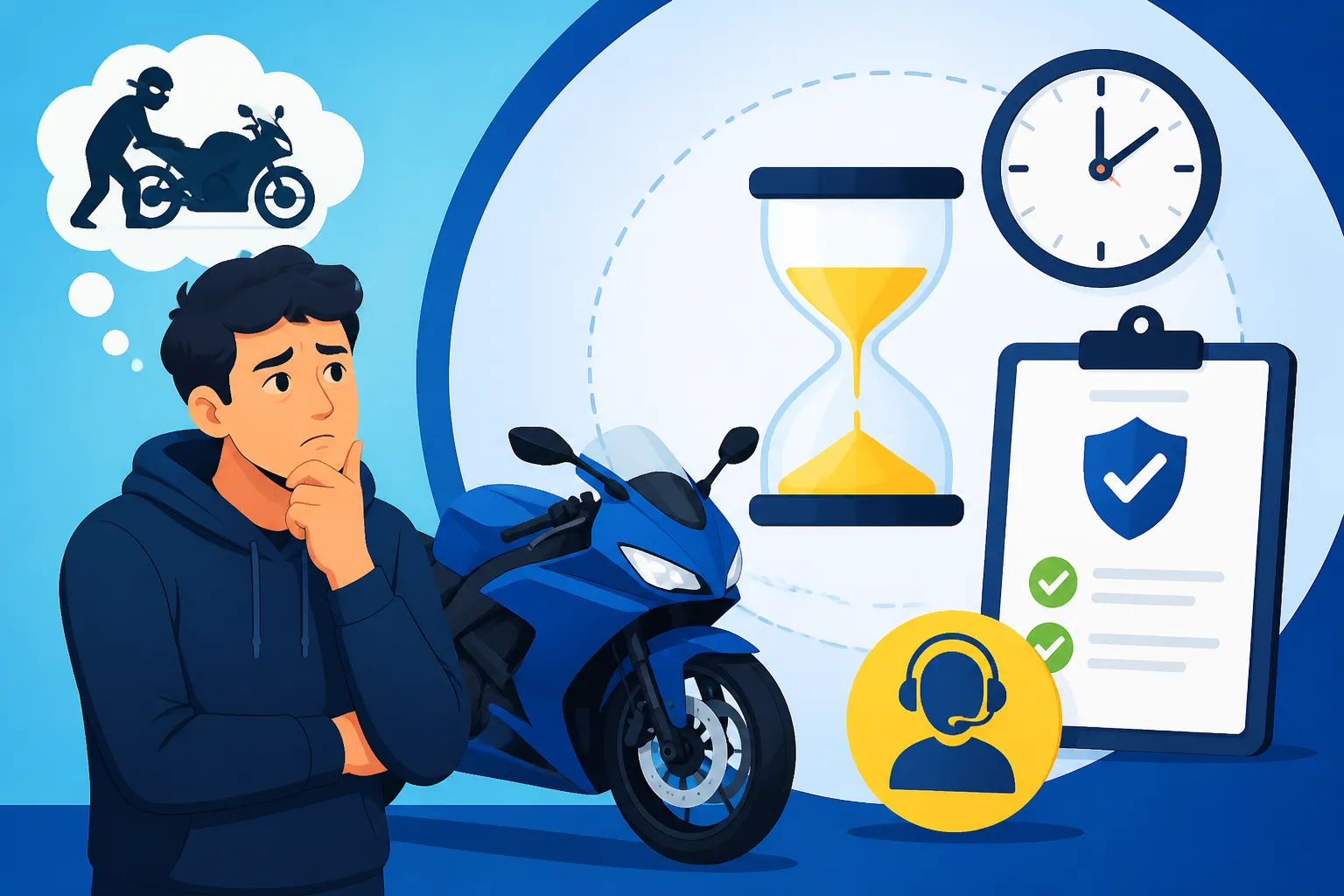
It's incredibly frustrating when your motorcycle goes missing, and then, to add insult to injury, your insurance claim seems to drag on forever. You're left without your beloved bike, possibly without transportation, and staring at an uncertain financial future, all while feeling like you're stuck in bureaucratic limbo. This guide is here to walk you through the common reasons for these frustrating delays and, more importantly, empower you with actionable steps to push your motorcycle theft claim forward and get the resolution you deserve.
Understanding Why Motorcycle Theft Claims Get Delayed
When your motorcycle is stolen, the last thing you want is a slow insurance process. You're already dealing with the emotional hit of losing your ride, not to mention the practical headache of being without transportation. Unfortunately, claim delays are a common reality, and understanding why they happen can help you navigate the process more effectively. It’s not always about your insurer trying to give you a hard time; often, it’s due to complex procedures and external factors.
Common Reasons for Slow Claims Processing
One of the primary culprits behind a dragging theft claim is often the sheer volume of claims an insurance company is handling. If there's been a rash of thefts in your area, or even a major weather event causing widespread property damage, adjusters can become overwhelmed. This bottleneck means less individual attention for each claim, leading to longer processing times. Another significant factor is incomplete documentation. Imagine you file a claim, but you're missing the original purchase receipt, detailed photos of custom parts, or even a copy of the police report. Each missing piece of information requires the adjuster to follow up, you to track it down, and then more time for them to review it, creating a domino effect of delays.
Sometimes, the delay isn't even with the insurer directly but with third parties. For instance, the police investigation itself can take time. Insurers often wait for the official police report to be finalized and for law enforcement to conclude their initial search efforts before they proceed too far with their own investigation. If the police department is understaffed or has a backlog, this can put your insurance claim on hold indefinitely. Additionally, if there are any suspicious circumstances around the theft, the insurer may initiate a more thorough internal investigation, which inherently takes more time.
Finally, communication breakdowns are surprisingly common. Maybe you're not responding to your adjuster's calls or emails quickly enough, or perhaps they're not being clear about what they need from you. It's a two-way street, and any disconnect can easily add days, or even weeks, to the overall timeline. Remember, every time a request is made and a response is delayed, the clock effectively stops on your claim's progress.
The Investigation Phase and Its Timeline
The investigation phase is crucial for a motorcycle theft claim, and it's where much of the waiting game truly begins. After you report the theft to the police and your insurance company, the insurer's claims team will launch their own inquiry. This isn't just a formality; they need to verify the facts, look for any red flags, and determine the legitimacy of the claim. This might involve reviewing your policy details, checking your payment history, and confirming that the bike was indeed covered for theft.
A significant part of this phase involves coordinating with law enforcement. The insurance company will want to see the official police report, including details like the date and time the theft was reported, any witnesses, and specific identifying features of your stolen motorcycle. They'll also typically wait a certain period, often 30 days or more, before officially "totaling" the bike due to theft. This waiting period allows police ample time to recover the motorcycle. If the bike is recovered during this time, even if damaged, the claim shifts from a pure theft claim to a damage claim, which can alter the payout and further delay the process.
During this investigative period, the insurer may also employ specialized investigators to look into the circumstances surrounding the theft. This is particularly common if your motorcycle is a high-value bike, a popular target for theft (like some sport bikes), or if there are any inconsistencies in your statement or the police report. These investigations can delve into your past claims history, financial background, and even interview neighbors or potential witnesses. While it feels invasive, it’s a standard procedure to prevent fraud, but it definitely adds to the overall timeline of your claim.
Proactive Steps You Can Take to Speed Up Your Claim
Feeling helpless while your motorcycle theft claim inches along is a terrible feeling. The good news is that you don't have to just sit there and wait. There are several proactive steps you can take to significantly influence the speed and efficiency of your claim. Being organized, persistent, and clear in your communications can make a world of difference when you're trying to get a fair resolution.
Organizing Your Documentation and Evidence
The absolute best thing you can do for your claim, even before a theft occurs, is to be meticulously organized with your motorcycle's documentation. When a theft happens, having everything at your fingertips dramatically reduces back-and-forth with your insurer. This includes your motorcycle's title, registration, bill of sale, and any loan documents if the bike is financed. You should also have a copy of your current insurance policy, specifically noting your coverage limits for theft and any endorsements for custom parts or accessories.
Beyond official documents, gather photographic and video evidence. Did you take pictures of your bike when you bought it? What about after adding those custom exhaust pipes or a new seat? Documenting your motorcycle, especially any aftermarket parts, is critical. Keep receipts for all modifications, maintenance, and gear. If you have GPS tracking installed or a security alarm system, gather any data or reports from those devices. These pieces of evidence not only support your claim but also help establish the actual cash value or agreed value of your bike, particularly important if you need to How to Negotiate a Motorcycle Total Loss Settlement later on.
Once the theft occurs, the first thing you need to do is file a police report immediately. Obtain a copy of this report, or at least the report number and the contact information for the investigating officer. This police report is the cornerstone of your insurance claim for theft. Without it, your insurer won't even begin their process. Make sure the report accurately describes your motorcycle, including the VIN, license plate number, make, model, and any unique identifiers like custom paint or modifications.
Maintaining Consistent Communication with Your Insurer
Once you've submitted your initial claim, consistent and clear communication with your insurance company is paramount. Don't just file the claim and disappear. Designate a specific point of contact at the insurance company – usually your claims adjuster – and make sure you have their direct phone number and email address. When you communicate, always do so in writing as much as possible, or follow up phone calls with a brief email summarizing what was discussed and any agreed-upon next steps. This creates a paper trail, which can be invaluable if disputes arise later.
It's helpful to establish a reasonable follow-up schedule. If you haven't heard from your adjuster in a few days to a week after submitting requested documents, don't hesitate to reach out. Be polite but firm. Ask for specific updates on the progress of your claim, what steps are currently being taken, and what information they are waiting on. If they ask for additional documents or information, provide it as quickly as possible. Every delay in your response translates to a delay in your claim processing.
While you're communicating with your insurer, be mindful of what you say. Stick to the facts of the theft and the information relevant to your policy. Avoid speculating or making assumptions. If you're feeling overwhelmed, remember resources like The Zebra can offer insights into general claims processes, even if they aren't handling your specific claim. Knowing what to expect from an insurer like Progressive or State Farm can give you a better framework for your conversations. The more transparent and factual your communication, the smoother the process tends to be.
Escalating Your Claim When Progress Stalls
You've done everything right – reported the theft, gathered your documents, and kept in touch with your adjuster. But weeks turn into months, and your claim is still stuck in neutral. This is when it's time to consider escalating your claim. There's a point where persistence needs to evolve into more formal action, especially when you're facing financial burdens or an unfair delay.
Involving Higher-Ups and State Regulators
If your designated claims adjuster isn't providing clear answers, seems unresponsive, or you feel your claim isn't being handled fairly or promptly, it's time to go up the ladder. Start by asking to speak with their supervisor or a claims manager. Explain your situation calmly and clearly, outlining the timeline of events, the actions you've taken, and the lack of progress. Refer to your documented communications and any deadlines that have been missed. Often, a fresh pair of eyes from a supervisor can quickly identify bottlenecks and get things moving.
If escalating within the insurance company itself doesn't yield results, your next step should be to contact your state's Department of Insurance (DOI). Every state has a regulatory body that oversees insurance companies and protects consumers. Filing a complaint with the DOI isn't a guaranteed fix, but it often prompts the insurance company to take your claim more seriously, as they are obligated to respond to state regulators. The DOI can mediate disputes and ensure that the insurer is adhering to state laws regarding prompt claims handling. This step can be particularly effective if you suspect the delay is due to bad faith practices rather than simple inefficiency.
Before contacting the DOI, ensure you have all your ducks in a row. Compile a clear chronology of events, including dates and times of calls, names of people you spoke with, and copies of all correspondence. The more organized and detailed your complaint, the more effectively the DOI can assist you. Remember, the DOI's role is not to settle your specific claim or force a payout, but to ensure the insurance company is following proper procedures.
Seeking Legal Counsel or Public Adjusters
When all internal and state-level avenues have been exhausted, and your claim is still significantly delayed or unfairly handled, it might be time to consider professional assistance. One option is to hire a public adjuster. Unlike the adjusters employed by your insurance company, a public adjuster works for you. They will review your policy, assess your loss, communicate with your insurer on your behalf, and negotiate a settlement. They are typically paid a percentage of the final settlement, so they have a vested interest in getting you the best possible outcome.
However, be aware that not all theft claims warrant a public adjuster, and their fees can sometimes eat into your settlement. This option is often best for high-value motorcycles, complex claims, or situations where the insurer is clearly low-balling the offer or denying the claim without sufficient reason. It's wise to interview a few public adjusters, ask for references, and understand their fee structure before committing.
Another, often more serious, step is to seek legal counsel. If you believe your insurer is acting in bad faith, deliberately delaying your claim, or refusing to honor the terms of your policy without valid reason, an attorney specializing in insurance law can be invaluable. They can review your case, advise you on your legal rights, and, if necessary, file a lawsuit on your behalf. This is a significant step that comes with its own costs and timelines, but it can be necessary to protect your interests and ensure you receive proper compensation, especially when the stakes are high, or you're dealing with a particularly uncooperative insurer. For instance, if you had comprehensive coverage and the insurer is giving you a hard time about the Motorcycle Theft Claim: How It Works, a lawyer might be your best bet.
Coping and Planning While Awaiting Resolution
The waiting game for a stolen motorcycle claim can be incredibly stressful, both emotionally and practically. It's not just about the money; it's about the disruption to your daily life. While you're actively pushing your claim forward, it's equally important to manage the interim period effectively, ensuring you're taking care of your practical needs and planning for the future.
Managing Transportation and Financial Strain
One of the immediate impacts of a stolen motorcycle is the loss of transportation. If your motorcycle was your primary mode of getting around, you're suddenly faced with the challenge of finding alternatives. This might mean relying on public transport, carpooling, or renting a car. Some motorcycle insurance policies offer rental reimbursement coverage, so check your policy details. If you have this coverage, make sure you understand its limits and duration. Even if you don't, keep detailed records of any transportation costs you incur, as these might be recoverable under certain circumstances, or at least help you understand the full financial impact of the theft.
Financially, a theft claim can be a huge burden, especially if your bike was financed. You might still be making loan payments on a motorcycle you no longer possess. This is where gap insurance could have been incredibly helpful, covering the difference between your bike's actual cash value and what you still owe on your loan. If you don't have gap coverage, you'll need to figure out how to manage those ongoing payments. It might be worth speaking to your lender to see if they offer any temporary relief options while your insurance claim is pending. The full cost of motorcycle insurance for a financed bike is often higher due to the need for full coverage, but it’s critical protection.
During this stressful time, it's also crucial to monitor your credit. If your bike was financed and you stop making payments because it's stolen, your credit score could take a hit, making future loans or insurance more expensive. It's a tough situation, but staying on top of your financial obligations, even for a bike you no longer have, is important until your claim is resolved. This is also a good time to review your overall financial health, perhaps with the help of online tools like those offered by The Zebra, to understand how a loss might impact your broader budget.
Preventing Future Thefts
While you're waiting for your claim to resolve, you might find yourself thinking about what you could have done differently, or how to prevent this agonizing experience from happening again. It's natural to feel vulnerable after a theft, and it's also an excellent opportunity to fortify your understanding of motorcycle security. Prevention strategies are key, whether you eventually get your old bike back or purchase a new one.
Consider investing in multiple layers of security for your next motorcycle. A disc lock on the front wheel is a simple deterrent. A heavy-duty chain and lock, secured to an immovable object, is even better. GPS trackers, like those offered by brands such as LoJack, can dramatically increase the chances of recovery if a theft occurs again. Even simple practices, like always parking in well-lit, high-traffic areas or covering your bike to obscure its identity, can make a difference. Taking a motorcycle safety course can also sometimes lead to insurance discounts, helping offset the cost of these security measures.
Reviewing your current or future insurance policy is also a vital step. Understand precisely what your Types of Motorcycle Insurance Coverage Explained includes, particularly for theft (comprehensive coverage) and what its limits are. Are your custom parts and accessories adequately covered? Do you have a stated value or agreed value policy if your bike is highly customized or vintage, rather than just actual cash value? Having robust coverage, especially from a reputable insurer like Progressive, can provide immense peace of mind, knowing that if the worst happens again, the financial blow will be cushioned and the claims process will hopefully be smoother.
| Action Step | Description | Who to Contact | When to Escalate |
|---|---|---|---|
| Gather All Documentation | Collect your police report, insurance policy, title, registration, loan docs, photos, and receipts for custom parts. Ensure everything is organized and easily accessible. | N/A (Internal Prep) | Immediately after theft |
| Maintain Communication Log | Keep a detailed record of all calls, emails, and conversations with your adjuster, including dates, times, and summaries of discussions. | Your Insurance Adjuster | Continuously from initial claim filing |
| Follow Up Regularly | Politely but persistently follow up with your adjuster for status updates, especially if you haven't heard from them within their stated communication timeline or a week after submitting new information. | Your Insurance Adjuster | If no progress or communication for 5-7 business days |
| Escalate to Supervisor/Manager | If your adjuster is unresponsive or unhelpful, request to speak with their direct supervisor or a claims manager within the insurance company. Clearly state your issue and efforts made. | Insurance Company Claims Supervisor/Manager | If adjuster is unresponsive for 2+ weeks or not resolving issues |
| File a Complaint with State DOI | If internal escalation fails, file a formal complaint with your state's Department of Insurance. Provide all documented evidence of delays and communication issues. | Your State's Department of Insurance | If internal escalation has failed for 2-4 weeks, or you suspect bad faith |
| Consult a Public Adjuster/Attorney | For significant delays, disputes over value, or suspected bad faith practices, consider hiring a public adjuster to negotiate on your behalf or an attorney specializing in insurance law. | Licensed Public Adjuster or Attorney (Specializing in Insurance Law) | If DOI intervention doesn't resolve the issue, or significant financial loss is at stake/bad faith is evident |
Disclaimer
This article is for general informational purposes only and does not constitute professional advice. Laws, prices and regulations vary by location and change over time. Consult a qualified professional for guidance on your specific situation.