What States Don’t Require Motorcycle Insurance in 2026?
Riding a motorcycle offers a sense of freedom that is hard to replicate, but that freedom often comes with a tangled web of legal paperwork. Many riders, especially those on a tight budget or those who only ride occasionally, find themselves frustrated by the rising costs of monthly premiums. You might be wondering if there is any way to legally skip the bill. This guide dives deep into the specific states that don't strictly require motorcycle insurance in 2026, the "catches" hidden in the fine print, and why the term "optional" is often a bit of a legal misnomer.
New Hampshire: The Only True Outlier
If you are looking for the one place in the United States where you can consistently swing a leg over your bike without a pre-purchased insurance policy, New Hampshire is your destination. The "Live Free or Die" state takes its motto quite seriously when it comes to motor vehicle coverage. Unlike almost every other jurisdiction, New Hampshire does not have a universal mandate requiring every rider to carry a liability policy just to get on the road. This makes it a unique case study in States That Don't Require Motorcycle Insurance for the average rider.
However, just because you aren't required to buy a policy doesn't mean you aren't responsible for what happens on the road. New Hampshire operates under a "financial responsibility" framework. This means that while you don't need to show proof of insurance to register your bike, you must be able to prove you have the funds to cover damages if you are found at fault in an accident. If you cause a wreck and can't pay for the other person’s medical bills or property damage, the state can suspend your driving privileges and seize your assets. It is a high-stakes gamble that many veteran riders find more stressful than simply paying a premium.
Furthermore, there are specific scenarios where the state of New Hampshire will force you to get insurance. If you have been convicted of a DUI, have been involved in a serious accident previously, or have certain other marks on your driving record, the state will issue a mandate requiring you to file for an SR-22. In these cases, you lose your "optional" status and must comply with the same types of Minimum Liability Insurance Explained (The Three Numbers) that riders in other states face. It is a system built on trust, but that trust is revoked the moment you prove to be a risk on the road.
Florida: The Complicated Case of Optional Coverage
Florida is frequently cited in online forums as a state where motorcycle insurance isn't required. While there is a kernel of truth to this, the reality is far more nuanced and, frankly, quite a headache for the uninformed rider. In Florida, motorcycles are not defined as "motor vehicles" under the state’s No-Fault Law. This means that riders are not required to carry Personal Injury Protection (PIP), which is a huge relief for the wallet compared to what car drivers in the Sunshine State have to pay.
Because of this legal distinction, you can actually register your motorcycle in Florida without showing proof of insurance. This leads many to ask, Do You Need Insurance for a Motorcycle in Florida? with the hope of a simple "no." But here is where the trap snaps shut: while you don't need insurance to register the bike, you are still legally and financially responsible for any injuries or property damage you cause. If you are in an accident and don't have liability coverage, the Florida Department of Highway Safety and Motor Vehicles can suspend your license and registration, and you may be required to purchase a policy and keep it for three years just to get back on the road.
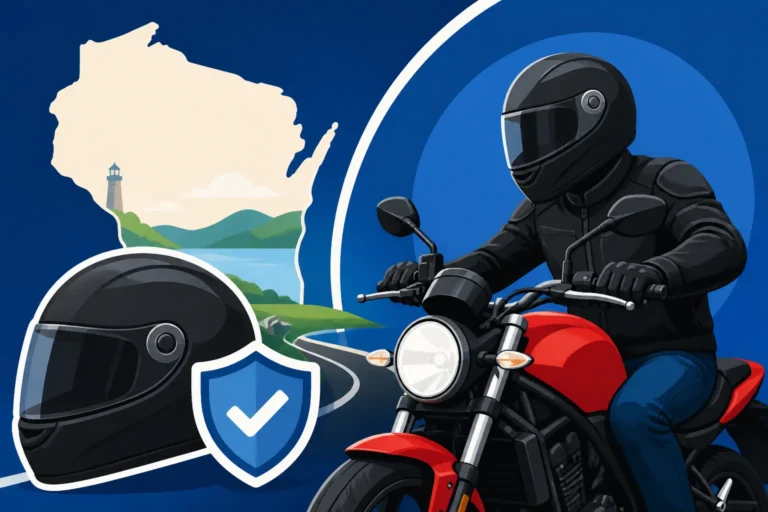
There is also a significant link between your choice of safety gear and your insurance requirements in Florida. Under the Florida Motorcycle Helmet Law, if you are over the age of 21 and wish to ride without a helmet, you are legally required to carry at least $10,000 in medical benefits coverage. This essentially makes insurance mandatory for those who want the "wind in their hair" experience. Even if you do wear a helmet, the financial risks of riding uninsured in a high-traffic state like Florida are massive. The Florida Motorcycle Insurance Requirements are designed in a way that gives you the "choice" to skip insurance at the start, but penalizes you heavily the moment anything goes wrong.
Financial Responsibility Laws and the Bond Alternative
Many riders don't realize that even in states where insurance is "mandatory," there is often a legal loophole known as a "Financial Responsibility Bond" or a cash deposit. This is a vestige of older laws that were designed for the very wealthy who didn't want to deal with insurance companies. In states like Texas or California, you can technically bypass a traditional insurance policy if you can prove to the state that you have a significant amount of cash—usually $30,000 to $50,000—deposited with the State Treasurer or a high-value surety bond.
This is a deep dive into Financial Responsibility Laws for Riders that most people ignore because, quite frankly, most of us would rather spend $50 a month on a policy than tie up $35,000 in a government escrow account. This "self-insurance" path is technically a way to ride without a traditional policy, but it doesn't absolve you of the need to have the money ready. If you choose this path, you are effectively the insurance company. If you hit a luxury SUV or cause a multi-vehicle pileup, that bond money will be gone in the blink of an eye, and you will still be on the hook for any costs exceeding that amount.
It is also important to note that these bond options are almost never available if you do not own your bike outright. If you are still making payments, your lender will have very strict Motorcycle Insurance Requirements for Financed Bikes that supersede state law. Banks want to protect their investment, so they will mandate "Full Coverage," which includes comprehensive and collision, regardless of whether the state of New Hampshire or Florida says you can ride without liability. Skipping out on insurance while having a loan can lead to "force-placed insurance," where the bank buys a very expensive policy on your behalf and adds it to your monthly loan payment.
| State Type | Insurance Required for Registration? | Financial Responsibility Requirement | Helmet/Insurance Link |
|---|---|---|---|
| New Hampshire | No | Must prove ability to pay after an at-fault accident. | None. |
| Florida | No | Mandatory 10k Med-Pay if riding without a helmet. | License suspension if uninsured during an accident. |
| Washington | Yes | Standard 25/50/10 limits. | Required for all riders. |
| Texas | Yes | Standard 30/60/25 limits. | Bond alternative allowed ($55k). |
| California | Yes | Standard 15/30/5 limits. | Cash deposit alternative ($35k). |
The Legal and Financial Risks of the Uninsured Path
We often talk about the law in terms of what we "have" to do to avoid a ticket, but for riders, the law is only half the battle. The other half is the civil courtroom. Even in a state where you might find a loophole, the Penalties for Riding Without Insurance extend far beyond a fine from a police officer. If you are involved in a collision, the other party’s insurance company will pursue you personally for every cent of the damage. This can lead to wage garnishment, liens on your home, and total financial ruin.
Think about the reality of a motorcycle accident. Because we lack the steel cage of a car, our injuries are often more severe, but we can also cause significant damage to others. If you accidentally swerve and cause a car to hit a guardrail, you are responsible for the car, the guardrail, and the driver’s medical bills. Without a policy, you are standing alone against an army of corporate lawyers. This is why What Insurance Do You Need to Ride a Motorcycle Legally? is a question that shouldn't just be about the minimums, but about what protects your future.
Furthermore, riding without insurance means you likely lack Uninsured/Underinsured Motorist coverage. A staggering number of drivers on the road are either underinsured or completely uninsured themselves. If a distracted driver hits you and they don't have insurance, and you don't have a policy of your own, there is no "pool" of money to pay for your bike’s repairs or your hospital stay. You are essentially paying for the "freedom" of no monthly premium by accepting the risk of a $100,000 medical bill. When people ask What Happens If You Get Caught Riding Without Insurance?, they usually think of a $500 fine, but the real "penalty" is often the hospital debt that follows you for decades.
Traveling Across State Lines
One of the biggest traps for riders living in or near New Hampshire or Florida is the issue of crossing state lines. The law of your home state does not travel with you like a bubble. If you live in New Hampshire and decide to ride down to Massachusetts for a weekend rally, you are now subject to Massachusetts law. This is a critical point in Riding Across State Lines: Insurance & Helmet Rules. Most states have a "reciprocity" understanding, but that usually applies to your license, not your lack of financial coverage.
If a police officer in a mandatory-insurance state pulls you over and you cannot produce Is Motorcycle Insurance Required? State-by-State proof of a policy, you can be cited, and in some jurisdictions, your motorcycle can be impounded on the spot. Imagine being 200 miles from home and watching your bike get towed away because you didn't think you needed a $30-a-month policy. It is a logistical nightmare that can turn a great road trip into a financial disaster.
The confusion often stems from the fact that car insurance is so universal that we assume motorcycle laws work the same way. But motorcycles are treated as "specialty vehicles" in many legislative books, leading to these weird gaps in coverage requirements. Before you head out on a multi-state tour, you should always check the Minimum Liability Insurance Explained (The Three Numbers) for every state on your route. Even if you are legally "okay" in your home state, the frustration of explaining New Hampshire’s "Financial Responsibility" laws to a skeptical trooper in rural Virginia is not how you want to spend your Saturday afternoon.
Why Even "Optional" Coverage is a Safety Net
At the end of the day, as a veteran rider, I’ve seen too many people try to save a few bucks only to regret it when the kickstand goes down for the last time. The psychological weight of riding without insurance is its own kind of burden. You find yourself riding more timidly, constantly worried about the "what if," rather than enjoying the road. The reality is that motorcycle insurance is generally much cheaper than car insurance, especially if you have a clean record and ride a sensible bike.
Instead of looking for ways to avoid it entirely, many riders find success by looking for the States That Don't Require Motorcycle Insurance alternatives like "lay-up" policies. These allow you to maintain comprehensive coverage (for theft or fire) during the winter months while pausing the expensive liability and collision portions of the policy. This gives you the legal protection you need when you are actually on the road without the high cost of a year-round "Full Coverage" policy.
With the rise of automated traffic enforcement and plate-scanning technology, it is getting harder to fly under the radar. Even if you are in a state where insurance is "optional" for registration, the legal net is tightening. Protecting yourself with a basic policy is less about following a government rule and more about ensuring that one bad day on the road doesn't take away everything you’ve worked for. Riding is about the joy of the journey, and that journey is much smoother when you know you’re covered.
Disclaimer
This guide is for informational purposes only and does not constitute legal or financial advice. Laws regarding motorcycle insurance and financial responsibility are subject to change and can vary significantly based on individual circumstances, such as driving history and bike ownership. Always consult with your local Department of Motor Vehicles or a qualified legal professional to ensure you are in compliance with the most current regulations in your specific jurisdiction.