Is Motorcycle Insurance Required in Oklahoma?
It's easy to get lost in the sea of state-specific vehicle laws, especially when you're a motorcycle enthusiast just trying to enjoy the open roads. You want to make sure you're riding legally and responsibly, but figuring out the exact insurance requirements for your two-wheeled companion can feel like navigating a maze. This guide is here to cut through the confusion and give you a clear, comprehensive breakdown of motorcycle insurance requirements in Oklahoma, so you can ride with peace of mind.
Yes, Motorcycle Insurance is Absolutely Required in Oklahoma
Let's get straight to it: if you're planning on riding a motorcycle on public roads in Oklahoma, you absolutely must carry motorcycle insurance. It's not an option, it's the law. Just like with cars, the state mandates that all registered vehicles, including motorcycles, must be covered by at least a minimum amount of liability insurance. This isn't just about protecting yourself; it's about protecting others on the road in case you're at fault in an accident.
Understanding Oklahoma’s Minimum Coverage Requirements
So, what exactly does "minimum liability insurance" mean in the Sooner State? Oklahoma operates under a "fault" system, which means the person who causes an accident is responsible for the damages. Your liability insurance is designed to cover these damages if you're the one at fault. The minimum requirements are often expressed as a series of three numbers, and in Oklahoma, those numbers are 25/50/25.
Let's break down what those figures represent:
- $25,000 for bodily injury liability per person: This means that if you cause an accident, your insurance will pay up to $25,000 for medical expenses, lost wages, and other related costs for one individual who is injured.
- $50,000 for total bodily injury liability per accident: This is the maximum amount your insurance will pay for all bodily injuries in a single accident, regardless of how many people are hurt. So, if three people are injured, the total payout for their injuries won't exceed $50,000, with no single person receiving more than $25,000.
- $25,000 for property damage liability per accident: This covers the cost of damage to another person's property, such as their vehicle, fences, or other structures, up to $25,000.
It's crucial to understand that these are just the bare minimums. While they make you legal to ride, they often don't provide nearly enough protection in the event of a serious accident, especially with rising medical costs and vehicle repair expenses. Many experienced riders will tell you that the Minimum Liability Insurance Explained (The Three Numbers) is a good starting point for understanding, but rarely enough to truly protect your assets.
Financial Responsibility Law Explained
Oklahoma's financial responsibility law dictates that all drivers, including motorcyclists, must be able to prove they can cover the costs of an accident they cause. While carrying an active insurance policy is the most common and easiest way to satisfy this requirement, there are other, less common ways to demonstrate financial responsibility. However, for 99.9% of riders, obtaining a motorcycle insurance policy is the only practical solution. You’re typically expected to carry proof of insurance, whether it's a physical card or digital proof, whenever you’re riding. Law enforcement can, and often does, request to see this proof during a traffic stop or after an accident. If you're curious about the specifics, our guide on Financial Responsibility Laws for Riders goes into much greater detail.
What Happens If You Ride Without Insurance in Oklahoma?
Thinking about skipping out on insurance to save a few bucks? Trust me, it's a gamble that's absolutely not worth taking in Oklahoma. The potential consequences far outweigh any perceived savings, and they can impact your finances and your freedom for years to come. Oklahoma takes its financial responsibility laws seriously, and riding uninsured is a surefire way to find yourself in a heap of trouble.
Penalties for Non-Compliance
Getting caught riding without valid motorcycle insurance in Oklahoma carries some pretty stiff penalties, even for a first offense. These aren't just minor inconveniences; they can significantly disrupt your life and empty your wallet.
- Fines: Expect a significant fine, which can range from $250 to $500 for a first offense. These aren't parking tickets; they add up fast.
- License and Registration Suspension: Your driver's license can be suspended, and your motorcycle's registration can also be suspended. This means you can't legally drive any vehicle, and your bike can't be on the road. Getting these reinstated often involves paying more fees and showing proof of insurance for the future.
- Vehicle Impoundment: Law enforcement has the authority to impound your motorcycle on the spot if you're caught without insurance. Imagine being stranded, then having to pay towing fees, storage fees, and the original fines just to get your bike back.
- SR-22 Requirement: If your license is suspended, you might be required to obtain an SR-22 filing for a certain period once you get your license back. An SR-22 is a certificate of financial responsibility that proves you have insurance. It signals to insurance companies that you're considered a high-risk driver, leading to significantly higher insurance premiums for years. Our article on SR-22 for Motorcycles: When It's Required provides a deep dive into this often-misunderstood requirement.
- Court Costs and Fees: On top of everything else, you'll likely be responsible for court costs and administrative fees associated with your penalties.
The financial hit from fines, fees, and increased insurance rates alone can quickly exceed the cost of a year's worth of proper coverage. It's a classic case of trying to save a little and ending up paying a lot more. You can learn more about the broader implications in our guide on What Happens If You Ride Without Insurance?.
The Cost of an Accident Without Coverage
While the penalties for getting caught without insurance are severe, the real nightmare scenario is being involved in an accident when you're uninsured. Remember, Oklahoma is a "fault" state. If you cause an accident and don't have liability insurance, you are personally on the hook for all the damages.
- Bodily Injuries: This is where things get truly terrifying. If you injure someone else, you're responsible for their medical bills, lost wages, pain and suffering, and any long-term care they might need. A serious injury can easily run into hundreds of thousands, if not millions, of dollars. Without insurance, that bill comes directly to you. Your savings, your home, your future earnings – all could be at risk.
- Property Damage: While perhaps less devastating than bodily injury, repairing or replacing someone else's vehicle after an accident can still be incredibly expensive. Even a minor fender bender can cost thousands.
- Lawsuits: The injured parties and their insurance companies can (and likely will) sue you to recover their losses. This means legal fees, court judgments against you, and potentially wage garnishments or liens on your property for years.
- No Coverage for Your Bike: If you're uninsured, you also have no coverage for damage to your own motorcycle. If your bike is totaled, you're out of luck and out of a motorcycle.
This is why motorcycle insurance isn't just a legal hoop to jump through; it's a fundamental financial safeguard. Even if you're the safest rider on the planet, accidents happen, and being prepared means having the right coverage.
Beyond the Basics: Important Considerations for Oklahoma Riders
Being a responsible motorcyclist in Oklahoma involves more than just meeting the minimum insurance requirements. There are other crucial laws and coverage options that can significantly impact your safety and financial well-being on the road.
Oklahoma Helmet Laws
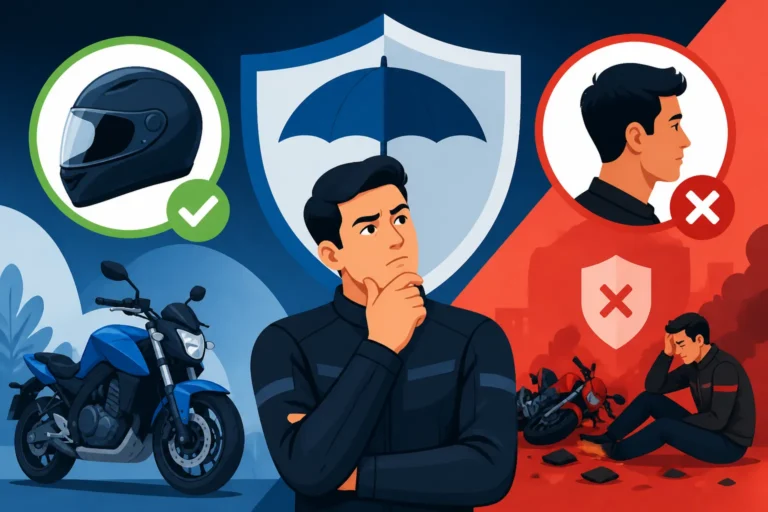
While insurance protects your finances, helmet laws are about protecting your head! In Oklahoma, the helmet law isn't universal for all riders. According to current Oklahoma law, riders and passengers under the age of 18 are required to wear a helmet. For riders and passengers 18 years of age and older, helmets are not legally required. However, even if you're over 18, wearing a DOT-compliant helmet is always, always, always a good idea. It's the single most effective piece of safety gear you can wear to prevent serious injury or death in an accident. Many insurance companies even offer discounts for riders who complete a motorcycle safety course, which emphasizes helmet use, or even for just wearing one. Our comprehensive guide on Motorcycle Helmet Laws by State provides even more detailed information about this vital topic.
Protecting Yourself with More Than Minimums
As we've discussed, Oklahoma's minimum liability coverage is designed to protect other people when you're at fault. It does very little to protect you or your motorcycle. For true peace of mind, especially on a motorcycle where the risks are inherently higher, you should seriously consider adding more coverage.
- Uninsured/Underinsured Motorist (UM/UIM) Coverage: This is a critically important coverage for any rider. While you might be insured, many drivers on the road aren't, or they carry only the bare minimum. If an uninsured or underinsured driver hits you and they're at fault, UM/UIM coverage steps in to cover your medical bills, lost wages, and property damage. Given the high percentage of uninsured drivers in some areas, this coverage is almost as important as liability itself. You can learn more in our detailed explanation of Uninsured & Underinsured Motorist Coverage (UM/UIM).
- Medical Payments (MedPay): Also known as MedPay, this coverage pays for reasonable and necessary medical expenses for you and your passengers, regardless of who is at fault in an accident. This can be a lifesaver, covering deductibles, co-pays, or even expenses not fully covered by your health insurance.
- Collision Coverage: This pays for damage to your motorcycle if you hit another vehicle or object, or if your bike rolls over. If you have a loan on your motorcycle, your lender will almost certainly require you to carry collision coverage.
- Comprehensive Coverage: This protects your motorcycle from non-collision incidents like theft, vandalism, fire, natural disasters (like hail or floods, which Oklahoma knows well!), or hitting an animal. If you've invested in a nice bike, this coverage is essential. Our guide on Collision vs Comprehensive Motorcycle Coverage breaks down the differences and helps you decide what's right for you.
- Accessories and Custom Parts Coverage: Many riders customize their bikes, adding expensive aftermarket exhausts, custom paint jobs, or chrome. Standard policies often only cover factory-installed parts. If you've poured money into personalizing your ride, you'll want this add-on to protect your investment.
- Roadside Assistance & Towing: Imagine breaking down on a deserted highway or getting a flat tire. Motorcycle-specific roadside assistance can be a true blessing, ensuring your bike gets safely towed to a repair shop.
When you're shopping for coverage, consider what you truly need versus just what's legally required. Companies like Progressive and Dairyland are well-known for offering robust motorcycle insurance options, allowing riders to tailor policies with these additional coverages.
Here's a quick summary of Oklahoma's minimum insurance requirements:
| Coverage Type | Minimum Requirement in Oklahoma | What it Covers |
|---|---|---|
| Bodily Injury Liability per person | $25,000 | Medical bills, lost wages, pain/suffering for one injured person you caused |
| Bodily Injury Liability per accident | $50,000 | Total medical bills, lost wages, pain/suffering for all injured in one accident you caused |
| Property Damage Liability per accident | $25,000 | Damage to other people's property (vehicles, fences, etc.) you caused |
Riding a motorcycle in Oklahoma is an incredible experience, offering beautiful scenery from the Osage Hills to the Ouachita Mountains. But to truly enjoy it without worry, being properly insured is non-negotiable. Oklahoma's laws are clear: you need at least minimum liability coverage to hit the public roads. But for your own financial safety and peace of mind, consider stepping up your coverage to truly protect yourself, your passengers, and your beloved bike from the unexpected. Don't let a legal misstep or an unforeseen accident turn your passion into a financial burden. Ride smart, ride safe, and ride insured.
Disclaimer
Please note that insurance laws and regulations can change. While we strive to provide the most accurate and up-to-date information, this article should not be considered legal advice. Always consult with a qualified insurance professional or the Oklahoma Department of Insurance for the most current and specific requirements for your situation.