Is Motorcycle Insurance Required? State-by-State
Riding a motorcycle offers an unparalleled sense of freedom, a connection to the open road that few other experiences can match. But before you twist that throttle and feel the wind in your face, there's a crucial, often headache-inducing detail every rider must contend with: motorcycle insurance. It’s easy to feel overwhelmed, wondering if it's required where you live, what kind you need, and what the real-world consequences are if you get it wrong. This comprehensive guide is here to untangle those complexities, state by state, ensuring you have all the information to ride legally and with true peace of mind.
Understanding the "Why": Why Motorcycle Insurance is More Than Just a Requirement
Many riders view insurance as just another hurdle, another line item in the budget. But peel back the layers, and you’ll find that motorcycle insurance is less about bureaucratic red tape and more about protecting yourself, your passengers, and your financial future. It's about being prepared for the unexpected, which, let's be honest, is a big part of the riding experience.
The Inherent Risks of Riding
Let's be real: riding a motorcycle, while exhilarating, carries inherent risks that differ significantly from driving a car. Motorcycles offer far less protection in the event of a collision compared to an enclosed vehicle. Even a minor incident can result in serious injuries or significant damage to your bike. This isn't meant to scare you off, but to emphasize the practical need for a robust safety net. It’s not just about other drivers, either; road hazards, sudden stops, or even a simple tip-over can lead to costly repairs or medical bills.
Think about a rider cruising down a scenic highway in California. They're enjoying the perfect weather, but suddenly, a deer jumps out from the brush. Even if the rider avoids a direct collision, swerving violently could lead to them laying down the bike, causing extensive damage to the fairings, handlebars, and more. Without proper coverage, every cent of those repair costs, potentially thousands of dollars, comes directly out of their pocket. This is where Does Motorcycle Insurance Cover Animal Strikes? becomes incredibly important.
Financial Protection for Yourself and Others
At its core, motorcycle insurance is about financial protection. If you're involved in an accident that's deemed your fault, liability coverage kicks in to cover the bodily injuries and property damage sustained by the other parties involved. This isn't a small thing; medical bills can quickly skyrocket into hundreds of thousands of dollars, and even minor property damage to another vehicle can be expensive. Without insurance, you'd be personally responsible for these costs, potentially facing lawsuits that could wipe out your savings, future earnings, and even personal assets.
Consider a scenario in Texas where a rider misjudges a turn and scrapes the side of a parked car. The car has significant paint damage and a dented door. Without property damage liability, the rider would be on the hook for the repairs, which could easily run into several thousand dollars. If there were also a passenger in the car who claimed whiplash, the bodily injury claims could be astronomical. Insurance acts as a buffer, shielding your personal finances from these potentially catastrophic expenses.
Peace of Mind on Two Wheels
Beyond the legal and financial necessities, having appropriate motorcycle insurance provides an invaluable sense of peace of mind. Knowing that you're covered in various scenarios, whether it’s a collision, theft, or even just needing a tow, allows you to truly enjoy the ride without constantly worrying about "what if." This emotional component is often overlooked but is a significant benefit.
Imagine you're on a road trip through the mountains of Colorado, hundreds of miles from home, and your bike suddenly breaks down. If you have roadside assistance coverage, a simple call means help is on the way. You're not stranded, frantically searching for a tow truck in an unfamiliar area. This is the peace of mind that good insurance offers – the assurance that even when things go wrong, you have a plan. This type of coverage often falls under Roadside Assistance & Towing for Motorcycles.
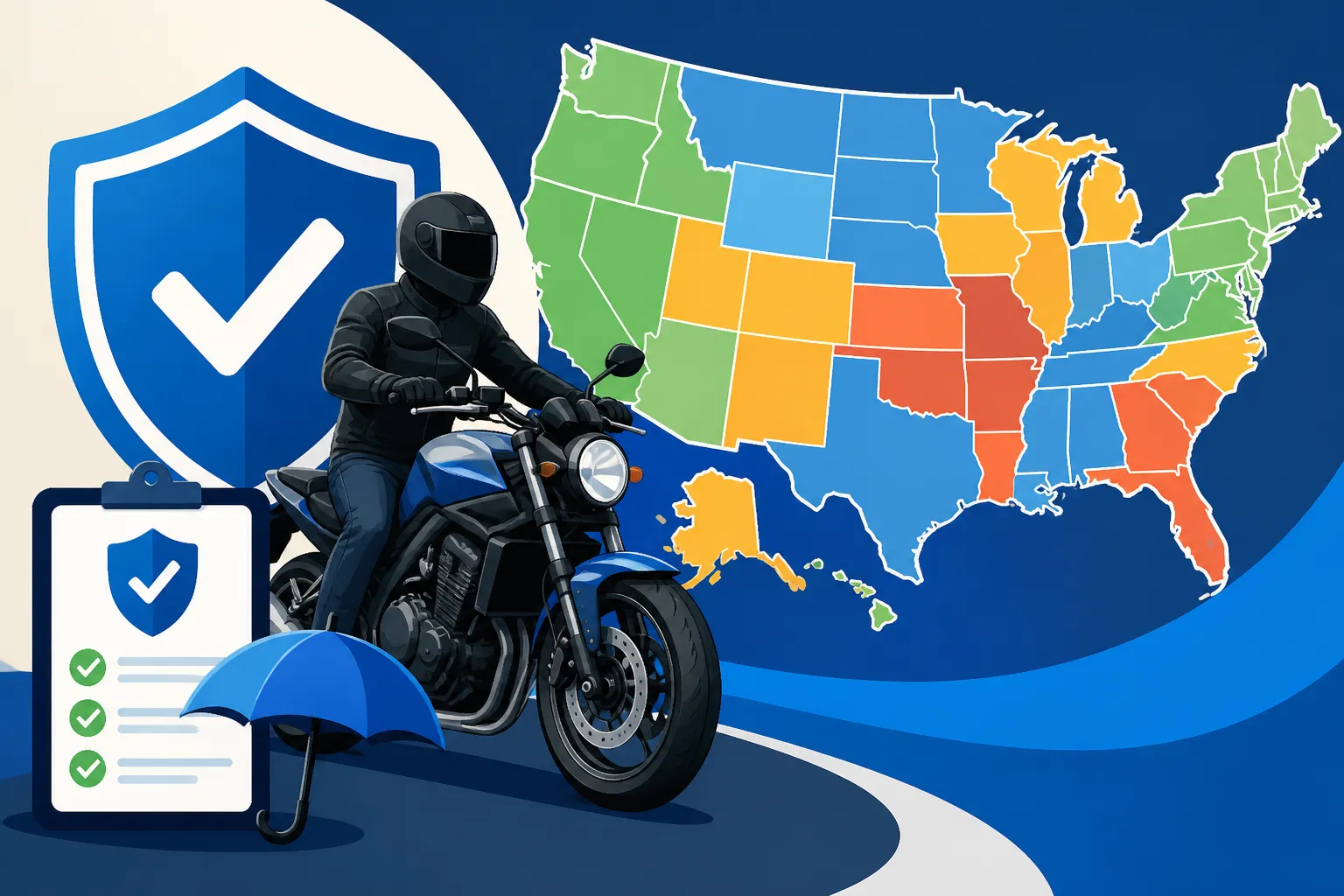
The National Landscape: Is Motorcycle Insurance Required in Your State?
This is the burning question for many riders, and the answer isn't a simple yes or no for every corner of the United States. While the vast majority of states do mandate some form of motorcycle insurance, there are nuances and even a few exceptions that every rider needs to understand.
States Where It's Absolutely Mandatory
For most of us, motorcycle insurance isn't optional; it's a legal prerequisite to register your bike and ride on public roads. These states require you to carry at least minimum liability coverage, meaning if you cause an accident, your insurance will pay for the other party's injuries and property damage up to certain limits. Failing to meet these requirements can lead to serious penalties, which we'll delve into later.
States like California, Florida, New York, and Texas are prime examples where carrying at least minimum liability insurance is non-negotiable. If you're pulled over and cannot provide Proof of Insurance & Registration for Motorcycles, you could face fines, license suspension, and even impoundment of your motorcycle. The specific minimums vary, but the requirement itself is universal in these states. For instance, in California, you need at least 15/30/5 coverage, which means $15,000 for bodily injury per person, $30,000 for bodily injury per accident, and $5,000 for property damage. For a deep dive into what these numbers mean, you can check out Minimum Liability Insurance Explained (The Three Numbers).
States with "Financial Responsibility" Laws
Then there's a category of states that operate under "financial responsibility" laws. This often means you have a choice: either purchase a motorcycle insurance policy or prove you have the financial means to cover damages in the event of an accident. While this sounds like an option to skip insurance, the reality is that proving financial responsibility without an actual insurance policy is incredibly difficult and often impractical for the average rider. It might involve posting a bond for tens of thousands of dollars, depositing cash with the state, or proving ownership of substantial assets that could be liquidated to cover accident costs.
New Hampshire is famously known for its financial responsibility law, often cited as a state that "doesn't require motorcycle insurance." However, if you cause an accident and cannot prove financial responsibility, you will face severe consequences, including license suspension and potential liability for all damages. For most riders in New Hampshire, purchasing an insurance policy is the only realistic and responsible way to meet this requirement. Other states, though less common, might have similar provisions, but they rarely translate into truly "no insurance needed" situations. Understanding Financial Responsibility Laws for Riders is crucial if you live in or ride through one of these states.
The Rare Exceptions
While no state truly allows you to ride completely unprotected without any form of financial accountability, New Hampshire is often highlighted as the closest thing to an "exception." As discussed, even there, you're still responsible for damages if you cause an accident, and an insurance policy is the most practical way to meet that financial obligation.
It's a common misconception that certain states have no requirements at all. Every state has some mechanism to ensure that drivers and riders can pay for damages they cause. It's just that some states offer alternatives to traditional insurance that are usually not feasible for most people. Therefore, for all intents and purposes, assume you need motorcycle insurance everywhere you plan to ride on public roads, or at least be prepared to meet stringent financial responsibility laws. If you're curious about specific states, you might look into States That Don't Require Motorcycle Insurance.
Deep Dive by Region: A Closer Look at State Requirements
While a general understanding is good, the devil is in the details when it comes to state-specific motorcycle insurance requirements. Laws vary not just in whether insurance is required, but also in the minimum coverage amounts, acceptable proof of insurance, and even specific helmet laws that can sometimes intertwine with insurance implications.
Northeast States: Navigating Dense Roads
The Northeast, with its bustling cities, winding rural roads, and often unpredictable weather, presents a unique riding environment. Insurance requirements here are generally stringent, reflecting the higher population density and increased traffic. Most states in this region mandate specific liability minimums, and some, like New York, require additional coverages like Uninsured/Underinsured Motorist (UM/UIM).
- New York: Requires liability coverage (25/50/10), plus Personal Injury Protection (PIP) and Uninsured Motorist Bodily Injury coverage. Riding without insurance can lead to severe penalties, including license and registration suspension, significant fines, and potential jail time. You'll definitely want to read up on New York Motorcycle Insurance Requirements.
- Pennsylvania: Demands liability coverage (15/30/5) but is an "at-fault" state, meaning the at-fault driver's insurance pays. While PIP is not mandatory for motorcycles, it's often a smart addition.
- Massachusetts: Similar to New York, Massachusetts requires not only liability but also Personal Injury Protection and Uninsured Motorist coverage, adhering to its 20/40/5 minimums. The state's compulsory insurance laws are some of the strictest in the nation.
Riders in these states must be particularly diligent about understanding their policies and ensuring continuous coverage. The sheer volume of traffic and the potential for severe accidents make robust insurance not just a legal obligation, but a common-sense safety measure.
Southern States: Diverse Regulations and Warm Weather Riding
The Southern states offer a long riding season and a vast array of landscapes, from coastal highways to mountain passes. While many share similar baseline requirements, there's considerable diversity in their specific laws.
- Florida: Requires 10/20/10 in Personal Injury Protection (PIP) and Property Damage Liability, but uniquely, it's a no-fault state for car insurance that doesn't fully extend to motorcycles. However, if you are found at fault for an accident and don't have proper bodily injury liability coverage, your license and registration can be suspended until you meet certain financial requirements. It’s a bit complex, and many riders opt for full liability even if not strictly mandated. For clarity, check out Is Motorcycle Insurance Required in Florida?.
- Texas: Mandates liability insurance with minimums of 30/60/25. Texas is an "at-fault" state, so the responsible party's insurance pays. Penalties for riding without insurance are significant, escalating for repeat offenses. Texas Motorcycle Insurance Requirements covers this in detail.
- Georgia: Requires minimum liability coverage of 25/50/25, similar to many other states. Like Texas, it's an at-fault state.
- North Carolina: Also an at-fault state, requiring 30/60/25 liability coverage. North Carolina is quite strict with its insurance laws, and lapses in coverage can lead to penalties.
The warm climate in many Southern states means motorcycles are on the road for more months out of the year, potentially increasing exposure to risk. Adequate coverage isn't just a legal necessity but a practical one.
Midwest States: Varying Approaches to Rider Safety
The Midwest encompasses a broad region with varying regulatory philosophies. From the Great Lakes to the Great Plains, motorcycle insurance laws can differ significantly, although liability coverage remains the standard.
- Illinois: Requires minimum liability coverage of 25/50/20. Illinois is an at-fault state, and proof of insurance is frequently checked.
- Ohio: Mandates liability coverage of 25/50/25. Like many other states, Ohio expects continuous coverage, and penalties for lapses or riding uninsured are strictly enforced.
- Michigan: This state has a unique "no-fault" auto insurance system, and while motorcycles are exempt from the standard no-fault personal injury protection for themselves, riders often still need liability coverage for damage they might cause to vehicles or property. It’s a nuanced system that can be confusing, so a deeper dive into Michigan Motorcycle Insurance (No-Fault) Explained is highly recommended for riders in the Wolverine State.
- Wisconsin: Requires 25/50/10 liability coverage. The state also has helmet laws that can affect insurance considerations in certain situations.
The mix of urban centers and wide-open rural areas means riders encounter diverse conditions, making reliable insurance a constant need across the Midwest.
Western States: Open Roads and Unique Laws
The vast and diverse Western states offer some of the most breathtaking riding routes in the country. From the Pacific Coast Highway to the Rocky Mountains, these states often see a high volume of motorcycle tourism, necessitating clear and consistent insurance laws.
- California: Mandates liability coverage of 15/30/5. California is an at-fault state, and proof of insurance is required. The state's bustling highways and diverse terrain mean accidents, unfortunately, are not uncommon, making insurance a critical safeguard. Learn more about California Motorcycle Insurance Requirements.
- Washington: Requires liability coverage of 25/50/10. It is an at-fault state. Like California, Washington also has significant traffic and varied riding conditions, making insurance a necessity.
- Arizona: Requires 25/50/15 liability coverage. Arizona, with its year-round riding weather, sees a constant stream of motorcyclists, underscoring the importance of adhering to insurance laws.
- Colorado: Mandates 25/50/15 liability coverage. As an at-fault state, ensuring you have coverage is vital for both legal compliance and financial protection in the event of an accident in the mountainous terrain or urban areas.
The blend of tourist riders and local enthusiasts means that adherence to state-specific insurance laws is paramount for all riders venturing through the West.
Here's a quick overview of minimum liability requirements for some key states. Please note these are subject to change and should always be verified with your state's DMV or an insurance professional.
| State | Bodily Injury Per Person | Bodily Injury Per Accident | Property Damage Per Accident | Is Insurance Required? |
|---|---|---|---|---|
| California | $15,000 | $30,000 | $5,000 | Yes |
| Florida | $10,000 (PIP) | $20,000 (PIP) | $10,000 | Yes (complex) |
| New York | $25,000 | $50,000 | $10,000 | Yes |
| Texas | $30,000 | $60,000 | $25,000 | Yes |
| Michigan | (No-Fault System) | (No-Fault System) | $10,000 (Property Damage) | Yes (Liability) |
| New Hampshire | (Financial Responsibility) | (Financial Responsibility) | (Financial Responsibility) | Yes (Financial Resp.) |
| Washington | $25,000 | $50,000 | $10,000 | Yes |
| Illinois | $25,000 | $50,000 | $20,000 | Yes |
| Ohio | $25,000 | $50,000 | $25,000 | Yes |
| Arizona | $25,000 | $50,000 | $15,000 | Yes |
Note: Some states may have additional required coverages like UM/UIM or PIP beyond these basic liability numbers.
Beyond the Basics: What Minimum Coverage Really Means
When a state mandates "minimum liability insurance," it's easy to assume that meeting those numbers is enough. However, for most riders, relying solely on minimum coverage is a risky gamble. It's the bare legal requirement, not necessarily what's best for your financial protection.
The "Three Numbers" Explained: Liability Limits
The minimum liability requirements you see for each state are often presented as a series of three numbers, like 25/50/15. Understanding what each number represents is fundamental to grasping your coverage.
- First Number (Bodily Injury per Person): This is the maximum amount your insurance company will pay for medical expenses, lost wages, and pain and suffering for one person injured in an accident you cause. For example, if it's $25,000, that's the cap for a single individual's claim.
- Second Number (Bodily Injury per Accident): This is the maximum amount your insurance company will pay for all bodily injuries in a single accident you cause, regardless of how many people were hurt. If it's $50,000 and three people are injured, the total payout for their injuries cannot exceed $50,000.
- Third Number (Property Damage per Accident): This is the maximum amount your insurance company will pay for damages to another person's property (like their vehicle, fence, or house) in an accident you cause. If it's $15,000, that's the most your policy will cover for property damage.
So, for a 25/50/15 policy, your coverage limits are $25,000 for one person's injury, $50,000 for all injuries in the accident, and $15,000 for property damage. These limits apply per accident.
Understanding Bodily Injury and Property Damage
Bodily injury liability covers the costs associated with injuries to others if you're at fault in an accident. This can include hospital bills, doctor visits, medication, physical therapy, and even long-term care or lost income. Property damage liability covers the cost to repair or replace another person's vehicle or property that you damage in an accident. This could be anything from a fender bender to hitting a mailbox or even a storefront.
Without sufficient liability coverage, you could quickly find yourself personally responsible for any costs that exceed your policy limits. Imagine you cause an accident in New York with minimum 25/50/10 coverage. The other driver sustains severe injuries, racking up $75,000 in medical bills, and their car is totaled, costing $20,000 to replace. Your policy would pay $25,000 for their injuries and $10,000 for their car. This leaves you personally on the hook for the remaining $50,000 in medical bills and $10,000 for the car. This kind of financial burden can be devastating.
Why Minimums Might Not Be Enough
As illustrated, state minimums are often woefully inadequate for real-world accident scenarios. Modern medical care is incredibly expensive, and even a moderate accident can quickly exhaust minimum bodily injury limits. Similarly, the cost of vehicles has risen dramatically; $5,000 or $10,000 in property damage coverage might not even cover a minor ding on a newer car, let alone a total loss.
Many experienced riders and insurance professionals strongly recommend carrying significantly more than the state minimums, often opting for limits like 100/300/50 or even higher. While this increases your premium, the additional cost is usually a small price to pay for the vastly increased financial protection. It’s about protecting your assets, your credit, and your future from the potentially ruinous costs of a serious accident. If you're wondering how much coverage you actually need, think about your assets and your risk tolerance. What can you afford to lose? This ties into the discussion about What Motorcycle Coverage Do You Actually Need?.
Penalties and Consequences: What Happens If You Ride Uninsured?
Riding without motorcycle insurance isn't just financially unwise; it's illegal in almost every state and comes with a host of immediate and long-term consequences that can significantly impact your riding privileges and financial well-being. Ignorance of the law is rarely an excuse, and law enforcement takes these violations seriously.
Immediate Legal Repercussions
If you're caught riding without the legally required insurance, the immediate aftermath can be quite harsh. Depending on the state and whether it's your first offense, you could face:
- Fines: These can range from hundreds to thousands of dollars. In California, for a first offense, the fine could be between $100 and $200, plus court fees, which can effectively double or triple that amount. Subsequent offenses carry even higher penalties.
- License and Registration Suspension: Your motorcycle license could be suspended, sometimes for several months or even a year. Your motorcycle's registration might also be suspended, making it illegal to operate the vehicle even if someone else is riding it. In Florida, if you're involved in an accident and lack proper insurance, your driving privileges and license plates can be suspended for up to three years.
- Impoundment of Your Motorcycle: Law enforcement might impound your bike on the spot. Getting it back involves paying impound fees, daily storage fees, and proving you now have valid insurance, which can quickly add up to a significant sum, sometimes exceeding the value of the bike itself.
- SR-22 or FR-44 Requirement: Many states will require you to obtain an SR-22 (or FR-44 in Florida and Virginia) certificate of financial responsibility. This is a form filed by your insurance company with the state, proving you have the minimum required liability coverage. Carrying an SR-22/FR-44 often results in much higher insurance premiums for several years. Read more about this at SR-22 for Motorcycles: When It's Required.
For an idea of how serious these can be, look at What Happens If You Ride Without Insurance?.
Long-Term Financial Headaches
The legal penalties are just the beginning. The long-term financial consequences of riding uninsured can be far more debilitating.
- Personal Liability for Damages: If you cause an accident without insurance, you are personally responsible for all damages and injuries. This means you could be sued for medical bills, lost wages, property damage, and pain and suffering. A single severe accident could result in judgments against you for hundreds of thousands or even millions of dollars.
- Wage Garnishment and Asset Seizure: If you lose a lawsuit and can't pay, the court could order wage garnishment, seizure of your bank accounts, or even the forced sale of your personal assets (like your home or other vehicles) to satisfy the judgment.
- Difficulty Getting Future Insurance: Having a history of riding uninsured or causing an accident without insurance will mark you as a high-risk driver/rider. This can make it incredibly difficult and expensive to obtain insurance in the future, with many companies refusing to cover you or charging exorbitant premiums.
- Impact on Credit Score: Unpaid fines, court judgments, and collection actions resulting from an uninsured accident can severely damage your credit score, making it harder to get loans, mortgages, or even some jobs.
The Ripple Effect on Your Riding Future
Beyond the financial and legal pain, riding uninsured can have a lasting ripple effect on your passion for two wheels. The stress and financial strain of dealing with an uninsured accident can quickly overshadow the joy of riding. It can make you feel constantly vulnerable, erode your confidence, and potentially force you off your bike permanently if you can no longer afford to legally operate it.
Imagine a rider in Arizona who gets into a minor fender bender, but because they lacked insurance, they're now facing a $5,000 fine, a suspended license, and a lawsuit for the other driver's minor injuries and vehicle repairs. This single incident could derail their finances, make it impossible to ride legally for a year, and leave them with a sour taste for what was once a cherished hobby. The simple act of obtaining appropriate insurance is an investment in protecting your riding future.
Navigating Special Scenarios: From Learners to Financed Bikes
Motorcycle insurance isn't a one-size-fits-all product. Different riding circumstances and ownership situations can dramatically alter what type and amount of coverage you need, adding another layer of complexity to state requirements.
Insurance for Learners and New Riders
If you're just starting your riding journey with a learner's permit, you might wonder if insurance is even necessary before you have your full endorsement. The answer is almost universally yes, and often it's a specific requirement to get your permit or take the road test. Insurers understand that new riders pose a higher risk, so coverage is crucial.
- Permit Requirements: Many states require proof of insurance even for a motorcycle with a learner's permit. This ensures that any damages or injuries caused while you're learning to ride are covered. Some states may even require you to have insurance before you can get your learner's permit or motorcycle endorsement. For example, to get your permit and take the riding test in some states, you need to show proof of insurance for the bike you'll be using. This is definitely something to check out in Is Motorcycle Insurance Mandatory for a Learner's Permit?.
- Higher Premiums: New riders, especially younger ones, can expect to pay higher insurance premiums due to their lack of experience. Insurers use statistics to assess risk, and statistically, new riders are more prone to accidents. Taking a motorcycle safety course, like those offered by the Motorcycle Safety Foundation, can often lead to discounts and help offset these higher initial costs, while also making you a safer rider.
- Specific Coverage Needs: Beyond basic liability, new riders might consider extra coverage like medical payments (MedPay) or personal injury protection (PIP) to cover their own medical bills, as they are more susceptible to injury in an accident.
Financed Motorcycles: Lender Requirements
If you've taken out a loan to purchase your motorcycle, your lender will almost certainly have specific insurance requirements that go beyond the state minimums. This is because the lender has a financial interest in your bike until the loan is paid off.
- Full Coverage Mandate: Lenders typically require you to carry "full coverage" insurance, which includes both collision and comprehensive coverage, in addition to liability.
- Collision Coverage: This pays for damages to your motorcycle if it collides with another vehicle or object, or if you lay it down.
- Comprehensive Coverage: This covers non-collision incidents like theft, vandalism, fire, natural disasters, and hitting an animal.
- Gap Insurance: Some lenders may also recommend or require gap insurance, especially if you have a small down payment or a long loan term. Gap insurance covers the "gap" between what you owe on your loan and your bike's actual cash value if it's totaled or stolen. Motorcycles depreciate quickly, and without gap insurance, you could owe money on a bike you no longer have. Understanding Do You Need Gap Insurance on a Motorcycle? is vital for financed riders.
- Maintaining Coverage: Lenders will often monitor your insurance policy. If your coverage lapses, they may purchase a policy for you (called "force-placed insurance") and add the cost to your loan. This insurance is typically very expensive and only protects the lender's interest, not yours.
This makes Motorcycle Insurance Requirements for Financed Bikes a very important read if you've got a loan on your ride.
Off-Road and Dirt Bikes: Different Rules
The rules change considerably when you're talking about off-road motorcycles, dirt bikes, or ATVs that are not street-legal. Since these vehicles are generally not designed or licensed for public roads, traditional state-mandated insurance requirements typically don't apply.
- Private Property Exemption: If you only ride your dirt bike on private property that you own, or on designated private tracks, you might not be legally required to carry insurance. However, this doesn't mean it's a good idea to go without.
- Park and Trail Requirements: Many public off-road parks, national forests, or organized trails do require proof of liability insurance, often as part of their permit or registration process. This protects them in case you cause damage or injury on their property.
- Homeowner's Policy Limitations: Don't assume your homeowner's insurance will cover your dirt bike. Most homeowner policies have exclusions for motor vehicles, especially those designed for off-road use.
- Specialized Off-Road Policies: Several insurance companies offer specialized off-road vehicle insurance that can cover liability, physical damage to your bike, and even theft, even if it's not street-legal. This is particularly important if you frequently ride with others or have a significant investment in your off-road machine. Take a look at Off-Road & Dirt Bike Insurance Requirements to understand these specifics.
Staying Legal and Smart: Essential Tips for Riders
Navigating the world of motorcycle insurance can seem daunting, but armed with the right information and a proactive approach, you can ensure you're always riding legally, safely, and smartly. It's about more than just checking a box; it's about making informed decisions for your riding life.
Always Carry Proof of Insurance
Regardless of your state's specific laws, always carry current proof of insurance when you ride. This isn't just a suggestion; in most states, it's a legal requirement. If you're pulled over or involved in an accident, law enforcement will ask for it.
- Physical Card: Many insurance companies still issue physical ID cards. Keep this in a secure, waterproof location on your person or on your bike.
- Digital Proof: Most states now accept digital proof of insurance displayed on your smartphone. However, make sure your phone is charged and accessible. Check your state's specific rules, as a few might still prefer physical proof. For example, in many states, you can simply pull up your insurance company's app or a PDF of your card. More details can be found at Proof of Insurance: Digital vs Paper for Riders.
- Consequences of No Proof: Failing to provide proof of insurance can lead to fines, even if you are, in fact, insured. It's a hassle you want to avoid.
Regularly Review Your Policy
Your life changes, and so should your insurance policy. What was adequate last year might not be today. Regularly reviewing your policy ensures it still meets your needs and is up-to-date.
- Annual Check-up: Set a reminder to review your policy at least once a year, ideally before renewal.
- Life Changes: Did you get a new bike? Add custom parts? Move to a new state? Get married? All these factors can impact your insurance needs and rates. For instance, if you've installed a new custom exhaust system, you'll want to ensure your Accessories & Custom Parts Coverage Explained is adequate.
- Discounts: Ask your insurer about any new discounts you might qualify for, such as those for motorcycle safety courses, multi-bike policies, or anti-theft devices. Bundling your motorcycle insurance with your auto or home policy can also often lead to significant savings. Learn more about this in Motorcycle Insurance Discounts You're Missing.
Shopping for the Right Coverage
Don't settle for the first quote you receive. The insurance market is competitive, and rates can vary significantly between providers for the same coverage.
- Compare Multiple Quotes: Get quotes from at least three to five different insurance companies. Some popular options include Progressive, Geico, Dairyland, and Markel. Each company has different underwriting criteria and may offer better rates for your specific rider profile and bike. For a good comparison, check out How to Compare Motorcycle Insurance Quotes.
- Understand Your Needs: Beyond state minimums, consider what type of coverage truly protects you and your investment. Do you need comprehensive and collision? What about uninsured/underinsured motorist coverage? What Motorcycle Coverage Do You Actually Need? can help you determine this.
- Read the Fine Print: Don't just look at the price. Understand your deductibles, coverage limits, and any exclusions in the policy. A cheaper policy might have significantly higher deductibles or less comprehensive coverage. For example, what's covered under What Does Full Coverage Motorcycle Insurance Mean? can vary slightly from one insurer to another.
The Future of State Requirements: What to Expect
The landscape of motorcycle insurance requirements isn't static. Laws and regulations are continually evolving, driven by various factors ranging from rider advocacy to technological advancements and changing accident statistics. Staying informed is key to being a responsible and prepared rider.
Evolving Legislation and Rider Advocacy
Motorcycle legislation is often influenced by rider advocacy groups and accident data. As riding trends change, and as new data emerges on accident causes and severity, states may adjust their insurance requirements.
- **Increased
Disclaimer
This article is for general informational purposes only and does not constitute professional advice. Laws, prices and regulations vary by location and change over time. Consult a qualified professional for guidance on your specific situation.