Does Motorcycle Insurance Cover Theft?
The gut-wrenching feeling of walking out to where your motorcycle should be parked, only to find an empty spot, is a fear that plagues many riders. It’s not just about the monetary value; it's the loss of your freedom machine, the countless hours spent customizing, and the unique bond you share with your bike. This guide will walk you through exactly how motorcycle insurance can cover theft, giving you peace of mind and the knowledge to protect your prized possession.
Understanding the Fear of Motorcycle Theft
Let's be real, a motorcycle isn't just a mode of transport; for most of us, it's a passion, a lifestyle, and a significant investment. The thought of it being stolen is enough to make any rider's stomach drop. This isn't an irrational fear; motorcycle theft is a genuine and persistent problem, and understanding why helps us appreciate the importance of proper insurance.
Why Motorcycles Are a Target for Thieves
Motorcycles, unfortunately, can be particularly appealing targets for thieves, often more so than cars in some situations. They are generally lighter and smaller, making them easier to load into a van or trailer, or even simply wheeled away by a determined thief. Unlike a car, which usually requires a key or complex hotwiring, some older or less secure motorcycles can be started or bypassed more easily, though modern security has certainly improved.
Beyond ease of transport, motorcycles hold significant resale value, either as a whole unit, or more commonly, as valuable parts. A stolen motorcycle can be quickly stripped down, with its engine, frame, wheels, and custom components sold off individually, often through illicit online marketplaces or chop shops. Certain models, especially popular sportbikes or high-end cruisers, are frequently targeted due to their demand for parts or their value for export. For instance, a quick glance at statistics often shows certain Harley-Davidson models, alongside high-performance Yamaha and Honda sportbikes, topping theft lists in many regions.
The Emotional and Financial Impact of Theft
The moment you realize your bike is gone, a wave of emotions can hit you. There's the initial shock and disbelief, followed by a profound sense of violation. For many riders, their motorcycle is an extension of themselves, a source of pride and countless memories on the open road. The emotional toll of losing such a personal item can be immense, far outweighing the purely financial aspect.
Financially, the impact can be devastating if you're not properly insured. Beyond the cost of replacing the bike itself, think about all the aftermarket parts and customizations you've invested in – a new exhaust, custom paint job, upgraded suspension, or premium saddlebags. Without specific coverage for these items, you could be left with a substantial out-of-pocket loss. Furthermore, there's the inconvenience of losing your primary mode of transportation, the time spent dealing with police reports and insurance claims, and the potential disruption to your daily life. It's a cascade of problems that only adequate insurance can truly mitigate.
The Key Coverage for Motorcycle Theft: Comprehensive Insurance
When it comes to protecting your motorcycle from theft, there's one specific type of insurance coverage that stands head and shoulders above the rest: comprehensive coverage. This isn't just an optional add-on; for most riders who want genuine peace of mind, it's an absolute necessity. Understanding what it entails is the first step toward securing your ride.
What Comprehensive Coverage Actually Is
Think of comprehensive coverage as your safeguard against almost anything that isn't a collision with another vehicle or object while you're riding. It's often referred to as "other than collision" coverage, and it's designed to cover damages to your motorcycle that occur from non-accident related incidents. This broad category includes a surprisingly wide range of events, making it incredibly valuable.
Beyond theft, comprehensive insurance typically covers damages resulting from natural disasters like hurricanes, floods, and hailstorms. It also steps in for incidents like fire, vandalism (which can sometimes be related to attempted theft), falling objects (like tree branches), and even striking an animal on the road. Without comprehensive coverage, if your motorcycle is stolen from your garage or vandalized while parked, you would be solely responsible for all repair or replacement costs. This is why it's such a critical component, especially given the various risks a motorcycle faces even when it's not being ridden. To understand more about the full spectrum of protection, take a look at our guide on What Does Full Coverage Motorcycle Insurance Mean?.
How Comprehensive Coverage Works for Theft
When your motorcycle is stolen, comprehensive coverage kicks into action, but it's not always an immediate payout. The process begins with you filing a police report as soon as you discover the theft, followed by contacting your insurance company to initiate a claim. Most insurers will require a waiting period, typically 30 days, before they'll process a full payout for a stolen vehicle. This waiting period allows law enforcement time to potentially recover your bike.
During this time, the insurance company will conduct its own investigation to verify the theft and gather all necessary information. If your motorcycle isn't recovered within the waiting period, or if it's recovered but deemed a total loss due to damage or stripped parts, your comprehensive policy will then pay out its value, minus your chosen deductible. This payout is typically based on the Actual Cash Value (ACV) of your motorcycle at the time of theft, although some policies offer "Agreed Value" or "Stated Value" options, which we'll explore in detail shortly. It's crucial to understand your policy's terms regarding valuation to avoid surprises during a claim. For a complete understanding of how this process works, our article on Motorcycle Theft Claim: How It Works provides further insights.
Diving Deeper into Your Comprehensive Policy
Simply having "comprehensive coverage" isn't the end of the story. The true value and effectiveness of your policy when facing a theft claim often come down to the specific clauses and add-ons within that comprehensive coverage. It’s vital to understand how your bike’s value is assessed and how your unique customizations are protected.
Actual Cash Value (ACV) vs. Agreed Value vs. Stated Value
This is perhaps one of the most critical distinctions in any comprehensive policy, especially for motorcycle owners, where depreciation and customization can greatly affect a bike's true worth. Let’s break down the three main valuation methods:
- Actual Cash Value (ACV): This is the most common valuation method and often the default for many insurance policies. ACV pays out the replacement cost of your motorcycle minus depreciation. In simpler terms, it's what your bike was worth right before it was stolen, factoring in its age, mileage, condition, and market value. So, if you bought a new bike for $15,000 two years ago, its ACV might only be $12,000, and that's what you'd get minus your deductible. This can be a huge disappointment if you were expecting more.
- Agreed Value: This is often considered the gold standard for unique, vintage, or heavily customized motorcycles. With an agreed value policy, you and your insurance company agree on a specific value for your motorcycle before the policy is issued. This value is typically based on appraisals and documentation you provide. If your bike is stolen and unrecovered, or totaled, the insurer pays out this pre-agreed amount (minus your deductible), regardless of its depreciated market value at the time of loss. This offers immense peace of mind for those with significant investments in their bikes.
- Stated Value: This option can be a bit of a tricky middle ground and is often misunderstood. With stated value, you declare a value for your motorcycle, and the insurer will not pay more than that stated value. However, in the event of a total loss or theft, the insurer will still only pay out the Actual Cash Value (ACV) or the stated value, whichever is less. So, while it sounds like you're setting the value, it ultimately defaults to the depreciated market value if that's lower than what you stated. For a detailed comparison, check out our article on Agreed Value vs Stated Value vs Actual Cash Value.
Here’s a quick table to illustrate the differences:
| Valuation Method | Description | Payout Calculation | Best For |
|---|---|---|---|
| Actual Cash Value | Most common. Covers replacement cost minus depreciation. | Replacement Cost – Depreciation | Newer bikes, minimal customizations, standard models. |
| Agreed Value | Pre-determined value agreed upon by you and the insurer at policy inception. | Pre-agreed amount | Vintage bikes, heavily customized bikes, unique models, high-value bikes. |
| Stated Value | You declare a maximum value, but payout is still ACV or stated value, whichever is less. | Min (ACV, Stated Value) | Riders who might misunderstand ACV; less ideal for high-value custom bikes. |
Choosing the right valuation method is paramount, especially if your motorcycle is a unique build or a classic. Don't assume your policy will cover the full emotional and financial value without confirming these details with your insurer.
Custom Parts and Accessories Coverage
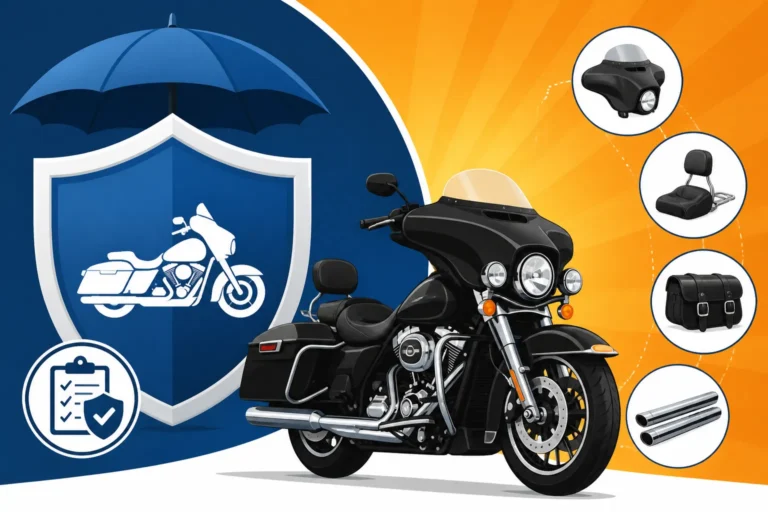
Most riders don't keep their motorcycles completely stock. We add personality, enhance performance, and improve comfort with aftermarket parts and accessories. This is where a standard comprehensive policy can fall short if you're not careful. Many base comprehensive policies only include a very limited amount of coverage for custom parts and accessories, sometimes as low as $1,000 or even $0.
If your stolen bike had a custom exhaust, saddlebags, upgraded navigation system, new wheels, or a unique paint job, you could be looking at thousands of dollars in losses that won't be covered by standard ACV comprehensive coverage. This is why it’s absolutely vital to add specific Accessories & Custom Parts Coverage Explained to your policy. This add-on allows you to schedule a higher amount of coverage, often up to $30,000 or more, specifically for these enhancements. To ensure proper coverage, you'll typically need to provide your insurer with receipts, photos, and a detailed list of all your custom additions. This extra step protects your investment beyond the factory value of your motorcycle.
What Comprehensive Doesn't Always Cover (And What You Need Instead)
While comprehensive coverage is your best friend when it comes to protecting against theft, it's not a magic bullet for every scenario related to your motorcycle or its contents. There are specific situations and items that might not fall under its umbrella, and understanding these gaps is key to truly safeguarding your assets.
Theft of Personal Belongings and Riding Gear
Imagine this: your motorcycle is recovered, but your expensive riding jacket, helmet, custom-fit gloves, and the laptop you had stashed in your saddlebag are all gone. While comprehensive coverage will deal with the motorcycle itself and any attached accessories (if properly covered), it generally does not cover personal belongings that are simply on or in the motorcycle. This is a common misconception that can lead to significant out-of-pocket losses.
Your riding gear – helmets, jackets, boots, and gloves – is often a substantial investment, easily running into hundreds or even thousands of dollars. Similarly, personal items like phones, wallets, cameras, or luggage stored in saddlebags or a top case typically aren't covered by your motorcycle insurance policy. For these items, you'll usually need to rely on your homeowner's or renter's insurance policy. Many standard homeowner's or renter's policies have provisions for personal property theft, even if it occurs away from your home. However, they often come with deductibles and sometimes have limits on high-value items, so it's always a good idea to check your specific policy details. Some specialized motorcycle insurance providers, like Progressive or Dairyland, might offer a specific "personal effects" or "carried contents" add-on, but these are rare and usually have low limits. It's always best to clarify this directly with your agent.
Other Scenarios: Vandalism, Attempted Theft, and Joyriding Damage
Comprehensive coverage is robust, but the nuances of theft-related incidents can sometimes be confusing. Let's say a thief attempts to steal your bike but is unsuccessful, leaving behind a damaged ignition, a broken steering lock, or scratched paint. This damage, even if no parts were successfully stolen, is typically covered by your comprehensive policy. It falls under the umbrella of "vandalism" or "attempted theft" and is exactly what comprehensive coverage is designed for.
Similarly, if your motorcycle is stolen and then recovered, but it's been damaged during a joyride or stripped of parts, your comprehensive policy will cover the repairs or declare it a total loss, depending on the extent of the damage. For example, if your Kawasaki Ninja was hot-wired, ridden recklessly, and then abandoned with a bent fork and a damaged engine, your comprehensive coverage would assess the cost of repairs against the bike's value. If the repairs exceed the total loss threshold (which varies by state and insurer, typically 70-80% of ACV), the insurer will likely declare it a total loss and pay out its value. Understanding these scenarios can help you prepare for the unexpected and ensure you have adequate protection. Our guide on What Happens When Your Motorcycle Is Totaled? offers more information on this process.
The Claims Process for a Stolen Motorcycle
Discovering your motorcycle has been stolen is a stressful experience, but knowing the steps to take can significantly ease the burden and streamline your insurance claim. Time is often of the essence, so acting quickly and methodically is crucial.
Immediate Steps After Discovering Your Bike is Gone
The moments right after you realize your motorcycle is missing can feel chaotic, but a clear plan will help. First and foremost, you need to contact the police. Filing an official police report immediately is not just about alerting law enforcement; it's a mandatory step for any insurance claim related to theft. Provide them with as much detail as possible: your bike's make, model, year, Vehicle Identification Number (VIN), license plate number, color, any unique features or custom parts, and the exact location and time you last saw it. Get a copy of the police report or at least the report number; your insurance company will definitely ask for it.
Once the police report is filed, your next call is to your insurance provider. Don't delay. The sooner you report the theft to them, the better. Have your policy number and the police report information ready. They will open a claim and guide you through their specific procedures. Many insurers, including reputable ones like Geico or Progressive, have dedicated claims departments available 24/7 for these types of emergencies. They'll explain the waiting period (as mentioned, usually 30 days) and what documentation they’ll need from you, which often includes your title, registration, and any keys you still possess. This initial rapid response is vital to get the ball rolling and maximize your chances of a positive outcome. For a deeper dive into the overall claims process, read our article on How to File a Motorcycle Insurance Claim.
What to Expect During the Investigation and Settlement
After you've reported the theft to both the police and your insurer, the waiting period begins. During this time, the police will investigate, and the insurance company will conduct its own inquiries. The insurer's investigation typically involves confirming the police report, verifying your ownership of the motorcycle, and sometimes checking for any red flags that might indicate fraud. This can feel like a slow process, especially when you're anxious about your missing bike, but it's a standard part of the procedure.
If your motorcycle is not recovered within the designated waiting period (e.g., 30 days), or if it is recovered but deemed a total loss due to extensive damage or missing components, the insurance company will move toward settlement. An adjuster will assess the value of your motorcycle based on the terms of your policy (ACV, Agreed Value, or Stated Value). They'll factor in depreciation, mileage, and any covered custom parts or accessories for which you provided documentation. It's crucial during this stage to be prepared to provide all necessary paperwork, such as the title, registration, proof of purchase, and receipts for any aftermarket parts. If you have an Agreed Value policy, the payout will be relatively straightforward. With an ACV policy, however, you might need to provide comparable listings or sales data to ensure you're getting a fair market value for your bike. The payout, minus your deductible, will then be issued to you or your lienholder if the bike is financed. Dealing with this process can be tough, but understanding what to expect can make it a little less daunting. Our piece on How to Negotiate a Motorcycle Total Loss Settlement offers useful advice.
Protecting Your Investment: Beyond Insurance
While comprehensive insurance is an absolute must-have for protecting against theft, it's not the only line of defense. Proactive measures can significantly reduce your risk of becoming a victim, and meticulous documentation ensures a smoother insurance process if the worst happens. Think of these as complementary strategies to your insurance policy.
Deterrents and Security Measures
Even the most robust insurance policy can't bring back the emotional connection you have with your motorcycle, so preventing theft in the first place is always the best strategy. Investing in physical deterrents and smart security practices can make your bike a much less attractive target for opportunistic thieves. Simple steps like always parking in well-lit, high-traffic areas, or better yet, a locked garage, can make a huge difference.
Beyond smart parking, consider equipping your motorcycle with effective security devices. A heavy-duty disc lock or chain lock from brands like Kryptonite or Abus can deter roll-away theft. Alarms with motion sensors and tilt sensors can notify you (and hopefully scare off thieves) if your bike is tampered with. For an even higher level of protection, GPS trackers offer real-time location monitoring, greatly increasing the chances of recovery if your bike is stolen. Many modern motorcycles, especially higher-end models, come with integrated anti-theft systems or can be easily outfitted with aftermarket ones. Always engage your steering lock, and if you have an alarm, make sure it’s armed every time you park. Layering these security measures makes it exponentially harder for thieves, making them more likely to move on to an easier target. When you're shopping for coverage, some insurers, which you can easily compare on platforms like The Zebra, even offer discounts for advanced anti-theft devices.
Tips for Documenting Your Motorcycle and its Value
This is often an overlooked step, but it's one that can save you a tremendous amount of headache and potentially a lot of money during a theft claim. The clearer and more extensive your documentation, the easier it will be for your insurance company to accurately assess the value of your stolen motorcycle and its components. Start with photos and videos: take clear, date-stamped pictures of your motorcycle from all angles, including close-ups of any unique features, custom paint, or aftermarket accessories. A video walkthrough can also be incredibly useful.
Keep meticulous records of everything. This includes your original bill of sale, title, and registration. For any aftermarket parts, upgrades, or custom work, hold onto all receipts, invoices, and even installation records. These documents are crucial for proving the value of your investments, especially if you have custom parts and accessories coverage. Maintain a folder, either physical or digital, with all this information readily accessible. Consider keeping a separate, off-site backup of digital files. This way, if your motorcycle is stolen, you won't be scrambling to recall details or find old receipts, making the claims process much smoother and ensuring you receive a fair settlement based on the true value of your beloved bike. This proactive documentation is a small effort with a potentially massive payoff.
Disclaimer
Please remember that this article provides general information about motorcycle insurance and theft coverage. Insurance policies and laws vary significantly by state and individual circumstances. It is crucial to consult with a qualified insurance professional and review your specific policy documents to understand your coverage, limits, and exclusions. We are not licensed insurance professionals and this content should not be considered legal or financial advice.