What Is OEM Parts Coverage on a Motorcycle?
It’s a nightmare scenario for any motorcycle rider: you’ve been in an accident, and now your beloved bike needs repairs. Beyond the immediate shock and the hassle of dealing with the aftermath, a sinking feeling often kicks in when you start thinking about the actual repair process. Will your bike ever be the same? Will the repair shop use high-quality parts that match the originals, or will they opt for cheaper alternatives? This concern about the quality of replacement parts is a very real source of anxiety for many riders, and it’s precisely why understanding something called OEM parts coverage is so crucial for your peace of mind and the integrity of your ride. This guide is here to break down exactly what OEM parts coverage is, why it matters, and how it can protect your investment.
Understanding Motorcycle Insurance and Parts
When you think about motorcycle insurance, your mind probably jumps to liability, comprehensive, and collision coverage. And while those are indeed the foundational pillars, the devil is often in the details – especially when it comes to the actual parts used to fix your bike after an incident. The quality of those components can make all the difference in how your motorcycle looks, performs, and even holds its value down the road.
The Cost of Repairing a Motorcycle
Let's be brutally honest: motorcycles are not cheap to fix. Even a seemingly minor fender bender can quickly escalate into a repair bill that sends shivers down your spine. For instance, imagine you scrape a fairing, bend a handlebar, or damage an exhaust pipe on your sportbike. A new fairing for a Honda CBR might run you hundreds of dollars, not including paint and labor. A set of OEM handlebars for a Harley-Davidson could easily be in the same ballpark, and if there's any damage to the frame or engine components, you're talking thousands, potentially even tens of thousands.
The financial stress of an accident isn't just about the immediate outlay; it's also about the long-term impact on your finances. Many riders have stories of getting their bike back after a collision, only to find that the repairs felt "off" or that some parts looked subtly different. This often stems from a fundamental difference in how replacement parts are sourced and used by repair shops, dictated by your insurance policy's fine print. Understanding this distinction is the first step in making sure your motorcycle gets the treatment it deserves.
Original Equipment Manufacturer OEM vs Aftermarket Parts
This is where the rubber meets the road, quite literally. When your motorcycle needs new parts, a repair shop generally has two main categories to choose from: Original Equipment Manufacturer (OEM) parts or aftermarket parts.
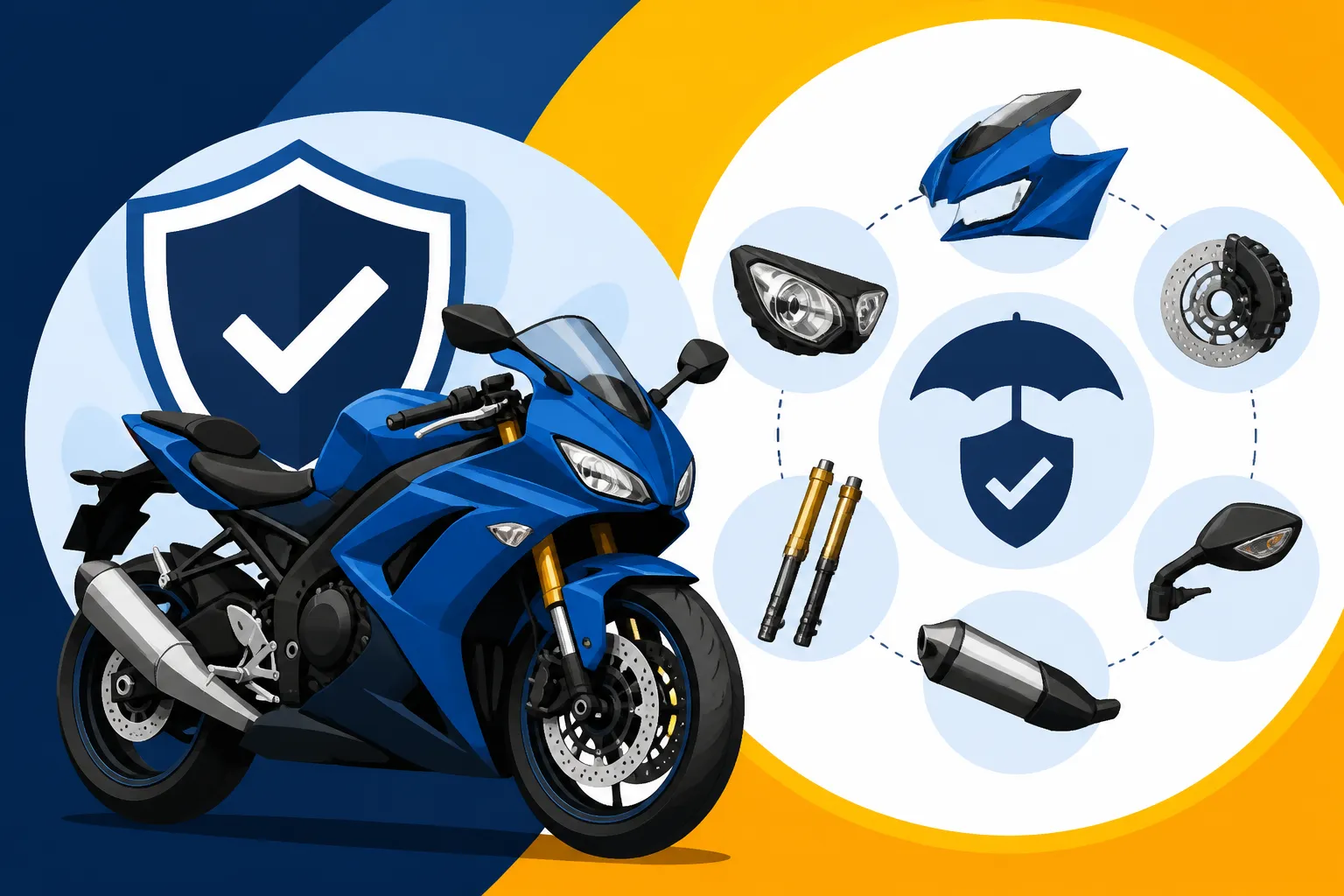
OEM parts are those manufactured by the original company that made your motorcycle, or by a company contracted by them, specifically for your make and model. Think of it like getting a genuine Apple charger for your iPhone versus a generic one from a discount store. The benefits are numerous: perfect fit, guaranteed quality, identical aesthetics, and often, a manufacturer's warranty. Using OEM parts ensures that your bike retains its original specifications, performance characteristics, and even its overall "feel." For riders who are meticulous about their machines, maintaining this factory-fresh standard is paramount. It can also play a significant role when it comes to resale value; potential buyers often prefer a bike repaired with OEM components.
Aftermarket parts, on the other hand, are produced by companies other than the original manufacturer. These can range from cheap generic alternatives to high-performance upgrades. The biggest pro for aftermarket parts is often the cost – they're typically more affordable than OEM parts. They also offer a vast world of customization options, allowing riders to personalize their bikes with unique exhausts, seats, lights, or performance enhancers. However, the cons can be significant. Quality can vary wildly between different aftermarket manufacturers. You might find parts that don't fit perfectly, require modification, or don't last as long as their OEM counterparts. Furthermore, some aftermarket parts might even void certain warranties on your bike. While some aftermarket brands produce high-quality components, the "insurance default" often leans towards the cheapest available option that meets basic safety standards, which may not always be what you'd choose yourself. This is where the choice between "good enough" and "original quality" becomes a very personal and financial decision.
What Exactly Is OEM Parts Coverage?
Given the stark difference between OEM and aftermarket parts, you can see why riders would be concerned about which type ends up on their bike after an insurance claim. This is precisely the problem that OEM parts coverage aims to solve. It’s an optional, but incredibly valuable, add-on that many insurance companies offer.
Defining the Coverage and Its Purpose
OEM parts coverage is an endorsement you can add to your standard motorcycle insurance policy. Its primary purpose is simple: to ensure that if your motorcycle is damaged in a covered incident and needs repairs, the insurer will authorize and pay for the use of brand-new, original equipment manufacturer (OEM) parts, rather than potentially cheaper, generic, or used aftermarket components. It’s important to understand that this isn’t typically a standard inclusion in most basic motorcycle insurance policies. Without it, your insurer generally has the right to use aftermarket, reconditioned, or even salvage parts if they deem them "like kind and quality" to the original and sufficient for repair. This can be a huge point of contention and frustration for riders.
The peace of mind this coverage offers is immense. Imagine the scenario: your beautiful Harley-Davidson Road Glide gets rear-ended, and the saddlebags and fender are damaged. Without OEM parts coverage, the insurer might specify using aftermarket saddlebags or a generic fender, which might not match the original paint, quality, or even the subtle nuances of the factory lines. With OEM coverage, you can rest assured that your insurer will pay for genuine Harley-Davidson parts, preserving the aesthetic integrity and the inherent value of your motorcycle. It's about protecting your investment and ensuring that, as much as possible, your bike returns to its pre-loss condition with the exact components it was built with.
How OEM Coverage Works in a Claim
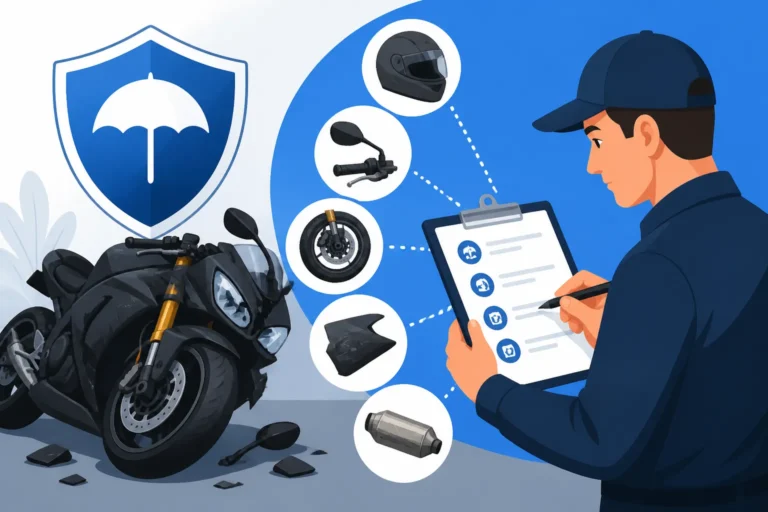
Let's walk through a hypothetical claim scenario to illustrate how OEM parts coverage actually functions. Imagine you're riding your relatively new Kawasaki Ninja ZX-6R, and you have a low-speed slide out on a gravel patch. The fairings are scratched, the clutch lever is snapped, and the exhaust has a ding. You contact your insurance company to file a claim.
The first step, as with any claim, will be for an adjuster to assess the damage. They’ll likely inspect the bike and create an estimate for repairs. If you have OEM parts coverage, this is where it kicks in. The adjuster will be mandated by your policy to include the cost of genuine Kawasaki parts in their estimate. This means they won't automatically default to sourcing a cheaper, unbranded aftermarket fairing or an off-brand lever. Instead, they'll specify the original Kawasaki components. The repair shop, once they receive the approved estimate, will then order those specific OEM parts directly from Kawasaki or an authorized dealer. This process ensures that when your bike is repaired, it's done with parts designed and built for it, maintaining its performance, safety, and visual appeal. This can sometimes lead to longer repair times if specific OEM parts are on backorder, but for many riders, the wait is worth the assurance of quality. It’s a tangible way your policy works to restore your bike to its original glory, rather than just getting it "back on the road" with potentially mismatched or inferior components.
The Benefits and Drawbacks of Choosing OEM Parts Coverage
Deciding whether to add OEM parts coverage to your motorcycle insurance policy isn't a simple yes or no. It comes with a distinct set of advantages and, like any insurance add-on, some considerations that might make it less appealing depending on your individual circumstances and the type of motorcycle you ride.
Why Riders Seek OEM Quality
For many motorcyclists, their bike is more than just transportation; it's a passion, a meticulously chosen machine that represents a significant investment. When something happens to it, the desire to restore it to its original, factory-spec condition is incredibly strong. This is where OEM quality truly shines.
One of the primary reasons riders opt for this coverage is to maintain the resale value of their motorcycle. A bike repaired with genuine manufacturer parts will almost always command a higher price and inspire more confidence in a buyer than one with a patchwork of aftermarket components. Imagine trying to sell a classic Honda Gold Wing and having to explain that half the bodywork is from a third-party supplier – it immediately raises questions about fit, finish, and overall care. Furthermore, OEM parts ensure preserved performance and safety. These parts are designed to work together seamlessly as an integrated system, meeting the manufacturer's stringent safety and performance standards. Swapping out critical components for untested aftermarket versions can subtly alter handling characteristics, braking performance, or structural integrity. For instance, an OEM suspension component is engineered for precise weight distribution and ride dynamics, something an aftermarket alternative might not perfectly replicate. Lastly, there's the aesthetic and emotional factor. Riders invest in a specific brand and model because they love its look, feel, and heritage. Having repairs done with matching OEM fairings, chrome pieces, or engine covers ensures that the bike's original aesthetics are maintained, avoiding mismatched colors or textures that can detract from its overall appeal. It's about ensuring your bike still looks and feels like your bike, just as it did before the unfortunate incident.
The Financial Implications and Potential Downsides
While the allure of OEM quality is strong, it's crucial to look at the practical side, especially the financial implications. The most significant "downside" to OEM parts coverage is, undoubtedly, the increased premium cost. Because OEM parts are more expensive than aftermarket alternatives, your insurance company takes on a greater financial risk by guaranteeing their use. This added risk translates directly into a higher monthly or annual premium for you. It's an extra layer of protection, and like any extra feature, it comes with a price tag. Before adding it, it's wise to get a quote and see how much it truly adds to your overall How Much Is Motorcycle Insurance? 2026 Cost Guide.
Another factor to consider is the availability of OEM parts. For some less common makes, older models, or bikes that are no longer in production, sourcing specific OEM parts can be challenging. There might be long lead times, meaning your bike could be in the shop for an extended period waiting for a part to be shipped from overseas or manufactured. In such cases, an aftermarket part might offer a quicker repair solution, even if it's not the original. Additionally, for riders with older bikes, or those primarily concerned with purely cosmetic damage, the added cost of OEM coverage might not make financial sense. If your bike is a decade old, its value has depreciated significantly, and spending more on premiums to guarantee OEM parts for a scratched tank cover might be overkill when a high-quality aftermarket replacement could do the trick at a fraction of the cost. Ultimately, the decision involves balancing the desire for original quality with the practical realities of cost, availability, and the specific value of your motorcycle.
Here's a quick comparison to help you weigh your options:
| Feature | With OEM Parts Coverage | Without OEM Parts Coverage |
|---|---|---|
| Parts Used | Guaranteed new, original manufacturer parts. | Aftermarket, reconditioned, or used parts (insurer's discretion). |
| Repair Quality | Higher likelihood of factory-spec fit, finish, and performance. | Varies widely, potential for fitment or aesthetic differences. |
| Resale Value | Helps maintain or enhance resale value. | May negatively impact resale value, questions about repair history. |
| Premium Cost | Higher due to increased cost of parts. | Lower, as insurer can use cheaper alternatives. |
| Part Availability | Can sometimes lead to longer repair times if parts are on backorder. | Generally quicker, wider availability of parts. |
| Peace of Mind | High, knowing your bike is restored to original spec. | Lower, uncertainty about final repair quality. |
| Best For | New, high-value, custom, or enthusiast bikes. | Older, lower-value bikes, budget-conscious repairs. |
Who Needs OEM Parts Coverage the Most?
While OEM parts coverage offers significant advantages, it's certainly not a one-size-fits-all solution for every rider or every motorcycle. Certain situations and types of bikes benefit far more from this added protection. Understanding these scenarios can help you decide if it's a worthwhile investment for you.
New and High-Value Motorcycles
If you've recently purchased a brand-new motorcycle, especially one with a hefty price tag, OEM parts coverage should be high on your consideration list. Think about that gleaming new Ducati Panigale, a top-of-the-line BMW K 1600 GT, or a fully loaded Harley-Davidson CVO Street Glide. These aren't just motorcycles; they're substantial investments. When a new bike is damaged, you want it restored to its factory condition, not pieced together with parts that might not quite match the finish or perform to the original specifications. The precision engineering and integrated systems of modern bikes mean that using anything other than OEM parts can compromise not just aesthetics, but also performance and safety.
Furthermore, if your new motorcycle is financed, this coverage becomes even more critical. Lenders often require comprehensive and collision coverage, but they typically don't mandate OEM parts coverage. If your financed bike is damaged and repaired with cheaper aftermarket parts, its actual cash value can depreciate more quickly. This means if it were to be totaled later, the payout might be less, potentially leaving you owing more on your loan than the bike is worth, a concept sometimes addressed by Motorcycle Insurance Requirements for Financed Bikes. Protecting that initial investment and maintaining the bike's value right from the start makes sound financial sense.
Riders Prioritizing Resale Value and Originality
Beyond new bikes, OEM parts coverage is particularly valuable for riders who are meticulous about maintaining their motorcycle's originality and those who anticipate selling their bike in the future. If you own a collectible vintage motorcycle, a limited-edition model, or even a very popular model that holds its value well, preserving its factory components is paramount. For instance, a beautifully restored Honda CB750 will fetch a much higher price if all its parts are original or genuine OEM replacements, compared to one repaired with generic components. Buyers of these types of bikes are often enthusiasts themselves, and they will meticulously inspect the originality of parts.
Even for more common motorcycles, maintaining original components can significantly impact how quickly and for how much you can sell it. When someone is looking at a used bike, they want confidence in its history and condition. Knowing that any repairs were done with OEM parts signals that the previous owner took great care of the machine and valued its integrity. It removes doubts about fitment issues, quality discrepancies, or potential long-term problems that can arise from inconsistent aftermarket parts. For these riders, the slightly higher premium for OEM parts coverage is seen not as an expense, but as an investment in the long-term value and desirability of their cherished ride. Understanding the difference between Agreed Value vs Stated Value vs Actual Cash Value can further highlight how protecting the value of your bike with OEM parts can directly affect your payout in the event of a total loss.
Finding and Adding OEM Parts Coverage to Your Policy
So, you've decided that OEM parts coverage makes sense for you and your motorcycle. The next step is to actually get it added to your policy. This isn't always as straightforward as checking a box online, as not every insurance provider offers this specific endorsement. It requires a bit of diligent shopping and a clear understanding of your current policy.
Shopping for Insurers That Offer This Option
The first thing to understand is that OEM parts coverage is an "extra." It's not a standard component of basic policies, and some insurance companies might not offer it at all. So, if you're serious about this protection, you need to be proactive in your search. Start by checking with your current insurer. Call your agent or customer service line and ask them directly if they offer an OEM parts endorsement for motorcycle policies. If they do, get a quote for how much it will add to your premium.
If your current provider doesn't offer it, or if the cost is prohibitive, it's time to shop around. This is where comparing multiple insurance providers becomes invaluable. Companies like Progressive, Dairyland, and Markel are well-known in the motorcycle insurance space and often have a wider range of specialized endorsements like OEM parts coverage. When you're gathering quotes, be very specific about what you're looking for. Don't just ask for "full coverage"; explicitly state that you want a quote that includes "OEM parts coverage." Using online comparison tools, like those offered by The Zebra, can be a fantastic way to quickly get multiple quotes from different insurers at once, and you can often filter or specify these kinds of add-ons directly in their quote process. This saves you a lot of time calling individual companies and helps you effectively How to Compare Motorcycle Insurance Quotes to ensure you're getting the best value for your desired coverage level.
Integrating OEM Coverage with Other Policy Types
OEM parts coverage doesn't stand alone; it's an enhancement that works in conjunction with your core coverage types. Specifically, it applies to claims made under your comprehensive and collision coverage.
- Collision Coverage: This pays for damage to your motorcycle resulting from an impact with another vehicle or object (like a guardrail or a pothole). If you have OEM parts coverage, any repairs covered by collision will use genuine manufacturer parts.
- Comprehensive Coverage: This handles non-collision damage, such as theft, vandalism, fire, natural disasters (like hail or floods), or hitting an animal. Should your fairing be cracked by a falling tree branch or your turn signal stolen, OEM parts coverage ensures those replacements are genuine.
So, if you only carry liability insurance, OEM parts coverage won't do anything for damage to your own bike, as liability only covers damages you cause to others. You must have comprehensive and collision coverage for OEM parts coverage to be relevant.
It's also important to differentiate OEM parts coverage from Accessories & Custom Parts Coverage Explained. While OEM parts coverage ensures original factory parts are used for repairs, custom parts coverage is a separate endorsement designed to protect any aftermarket modifications or additions you've made to your bike, like custom paint, exhaust systems, saddlebags, or chrome work. If your custom chrome exhaust is damaged, OEM parts coverage won't replace it with another custom chrome exhaust; it would replace it with the original factory exhaust. To protect your customizations, you need specific custom parts coverage. Understanding the distinctions between these add-ons and core coverages like Collision vs Comprehensive Motorcycle Coverage is key to building a robust policy that truly protects your unique ride from all angles.
Real-World Scenarios and Considerations
Understanding OEM parts coverage in theory is one thing, but seeing how it plays out in various real-world situations, and considering its nuances, can really drive home its value (or lack thereof, depending on your bike and priorities). Let’s dive into a few common scenarios and important considerations.
A Minor Fender Bender vs. a Total Loss
The application of OEM parts coverage can vary significantly based on the severity of the damage to your motorcycle.
Minor Fender Bender: Let's say you're at a stoplight, and someone nudges you from behind, causing minor damage to your rear fender and perhaps a turn signal. This is a perfect scenario for OEM parts coverage to shine. Without it, the insurance company might specify a cheaper, aftermarket fender that doesn't quite match the paint or fit perfectly, or a generic turn signal assembly. With OEM coverage, you're looking at a brand-new, factory-painted fender and a genuine turn signal, ensuring your bike looks and feels exactly as it did before the incident. The repair shop will order the correct OEM components, and your bike will be restored to its original glory, assuming the damage falls below the total loss threshold.
Total Loss Scenario: What happens if your motorcycle is deemed a What Happens When Your Motorcycle Is Totaled?? In this case, OEM parts coverage doesn't directly mean the insurer will "repair" it with all OEM parts, because the bike isn't being repaired. Instead, your insurer will pay out the actual cash value (ACV) of your motorcycle, minus your deductible. However, having OEM parts coverage can indirectly influence the ACV calculation. Some policies, or the adjusters themselves, might take into account that had the bike been repaired, it would have been repaired with higher-quality OEM parts, potentially influencing the valuation upwards slightly, though this isn't a guaranteed benefit and varies by insurer and state. If your bike has very low mileage and is almost new, some insurers offer "new bike replacement" or "total loss replacement" coverage, which is a separate endorsement that might pay for a brand-new bike of the same make and model, rather than just ACV. This is a distinct coverage, but both aim to maximize your benefit if a severe incident occurs.
OEM Coverage for Customizations and Modifications
This is a point of common confusion for many riders. If you've spent thousands of dollars tricking out your Harley-Davidson with custom exhaust, chrome, upgraded suspension, and a unique paint job, you might assume OEM parts coverage will protect all that. Unfortunately, that's not quite how it works.
OEM parts coverage specifically ensures that original factory parts are used for repairs. If your custom aftermarket exhaust system is damaged, OEM parts coverage will not replace it with another custom exhaust. It would replace it with the standard, factory exhaust that originally came with your bike. This is a critical distinction. To protect your investment in custom parts and modifications, you need a separate endorsement called Does Motorcycle Insurance Cover Custom Parts? This add-on allows you to declare a specific value for your customizations, and the insurer will cover those up to the declared limit. Often, you'll need to provide receipts or appraisals for these custom components. So, if you've got a stock bike and want to keep it stock, OEM parts coverage is great. If you've got a highly customized machine, you absolutely need both OEM parts coverage (for the original parts that remain) and dedicated custom parts coverage for all your aftermarket additions.
The Age of Your Motorcycle
The age of your motorcycle is another significant factor in determining the value and practicality of OEM parts coverage.
Newer Motorcycles: For bikes that are only a few years old, OEM parts coverage is almost always a smart investment. The value of these bikes is still relatively high, the parts are readily available, and maintaining their original condition directly impacts their value and your enjoyment. The increased premium is typically a small percentage of the bike's overall worth, making it a good protective measure.
Older or Vintage Motorcycles: As your bike ages, the benefits of OEM parts coverage can become a bit more nuanced. For a 15-year-old cruiser with significant mileage, the actual cash value has dropped considerably. The added cost of an OEM parts endorsement might start to outweigh the benefit, especially if the bike is primarily for utilitarian use rather than being a showpiece. Furthermore, Do You Need Comprehensive on an Old Motorcycle? is a question many older bike owners ask, and the answer often depends on how much the bike is worth versus the cost of insurance.
However, there's an exception: collectible or vintage motorcycles. For these bikes, originality is king. If you own a rare 1970s Kawasaki Z1 or a meticulously restored classic Indian, then OEM parts (or period-correct original parts) are absolutely essential. In these cases, even though the bike is old, OEM parts coverage is highly valuable to ensure authenticity during repairs. You might even need specialized classic or vintage motorcycle insurance policies that offer "agreed value" coverage to truly protect these unique machines, but even then, ensuring any repair uses the proper components is vital. It’s all about balancing the depreciated value, the availability of parts, and your personal attachment and goals for the motorcycle.
Cost-Saving Strategies and Smart Choices
It’s easy to get overwhelmed by all the coverage options and the potential costs. After all, nobody wants to pay more than they have to for insurance, even if it’s for important protection like OEM parts coverage. The good news is that there are smart strategies you can employ to help manage your premiums while still getting the robust coverage you need.
Balancing Premiums and Protection
Finding the sweet spot between adequate protection and an affordable premium is an art form, not a science. While adding OEM parts coverage will increase your premium, it doesn't mean you're stuck with an exorbitant bill. One common strategy is to adjust your deductible. A higher deductible on your comprehensive and collision coverage will typically result in a lower premium. Just make sure you choose a deductible amount you're comfortable paying out-of-pocket if you ever need to file a claim. If you have a $1,000 deductible, you’d need to pay that much before your insurance kicks in for a repair, even with OEM parts coverage.
Beyond deductibles, make sure you're taking advantage of all possible discounts. Many insurers offer discounts for completing a motorcycle safety course (like those offered by the Motorcycle Safety Foundation), for being an experienced rider, having a clean driving record, or for bundling your motorcycle insurance with other policies, such as your car or home insurance. Some companies, including The Zebra, make it very easy to compare quotes with various discounts applied, allowing riders to see how different factors impact their final rate. Simply asking your agent or checking the insurer's website for a list of available discounts can sometimes unearth significant savings. For a deeper dive into reducing costs, exploring How to Get Cheap Motorcycle Insurance can provide even more valuable insights into managing your expenses effectively.
Regularly Reviewing Your Coverage Needs
Your motorcycle insurance policy shouldn't be a "set it and forget it" item. Your needs, your bike's value, and even the insurance market can change over time, making an annual review a highly recommended practice.
As your motorcycle ages, its actual cash value (ACV) naturally depreciates. After a few years, the added cost of OEM parts coverage might start to outweigh the remaining value of the bike, especially if it’s not a collectible model. During your annual review, take a moment to honestly assess your bike's current market value versus what you're paying for coverage. You might decide that for an older bike, switching to a policy that allows for quality aftermarket parts is a more financially sensible choice, especially if the premium savings are significant.
Life changes also impact your insurance needs. Have you moved to a new state? Have you paid off your motorcycle loan, meaning full coverage is no longer a lender requirement? Has your financial situation changed, making you more or less sensitive to deductibles? These are all factors that should prompt a re-evaluation of your policy. Don't hesitate to reach out to your insurance provider or use an online comparison tool to get fresh quotes and discuss your changing needs. It’s about being proactive to ensure you're always getting the most relevant and cost-effective protection for your ride. For more guidance on what truly matters for your specific ride, check out our guide on What Motorcycle Coverage Do You Actually Need?.
Disclaimer
Please remember that this information is intended for general guidance only and does not constitute professional insurance advice. Insurance policies and coverages can vary significantly by state, provider, and individual circumstances. It is crucial to read your specific policy documents carefully, or consult with a licensed insurance agent, to understand the exact terms, conditions, limitations, and exclusions of your motorcycle insurance coverage, including any OEM parts endorsements.