Is Motorcycle Insurance Required in Rhode Island?
Navigating the world of motorcycle insurance can feel like trying to find your way through a maze, especially when you're just trying to figure out the basics like whether it's even required where you ride. Many riders in the Ocean State often wonder, "Is motorcycle insurance required in Rhode Island?" It's a valid question, and getting a clear answer is crucial not only for staying legal but also for protecting yourself on the road. This guide will cut through the confusion and explain exactly what you need to know about motorcycle insurance in Rhode Island.
Rhode Island's Motorcycle Insurance Landscape
Riding a motorcycle in Rhode Island offers some truly picturesque routes, from the coastal roads of Newport to the winding backroads of the countryside. But before you hit the open highway, understanding the legal requirements for motorcycle insurance is paramount. It’s not just a suggestion; it's a mandatory part of being a responsible rider in this state, just like it is in most places across the U.S.
Is Motorcycle Insurance Required in Rhode Island?
Let's get straight to it: Yes, motorcycle insurance is absolutely required in Rhode Island. It's not one of the few states that don't require motorcycle insurance. The state mandates that all registered motorcycles carry a minimum amount of liability insurance. This isn't just about covering your own bike; it's primarily about ensuring that if you cause an accident, the other parties involved—whether they're other drivers, passengers, or even pedestrians—have their medical expenses and property damage covered. Without this foundational coverage, you could find yourself in a world of financial hurt after even a minor fender bender, let alone a serious crash. It’s a common misconception that if you’re a safe rider, you won’t need it, but accidents can happen to anyone, no matter how skilled or careful.
Minimum Liability Coverage Explained
Rhode Island operates on what's known as a "fault" system, meaning the at-fault driver is responsible for damages. This is where your liability insurance comes in. The minimum liability coverage in Rhode Island is often expressed as three numbers, similar to what you might see for car insurance: 25/50/25. Let's break down what those numbers actually mean, because it can be a bit confusing at first glance.
- $25,000 for bodily injury liability per person: This is the maximum amount your insurance will pay for medical expenses, lost wages, and pain and suffering for one person injured in an accident you cause. If you accidentally hit another rider, for example, your policy would cover up to $25,000 of their injuries.
- $50,000 for bodily injury liability per accident: This is the total maximum amount your insurance will pay for bodily injuries if more than one person is hurt in an accident you cause. So, if you hit a car with a driver and a passenger, your insurance would pay a total of $50,000 for their injuries, with no more than $25,000 going to any single individual.
- $25,000 for property damage liability per accident: This covers the cost of damage you cause to another person's property, up to $25,000. This could be their vehicle, a fence, a mailbox, or even a building. If you accidentally scrape a parked car, this part of your policy would help cover the repair costs.
It's really important to grasp these numbers because while they represent the legal minimum, they might not be enough to fully cover the costs of a serious accident. Imagine a situation where you cause an accident with a new luxury SUV and the driver sustains significant injuries. $25,000 for property damage might not even cover the cost of repairs for the vehicle, let alone the $25,000 for the injured driver's medical bills. Any costs beyond these limits would come directly out of your pocket. Understanding Minimum Liability Insurance Explained (The Three Numbers) can give you an even deeper insight into these crucial figures.
What Happens If You Ride Without Insurance in Rhode Island?
The temptation to save a few bucks by skipping motorcycle insurance might seem appealing to some, especially if they believe they're a careful rider or only go on short trips. However, the potential consequences of riding uninsured in Rhode Island are far more severe and costly than the premium payments you'd avoid. It's a risk that simply isn't worth taking, as the state takes its financial responsibility laws very seriously.
Penalties and Consequences
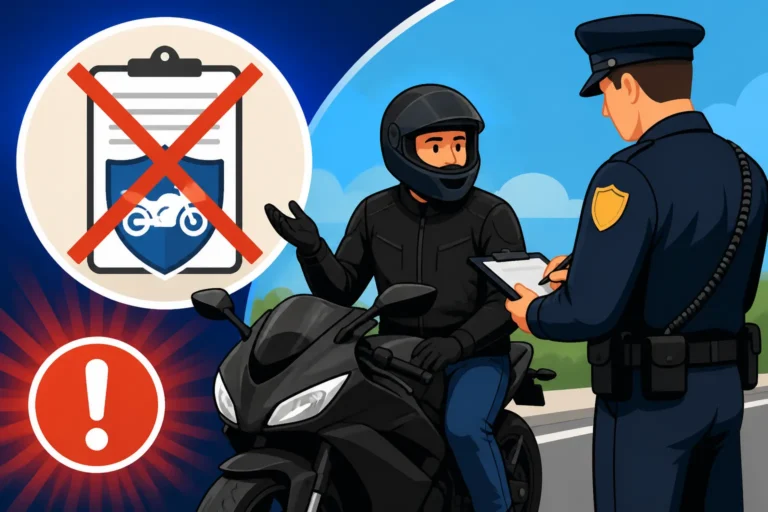
Getting caught riding without valid motorcycle insurance in Rhode Island can lead to a cascade of unpleasant and expensive penalties. It's not just a slap on the wrist; these consequences can significantly impact your finances and your ability to ride legally.
Firstly, you're looking at hefty fines. A first offense for operating an uninsured motor vehicle can carry a fine of $100 to $500. Repeated offenses escalate quickly, with fines potentially reaching $500 to $1,000. On top of that, you could face license and registration suspension. Your operator's license could be suspended for up to 90 days for a first offense, and up to one year for subsequent offenses. This means you wouldn't be able to legally ride any vehicle, let alone your motorcycle, for that period. And let's not forget the possibility of your motorcycle being impounded, which comes with towing and storage fees that add up quickly.
Beyond the immediate legal repercussions, consider the devastating financial impact if you cause an accident. If you're uninsured and at fault, you're personally responsible for all damages and injuries to the other parties. This includes medical bills, lost wages, property damage, and even legal fees if they decide to sue you. A serious accident could easily lead to hundreds of thousands of dollars in costs, potentially bankrupting you. This is why understanding What Happens If You Ride Without Insurance? is so critical.
Financial Responsibility Laws for Riders in Rhode Island
Rhode Island, like many states, has financial responsibility laws designed to ensure that anyone operating a vehicle on public roads can cover the costs of damages they might cause. While insurance is the most common way to satisfy this requirement, the core principle is that you, as the driver, are financially accountable. If you don't carry the minimum liability insurance, the state will hold you personally liable for any damages you cause. This isn't just theory; it plays out in real courtrooms every day.
For example, if you cause an accident with an uninsured motorcycle, the other party's insurance company (or the individual themselves if they also don't have certain coverages) could come after you directly to recoup their losses. They could garnish your wages, place liens on your assets, or force you into a payment plan that severely impacts your financial future for years. The purpose of these laws is to prevent victims of accidents from being left with massive bills and no recourse. It’s a system designed for everyone's protection, and bypassing it leaves you completely exposed. It’s important to remember that these laws apply to all motorized vehicles, so even if you ride a scooter, you might need to check Moped & Scooter Insurance Requirements by State.
Essential Considerations Beyond the Minimum
While meeting Rhode Island's minimum insurance requirements keeps you legal, it's often not enough to truly protect yourself, your motorcycle, and your financial well-being. Thinking beyond just liability is a smart move for any rider, especially given the inherent risks associated with motorcycling. You might be perfectly legal with just the basic coverage, but you certainly won't be fully protected.
Why Basic Liability Might Not Be Enough
Minimum liability coverage, as we discussed, only covers damages and injuries you inflict on others. It does absolutely nothing for you, your bike, or your own injuries if you're at fault in an accident. And if you're not at fault but the other driver is uninsured or underinsured, you could still be left holding the bag for your own medical bills and bike repairs. This is a terrifying thought for many riders, and it's a very real scenario.
Consider these common situations:
- A solo accident: You hit a patch of gravel, lay the bike down, and injure yourself and damage your motorcycle. Minimum liability won't cover your medical bills or the cost to repair your bike.
- Hit by an uninsured driver: Someone without insurance T-bones you. While you might be able to sue them, good luck collecting from someone who couldn't even afford insurance. Your medical bills could be astronomical, and your bike could be totaled. This is where Uninsured & Underinsured Motorist Coverage (UM/UIM) becomes invaluable.
- Theft or vandalism: Your beautifully customized ride is stolen from your garage or vandalized in a parking lot. Liability coverage offers no protection here.
This is why many experienced riders opt for what's commonly referred to as What Does Full Coverage Motorcycle Insurance Mean?. This typically includes collision coverage (for damage to your bike in an accident, regardless of fault) and comprehensive coverage (for non-collision events like theft, vandalism, fire, or hitting an animal). Depending on your bike's value and how much you've invested in it, adding accessories and custom parts coverage can also be a wise decision.
Factors Affecting Your Motorcycle Insurance Rates in Rhode Island
Several elements come into play when insurance companies calculate your motorcycle insurance premiums in Rhode Island. It’s not just a random number they pull out of thin air; it’s a detailed assessment of risk. Understanding these factors can help you make informed decisions and potentially find ways to lower your costs.
- Your Riding History: A clean driving record with no accidents or tickets will generally lead to lower rates. If you've had a few scrapes or citations, particularly for speeding or reckless driving, expect your premiums to be higher.
- Type of Motorcycle: Insurers categorize bikes based on their risk profile. Sport bikes, especially high-performance models, typically have higher insurance costs due to their higher theft rates and greater potential for serious accidents. Cruisers and touring bikes often have lower rates. A Sport Bike Insurance Cost (Why So High) guide can elaborate further.
- Your Age and Experience: Younger riders (typically under 25) and new riders without much experience often face higher premiums, as they are statistically more likely to be involved in accidents. As you gain more experience and age, rates tend to decrease.
- Location: Where you live and primarily store your motorcycle in Rhode Island can impact rates. Areas with higher theft rates or more traffic congestion might see higher premiums.
- Coverage Limits and Deductibles: Choosing higher liability limits or adding comprehensive and collision coverage will increase your premium. However, opting for a higher deductible (the amount you pay out-of-pocket before insurance kicks in) can lower your monthly or annual cost.
- Discounts: Don't forget to ask about discounts! Many insurers offer savings for completing a motorcycle safety course, bundling policies (like your auto and motorcycle insurance), being a homeowner, having anti-theft devices, or being a veteran. Exploring Motorcycle Insurance Discounts You're Missing could save you a significant amount.
Getting the Right Coverage for Your Rhode Island Ride
Choosing the right motorcycle insurance isn't about finding the absolute cheapest policy; it's about finding the best value that offers adequate protection for your specific needs as a rider in Rhode Island. There are many ways to approach this, from smart shopping to understanding the nuances of policy options.
Tips for Finding Affordable Rhode Island Motorcycle Insurance
Even though insurance is a necessity, that doesn't mean you have to break the bank. There are several strategies you can employ to make your motorcycle insurance more affordable without sacrificing critical coverage.
- Shop Around Aggressively: This is perhaps the most important tip. Don't just get one quote. Reach out to multiple insurance providers like Progressive, Geico, Dairyland, and Markel. Each company uses its own algorithms and risk assessments, so quotes can vary wildly for the exact same coverage. A tool to How to Compare Motorcycle Insurance Quotes can be incredibly helpful here.
- Take a Motorcycle Safety Course: Completing a Motorcycle Safety Foundation (MSF) approved course not only makes you a safer rider, but most insurers offer a discount for it. It's a win-win!
- Increase Your Deductibles: If you have an emergency fund set aside, consider raising your deductibles for collision and comprehensive coverage. This will lower your premium, but remember you'll pay more out-of-pocket if you need to file a claim.
- Bundle Your Policies: If you already have car insurance, homeowner's insurance, or renter's insurance with a particular company, ask about a multi-policy discount when you add your motorcycle policy. Many companies incentivize bundling.
- Review Your Coverage Annually: Your needs change, and so do insurance rates. Re-evaluate your policy every year or two to ensure you still have the right coverage for your bike's current value and your financial situation.
- Maintain a Clean Driving Record: This goes without saying, but avoiding accidents and traffic violations is one of the best ways to keep your insurance rates low over the long term.
Understanding Your Policy Options
Beyond the basic liability, there are several other types of coverage that can provide crucial protection for Rhode Island riders. Understanding what each one offers allows you to tailor a policy that genuinely meets your needs.
- Collision Coverage: This pays for damage to your motorcycle if it collides with another vehicle or object, or if you lay it down in a single-vehicle accident. It's vital if you want your bike repaired or replaced after an incident where you're at fault, or if the at-fault driver is uninsured.
- Comprehensive Coverage: This is your protection against non-collision events. Think theft, vandalism, fire, natural disasters, or even hitting an animal. If your bike is parked and gets damaged, comprehensive coverage is usually what kicks in. Many riders also wonder, Does Motorcycle Insurance Cover Theft? – yes, this is typically under comprehensive.
- Uninsured/Underinsured Motorist (UM/UIM) Coverage: This is incredibly important in Rhode Island and anywhere else, really. If an uninsured or underinsured driver hits you, this coverage helps pay for your medical expenses and, in some cases, damage to your motorcycle. It's your financial safety net when others aren't adequately insured.
- Medical Payments (MedPay) or Personal Injury Protection (PIP): Rhode Island is a fault state, so MedPay isn't universally offered or required like it is in some no-fault states. However, if available, MedPay can cover medical expenses for you and your passengers after an accident, regardless of who was at fault. This can be a huge relief, especially with rising healthcare costs.
- Accessories and Custom Parts Coverage: If you've invested in aftermarket parts, custom paint, or expensive gear, standard collision or comprehensive might not cover their full value. This add-on ensures your unique customizations are protected. This is particularly relevant for riders who might want to know Does Motorcycle Insurance Cover Custom Parts?.
- Roadside Assistance: For those long rides or unexpected breakdowns, roadside assistance coverage can be a lifesaver, covering towing, fuel delivery, or flat tire service.
Here's a quick summary of Rhode Island's minimum requirements and common additional coverages:
| Coverage Type | Rhode Island Minimum Requirement | What It Covers | Who It Protects |
|---|---|---|---|
| Bodily Injury Liability | $25,000 per person / $50,000 per accident | Injuries to others if you're at fault | Other people |
| Property Damage Liability | $25,000 per accident | Damage to others' property if you're at fault | Other people's property |
| Collision | Not required | Damage to your motorcycle in an accident | Your motorcycle |
| Comprehensive | Not required | Damage to your motorcycle from non-collision events (theft, fire, etc.) | Your motorcycle |
| Uninsured/Underinsured Motorist | Not required (but highly recommended) | Your injuries/damage if hit by an uninsured/underinsured driver | You and your passengers |
| Medical Payments | Not required (but available) | Medical expenses for you and your passengers | You and your passengers |
Making an informed decision about your motorcycle insurance in Rhode Island means balancing legal requirements with your personal risk tolerance and financial situation. It’s an investment in peace of mind, allowing you to focus on the joy of the ride rather than worrying about what might happen if things go sideways.
Disclaimer
Please remember that insurance laws and requirements can change. This information is intended for general guidance and informational purposes only, and does not constitute legal or insurance advice. Always consult with a qualified insurance professional or the Rhode Island Department of Motor Vehicles to get the most accurate and up-to-date information for your specific situation.