How to File a Motorcycle Insurance Claim in Maryland
Riding the open roads of Maryland offers an unparalleled sense of freedom, but that peace of mind can quickly turn to panic if you find yourself involved in an accident. The aftermath of a motorcycle crash is disorienting, and figuring out how to navigate the complex world of insurance claims, especially with Maryland's specific laws, can feel overwhelming. This guide is designed to walk you through the essential steps to file a motorcycle insurance claim in Maryland, ensuring you protect your rights and get the compensation you deserve.
Understanding Maryland's Motorcycle Insurance Landscape for Claims
Before diving into the claims process itself, it's crucial to understand the legal framework that governs motorcycle insurance and accidents in Maryland. These state-specific rules significantly impact how your claim will proceed and what you can expect.
At-Fault vs. No-Fault in Maryland
Maryland operates under an "at-fault" system when it comes to vehicle accidents, and this applies directly to motorcycles. What does this mean for you? Simply put, the person who is determined to be at fault for the accident is generally responsible for paying for the damages and injuries incurred by the other parties through their insurance policy. This is a significant distinction from "no-fault" states, where each driver typically files a claim with their own insurance company regardless of who caused the accident.
In a practical sense, if you're involved in a collision in Maryland, your insurance company, or the other driver's insurer, will investigate to determine fault. This investigation involves reviewing police reports, witness statements, accident reconstructions, and photographic evidence. The determination of fault is paramount because it dictates whose insurance will be primarily responsible for covering the damages. It's not uncommon for insurance companies to dispute fault, which can add layers of complexity and frustration to an already stressful situation. This is where comprehensive documentation from the scene of the accident becomes incredibly valuable.
A critical, and often frustrating, aspect of Maryland law is its pure contributory negligence rule. Unlike most other states that have adopted comparative negligence laws, Maryland's contributory negligence means that if you are found to be even 1% at fault for the accident, you could be barred from recovering any damages from the other party. This isn't just a minor detail; it's a huge hurdle that riders often face and why having a clear understanding of the accident's circumstances and strong evidence is so vital. It’s a tough pill to swallow for many, and it makes proving the other party’s sole fault incredibly important in Maryland.
Minimum Coverage Requirements in the Old Line State
Maryland mandates specific minimum liability insurance coverage for all registered vehicles, including motorcycles. These minimums are designed to protect other drivers and their property in an accident where you are at fault. It’s important to remember these are minimums, and they might not be enough to cover severe damages or injuries, especially with medical costs continually on the rise.
As of 2024, Maryland's minimum liability coverage requirements are:
- $30,000 for bodily injury per person: This covers medical expenses, lost wages, and pain and suffering for one person injured in an accident where you are at fault.
- $60,000 for bodily injury per accident: This is the maximum amount your policy will pay for all injuries in a single accident where you are at fault, regardless of how many people are injured.
- $15,000 for property damage per accident: This covers damages to another person's property, like their vehicle or a fence, in an accident where you are at fault.
Beyond these basic liability coverages, Maryland also requires Personal Injury Protection (PIP) unless you specifically waive it, and Uninsured/Underinsured Motorist (UM/UIM) coverage. PIP covers medical expenses and lost wages for you and your passengers, regardless of fault, up to a certain limit. Given the inherent risks of motorcycling, many riders wisely choose to carry higher liability limits and ensure they have robust UM/UIM coverage, which protects you if the at-fault driver has no insurance or insufficient coverage. You can learn more about Uninsured & Underinsured Motorist Coverage UM/UIM coverage and why it's so important for riders. Many reputable insurance providers like Progressive offer a variety of coverage options tailored to motorcycle riders, often including higher limits and additional protections beyond the state minimums.
While the state minimums might seem like a way to save money on your premiums, they often leave riders severely underprotected. Imagine a scenario where a rider causes an accident that totals another vehicle and sends multiple occupants to the hospital. The minimum $15,000 for property damage won't even cover a new car, and the $60,000 for bodily injury would quickly be exhausted. The remaining costs? Those could come directly out of your pocket. This is why most financial advisors and seasoned riders recommend significantly higher coverage limits, often $100,000/$300,000/$50,000, to ensure genuine financial protection. Having to grapple with an accident is hard enough without the added stress of crushing debt from insufficient coverage.
Immediate Steps After a Motorcycle Accident in Maryland
The moments immediately following a motorcycle accident are often chaotic and frightening. However, taking the right actions during this critical time can significantly impact the success of your insurance claim and your overall recovery.
Prioritizing Safety and Seeking Medical Attention
Your absolute top priority after any accident is your safety and the safety of others. First, if you or anyone else is injured, even if it feels minor, call 911 immediately. Don't try to be tough; adrenaline can mask serious injuries, and waiting to seek medical attention can not only harm your health but also weaken your insurance claim. Insurance companies often look suspiciously at delayed medical care, arguing that your injuries might not be directly related to the accident. Even if you walk away feeling fine, it's wise to get checked out by a medical professional as soon as possible. Many serious injuries, like concussions or internal bruising, don't manifest symptoms for hours or even days.
Once immediate safety and medical needs are addressed, if it's safe to do so, move your motorcycle and yourself to the side of the road to avoid further danger from oncoming traffic. If your bike isn't rideable or moving it would worsen damage or risk injury, leave it in place and activate your hazard lights, if possible. Place warning triangles or flares if you have them. Your physical well-being always comes first, and a solid paper trail of medical treatment, starting from the day of the accident, is invaluable for any personal injury claim. This initial medical evaluation establishes a baseline for your injuries and links them directly to the accident event.
Gathering Critical Information at the Scene
This step is where your inner detective needs to shine, as the details you collect can be the cornerstone of your insurance claim. With the shock and adrenaline, it's easy to forget things, so try to be methodical.
- Exchange Information: Get the other driver's full name, contact information (phone and email), insurance company name and policy number, driver's license number, and vehicle license plate number. Don't just trust them; take photos of their physical insurance card and driver's license.
- Witness Information: If anyone saw the accident, politely ask for their names and contact information. Independent witnesses can provide unbiased accounts that are incredibly valuable if there are disputes over fault.
- Document the Scene with Photos and Videos: This is perhaps the most crucial part. Use your smartphone to take as many pictures and videos as possible. Capture the overall scene, the position of all vehicles, damage to your motorcycle and the other vehicle(s), skid marks, road conditions, traffic signs, nearby landmarks, and any debris on the road. Don't forget to take photos from multiple angles and distances. These visual records provide irrefutable evidence that can counter conflicting statements from the other party or the insurance company.
- Notes: Write down everything you remember about the accident: the time, date, weather conditions, direction of travel, and how you believe the accident occurred. Also, make notes about any statements made by the other driver. Even simple observations like "the other driver admitted they didn't see me" can be powerful evidence.
The goal here isn't to play judge and jury, but to provide your insurance company and, if necessary, your legal representative, with a clear, factual account backed by evidence. This meticulous documentation also proves invaluable when determining What Happens If You Ride Without Insurance? in Maryland, as a lack of insurance can complicate even the most straightforward claims.
Notifying Law Enforcement and Your Insurer
After ensuring safety and gathering initial information, two crucial notifications must be made: to the police and to your own insurance company.
- Contacting Law Enforcement: In Maryland, you should report any accident involving injury, death, or significant property damage (generally over $1,500) to the police. Even if the damage seems minor, it's often best to call, especially since you might not fully assess damage or injury at the scene. The police will create an official accident report, which is an impartial record of the incident. This report will include crucial details like the date, time, location, involved parties, and often, an initial determination of fault. Be cooperative and provide accurate information, but avoid speculating or admitting fault. If the police don't come to the scene for minor damage, you might need to file a self-report with the Maryland Motor Vehicle Administration (MVA) within 15 days.
- Notifying Your Insurance Company: You should notify your own motorcycle insurance provider as soon as reasonably possible after the accident, typically within 24-48 hours. Don't wait until you're fully recovered or your bike is repaired. Even if the other driver is clearly at fault, your policy might have requirements for timely notification. Provide them with the basic facts of the accident, the other driver's information, and let them know you'll be seeking medical attention or repairs. Do not give a recorded statement until you've had a chance to fully understand your injuries and policy, and consider consulting with legal counsel. Your insurance company is there to help, but they are also a business, and early, unconsidered statements can sometimes be used against you. Companies like The Zebra can help you compare policies and understand what's covered before an accident occurs, so you're better prepared if one does happen. Remember, timely notification helps prevent issues like a Motorcycle Insurance Grace Period When Buying from impacting your ability to file a claim.
Navigating the Claims Process with Your Maryland Insurance Company
Once the immediate aftermath is handled, the real work of the insurance claim begins. This stage involves significant back-and-forth with insurance adjusters and requires diligent record-keeping on your part.
Understanding Your Policy and Coverage Types
Before you speak extensively with an insurance adjuster, take the time to review your own motorcycle insurance policy. Seriously, read it. It's easy to sign up for a policy and then forget the specifics until you really need them. Understanding what you're covered for, and to what extent, will empower you during discussions with adjusters.
Key coverage types you should be familiar with include:
- Liability Coverage: As discussed, this covers damages and injuries you cause to others if you're at fault.
- Collision Coverage: This pays for damages to your own motorcycle resulting from a collision with another vehicle or object, regardless of fault. This is critical for getting your bike repaired or replaced.
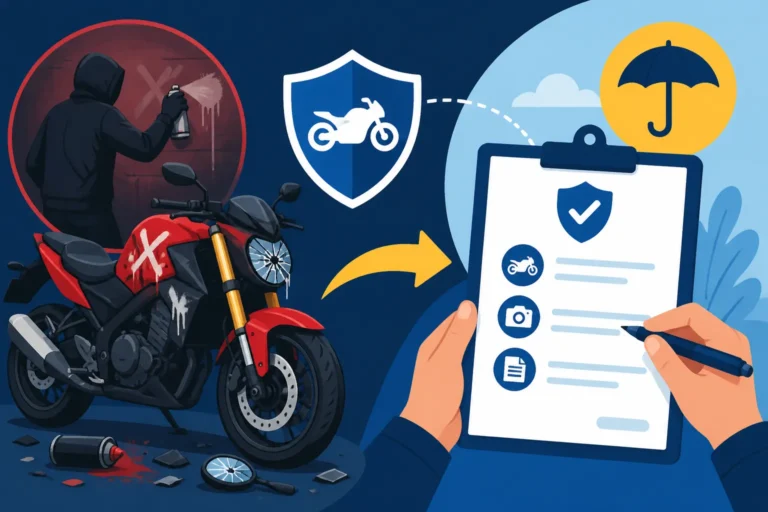
- Comprehensive Coverage: This covers non-collision damages to your motorcycle, such as theft, vandalism, fire, natural disasters (like hail or floods), or hitting an animal. If your bike was damaged in a non-collision event, this is the coverage you'd tap into. You can read more about What Is Comprehensive Motorcycle Insurance?.
- Uninsured/Underinsured Motorist (UM/UIM) Coverage: Absolutely vital in Maryland. If the at-fault driver either has no insurance or not enough insurance to cover your damages and medical bills, your UM/UIM coverage steps in to protect you. Given that Maryland consistently has a noticeable percentage of uninsured drivers, this coverage is a lifesaver.
- Medical Payments (MedPay) or Personal Injury Protection (PIP): These cover medical expenses for you and your passengers, regardless of who was at fault. Maryland requires PIP unless waived, and it can be invaluable for immediate medical costs, especially if fault is disputed or the other driver's insurance is slow to pay.
- Custom Parts and Accessories Coverage: If you've invested in aftermarket parts, custom paint, or expensive gear, ensure your policy covers these items. Standard policies often have low limits for customization, or none at all, unless you've specifically added this coverage. Many riders have unfortunately found out the hard way that their custom exhaust or fairings weren't covered.
Knowing what your policy offers will help you understand what you can claim and prevent the insurance company from lowballing you or denying coverage you rightfully have. It can also help you determine if you need What Does Full Coverage Motorcycle Insurance Mean? to protect your investment.
Documenting Damages and Injuries
The success of your claim hinges on thoroughly documenting everything. This isn't just about the initial photos; it's an ongoing process.
- Motorcycle Damage: Obtain detailed repair estimates from reputable motorcycle repair shops. If your bike is severely damaged, the insurance company might declare it a "total loss." In this case, you'll need to understand how they value your bike (Actual Cash Value vs. Agreed Value vs. Stated Value). Always get at least two estimates if possible. Take photos of all damage, especially any that weren't visible at the accident scene but became apparent later (e.g., hidden frame damage). Keep all receipts for towing, storage, and any immediate repairs you had to make to secure the bike.
- Medical Injuries: This is incredibly important. Keep meticulous records of all medical treatment, including doctor's visits, hospital stays, physical therapy, chiropractic care, prescriptions, and any medical equipment. Request copies of all medical bills and records. If you miss work due to your injuries, keep detailed records of lost wages, including pay stubs and a letter from your employer confirming your time off. Document how your injuries have impacted your daily life, your ability to ride, and any pain and suffering you're experiencing. A journal can be helpful for tracking pain levels, limitations, and emotional distress. Remember, the longer you wait to document injuries, the harder it becomes to connect them directly to the accident. Your medical history and consistent care are central to establishing the validity and extent of your personal injury claim.
Working with the Adjuster and Settlement Negotiations
The insurance adjuster is the person assigned by the insurance company to investigate your claim and determine what they will pay. They are not necessarily on your side, so approach interactions with caution and clarity.
- Initial Contact: Be prepared to provide the basic facts of the accident. Stick to what you know. Avoid guessing, speculating, or admitting fault. If you've been injured, clearly state that you've sought medical attention and are continuing to receive care. Do not give a recorded statement until you've consulted with an attorney, especially in Maryland with its contributory negligence rule.
- Providing Documentation: Promptly provide all requested documentation: police reports, photos, witness statements, repair estimates, and medical records. Keep copies of everything you send to the insurance company.
- Negotiating a Settlement: Once the adjuster has evaluated your claim, they will likely make an initial settlement offer. This offer is often lower than what you might be entitled to. Don't feel pressured to accept it immediately. Review it carefully. If you have significant injuries, high medical bills, or your bike is totaled, it's highly advisable to have a personal injury attorney review the offer. They can help you understand the true value of your claim, including pain and suffering, future medical costs, and lost earning capacity, which are often overlooked or undervalued by adjusters. Be prepared to counter-offer with your own calculations and supporting documentation. This back-and-forth is a normal part of the process, and a knowledgeable attorney can be invaluable in these negotiations, especially if the adjuster seems difficult or is denying elements of your claim. This is also where understanding what How to File a Motorcycle Insurance Claim effectively means.
Specific Scenarios and Maryland Considerations
Maryland's unique legal landscape adds layers of complexity to motorcycle insurance claims. Being aware of these specific scenarios and considerations can significantly influence your claim's outcome.
Dealing with Uninsured/Underinsured Motorists in Maryland
It's an unfortunate reality that many drivers in Maryland, despite state law, operate without adequate insurance. This poses a significant risk to motorcyclists, who are particularly vulnerable in accidents. If you're involved in a crash with an uninsured or underinsured motorist (UM/UIM) in Maryland, your UM/UIM coverage becomes your primary defense.
If the at-fault driver has no insurance at all, your uninsured motorist coverage will kick in to pay for your medical expenses, lost wages, and property damage, up to your policy limits. If the at-fault driver has some insurance, but their limits are too low to cover your full damages, your underinsured motorist coverage will make up the difference. For example, if your medical bills are $70,000 and the at-fault driver only has the minimum $30,000 bodily injury coverage, your underinsured motorist coverage would cover the remaining $40,000 (up to your policy limit).
The process for filing a UM/UIM claim is generally similar to a standard claim, but you'll be working with your own insurance company to cover damages that would typically come from the other driver's insurer. This is why selecting robust UM/UIM limits is paramount for Maryland riders. Don't skimp on this coverage; it's a critical safety net against irresponsible drivers. Many riders have found themselves in dire financial straits after an accident with an uninsured driver, wishing they had opted for higher UM/UIM limits. When considering your options, checking out different providers through a comparison site like The Zebra can help you find policies with strong UM/UIM options.
When to Seek Legal Counsel in Maryland
Given Maryland's pure contributory negligence rule, consulting with a personal injury attorney after a motorcycle accident is often a wise decision, even if you initially believe the accident was straightforward. Here are situations where legal counsel becomes particularly critical:
- Serious Injuries: If you've sustained significant injuries requiring extensive medical treatment, rehabilitation, or resulting in long-term disability, an attorney can help ensure all your current and future medical costs, lost wages, and pain and suffering are accurately calculated and recovered.
- Disputed Fault: If the other driver or their insurance company disputes who was at fault, an attorney can gather evidence, interview witnesses, and present a strong case to protect you from Maryland's contributory negligence rule, which could otherwise bar you from any recovery.
- Lowball Settlement Offers: If the insurance company offers a settlement that doesn't seem to cover your damages or adequately compensate you, a lawyer can negotiate on your behalf. They know the true value of claims and are skilled at dealing with aggressive insurance adjusters.
- Uninsured/Underinsured Motorist Claims: While you're dealing with your own insurance company, a lawyer can ensure they handle your UM/UIM claim fairly and don't try to minimize your payout.
- Complex Accidents: Accidents involving multiple vehicles, commercial vehicles, or unclear circumstances often benefit from a lawyer's expertise in investigation and negotiation.
Many personal injury attorneys offer free initial consultations, so there's no harm in discussing your case. They typically work on a contingency basis, meaning they only get paid if you win your case, taking a percentage of the settlement or award. This makes legal representation accessible even if you don't have upfront funds. Seeking timely legal advice, for instance, after a car accident where you were a motorcycle passenger, is crucial for Motorcycle Insurance Requirements for Passengers.
Common Pitfalls to Avoid During a Claim
Navigating an insurance claim can feel like walking through a minefield. Avoiding these common mistakes can save you a lot of headache and protect your financial recovery:
- Admitting Fault (Even Partially): Never, ever admit fault or apologize at the scene of an accident. Even a simple "I'm sorry" can be twisted and used against you later by insurance companies trying to invoke Maryland's contributory negligence rule. Stick to the facts.
- Delaying Medical Treatment: As mentioned, putting off medical care can harm your health and your claim. Seek immediate attention, and follow through with all recommended treatments. Gaps in treatment can lead adjusters to question the severity or origin of your injuries.
- Providing a Recorded Statement Without Counsel: Insurance adjusters might ask for a recorded statement early on. While you must cooperate with your own insurer, it's generally best to decline a recorded statement until you've spoken with a lawyer. They can advise you on what information to share and how to phrase it to avoid inadvertently damaging your claim.
- Signing Releases Without Understanding: Never sign any release forms or documents from the other driver's insurance company without fully understanding what you're signing, and ideally, having an attorney review them. You could unknowingly waive your rights to future compensation.
- Not Documenting Everything: Lack of detailed documentation (photos, medical records, repair estimates, communications) can significantly weaken your claim. Be diligent in keeping records of everything related to the accident and your recovery.
- Accepting the First Offer: Insurance companies are businesses, and their first offer is usually designed to be in their best interest, not yours. Don't feel pressured to accept it. You have the right to negotiate and, with proper documentation or legal help, pursue a fair settlement.
- Repairing Your Bike Before Inspection: If your motorcycle is damaged, allow the insurance adjuster to inspect it before you authorize any significant repairs, unless it's an emergency to prevent further damage. This ensures they can properly assess the damage for the claim. You don't want to inadvertently mess up your chances of proving What Happens When Your Motorcycle Is Totaled?.
By being proactive, informed, and cautious, you can navigate the Maryland motorcycle insurance claims process more effectively and increase your chances of a fair resolution.
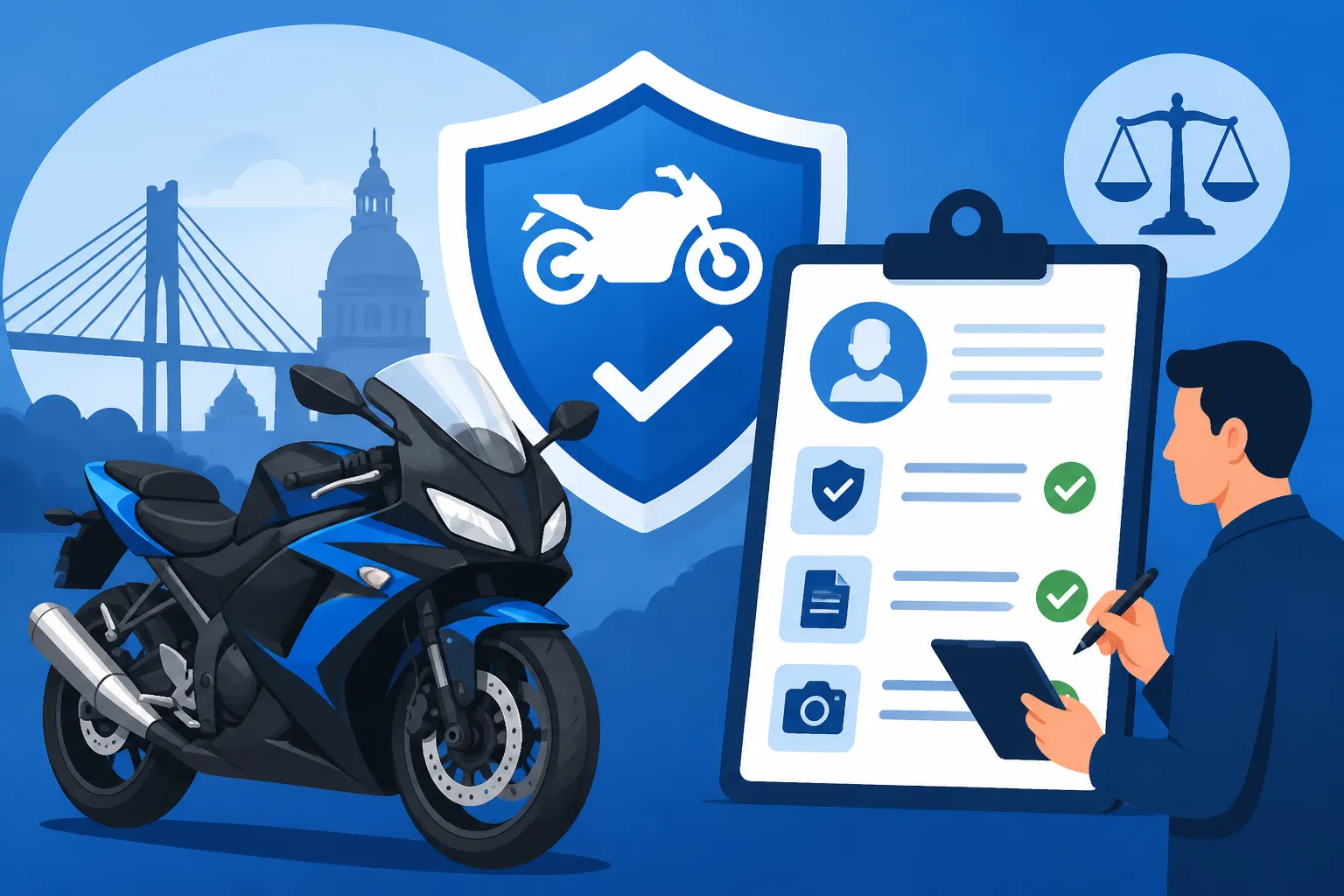
Motorcycle Accident Claim Checklist for Maryland Riders
To help you keep track of all the steps, here's a handy checklist you can use if you ever find yourself in the unfortunate situation of filing a claim in Maryland.
| Step | Action | Important Notes |
|---|---|---|
| 1. Immediate Safety & Medical | Assess injuries, call 911 for emergencies. Move to safety if possible. Seek medical attention ASAP, even if injuries seem minor. | Your health is paramount. Adrenaline masks pain. Medical documentation immediately links injuries to the accident. |
| 2. Secure the Scene | Activate hazards. Use flares/triangles. Do NOT admit fault or say "sorry." | Maryland's contributory negligence rule means even 1% fault can bar recovery. Protect your claim. |
| 3. Gather Information | Exchange details (name, contact, insurance, license, plate) with ALL involved parties. Get witness names & contacts. Take extensive photos/videos of scene, vehicles, injuries, road conditions. Note down everything you remember. | Detailed evidence is critical for determining fault and proving your claim. Don't rely solely on the police report. |
| 4. Notify Authorities | Call police (911 or non-emergency) to file an official accident report, especially if injuries or significant damage. If police don't respond, file a self-report with Maryland MVA within 15 days. | The police report is an impartial record. Failure to report can lead to penalties. |
| 5. Contact Your Insurer | Notify your motorcycle insurance company (e.g., Progressive) as soon as possible (within 24-48 hours). Provide basic facts. Do NOT give a recorded statement without legal counsel. | Timely notification is often required by your policy. Your insurer can guide you, but remember they have their own interests. |
| 6. Document Damages & Injuries | Obtain multiple repair estimates for your motorcycle. Keep ALL medical records, bills, prescription receipts, and therapy notes. Document lost wages. Keep a pain journal. Retain receipts for all accident-related expenses (towing, rental, gear replacement). | Thorough documentation is key to valuing your claim accurately and ensures nothing is overlooked. |
| 7. Review Your Policy | Understand your coverage limits and types (Liability, Collision, Comprehensive, UM/UIM, MedPay/PIP, Custom Parts). | Knowing what you're entitled to will prevent lowball offers and help you negotiate effectively. Refer to Types of Motorcycle Insurance Coverage Explained for a detailed breakdown. |
| 8. Work with Adjuster | Cooperate by providing requested documentation. Be polite but firm. Avoid speculation. Do NOT accept the first settlement offer without careful consideration, especially for severe injuries. | Adjusters work for the insurance company. Be prepared to negotiate. |
| 9. Consider Legal Counsel | If injuries are serious, fault is disputed, or settlement offers are unfair, consult a Maryland personal injury attorney. | An attorney can navigate Maryland's complex laws (like contributory negligence) and ensure you receive fair compensation. Consider if you need What Happens if You Are Hit by an Uninsured Driver. |
| 10. Finalize Settlement | Review all settlement documents carefully. Do not sign anything that waives your rights to future claims if your injuries haven't fully resolved. | Ensure you are fully compensated for all past, present, and foreseeable future damages before signing off on the claim. If your bike is financed, understand What Happens if You Total a Financed Motorcycle?. |
Navigating a motorcycle insurance claim in Maryland can be challenging due to its unique laws and the inherent complexities of insurance processes. By understanding your rights, acting swiftly, and documenting everything meticulously, you can protect your interests and focus on what truly matters: your recovery. Remember, resources like The Zebra can help you find and compare various insurance policies, ensuring you have the right coverage before an accident happens, making the claims process smoother.
Disclaimer
This article is for general informational purposes only and does not constitute professional advice. Laws, prices and regulations vary by location and change over time. Consult a qualified professional for guidance on your specific situation.