What Happens if I Crash Without Insurance?
It's a terrifying thought for any rider: what happens if you crash and you don't have motorcycle insurance? The truth is, it’s a situation fraught with severe financial, legal, and personal consequences that can feel overwhelming and impossible to navigate. This guide will walk you through the harsh realities of riding uninsured, detailing exactly what you could face in the unfortunate event of an accident, and why having proper coverage isn't just a legal requirement, but a lifeline.
The Immediate Aftermath: What Happens at the Scene?
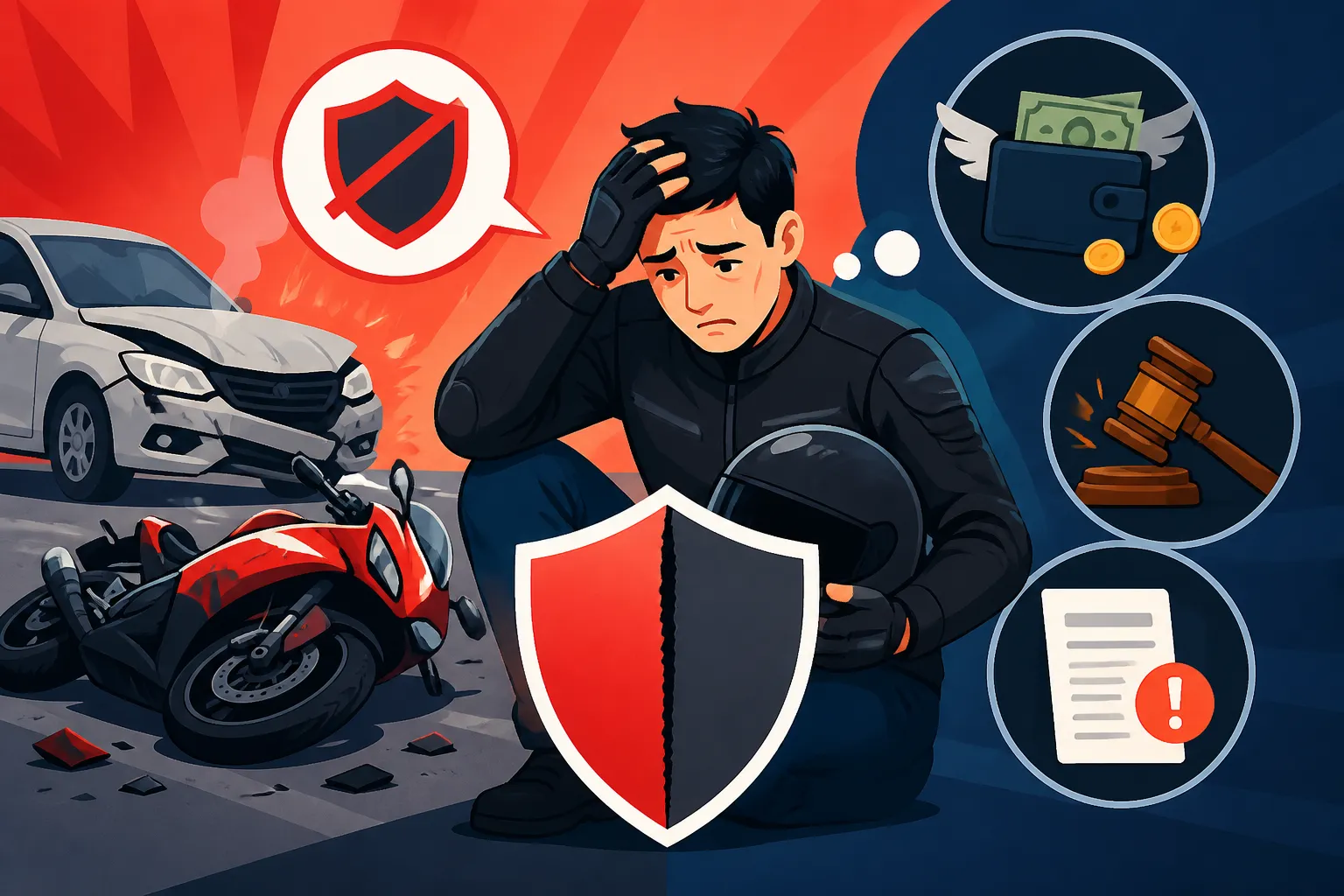
When you’re involved in a motorcycle crash, regardless of fault, the first moments are often chaotic. If you’re riding without insurance, that chaos quickly escalates into a nightmare scenario once law enforcement arrives and the question of coverage comes up. It’s not just a minor inconvenience; it’s a critical turning point that can set the stage for years of trouble.
Law Enforcement Involvement and Penalties
The moment an officer arrives on the scene, one of the first things they'll ask for is your proof of insurance and registration. If you can't provide it, you're immediately facing legal trouble that goes beyond the accident itself. In almost every state, riding without motorcycle insurance is illegal, and the penalties can be steep.
For instance, in states like California, Texas, and Florida, the penalties for riding without insurance aren't just a slap on the wrist. You could be looking at significant fines, which can range from a few hundred to over a thousand dollars for a first offense. But it doesn't stop there. Many states also have laws that mandate the immediate suspension of your driver's license, revocation of your motorcycle registration, and even impoundment of your bike. Imagine your damaged motorcycle being towed away, not just for repairs, but because it's now illegal for you to operate it. This creates a whole new layer of stress and expense, as you’ll be responsible for towing and storage fees on top of everything else. It’s a very harsh reality, but it’s crucial to understand the immediate legal implications. You can learn more about the specific penalties you might face in different areas by checking out articles like What Happens If You Ride Without Insurance?.
Dealing with Injured Parties and Property Damage
If the accident involves another vehicle or property, and you're found to be at fault – or even partially at fault – your problems multiply exponentially. Without liability insurance, there's no insurance company to step in and cover the damages or injuries you caused. This means you are personally, 100% responsible for all costs.
Consider a scenario: you misjudge a turn and clip the rear bumper of a new SUV, causing several thousand dollars in damage. Or worse, you accidentally cause an injury to the driver or passengers in that SUV. Normally, your liability insurance would kick in to cover their medical bills and vehicle repairs, up to your policy limits. But without it, every single dollar of that expense falls squarely on your shoulders. This isn't just about covering a dent; it's about potentially footing the bill for emergency room visits, ongoing physical therapy, lost wages for the injured party, and even pain and suffering. These costs can quickly skyrocket into tens or even hundreds of thousands of dollars, far beyond what most people have readily available. It’s a terrifying prospect that can financially cripple individuals and families for years. Understanding what minimum liability insurance entails can help you grasp the magnitude of these potential costs, so definitely look into Minimum Liability Insurance Explained (The Three Numbers).
The Financial Avalanche: Costs You'll Face
Beyond the immediate scene, the financial implications of crashing without insurance begin to snowball. What might seem like a minor fender bender can quickly turn into a catastrophic financial burden, impacting every aspect of your life.
Out-of-Pocket Medical Bills and Lost Wages
Motorcycle accidents, unfortunately, often result in serious injuries for riders. If you crash without insurance, any medical bills you incur for your own injuries will be entirely out of your own pocket. We're talking about ambulance rides, emergency room charges, surgeries, hospital stays, medication, and lengthy rehabilitation. Even a broken bone can cost tens of thousands of dollars, and severe injuries can easily exceed six figures.
And it’s not just the direct medical costs. If your injuries prevent you from working, you'll also face the crushing burden of lost wages. Imagine being unable to pay your rent or mortgage, put food on the table, or cover other essential living expenses, all while facing mounting medical debt. This double whammy of no income and massive debt is a common and devastating outcome for uninsured riders. If you had a passenger on your bike, their injuries would also be your responsibility. It's a heavy thought, but understanding Motorcycle Insurance Requirements for Passengers is vital, as you'd be liable for their medical costs too.
Repair or Replacement of Your Motorcycle and Others' Property
Without collision coverage on your policy, there's no insurance payout to fix or replace your own damaged motorcycle. You'll have to pay for all repairs yourself, or buy a new bike entirely. And let's be honest, repairing motorcycle damage isn't cheap. Even a tip-over in a parking lot can result in hundreds, if not thousands, of dollars in damage to fairings, mirrors, levers, and handlebars. A full-blown crash could easily total your bike, leaving you with no ride and no financial compensation.
But the financial pain doesn't stop with your own bike. As we discussed, if you caused damage to another vehicle or property, you are personally responsible for those costs. A simple dent in a car bumper can require complex bodywork and paint, easily running into thousands of dollars. If you damaged a fence, a mailbox, or even a storefront, those repair bills are all yours. This is where the true value of proper coverage, especially comprehensive and collision, really shines. Without it, you’re looking at a mountain of bills that can quickly become unmanageable. To fully grasp what these coverages protect against, take a look at Collision vs Comprehensive Motorcycle Coverage.
Legal Fees and Lawsuits
This is perhaps one of the most frightening aspects of crashing without insurance. If you cause injury or significant property damage to another party, they have every right to sue you to recover their losses. This means you'll need a lawyer to defend yourself, and legal fees can be astronomically expensive, even if you win your case. If you lose, a court judgment could be awarded against you for medical bills, property damage, lost wages, and pain and suffering for the other party.
These judgments aren't just theoretical. They can lead to wage garnishment, where a portion of your paycheck is automatically taken to pay off the debt. They can also result in liens placed on your assets, like your home or other vehicles, making it impossible to sell them until the debt is paid. In some extreme cases, repeated judgments can even lead to bankruptcy, wiping out your credit and severely impacting your financial future for years to come. This is why financial responsibility laws are in place for all drivers and riders; they ensure that victims of accidents can be compensated, and without insurance, you become the direct source of that compensation. Read more about Financial Responsibility Laws for Riders to understand these obligations.
Long-Term Consequences and Legal Repercussions
The immediate aftermath and financial hit are just the beginning. Crashing without insurance can trigger a domino effect of long-term consequences that can severely impact your ability to ride, drive, and even live your life normally for years to come.
License Suspension, SR-22/FR-44 Requirements, and Insurance Difficulties
One of the most immediate and impactful long-term consequences is the suspension of your driver's license and motorcycle registration. Depending on your state's laws, this suspension can last for months or even years. Without a valid license, you can't legally operate any motor vehicle, not just your motorcycle. Getting caught driving with a suspended license can lead to even more severe penalties, including additional fines, longer suspensions, and even jail time.
When you eventually try to reinstate your license, you'll likely be required to obtain an SR-22 or FR-44 filing. These aren't types of insurance, but rather certificates that your insurance company files with the state to prove you carry the mandatory minimum liability coverage. An SR-22 is typically required after serious violations like a DUI or driving without insurance, while an FR-44 (used in states like Florida and Virginia) mandates even higher liability limits. Having an SR-22 or FR-44 on your record immediately flags you as a "high-risk" driver to insurance companies. This means that when you do finally seek insurance, your premiums will be significantly higher than before the incident, often by hundreds or even thousands of dollars per year. Companies like Progressive and others that specialize in high-risk policies will still be able to offer you coverage, but at a much steeper price point. The Zebra can also help you compare high-risk quotes, but be prepared for the sticker shock. You can delve deeper into what these requirements mean by checking out SR-22 for Motorcycles: When It's Required and What Is FR-44 and Which States Use It?. The elevated rates are a direct result of being deemed a higher risk, a common reason why some ask, Why Is My Motorcycle Insurance So Expensive?.
Impact on Your Finances and Future
The financial judgments from an accident can haunt you for years. Beyond wage garnishment, any assets you own, such as savings accounts, real estate, or other vehicles, could be at risk of seizure to satisfy debts. This can decimate your credit score, making it incredibly difficult to obtain loans for a car, a home, or even to rent an apartment. Many employers now conduct background checks that include financial history, which could even impact future job prospects.
The weight of debt and the inability to escape it can lead to immense stress and a feeling of being trapped. For some, the only recourse might be bankruptcy, which offers a fresh start but comes with its own set of long-lasting negative consequences on your credit and financial reputation. This is why the penalties for riding without insurance are so severe; they're designed to deter people from risking financial catastrophe for themselves and others. It’s a very real prospect that uninsured riders face. For a full picture of what this truly means, I recommend reading Penalties for Riding Without Insurance.
Avoiding the Nightmare: Why Insurance is Non-Negotiable
Given the severe consequences, it becomes abundantly clear that motorcycle insurance isn't just another bill to pay; it's a critical safety net that protects you, your finances, and your future.
The True Value of Coverage
Many riders focus on the cost of insurance, but rarely consider the cost of not having it. Insurance provides peace of mind, knowing that if the unthinkable happens, you won't be left to face a financial crisis alone. It covers damages to other vehicles, medical bills for injured parties, and even your own injuries and bike damage if you opt for comprehensive coverage. It essentially acts as your financial shield, safeguarding your assets and future earnings from the devastating costs of an accident.
Beyond the mandatory liability, additional coverages like collision, comprehensive, and uninsured/underinsured motorist protection offer layers of security. Collision coverage helps repair your bike after an accident, while comprehensive covers incidents like theft, vandalism, or hitting an animal. Uninsured motorist coverage is particularly crucial, as it protects you if you're hit by another driver who also doesn't have insurance, or if they have insufficient coverage. There are so many options, and each one plays a vital role in protecting you. To get a detailed breakdown of all the different types of protection available, check out Types of Motorcycle Insurance Coverage Explained.
How to Get Covered Affordably
If the thought of these consequences is making you reconsider riding uninsured, that’s a good thing! Getting covered doesn't have to break the bank. The key is to shop around and compare quotes from multiple providers. Different companies have different risk assessments and discounts, so what's expensive with one insurer might be affordable with another.
Many major insurers, like Progressive, offer competitive rates and a variety of discounts for things like taking a motorcycle safety course, having multiple policies (bundling), being an experienced rider, or having a clean driving record. Websites like The Zebra allow you to compare quotes from various providers side-by-side, making it easy to find the best deal for your specific needs. Don't assume insurance is too expensive until you've actually looked into it. There are often ways to reduce your premium and make it more manageable. Check out our guide on How to Get Cheap Motorcycle Insurance for practical tips, and also learn How to Compare Motorcycle Insurance Quotes effectively. It’s an investment in your financial security and peace of mind on the road.
Common Penalties for Riding Without Motorcycle Insurance by State
| State | Fines (First Offense) | License Suspension | Vehicle Impoundment | SR-22/FR-44 Requirement | Other Penalties |
|---|---|---|---|---|---|
| California | $100-$200 (plus court fees) | 1 year | Yes | Yes | Vehicle registration suspension |
| Texas | $175-$350 | Up to 2 years | Yes | Yes | Annual surcharge of $250 for 3 years |
| Florida | Minimum $150 | Up to 3 years | Yes | Yes (FR-44) | Vehicle registration suspension, reinstatement fees |
| New York | $150-$1,500 | 1 year | Yes | Yes | Up to 15 days jail time, civil penalties |
| Illinois | $500-$1,000 | Up to 1 year | Yes | Yes | Vehicle registration suspension, reinstatement fees |
| Virginia | $600-$1,000 | Suspended until insured | Yes | Yes (FR-44) | Reinstatement fees, uninsured motorist fee |
Note: Penalties can vary and often increase significantly for repeat offenses. This table is for informational purposes and should not be considered legal advice.
Disclaimer
This article is for general informational purposes only and does not constitute professional advice. Laws, prices and regulations vary by location and change over time. Consult a qualified professional for guidance on your specific situation.