Does Motorcycle Insurance Cover Theft From a Garage?
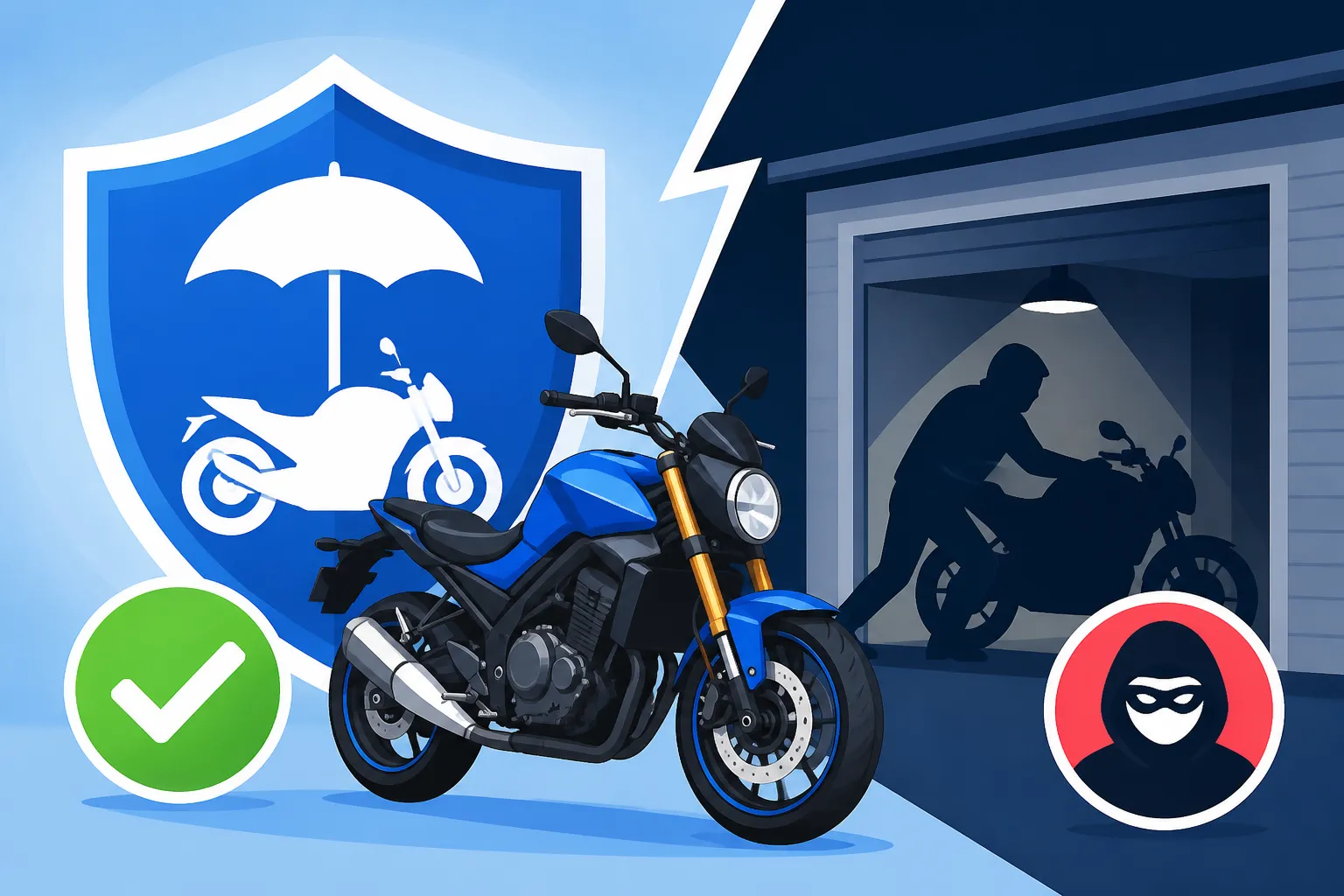
It's an absolutely gut-wrenching feeling: walking into your garage, the place you thought was perfectly secure, only to find your motorcycle gone. The empty space echoes not just the physical absence of your prized ride, but also a profound sense of violation and frustration. Many riders assume that because their bike is safely tucked away at home, any theft would automatically be covered by their insurance. But the reality isn't always that straightforward. This guide is here to untangle the complexities of motorcycle insurance and specifically address whether your policy truly covers theft when your bike is stolen from your garage.
Understanding Motorcycle Insurance and Theft Coverage
Navigating the world of motorcycle insurance can feel like trying to read a foreign language sometimes, especially when you're dealing with specific scenarios like theft from your own garage. It’s not just about having "insurance"; it’s about having the right kind of insurance for the right situation.
The Role of Comprehensive Coverage
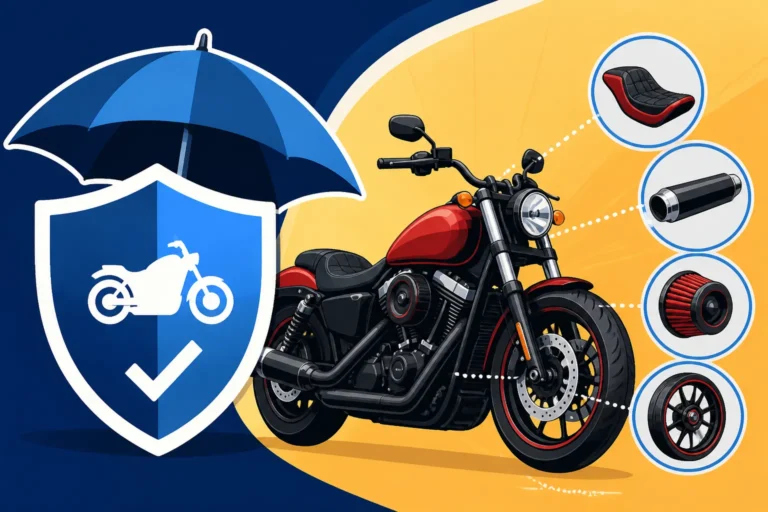
When we talk about motorcycle theft, whether it's from a parking lot, a street corner, or even your garage, there's one specific type of coverage that steps up to the plate: comprehensive coverage. Think of comprehensive as your policy's all-star defender against incidents that aren't a result of a collision. If your bike is stolen, vandalized, catches fire, or is damaged by a natural disaster like a flood or hail, comprehensive coverage is what you’ll typically rely on.
This coverage is crucial because it’s designed to protect your investment from a wide array of perils that are often beyond your control. For instance, if a tree falls on your garage and damages your bike, or if a rogue deer decides to run into your parked motorcycle, comprehensive would likely cover it. The beauty of it for our discussion today is that theft, regardless of where it happens, usually falls squarely within its protective umbrella. Without comprehensive coverage, if your motorcycle vanishes from your garage, you're essentially out of luck, bearing the full financial brunt of replacing it yourself. It's truly the primary line of defense every rider should consider, especially for any bike worth more than what you're comfortable losing entirely.
Differentiating Comprehensive from Other Coverage Types
To really grasp why comprehensive is so vital for garage theft, it helps to quickly touch on what other common coverages don't do in this scenario. Many riders get confused by the different components of their policy, often mistaking basic coverage for full protection.
First up, you have liability coverage. This is the bare minimum most states require you to carry, and it's there to protect other people and their property if you cause an accident. If you accidentally rear-end a car, or if a passenger on your bike gets injured, your liability insurance would kick in to cover their medical bills or repair costs. But here's the kicker: liability does absolutely nothing to help you if your motorcycle is stolen or damaged. It's all about your responsibility to others, not your own bike's well-being. If you're wondering, "Does Motorcycle Insurance Cover Theft From a Garage?", liability alone is a resounding no.
Then there's collision coverage. This part of your policy is designed to pay for damage to your own motorcycle if it's involved in a collision, regardless of who is at fault. So, if you hit a guardrail, or another vehicle swerves into your lane and you crash, collision coverage would cover the repairs to your bike (minus your deductible, of course). While essential for protecting your bike in an accident, collision coverage offers zero protection against theft. It’s purely for impacts and crashes, not for when your bike simply disappears. This is why understanding Types of Motorcycle Insurance Coverage Explained is so important—each piece serves a distinct purpose. Many riders opt for What Does Full Coverage Motorcycle Insurance Mean? which usually combines liability, collision, and comprehensive, providing a much broader safety net.
When Does Your Policy Cover Garage Theft?
So, you’ve got comprehensive coverage – great! But that doesn't automatically mean every single theft scenario from your garage will be a slam-dunk claim. Insurance policies, by their nature, have specific conditions and expectations.
Typical Scenarios for Coverage
In most cases, if your motorcycle is stolen from a garage and you have comprehensive coverage, your policy should cover it. The key here often revolves around the concept of "forced entry" or evidence of theft. For example, imagine you wake up one morning, head to your detached garage, and find the side door kicked in, the lock broken, and your Kawasaki Ninja missing. This is a clear case of forced entry, and with a police report documenting the crime, your comprehensive coverage would typically kick in to cover the loss of your motorcycle.
Another common scenario involves sophisticated thieves who might bypass traditional locks. Maybe they "jimmy" your garage door opener code or use a device to fool your security system. As long as there's clear evidence of unlawful entry and the theft is reported, your insurer, whether it's Progressive or State Farm, will usually process the claim. What they're looking for is proof that the theft wasn't a result of your own negligence in securing the vehicle or property. The goal is to return you to your pre-loss financial state, minus your deductible, by covering the value of the stolen bike, often based on its actual cash value at the time of the theft.
Potential Exclusions and Limitations
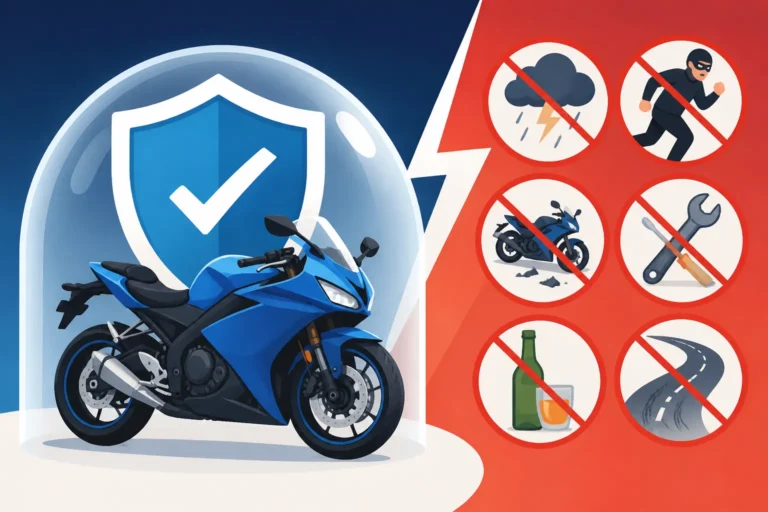
While comprehensive coverage is robust, there are indeed situations where coverage for garage theft might be denied or limited. These usually stem from specific clauses in your policy or actions that could be considered negligence on your part.
One major exclusion to watch out for is negligence regarding security. If you consistently leave your garage door wide open, especially overnight, or leave the keys in the ignition of your motorcycle and the garage unlocked, an insurer might argue that you did not take reasonable steps to prevent the theft. They could deem this "contributory negligence" and either reduce your payout or deny the claim altogether. Another common issue is if an "unlisted driver" has access. While less common for theft, if someone not on your policy borrows your bike from the garage (with your permission) and it gets stolen while they're using it, it could complicate matters. Most policies specify who is covered to ride the motorcycle.
Furthermore, some policies have specific clauses about the type of storage. For most residential garages, this isn't an issue. However, if your "garage" is more of an open-air carport without secure walls or a lockable door, your insurer might classify it differently, potentially affecting coverage. It’s also crucial to be aware of your policy's stated limits for accessories and custom parts coverage. If your Harley-Davidson Electra Glide, laden with thousands of dollars in aftermarket chrome, is stolen, and you only have basic accessory coverage, you might only get the standard value of the bike itself, leaving a significant gap for your custom additions. Always review your policy documents thoroughly, and don't hesitate to ask your insurance agent about any ambiguities regarding your specific storage situation. Understanding What Happens If You Ride Without Insurance? highlights the importance of having proper coverage in place from the start.
Proving a Garage Theft Claim
Finding your motorcycle missing from your garage is a terrible experience, but knowing the immediate steps to take can significantly smooth the insurance claim process. Being prepared and acting quickly are your best allies.
Immediate Steps After Discovering Theft
When you realize your motorcycle has been stolen from your garage, panic is a natural reaction. However, it's crucial to act swiftly and methodically. Your first and most important step is to contact the police immediately. Do not delay. Call your local police department and report the theft, providing them with all the details: your motorcycle’s make, model, year, VIN (Vehicle Identification Number), license plate number, any unique identifiers, and the circumstances of the theft, including any signs of forced entry to your garage. Make sure to get a copy of the police report or at least the incident report number. This document is absolutely essential for your insurance claim; without it, your insurer can't proceed.
Once the police report is filed, your next call should be to your motorcycle insurance provider. Inform them of the theft and provide the police report number. They will open a claim and assign an adjuster to your case. The quicker you report it, the better, as it minimizes any potential arguments about delayed reporting. The adjuster will guide you through their specific process, which will likely involve gathering documentation and possibly inspecting the scene (your garage) for evidence. This initial prompt action is key to a smooth claims process, as detailed in guides like How to File a Motorcycle Insurance Claim and Motorcycle Theft Claim: How It Works.
Documentation and Evidence for Your Claim
To successfully prove a garage theft claim, you'll need to provide your insurance company with solid evidence. The more information you have, the stronger your case will be, and the faster your claim can be processed.
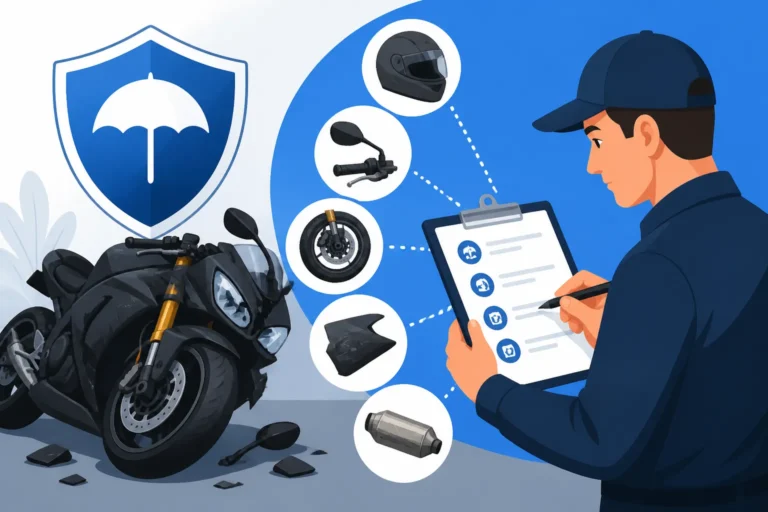
Start by gathering all documentation related to your motorcycle. This includes:
- Proof of ownership: Your title and registration documents.
- Purchase receipts: For the motorcycle itself and any significant aftermarket parts or accessories you’ve added. This is vital if you have Accessories & Custom Parts Coverage Explained.
- Photos of your bike: Recent photos showing its condition, any custom modifications, and overall appearance. These can help prove its existence and value.
- Maintenance records: While not always required, these can sometimes help establish the bike’s well-maintained condition.
- Proof of security measures: If you have security cameras in or around your garage, footage of the theft (or lack thereof, if they disabled it) is invaluable. Photos of your garage door locks, security systems, or ground anchors can also serve as proof of your efforts to secure the bike.
- Police report: As mentioned, this is non-negotiable.
Here’s a quick reference table for key documents:
| Document Type | Why It's Needed |
|---|---|
| Police Report | Official record of the crime; required for any theft claim. |
| Motorcycle Title/Registration | Proof of ownership. |
| Purchase Receipt | Verifies ownership and original purchase price. |
| Photos of Motorcycle | Establishes condition, features, and existence before theft. |
| Accessory/Custom Parts Receipts | Justifies additional coverage claims for modifications. |
| Security System Records | Demonstrates efforts to prevent theft (e.g., alarm logs, camera footage). |
| VIN (Vehicle Identification Number) | Unique identifier for your motorcycle. |
Having this organized information ready for your adjuster will streamline the entire process. Remember, the insurer’s goal is to verify the loss and its circumstances, so providing clear, comprehensive documentation helps them do just that.
Factors Affecting Your Payout and Premium
Even with solid comprehensive coverage, understanding how your deductible and the valuation method impact your final payout, and what happens to your premiums afterward, is crucial for any rider.
How Deductibles and Actual Cash Value Impact Payouts
When your motorcycle is stolen from your garage and your comprehensive claim is approved, the payout isn't simply the full price you paid for the bike. There are a couple of key factors at play that determine the final amount you receive.
First, there's your deductible. This is the amount you agreed to pay out of pocket before your insurance company steps in. So, if your bike is valued at $10,000 and you have a $500 deductible, your insurance company will pay you $9,500. Choosing a higher deductible often leads to lower monthly premiums, but it also means a larger out-of-pocket expense if you ever need to file a claim. It’s a balancing act that every rider needs to weigh carefully.
Second, and perhaps more significantly, is the valuation method your policy uses. Most standard motorcycle insurance policies use Actual Cash Value (ACV). This means the insurance company will pay you the fair market value of your motorcycle at the time of the theft, taking into account depreciation due to age, mileage, and wear and tear. So, a bike you bought new for $15,000 five years ago might only be valued at $8,000 by your insurer if it's stolen today. This can be a harsh reality check for many riders who feel their bike is worth more.
For those with custom bikes, rare models, or significant modifications, ACV can be particularly disappointing. This is where Agreed Value or Stated Value policies come into play. With an agreed value policy, you and the insurer agree on a specific value for your motorcycle before the policy is issued. If the bike is stolen, you receive that agreed-upon amount (minus your deductible). Stated value is a bit trickier; it's the maximum the insurer might pay, but they'll still ultimately pay the ACV or the stated value, whichever is less. Understanding Agreed Value vs Stated Value vs Actual Cash Value is paramount for riders, especially if you have a unique or highly modified bike. Without these specialized coverages, if your motorcycle is deemed a total loss due to theft, the payout might not be enough to replace it with a comparable model.
Impact on Future Premiums and Tips for Mitigation
It's a common fear among riders: "If I file a claim, will my insurance rates skyrocket?" Unfortunately, filing a theft claim, especially one for a significant amount like a motorcycle, can indeed impact your future insurance premiums. Insurance companies assess risk, and a theft claim signals a higher risk profile for them. They might view your location or your security measures (or lack thereof) differently, leading to an increase in your renewal rate.
The exact increase varies widely based on factors like your claims history, your driving record, the value of the stolen bike, and even your credit score. If this is your first claim in many years and you have an otherwise stellar record, the increase might be minimal. However, if you've had other claims or traffic violations, a theft claim could be the straw that breaks the camel's back, resulting in a noticeable jump in costs. This is part of What Affects Your Motorcycle Insurance Rate?.
So, how can you mitigate this potential hike?
- Review your discounts: Many insurers offer various discounts that you might not be taking full advantage of. Look into discounts for completing a motorcycle safety course, being a mature rider, having an anti-theft device installed, or even bundling your motorcycle insurance with other policies (like car or home insurance). This can help offset any increases. Check out Motorcycle Insurance Discounts You're Missing for a comprehensive list.
- Improve security: After a theft, reinforcing your garage security measures can demonstrate to your insurer that you're proactively addressing the risk. This might even qualify you for an anti-theft discount.
- Shop around: Don't be afraid to compare motorcycle insurance quotes from different providers at renewal time. While your current insurer might increase your rates, another company might offer a more competitive rate based on your updated risk profile. Using comparison tools from services like The Zebra can make this process incredibly easy, letting you see multiple quotes side-by-side without having to visit individual insurer websites.
Preventing Motorcycle Theft from Your Garage
While insurance is there to protect you financially after a theft, preventing the theft in the first place is always the best outcome. Thieves are often opportunistic, so making your motorcycle a harder target can go a long way.
Enhancing Physical Security Measures
Your garage might feel like a fortress, but determined thieves can often find weaknesses. Boosting your physical security is paramount. Start by assessing your garage door. Is it a flimsy single-panel door that could easily be pried open? Consider reinforcing it or upgrading to a more robust, insulated door. Garage door locks are often minimal; adding a secondary lock, like a deadbolt or even a padlock on the track, can make it much harder for thieves to force entry or bypass your opener.
Next, think about windows and side doors. Are they secured with strong locks? Consider adding window bars or motion-sensor alarms. Many thieves will opt for the path of least resistance. Inside the garage, don't just rely on the garage itself. Use additional layers of security for your bike. A heavy-duty disc lock on your front brake disc can immobilize the wheel. For an even greater deterrent, invest in a ground anchor. These are steel anchors drilled into your concrete floor, to which you can chain your motorcycle with a hardened steel chain. Brands like Kryptonite and Oxford offer excellent security chains and locks specifically designed to withstand bolt cutters and angle grinders for a significant amount of time, often making thieves move on to an easier target.
Finally, lighting and visibility play a crucial role. Install bright motion-sensor lights outside your garage. Thieves prefer to operate under the cloak of darkness, so illuminating the area can be a strong deterrent. Consider adding security cameras that record footage and ideally send alerts to your phone. Visible cameras alone can often make a thief reconsider.
Smart Habits and Additional Precautions
Beyond physical fortifications, developing smart habits is equally important in thwarting motorcycle thieves. It's often the small oversights that create opportunities for crime.
First and foremost, never leave your motorcycle keys in the ignition, even for a moment, and never leave them openly accessible in your garage. Many thefts occur because keys are left hanging on a hook near the door, a tempting target for a quick smash-and-grab. Always take your keys with you, or secure them in a hidden, locked location.
Always close and lock your garage door, even if you're just stepping inside for a few minutes. It's easy to get complacent, but an open garage is an open invitation. If you have an attached garage, ensure the internal door leading into your house is also locked. Don't make it easy for someone to gain access to your home if they bypass your garage security.
Being discreet about owning a motorcycle, especially a high-value one, can also help. Avoid openly displaying expensive aftermarket parts or discussing your bike's location and value with strangers. Social media posts showing your bike's exact storage location can also pose a risk.
Consider adding a GPS tracking device to your motorcycle. Devices from brands like LoJack or Monimoto can send alerts to your phone if your bike is moved without your permission and can help law enforcement track and recover your stolen ride. While this won't prevent the theft, it significantly increases the chances of recovery. Always lock your steering, even inside the garage. This adds another layer of defense and can buy valuable time if a thief does manage to get inside. Remember, layers of security are more effective than a single, easily defeated measure.
Disclaimer
Please remember that insurance policies and state laws can change. This information is intended for general guidance only and is not a substitute for professional legal or insurance advice. Always consult with a qualified insurance professional and review your specific policy documents to understand your coverage and obligations.