Does Motorcycle Insurance Cover Flood Damage?
Riding your motorcycle brings an unparalleled sense of freedom, but the thought of Mother Nature unleashing her fury, particularly in the form of devastating floods, can be a real source of anxiety. It's a terrifying scenario for any rider: you wake up to find your beloved bike submerged, wondering if your investment is utterly lost. This comprehensive guide is here to cut through the confusion, explaining precisely whether your motorcycle insurance steps in to cover flood damage and what steps you need to take if the worst happens.
Understanding Flood Damage and Its Impact on Motorcycles
When we talk about flood damage, it's often more complex than just "wet." The insidious nature of water can cause far more widespread and lasting harm to a motorcycle than many riders realize. It's not just about what you see on the surface; it's about the hidden destruction within.
What Qualifies as Flood Damage for Insurance Purposes?
From an insurance perspective, "flood damage" is typically defined by water rising from natural sources — think heavy rains, overflowing rivers, storm surges from hurricanes, or even rapidly melting snow that overwhelms drainage systems. This is distinct from other types of water damage, such as a leaky roof in your garage or a burst pipe, which might be covered under different policy provisions or even your homeowner's insurance (though your bike is specifically covered by its own policy). The key here is the source of the water: it has to be a widespread, natural event rather than an isolated incident caused by human error or a localized failure.
For instance, if you live in a coastal area like Florida and a hurricane brings a massive storm surge that inundates your street and garage, submerging your Kawasaki Ninja, that's undeniably flood damage. Similarly, if you're in a region prone to river overflows, such as parts of the Mississippi River basin, and your property is flooded due to rising waters, your insurance company would classify this as flood-related. These are large-scale, often unpredictable events that are beyond your direct control, and that's precisely the kind of peril specific coverage is designed to address. Without understanding this distinction, many riders might mistakenly assume any water damage falls under the same umbrella.
The Silent Destroyer: How Water Harms Motorcycle Components
When a motorcycle is exposed to floodwaters, the damage isn't just cosmetic; it's deep, pervasive, and often catastrophic. The engine is one of the first and most critical components to suffer. Water can enter through the air intake, filling cylinders and leading to "hydro-lock" – a severe condition where the engine cannot complete its compression stroke, potentially bending connecting rods, cracking the engine block, or causing other irreversible internal damage if someone attempts to start it. Even if it doesn't hydro-lock, sludge and contaminants from floodwaters can destroy bearings and crucial moving parts, leading to premature wear and failure.
Beyond the engine, the electrical system is incredibly vulnerable. Modern motorcycles are packed with intricate wiring harnesses, electronic control units (ECUs), sensors, and relays. Exposure to water, especially dirty floodwater laden with silt, chemicals, and saltwater, leads to immediate corrosion. This can cause short circuits, intermittent failures, and long-term reliability issues that are incredibly difficult and expensive to diagnose and repair. The fuel system, including the fuel tank, lines, and injectors, can become contaminated, leading to rust, fuel pump failure, and clogged injectors. Brakes can suffer from rusted calipers, lines, and master cylinders, compromising a critical safety system. Even the frame, while seemingly robust, can conceal rust in hidden crevices, weakening its structural integrity over time. The cumulative effect of these issues makes repairing a severely flood-damaged motorcycle a daunting and often economically unfeasible task.
Comprehensive Coverage: Your Shield Against Nature's Wrath
The good news for many riders is that flood damage can be covered by their motorcycle insurance policy. However, it’s not just any policy; it's a specific type of coverage that offers this crucial protection. Understanding this distinction is vital, as simply having liability insurance won't protect your own bike.
The Role of Comprehensive Coverage in Flood Claims
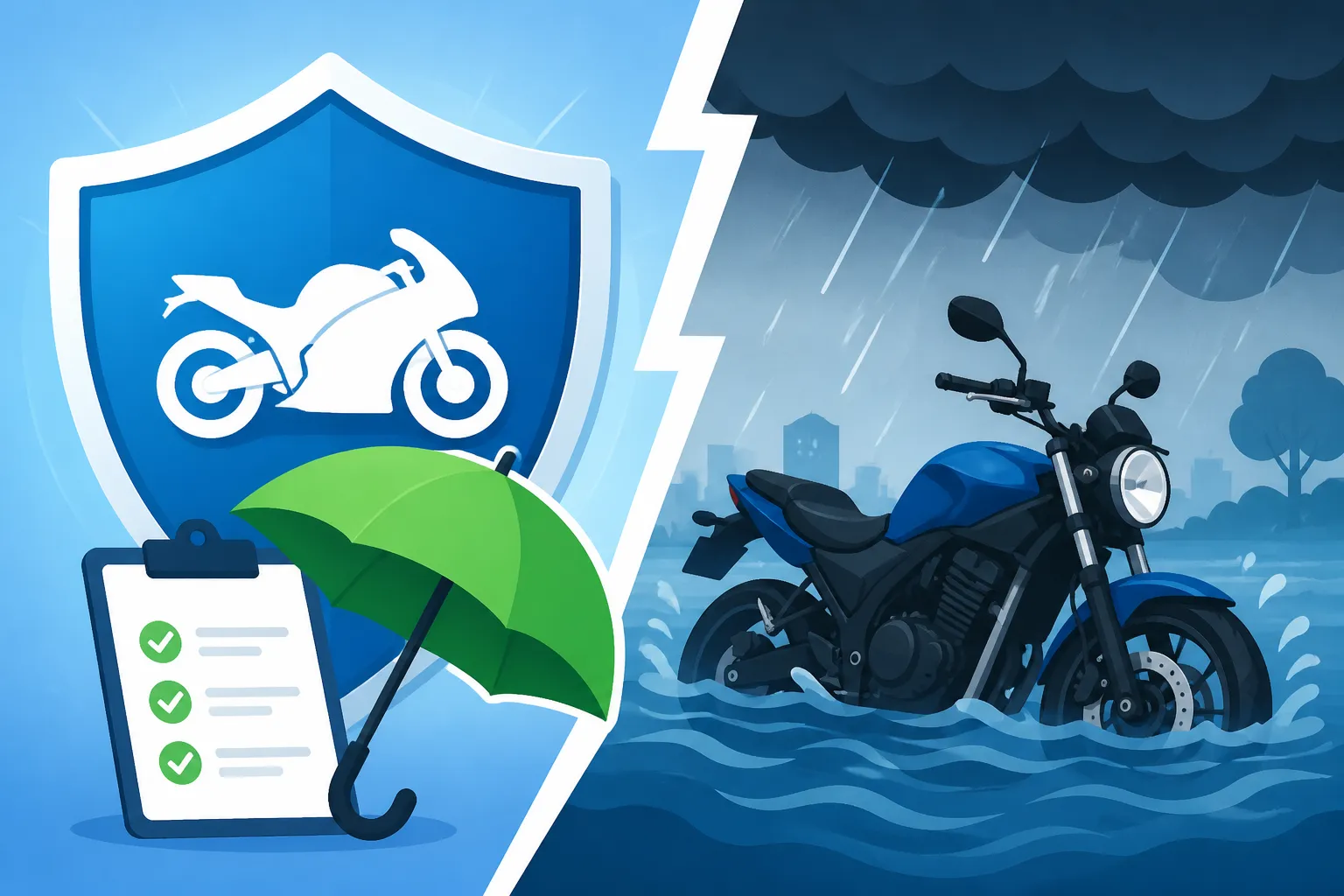
Generally speaking, flood damage to your motorcycle falls under what’s known as Comprehensive Coverage on a Motorcycle?. This coverage is designed to protect your bike from non-collision incidents – events that are largely out of your control and don't involve hitting another vehicle or object. Think of it as protection against things like theft, vandalism, fire, falling objects, and yes, natural disasters like floods. If you only carry minimum liability insurance, which is what's legally required in most states to cover damages you cause to other people and their property, your own motorcycle's flood damage will not be covered. This is a common and often heartbreaking misconception for riders who find their bikes ruined after a major storm.
To illustrate, imagine you live in Houston, Texas, a city unfortunately familiar with severe flooding. If your motorcycle is parked safely in your driveway and a sudden, intense downpour causes widespread street flooding that engulfs your bike, comprehensive coverage is what would kick in. This is in stark contrast to, say, accidentally riding into a deep puddle and dropping your bike, which might be a collision claim, or even just wiping out on a slick road, which is also generally covered by collision. Comprehensive coverage is specifically designed for those unexpected acts of nature or other unforeseen events that don't involve impact. It's a critical component of what many riders refer to as What Does Full Coverage Motorcycle Insurance Mean?, ensuring your investment is protected from a broad range of perils.
What to Expect During a Flood Damage Claim
If your motorcycle has been damaged by a flood, the claims process can feel overwhelming, especially when you're also dealing with the broader impact of a natural disaster. The very first step, once it's safe to do so, is to document everything thoroughly. Take clear photographs and videos from multiple angles, showing the water line on the bike, any visible damage, and the surrounding flood conditions. This visual evidence is critical for your insurance claim. Next, contact your insurance provider as soon as possible. Many companies, like Progressive or Dairyland, have dedicated claims departments available 24/7, particularly during widespread emergencies. They will assign an adjuster to assess the damage.
The adjuster will evaluate your motorcycle to determine the extent of the water intrusion and the damage to its mechanical and electrical systems. They'll consider whether the bike can be safely and economically repaired or if it will be declared a total loss. This determination hinges on the cost of repairs versus the bike's actual cash value (ACV) or agreed value, depending on your policy. During this process, be prepared to answer questions about the circumstances of the flood, where your bike was parked, and any preventative measures you took. Utilizing a resource like The Zebra can be incredibly helpful when you're comparing policies, as they often highlight the breadth of comprehensive coverage options available from different carriers, which can influence how smoothly a flood claim proceeds. Remember, honesty and thorough documentation are your best friends throughout this process.
Understanding Deductibles and Payouts for Flood-Damaged Bikes
When it comes to a flood damage claim under your comprehensive coverage, you'll almost always have a deductible to pay. This is the out-of-pocket amount you agree to cover before your insurance company starts paying for the repairs or the value of your bike. For example, if you have a $500 comprehensive deductible and your bike sustains $5,000 in flood damage, you'd pay the first $500, and your insurer would cover the remaining $4,500. It's important to understand this upfront, as it can impact your immediate financial situation after a loss.
Regarding the payout, most standard motorcycle policies will compensate you based on the "actual cash value" (ACV) of your motorcycle at the time of the loss. ACV takes into account depreciation due to age, mileage, and wear and tear. So, if your bike was worth $10,000 when new but is now 5 years old and has significant mileage, its ACV might only be $6,000. For riders with custom bikes or classic motorcycles, this can be a painful reality. This is where specialized coverage, like Agreed Value vs Stated Value vs Actual Cash Value, can be invaluable. Agreed value policies allow you to set the value of your bike with the insurer when you purchase the policy, ensuring you're paid that agreed amount if it's totaled. Stated value policies, however, might only pay up to the stated amount or the ACV, whichever is less, so read the fine print carefully. If your motorcycle is deemed a total loss due to flood damage, it may also be issued a salvage title, which can significantly affect its resale value and future insurability, even if you decide to repair it.
Proactive Measures and What Isn't Covered
While comprehensive coverage is a powerful tool against the financial impact of flood damage, prevention is always the best strategy. Furthermore, understanding the limitations and exclusions of your policy is just as crucial as knowing what it covers. Not all water damage is treated equally, and certain actions on your part could jeopardize your claim.
Preventing Flood Damage: Practical Tips for Riders
The best way to deal with flood damage is to avoid it altogether. Staying informed about weather forecasts is your first line of defense, especially if you live in an area prone to flooding. Pay close attention to flood watches and warnings issued by local authorities and meteorologists. If a flood threat is imminent, don't wait until the last minute. The most effective measure is to move your motorcycle to higher ground. This could mean riding it to a friend's house on a hill, parking it in a higher-level parking garage, or even simply elevating it within your own garage using sturdy blocks or a motorcycle lift if the water isn't expected to rise too high.
For long-term storage or during seasonal layoffs, if your area is prone to water issues, consider investing in a dedicated storage unit that's known to be flood-resistant. Even within your own garage, simple preventative steps can make a difference. Ensure drains are clear, and consider temporary barriers like sandbags if you have prior warning. Regularly checking your local city's flood maps can also give you an idea of your property's specific risk. While not every flood can be completely avoided, taking these proactive steps can significantly reduce the risk to your motorcycle, saving you the headache and heartache of a major claim. It’s also worth considering how Do You Need Insurance to Store a Motorcycle? might protect it from non-riding perils like floods, even when it's not on the road.
Exclusions and Limitations to Be Aware Of
While comprehensive coverage is robust, it's not a blanket solution for every water-related incident. One significant exclusion is damage resulting from intentional acts. For example, if floodwaters are clearly visible and declared unsafe, but you decide to ride your motorcycle through them anyway, and it gets damaged, your insurer might deny the claim, arguing that you intentionally put your vehicle at risk. This is similar to the challenges faced if you cause an accident through reckless driving; insurance is there for unforeseen events, not deliberate hazards.
Another critical point: never try to start a flooded motorcycle. Doing so can cause catastrophic engine damage (hydro-lock) that might not have occurred otherwise, and this subsequent damage could be deemed preventable and thus not fully covered. It's crucial to leave the bike untouched and wait for professional assessment. Furthermore, if the flood damage exacerbates pre-existing mechanical issues that weren't related to the flood, your policy might only cover the new damage directly attributable to the water. Basic liability-only policies, as mentioned before, offer no coverage for your own bike, meaning flood damage would be 100% out of your pocket. Understanding these limitations is just as important as knowing what is covered, helping you to avoid common pitfalls during a stressful claims process.
Navigating the Aftermath: Repairing or Replacing a Flooded Motorcycle
After the waters recede and the initial shock wears off, you're faced with a critical decision: attempt to repair your flood-damaged motorcycle, or accept a total loss settlement and look for a replacement. This choice is rarely straightforward and involves many factors, both financial and emotional.
The Difficult Decision: Repair vs. Total Loss
The decision to repair a flood-damaged motorcycle or declare it a total loss is often a heart-wrenching one, but insurers typically make it based on cold, hard numbers. An adjuster will estimate the cost of repairing all the damaged components, from the engine and electrical system to the brakes and fuel lines. If the estimated repair cost, including parts and labor, exceeds a certain percentage of the bike's actual cash value (ACV) – typically 70-80% in many states – the insurance company will declare it a total loss. This threshold exists because flood damage is notorious for hidden problems; a seemingly repaired bike can develop chronic electrical issues, rust, or engine problems months or even years down the road.
For instance, a classic Harley-Davidson might have a high sentimental value, but if its ACV is $8,000 and the repair estimate comes in at $6,500 due to extensive engine and wiring damage, the insurer might total it. The repairs required for a flooded bike are incredibly extensive and include flushing all fluids, replacing all electrical components, rebuilding or replacing the engine, and meticulously cleaning or replacing fuel system parts. Even after professional repairs, there's always a lingering doubt about the bike's long-term reliability and safety. This is why many riders find themselves saying goodbye to a beloved machine, even if it could technically be "fixed." Understanding What Happens When Your Motorcycle Is Totaled? will help you prepare for this difficult conversation with your insurer.
Dealing with Salvage Titles and Future Resale Value
If your motorcycle is declared a total loss due to flood damage, it will likely be issued a salvage title by your state's Department of Motor Vehicles. A salvage title is a permanent mark on the vehicle's record, indicating that it has been deemed uneconomical to repair by an insurance company. This has significant implications for both resale value and future insurability. A bike with a salvage title is worth considerably less than a clean-titled vehicle, often only a fraction of its pre-damage value, even if it has been expertly repaired. Potential buyers are wary of salvage titles due to the unknown long-term issues and the difficulty in obtaining financing or even proper registration in some cases.
Furthermore, insuring a motorcycle with a salvage title can be a major challenge. Many insurance companies, including well-known carriers like Geico, may be reluctant to offer full coverage on a salvage-titled bike, or they might charge significantly higher premiums if they do. They see it as a higher risk due to the potential for lingering problems. If you decide to buy back your totaled motorcycle from the insurer (a common option) and undertake the repairs yourself, you'll need to go through a rigorous inspection process to get a "rebuilt" or "reconstructed" title, but it will still carry the history of being a salvage vehicle. For this reason, for many riders, accepting the total loss payout and using it towards a new, clean-titled motorcycle is the most practical path forward. Tools offered by companies like The Zebra can sometimes help you find insurers willing to cover salvage titles, but options are often limited and more expensive.
Here's a quick overview of how different coverage types handle various scenarios:
| Coverage Type | Covers Damage to Your Bike from Flood? | Covers Damage to Your Bike from Collision? | Covers Damage You Cause to Others? | Covers Theft? |
|---|---|---|---|---|
| Comprehensive | Yes | No | No | Yes |
| Collision | No | Yes | No | No |
| Liability Only | No | No | Yes | No |
| Full Coverage | Yes (includes Comp & Collision) | Yes (includes Comp & Collision) | Yes | Yes |
Disclaimer
Please remember that insurance policies can vary greatly depending on your specific provider, the state you live in, and the specific terms and conditions of your individual policy. The information provided here is for general informational purposes only and should not be considered legal or insurance advice. Always consult with a qualified insurance professional and refer to your actual policy documents for precise coverage details.