Do You Need Insurance for a Trike or Three-Wheeler?
Many riders find themselves staring at a shiny new Can-Am or a sleek Polaris Slingshot in their driveway, only to realize that their local DMV clerk and their insurance agent seem just as confused as they are about the paperwork. This guide solves the mystery of three-wheeler insurance, clarifying exactly how these machines are classified and what coverage you must have to stay on the right side of the law.
Understanding the Trike Classification: Is It a Motorcycle or an Autocycle
The first thing you have to wrap your head around is that "trike" is a bit of a catch-all term that the legal system hasn't always been quick to define. If you are riding a traditional Harley-Davidson Freewheeler, you are essentially on a motorcycle with an extra wheel in the back. However, if you’re buckled into a Polaris Slingshot with a steering wheel and bucket seats, you are in what many states now call an "autocycle." This distinction is not just semantic; it dictates whether you need a special endorsement and how a company like The Zebra will help you find the right policy.
Traditional Trikes vs Reverse Trikes
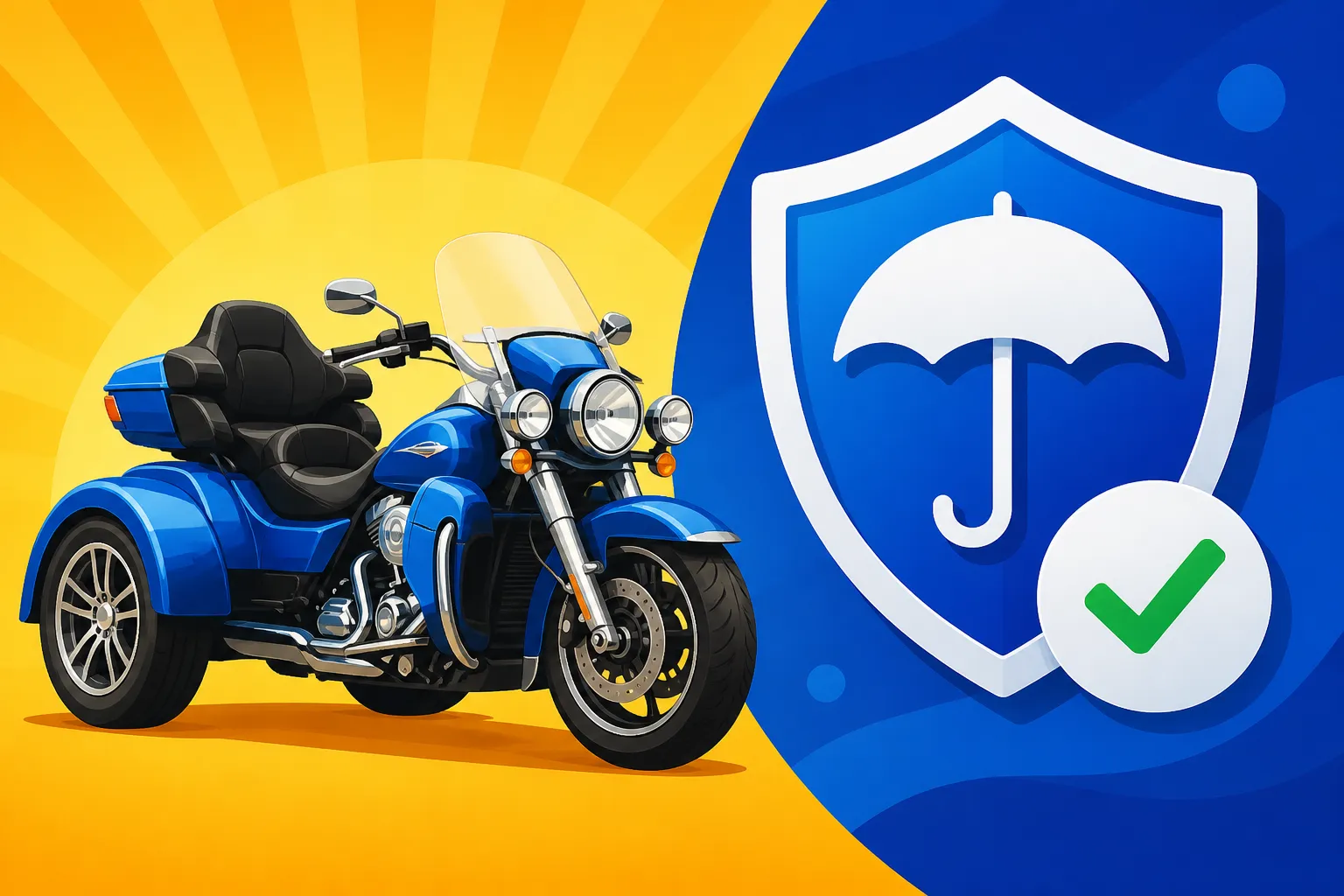
When we talk about traditional trikes, we are looking at the one-wheel-in-front, two-wheels-in-back configuration. These are the classic cruisers of the three-wheel world. They handle very differently than a two-wheeled bike because you can't lean them, yet they are almost universally classified as motorcycles for insurance purposes. You will still need to look into Motorcycle License, Endorsement & Insurance requirements because, in many jurisdictions, a standard Class C car license won't cut it.
Then you have reverse trikes, like the Can-Am Spyder or Ryker. These have two wheels in the front and one in the back. These are often marketed as being more stable, especially for riders who are worried about the physical toll of balancing a heavy touring bike. Despite the futuristic look, they generally fall under the same insurance umbrella as traditional motorcycles. Because they are often high-value machines, finding the best rates via The Zebra is usually the smartest move to protect such a significant investment.
The Rise of the Autocycle
The real confusion started when machines like the Polaris Slingshot or the Vanderhall hit the market. These look like open-air race cars but technically have three wheels. Most states have created a specific "autocycle" category for these. In a state like Texas, for example, you can drive a Slingshot with a regular driver's license, but you still need to follow the Texas Motorcycle Insurance Requirements because it doesn't meet the federal safety standards of a passenger car.
This hybrid status means you have to be very careful when shopping for a policy. You aren't buying a car policy, and a standard "bike" policy might not account for things like your seatbelts or the specific crash-test ratings (or lack thereof) for these vehicles. It’s a specialized niche that requires a bit of extra digging into your specific state laws.
Legal Insurance Requirements for Three Wheelers
Just like any other vehicle on the road, three-wheelers are subject to financial responsibility laws. You can’t just roll out of the dealership and hope for the best. Every state, with very few exceptions, mandates that you carry at least a minimum level of liability coverage. If you’re wondering, "Is it legal to ride without it?" the answer is a resounding no, and the Penalties for Riding Without Insurance can include heavy fines or even the suspension of your registration.
Minimum Liability Coverage for Trikes
Liability is the bedrock of your policy. It’s what pays for the other person’s car or medical bills if you accidentally clip a fender or cause a multi-car pileup. Most states use a three-number system to describe these limits. For example, you might see 25/50/25. If you aren't sure what that means, you should check out our guide on Minimum Liability Insurance Explained (The Three Numbers) to get the full breakdown.
For a trike rider, liability is often the cheapest part of the policy, but it’s also where people tend to under-insure. Think about it: a trike is wider than a standard motorcycle. You have a larger footprint on the road, which slightly increases the chances of a "fender bender" in tight traffic or parking lots. Carrying only the state minimum might leave you personally liable if you cause damage that exceeds those small limits.
State by State Variations in Trike Laws
The laws are shifting constantly. Some states require a helmet for all three-wheel riders, while others treat autocycles like cars where a helmet isn't required if there is a roll cage. This impacts your insurance because some insurers may adjust your medical payment coverage based on your state’s Motorcycle Helmet Laws by State.
For instance, if you are wondering Is Motorcycle Insurance Required in California? for your trike, the answer is yes, and the limits are strictly enforced. Meanwhile, if you are looking at Florida Motorcycle Insurance Requirements, you’ll find a unique set of rules regarding how medical benefits are handled. It is vital to use a platform like The Zebra to compare how different carriers handle these state-specific quirks so you don't end up paying for coverage you don't actually need—or worse, missing something mandatory.
Why You Need More Than Just the Legal Minimums
If you’ve spent $30,000 on a top-of-the-line Tri-Glide or a custom converted Goldwing, "Liability Only" is a recipe for heartbreak. Liability does absolutely nothing for your bike. If you drop the bike, if it’s stolen, or if a storm knocks a tree branch onto it in your driveway, you are on the hook for every penny of the repair.
Collision and Comprehensive Coverage
Collision coverage is what handles the damage to your trike if you hit another vehicle or an object (like a light pole). Given that trike parts—especially the rear bodywork and fiberglass fenders—can be incredibly expensive to paint and replace, collision is almost a necessity.
Comprehensive coverage handles the "acts of God" and theft. Trikes are unfortunately targets for thieves because they are high-value and can be winched onto a trailer relatively easily. If you’re curious about the cost difference, looking at Liability-Only vs Full Coverage Cost can give you a better idea of why the upgrade is usually worth it. When you search for quotes on The Zebra, you’ll see that the premium jump for full coverage on a trike is often less than it would be for a high-performance sport bike.
Uninsured Motorist Protection
This is perhaps the most underrated coverage for a trike rider. Statistics show that a huge percentage of drivers on the road are either uninsured or underinsured. If a distracted driver in a sedan hits your three-wheeler and they don't have insurance, you could be left with massive medical bills and a totaled bike. Uninsured & Underinsured Motorist Coverage (UM/UIM) steps in to pay for your losses when the at-fault party can't. Because trike riders are often older or carrying passengers, having this safety net for medical expenses is non-negotiable for a realistic long-term riding plan.
| Trike Type | Common Classification | Typical Insurance Need |
|---|---|---|
| Traditional Trike (Harley Servicar style) | Motorcycle | Motorcycle Policy |
| Reverse Trike (Can-Am Spyder) | Motorcycle | Motorcycle Policy |
| Autocycle (Polaris Slingshot) | Autocycle | Specialized Motorcycle Policy |
| Sidecar Rig | Motorcycle + Accessory | Motorcycle Policy w/ Sidecar Endorsement |
Factors That Influence Your Trike Insurance Rates
Not all trikes are insured equally. A 65-year-old veteran riding a touring trike in rural Iowa is going to pay a vastly different rate than a 25-year-old with a modified Slingshot in downtown Miami. Understanding what goes into the "black box" of insurance pricing can help you find ways to save.
Age and Experience
In the world of two wheels, young riders are often penalized with high rates. However, the trike market skews older. Insurance companies often view trike riders as more mature and less likely to engage in "stunt" riding. If you are a senior rider, you might find that Motorcycle Insurance Cost for Riders Over 50 is surprisingly affordable. This is one of the few areas where getting older actually works in your favor for insurance premiums.
Custom Parts and Accessories
Many trike owners can't help but customize. Whether it's a custom chrome front end, high-end audio systems, or specialized paint jobs, these add-ons increase the value of the vehicle. Standard policies usually only cover a small amount of accessories—often just $1,000 to $3,000. If you’ve put $10,000 into a custom conversion, you need Accessories & Custom Parts Coverage Explained to ensure you aren't under-insured. Always keep your receipts and photos of the modifications, as you’ll need them if you ever have to file a claim.
Finding the Best Rates and Policies
The best way to ensure you aren't overpaying is to shop around. The trike market is specialized, and some "standard" auto insurers don't really know how to price them, leading to inflated quotes. This is exactly where using a comparison tool like The Zebra pays off. By putting your details in once, you can see how the big players like Progressive or Geico stack up against specialty insurers like Dairyland.
Bundling and Discounts
Don't forget to ask about bundling. If you already have a car and a homeowners policy, adding your trike can often trigger a multi-policy discount that makes the trike coverage nearly free in some cases. Also, check for safety course discounts. Even if you’ve been riding for thirty years, taking a three-wheel-specific safety course can shave 5% to 10% off your premium. You can find more tips in our guide on How to Get Cheap Motorcycle Insurance.
Evaluating Your Limits
When you're setting up your policy, don't just click the cheapest option. Think about your actual risk. Do you frequently carry a passenger? If so, you need to make sure your Passenger Coverage on a Motorcycle is robust. A trike feels more stable, which can lead to a false sense of security, but the medical costs of an accident are the same whether you have two wheels or three. Using The Zebra to compare higher limit options often reveals that doubling your coverage only costs a few extra dollars a month.
Do You Need Special Coverage for a Trike or Sidecar
One question that often pops up in the garage is whether a sidecar rig is the same as a trike. Legally, a motorcycle with a sidecar is still a motorcycle, but the insurance company needs to know about the sidecar. It’s considered an "attached accessory." If you don't disclose it, they might deny a claim involving the sidecar itself. For a deep dive into this specific niche, check out Do You Need Special Coverage for a Trike or Sidecar? to make sure your vintage Ural or your custom sidecar rig is actually protected.
In the end, the peace of mind that comes with knowing you are fully covered is worth the afternoon spent on paperwork. Whether you are cruising the Pacific Coast Highway or just running errands around town, your three-wheeler represents freedom—and good insurance ensures that freedom isn't taken away by one bad day on the road.
Disclaimer
This guide is provided for informational purposes only and does not constitute legal or professional insurance advice. Insurance laws and requirements for trikes and autocycles vary significantly by state and are subject to change. Always consult with a licensed insurance agent or your state's Department of Motor Vehicles to verify specific coverage requirements for your vehicle.