Do You Need Accessories Coverage on a Motorcycle?
It’s a tale as old as time for us riders: you get a new bike, or even an old one, and the first thing you want to do is make it yours. Maybe it’s a shiny new exhaust, some custom paint, upgraded suspension, or even just some sweet saddlebags. But here’s the kicker many riders learn the hard way: your standard motorcycle insurance policy likely won't cover these aftermarket additions if something happens. This guide is all about demystifying accessories coverage, explaining why you need it, and how to make sure your personalized ride is truly protected.
The Gap in Standard Motorcycle Insurance Policies
You've just invested a chunk of change, not just in your motorcycle, but in making it perfectly suited to your style and riding needs. Maybe you’ve added some performance upgrades, a custom seat for those long hauls, or even just a premium navigation system. It stings to think that if your bike were stolen or totaled, your insurance might only pay out for its "stock" value, leaving you out of pocket for all those personal touches. This is a common and incredibly frustrating blind spot in basic policies.
The "Stock" Assumption in Basic Policies
When you purchase a standard motorcycle insurance policy, whether it's just liability or even a basic full coverage plan, the insurer typically assesses the value of your bike based on its factory specifications. They look at the make, model, year, and its original condition. They assume it's the bike that rolled off the assembly line, or at least a standard version without significant modifications. This means all those custom parts and accessories you've lovingly installed are effectively invisible to your policy’s payout calculations.
Imagine you crash your meticulously customized Harley-Davidson in an unfortunate low-side incident on a winding country road. Your standard collision coverage will kick in to repair or replace the stock components of the bike. But what about that aftermarket fairing, the Vance & Hines exhaust, or the custom LED lighting you spent hours installing? Unless you specifically added coverage for these items, your insurer won't factor their value into the repair cost or total loss settlement. This can leave you with a gaping hole in your finances and the disheartening task of replacing expensive parts out of your own pocket. It's a rude awakening for many riders who assume "full coverage" means full coverage of everything on their bike.
The Hidden Costs of Uninsured Customization
The financial implications of not having accessories coverage can be substantial, especially if you've invested heavily in your motorcycle. Let's say you own a Honda Gold Wing and decided to outfit it with a custom audio system, heated grips, upgraded luggage, and a specialized windshield for touring comfort. You've easily poured thousands of dollars into these additions. If your bike is stolen from your garage in suburban Dallas, for example, your standard comprehensive coverage might help replace the bike, but that premium audio system and custom luggage? Those could be a complete loss.
The true cost isn't just the monetary value of the parts, either. It’s the labor for installation, whether you did it yourself or paid a shop. It’s the time spent researching, ordering, and waiting for those unique pieces. It's the emotional investment in making your bike truly yours. Without proper coverage, you're not just risking a financial hit; you're risking the loss of all that effort and personalization. Many riders don't realize this until it's too late, often after filing a claim for something like a Motorcycle Theft Claim and realizing the payout falls far short of what they need to restore their bike to its customized glory.
Understanding Motorcycle Accessories Coverage
This is where specialized accessories and custom parts coverage comes into play. It's an optional add-on that specifically extends your insurance protection to cover the non-standard items you've added to your motorcycle. Think of it as a safety net for your personal flair, ensuring that the components that make your bike unique are just as protected as its factory parts.
What Qualifies as an Accessory or Custom Part?
Generally, an accessory or custom part is anything that wasn't installed by the original manufacturer at the factory and significantly alters the bike's appearance, performance, or function from its stock form. This can cast a pretty wide net, but here are some common examples:
- Performance Upgrades: Aftermarket exhaust systems (like Akrapovič or Two Brothers Racing), engine modifications, performance air filters, fuel tuners, or suspension upgrades (Ohlins, Race Tech).
- Appearance Enhancements: Custom paint jobs, chrome plating, custom wheels, aftermarket fairings, LED lighting kits, unique seats, or custom handlebars.
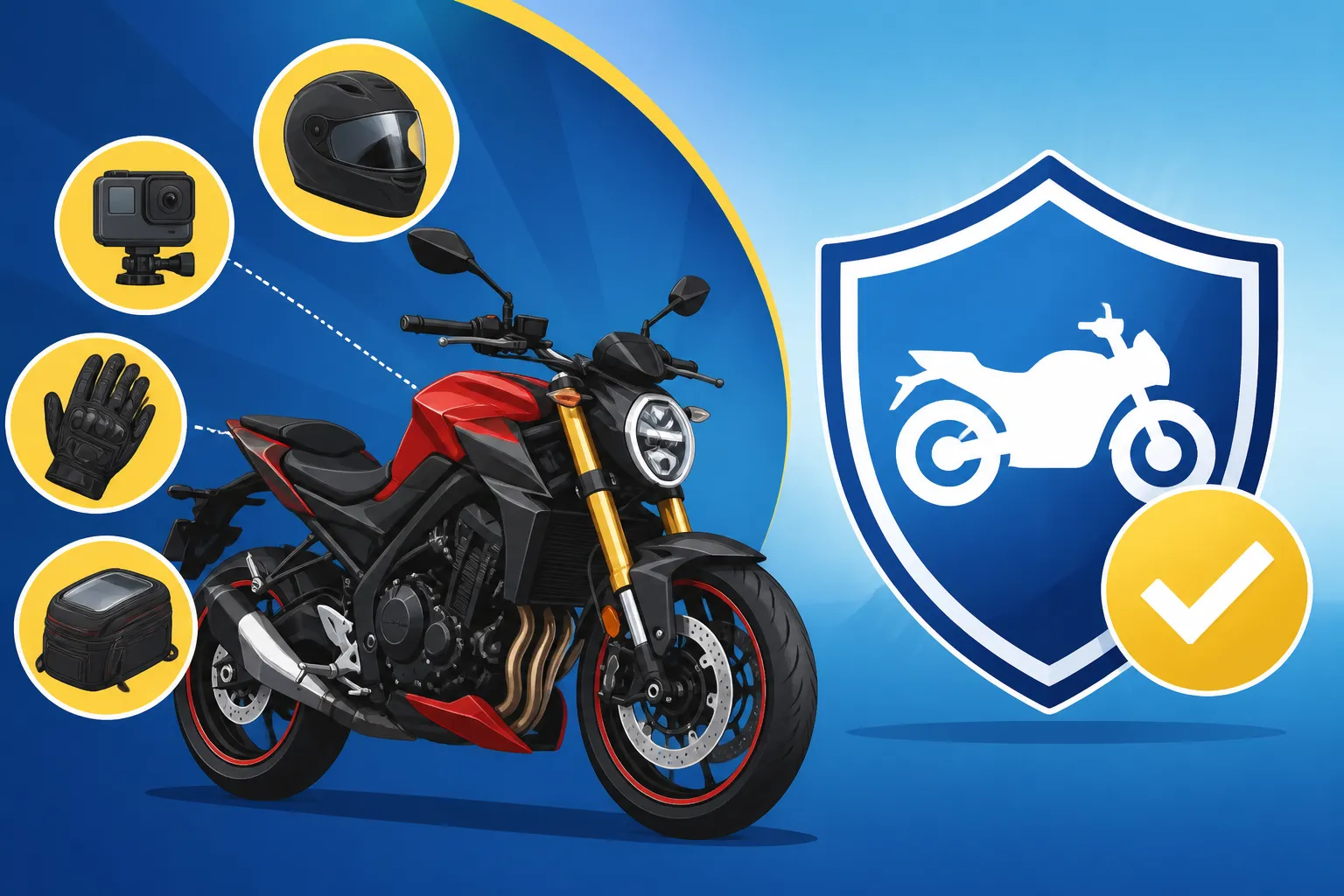
- Comfort and Convenience: Saddlebags, top cases, heated grips, GPS navigation systems, communication systems, crash bars, windshields, or passenger backrests.
- Safety Features: Frame sliders, aftermarket brake components, or upgraded lighting that wasn't standard.
Even seemingly minor additions can qualify. For instance, if you replaced your stock mirrors with a more stylish aftermarket set, or added a branded tank bag, these are considered accessories. It’s anything beyond the base model that adds value or changes the bike's original configuration.
How This Coverage Works
Motorcycle accessories coverage typically comes in a couple of forms: blanket coverage or scheduled coverage.
- Blanket Coverage: This is often included by some insurers up to a certain dollar amount, say $1,000 to $3,000, as part of your comprehensive and collision policies, or as a small, automatic add-on. It's designed to cover minor modifications without needing to itemize them. For example, if you add new grips, levers, and a tank pad that total $500, a blanket coverage of $1,000 would typically cover it. However, once you exceed that blanket limit, you'll need to consider scheduled coverage.
- Scheduled Coverage: This is for more extensive and expensive modifications. You'll need to provide your insurer with a detailed list of each custom part, its cost, and often proof of purchase (receipts). This allows you to specify the exact value you want to insure for these items. For example, if you have a custom paint job worth $2,000 and an exhaust system worth $1,500, you’d schedule each of these for their respective values. This option allows for much higher coverage limits, often up to $30,000 or more, depending on the insurer and the value of your bike.
When you make a claim, the coverage will generally reimburse you for the actual cash value (ACV) of the damaged or stolen accessories, or for their replacement cost, depending on your specific policy terms. It's crucial to understand whether your policy offers ACV (depreciated value) or replacement cost (brand new value) for your accessories. This detail can significantly impact your payout. Learning about different valuation methods like Agreed Value vs Stated Value vs Actual Cash Value can provide further clarity.
Common Items Covered
To give you a better idea of what can be covered, let's look at a table of common accessories and custom parts that riders frequently choose to insure:
| Category | Examples of Items Covered |
|---|---|
| Performance | Aftermarket exhaust, engine tune, air intake, performance shocks, upgraded brake lines |
| Cosmetic | Custom paint, chrome parts, aftermarket fairings, custom wheels, LED lighting, unique mirrors |
| Comfort/Ergonomics | Custom seats, heated grips, taller windshields, rider backrests, floorboards |
| Utility/Touring | Saddlebags, top cases, tank bags, crash bars, GPS mounts, communication systems, phone holders |
| Safety/Protection | Frame sliders, engine guards, upgraded footpegs, specific covers for vital components |
| Electronics | Premium sound systems, navigation units, aftermarket alarms, dash cams, USB charging ports |
It's important to remember that this coverage usually applies to items permanently attached to the motorcycle. Your personal riding gear, like your helmet or jacket, is typically not covered under this endorsement, though some specialized policies or personal property coverage might offer limited protection for these items. For more details on protecting your gear, you might look into Does Motorcycle Insurance Cover Riding Gear?.
Is Motorcycle Accessories Coverage Worth the Investment?
This is the million-dollar question for many riders. When you're already paying for premiums, adding another layer of coverage might seem like an unnecessary expense. However, for a vast majority of motorcycle owners, especially those who love to personalize their machines, it's an absolute no-brainer. It really boils down to protecting your financial and emotional investment.
Protecting Your Passion and Investment
Riding a motorcycle isn't just a hobby; it's a passion, a lifestyle, and often a significant investment. You choose your bike, then you spend countless hours and dollars making it uniquely yours, improving its performance, comfort, or aesthetics. Each accessory tells a part of your story, reflects your personality, and enhances your riding experience. It’s more than just metal and plastic; it's an extension of you.
Without accessories coverage, all that passion and investment can vanish in an instant if your bike is involved in an accident or stolen. Imagine the frustration and despair of seeing your custom-painted tank scratched, your performance exhaust mangled, or your meticulously chosen saddlebags ripped, only to find out your insurance won't cover the cost to replace them. It's a gut punch. This coverage acts as a safeguard, ensuring that the unique elements you’ve added are protected, providing peace of mind that your passion project won't become a financial burden if the worst happens. It’s about being able to restore your bike to its former glory, or at least recoup the costs, without undue stress.
Scenarios Where It Pays Off
Let's dive into a few real-life situations where accessories coverage proves its worth:
- The Garage Break-In: You wake up one morning in Sacramento, California, to find your garage door forced open and your pride and joy, a Kawasaki Ninja ZX-6R, completely gone. Not only that, but the thieves also stripped your premium exhaust and custom levers off your bike before taking it. Your comprehensive coverage would handle the theft of the motorcycle itself, but that custom exhaust system from Yoshimura and those expensive Pazzo levers? If you had specific accessories coverage, you could file a claim for those items too, ensuring you get reimbursed for their value. Without it, you'd be stuck replacing them out of pocket. This scenario highlights why Does Motorcycle Insurance Cover Theft? is so important, and how accessories coverage enhances it.
- The Unfortunate Tip-Over: You're parked on a slight incline at a café in Austin, Texas, enjoying your morning coffee. A strong gust of wind or an absent-minded driver backs into your bike, and it tips over. The fall damages your aftermarket engine guards, custom fairing, and a pair of new LED auxiliary lights you just installed. While your collision coverage would typically cover damage to the bike itself, those specific accessories might not be covered if they exceed a basic blanket limit. With dedicated accessories coverage, you can claim the full repair or replacement cost for each of those damaged components, saving you potentially thousands in repairs.
- The Accident that Totals Your Bike: You're involved in a collision that, thankfully, you walk away from with minor injuries, but your beloved, heavily customized BMW R 1250 GS is totaled. You had invested in advanced touring luggage, a custom navigation system, crash bars, and an aftermarket seat designed for ultimate comfort on long rides. Without accessories coverage, the insurer would pay you the Actual Cash Value of a stock BMW R 1250 GS. With accessories coverage, the value of all those custom parts is added to your payout, getting you much closer to what you need to either replace your bike and its customizations, or move on without a huge financial loss. This is especially vital when dealing with What Happens When Your Motorcycle Is Totaled?.
When You Might Skip It
While highly recommended for most, accessories coverage isn't strictly necessary for every rider. There are a few situations where you might opt to skip it:
- Minimal or No Modifications: If your motorcycle is completely stock, or if the only "customization" you have is a $5 license plate frame, then this coverage probably isn't for you. You won't have any significant accessories to protect.
- Very Old, Low-Value Bikes with Few Mods: For an older, classic bike that you keep mostly stock and that holds more sentimental than monetary value, especially if parts are hard to find or inexpensive to replace, the added premium might not make sense. However, if your vintage bike has expensive period-correct or custom parts, then it's absolutely worth considering.
- Limited Budget, Prioritizing Essentials: If you're on a very tight budget and need to prioritize absolute minimum coverage to ride legally, then liability-only coverage is your main focus. However, even then, many insurers offer a small amount of blanket accessories coverage that's very affordable, so it's always worth asking. But generally speaking, if you can only afford the bare minimum, this might be an area to cut, though it comes with significant risk if you do have valuable mods.
Ultimately, the decision rests on the value of your modifications and your risk tolerance. For most riders who customize their bikes, the peace of mind and financial protection offered by accessories coverage far outweigh the additional cost.
Key Factors to Consider When Getting Coverage
Deciding to get accessories coverage is a smart move, but simply adding it isn't enough. You need to be strategic about how you set it up to ensure you're adequately protected without overpaying. This involves a bit of homework and clear communication with your insurance provider.
Valuing Your Customizations
Accurately valuing your customizations is arguably the most critical step. Don't guess! Underestimating the value means you're underinsured, and overestimating could lead to higher premiums than necessary. Here’s how to approach it:
- Keep Meticulous Records: Every time you buy an aftermarket part, a new exhaust, a custom seat, or even pay for a professional paint job, save the receipts. These are your best evidence of value.
- Document Installation Costs: If you pay a shop to install parts, keep those invoices too. Labor costs add to the overall value of the customization.
- Take Photos: Good quality photos of your bike, showcasing all the custom parts, can be invaluable. Date them if possible. This helps your insurer visualize what you’re describing and can be crucial during a claim.
- Get Appraisals for Unique Builds: For highly customized bikes, especially those with unique fabrication or rare parts, consider getting a professional appraisal. This provides an objective, expert valuation that insurers are more likely to accept. It's particularly useful if you're exploring Agreed Value Coverage on a Motorcycle?.
When you speak with your insurance agent, be prepared to share this information. The more details you provide, the more accurately they can calculate the appropriate coverage amount, which in turn reflects the true What Affects Your Motorcycle Insurance Rate?.
Choosing the Right Coverage Limits
Once you have a good handle on the total value of your custom parts, you'll need to decide on the coverage limit. This is the maximum amount your insurer will pay out for accessories in a covered loss.
- Start with Total Value: Your coverage limit should ideally match the total value of all your custom parts and accessories. If your receipts and appraisals add up to $7,500, then aim for a $7,500 limit.
- Consider Future Modifications: Are you planning more upgrades soon? It might be wise to build in a little buffer if your budget allows, so you don't have to update your policy immediately after adding a small part.
- Understand Blanket vs. Scheduled: Remember the difference. If your modifications are minor and fall within a standard blanket limit (e.g., $1,000-$3,000), you might just need that. But for anything more substantial, you'll need to itemize and schedule your items for higher limits. Many policies start with a base amount of, say, $3,000, and you can increase it incrementally.
- Discuss Deductibles: Just like your main comprehensive and collision coverage, accessories coverage often has a deductible. A higher deductible can lower your premium, but means you pay more out-of-pocket if you file a claim. Choose a deductible you're comfortable with.
Don't be afraid to ask questions. Your agent should be able to walk you through the options and help you determine the best limit for your specific situation.
Comparing Insurers and Policies
Not all motorcycle insurance companies offer the same accessories coverage, or at the same rates. It pays to shop around and compare.
- Specialized Providers: Some companies specialize in motorcycle insurance, like Dairyland or Markel, and might offer more robust or flexible options for custom parts. Others, like Progressive or Harley-Davidson Insurance, are major players with extensive motorcycle departments that understand the unique needs of riders.
- Bundling Options: Many major insurers, such as Progressive, Geico, State Farm, Allstate, and Nationwide, offer discounts if you bundle your motorcycle policy with your car insurance or home insurance. This can sometimes make added coverages like accessories protection more affordable.
- Read the Fine Print: Always review the policy documents carefully. Look for details on what specifically qualifies as an accessory, whether actual cash value or replacement cost applies, and any exclusions. For instance, some policies might exclude certain performance modifications used for racing or track events.
- Utilize Comparison Tools: Websites like The Zebra can be incredibly useful here. You can input your motorcycle details, your desired coverage, including accessories, and get multiple quotes from different providers side-by-side. This helps you quickly see which companies offer the best rates and coverage for your customized bike without having to contact each insurer individually. Using such tools can truly simplify the process of How to Compare Motorcycle Insurance Quotes and help you find the Cheapest Motorcycle Insurance Companies that still meet your customization needs.
By taking the time to compare, you ensure you're getting the best bang for your buck and comprehensive protection for your unique ride.
Actionable Steps to Get Your Custom Parts Covered
Alright, you're convinced that protecting your customized motorcycle is the way to go. Now, let’s talk about the practical steps you need to take to actually get that coverage in place. It's simpler than you might think, but it requires a bit of organization on your part.
Document Everything
This cannot be stressed enough: documentation is your best friend when it comes to insuring custom parts and, even more so, when you need to file a claim.
- Keep a Detailed Inventory: Create a list of every single aftermarket part, accessory, or custom modification you’ve made. Include the item, the brand, the model number (if applicable), and the date of purchase.
- Save All Receipts: Every receipt for parts purchased and labor performed is crucial. Scan them or take photos and store them digitally in a cloud service (like Google Drive or Dropbox) in addition to keeping physical copies. This way, even if your house burns down or your computer crashes, you have a backup. This proof of purchase helps substantiate the value of your items.
- Take High-Quality Photos and Videos: Before and after photos of installations are great. Take detailed pictures of your entire bike, specifically highlighting all the custom parts. A quick video walk-around, narrating the custom elements, can also be incredibly helpful. Ensure these are dated. These visual records serve as undeniable proof of your modifications.
- Professional Appraisals (for high-value custom work): If you have a custom paint job costing thousands, an engine build by a specialist, or other truly unique modifications, consider getting a professional appraisal. An independent appraiser can provide an official document detailing the value of these customizations, which holds significant weight with insurance companies.
Having all this documentation readily available makes the process of adding coverage smoother and provides peace of mind that if you ever need to file a claim, you have all the necessary evidence to support your loss.
Talk to Your Insurance Provider
Once your documentation is in order, the next step is a direct conversation with your insurance company or agent. This isn't a "set it and forget it" kind of deal; you need to be proactive.
- Be Explicit: Clearly state that you want to add accessories and custom parts coverage to your existing motorcycle policy or to your new one. Don't assume anything is included.
- Provide Your Inventory: Share your detailed inventory, receipts, and photos with your agent. They will use this information to accurately assess the value and determine the appropriate coverage limits.
- Ask About Blanket vs. Scheduled Coverage: Inquire about both options. If your total custom value is low, a blanket policy might suffice. For higher values, you'll want to schedule individual items. Your agent can explain the nuances of each.
- Understand the Deductible: Confirm what deductible applies to your accessories coverage. It might be the same as your comprehensive/collision deductible, or it could be separate.
- Get It in Writing: After discussing and agreeing on the coverage, ensure you receive updated policy documents that explicitly list your accessories coverage and its limits. Read through it to verify everything is correct. A conversation is good, but written proof is king. Don't hesitate to ask questions like "What Does Motorcycle Liability Insurance Cover?" versus What Is Collision Coverage on a Motorcycle? to truly understand your overall protection.
Many riders find working with a broker or using a comparison site like The Zebra helpful because they can often navigate different insurer offerings and advise on the best way to secure this specific coverage for your situation.
Review and Update Regularly
Your motorcycle is not a static object; it evolves as you add new parts, replace old ones, or even change your riding style. Your insurance coverage should reflect these changes.
- Annual Review: Make it a habit to review your motorcycle insurance policy annually. This is a good time to check your coverage limits, see if you qualify for any new Motorcycle Insurance Discounts You're Missing, and, critically, update your accessories coverage.
- Update After Major Modifications: Did you just install a brand-new engine management system or get a full custom paint job over the winter? Don't wait until your annual review. Contact your insurer immediately to update your policy. These are significant investments that need to be protected right away.
- Adjust for Depreciating Value: While some custom parts might hold their value, others might depreciate over time. Discuss with your insurer how depreciation is handled for accessories, especially if your policy uses Actual Cash Value. This can help you decide if adjusting your coverage limit is necessary.
- Consider Changing Insurers: As your needs change, or if you find a better deal for your overall coverage, don't be afraid to How to Switch Motorcycle Insurance Companies. Just ensure any new policy offers comparable or better accessories coverage.
By staying proactive and regularly reviewing your coverage, you ensure that your motorcycle, in all its customized glory, remains adequately protected, no matter how many modifications you add. It’s an ongoing process that’s well worth the effort for any serious rider.
Disclaimer
This article is for general informational purposes only and does not constitute professional advice. Laws, prices and regulations vary by location and change over time. Consult a qualified professional for guidance on your specific situation.