Do You Need Medical Payments Coverage on a Motorcycle?
Riding a motorcycle offers unparalleled freedom, but it also comes with unique risks. One of the biggest worries after an accident, big or small, isn't just the damage to your bike, but the potentially crippling medical bills that can pile up in the blink of an eye. This guide will dive deep into Medical Payments (MedPay) coverage, explaining exactly what it is, why it’s a crucial consideration for riders, and if it's the right choice for your peace of mind and financial security.
What Exactly Is Medical Payments Coverage for Riders?
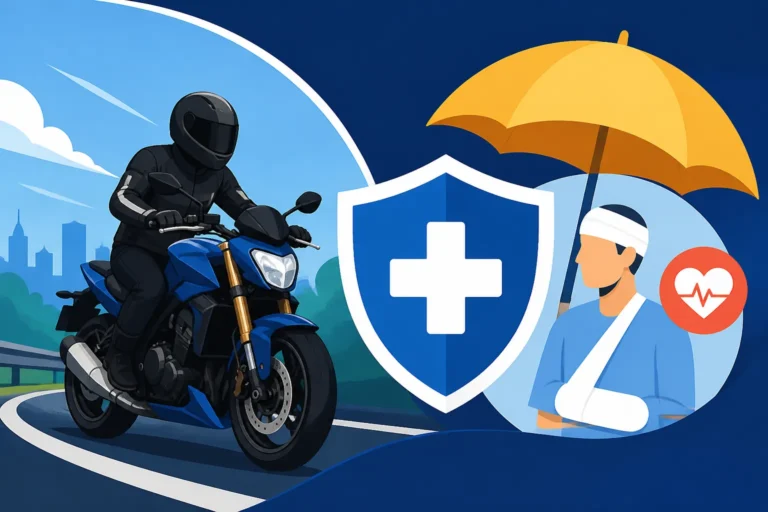
Let's cut right to the chase: Medical Payments coverage, often called MedPay, is a type of motorcycle insurance that helps pay for medical expenses for you and any passengers if you're injured in a motorcycle accident, regardless of who was at fault. This "regardless of fault" aspect is a huge deal for riders, as it means you don't have to wait for an investigation to determine blame before your medical bills start getting addressed.
Beyond Basic Health Insurance
You might be thinking, "But I already have health insurance!" And that's fantastic, truly. However, health insurance isn't always designed to be the sole savior in a vehicle accident scenario, especially for motorcycles. Think about those pesky deductibles and co-pays. If you have a high-deductible health plan, you could be on the hook for thousands of dollars out-of-pocket before your health insurance even begins to cover a significant portion. That's a burden nobody wants when they're already recovering from an injury.
MedPay steps in to cover these immediate expenses. It acts as a primary payer for accident-related medical costs up to your chosen limit, often without a deductible. This means quick access to funds for immediate care, which can be absolutely critical when you're dealing with injuries. It fills that often frustrating gap between the accident and when other insurance might finally kick in, or when you meet your health insurance deductible. While your health insurance might ultimately cover the bulk of long-term care, MedPay is there for the urgent, immediate financial hits that can quickly derail your recovery. It's a layer of protection specifically tailored for the immediate aftermath of a crash.
Who and What It Covers
The beauty of MedPay is its broad scope when it comes to individuals and expenses. It covers you, the policyholder, and any passengers you might have on your motorcycle at the time of the accident. This is particularly important because your personal health insurance policy generally won't cover injuries sustained by a passenger on your bike. If you often ride with a friend or loved one, this aspect alone makes MedPay incredibly valuable. You're not just protecting yourself, but anyone riding with you.
As for what it covers, think of almost any reasonable and necessary medical expense directly resulting from the accident. This typically includes:
- Ambulance and emergency services: Getting to the hospital quickly is often the first, and most expensive, step.
- Hospital stays: From a quick check-up to an extended inpatient stay.
- Doctor and surgeon fees: All consultations, procedures, and follow-ups.
- X-rays, MRIs, and other diagnostic tests: Identifying the extent of injuries.
- Rehabilitation and physical therapy: Crucial for regaining strength and mobility.
- Dental services: If your teeth are damaged in the accident.
- Funeral expenses: In the most tragic circumstances.
The key takeaway here is the comprehensiveness of the medical expenses it covers and the no-fault nature. Whether you swerve to avoid a deer, accidentally lay the bike down on a gravel patch, or are involved in a collision with another vehicle, MedPay is designed to respond swiftly to your immediate medical needs and those of your passenger.
Why Riders Seriously Consider Medical Payments Coverage
For many riders, MedPay isn't just another optional add-on; it's a fundamental part of a robust Types of Motorcycle Insurance Coverage Explained strategy. The unique vulnerabilities of riding a motorcycle mean that medical expenses after an accident can be steep, and MedPay offers a direct, fast-acting solution.
Bridging the Gap Before Health Insurance Kicks In
Let’s be honest, dealing with insurance after an accident can feel like navigating a maze while blindfolded. Your health insurance, while vital, often comes with deductibles and co-pays that can leave you with significant out-of-pocket expenses immediately following an incident. Imagine this: you have a high-deductible health plan, say $5,000. You're involved in a low-speed accident, break your collarbone, and the ambulance ride, ER visit, and initial X-rays total $4,000. Without MedPay, that entire $4,000 comes directly out of your pocket before your health insurance even starts paying a dime.
This is where MedPay truly shines. It can cover these initial costs up to its limit, potentially saving you from having to tap into your savings or rack up medical debt while you’re trying to heal. Unlike health insurance, which can be slow to process claims related to accidents while they determine fault, MedPay typically pays out much faster. This rapid response means you can focus on getting the medical care you need without the added stress of how you’re going to pay for it right away. It's not about replacing your health insurance, but rather acting as an immediate financial buffer specifically for accident-related injuries.
Protecting Yourself Regardless of Fault
One of the most compelling reasons to consider MedPay is its no-fault nature. In the world of motorcycle accidents, fault determination can be complex and time-consuming. You could be involved in an accident where the other driver is clearly at fault, but their insurance company drags its feet or disputes the claim. Or, perhaps you have a single-vehicle incident – you hit a pothole you didn't see, or a slick patch of road – and there's no other party to blame. In these scenarios, your standard Liability Coverage for Motorcycles Explained won't help your injuries, as liability coverage is designed to pay for damages and injuries you cause to others.
MedPay doesn't care whose fault it is. If you're injured in an accident while riding your insured motorcycle, it will help cover your medical expenses up to the policy limit. This is a massive peace-of-mind factor for riders. It means that even if you're involved in a scenario where you're deemed at fault, or where no other party is involved, you still have a safety net for your medical costs. It empowers you to seek immediate medical attention without fear of massive bills, knowing your policy has your back.
Covering Passengers and Uninsured/Underinsured Gaps
Riding solo is one thing, but if you ever carry a passenger, MedPay becomes even more critical. As mentioned, your personal health insurance likely won't cover your passenger's injuries in an accident. Without MedPay, if your passenger is injured, they would need to rely on their own health insurance, or potentially pursue a claim against you if you were at fault, which can strain relationships and add significant legal complexities to an already difficult situation. MedPay extends its no-fault medical coverage to your passengers, providing them with immediate financial support for their injuries.
Furthermore, MedPay can offer an additional layer of protection alongside your Uninsured & Underinsured Motorist Coverage (UM/UIM). While UM/UIM is essential for protecting you when an at-fault driver either has no insurance or insufficient insurance to cover your damages, MedPay can still provide immediate funds for your medical treatment without having to wait for the UM/UIM claim process to unfold. It works as a quick bridge, ensuring that your immediate medical needs are met even when another driver's negligence leaves you in a lurch. This dual protection strategy is something many experienced riders value when building out their What Does Full Coverage Motorcycle Insurance Mean policies.
Is Medical Payments Coverage a Must-Have for Every Rider?
Deciding whether MedPay is a "must-have" is a deeply personal choice, and it really comes down to your individual circumstances, financial comfort, and how you assess risk. While it’s certainly not mandatory in most states – check your specific Motorcycle Insurance Requirements by State (2026 Guide) – its benefits are compelling enough that many experienced riders wouldn't go without it.
Evaluating Your Personal Situation
Before adding MedPay to your policy, take an honest look at your personal situation:
- Your existing health insurance: How robust is it? What's your deductible, and how much is your out-of-pocket maximum? If you have a high-deductible plan, MedPay can act as a fantastic buffer against initial medical costs. If your health insurance is incredibly comprehensive with low out-of-pocket expenses, the urgency for MedPay might be slightly less, but the "no-fault" and "fast payout" aspects still hold value.
- Riding frequency and risk tolerance: Do you ride daily, or only on weekends? Do you stick to familiar roads, or venture out on longer, less predictable trips? The more you ride, and the more adventurous your riding style, the higher your exposure to risk, making MedPay a more attractive option.
- Financial comfort: Can you comfortably absorb a few thousand dollars in unexpected medical bills right after an accident? If the thought of a sudden, large medical expense would create significant financial hardship, MedPay offers a vital safety net.
- Riding with passengers: As we discussed, if you frequently have a passenger, MedPay is arguably a much stronger "yes," as it protects them as well.
It’s about weighing the potential costs of an accident against the relatively low premium of MedPay. When you're comparing policies and considering your options, helpful tools like those offered by The Zebra can lay out all the optional coverages side-by-side, making it easier to see if MedPay fits your current budget and needs. They can help you visualize how different coverage levels interact with your existing health insurance.
Cost vs. Benefit Analysis
The good news is that Medical Payments coverage is generally one of the more affordable additions to a motorcycle insurance policy. The cost increase is usually minimal compared to the peace of mind and financial protection it offers. Let's consider a quick comparison:
| Scenario | With MedPay Coverage ($5,000 Limit) | Without MedPay Coverage |
|---|---|---|
| Minor Accident (Your Fault) | MedPay covers initial $5,000 for ambulance, ER, X-rays. | You pay health insurance deductible ($2,500+) out-of-pocket. |
| Passenger Injury (Not Your Fault) | MedPay covers passenger's initial medical up to $5,000. | Passenger relies on their health insurance or sues at-fault driver. |
| Emergency Ambulance Ride | MedPay covers the full cost of the ambulance up to limit. | Ambulance bill goes to you, then health insurance after deductible. |
| Hitting a Deer | MedPay covers your injuries up to limit, regardless of fault. | Your health insurance handles it, subject to deductibles/co-pays. |
Many riders find that the peace of mind offered by MedPay, especially when getting a quote from a comparison site like The Zebra, is well worth the minimal additional cost. The potential to avoid thousands of dollars in immediate out-of-pocket medical expenses, coupled with the benefit of quick access to treatment funds, often makes it a clear winner for personal injury protection. Think of it as an investment in your physical and financial recovery.
How Medical Payments Works in Real-Life Scenarios
Understanding how MedPay functions during an actual incident can truly highlight its value. It’s not just theoretical protection; it’s practical help when you need it most.
Quick Reimbursement and Medical Care Access
Let's paint a picture: You're enjoying a beautiful fall ride through the scenic backroads of North Carolina. Suddenly, a patch of unexpected gravel appears mid-corner. You lose traction, lay the bike down, and slide a bit. Your knee is twisted, and your arm feels pretty bad. An ambulance is called, and you're off to the emergency room. The ambulance ride alone could be hundreds, even thousands, of dollars. Then come the ER doctors, X-rays, possibly a cast or stitches. This initial flurry of medical care can quickly rack up a bill in the range of $2,000-$5,000.
This is where MedPay shines. Instead of waiting for an accident investigation or trying to figure out your health insurance deductible, your MedPay coverage would kick in swiftly. It would help cover that ambulance ride, the ER visit, and those immediate X-rays. This means less stress about the bill and more focus on your recovery. This rapid response is a stark contrast to the often lengthy process of determining fault, which is where services like The Zebra can really shine, helping you understand how different coverage types will react in these common situations. It's about getting you treatment without financial roadblocks.
Another scenario: You're riding with a friend on your passenger seat, cruising through the bustling streets of Miami. Another driver, distracted by their phone, swerves into your lane, causing you to lose control and crash. Both you and your friend sustain injuries. Even though the other driver is clearly at fault, their insurance company might take weeks or even months to accept liability and process claims. In the meantime, your MedPay coverage can immediately begin to cover the medical expenses for both you and your friend, up to your policy limits. This ensures that you both get prompt medical attention and aren't left waiting for an insurance company to play catch-up. This is particularly valuable in states like Florida or Texas, where accident claims can sometimes involve lengthy negotiations.
Coordinating with Other Insurance
It's important to understand that MedPay isn't designed to replace your health insurance. Instead, it works in coordination with it, often acting as the primary payer for accident-related medical bills up to your chosen limit. Once your MedPay limits are exhausted, your personal health insurance can then step in to cover any remaining balances, subject to its own deductibles, co-pays, and policy terms.
For example, if you have a MedPay limit of $5,000 and your total medical bills from an accident come to $10,000, your MedPay would pay out its $5,000. The remaining $5,000 would then fall to your health insurance, which would apply its own coverage, deductibles, and co-pays as normal. This layered approach ensures comprehensive coverage and helps mitigate your out-of-pocket costs.
The key is understanding the hierarchy and how your specific policies coordinate. An insurance agent can walk you through this, or comparison tools can often illustrate these scenarios. Many riders view MedPay as a smart complement to their existing health insurance, specifically designed to handle the immediate and unique financial shockwaves that follow a motorcycle accident. It’s a proactive step to ensure that your recovery isn't hampered by financial worries.
Disclaimer
Please remember that insurance policies and requirements can vary significantly by state and individual circumstances. The information provided here is for general guidance only and should not be considered legal or financial advice. Always consult with a licensed insurance professional to discuss your specific needs and obtain personalized quotes.