Proof of Insurance: Digital vs Paper for Riders
Ah, the age-old question that keeps many a rider wondering at a traffic stop: do I need a paper insurance card, or is flashing my phone good enough? It's a real headache trying to keep up with what's legally accepted, especially when the rules seem to change every other year. This guide is here to clear up all that confusion, breaking down the ins and outs of both digital and paper proof of motorcycle insurance so you're always prepared, no matter where the road takes you.
The Evolving Landscape of Motorcycle Insurance Proof
Remember when carrying your physical insurance card was the absolute, non-negotiable standard? Times, they are a-changin'. The world is moving digital, and so is the way we prove we're properly insured. This shift brings a mix of convenience and new considerations for riders like us. It’s no longer a simple black-and-white matter; there are shades of gray and state-specific nuances to navigate.
The Traditional Paper Proof: What It Entails
For decades, the standard was a physical, wallet-sized insurance identification card, usually mailed to you by your insurer. This little piece of paper was your undeniable proof of financial responsibility. It listed your policy number, effective dates, the insured vehicle (your beloved motorcycle!), and sometimes even the specific coverages you carried. Beyond the ID card, your full policy documents, which could be a small novel, also served as proof, though no one expected you to carry that around with you on every ride.
The beauty of paper proof is its simplicity and universal acceptance. A police officer or DMV clerk can quickly glance at it, and there's no fumbling with technology, no worries about a dead phone battery, or a glitchy app. It's a tangible record that, in many ways, feels more "official" to those accustomed to traditional documentation. However, it also comes with its own set of frustrations. These cards can get lost, torn, or simply become outdated if you switch policies or make changes. Plus, waiting for a new card to arrive in the mail after an update can be a minor inconvenience when you just want to get out and ride.
The Rise of Digital Proof: Convenience Meets Technology
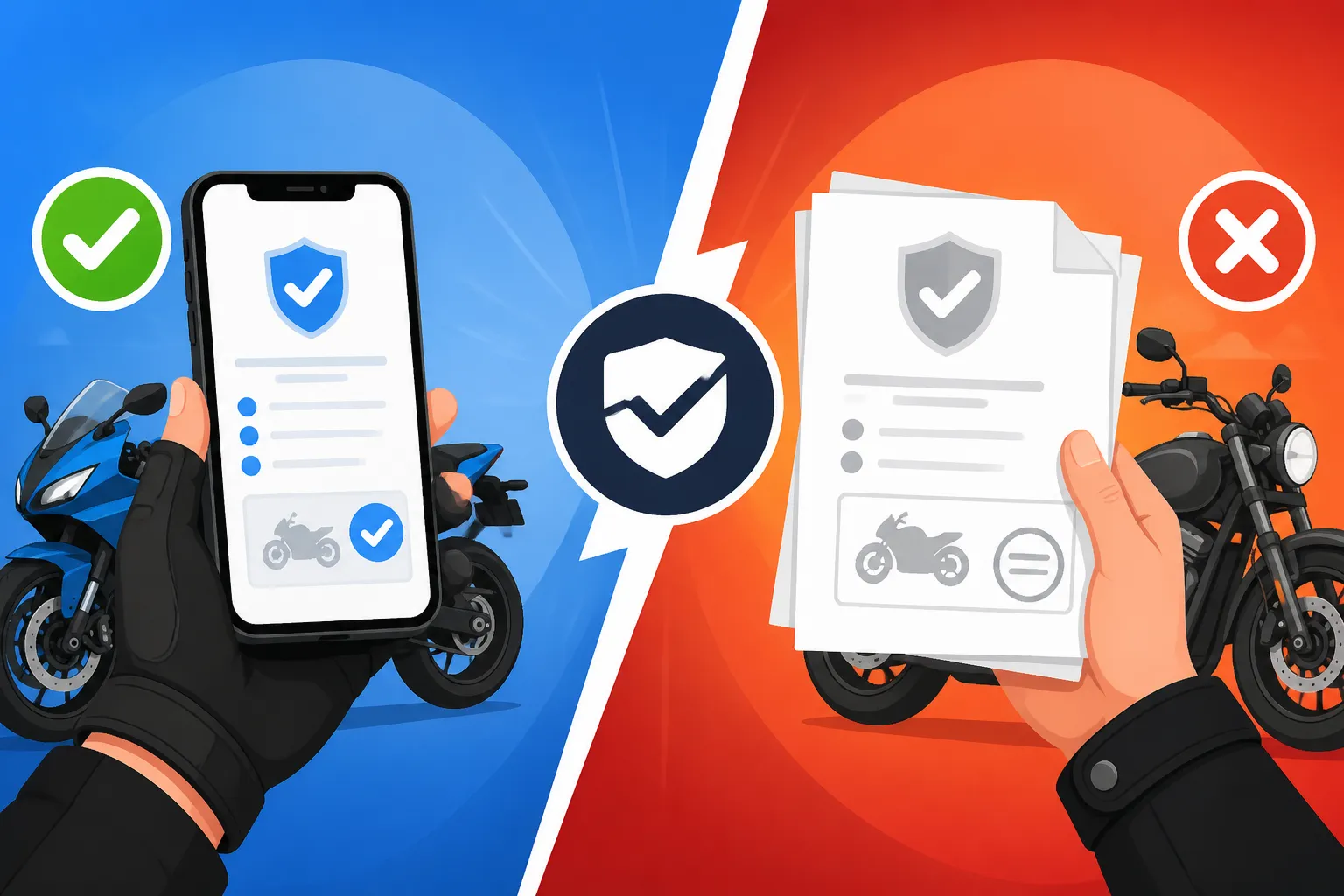
With smartphones becoming an extension of our very hands, it was only a matter of time before insurance companies and state motor vehicle departments recognized the potential for digital proof. Many major insurers, like Progressive, Geico, and State Farm, now offer digital ID cards through their mobile apps or allow you to download a PDF to your phone. The idea is simple: if you have your phone, you have your proof of insurance.
This move to digital proof for motorcycles mirrors the trend seen with car insurance, offering an unparalleled level of convenience. Imagine never having to worry about leaving your insurance card at home again. As long as your phone is charged, your proof of coverage is just a tap away. This can be especially handy for riders who might switch out wallets or jackets frequently, or those who simply prefer to minimize what they carry. It also aligns with a more environmentally conscious approach, reducing the need for paper printing and mailing. However, as we'll explore, this modern convenience isn't without its own set of caveats, primarily related to technology and state-specific laws.
State-by-State Breakdown: Digital vs. Paper Acceptance
Navigating the legal requirements for motorcycle insurance proof can feel like a labyrinth, especially when you consider that each state has its own set of rules. What's perfectly acceptable in California might land you a ticket in New York. This state-by-state variation is precisely why understanding the local regulations is so important before you hit the road. Generally, all states require you to carry some form of proof of insurance when operating a motorcycle, but how you can show that proof is where the differences lie. For a broader look at what's required, check out our guide on Motorcycle Insurance Requirements by State (2026 Guide).
States Embracing Digital Proof
The vast majority of U.S. states have now passed legislation allowing drivers and riders to present proof of insurance electronically. This means you can typically show your insurance ID card on your smartphone, tablet, or other electronic device. States like California, Texas, Florida, and most others in the contiguous U.S. have embraced this modern convenience. For instance, if you're riding through Arizona, flashing your digital insurance card on your phone to a law enforcement officer is generally accepted as valid proof. In Washington State, the law explicitly states that "an electronic image of an insurance card" is acceptable. This trend reflects a broader push towards digital documentation and convenience across many aspects of daily life.
However, even in states that accept digital proof, there can be a few nuances. Some states might specify that the officer cannot take possession of your device, or that you must be able to display it clearly and legibly. It’s also crucial that the digital proof is from an official source, such as your insurer’s mobile app or an electronic document provided by them, rather than just a photo you took of your paper card. While most states are on board, it's always a good idea to confirm the specific regulations for your state or any state you plan to ride through.
States Still Requiring or Preferring Paper
While the list of states that don't accept digital proof is rapidly shrinking, there might still be some exceptions or situations where paper proof is preferred or even legally mandated. As of our last check, every state now accepts electronic proof of insurance to some degree. However, specific circumstances, like certain types of traffic stops or interactions with different government agencies (e.g., registering your motorcycle at the DMV), might still lead to requests for a physical document. For example, while you can likely show digital proof at a traffic stop in New Mexico, when you go to register your bike, they might still ask for a paper copy or a printout. It’s not about rejection of digital, but sometimes about administrative processes that haven’t fully caught up.
In some states, while digital proof is accepted, there might be a strong preference from law enforcement for a physical card simply due to familiarity or ease of record-keeping. It's a "better safe than sorry" scenario for many riders, where carrying both offers peace of mind. If you ever find yourself wondering Is Motorcycle Insurance Required? State-by-State, remember that even in states with more relaxed rules, having proof is non-negotiable.
Here's a simplified look at the general acceptance across the U.S. (always verify with your specific state DMV or insurer):
| State/Territory | Digital Proof Accepted? | Paper Proof Required/Preferred for Any Scenario? |
|---|---|---|
| Most U.S. States | Yes, universally accepted by law enforcement during traffic stops. | Typically no, but may be preferred by some officers or for certain DMV transactions. |
| Example: California | Yes. | No, digital is fully legal. |
| Example: Texas | Yes. | No, digital is fully legal. |
| Example: New York | Yes. | No, digital is fully legal. |
| Example: Florida | Yes. | No, digital is fully legal. |
| Example: Michigan | Yes. | No, digital is fully legal. |
Disclaimer: This table provides a general overview. Laws can change, and specific situations (like out-of-state travel or particular DMV services) might have unique requirements. Always check with your local DMV and insurance provider for the most current information.
Advantages and Disadvantages of Digital Proof
Moving to digital proof of insurance feels like a natural progression in our increasingly tech-driven world. But just like anything new, it comes with its own set of benefits and potential headaches. It's not a one-size-fits-all solution, and understanding these pros and cons can help you decide if it's the right primary method for you.
The Perks of Going Digital
The most obvious advantage of digital proof is sheer convenience. Your smartphone is almost always with you, making it nearly impossible to forget your insurance card. You simply open an app or a PDF, and there it is. This eliminates the frantic search through your wallet or the "Oh no, I left it in my other jacket!" moment. For those who frequently switch vehicles or have multiple motorcycles, having all your insurance documents accessible on one device is incredibly efficient.
Furthermore, digital proof is always up-to-date. When you renew your policy or make a change, your insurer often updates the digital version almost instantly. No more waiting for a new card to arrive in the mail, hoping it gets there before your old one expires. This immediate update capability ensures you always have the most current information on hand, which can be critical during a traffic stop or after an accident. It also contributes to a paperless environment, reducing waste, which is a small but meaningful benefit to many riders. If you're looking into how to get the most accurate details for your coverage, a good place to start would be understanding your Motorcycle Insurance Minimums: 25/50/25 Meaning or reviewing your complete policy.
The Potential Pitfalls
As wonderful as digital convenience sounds, it's not without its drawbacks. The biggest one? Technology itself. What happens if your phone battery dies right when you need to show proof? Or if you're in an area with no cell service, and your insurer's app requires an internet connection to load the card? These are real-world scenarios that can quickly turn a moment of convenience into a stressful situation. While most digital cards can be downloaded as a PDF for offline access, remembering to do so and keeping it updated is an extra step.
Another concern for some riders is privacy. Handing over your unlocked phone to a law enforcement officer, even just to show your insurance card, can feel like an invasion of privacy. While officers are generally trained not to browse your device, the thought of them accidentally (or intentionally) seeing personal notifications or data is unsettling. There's also the risk of dropping your phone in the heat of the moment, leading to costly damage. These are valid concerns that make some riders hesitant to rely solely on digital proof, prompting them to carry a physical backup.
Advantages and Disadvantages of Paper Proof
While digital solutions are definitely gaining traction, there's still a lot to be said for the good old-fashioned paper proof of insurance. For many riders, it's a habit, a security blanket, and in some situations, still the most straightforward option.
The Reliability of Tangible Proof
The primary advantage of paper proof is its undeniable reliability. A physical card doesn't rely on battery life, signal strength, or software glitches. You don't need to unlock your phone, navigate an app, or worry about screen visibility in bright sunlight. It's a simple, straightforward document that most everyone, from police officers to tow truck drivers, instantly recognizes and understands. This makes interactions quicker and smoother, eliminating any potential technological hurdles.
Furthermore, a physical card is a universally accepted form of proof across all states, regardless of their digital acceptance laws. If you're planning a cross-country adventure, carrying a paper card ensures you're covered no matter where you ride. This peace of mind is invaluable. It’s a failsafe that doesn't let you down when your smartphone decides to act up. For a broader perspective on travel requirements, you might want to look into Riding Across State Lines: Insurance & Helmet Rules. Having that little card tucked away means one less thing to stress about when you're out enjoying the open road.
The Drawbacks of Paper
Despite its reliability, paper proof isn't perfect. The most common issue is simply losing it. These small cards are easily misplaced, forgotten in a different jacket, or accidentally tossed out with old mail. Finding yourself at a traffic stop without your paper card can be just as problematic as a dead phone, if not more so, because it's not as easily retrievable as a digital document.
Another significant drawback is that paper proof can quickly become outdated. If you make a policy change, renew your coverage, or switch insurers, you have to wait for a new card to be mailed to you. During that waiting period, you're technically carrying an invalid or expired card, which could lead to questions or even penalties if you're stopped. While most insurers offer temporary printouts, that's an extra step. The bulk factor, while minor, is also a consideration for minimalist riders. Adding another piece of paper to your wallet or documents pouch, when a digital alternative exists, might feel unnecessary.
Best Practices for Riders: Ensuring You're Always Covered
No matter how you prefer to carry your proof of insurance, the ultimate goal is to always have valid, accessible documentation. Getting caught without it can lead to frustrating delays, fines, or even more serious legal repercussions, as detailed in articles like What Happens If You Ride Without Insurance? and Penalties for Riding Without Insurance. A little proactive planning can save you a lot of headache down the road.
Redundancy Is Your Friend
The smartest approach for any rider, regardless of state laws, is to adopt a redundancy strategy. This means carrying both digital and paper proof of insurance. Think of your paper card as your reliable backup, and your digital version as your quick-access convenience. If your phone dies, you have the card. If you forget your wallet but have your phone, you're still good. This dual approach provides the best of both worlds and minimizes the chances of being caught unprepared.
Many riders keep their physical card tucked into their motorcycle's registration and inspection document pouch, which is often stored under the seat or in a saddlebag. This keeps it secure and out of the elements. For the digital copy, make sure you've downloaded it as a PDF directly to your phone, rather than relying solely on an app that needs internet access. This ensures it's available even if you're out of range or your data plan is being temperamental. This way, when a police officer asks for your Proof of Insurance & Registration for Motorcycles, you can confidently produce it in whichever format works best at that moment.
Keeping Your Proof Up-to-Date
Having proof is one thing, but having current and valid proof is another entirely. It's crucial to regularly check the expiration date on your insurance card, both paper and digital. If you renew your policy, ensure you receive updated documents and replace any old paper cards. For digital proof, confirm that the version on your phone or in your app reflects the current policy period.
Life changes, and so can your insurance needs. If you make adjustments to your coverage, purchase a new motorcycle, or even move to a new state, your insurance documents will need updating. For example, if you get a new bike, you'll need to know What Documents Do You Need to Insure a Motorcycle? to get your new policy sorted. Always make it a habit to check your policy details and update your proof of insurance whenever these significant life events occur. Set a reminder in your phone or mark your calendar for your policy renewal date to ensure you're never caught off guard with expired documentation. Staying on top of these details ensures that when you're out on the road, your mind can be focused on the ride, not on whether your paperwork is in order.
Disclaimer
The information provided in this guide is for general informational purposes only and does not constitute legal or insurance advice. Motorcycle insurance laws and regulations, including those pertaining to proof of insurance, vary by state and can change. Always consult with your state's Department of Motor Vehicles (DMV) or equivalent agency and your insurance provider for the most accurate, up-to-date, and state-specific requirements.