What Is FR-44 and Which States Use It?
Oh, the world of insurance can feel like navigating a maze blindfolded, especially when you're talking about something as specific and often misunderstood as FR-44 certification for your motorcycle. Many riders find themselves completely blindsided by this requirement, often after an incident that leaves them feeling a mix of frustration and confusion. It's not just about getting "more" insurance; it's about a specific type of financial responsibility filing that comes with its own unique set of rules and, let's be honest, higher costs. This guide is here to untangle the complexities of FR-44, explaining exactly what it is, why certain states demand it, and how you can navigate the process without losing your mind—or your riding privileges.
Demystifying FR-44 Insurance for Motorcyclists
When you hear "FR-44," your first thought might be, "Is that just like an SR-22?" And while they're cousins in the world of high-risk insurance filings, the FR-44 is a much more stringent beast, designed for specific, severe driving infractions. It's not just a piece of paper; it's a commitment to carrying significantly higher liability coverage than the state minimums, proving your financial responsibility after a serious offense.
What Exactly Is FR-44?
At its core, an FR-44 isn't an insurance policy itself, but rather a certification that your insurance company files with your state's Department of Motor Vehicles (DMV) or equivalent agency. This certificate proves that you've purchased and will maintain specific, higher-than-average liability limits on your motorcycle insurance policy. Unlike standard liability coverage, which typically covers damages and injuries you cause to others in an accident, FR-44 ensures that you have a much larger financial safety net in place. This isn't about protecting your bike from collision damage or theft; it's solely focused on your responsibility to others on the road.
The key differentiator for an FR-44 is the significantly increased liability limits. We're talking about minimums that can be two or even four times higher than what most states require for basic coverage. For instance, where a state might ordinarily mandate 25/50/25 (which means $25,000 for bodily injury per person, $50,000 for bodily injury per accident, and $25,000 for property damage), an FR-44 requirement could jump to something like 100/300/50. This substantial increase is a direct reflection of the severity of the driving offense that triggered the requirement in the first place. It’s a way for the state to make sure that if you get into another incident, there's ample coverage to protect any victims you might injure or any property you might damage.
Why Is FR-44 Required?
The requirement for an FR-44 typically stems from severe driving infractions, particularly those involving driving under the influence (DUI) or driving while intoxicated (DWI). These aren't minor traffic tickets; these are serious offenses that demonstrate a significant disregard for public safety and the law. States that implement FR-44 mandates see these incidents as high-risk behaviors that warrant a much stricter financial responsibility requirement. The idea is simple: if you've proven yourself to be a high-risk driver, the state wants to ensure that you are financially prepared to cover potentially devastating costs if another incident occurs.
It's a punitive measure, yes, but it's also a protective one. Imagine the scenario: a rider is caught for a second DUI, their license is suspended, and to get it back, they need an FR-44. This isn't just about them. It's about protecting every other motorist, pedestrian, and property owner from potentially catastrophic financial burdens if that rider were to be involved in another alcohol-related accident. Without this heightened level of financial backing, the victim of such an accident could be left to shoulder immense medical bills or property repair costs out of their own pocket, which is exactly what the state wants to prevent. It essentially puts the onus on the high-risk driver to carry a burden proportionate to the risk they pose.
How FR-44 Differs from SR-22
This is where a lot of confusion comes in, and rightly so. Both FR-44 and SR-22 are financial responsibility filings, but they serve different purposes and carry different weight. Think of an SR-22 as the "standard" high-risk filing, often required for less severe infractions like multiple speeding tickets, at-fault accidents without insurance, or driving with a suspended license. When you need an SR-22, your insurer files a certificate proving you have at least the state's minimum liability coverage. The focus is simply on ensuring you meet the basic legal requirements after demonstrating you might be a higher risk. You can learn more about what an SR-22 entails for motorcyclists in our guide on SR-22 for Motorcycles: When It's Required.
Now, the FR-44 is a different animal altogether. It’s exclusively for the most serious violations, predominantly DUIs or DWIs. The key difference isn't just the type of offense, but the amount of coverage. With an FR-44, you're not just proving you have the minimum; you're proving you have significantly more than the minimum. The liability limits for an FR-44 are substantially higher, often double or even quadruple the standard state requirements. This means your premiums will be considerably higher with an FR-44 compared to an SR-22, reflecting the increased financial exposure and the severity of the offense that necessitated it. Essentially, SR-22 says, "I have the minimum," while FR-44 says, "I have way more than the minimum because my offense was more serious."
States Requiring FR-44 Certification
It's a common misconception that FR-44 is a nationwide requirement, but thankfully, that's not the case. Only a select few states utilize this particular filing, which is good to know if you ever find yourself in this predicament. Knowing which states impose it is crucial, especially if you're a rider who travels or is considering moving.
The Current FR-44 States (Virginia and Florida)
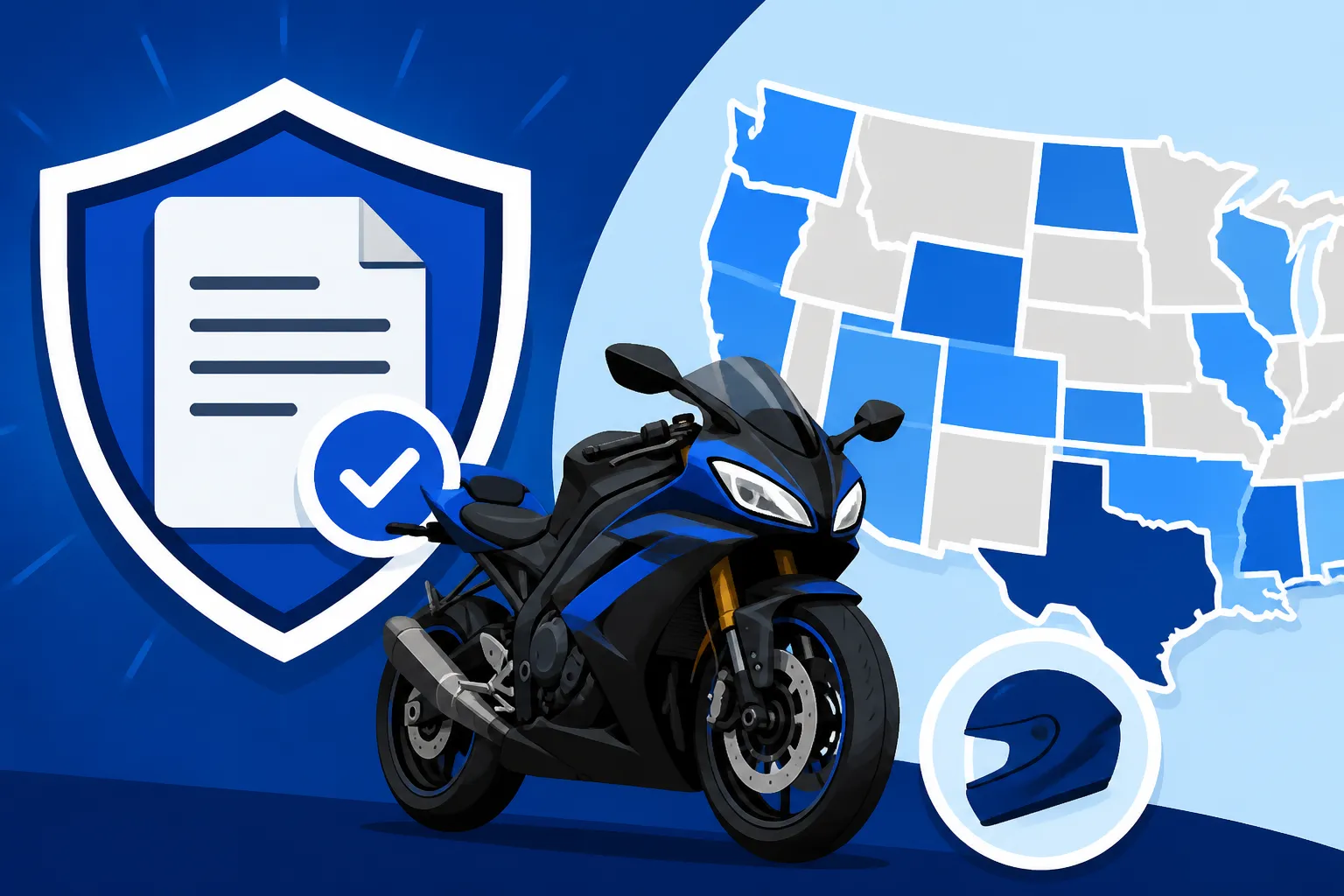
As of now, only two states in the United States currently mandate FR-44 insurance certification for certain serious driving offenses: Virginia and Florida. If you're riding in any other state and facing a high-risk insurance requirement, it will almost certainly be an SR-22 filing, not an FR-44. This distinction is incredibly important because the financial implications of an FR-44 are much greater than an SR-22.
For riders in Virginia, the FR-44 requirement often comes into play after convictions for DUI/DWI, maiming another person while driving under the influence, or driving on a suspended license due to an alcohol-related offense. The Old Dominion takes these infractions very seriously, and the FR-44 is their way of ensuring a higher level of financial responsibility for those who have proven to be a danger on their roads. Similarly, in Florida, known as the Sunshine State, an FR-44 is typically required for similar alcohol or drug-related driving offenses. Florida's approach is just as strict, making sure that if you're going to get back on the road after a severe incident, you're prepared for the financial consequences. It’s a tough lesson, but it’s rooted in public safety.
What Triggers an FR-44 Requirement in These States
The primary trigger for an FR-44 requirement in both Virginia and Florida is a conviction for driving under the influence (DUI) or driving while intoxicated (DWI). This isn't just about being pulled over and getting a ticket; it's about a conviction in court. These states view operating a vehicle—be it a car or a motorcycle—under the influence of alcohol or drugs as a grave offense that demands a higher level of accountability.
However, the specific circumstances can vary slightly. For instance, in Virginia, an FR-44 might also be required if you're convicted of driving on a suspended license where the suspension was a result of an alcohol or drug-related violation. It can also be imposed if you're convicted of violating certain federal alcohol or drug laws while operating a motor vehicle. Florida has similar stipulations, often extending the FR-44 requirement to cases where a driver has caused serious bodily injury or death while intoxicated. It’s not just the act of driving impaired, but the potential or actual harm caused that solidifies the need for this severe financial responsibility filing. This isn't a situation you want to find yourself in, and understanding the triggers is the first step in avoiding it altogether.
The Impact of FR-44 on Your Policy
Receiving an FR-44 requirement letter is a game-changer for your motorcycle insurance policy. The most immediate and noticeable impact will be a significant increase in your insurance premiums. This isn't just a slight bump; we're talking about premiums that can easily double, triple, or even quadruple compared to what you were paying before. Why such a drastic increase? Because you're now classified as a "high-risk" driver, and the state is demanding much higher liability limits, which inherently costs more. Insurers see you as a much greater risk to underwrite, and they price that risk accordingly.
Beyond the cost, your choice of insurance providers might also become limited. Not all insurance companies are willing to offer FR-44 filings, or they might charge exorbitant rates if they do. Companies like Progressive and Dairyland are often known for working with high-risk drivers and offering FR-44 filings, but it's essential to shop around and compare quotes specific to your situation. You can't just pick any policy; it has to be one that your state's DMV will accept with the FR-44 certification. Furthermore, you might find that certain discounts you previously enjoyed are no longer applicable. The priority shifts from saving a few bucks to simply securing compliant coverage. This can make finding affordable motorcycle insurance a real challenge. You may want to explore options mentioned in our guide on How Much Does SR-22 Increase Motorcycle Insurance? to get an idea of the magnitude of cost increases associated with these types of filings.
Navigating FR-44 Requirements and Higher Limits
Once you're hit with an FR-44 requirement, the focus shifts to compliance. This isn't something you can ignore or hope goes away. Your ability to legally ride your motorcycle depends on meeting these stringent requirements. It demands understanding the new liability minimums, knowing where to find coverage, and understanding how long this requirement will stick with you.
Understanding FR-44 Liability Minimums
This is perhaps the most critical aspect of an FR-44: the dramatically increased liability limits. Unlike standard motorcycle insurance requirements that vary from state to state, an FR-44 sets a new, much higher bar. For instance, in Virginia, if you're required to carry an FR-44, the minimum liability coverage for bodily injury or death for one person is $60,000, for two or more persons is $120,000, and for property damage is $40,000. This is often referred to as 60/120/40. In Florida, the typical FR-44 limits are even higher, usually 100/300/50, meaning $100,000 for bodily injury per person, $300,000 for bodily injury per accident, and $50,000 for property damage.
These numbers are a significant jump from standard state minimums, which for many states might be as low as 25/50/25 or even 10/20/10. It’s a stark reminder of the seriousness of the offense that led to the FR-44. You're not just getting "full coverage" in the colloquial sense; you are securing specific, very high liability coverage to satisfy the state. This means your personal assets are on the line if you don't carry sufficient coverage and cause a serious accident. Don't confuse these liability minimums with options like collision or comprehensive coverage, which protect your own motorcycle; the FR-44 is all about protecting others. If you're confused about these numbers, our guide on Minimum Liability Insurance Explained (The Three Numbers) can provide further clarity.
Finding an Insurer for FR-44 Coverage
Finding an insurer willing to provide FR-44 coverage can be a bit more challenging than just getting a standard policy. Many mainstream insurance companies prefer not to deal with high-risk clients, or they might not even offer FR-44 filings. You'll likely need to seek out companies that specialize in or are more accustomed to insuring high-risk drivers.
Major national providers like Progressive and Dairyland often have options for FR-44 filings, as they tend to cater to a broader spectrum of drivers, including those with less-than-perfect records. It's crucial to be upfront about your FR-44 requirement when getting quotes, as hiding it will only lead to issues later. You'll need to compare not only rates but also ensure that the insurer is capable of electronically filing the FR-44 certificate directly with the Virginia or Florida DMV. Some smaller or local insurers might not have this capability, which could cause delays in getting your license reinstated. The best approach is to contact several providers, explain your situation clearly, and request FR-44 specific quotes. Remember, the cheapest option isn't always the best; you need reliable coverage that meets the state's strict demands.
The Duration of FR-44 Requirements
The FR-44 requirement isn't a life sentence, but it's certainly not a short-term penalty either. Typically, you'll be required to maintain FR-44 certification for a period of three to five years, depending on the specific state laws and the nature of your offense. In both Virginia and Florida, a common duration is three years from the date your license is eligible for reinstatement, or from the end of any suspension period. However, this period can sometimes be extended if you incur additional violations or allow your FR-44 coverage to lapse during the required period.
It's absolutely critical to understand the exact end date of your FR-44 obligation. If you cancel your policy or let it lapse before the official release date, your insurance company is legally obligated to inform the state DMV, which will immediately re-suspend your license. This could restart the clock on your FR-44 requirement, making the whole ordeal last even longer. So, once you're in the FR-44 boat, you're committed until the state formally releases you. Keep meticulous records of your policy and the dates, and don't be afraid to contact your DMV or your insurer as the end date approaches to confirm your status. This commitment is similar to what riders experience when an SR-22 is required for a specified period, as discussed in How Long Do I Need an SR-22 for a Motorcycle?.
Consequences of Non-Compliance and Getting Back on Track
Ignoring an FR-44 requirement or failing to maintain continuous coverage is not an option if you want to legally ride your motorcycle. The consequences are severe and can lead to a never-ending cycle of legal and financial headaches. Understanding these penalties and knowing the steps to rectify your situation is paramount.
Penalties for Not Maintaining FR-44
The penalties for failing to maintain your FR-44 certified insurance are swift and severe in both Virginia and Florida. The moment your insurance company notifies the DMV that your FR-44 policy has lapsed or been canceled, your driver's license will be immediately suspended. This isn't a warning; it's an automatic suspension. Riding a motorcycle with a suspended license carries its own set of very serious penalties, including hefty fines, potential jail time, and further extensions of your license suspension. You could also face impoundment of your motorcycle, and if you're involved in an accident while uninsured and with a suspended license, the financial and legal repercussions could be catastrophic.
Beyond the immediate legal troubles, failing to maintain FR-44 coverage will also likely extend the period for which you're required to carry it. The clock essentially resets, meaning you'll be paying those incredibly high premiums for an even longer duration. It's a costly mistake that far outweighs the perceived savings of letting your policy lapse. This is a situation where the state is watching your compliance very closely, and they have no qualms about enforcing the rules. The financial consequences are detailed further in resources such as What's the Penalty for Letting Motorcycle Insurance Lapse?.
Steps to Obtain or Reinstate FR-44
If you've received notice that you need an FR-44 or if your coverage has lapsed and you need to reinstate it, the process, while daunting, is straightforward. Your first step is to contact insurance providers that handle FR-44 filings. As mentioned, companies like Progressive or Dairyland are good places to start. You'll need to explain your situation clearly, detailing the type of offense and the state requiring the FR-44. Be prepared for high quotes, but compare them diligently.
Once you select a policy, pay for it in full, if possible, or ensure your payments are set up to avoid any lapses. Your chosen insurer will then file the FR-44 certificate electronically with the appropriate state DMV (Virginia or Florida). This filing confirms to the state that you have purchased the required, higher liability limits. After the DMV receives and processes this filing, they will notify you that your license is eligible for reinstatement. You'll still need to pay any reinstatement fees and satisfy any other outstanding requirements, such as taking defensive driving courses or paying fines, before you can legally get back on the road. Do not assume you're cleared until you have official confirmation from the DMV.
When Your FR-44 Requirement Ends
The day your FR-44 requirement officially ends is a day for celebration for many riders! However, you can't just drop your enhanced coverage the moment you hit the three or five-year mark. It's crucial to confirm with the state DMV that your FR-44 obligation has officially concluded. Don't rely solely on your own calculations or memory. Contact the Virginia DMV or Florida DMV directly to verify your status.
Once the state confirms that the FR-44 requirement has been satisfied, they will typically send a release notice to both you and your insurance company. At this point, you are free to switch to a standard motorcycle insurance policy with lower liability limits, if you wish, and shop around for potentially much cheaper rates. You will no longer be considered a high-risk driver for that specific filing, which means more options and lower costs for your insurance. Just be sure to maintain continuous coverage, even if it's a standard policy, to avoid future issues. Remember, a new infraction could always land you back in hot water, so continuing to drive responsibly is key.
Here's a quick look at how FR-44 and its cousin, SR-22, stack up:
| Feature | FR-44 Filing | SR-22 Filing |
|---|---|---|
| Purpose | Proves higher liability coverage | Proves minimum liability coverage |
| Triggering Offense | Severe offenses (e.g., DUI/DWI, maiming) | Moderate offenses (e.g., at-fault accident, multiple tickets, driving without insurance) |
| Required States | Primarily Virginia and Florida | Most states, if required |
| Liability Limits | Significantly higher than state minimums (e.g., 100/300/50 in FL) | State minimum liability limits (e.g., 25/50/25) |
| Duration | Typically 3-5 years | Typically 1-3 years |
| Impact on Premiums | Drastically higher | Moderately to significantly higher |
| Key Distinction | Focus on higher financial responsibility | Focus on proof of financial responsibility |
Ultimately, facing an FR-44 requirement for your motorcycle is a challenging situation, but it's one that can be navigated with the right information and a commitment to compliance. Understanding what FR-44 is, which states use it, and how to meet its demands will help you get back on the road legally and responsibly.
Disclaimer
This article is for general informational purposes only and does not constitute professional advice. Laws, prices and regulations vary by location and change over time. Consult a qualified professional for guidance on your specific situation.