Does Motorcycle Insurance Cover Theft of Parts?
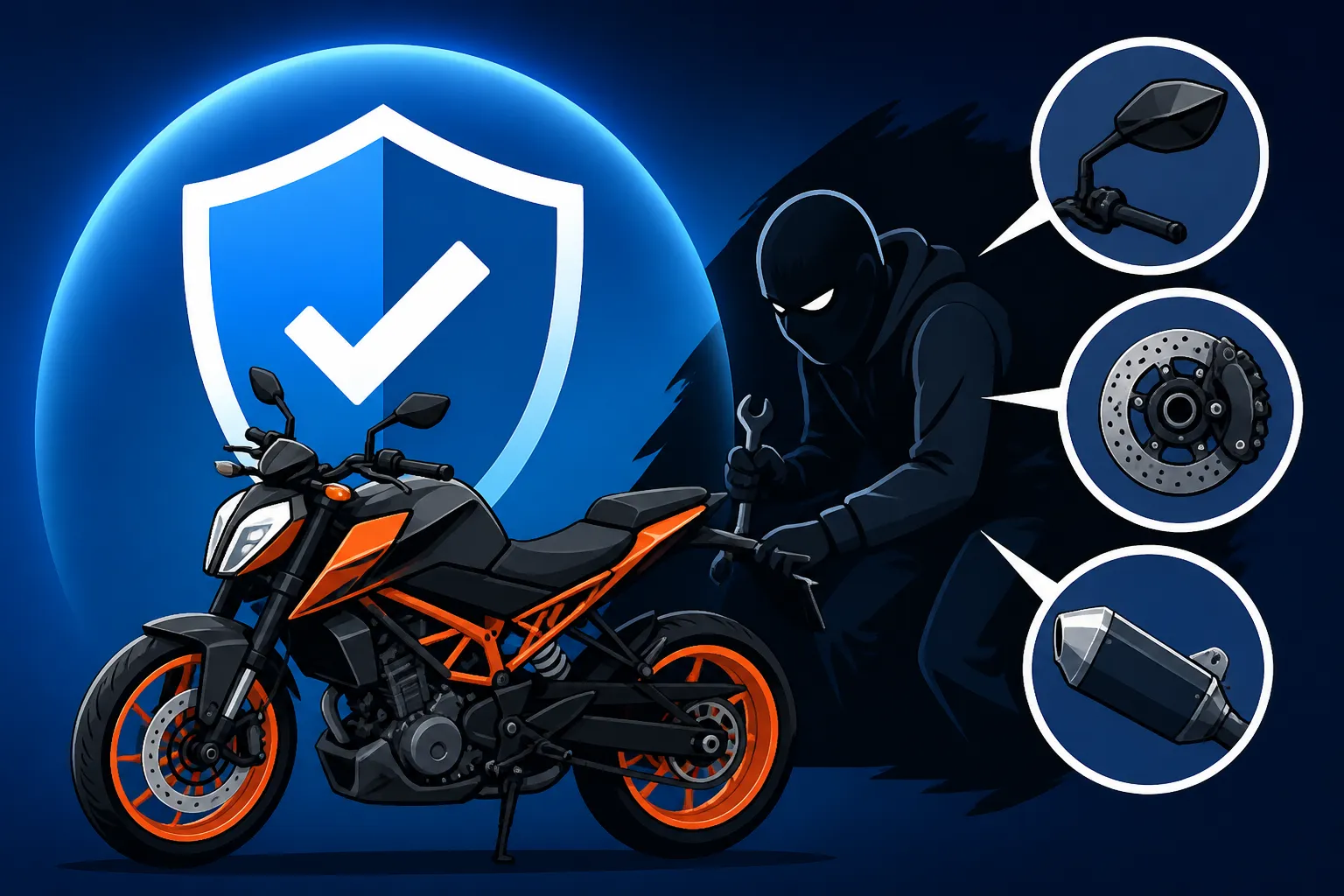
It's a gut-wrenching feeling: walking out to your garage or parking spot, only to find your beloved motorcycle tampered with, or worse, specific, valuable parts stripped clean. The initial shock, the anger, the worry about how much it's going to cost to replace that custom exhaust or those shiny chrome wheels – it's a nightmare scenario no rider wants to face. This guide is dedicated to helping you understand if your motorcycle insurance policy can offer a lifeline when your bike's parts go missing due to theft, and how to best prepare for such an unfortunate event.
Understanding Motorcycle Insurance and Theft Coverage
Let's be honest, insurance policies can feel like reading a foreign language. But when it comes to theft, understanding a few key terms can make all the difference. Knowing what type of coverage kicks in for a stolen fender or an entire engine is crucial.
The Role of Comprehensive Coverage
When we talk about theft, whether it's your entire motorcycle disappearing or just its valuable components, the type of coverage you absolutely need to have in place is comprehensive insurance. Think of comprehensive as your policy's guardian angel against all the "non-collision" stuff that can happen to your bike when you're not riding it. It’s the coverage that steps up when Mother Nature throws a tantrum, when vandals leave their mark, or, most relevantly here, when thieves make off with your pride and joy.
Comprehensive coverage typically covers losses from events like fire, natural disasters (hail, floods, falling objects), vandalism, and, yes, theft. If you've got comprehensive on your policy, you're generally covered if your whole motorcycle is stolen. But here's where it gets a bit nuanced for parts: it usually extends to cover individual parts and accessories that are permanently attached to your motorcycle at the time of theft. This means if a thief makes off with your factory-installed turn signals, your comprehensive coverage should be there for you, minus your deductible. This is different from collision coverage, which only comes into play if your bike is damaged in a crash with another vehicle or object. Understanding the distinction is vital, as Types of Motorcycle Insurance Coverage Explained dives deeper into all the options available.
Differentiating Between Full Motorcycle Theft and Parts Theft
While comprehensive coverage is the hero for both scenarios, there are subtle differences in how these claims might be handled. If your entire motorcycle is stolen, the process is usually straightforward: you report it to the police, file a claim with your insurer, and if the bike isn't recovered, they'll typically pay out its actual cash value (or agreed/stated value, if you have that specific endorsement) after your deductible. This often means you're looking at a larger payout, as the value of the entire motorcycle is at stake.
When it's just parts that are stolen, like a catalytic converter from your Harley-Davidson or the expensive aftermarket navigation system from your touring bike, the claim process still falls under comprehensive. However, the valuation and what's covered can get a little more intricate, especially if those stolen parts weren't standard factory equipment. This is where the devil is truly in the details of your specific policy and any additional endorsements you've wisely added. Some basic policies might have limits on accessories or custom parts, which could leave you with an unexpected out-of-pocket expense if your custom parts exceed that limit. It’s a good idea to review your policy regularly to ensure it still meets your needs, especially if you’ve recently added new modifications.
What Happens When Motorcycle Parts Are Stolen?
The moment you discover parts of your motorcycle are missing, a thousand questions race through your mind. What do I do first? Will my insurance actually cover this? And how much will I get back? It's a frustrating and often disheartening situation, but knowing the steps and understanding your coverage can help immensely.
Identifying What's Covered and What Isn't
Here's the critical distinction for parts theft: standard comprehensive insurance policies generally cover the theft of original manufacturer parts. If your stock mirrors, seat, or exhaust are stolen, you're typically in good shape. The challenge arises when you've invested in aftermarket modifications or custom parts. Many standard policies include a limited amount of coverage for accessories and custom parts, often as low as $1,000 to $3,000. While this might cover minor additions, it's quickly exhausted if you've got an elaborate custom paint job, performance upgrades, or high-end sound systems.
This is precisely why specialized "accessories and custom parts" coverage is so vital for many riders. This add-on extends the coverage limits for non-factory components, protecting your investment in those unique touches that make your bike yours. Whether it's a Vance & Hines exhaust, Kuryakyn floorboards, or a custom saddle, this endorsement ensures these items are properly valued and covered in the event of theft. Without it, you could be left footing a significant portion of the replacement bill yourself. When you're looking for robust protection, make sure you specifically ask about this type of coverage, especially if you ride a custom Harley or a sport bike loaded with upgrades. Knowing if Does Motorcycle Insurance Cover Custom Parts? is crucial for customizers.
The Claims Process for Stolen Parts
When you find yourself facing stolen parts, acting swiftly and systematically can make the claims process much smoother. It's a frustrating time, but a clear head will serve you well.
-
File a Police Report Immediately: This is the absolute first step. Contact your local law enforcement agency – whether it's the Los Angeles Police Department if you're in California or the Dallas Police Department in Texas – and file a detailed report. Provide them with all the information you can: description of the stolen parts, any unique markings, the time you last saw your bike intact, and any suspicious circumstances. Get a copy of the police report, as your insurance company will require it. This is similar to the initial steps you'd take in a full Motorcycle Theft Claim: How It Works.
-
Document Everything: Before you touch anything, take photos and videos of the damaged areas where the parts were stolen. Note down serial numbers of stolen components if you have them. This visual evidence, combined with your detailed list, will be invaluable to your insurance adjuster. The more information you can provide, the easier it is for them to assess the claim accurately.
-
Contact Your Insurance Company: As soon as you have a police report number, call your insurer. Most companies, like Progressive or Dairyland, have dedicated claims departments. Explain clearly that specific parts of your motorcycle were stolen and that you have a police report. They will assign an adjuster to your case. The more proactive you are, the faster the claim can move. Remember, a quick response on your part sets the tone for a smooth process.
-
Work with Your Adjuster: Your adjuster will guide you through the next steps, which might include having a mechanic assess the damage and provide estimates for replacement. Be prepared to provide purchase receipts or documentation for any aftermarket or custom parts to help establish their value. This table outlines the key documents often requested:
| Document Type | Purpose | Importance for Stolen Parts Claim |
|---|---|---|
| Police Report | Official record of theft | Mandatory for any theft claim. |
| Photos/Videos of Damage | Visual evidence of the theft and missing parts | Helps adjuster understand scope of loss. |
| Itemized List of Stolen Parts | Detailed description of each missing part | Essential for accurate valuation and replacement. |
| Receipts for Aftermarket Parts | Proof of purchase and cost for custom/added components | Crucial for proving value beyond factory parts. |
| Repair/Installation Invoices | Shows professional installation costs, adding to value | Supports claim for labor costs if applicable. |
| Previous Appraisal/Valuation | For highly customized bikes, helps establish agreed or stated value | Extremely useful for specialized coverage types. |
| Motorcycle Title/Registration | Proof of ownership | Standard requirement for any major claim. |
Valuing Your Stolen Parts: ACV, Stated Value, and Agreed Value
The biggest headache after reporting stolen parts isn't just the inconvenience; it's often the financial hit. How much will your insurance company actually pay out? This largely depends on how your policy values your bike and its components.
How Insurers Determine Payouts
For most standard parts, your insurer will likely use what's called Actual Cash Value (ACV). This means they'll pay out the replacement cost of the stolen part, minus depreciation. Just like a car, motorcycle parts lose value over time. So, if your three-year-old factory exhaust system is stolen, you won't get enough to buy a brand new one. You'll get what a three-year-old used exhaust system is worth. This can be a rude awakening for many riders, especially those who see their motorcycle as a timeless investment rather than a depreciating asset. The depreciation factor can significantly reduce your payout, leaving a gap between what you receive and what it costs to truly replace the stolen components with new ones.
This becomes an even bigger issue with custom or aftermarket parts. While you might have spent $2,000 on a new fairing last year, its ACV might be considerably less, especially if it's considered an "accessory" rather than a fundamental part of the bike's operation. This is why a thorough understanding of Agreed Value vs Stated Value vs Actual Cash Value is paramount, especially if your bike isn't fresh off the showroom floor.
The Importance of Specialized Coverage
To combat the limitations of ACV, especially for riders who pour their hearts and wallets into customizing their motorcycles, insurance companies offer specialized valuation options:
-
Stated Value: With stated value coverage, you declare a maximum value for your motorcycle (or its custom parts) at the beginning of the policy term. However, it's important to understand the "catch" with stated value. While you state a maximum, the insurer typically reserves the right to pay out up to that stated amount, often based on the actual cash value or fair market value at the time of loss, whichever is less. So, if you state your custom exhaust is worth $1,500, but the adjuster determines its ACV is only $800, you'll get $800. It offers a little more flexibility than pure ACV but still leaves room for disappointment.
-
Agreed Value: This is often considered the gold standard for highly customized or vintage motorcycles, and it's especially beneficial when it comes to covering the theft of custom parts. With agreed value, you and your insurance company literally agree on a specific value for your motorcycle and its modifications before the policy takes effect. This agreement is typically based on an appraisal or detailed documentation of your custom work. If parts covered under this agreement are stolen, the insurer pays out the pre-agreed amount (minus your deductible), without factoring in depreciation. This certainty is a huge relief for owners of unique bikes. For instance, if you have an agreed value policy on your custom chopper in Sturgis, South Dakota, that clearly lists a $5,000 custom engine modification, and that engine is stolen, you'll receive that $5,000 (minus deductible), regardless of its depreciated value. This peace of mind is invaluable.
When shopping for motorcycle insurance, particularly if you have significant custom work, always inquire about agreed value policies. Not all insurers offer it, or they might have specific requirements for appraisals. Companies like Markel or Hagerty, known for classic and custom vehicle insurance, are often good places to start for these specialized options. They understand that a custom bike isn't just a machine; it's a piece of art and a labor of love.
Practical Steps to Protect Your Investment and Navigate a Claim
Discovering stolen parts is tough, but you can take proactive steps to minimize your risk and ensure a smoother claims process if the worst happens. It’s all about preparation and making informed choices about your coverage.
Documenting Your Motorcycle and Its Modifications
This can't be stressed enough: detailed documentation is your best friend when it comes to custom parts. Before anything happens, take comprehensive photos and videos of your motorcycle from every angle, highlighting all your aftermarket and custom additions. Don't forget the close-ups of specific components, noting their brand, model, and any serial numbers.
Beyond visual proof, keep meticulous records of all purchases and installations. Every receipt for that new exhaust, the invoice for the custom paint job, or the bill for the upgraded suspension should be filed away securely, preferably both physically and digitally. This creates an undeniable paper trail that proves ownership and value. Imagine a thief makes off with your high-end Öhlins suspension from your sport bike in San Diego. Without proper documentation, proving its true value and what you paid for it can be incredibly difficult, leading to a much lower payout based on generic estimates. This proactive step ensures that when you How to File a Motorcycle Insurance Claim, you have all your ducks in a row.
Consider having your motorcycle professionally appraised, especially if it has extensive custom work or is a rare model. An independent appraisal provides a professional, objective valuation that can be crucial for an agreed value policy and can stand up strongly during a claim. Store these documents in a safe place, like a fireproof safe or a cloud storage service, separate from where you keep your motorcycle itself.
Choosing the Right Policy and Provider
Selecting the right insurance policy is about more than just finding the cheapest premium. It's about ensuring you have adequate protection for your specific bike and your riding lifestyle. If you've got a stock cruiser that rarely leaves the garage, a basic comprehensive policy might suffice. But if you're riding a fully customized touring bike that's your pride and joy, you'll need more robust coverage.
When you're shopping for insurance, don't hesitate to ask specific questions about how theft of parts is covered. Inquire about:
- Comprehensive Coverage Limits: What are the standard limits for accessories and custom parts included?
- Custom Parts & Accessories Endorsements: What are the options to increase this coverage, and what are the associated costs? Can you specify individual high-value items?
- Valuation Methods: Do they offer stated value or, ideally, agreed value for custom bikes or specific high-value parts?
- Deductibles: How does your deductible apply to a parts theft claim? A higher deductible means lower premiums but more out-of-pocket in a claim.
Comparing quotes from multiple providers is always a smart move. Online tools from companies like The Zebra can help you get multiple quotes quickly, allowing you to compare not just prices but also coverage specifics. Don't just look for the cheapest option; look for the best value that provides comprehensive protection for all of your motorcycle, including those precious custom components. Remember, How to Compare Motorcycle Insurance Quotes is essential for finding the right fit. Different companies have different appetites for risk and different specializations. For example, some may offer better rates or more extensive coverage for a classic bike, while others specialize in sport bike insurance.
Investing in robust security measures for your motorcycle can also go a long way in deterring thieves. This includes using disc locks, chain locks, alarming systems, and always parking in well-lit, visible areas. Some insurers even offer discounts for certain anti-theft devices. By combining smart security with comprehensive and specialized insurance coverage, you can ride with greater peace of mind, knowing your two-wheeled investment is as protected as possible.
Disclaimer
Please remember that this guide provides general information about motorcycle insurance and stolen parts. Specific coverage, terms, conditions, and exclusions can vary significantly by insurance provider and policy. It is crucial to read your individual policy documents carefully and consult directly with your insurance agent or company to understand your exact coverage details. State laws and requirements also differ, impacting available coverages.