What Coverage Do You Need for a Track Day or Race?
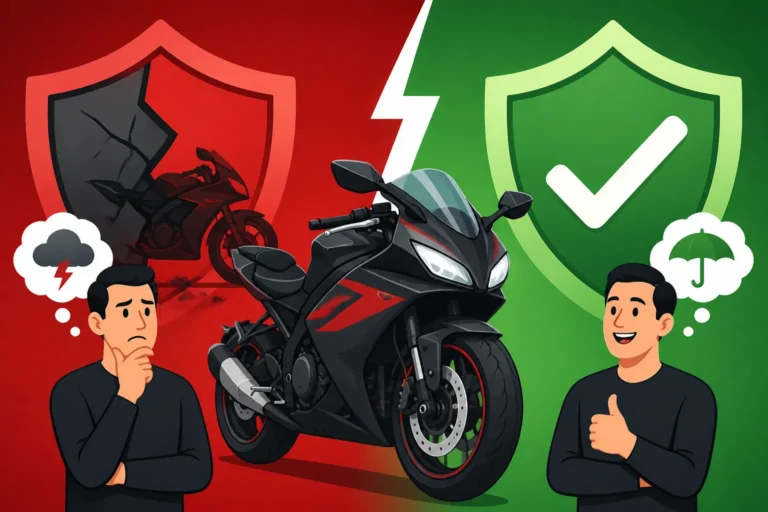
The thrill of taking your motorcycle to a track day or a race can be absolutely exhilarating, a chance to truly push your machine and hone your skills without the dangers of public roads. But for many riders, the excitement is often mixed with a nagging worry: "What happens if I crash? Does my regular motorcycle insurance even cover this?" This guide is here to clear up that confusion, explaining exactly what kind of coverage you'll need to enjoy your track time with peace of mind.
Why Standard Motorcycle Insurance Policies Rarely Cover Track Days
It’s a common misconception that your everyday street motorcycle insurance policy will protect you when you take your bike to a closed course. Unfortunately, this is almost universally not the case. Insurance companies view the risks associated with track riding and racing in a completely different light than typical road use, and for good reason.
The High-Risk Nature of Track Riding
Think about it: when you're on a track, you're intentionally pushing your motorcycle to its limits – higher speeds, harder braking, aggressive cornering. These are precisely the conditions that lead to a higher likelihood of accidents, and often, more severe damage. Standard policies are designed to cover accidents that occur during normal, legal street operation, not the high-performance environment of a track.
Most standard policies, whether you have basic liability or even full coverage, contain explicit exclusions for "competitive events," "racing," "performance events," or "track days." If you were to have an incident on a track and tried to file a claim with your regular provider, you'd likely find your claim swiftly denied based on these clauses. It's not a sneaky tactic; it's simply a reflection of the different risk profiles involved. What Does Full Coverage Motorcycle Insurance Mean? is a great resource to understand what these policies do cover. Many riders are surprised to learn that even a minor tip-over on a track could be outside their standard policy's scope.
Distinguishing Between Track Days and Professional Racing
While both track days and professional racing take place on a closed course, insurance companies often draw a distinction. Track days, also known as High-Performance Driving Events (HPDE), are generally seen as instructional or recreational events where the primary goal is skill development, not competition. Speeds might be limited, and passing rules are typically more conservative.
Professional racing, on the other hand, involves direct competition for prizes, timing, and official results. The risks are inherently higher due to the competitive nature, closer riding, and even greater speeds. While some specialized insurance might cover certain aspects of racing, coverage for general track days is usually a separate product category with different underwriters and terms. It's crucial to understand these distinctions because misrepresenting your activity could lead to a denied claim. Always be transparent with your insurer about the type of event you plan to attend.
Specialized Track Day and Race Insurance Options
Since your regular policy won't cut it, you'll need to look into specialized insurance products specifically designed for track use. These policies are tailored to the unique risks of performance riding and can offer crucial financial protection.
Dedicated Track Day Coverage
For recreational track days, you're generally looking at short-term, event-specific policies. These are designed to cover damage to your motorcycle only during the specific track day(s) you're attending. They often work like this: you purchase coverage for a single event, a weekend, or sometimes even a full season of non-competitive track riding.
The coverage typically focuses on physical damage to your bike, similar to the comprehensive and collision components of a standard policy, but adapted for the track environment. This means if you crash your bike during a session, the policy would help cover the repair costs or the actual cash value of the bike if it's totaled. Some providers might offer coverage for riding gear, but it's less common. Be aware that most of these policies will have a deductible, and this can sometimes be a higher percentage of the bike's value than a typical street policy. When evaluating options, remember that knowing What Is the Deductible on Motorcycle Insurance? is key to understanding your out-of-pocket costs.
One thing to note is that these policies generally don't cover liability for damage you might cause to another rider or property on the track. This is often handled by the track or event organizer's master policy, though it's always wise to confirm this beforehand. Companies like Lockton Motorsports or Rider's Insurance (through various carriers) are well-known for offering these types of specialized policies. When comparing options, you might check a comparison site like The Zebra, though you'll often need to contact specialty providers directly for these niche coverages.
Race Event Coverage and Season-Long Policies
If you're delving into competitive racing, the insurance landscape becomes even more specialized. Full-blown race event coverage is much rarer and often significantly more expensive, reflecting the extremely high risk. These policies are generally geared towards covering damage to your motorcycle during an actual race, and sometimes during practice sessions associated with the race event.
Some professional racers or frequent track riders might opt for season-long policies. These policies provide coverage for multiple events over a specific period, which can be more cost-effective than buying individual policies if you're hitting the track regularly. However, they still come with stringent conditions and higher premiums. These might also have exclusions for specific types of races or professional series.
For both track day and race event coverage, it's crucial to understand the valuation method used by the insurer. Some policies might offer "agreed value" coverage, which is fantastic for highly customized or valuable race bikes, while others might stick to "actual cash value" which can leave you short. You can learn more about these differences in Agreed Value vs Stated Value vs Actual Cash Value.
Key Considerations When Choosing Track Day Coverage
Navigating the world of specialized motorcycle insurance can feel a bit daunting, but asking the right questions and understanding the details will help you choose the best protection for your track adventures.
Understanding Coverage Limits and Exclusions
First and foremost, always scrutinize the policy's coverage limits. What is the maximum amount the insurer will pay out for damage to your motorcycle? Does this amount accurately reflect the value of your bike, including any performance upgrades or custom parts? If you've invested heavily in aftermarket exhaust, suspension, or other modifications, ensure they are covered. This is especially important as your standard policy likely has specific rules about Accessories & Custom Parts Coverage Explained.
Equally important are the exclusions. Beyond the obvious exclusion of street use, are there any other caveats?
- Mechanical Breakdown: Is a crash caused by a mechanical failure covered, or is that excluded?
- Consequential Damage: If a minor incident leads to a larger, more expensive issue down the line, how is that handled?
- Specific Track Types or Conditions: Are certain tracks or riding conditions (e.g., wet track days) excluded?
- Participant Liability: Does the policy offer any limited coverage for damage you might accidentally cause to another participant's bike or property? While rare for physical damage, some may offer limited medical payments if you injure someone else.
- Off-Track Incidents: If your bike is damaged in the paddock or during transport to or from the track, is that covered? (This typically falls under your standard comprehensive coverage or a separate transit policy).
It’s easy to skim over these details, but they can make a monumental difference when it comes time to file a claim.
Comparing Providers and Getting Quotes
Because track day insurance is a niche product, you won't find it offered by every major insurer. While traditional carriers like Progressive or Geico might have some limited offerings, you'll often need to look to specialty providers. It’s worth checking with companies that specifically cater to motorsports enthusiasts, as they often have the most tailored policies.
When you're comparing quotes, don't just look at the price. Ask about:
- Deductibles: What is the deductible, and is it a fixed dollar amount or a percentage of the claim?
- Payout Method: Is the payout based on actual cash value, or can you get an agreed value policy for your bike?
- Reputation and Claims Process: How easy is it to file a claim? What is their track record for paying out quickly and fairly? How Long Does a Motorcycle Insurance Claim Take? is a crucial question to ask.
- Flexibility: Can you buy coverage for just one event, or do they only offer season-long plans?
Using a comparison tool like The Zebra can sometimes point you towards providers, but for very specialized coverages, you might need to do some direct outreach to niche brokers. Always get quotes from at least three different providers to ensure you're getting a competitive rate and the best coverage for your needs.
Here's a simple comparison table to help you visualize the differences:
| Feature | Standard Motorcycle Insurance (Street) | Track Day/Race Insurance (Specialty) |
|---|---|---|
| Primary Purpose | Road legality, daily riding protection | On-track incident protection |
| Coverage Scope | Liability, collision, comprehensive, UM/UIM | Physical damage to your motorcycle |
| Event Exclusions | Excludes racing, track days, competitive events | Specifically designed for these events |
| Duration | Annual policy, ongoing | Event-specific, weekend, or season-long |
| Liability for Others | Covers damage/injury to others on the street | Often excluded, covered by track/event org |
| Medical Coverage | MedPay/PIP for rider/passenger | Generally excluded for rider |
| Custom Parts Coverage | Often limited; requires add-ons | Can be tailored for race-specific parts |
| Availability | Major insurers, easy to find | Specialty insurers, harder to find |
| Cost Driver | Rider age, bike type, record, location | Event risk, bike value, coverage limits |
Before You Hit the Track: Essential Steps
Once you've decided to hit the track, don't just show up and hope for the best. There are several crucial steps you need to take to ensure you're properly prepared and protected.
Verify Your Coverage Before the Event
This step cannot be stressed enough. Never assume you're covered. Before you even load your bike onto the trailer, call your specialized track day insurance provider (or the track day organizer, if their policy applies to participants) and confirm your coverage. Ask for written proof of coverage, including the dates and the specific event or track it applies to.
Make sure you understand the exact limits and any exclusions that might apply. For instance, some policies might only cover a certain number of laps or sessions, or they might have stricter conditions for specific groups (e.g., advanced riders vs. novice). Having clear documentation can save you a world of headache if an incident occurs. Remember, being prepared means knowing exactly "What Motorcycle Coverage Do You Actually Need?".
Inspect Your Motorcycle Thoroughly
Even with the best insurance, preventing an accident is always the priority. A thorough pre-track inspection of your motorcycle is non-negotiable. This goes beyond your usual pre-ride check. You need to inspect:
- Tires: Check for proper inflation, wear, and any damage.
- Brakes: Ensure pads have plenty of life, fluid levels are correct, and lines are in good condition.
- Fluids: Oil, coolant, brake fluid – all at optimal levels.
- Chain/Belt: Proper tension and lubrication.
- Fasteners: Check all critical bolts (axles, calipers, levers, clip-ons) are tight and safety wired if required by the track.
- Fairings/Bodywork: Ensure everything is secure and nothing is loose that could detach at speed.
Many track day organizations have tech inspection requirements, but you should perform your own detailed check beforehand. A mechanical failure at speed can be devastating, both for you and your bike. A small investment in time for maintenance can prevent a costly accident that might lead you to file a claim.
Know the Track Rules and Emergency Procedures
Every track and every track day organizer will have specific rules and emergency procedures. Attend the rider's meeting, pay attention, and ask questions. Know where the corner workers are, what the flag signals mean, and what to do in case of a crash or breakdown on the track. Understanding these rules is not just about safety; it can also impact your insurance. Violating track rules (like ignoring a black flag) could potentially jeopardize your coverage, as it might be seen as negligence.
Also, be aware of how the track handles medical emergencies and bike recovery. Having a plan for how your bike will be retrieved if it breaks down or crashes is vital. Some track day insurance policies might offer limited roadside assistance coverage, but it's often more about getting the bike to the track rather than off the track. Knowing the local protocols can save you stress and expense in an emergency situation.
Taking your motorcycle to a track day or race is an incredible experience that every passionate rider should consider. But it's not a decision to take lightly when it comes to insurance. Your standard policy just won't cut it, and pretending it will is a recipe for financial disaster. By understanding the unique risks and investing in dedicated track day coverage, you can focus on mastering those corners and enjoying the ride, knowing you're properly protected. Ride safe, and have a blast out there!
Disclaimer
This article is for general informational purposes only and does not constitute professional advice. Laws, prices and regulations vary by location and change over time. Consult a qualified professional for guidance on your specific situation.