What Is the Best Coverage for a Harley?
It’s a unique feeling, isn't it? The rumble of a Harley, the open road stretching out, and the wind in your face. There’s nothing quite like it. But then reality sets in: that beautiful machine is a significant investment, often customized to perfection, and protecting it can feel like a maze of confusing insurance options. Choosing the "best" coverage for your Harley isn't just about meeting state minimums; it's about safeguarding your passion. This guide will cut through the jargon, helping you understand the essential coverages and smart add-ons tailored specifically for Harley-Davidson owners, so you can ride with peace of mind.
Understanding the Unique Needs of a Harley-Davidson Owner
When you're talking about a Harley, you're not just talking about any motorcycle. You're talking about a lifestyle, a statement, and often, a piece of art that’s been lovingly customized over time. This distinct character means that standard, bare-bones insurance policies often fall short, leaving riders vulnerable when something goes wrong. Harley owners face specific challenges and have different priorities compared to someone riding a basic commuter bike or even a sportbike.
Why Harleys Require Specialized Coverage
First off, Harleys, especially those iconic models like a Street Glide, Road King, or Fat Boy, tend to hold their value incredibly well. They’re often seen as collector’s items or long-term investments rather than disposable transportation. This inherent value means that if your bike is stolen or totaled, the payout you receive from insurance needs to truly reflect its worth, not just a depreciated market value. Many riders spend thousands on aftermarket parts, performance upgrades, chrome accents, or unique paint jobs, making their bike one-of-a-kind. Standard policies might only cover factory parts, leaving a massive financial gap for all those beloved customizations. Imagine your custom exhaust or bespoke saddlebags not being covered after an incident – that’s a gut punch no rider wants to experience.
Beyond the bike's monetary value, there’s the emotional attachment. For many, a Harley isn’t just transportation; it's a part of their identity. The thought of losing it or having it severely damaged without proper recourse is genuinely distressing. This is why a "one-size-fits-all" approach to motorcycle insurance just doesn’t work for a Harley owner. You need a policy that understands and respects the dedication you've poured into your ride.
Assessing Your Riding Style and Usage
Your riding habits play a huge role in determining the ideal insurance package. Are you a weekend warrior, cruising local scenic routes, or do you embark on epic cross-country tours every summer? A rider who puts thousands of miles on their Road Glide each year, traveling through multiple states, will have different needs than someone whose Softail Custom primarily stays garaged and sees occasional Sunday rides.
Consider the potential risks associated with your usage. Longer trips increase the chance of breakdowns far from home, minor incidents, or even needing a tow in an unfamiliar area. If you're a city rider, parking your Street Bob on busy streets exposes it to different risks like vandalism or minor collisions while parked. If you store your CVO Limited for several months during the colder seasons, you might want to explore options for Do You Need Insurance to Store a Motorcycle?. Think realistically about how and where you ride, and what protections would genuinely give you peace of mind in those scenarios. This self-assessment is the first crucial step in tailoring your Harley's insurance.
Essential Coverage Types for Your Harley
When it comes to insuring your Harley-Davidson, you want a policy that acts as a fortress around your investment, not just a flimsy fence. The basic legal requirements are a starting point, but to truly protect a Harley, you'll need to go beyond the minimums. Understanding the different types of coverage is key to building a robust policy.
Liability Coverage: Protecting Others
This is the absolute bedrock of any motorcycle insurance policy, and it's legally mandated in almost every state. Is Motorcycle Insurance Required? State-by-State Liability coverage protects you financially if you're at fault in an accident that causes injury to another person or damage to their property. It won't pay for your own injuries or damages to your beautiful Harley, but it ensures you're not personally on the hook for potentially devastating costs if you cause a crash.
Think about it: even a minor fender-bender with a car can result in thousands of dollars in repairs for the other vehicle. If someone is injured, medical bills can skyrocket. Without sufficient liability coverage, your personal assets – your savings, your home, even your future earnings – could be at risk. For a Harley owner, who might be perceived as a higher-risk rider, carrying higher liability limits than the state minimum is often a wise decision. Many states mandate something like 25/50/25 coverage, which means $25,000 for bodily injury per person, $50,000 for bodily injury per accident, and $25,000 for property damage. But for real peace of mind, especially with the potential for serious accidents, increasing these numbers to 100/300/50 or even higher is strongly recommended.
Comprehensive and Collision Coverage: Safeguarding Your Investment
These two coverages are what truly protect your Harley itself, regardless of who is at fault or if an accident isn't even involved.
Collision Coverage
Collision coverage pays for damages to your own motorcycle if it hits another vehicle, an object (like a guardrail or a pothole), or if it tips over. If you lay your Road Glide down on a winding country road or accidentally back into a parked car, this is the coverage that steps up. Given the cost of repairing even minor damage to a Harley – parts are often proprietary and labor can be specialized – collision coverage is absolutely vital. Imagine the cost of replacing a fairing, repairing engine damage, or even just fixing scratched chrome. These repairs can quickly run into the thousands. Without collision coverage, you'd be paying out-of-pocket for every dent, scrape, or bent fork.
This coverage is especially critical if your Harley is still financed. Lenders almost always require you to carry collision coverage because they want to protect their investment until the bike is fully paid off. Even if your bike is paid off, if you couldn't easily afford to replace or fully repair your Harley after a significant accident, collision coverage is a non-negotiable part of your policy.
Comprehensive Coverage
Comprehensive coverage is your Harley’s guardian angel against non-collision events. This includes things like theft, vandalism, fire, flood, hail, falling objects (like a tree branch), or even hitting an animal. Harleys, with their high resale value, are sadly often targets for thieves. My Motorcycle Was Stolen: Will Insurance Pay? Comprehensive coverage means that if you wake up one morning and your prized Softail Deluxe is gone, your insurance company will work to reimburse you for its value.
This coverage is crucial for any Harley owner. Whether your bike is stored in a garage, parked outside, or left in a hotel parking lot during a trip, it's vulnerable to incidents beyond your control. Even if you're extremely careful on the road, comprehensive coverage protects against the unpredictable and often unavoidable misfortunes that can befall a motorcycle. Like collision, if your Harley is financed, comprehensive coverage will be a mandatory requirement from your lender. For a classic or custom Harley, comprehensive coverage can be a lifesaver, covering the costs that would otherwise leave you devastated by a total loss.
Uninsured/Underinsured Motorist Coverage: Protecting Yourself from Others
This coverage is incredibly important for motorcyclists, perhaps even more so than for car drivers. Uninsured & Underinsured Motorist Coverage (UM/UIM) It protects you if you're hit by a driver who either doesn't have insurance at all (uninsured) or doesn't have enough insurance to cover your medical bills and property damage (underinsured).
Unfortunately, there are a lot of uninsured drivers out there. Imagine you're cruising on your Ultra Limited, and an uninsured driver blows a stop sign, totaling your bike and sending you to the hospital. Without UM/UIM, you could be left with astronomical medical bills, lost wages, and the cost of replacing your Harley, all out of your own pocket. Even if the other driver has minimum liability coverage, it might not be enough to cover the full extent of your damages, especially after a serious motorcycle accident which can lead to extensive injuries and high medical costs. This coverage fills that gap, ensuring you're not financially ruined by someone else's negligence or irresponsibility. Many states don't require UM/UIM, but for a Harley rider, it's one of those coverages that pays dividends in peace of mind.
Specialized Add-Ons and Considerations for Harleys
For a Harley owner, standard coverage is just the beginning. The real protection for your unique machine and riding lifestyle comes from specific add-ons that cater to the value of your bike and your passion for riding.
Accessories and Custom Parts Coverage
This is arguably one of the most critical add-ons for any Harley-Davidson owner. If you've spent countless hours and dollars customizing your Road King with chrome, a performance exhaust system, upgraded fairings, custom seats, or a unique paint job, standard comprehensive and collision coverage often won't cover these modifications beyond a very low limit, if at all. Many standard policies might only offer $1,000 or $2,000 for accessories, which any Harley enthusiast knows can be easily exceeded by a single exhaust system or a pair of quality saddlebags.
Custom parts and accessories coverage specifically extends your policy to cover these added components. You typically choose a specific coverage limit, say $10,000, $20,000, or even more, depending on the value of your customizations. This ensures that if your customized Sportster S is damaged or stolen, you're reimbursed for the true value of your investment, not just the stock bike. When getting quotes from platforms like The Zebra, make sure to detail all your custom parts to get an accurate assessment of this vital coverage. It's the difference between replacing your custom parts or having to downgrade significantly after a claim.
Agreed Value Coverage
This is a game-changer for owners of classic, vintage, or heavily customized Harleys. Most standard policies use "Actual Cash Value" (ACV) when determining a payout after a total loss. ACV means the replacement cost minus depreciation. For a 20-year-old Harley that you’ve poured a fortune into, its ACV might be shockingly low, leaving you far short of what you need to replace it.
Agreed Value coverage, on the other hand, means you and the insurance company agree on a specific value for your motorcycle before the policy takes effect. If your prized Heritage Classic is totaled, you receive that agreed-upon amount, no questions asked about depreciation. To establish this value, you might need to provide appraisals, photos, and detailed records of your customizations and maintenance. While it can be slightly more expensive, the peace of mind knowing the true worth of your unique Harley is protected is invaluable. This is especially relevant for models like a vintage Knucklehead or Panhead, or a modern Harley with extensive bespoke modifications that enhance its value significantly. It helps avoid the painful negotiation of What if the Insurance Total Loss Offer Is Too Low?.
Roadside Assistance and Trip Interruption
For Harley riders who love to hit the open road, these add-ons are lifesavers. Breaking down far from home is never fun, but it can be particularly challenging with a motorcycle.
Roadside Assistance
Roadside assistance coverage means that if your Street Glide breaks down, runs out of fuel, gets a flat tire, or needs a jump start, help is just a phone call away. The policy will cover the cost of towing your bike to the nearest qualified repair shop, often up to a certain mileage or dollar limit. Some plans even cover minor on-site repairs. This is an inexpensive add-on that provides immense relief when you're stranded. Knowing you won't be scrambling to find a motorcycle-specific tow truck or emptying your wallet for an emergency tow in an unfamiliar town is worth every penny.
Trip Interruption
If you're embarking on a long journey, say from Phoenix to Sturgis, and your Electra Glide breaks down hundreds of miles from home, trip interruption coverage can come to the rescue. It helps cover expenses like lodging, alternative transportation, and food if your trip is interrupted due to a covered breakdown or accident. This means you won't be stuck paying out-of-pocket for unexpected hotel stays or rental cars while your Harley is being repaired. For dedicated touring riders, this coverage transforms a potential nightmare into a manageable inconvenience, allowing you to continue your adventure (or at least get home comfortably).
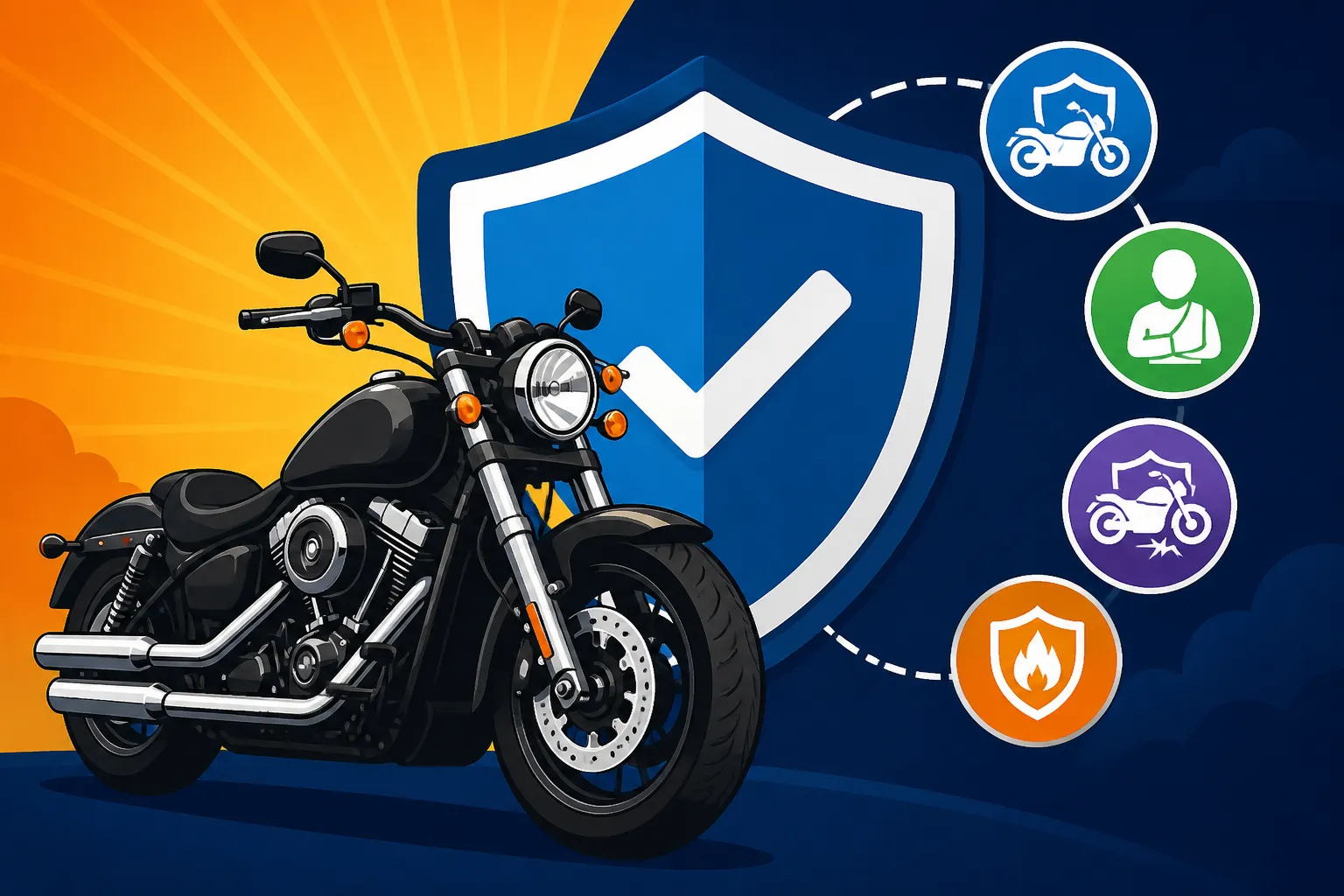
Here’s a quick overview of these crucial Harley coverages:
| Coverage Type | What it Covers | Why it's Essential for a Harley |
|---|---|---|
| Liability | Damage/injury to others when you're at fault. | Protects your assets from expensive third-party claims. Increase limits for peace of mind. |
| Collision | Damage to your Harley from impact with another vehicle or object, or tipping over. | Crucial for repair or replacement of costly Harley parts. Often lender-required. |
| Comprehensive | Damage to your Harley from theft, vandalism, fire, weather, animal strikes. | High-value Harleys are theft targets. Protects against many non-riding incidents. |
| Uninsured/Underinsured Motorist | Your injuries/damages if hit by a driver without enough or any insurance. | Vital protection against financially irresponsible drivers, common for riders. |
| Accessories & Custom Parts | Aftermarket parts, custom paint, chrome, performance upgrades. | Standard for any customized Harley; protects your unique investment beyond factory parts. |
| Agreed Value | Payout for total loss based on a pre-agreed amount, no depreciation. | Essential for vintage, classic, or heavily customized Harleys to ensure true value reimbursement. |
| Roadside Assistance | Towing, fuel delivery, flat tire service. | invaluable for touring or if you breakdown far from home; convenient and cost-effective. |
| Trip Interruption | Lodging, food, alternative transport if your trip is halted by a covered event. | Great for long-distance riders; reduces stress and unexpected costs during breakdowns. |
Other Noteworthy Coverages
Beyond the big ones, there are a few other coverages that can be beneficial for Harley owners:
- Medical Payments (MedPay) / Personal Injury Protection (PIP): These coverages pay for your medical expenses (and sometimes lost wages) regardless of who is at fault in an accident. Given the higher risk of injury in motorcycle accidents, having some form of medical coverage through your bike policy can complement your health insurance.
- OEM Parts Coverage: Some insurers offer options to ensure that if your Harley needs repairs after a covered incident, only original equipment manufacturer (OEM) parts are used, maintaining your bike's authenticity and potentially its value.
- New Bike Replacement Coverage: If your relatively new Harley is totaled within a certain timeframe (e.g., the first year or 1,000 miles), this coverage allows you to get a brand-new bike of the same make and model, rather than just its depreciated value. This is fantastic for those who just bought a shiny new Harley-Davidson straight from the dealership.
Navigating the Quote Process and Finding the Right Fit
Finding the "best" coverage for your Harley isn't just about picking every add-on under the sun; it's about finding the right balance of protection and affordability that suits your specific needs and budget. The process can seem daunting, but with a clear strategy, you can secure an excellent policy.
Gathering Your Information and Being Specific
Before you even start getting quotes, have all your details ready. This includes your personal information (name, address, date of birth, riding history, license endorsement status), details about your Harley (VIN, make, model, year, engine size, any anti-theft devices installed), and a comprehensive list of all aftermarket parts and customizations, along with their estimated value. The more accurate and detailed information you provide, the more precise your quotes will be. Don't gloss over the custom exhaust or that expensive paint job; these are critical components that determine your coverage needs.
Be honest about your riding experience and any past accidents or tickets. While a clean record will certainly help lower your premiums, honesty is always the best policy to avoid issues later during a claim. Also, consider any safety courses you've completed, like the Harley-Davidson Riding Academy or a Motorcycle Safety Foundation (MSF) course, as these often qualify you for discounts. You can learn more about Does a Motorcycle Safety Course Lower Insurance? in our detailed guide.
Comparing Multiple Quotes and Providers
This is perhaps the most crucial step in finding the "best" and most affordable insurance for your Harley. Different insurance companies specialize in different types of riders or bikes, and their pricing models can vary wildly. What might be cheap for a sportbike rider might not be the most competitive for a Harley owner.
Don't settle for the first quote you get. Reach out to multiple insurance providers. Major national carriers like Progressive, Geico, and State Farm all offer motorcycle insurance, but so do specialized carriers like Dairyland or Markel, which sometimes have policies better tailored to the unique needs of Harley riders, especially concerning custom parts and agreed value coverage. Online comparison tools, such as those offered by The Zebra, can be incredibly helpful here. They allow you to input your information once and receive multiple quotes from various providers, saving you a ton of time and effort. This allows you to directly compare not just the prices but also the coverage options and deductibles offered by each company. Look for a balance of good coverage at a reasonable price, not just the absolute cheapest policy, which might leave you underinsured.
Leveraging Discounts and Bundling Options
Insurance companies love to offer discounts, and as a Harley owner, you might qualify for several. Don't be shy about asking your agent or checking online for every possible discount.
Common discounts include:
- Multi-policy discount: If you also insure your car, home, or life insurance with the same company, you can often get a significant discount on your Harley policy. This is known as Bundling Motorcycle and Auto Insurance: Worth It?.
- Motorcycle safety course discount: As mentioned, completing an approved rider safety course can knock a percentage off your premium.
- Harley Owners Group (H.O.G.) discount: Some insurers offer specific discounts for H.O.G. members.
- Anti-theft device discount: If your Harley has a factory alarm, GPS tracker, or other anti-theft measures, you could save money.
- Good rider/driver discount: A clean driving record with no accidents or violations will always result in lower premiums.
- Paid-in-full discount: Paying your entire annual premium upfront, instead of monthly installments, often earns a discount.
- Lay-up or seasonal discount: If you store your Harley for several months during winter, some policies offer discounts or allow you to suspend certain coverages during that period, focusing only on comprehensive coverage for theft and damage while parked. You can read more about Do You Need Insurance to Store a Motorcycle? in our other article.
By actively seeking out these discounts and comparing providers, you can craft a comprehensive policy for your Harley that offers robust protection without breaking the bank. Remember, the "best" coverage isn't static; it evolves with your bike, your riding habits, and your personal circumstances. Revisit your policy and compare quotes every year or two to ensure you're still getting the best value.
Disclaimer
Please remember that this article provides general information and recommendations regarding motorcycle insurance. Insurance policies and requirements can vary significantly by state, provider, and individual circumstances. It is essential to consult with a qualified insurance professional to discuss your specific needs and obtain personalized advice. Policy terms, conditions, and exclusions always apply.