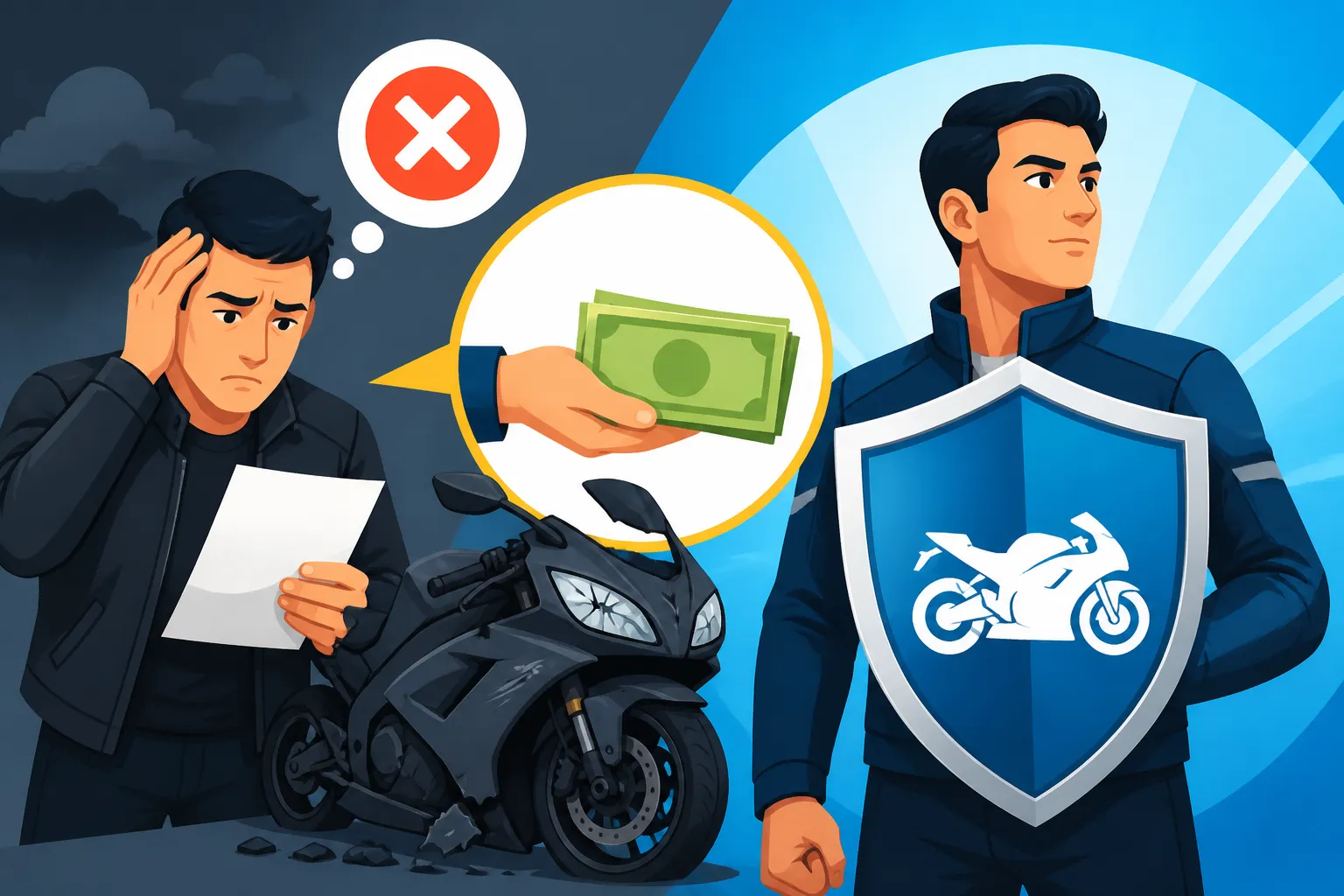
What if the Insurance Total Loss Offer Is Too Low?
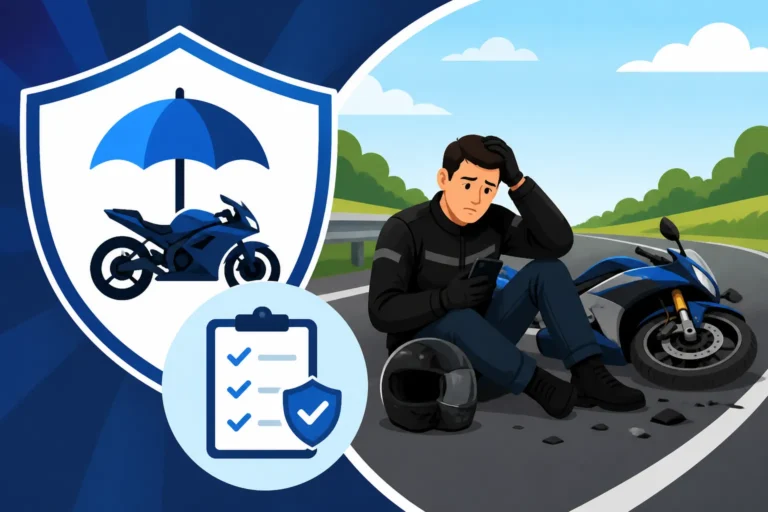
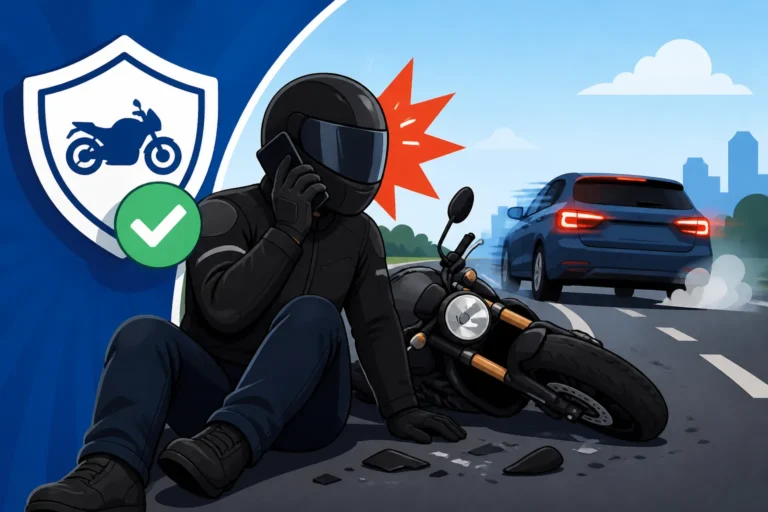
It's an incredibly frustrating moment: you've been through a motorcycle accident, your beloved bike is totaled, and then the insurance company comes back with an offer that feels insultingly low. It’s not just about the money; it’s about the value you placed on your ride, the memories, and the sheer injustice of it all. This guide is here to walk you through exactly what to do when that dreaded lowball offer lands, helping you understand your options and fight for a fair settlement.
Understanding Your Motorcycle's "Total Loss" Valuation
When your motorcycle is declared a "total loss," it means the cost to repair it exceeds a certain percentage of its pre-accident value, often 70-80% depending on the state and insurer. But how do they arrive at that pre-accident value in the first place? It’s not always as straightforward as it seems, and understanding their methods is the first step in disputing a low offer.
How Insurers Determine Actual Cash Value (ACV)
Most standard motorcycle insurance policies determine a total loss payout based on the Actual Cash Value (ACV) of your bike. This isn't what you paid for it new, nor is it necessarily what you think it's worth. ACV is generally defined as the replacement cost of the vehicle minus depreciation. Think of it as the fair market value of your motorcycle right before the accident, taking into account its age, mileage, condition, and any wear and tear.
Insurers typically use specialized databases and valuation tools from companies like CCC Information Services, Audatex, or Mitchell International to crunch these numbers. These databases compile sales data from dealerships, private sales, and auctions for comparable vehicles. However, they're not always perfect and can sometimes miss the nuances of the motorcycle market, especially for custom bikes or specific regional pricing trends. For instance, a vintage Harley-Davidson in pristine condition might be undervalued by a system primarily designed for mass-produced models.
They also factor in mileage – a higher odometer reading almost always means lower value – and the overall cosmetic and mechanical condition. If your bike had a few dings or some worn tires before the crash, those existing flaws can, and often will, be used to reduce its pre-accident value, even if they had nothing to do with the total loss incident itself. It's a precise, often cold, calculation that can feel entirely detached from your personal investment in the machine.
The Difference Between ACV, Stated Value, and Agreed Value
It's crucial to understand that not all insurance policies value a total loss in the same way. While ACV is the most common, especially for newer, unmodified bikes, there are other options that can offer more protection, particularly for unique or high-value motorcycles. If you're wondering how your current policy stacks up, you might find it helpful to read up on the nuances of Agreed Value vs Stated Value vs Actual Cash Value.
Stated Value policies offer a slight variation from pure ACV. With a stated value policy, you declare a value for your motorcycle when you purchase the insurance, and the insurer agrees to not pay more than that stated amount. However, in the event of a total loss, the insurance company will still pay you the lesser of either the stated value or the actual cash value. So, if you state your custom chopper is worth $30,000, but the insurer's appraisal after a loss determines its ACV is only $20,000, you'll only receive $20,000. It doesn't guarantee the stated amount, but it does set an upper limit.
Agreed Value coverage, on the other hand, is generally the gold standard for custom, classic, or highly modified motorcycles. With this type of policy, you and the insurance company agree on a specific value for your bike before the policy is issued. This value is typically determined through an appraisal process, sometimes requiring photos and documentation of custom work. If your bike is then declared a total loss, the insurance company pays you that exact agreed-upon amount, no questions asked about depreciation or ACV. This eliminates much of the dispute potential because the value is locked in beforehand, providing peace of mind for riders with significant investments in their machines. You can explore this further in our guide What Is Agreed Value Motorcycle Insurance?.
Why Your Total Loss Offer Might Feel Low
There are several common reasons why an insurance company's total loss offer can seem incredibly low, and they often stem from disconnects between how you perceive your motorcycle's worth and how an insurer's algorithms calculate it. These aren't always malicious acts, but rather a reflection of standardized processes that don't always capture the unique spirit and value of every bike.
Overlooked Modifications and Customizations
One of the biggest culprits behind a low total loss offer is the failure to adequately account for custom parts, accessories, and modifications. Standard motorcycle insurance policies often include only minimal coverage for these additions, or sometimes none at all, beyond the factory-installed components. If you've spent thousands on custom paint, performance upgrades, saddlebags, a new exhaust system, or chrome accessories, and your policy only covers the base model's ACV, you're going to feel a huge financial sting.
Many riders, especially those new to custom work, don't realize they need to specifically declare these additions and purchase additional coverage for them. Most insurers offer "accessories and custom parts coverage" as an optional endorsement, which typically provides a specified amount of coverage for these upgrades. Without this, your insurer might only value your bike as if it were still bone stock, completely ignoring your significant investment. It's a crucial oversight that many riders learn about the hard way during a total loss claim. We delve into this more in Accessories & Custom Parts Coverage Explained.
Inaccurate Market Data and Depreciation Calculations
As mentioned, insurers rely heavily on broad market data, but this data isn't always granular enough to reflect the true value of every motorcycle in every location. For example, the market for a specific vintage Japanese bike might be robust in one state but nearly non-existent in another, yet the valuation system might pull a national average. Similarly, certain niche bikes, limited editions, or highly sought-after models might not have enough comparable sales data in the databases to generate an accurate ACV.
Furthermore, depreciation calculations can be aggressive. While all vehicles depreciate, motorcycles, especially sport bikes, can see steep declines in value, particularly in their first few years. If your bike was a few years old with moderate mileage, the insurance company's depreciation formula might knock off a significant chunk of its value, even if you, as the owner, meticulously maintained it and kept it in showroom condition. The systems often prioritize age and mileage over the actual care and condition, which can feel unfair to a diligent owner.
Condition Discrepancies and "Prior Damage" Assumptions
When an adjuster evaluates your motorcycle after an accident, they're not just looking at the damage from the recent incident. They're also assessing its pre-accident condition, sometimes relying on vague photos or a quick inspection. If there were any pre-existing cosmetic flaws – a small scratch, a faded patch, a minor dent – these can be documented and used to justify a lower ACV, even if they had no bearing on the accident that totaled the bike.
In some cases, insurers might even assume "prior damage" or general wear and tear that wasn't actually present or was much less significant than they claim. This can happen if the initial inspection is rushed, or if the adjuster isn't intimately familiar with the specific model of your bike and mistakenly identifies certain characteristics as flaws rather than factory features. The burden of proof often falls on you, the rider, to demonstrate the bike's pristine pre-accident condition, which can be challenging when the bike is now a mangled heap.
Steps to Dispute a Low Total Loss Offer
Receiving a low total loss offer doesn't mean you're out of options. In fact, many riders successfully negotiate higher settlements by being prepared and persistent. It's a process that requires a bit of detective work and clear communication, but it can absolutely pay off. Don't just accept the first offer if it feels wrong; stand your ground.
Gather Your Evidence Meticulously
The single most powerful tool you have in disputing a low offer is solid evidence. Think of yourself as building a case for your motorcycle's true value. Start by collecting everything that demonstrates its pre-accident condition and worth. This includes:
- Pre-accident photos: Dig through your phone or camera for any pictures of your motorcycle before the incident. The more detailed, the better, showing different angles, close-ups of pristine parts, and custom work. These are invaluable for proving its condition.
- Maintenance records: Have you kept receipts for oil changes, tire replacements, major services, or any repairs? These show a history of diligent care, which speaks to the bike's mechanical health.
- Upgrade and accessory receipts: This is crucial for custom parts. If you bought aftermarket exhaust, upgraded suspension, or expensive luggage, gather those receipts. They prove the cost and existence of these additions, which might have been overlooked in the initial valuation.
- Professional appraisals: For highly customized or vintage motorcycles, a pre-loss professional appraisal can be a lifesaesaver. If you don't have one, consider getting an appraisal of the damage or condition from an independent shop that specializes in your type of bike.
- Advertisements: If you had your bike listed for sale recently, copies of the advertisement and any inquiries can also serve as evidence of its perceived market value.
This documentation will form the backbone of your argument. Without it, your claims of higher value are just words against their data. Our guide on How to Prove Your Bike's Value in a Total Loss Claim offers even more detailed advice on this essential step.
Research Comparable Sales (Comps)
One of the most effective ways to counter an insurer's valuation is to present your own list of comparable sales. The insurance company's valuation system might be pulling data from a broad area, or perhaps it's using outdated information. Your goal is to find motorcycles similar to yours – same year, make, model, trim, and as close as possible in mileage and condition – that have recently sold or are currently for sale in your local market.
Start your research on popular online marketplaces like Craigslist, Cycle Trader, eBay Motors, Facebook Marketplace, and even local dealership websites. Focus on listings within a reasonable geographical radius of your home, as local market conditions can heavily influence value. Print out or screenshot these listings, making sure they include the price, mileage, and detailed descriptions or photos. If you find multiple bikes listed for significantly more than the insurer's offer, you have a strong basis for negotiation. Remember, aim for bikes that truly compare to yours, not just any bike of the same make.
For instance, if your totaled bike was a 2018 Honda Rebel 500 with 10,000 miles and a pristine aesthetic, don't compare it to a base model with 30,000 miles and visible scratches. Find other 2018 Rebel 500s, ideally with similar mileage and condition, that are being sold for higher prices. This is where companies like The Zebra can be useful for comparing general market values, though for hyper-specific comps, direct research is best.
Present Your Case Clearly to the Adjuster
Once you've gathered all your evidence and compiled your list of comparable sales, it's time to communicate with the insurance adjuster. Start by requesting a detailed breakdown of their valuation. Ask for the specific comparable vehicles they used, their source data, and how they calculated depreciation. This transparency is crucial.
When you present your counter-offer, do so in writing, clearly outlining why you believe their initial offer is insufficient. Reference your photos, receipts, maintenance records, and especially your list of comparable sales. Be polite but firm, stick to the facts, and avoid emotional arguments. For example, you might write, "I've reviewed your offer for my 2020 Kawasaki Ninja 400. While I appreciate your assessment, I've identified several discrepancies. Your valuation did not account for the Akrapovic exhaust system (receipt attached, $800 value) and the aftermarket adjustable levers ($150 value). Furthermore, I've found three comparable 2020 Ninja 400s in excellent condition, with similar mileage, selling in the Denver area for an average of $6,500 (listings attached), whereas your offer is $5,200. I believe a fair ACV, including accessories, would be $7,450."
Many adjusters, especially those working for major carriers like Progressive, have some latitude to increase an offer, particularly if you present compelling evidence. They might not immediately agree to your full demand, but a negotiation often begins here. Be prepared to compromise, but don't undervalue your bike just to close the claim quickly.
Escalating Your Dispute If Negotiation Fails
Sometimes, despite your best efforts and compelling evidence, the insurance adjuster simply won't budge. This can be incredibly frustrating, but it's not the end of the road. You still have several avenues to pursue to ensure you get a fair settlement for your totaled motorcycle.
Request an Appraisal Clause Invocation
Many motorcycle insurance policies include an "appraisal clause." This clause allows both you and the insurance company to each hire an independent appraiser if you can't agree on the actual cash value of your bike. The two appraisers then review the damage and negotiate a settlement. If they still can't agree, they select a neutral "umpire," and a decision from any two of the three (your appraiser, their appraiser, or the umpire) is binding.
Invoking an appraisal clause can be a powerful tool, but it's not without cost. You will typically be responsible for the cost of your independent appraiser, and you'll split the cost of the umpire if one is needed. This option is usually best for situations where there's a significant difference between your desired payout and the insurer's offer, making the cost of the appraisal worthwhile. It adds an impartial third party to the valuation process, taking it out of the hands of the initial adjuster.
Before proceeding, ask your insurer to confirm if your policy contains an appraisal clause and what the specific process entails. Then, research independent appraisers who specialize in motorcycles in your area. Look for someone with a strong reputation and experience in handling total loss valuations.
File a Complaint with Your State's Department of Insurance
If direct negotiation and the appraisal clause option haven't yielded a fair outcome, your next step should be to file a complaint with your state's Department of Insurance (DOI). These government agencies are responsible for regulating insurance companies and protecting consumers. They investigate complaints related to unfair claims practices, lowball offers, and bad faith insurance tactics.
The process typically involves submitting a formal complaint form, detailing your policy number, the claim information, and a comprehensive explanation of your dispute, including all the evidence you've gathered. The DOI will then review your complaint and contact the insurance company, requiring them to respond to your allegations. While the DOI won't force the insurer to pay a specific amount, their involvement often prompts insurance companies to re-evaluate their offers more seriously, as they want to avoid regulatory scrutiny and potential penalties.
Remember, this isn't a legal lawsuit, but a regulatory action. It's designed to ensure that insurance companies are adhering to state laws and the terms of their policies. Each state has its own specific complaint process, so visit your state's DOI website for precise instructions and forms.
Consider Legal Counsel
When all other avenues have been exhausted, and you still believe the insurance company is acting in bad faith or unfairly lowballing your offer, consulting with an attorney specializing in insurance claims might be your final recourse. An attorney can review your case, assess its merits, and advise you on the feasibility of legal action. They can help you understand the legal definition of a fair settlement and whether the insurer's actions cross the line into bad faith.
Taking legal action can be time-consuming and expensive, and there's no guarantee of a successful outcome. However, the threat of a lawsuit or an actual lawsuit can sometimes motivate an insurance company to offer a more reasonable settlement, especially if your case is strong and well-documented. An attorney can also help you navigate complex legal procedures, gather additional evidence through discovery, and represent you in court if necessary.
This step should be considered a last resort, but for significant losses or egregious unfairness, it might be the only way to recover the true value of your motorcycle. For context, you might be interested in knowing What Happens When Your Motorcycle Is Totaled? and the full implications of that declaration.
Preventing Future Under-Valuation Issues
Dealing with a low total loss offer is stressful and time-consuming. While you can't prevent accidents, you can take proactive steps to minimize the chances of a future under-valuation. It’s all about being informed, diligent, and ensuring your policy truly reflects the value of your motorcycle.
Review Your Policy Annually and Update Coverage
Your motorcycle's value and your insurance needs aren't static. What made sense when you first bought your policy might not be sufficient a year or two down the line, especially if you've made significant changes to your bike or its market value has shifted. Make it a habit to review your motorcycle insurance policy annually, ideally before renewal.
During this review, pay close attention to the coverage limits for accessories, custom parts, and any specific valuation clauses. If you’ve added new parts, modified the engine, or changed the paint scheme, notify your insurer and ensure your Accessories & Custom Parts Coverage Explained is updated to reflect these investments. Don't assume your policy automatically adjusts. This is also a good time to check other factors that affect your rates and coverage options, which you can learn more about in What Affects Your Motorcycle Insurance Rate?. A quick call to your insurance agent or a look at your online policy portal (many major insurers like Progressive or Nationwide offer this) can save you a world of trouble later.
Document All Modifications and Maintenance
Remember all those receipts you wished you had when disputing your current claim? Start saving them now! Create a dedicated file, digital or physical, for everything related to your motorcycle. This includes:
- Purchase receipts for all aftermarket parts and accessories: Keep track of what you bought, when, and how much it cost.
- Photos of your bike: Take detailed photos of your bike, particularly after any significant modifications or if it's in pristine condition. Date-stamp these photos if possible.
- Maintenance and service records: Receipts for oil changes, tire replacements, major services, and any repairs all contribute to proving the excellent condition and value of your bike.
- Appraisals: For truly unique or high-value custom builds, consider getting a professional appraisal done proactively.
Having a comprehensive record of your motorcycle's history, condition, and all investments made into it will be invaluable if you ever face another total loss scenario. It provides irrefutable proof of its value, making it much harder for an insurer to undervalue it.
Consider Agreed Value or Stated Value Policies
For riders who own classic, vintage, highly customized, or unique motorcycles, relying solely on Actual Cash Value (ACV) coverage can be a significant gamble. These bikes often have subjective values, market fluctuations, or significant investments in custom work that ACV calculations struggle to capture fairly. In these situations, explore alternatives like agreed value or stated value policies.
Agreed value coverage, as discussed earlier, locks in your bike's value upfront, ensuring that if it's totaled, you receive that specific amount. This provides the most peace of mind for high-value machines. Our guide What Is Agreed Value Motorcycle Insurance? further outlines the benefits and process. Stated value coverage sets a maximum payout but still relies on ACV at the time of loss, so while it's better than pure ACV, it still leaves some room for dispute.
While these types of policies might come with a slightly higher premium, the peace of mind and financial protection they offer for a truly special motorcycle often far outweigh the additional cost. Discuss these options with your insurance provider or compare quotes from different companies like The Zebra that specialize in collector or custom vehicle insurance to find the best fit for your unique ride.
| Valuation Type | How Value is Determined | Best Suited For | Potential for Dispute | Typical Cost |
|---|---|---|---|---|
| Actual Cash Value (ACV) | Replacement cost minus depreciation (market value at time of loss). | Most standard, newer, or unmodified motorcycles. | High; subject to insurer's databases, adjuster interpretation, and market fluctuations. | Standard base premium. |
| Stated Value | You declare a maximum value, but insurer pays lesser of stated value or ACV. | Bikes with some modifications, but not extensively custom. | Medium; still relies on ACV at loss, but sets a ceiling. | Slightly higher than ACV. |
| Agreed Value | Insurer and owner agree on a fixed value upfront (often with appraisal). | Custom builds, classic, vintage, or high-value motorcycles. | Low; value is fixed and pre-determined. | Highest premium, but guarantees payout. |
Disclaimer
The information provided in this guide is intended for general informational purposes only and does not constitute professional financial, insurance, or legal advice. Motorcycle insurance laws and regulations vary significantly by state and policy terms. You should consult with a qualified insurance professional or legal expert to discuss your specific situation and needs. Insurance policies are contracts, and it is essential to read and understand your specific policy documents.