My Motorcycle Was Stolen: Will Insurance Pay?
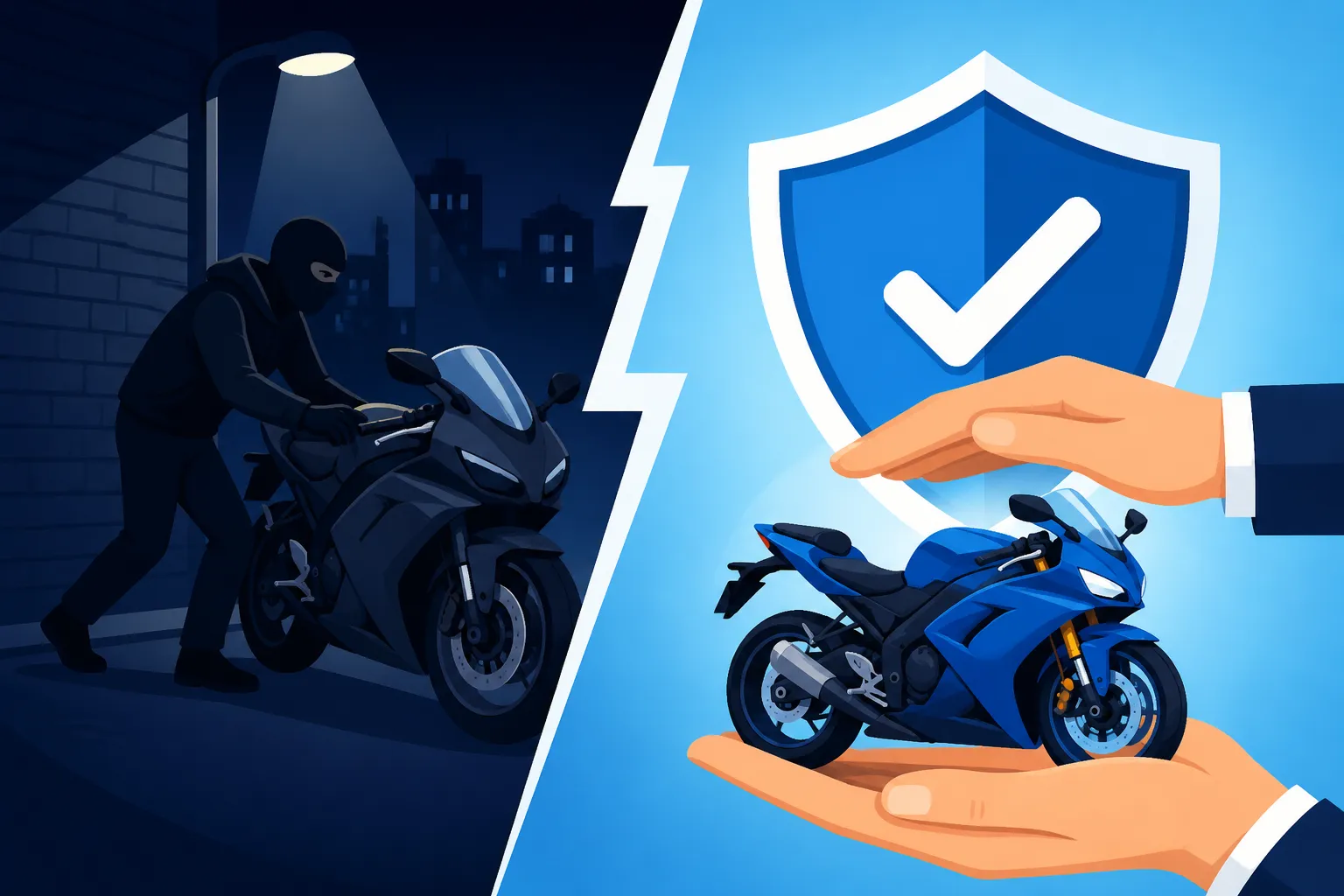
There's hardly a more gut-wrenching feeling for a rider than walking out to where you parked your beloved machine and finding nothing but an empty space. That immediate rush of panic, the disbelief, and then the sinking realization that your motorcycle is gone – it's a nightmare scenario. When your motorcycle is stolen, your first frantic thought, after calling the police, is often, "Will my insurance even cover this?" The good news is, depending on the type of coverage you've invested in, the answer is often yes, but understanding the specifics is crucial for navigating the claims process. This guide will walk you through exactly what your insurance might cover, what steps to take, and how to prepare for the unexpected.
Does Your Motorcycle Insurance Cover Theft? The Crucial Factor
Let's cut right to the chase: whether your motorcycle insurance will pay out for theft hinges entirely on the type of coverage you carry. This isn't just a technicality; it's the difference between replacing your bike and being left with a hefty financial loss.
The Absolute Necessity of Comprehensive Coverage
If you're worried about your motorcycle being stolen, comprehensive coverage is the hero you need. This isn't just a fancy add-on; it's specifically designed to protect your bike from non-collision incidents. Think of it as your all-around guardian against things that aren't a direct result of hitting another vehicle or object. This includes theft, but also vandalism, fire, falling objects, damage from animals, and natural disasters like floods or hailstorms.
Without comprehensive coverage, your insurer simply won't have a policy clause that kicks in for a stolen bike. Many experienced riders will tell you that even if you've paid off your bike and are looking to save a few bucks, comprehensive coverage is often still worth keeping, especially if you live in an area with high theft rates or if your bike is particularly valuable. It's a small premium to pay for the peace of mind that if your pride and joy vanishes, you won't be starting from scratch financially. This coverage is usually required if you have a financed motorcycle, ensuring the lender's investment is protected. For more on what this type of coverage entails, you can read about What Is Comprehensive Motorcycle Insurance?.
Why Liability-Only Leaves You Exposed
Here’s where many riders get caught out, especially new ones or those on older, less expensive bikes who opt for the bare minimum. Liability-only insurance, while legal in most states to get you on the road, offers absolutely no protection for your own motorcycle. Its sole purpose is to cover damages and injuries you cause to other people and their property in an accident where you are at fault. It's about protecting them from your negligence, not protecting your bike from anything.
So, if your motorcycle is stolen and you only have liability coverage, your insurance company won't pay a dime for the loss of your bike. This can be a devastating realization after the fact, leaving you to bear the entire financial burden of replacing your stolen machine. It’s a common misconception that "insurance" covers everything; you really need to understand the different Types of Motorcycle Insurance Coverage Explained to avoid these painful surprises. While it might seem like a way to save on premiums, choosing liability-only on a bike you can’t afford to replace out of pocket is a gamble that rarely pays off when theft strikes.
Immediate Actions After Discovering Your Bike is Gone
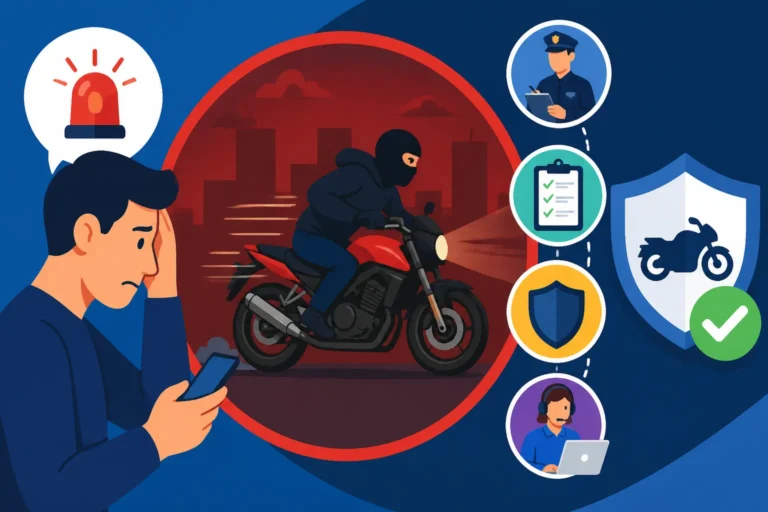
The moment you realize your motorcycle has been stolen, a million thoughts will race through your head. It's a highly emotional time, but taking immediate, structured action is crucial for both law enforcement and your insurance claim.
The Critical Police Report: Details Matter
This is your absolute first step, even before you call your insurance company. You need to file a police report immediately. Don't delay. The sooner law enforcement has the details, the higher the chance they might be able to recover it. When you call, be prepared to provide as much information as possible:
- Vehicle Identification Number (VIN): This is paramount. It uniquely identifies your motorcycle.
- License Plate Number: Another critical identifier.
- Make, Model, and Year: Essential for identification.
- Color and Distinctive Markings: Any custom paint jobs, decals, dents, or aftermarket accessories. The more unique details, the better.
- Location of Theft: Where was the bike last seen?
- Timeframe of Theft: When do you estimate it was stolen?
- Any Witnesses or Surveillance: Did anyone see anything? Are there security cameras nearby?
Make sure you get a copy of the police report and the case number. Your insurance company will absolutely require this for your claim. Without an official police report, your insurance claim will likely be denied because there's no official record of the theft.
Notifying Your Insurance Provider Promptly
Once you've filed a police report and have a case number, your next call is to your insurance provider. Just like with the police, prompt reporting is key. Most policies require you to report a theft claim within a certain timeframe, typically 24-72 hours, though it's always best to do it as soon as possible.
When you call, you'll need to provide them with the police report number and all the details you gave the police. They'll assign a claims adjuster to your case. This adjuster will be your main point of contact throughout the process. Be honest and thorough with them. They'll ask about your bike's condition, any modifications, where it was stored, and your security measures.
Companies like Progressive often have streamlined online claim portals in addition to phone support, making the initial reporting process a bit easier during a stressful time. Remember, the goal here is to get the ball rolling quickly, so both the police can search, and your insurance can begin their investigation and eventual payout process.
Navigating the Motorcycle Theft Insurance Claim Process
After the initial shock and reporting, the insurance claim process can feel like a waiting game. It's a structured process that involves investigation, valuation, and ultimately, settlement.
The Investigation and Waiting Game
Once you've reported the theft to both the police and your insurance company, an investigation begins. For the police, this means trying to locate your motorcycle. For the insurance company, it often involves a waiting period before they will declare the bike a total loss and issue a payout. This waiting period is typically around 30 days, though it can vary by insurer and state. Why the wait? Because motorcycles are often recovered. They might be found abandoned, or law enforcement might track them down. If your bike is recovered during this period, your insurance claim will shift from a theft claim to a damage claim, assuming the bike was damaged during the theft.
During this time, your insurance adjuster will be gathering information. They might ask for additional details about your bike, such as service records, recent photos, and receipts for any custom parts or upgrades. They’ll also verify your policy details and ensure you have the comprehensive coverage necessary for a theft claim. It can be frustrating to wait, especially when you're without your ride, but it's a standard part of the process. For more on what happens during a claim, you can review How to File a Motorcycle Insurance Claim.
Valuation: Actual Cash Value vs. Agreed Value
This is arguably the most critical part of the claim for your wallet. How much will your insurance company pay for your stolen motorcycle? The answer depends heavily on whether your policy uses Actual Cash Value (ACV) or Agreed Value.
- Actual Cash Value (ACV): Most standard comprehensive policies operate on an ACV basis. This means the insurer will pay you the market value of your motorcycle at the time of the theft, minus depreciation. Think of it like this: if you bought a bike for $15,000 three years ago, its value today, after considering mileage, wear and tear, and general market conditions, will be significantly less. The insurer will find comparable bikes for sale in your area and offer you that amount, minus your deductible. This can be a tough pill to swallow, as it rarely covers what you originally paid or what you feel your bike is worth.
- Agreed Value: This is a much more favorable option for many riders, especially those with custom, vintage, or high-value motorcycles. With an agreed value policy, you and the insurance company agree on a specific value for your motorcycle before the policy is issued. If the bike is stolen, they pay out that agreed amount, minus your deductible, regardless of its depreciated market value. This eliminates the guesswork and often provides a higher payout. While tools like The Zebra can help you compare policies, make sure you specifically look for insurers offering agreed value if you want this peace of mind. To fully understand the differences, check out Agreed Value vs Stated Value vs Actual Cash Value.
Documentation and Cooperation
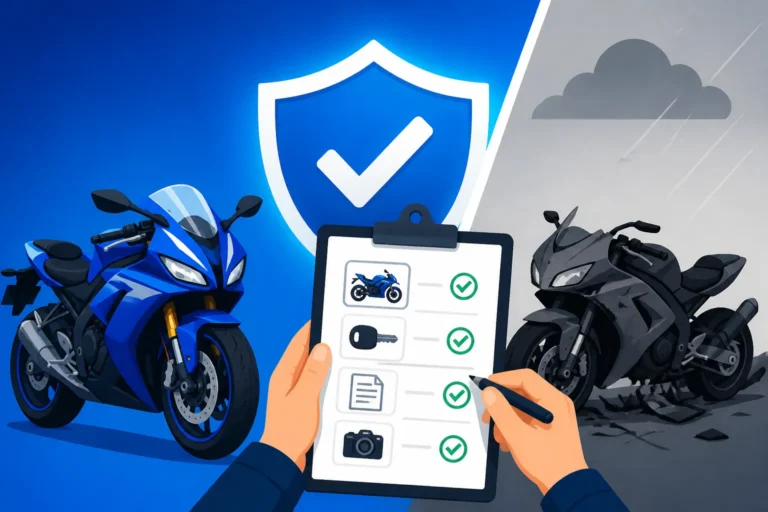
Throughout the process, the insurance company will expect your full cooperation. This includes providing any requested documentation promptly. This might include:
- Motorcycle Title: Proof of ownership.
- All Sets of Keys: To show you didn't leave them in the ignition.
- Service Records: To prove maintenance and condition.
- Photos of the Bike: Recent pictures that show its condition and any customizations.
- Receipts for Aftermarket Parts/Upgrades: Crucial for getting reimbursed for those expensive add-ons.
The more thoroughly you can document your bike's value and condition, the smoother the claims process will be and the better your chances of a fair settlement. If you've got a heavily customized bike, this documentation becomes even more important for claiming those Custom Parts Coverage Explained.
Understanding Your Payout for a Stolen Motorcycle
Getting a check from your insurance company for a stolen motorcycle can bring a sense of relief, but it's important to have realistic expectations about the amount. There are several factors that will influence the final figure.
Deductibles and Depreciation: The Bottom Line
When your insurance company calculates your payout, two major factors will almost always reduce the amount you receive: your deductible and depreciation.
First, your deductible is the amount you agreed to pay out of pocket before your insurance coverage kicks in. For instance, if your motorcycle is valued at $8,000 and you have a $500 comprehensive deductible, your maximum payout will be $7,500. This is a non-negotiable part of your policy, and it's important to choose a deductible you can comfortably afford, as it directly impacts your premium and your out-of-pocket costs during a claim.
Second, depreciation is a huge factor, particularly with Actual Cash Value (ACV) policies. Motorcycles, like cars, lose value over time due to age, mileage, and wear and tear. Your insurance company will assess the market value of a similar motorcycle in your area, in similar condition, right before it was stolen. They then subtract the depreciation from its original value. This means that if you bought a motorcycle for $18,000 three years ago, its ACV might only be $12,000, and after your deductible, your payout could be $11,500. This reality often catches riders off guard, as they expect a payout closer to what they originally paid or what they still owe. This is why understanding How Much Is Motorcycle Insurance? 2026 Cost Guide often involves understanding how depreciation factors into your policy.
Coverage for Custom Parts and Accessories
If you've spent countless hours and dollars customizing your motorcycle with aftermarket exhaust, upgraded suspension, a custom paint job, or even just some nice saddlebags, you need to ensure these modifications are properly covered. Standard comprehensive coverage typically has very limited, if any, coverage for custom parts and accessories. Most policies might only offer a few hundred dollars of coverage for these items, which is often a drop in the bucket compared to what many riders invest.
To adequately protect your custom parts, you usually need to purchase a specific accessories and custom parts coverage endorsement. This add-on allows you to declare a specific value for your modifications, ensuring they are included in your payout should your bike be stolen. Always provide receipts and detailed descriptions of your custom work to your insurer, or it will be incredibly difficult to prove their value after a theft. Companies like Harley-Davidson Insurance specialize in covering highly customized bikes, often understanding the true value riders place on their unique machines.
What Happens if Your Stolen Bike is Financed?
Having your motorcycle stolen is stressful enough, but if it's financed, the situation can become even more complex. When you finance a motorcycle, your lender typically requires you to carry full coverage, which includes comprehensive and collision, to protect their investment. If your financed bike is stolen and declared a total loss, your insurance company will pay out the Actual Cash Value to you, minus your deductible.
However, the ACV payout might not be enough to cover the remaining balance on your loan. This scenario is known as being "upside down" or "underwater" on your loan. For example, if your bike is stolen, and your insurance pays out $12,000, but you still owe $14,000 on your loan, you would be responsible for paying that $2,000 difference out of pocket. This is where Gap Insurance becomes incredibly valuable. Gap insurance covers the "gap" between your motorcycle's Actual Cash Value and the outstanding balance on your loan. If you have a financed bike, especially a newer one, strongly consider adding gap insurance to your policy. It's a lifesaver in a theft or total loss situation. You can learn more about Do You Need Gap Insurance on a Motorcycle? to decide if it's right for you.
Proactive Steps to Deter Motorcycle Theft
While insurance helps mitigate the financial loss after a theft, preventing the theft in the first place is always the better outcome. Unfortunately, motorcycles are high on thieves' hit lists due to their portability and ease of theft compared to cars. However, there are many things you can do to make your bike a less appealing target.
Layered Security is Your Best Defense
No single security device is foolproof, but using multiple layers of security significantly increases the time and effort a thief needs, often making them move on to an easier target. Think of it as creating a gauntlet of deterrents:
- Disc Locks: Small, portable, and effective. They lock onto your brake disc, preventing the wheel from turning. Just remember to get one with a reminder cable so you don't try to ride off with it still attached!
- Heavy-Duty Chains and Padlocks: A thick, hardened steel chain run through your wheel or frame and secured to an immovable object (like a light post or dedicated anchor point) is a strong deterrent. Brands like Kryptonite and Oxford are well-regarded for their robust chains.
- Alarms: Modern motorcycle alarms can be quite sophisticated, with motion sensors, tilt sensors, and loud sirens designed to draw attention to any tampering. Some even have remote paging features that alert you if your bike is disturbed.
- GPS Tracking Devices: Devices like LoJack or similar aftermarket GPS trackers can be hidden on your bike and allow you to track its location if it's stolen. This significantly increases the chances of recovery. Some insurance providers, including Progressive, offer discounts for bikes equipped with these anti-theft devices.
Smart Parking and Storage Strategies
Where you leave your motorcycle is just as important as the security devices you use. Thieves often case areas for easy targets.
- Well-Lit and Visible Areas: Avoid parking in dark, secluded spots. A well-lit, high-traffic area makes it harder for thieves to work unnoticed.
- Secure Garages or Sheds: The safest place for your bike is behind a locked door. If you have a garage, always use it and keep it locked, even if you're just stepping inside for a moment. Consider adding ground anchors inside your garage to chain your bike to for an extra layer of security.
- Avoid Consistent Routines: If you always park in the same spot at the same time, you become predictable. Mix up your parking spots when possible.
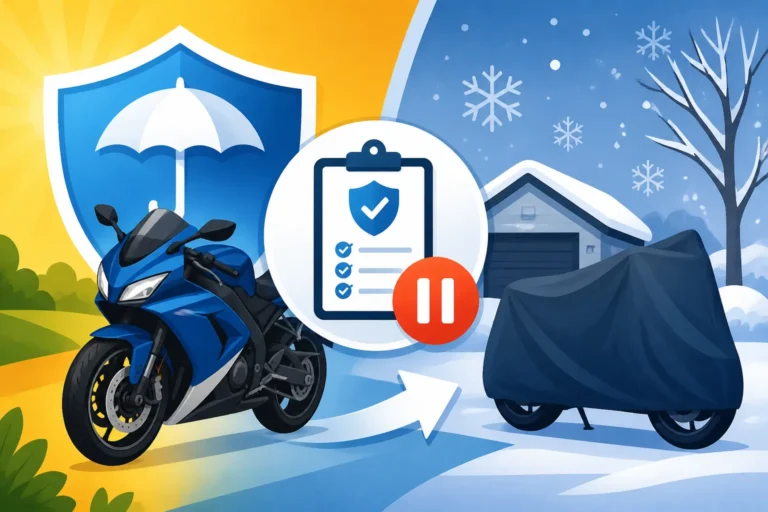
- Cover Your Bike: A motorcycle cover can be a surprisingly effective deterrent. It hides your bike from plain sight, making it less obvious what kind of motorcycle it is and adding an extra step for a thief to uncover it before they can assess the security.
Community and Prevention Programs
Sometimes, the best defense is a strong community and proactive measures beyond physical locks.
- Register Your Bike and Mark Parts: Many law enforcement agencies or local riding groups offer programs to mark your motorcycle's parts with unique identifying numbers (often your VIN). This makes it harder for thieves to sell parts individually and easier for authorities to identify stolen components.
- Join Rider Networks: Local motorcycle clubs or online forums can be great resources for sharing theft alerts and keeping an eye out for each other's bikes. If a bike is stolen in the community, word often spreads fast.
- Report Suspicious Activity: If you see someone loitering around bikes or acting suspiciously, don't hesitate to report it to building management or local law enforcement. Trust your gut.
By combining robust security devices with smart parking choices and community awareness, you can drastically reduce the chances of becoming a victim of motorcycle theft.
| Coverage Type | Does it Cover Theft? | What it Covers Instead | Typical Requirement |
|---|---|---|---|
| **Comprehensive** | **YES** | Damage from non-collision events (fire, vandalism, natural disasters, hitting an animal) | Often required by lenders for financed bikes; recommended for most riders. |
| **Liability Only** | **NO** | Damage and injury you cause to others and their property. | Minimum legal requirement in most states. |
| **Collision** | **NO** | Damage to your own motorcycle from an accident, regardless of fault. | Often required by lenders for financed bikes; optional for paid-off bikes. |
| **Accessories & Custom Parts** | **YES (as an add-on)** | Specialized coverage for aftermarket parts, modifications, and gear. | Optional, highly recommended for customized bikes. |
| **Gap Insurance** | **NO (but helps after theft)** | Pays the difference between ACV and loan balance if the bike is totaled or stolen. | Optional, highly recommended for financed bikes. |
Disclaimer
Please remember that insurance policies can vary significantly. This guide provides general information and should not be considered legal or financial advice. Always consult your specific policy documents or speak directly with your insurance provider to understand your coverage limits, deductibles, and exclusions. State laws and requirements for motorcycle insurance also differ, so it’s always a good idea to stay informed about the regulations in your area.