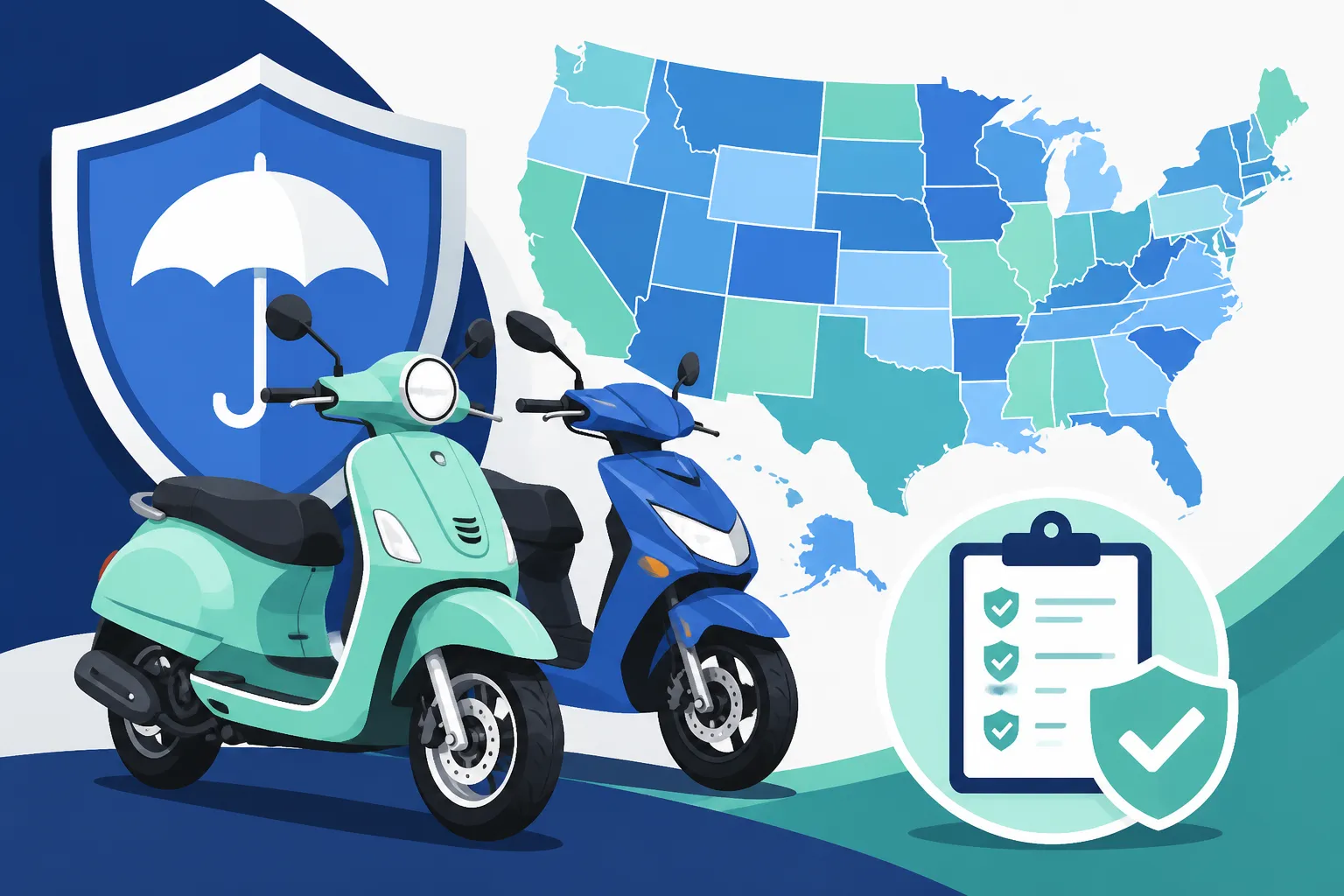
Moped & Scooter Insurance Requirements by State
Oh, the humble moped and scooter! They're fantastic for zipping around town, saving on gas, and just generally enjoying the open air without the full commitment of a big motorcycle. But if you've ever tried to figure out the insurance situation, you know it can feel like navigating a maze blindfolded. Is it a bike? Is it a car? Does it even need insurance? The confusion is real because the rules vary wildly from state to state, making it tough to know if you're riding legally or risking a hefty fine. This comprehensive guide is here to untangle all that, helping you understand the specific moped and scooter insurance requirements in each state so you can ride with peace of mind.
The Nuance Between Mopeds, Scooters, and Motorcycles
Before we even dive into insurance, let's clear up a common misconception that often trips people up: the difference between mopeds, scooters, and full-blown motorcycles. While they all have two (or sometimes three) wheels and an engine, their legal classifications, and thus their insurance requirements, can be surprisingly distinct. States often use very specific definitions based on engine size, top speed, and design, and these details are paramount when it comes to what kind of insurance you're mandated to carry.
What Defines a Moped?
Generally speaking, a moped is characterized by its small engine displacement and limited top speed. Historically, mopeds actually had pedals, hence "mo-ped" (motorized bicycle with pedals), allowing riders to propel them like a bicycle if needed. While modern mopeds might not always have pedals, the defining characteristic remains their modest power. In many states, a moped is legally defined as a two-wheeled vehicle with an engine displacement of 50cc (cubic centimeters) or less, and a top speed that typically doesn't exceed 30 mph. Because of these limitations, they often fall into a different regulatory category than motorcycles, sometimes even being treated more like bicycles or motorized bicycles. This classification is key because it directly influences whether you need a special license, registration, and most importantly for us, insurance.
What Defines a Scooter?
Scooters, on the other hand, cover a broader range. The term "scooter" often refers to a vehicle with a step-through frame, smaller wheels than most motorcycles, and an engine located under the seat. Unlike mopeds, scooters can have a much wider range of engine sizes, from 50cc all the way up to 650cc or even larger. A 50cc scooter might technically fit a moped's definition in some states, while a 250cc or 400cc scooter will almost certainly be classified as a motorcycle due to its power and speed capabilities. For instance, a classic Vespa or a modern Honda Forza are quintessential scooters, but their larger engine sizes mean they often require full motorcycle licensing and insurance. The key differentiator is often that engine size; once you go above 50cc, or sometimes 150cc, states tend to lump scooters in with motorcycles for legal purposes.
Why the Distinction Matters for Insurance
The specific classification by your state's Department of Motor Vehicles (DMV) or equivalent agency is the ultimate decider for your insurance needs. If your vehicle is legally classified as a "moped" or "motorized bicycle" due to its low power, you might find yourself in a state where no insurance is legally mandated, or perhaps only minimal liability coverage is required. Conversely, if your scooter, even a relatively small one, is classified as a "motorcycle" because its engine exceeds a certain displacement threshold, then you're almost certainly going to need to meet the same insurance requirements as any other motorcyclist in your state. This is why a simple Google search for "moped insurance" might not give you the full picture; you really need to understand how your specific vehicle is categorized by your state's laws. For riders curious about broader requirements, our guide on Motorcycle Insurance Requirements by State (2026 Guide) provides a good comparison point for what full motorcycles typically need.
State-by-State Moped & Scooter Insurance Requirements
Alright, let's get into the nitty-gritty of what your state actually expects from you. It's a patchwork quilt of regulations out there, so what's mandatory in one place might be completely optional, or even non-existent as a requirement, just a state or two over. There's no universal "moped rule" across the United States, so you really have to check your local laws to avoid any surprises.
States Where It's Explicitly Required
For many states, if your moped or scooter meets certain criteria, usually related to engine size or top speed, you'll be treated just like any other motorcyclist, meaning insurance is a must-have. These states typically classify anything above a very low threshold (often 50cc for mopeds) as a motorcycle, or they have specific insurance mandates for mopeds themselves.
For example, in North Carolina, mopeds are defined as vehicles with a motor of 50cc or less and a top speed of no more than 30 mph. If your moped fits this definition, you must register it and carry liability insurance, just like a car or motorcycle. This isn't optional; without proof of insurance, you can't even get it registered. Similarly, New York requires insurance for all motorcycles, which includes scooters with engines over 50cc. If you're riding a smaller scooter or moped, the requirements can sometimes be less stringent or even fall under different categories, but typically, anything with significant motor power will need some form of coverage. Even in states like California, where mopeds might have slightly different registration processes, liability insurance is generally required for any motorized vehicle operating on public roads, especially if it exceeds specific speed or power limits. This ensures that if you're involved in an accident, there's a way to cover damages to other parties, aligning with the state's financial responsibility laws.
States Where It's Not Explicitly Required, But Highly Recommended
Then there's another set of states where the law might not explicitly demand moped or scooter insurance, but trust me, it's a really, really good idea to have it anyway. These states often have what are known as "financial responsibility" laws. This means that while you might not need to buy an insurance policy, you are still personally liable for any damages or injuries you cause in an accident. If you don't have insurance and cause an accident, you could be on the hook for thousands, or even hundreds of thousands, of dollars out of your own pocket.
Consider Texas; while they have robust motorcycle insurance laws, the requirements for mopeds (defined as motorized bicycles with an engine not exceeding 50cc and a top speed of 30 mph) are less clear-cut for mandatory insurance. However, Texas has financial responsibility laws. If you're involved in a crash and don't have insurance, you'll be held personally accountable for damages. Similarly, in Washington, while smaller scooters and mopeds might not always fall under the strict motorcycle insurance mandates, the general principle of financial responsibility still applies. If you cause an accident, you are legally obligated to cover the costs. For more on what this entails, you might want to read about Financial Responsibility Laws for Riders. This is why, even without a specific mandate, opting for at least liability insurance is a smart move. It protects your assets and gives you peace of mind that you won't face financial ruin over an unfortunate fender bender.
States That Classify Them as Bicycles or Have Unique Rules
Finally, we have states that have very specific, sometimes more lenient, classifications for mopeds, often treating them more like bicycles or not requiring traditional motor vehicle insurance. These usually apply to the smallest, slowest mopeds.
For example, in Montana, a motorized bicycle (which includes many mopeds) with an engine of 50cc or less and a top speed of 30 mph is often not considered a "motor vehicle" for insurance purposes. This means you might not need the same level of insurance as a motorcycle. Similarly, New Hampshire is known for its relatively relaxed vehicle laws, and certain low-power motorized bicycles or mopeds might not require insurance, although this can still be subject to specific criteria about engine size and speed. However, even in these states, it's crucial to understand that if your "moped" slightly exceeds a certain engine size or speed limit, it could suddenly jump into the "motorcycle" category, changing all the rules. Always double-check with your state's DMV website or a local insurance agent to confirm the exact classification and requirements for your specific vehicle. Our article on States That Don't Require Motorcycle Insurance might offer additional context, though remember, mopeds are a separate category.
Here's a quick overview of some state requirements to give you a clearer picture:
| State | Vehicle Classification (Typical) | Engine Size (Typical Limit) | Insurance Requirement | Notes |
|---|---|---|---|---|
| California | Moped, Scooter, Motorcycle | Moped: <= 50cc | Yes (Mopeds and Scooters over 50cc typically need motorcycle insurance, smaller mopeds may have specific rules) | All motorized vehicles on public roads generally require financial responsibility. If classified as a motor vehicle, insurance is mandatory. Often depends on top speed and engine size. |
| Florida | Moped, Scooter, Motorcycle | Moped: <= 50cc | Yes (For most) | Mopeds often fall under specific definitions and typically require registration and insurance if they exceed basic bicycle-like parameters. Motorcycles (including larger scooters) require PIP (Personal Injury Protection) if they have 4 or more wheels, or equivalent medical coverage if 2 wheels, and liability insurance. |
| New York | Moped, Scooter, Motorcycle | Moped: <= 50cc | Yes (For most) | Scooters over 50cc are classified as motorcycles and require motorcycle insurance. Smaller mopeds may have different requirements but most motorized vehicles need some form of coverage. |
| North Carolina | Moped, Scooter, Motorcycle | Moped: <= 50cc | Yes | Mopeds (<= 50cc, <= 30 mph) require registration and liability insurance. Scooters exceeding these limits are motorcycles and follow motorcycle insurance laws. |
| Texas | Moped, Motorized Bicycle, Motorcycle | Moped: <= 50cc | Not explicitly required for all mopeds; Financial Responsibility applies | While mopeds (motorized bicycles <= 50cc) may not explicitly require insurance, riders are still liable for damages. Motorcycle insurance is required for vehicles classified as motorcycles (typically scooters over 50cc). |
| Washington | Moped, Motorized Scooter, Motorcycle | Moped: <= 50cc | Not explicitly required for all mopeds; Financial Responsibility applies | State laws differentiate between motorized bicycles and motor-driven cycles (which include many scooters). Insurance is usually required for motor-driven cycles, and financial responsibility applies to all. |
| Montana | Motorized Bicycle, Motorcycle | Motorized Bicycle: <= 50cc | No (for certain motorized bicycles) | Motorized bicycles (50cc or less, under 30 mph) are generally not considered motor vehicles for insurance, but larger scooters will be. |
This table provides general guidelines. Always verify with your state's DMV or a licensed insurance agent for the most current and specific requirements for your exact vehicle.
Minimum Coverage Options for Scooters and Mopeds
Even if your state doesn't have a strict mandate for moped or scooter insurance, understanding the types of coverage available is still incredibly important. If it is required, you'll need to know what minimums you have to meet. Just like with cars and motorcycles, different coverage types protect you in various scenarios, from fender benders to theft. When you're looking into scooter or moped insurance, you'll generally encounter a few core options, and then some additional ones that offer more robust protection.
Liability Coverage Essentials
This is the absolute bedrock of any vehicle insurance policy, and it's almost always what states are referring to when they talk about "minimum insurance requirements." Liability coverage protects other people if you cause an accident. It has two main components:
- Bodily Injury Liability: This pays for medical expenses, lost wages, and pain and suffering for anyone you injure in an accident where you are at fault. For instance, if you accidentally cut off a car and they swerve into a ditch, leading to injuries for the driver and passengers, your bodily injury liability would kick in to cover their costs. Most states express this with two numbers, like $25,000/$50,000, meaning it covers up to $25,000 per person and $50,000 per accident. Our guide on Minimum Liability Insurance Explained (The Three Numbers) goes into more detail on how these numbers work.
- Property Damage Liability: This covers the cost of repairing or replacing property you damage in an accident, again, when you are at fault. This could be another vehicle, a mailbox, a fence, or even a building. If you accidentally scrape a parked car, your property damage liability would pay for its repairs. This is usually the third number in the common liability format, like $25,000. So, a typical minimum might be 25/50/25, indicating the coverage limits.
It's really important to remember that liability coverage doesn't pay for your own injuries or damages to your moped or scooter. It's purely for the "other guy."
Optional Coverages to Consider
While liability is often the only mandated coverage, thinking about some optional coverages can save you a world of hurt (and money) in the long run. These are the coverages that truly protect you and your investment.
- Collision Coverage: This pays for repairs to your moped or scooter if it's damaged in an accident, regardless of who is at fault. It also covers incidents like hitting a pothole, rolling over, or striking an object. So, if you drop your scooter or get into a minor collision, collision coverage helps you get it fixed without having to pay the full cost out of pocket, beyond your deductible. This coverage is often paired with comprehensive coverage, which you can learn more about in our article on Collision vs Comprehensive Motorcycle Coverage.
- Comprehensive Coverage: This is your "non-collision" damage protector. It covers things like theft, vandalism, fire, natural disasters (hail, floods), and even hitting an animal. If your scooter gets stolen from your apartment complex, or a tree branch falls on it during a storm, comprehensive coverage would help with the replacement or repair costs.
- Uninsured/Underinsured Motorist (UM/UIM) Coverage: This is incredibly valuable, especially for smaller, more vulnerable riders like those on mopeds and scooters. UM/UIM protects you if you're hit by a driver who either doesn't have insurance at all (uninsured) or doesn't have enough insurance to cover your medical bills and damages (underinsured). Given the number of uninsured drivers on the road, this coverage is a smart addition. For a deeper dive into this, check out our guide on Uninsured & Underinsured Motorist Coverage (UM/UIM).
- Medical Payments (MedPay) or Personal Injury Protection (PIP): These cover medical expenses for you and your passengers, regardless of who was at fault in an accident. PIP can also cover lost wages and other non-medical costs, depending on your state. Even if you have health insurance, these coverages can help with deductibles and co-pays, providing immediate access to care.
Understanding Financial Responsibility Laws
Even in states where moped or scooter insurance isn't explicitly required, almost all states have "financial responsibility" laws. This is a critical concept to grasp. It means that if you're operating any motor vehicle (and sometimes even a moped or scooter, depending on its classification) on public roads, you are legally obligated to be financially responsible for any damage or injury you cause to others. This responsibility doesn't disappear just because you don't have an insurance policy. If you cause an accident and don't have insurance, the other party can sue you directly for their medical bills, property damage, lost wages, and more. This could mean garnishing your wages, placing liens on your property, or even forcing you into bankruptcy. So, while insurance might not be "required" in a checkbox sense, it's virtually impossible to meet your financial responsibility without it, unless you happen to have a spare few hundred thousand dollars sitting around to pay for potential damages. Our article on What Happens If You Ride Without Insurance? details the severe consequences of being caught without coverage when it's needed most.
Factors Influencing Your Moped or Scooter Insurance Costs
So, you've decided to get insurance, or maybe your state legally requires it. The next big question is usually, "How much is this going to cost me?" Just like with motorcycles or cars, a whole host of factors come into play when insurance companies calculate your premium for a moped or scooter. It's not just about the vehicle itself, but also about who's riding it and where. Understanding these elements can help you anticipate costs and even find ways to save money. If you're looking for a broader understanding of pricing, our How Much Is Motorcycle Insurance? 2026 Cost Guide might offer some useful comparisons.
Rider Demographics and Experience
Your personal profile plays a massive role in your insurance rates. Insurers are all about assessing risk, and certain demographic data points are historically linked to higher or lower accident rates.
- Age and Experience: Younger riders, especially those under 25, typically face higher premiums. This is simply because, statistically, they have less riding experience and are involved in more accidents. As you age and gain more years of riding experience, your rates tend to decrease, assuming a clean record. Conversely, very senior riders might see slight increases again due to different risk factors. If you're a new rider, expect to pay a bit more initially.
- Driving Record: This is a big one. Any traffic violations—speeding tickets, reckless driving, DUIs—will significantly hike up your premiums. Accidents, even minor ones, where you were at fault will also impact your rates. Conversely, a spotless driving record is one of the best ways to keep your insurance costs down. Taking a motorcycle safety course, even for a moped or scooter, can sometimes earn you a discount and show insurers you're a responsible rider.
- Credit Score: In most states, your credit-based insurance score (which is different from your financial credit score but uses similar data) can influence your premium. Insurers have found a correlation between higher credit scores and a lower likelihood of filing claims.
- Location: Believe it or not, where you live and even where you park your moped or scooter can impact your rates. Urban areas with higher traffic density and theft rates typically have higher premiums than rural areas. If you live in a ZIP code known for vehicle theft or vandalism, your comprehensive coverage will likely cost more.
Vehicle Characteristics
The specific moped or scooter you ride also contributes significantly to your insurance bill. Not all two-wheelers are created equal in the eyes of an insurer.
- Engine Size and Performance: This is perhaps the biggest factor differentiating moped/scooter rates. Smaller engine sizes (e.g., 50cc) generally mean lower speeds and less power, which translates to lower risk for insurers. As the engine size increases (e.g., 150cc, 250cc, 400cc), the vehicle is capable of higher speeds and more damage, so rates will climb. A high-performance scooter, even if it's still a "scooter," could be as expensive to insure as a smaller motorcycle.
- Vehicle Value: The newer and more expensive your moped or scooter, the more it will cost to repair or replace if it's damaged or stolen. This directly affects the cost of comprehensive and collision coverage. A brand new Vespa will cost more to insure than a 10-year-old no-name moped.
- Safety Features: While not as prominent on smaller two-wheelers as on cars, any safety features like anti-lock brakes (ABS) can sometimes lead to small discounts, as they reduce the likelihood of accidents.
- Theft Rates: Certain models or brands might be more attractive targets for thieves. If your specific moped or scooter model has a high theft rate, your comprehensive coverage premium could be higher.
Location and Usage
How and where you use your moped or scooter also plays a role in determining your insurance premium.
- Annual Mileage: If you only ride your moped occasionally, say for a few hundred miles a year, you might get a lower rate compared to someone who commutes daily and racks up thousands of miles. Less time on the road, statistically, means less exposure to risk. Some insurers even offer "pay-per-mile" options for very low-use vehicles.
- Storage: Where do you keep your moped or scooter when you're not riding it? A locked garage offers better protection against theft and vandalism than parking it on the street. Insurers often offer discounts for secure storage.
- Primary Use: Is your moped for occasional recreational use, or is it your primary mode of transportation for commuting through heavy city traffic? The latter scenario generally presents a higher risk and, therefore, a higher premium.
By understanding these factors, you can make informed decisions about your vehicle choice, riding habits, and even where you live, all of which can influence your final insurance cost.
How to Get Moped and Scooter Insurance
So, you're ready to get your moped or scooter insured. The process doesn't have to be intimidating, but it does require a bit of legwork to ensure you get the right coverage at a fair price. It's essentially similar to getting motorcycle insurance, just with a few tweaks depending on how your specific vehicle is classified.
Gathering Necessary Information
Before you even start calling for quotes or browsing websites, make sure you have all your ducks in a row. Having this information handy will streamline the process and ensure accurate quotes.
- Your Personal Details: This includes your full name, date of birth, driver's license number (and motorcycle endorsement if you have one), address, and social security number (for credit score checks). Insurers will also ask about your riding history, including any accidents, traffic violations, or prior insurance claims.
- Moped/Scooter Details: You'll need the make, model, year, and Vehicle Identification Number (VIN) of your moped or scooter. The VIN is like your vehicle's fingerprint and helps insurers identify its exact specifications. You should also know the engine size (e.g., 49cc, 150cc, 250cc) and any modifications or aftermarket parts you've added, as these might require special coverage.
- Usage Information: Be prepared to discuss how you'll use the vehicle (e.g., leisure, commuting), your estimated annual mileage, and where you'll typically store it (e.g., locked garage, carport, street).
Having these details ready will make the quoting process much faster and prevent delays.
Shopping Around for Quotes
This is arguably the most crucial step in finding affordable and appropriate insurance. Never settle for the first quote you receive. Insurance rates can vary significantly between companies for the exact same coverage.
- Online Quote Tools: Many major insurance providers, like Progressive, GEICO, and Dairyland, offer online quote tools that can give you instant estimates. These are great for getting a baseline idea of costs. Just make sure you're comparing apples to apples—same coverage limits, deductibles, and types of coverage.
- Independent Agents: An independent insurance agent works with multiple insurance companies, not just one. They can shop around for you and present you with several options, often finding deals you might not discover on your own. They can also provide valuable advice on what coverage levels are appropriate for your situation.
- Direct Insurers: Companies like Markel or Harley-Davidson Insurance might offer specialized policies for two-wheelers that could be a good fit, depending on your bike. Don't overlook smaller, regional insurers either, as they sometimes have competitive rates. Our guide on How to Compare Motorcycle Insurance Quotes offers additional tips on this process.
Aim to get at least 3-5 quotes to ensure you're seeing a good range of options.
What to Look for in a Policy
Once you have your quotes, it's time to dig into the details. It's not just about the lowest price; it's about getting the right protection for your needs and budget.
- Coverage Limits: Ensure the liability limits meet or exceed your state's minimum requirements. Also, consider increasing your liability beyond the minimums. In today's world, minimum coverage often isn't enough to cover serious accidents, leaving you personally exposed.
- Deductibles: This is the amount you pay out-of-pocket before your collision or comprehensive coverage kicks in. Higher deductibles usually mean lower premiums, but make sure you can comfortably afford the deductible if you need to file a claim.
- Available Discounts: Ask about every possible discount. Common ones include multi-policy discounts (if you bundle with car or home insurance), safe rider discounts (for completing a safety course), anti-theft device discounts, mature rider discounts, and paid-in-full discounts.
- Customer Service and Claims Process: While not directly on the quote, research the insurer's reputation for customer service and how they handle claims. A cheap policy is no good if you can't get help when you need it most. Check online reviews and ratings from independent agencies. The best insurance companies are often those that offer excellent service when you file a claim, not just the cheapest rates. You might find our list of the Best Motorcycle Insurance Companies (2027) helpful in this regard.
By taking your time and being thorough, you can find moped or scooter insurance that offers robust protection without breaking the bank.
Disclaimer
Please remember that insurance laws and requirements are subject to change and can vary significantly based on your specific location and the precise classification of your vehicle. This guide provides general information and should not be considered legal or financial advice. Always consult with your state's Department of Motor Vehicles or a licensed insurance professional for the most accurate and up-to-date information regarding your personal circumstances.