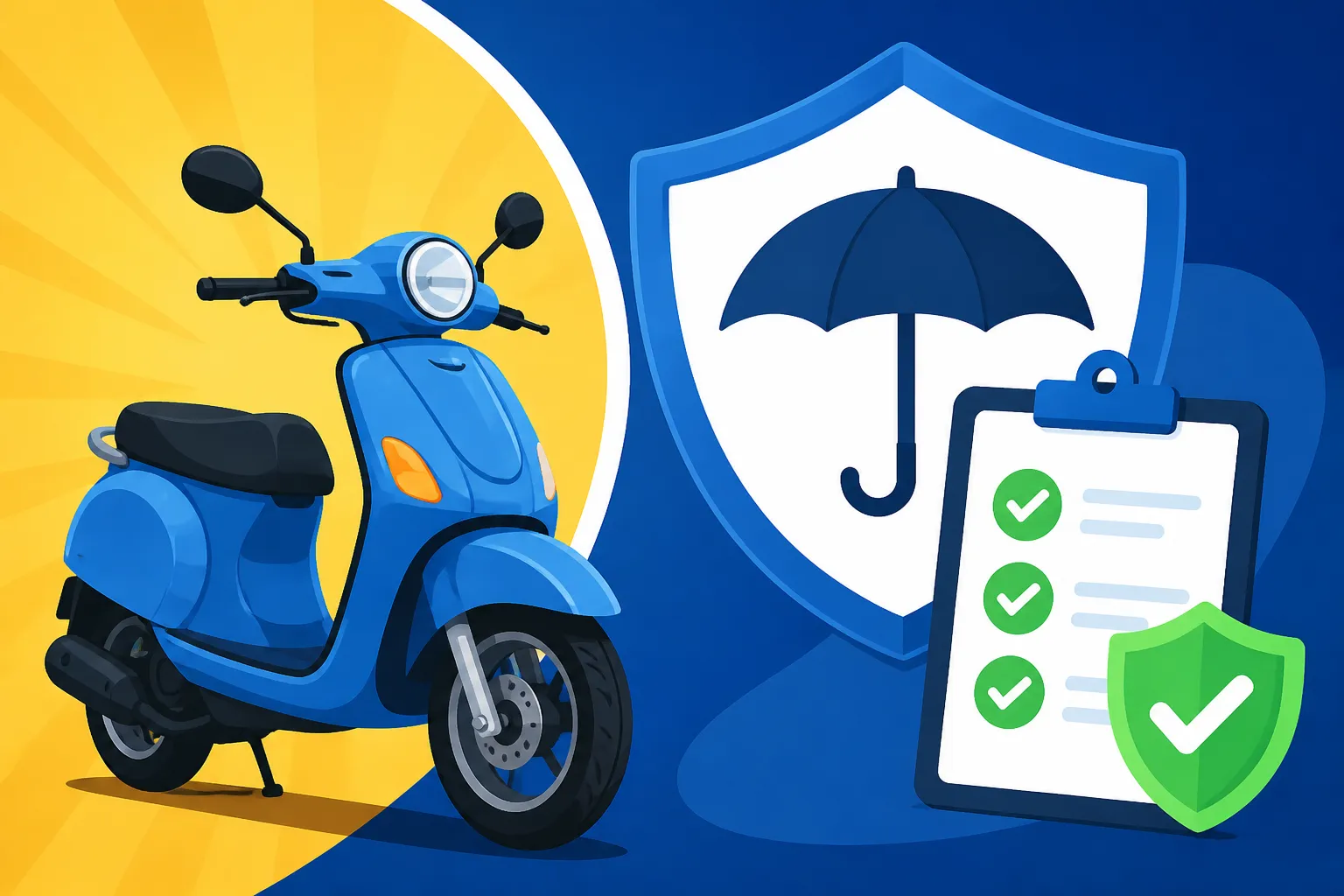
Do You Need Insurance for a 50cc Scooter?
It's incredibly common for riders, especially those new to the world of two-wheeled transportation, to feel completely lost when it comes to insurance for smaller vehicles like 50cc scooters. You might assume that because it’s not a full-blown motorcycle, the rules are different, or perhaps even nonexistent. This guide is here to untangle all that confusion, walking you through the intricate legal landscape and helping you understand exactly what you need to ride your 50cc scooter legally and safely.
Defining Your Ride: Scooter, Moped, or Motorcycle?
One of the biggest sources of confusion starts right at the definition. What exactly *is* a 50cc scooter in the eyes of the law? Is it a motorcycle, a moped, or something else entirely? This isn’t just semantics; it’s the crucial first step in figuring out your insurance obligations. Generally, a 50cc scooter typically refers to a two-wheeled vehicle with an engine displacement of 50 cubic centimeters or less. The top speed often dictates how it’s classified, with many states capping “moped” or “scooter” classifications at 30 or 35 mph.
The distinction between a scooter, moped, and motorcycle can vary wildly from one state to another, and even within the same state, different departments (like the DMV versus the insurance regulator) might have slightly different takes. For example, some states consider anything under a certain engine size and speed a "moped," requiring only a standard driver's license and no special motorcycle endorsement. Other states might lump all powered two-wheelers into a broader "motorcycle" category if they exceed a very low speed threshold, thereby triggering full motorcycle licensing and insurance requirements. Understanding this local definition is paramount, as it directly impacts whether you need a special license, registration, and, most importantly, insurance.
Why These Classifications Matter for Insurance
The legal classification of your 50cc scooter directly dictates the type and amount of insurance you’re required to carry. If your state classifies it as a moped or motorized bicycle, you might find that it falls under a less stringent set of rules, sometimes not even requiring traditional motorcycle insurance. However, if it’s considered a low-power motorcycle, you’ll likely need to adhere to the same minimum liability coverage as a larger motorcycle. This is why you can’t just take a friend’s word for it; you need to check the specific regulations for where you live.
This differentiation can also influence the type of policy available to you. Some insurance providers have specific policies tailored for mopeds and scooters that might be less expensive than a full motorcycle policy, reflecting the lower risk profile associated with slower speeds and smaller engines. Conversely, if your 50cc scooter pushes the boundaries of moped classification, it might be subject to higher premiums and more comprehensive coverage expectations, aligning it with traditional motorcycles. So, don't just ask, "Do I need insurance for a 50cc scooter?"; dig deeper and ask, "How does my state classify my 50cc scooter, and what are the insurance requirements for that classification?".
Navigating State-Specific Insurance Requirements for 50cc Scooters
Alright, let’s get down to the nitty-gritty: what are the actual requirements? This is where things get really localized. There isn’t a single, unified answer for the entire United States, and frankly, that’s what makes it so frustrating for riders trying to do the right thing. Some states are pretty laid-back, while others treat a 50cc scooter almost identically to a full-sized Harley-Davidson when it comes to insurance.
States Where 50cc Scooter Insurance is Typically Required
Most states lean towards requiring some form of financial responsibility, which almost always means liability insurance, even for smaller vehicles like 50cc scooters. This is primarily to protect other people on the road, ensuring that if you’re at fault in an accident, there’s a way to cover the damages or injuries you cause. Think about states like Florida, where motor vehicle laws are quite comprehensive. In Florida, if your 50cc scooter exceeds certain speeds or engine power, it could be classified as a motor vehicle, which generally means you’ll need at least basic liability insurance, similar to what’s outlined in our guide on Motorcycle Insurance Requirements by State (2026 Guide). Even if it’s technically a “moped,” some interpretations still point towards requiring personal injury protection (PIP) coverage.
Similarly, states like New York are quite strict. While a 50cc scooter might not require a motorcycle endorsement if it's below a certain speed limit (usually 20 or 30 mph), New York law generally considers these vehicles to be "motor vehicles" that must be registered and insured. You'll need to meet the minimum liability requirements for property damage and bodily injury. This isn't unique to New York; many states adopt this protective stance. It’s always best to check with your local DMV or an insurance agent who specializes in these kinds of vehicles to get the definitive word for your specific area.
States With Exceptions or Less Stringent Rules
Now, there are some places where the rules are a bit more relaxed, at least at first glance. For instance, some states might classify 50cc scooters strictly as “mopeds” or “motorized bicycles” that don’t fall under the same mandatory insurance umbrella as motorcycles or cars. In such states, you might find that registration is still required, and you probably still need a standard driver’s license, but the explicit legal mandate for insurance might be absent. However, even in these scenarios, it’s crucial to understand that “not required” doesn’t mean “not recommended.”
For example, states like Arkansas and Montana have historically been known for less stringent motorcycle insurance requirements overall. While this might extend to 50cc scooters or mopeds in some cases, these laws can change. It's also important to differentiate between no mandatory insurance and no need for insurance. Even if the state doesn't compel you to buy it, riding without any coverage leaves you financially vulnerable. If you cause an accident and injure someone or damage their property, you'll be on the hook for those costs out of pocket. This is why even in states with relaxed rules, many riders still opt for at least liability coverage to protect their assets. When exploring this, you might find our article on Moped & Scooter Insurance Requirements by State particularly helpful.
Understanding Financial Responsibility Laws
Regardless of whether your state explicitly says “you *must* have insurance for a 50cc scooter,” almost all states have some form of “financial responsibility” law. This means that if you’re involved in an accident and found at fault, you are legally responsible for the damages and injuries. How you meet this responsibility is where insurance comes in. Even in a state where insurance isn’t mandated for your specific 50cc scooter, if you cause an accident, you’ll either need to have an insurance policy that covers it, or you’ll have to pay for everything yourself.
This is a critical distinction that many riders overlook. It's not just about avoiding a ticket for no insurance; it's about protecting yourself from potentially devastating financial consequences. Imagine a scenario where you accidentally hit a pedestrian or a luxury car. The costs for medical bills and vehicle repairs can quickly soar into tens or even hundreds of thousands of dollars. Without insurance, your personal savings, future earnings, and even your home could be at risk. This is a stark reminder that even if your 50cc scooter is technically exempt from mandatory insurance, carrying at least basic liability is a smart, financially responsible choice. Our piece on Financial Responsibility Laws for Riders delves deeper into this concept.
Here's a quick, general overview, but always, always verify with your local DMV or insurance professional for the most current and specific information:
| State (Example) | 50cc Scooter Classification | Insurance Requirement (General) | Notes |
|---|---|---|---|
| California | Moped/Motorized Scooter | Not explicitly required | Requires valid driver's license (any class), registration. Prone to local variations. |
| Florida | Motor Vehicle/Moped (varies) | Often required (PIP, Liability) | Classification depends on speed/engine. PIP usually required if classified as motor vehicle. |
| New York | Motor Vehicle (often) | Required (Liability) | Needs registration, often treated as a motorcycle for insurance purposes. |
| Texas | Moped (if under 30mph) | Not explicitly required | Driver's license required, registration if classified as moped. Insurance recommended. |
| Pennsylvania | Motorized Pedalcycle | Not explicitly required | If classified as a motorized pedalcycle, no registration or insurance needed, but still liability for accidents. |
Essential Types of Insurance Coverage for Scooter Riders
So, you’ve figured out your state’s stance on 50cc scooter insurance. Now, let’s talk about the kinds of coverage you might encounter or consider. Just like with full-sized motorcycles, there are various types of insurance that offer different levels of protection. Understanding these will help you build a policy that truly fits your needs and budget.
Liability Coverage Explained
This is the absolute bedrock of any vehicle insurance policy, and it’s almost always the minimum requirement, even if it’s not explicitly mandated for your 50cc scooter. Liability coverage protects *other* people, not you or your scooter. If you’re at fault in an accident, your liability insurance will step in to cover the costs of bodily injury to the other party (medical bills, lost wages, pain and suffering) and property damage (repairs to their vehicle or other property you’ve damaged).
Most states express liability limits as three numbers, like 25/50/25. This means $25,000 for bodily injury per person, $50,000 for total bodily injury per accident, and $25,000 for property damage per accident. While these minimums might seem sufficient, the reality is that accident costs can quickly exceed these amounts. For a more detailed breakdown, check out our guide on Minimum Liability Insurance Explained (The Three Numbers). For a 50cc scooter, even though speeds are lower, the potential for causing significant damage or injury is still very real, especially in urban environments with heavy traffic. Choosing higher liability limits, if available and affordable, is always a wise decision to protect your financial future.
Collision and Comprehensive Coverage
If you’re financing your 50cc scooter, or if it’s new and you want to protect your investment, you’ll likely want to consider collision and comprehensive coverage. These are the coverages that protect *your* scooter. Collision coverage pays for damage to your scooter if you hit another vehicle, an object (like a pole or guardrail), or if it rolls over. It doesn’t matter who is at fault; if your scooter is damaged in a collision, this coverage helps pay for repairs or replacement, minus your deductible.
Comprehensive coverage, on the other hand, handles damage to your scooter that isn't caused by a collision. This includes things like theft, vandalism, fire, natural disasters (hail, floods), and even hitting an animal. For a 50cc scooter, especially if it's often parked outside or in areas prone to theft, comprehensive coverage can be a real lifesaver. Even small scooters can be targets for thieves or can suffer damage from unexpected events. Our article, Collision vs Comprehensive Motorcycle Coverage, offers a deeper dive into these important protections. While these coverages add to your premium, they offer peace of mind, knowing that a mishap won't leave you completely out of pocket for repairs or a replacement.
Additional Coverage Options to Consider
Beyond the basics, there are a few other coverage types that could be beneficial for 50cc scooter riders:
- Uninsured/Underinsured Motorist (UM/UIM): This is incredibly important because even if you have proper insurance, not everyone else does. UM/UIM coverage protects you if you're hit by a driver who has no insurance or not enough insurance to cover your medical bills and property damage. Given the number of uninsured drivers on the road, especially in crowded cities, this is a coverage I highly recommend for any rider.
- Medical Payments (MedPay): This coverage helps pay for medical expenses for you and your passengers, regardless of who is at fault for the accident. It can be a quick way to get medical bills paid without waiting for fault to be determined.
- Roadside Assistance: While a 50cc scooter might be easier to push than a full-sized motorcycle, a flat tire or mechanical breakdown can still leave you stranded. Roadside assistance can cover towing and other services.
Even if your state doesn't require "full coverage motorcycle insurance," which typically includes collision and comprehensive, these additional options offer a robust safety net. When you're comparing policies from insurers like Progressive, Geico, or Dairyland, pay attention to these add-ons, as they can significantly enhance your protection on the road.
Factors That Influence Your 50cc Scooter Insurance Costs
So, you’ve decided to get insurance, which is a smart move. But what can you expect to pay? The cost of insurance for a 50cc scooter, just like with any vehicle, isn’t a one-size-fits-all number. Several factors come into play, and understanding them can help you find ways to save money.
Rider Profile and Experience
Your personal details play a significant role in how much you’ll pay. Insurers look at you, the rider, as a key part of the risk assessment.
- Age: Younger riders, particularly those under 25, often face higher premiums because they're statistically considered to be at a higher risk of accidents. As you get older and gain more experience, your rates tend to decrease.
- Riding Experience: If you're a brand-new rider, you might see higher initial rates. However, taking a Motorcycle Safety Foundation (MSF) course can often lead to discounts, not to mention making you a safer rider. Insurers love to see that you've invested in your skills.
- Driving Record: A clean driving record, free of accidents, tickets, or DUIs, is your best friend when it comes to low insurance premiums. Conversely, a history of violations will almost certainly lead to higher costs. This is just like car insurance; a problematic record flags you as a higher risk.
- Location: Where you live and primarily ride your scooter matters. Urban areas with higher traffic density and theft rates typically have higher premiums than rural areas. Even your specific zip code within a city can make a difference. For example, insuring a scooter in downtown Los Angeles might be more expensive than in a quiet suburb outside Sacramento. This is also covered in our detailed article on What Affects Your Motorcycle Insurance Rate?.
Scooter Details and Usage
The scooter itself and how you use it also weigh heavily on your insurance premium.
- Make, Model, and Year: While 50cc scooters are generally less expensive to insure than powerful sport bikes, there can still be variations. Newer models might cost more to repair or replace, influencing rates. Some brands might have higher theft rates, which could also impact comprehensive coverage costs.
- Engine Size (CC): This is a no-brainer. While you're looking at 50cc, if you were considering a 150cc or 250cc scooter, the rates would generally climb. Smaller engines mean lower speeds, which usually translates to lower risk in the eyes of an insurer.
- Modifications and Customizations: If you've tricked out your 50cc scooter with custom paint, performance parts, or expensive accessories, you'll need additional coverage for those. Standard policies might not cover the full value of aftermarket parts, so make sure to ask about Accessories & Custom Parts Coverage Explained if this applies to you.
- Annual Mileage: How much you ride your scooter can influence rates. If you only use it for short commutes or pleasure rides a few times a month, you might pay less than someone who uses it daily for long distances.
- Storage: Where you store your scooter overnight also matters. A scooter kept in a locked garage is typically less of a theft risk than one parked on the street, which can lead to lower comprehensive coverage rates.
By understanding these factors, you can not only anticipate costs but also make choices that could lead to more affordable premiums, such as taking a safety course or ensuring your scooter is securely stored.
Consequences of Riding a 50cc Scooter Without Insurance
Even if you think the rules for 50cc scooters are a bit fuzzy, or you simply choose to ignore them, riding uninsured can lead to a world of trouble. The penalties for riding without proper insurance or financial responsibility can range from annoying inconveniences to life-altering financial burdens. It’s truly not worth the risk.
Legal Penalties and Fines
First and foremost, if your state requires insurance for your 50cc scooter and you’re caught without it, you’re looking at legal repercussions. These can include:
- Fines: Depending on the state and whether it's your first offense, fines can be substantial. In some places, they can run into hundreds or even thousands of dollars.
- License Suspension: Your driver's license (or motorcycle endorsement, if applicable) could be suspended, meaning you'd be legally unable to operate any vehicle. Reinstating it often involves additional fees and proof of insurance.
- Vehicle Impoundment: Your scooter could be impounded, leading to towing and storage fees on top of any fines. Getting it back can be a bureaucratic nightmare.
- Registration Suspension: Your scooter's registration could be suspended, making it illegal to operate even if you eventually get insurance.
- SR-22 Requirement: In some cases, you might be required to obtain an SR-22 filing, which is a certificate of financial responsibility that your insurance company files with the state. This typically signals you as a high-risk driver and will significantly increase your insurance premiums for years to come. Our article on SR-22 for Motorcycles: When It's Required explains this in more detail.
These penalties are not just for full-sized motorcycles; they apply equally to any vehicle deemed to require insurance, including certain 50cc scooters depending on state law. A quick traffic stop for a minor infraction could quickly escalate into a major legal and financial headache if you can't provide proof of insurance.
Financial Vulnerability and Civil Liability
Beyond legal penalties, the most significant risk of riding uninsured is the massive financial exposure you face if you cause an accident. Let’s imagine the worst-case scenario: you’re riding your 50cc scooter, and due to a momentary lapse in judgment, you hit a pedestrian, causing serious injuries, or you collide with an expensive car, totaling both vehicles.
- Medical Bills: If you injure someone, their medical bills could quickly climb into the tens or hundreds of thousands of dollars, or even more for severe, long-term injuries. Without insurance, you are personally responsible for these costs.
- Property Damage: The cost to repair or replace another person's vehicle or property could be staggering. Even if it's "just" a fender bender, modern car repairs are incredibly expensive.
- Lawsuits: The injured party or their insurance company can sue you directly to recover these costs. A judgment against you could lead to wage garnishment, liens on your property (like your home), and severe damage to your credit score for years.
- Loss of Your Scooter: If your scooter is damaged and you don't have collision coverage, you'll have to pay for its repairs or replacement entirely out of your own pocket.
The financial fallout from a single accident without insurance can be financially devastating, potentially leading to bankruptcy. This is why our article on What Happens If You Ride Without Insurance? emphasizes the grave risks involved. Even for a seemingly harmless 50cc scooter, the real-world consequences are identical to those faced by a larger vehicle if an accident occurs and you are found liable.
Tips for Finding Affordable 50cc Scooter Insurance
Okay, so now you understand the importance of insurance for your 50cc scooter. The good news is that because these vehicles are generally considered lower risk, insurance can often be quite affordable compared to a powerful motorcycle or a car. Still, there are smart ways to ensure you’re getting the best possible rate without sacrificing necessary coverage.
Shop Around and Compare Quotes
This might seem obvious, but it’s the single most effective way to find cheap motorcycle insurance, including for 50cc scooters. Don’t just go with the first quote you get, and don’t assume your current car insurance provider automatically offers the best deal for your scooter. Different companies have different underwriting models and risk assessments, which means their pricing can vary wildly for the exact same coverage.
- Get multiple quotes: Reach out to several different insurance providers. Major players like Progressive, Geico, State Farm, and Allstate often offer scooter insurance, but also look into specialty providers that might cater specifically to two-wheelers, such as Dairyland or Markel. You might find that Progressive vs Geico for Motorcycles or Dairyland Motorcycle Insurance Review can give you insights into specific providers.
- Use online comparison tools: Many websites allow you to enter your information once and get quotes from multiple insurers simultaneously. This can save you a lot of time.
- Work with an independent agent: An independent insurance agent isn't tied to one company. They can shop various carriers on your behalf to find the best policy and price for your unique situation.
When comparing quotes, make sure you're comparing apples to apples. Ensure the coverage types, limits, and deductibles are identical across all quotes so you can accurately assess which company offers the best price for the same level of protection.
Leverage Discounts and Safety Measures
Insurance companies love safe riders and responsible vehicle owners, and they often reward them with discounts. Even for a 50cc scooter, these savings can add up.
- Motorcycle Safety Course: Completing an approved motorcycle safety course, even if it's not required for your scooter's classification, can often earn you a discount. It also makes you a more skilled and safer rider, reducing your risk of an accident in the first place.
- Multi-Policy Discount (Bundling): If you already have car insurance, homeowner's insurance, or renter's insurance with a particular provider, ask about bundling your scooter policy. Many companies offer significant discounts for customers who hold multiple policies with them. This is often the easiest way to save money. Our article on Bundling Motorcycle and Auto Insurance: Worth It? goes into more detail.
- Security Devices: Installing an alarm, tracking device, or even just using a high-quality disc lock can sometimes qualify you for a discount on comprehensive coverage, as it reduces the risk of theft.
- Good Driver/Rider Discount: Maintaining a clean driving record free of accidents and moving violations for a specified period (e.g., three to five years) can often result in a good driver discount.
- Paid-in-Full Discount: If you can afford it, paying your entire premium upfront for the year instead of monthly installments often comes with a small discount.
- Organizational Discounts: Some insurers offer discounts to members of specific organizations, military personnel, or affinity groups. Always ask if any apply to you.
Adjust Your Coverage Strategically
While it’s never wise to underinsure, you can sometimes adjust your coverage strategically to lower your premiums, especially if your scooter is older or less valuable.
- Increase Your Deductible: A higher deductible means you'll pay more out of pocket if you make a claim, but it almost always leads to a lower premium. Just make sure you can comfortably afford your deductible if an accident occurs.
- Re-evaluate Full Coverage on Older Scooters: If your 50cc scooter is significantly older or has a very low market value, the cost of collision and comprehensive coverage might eventually outweigh the potential payout after a deductible. At some point, it might make financial sense to switch to liability-only coverage.
- Consider Seasonal Coverage (if applicable): If you live in a region with harsh winters and truly don't ride your scooter for several months, some insurers offer a "lay-up" or seasonal policy that reduces coverage (often to comprehensive-only) during the storage period, which can save you money. Our guide on Seasonal Lay-Up & Winter Storage Insurance covers this in detail.
By combining diligent shopping, taking advantage of all eligible discounts, and strategically adjusting your coverage to match your scooter's value and your riding habits, you can find affordable insurance that provides the peace of mind you need to enjoy your 50cc scooter responsibly.
Conclusion: Ride Smart, Ride Insured
Riding a 50cc scooter is often about convenience, fuel efficiency, and a pure sense of freedom. But don’t let the smaller engine size or seemingly innocuous nature of these vehicles trick you into thinking they’re exempt from the rules of the road. As we’ve thoroughly discussed, the question of “Do you need insurance for a 50cc scooter?” is complex and depends heavily on your specific state’s classifications and laws. While some states might have slightly more relaxed rules for mopeds or motorized bicycles, the vast majority either explicitly require insurance or maintain financial responsibility laws that make carrying coverage an absolute necessity.
The consequences of riding uninsured, whether it's a minor ticket or a catastrophic financial loss from an accident, simply aren't worth the risk. Protecting yourself and others on the road isn't just a legal obligation in many places; it's a fundamental aspect of responsible riding. By understanding how your state classifies your scooter, exploring the various types of coverage available, and diligently shopping for affordable rates, you can ensure that your 50cc scooter adventures are not only fun but also fully protected. Always verify the latest requirements with your local Department of Motor Vehicles and consult with a reputable insurance provider to tailor a policy that perfectly fits your needs. Stay safe out there, and enjoy the ride!
Disclaimer
Please note that the information provided in this guide is for informational purposes only and does not constitute legal or insurance advice. State laws and insurance regulations are subject to change. Always consult with your local Department of Motor Vehicles or a qualified insurance professional to get the most accurate and up-to-date information regarding your specific situation and location.