Missouri Motorcycle Helmet Law
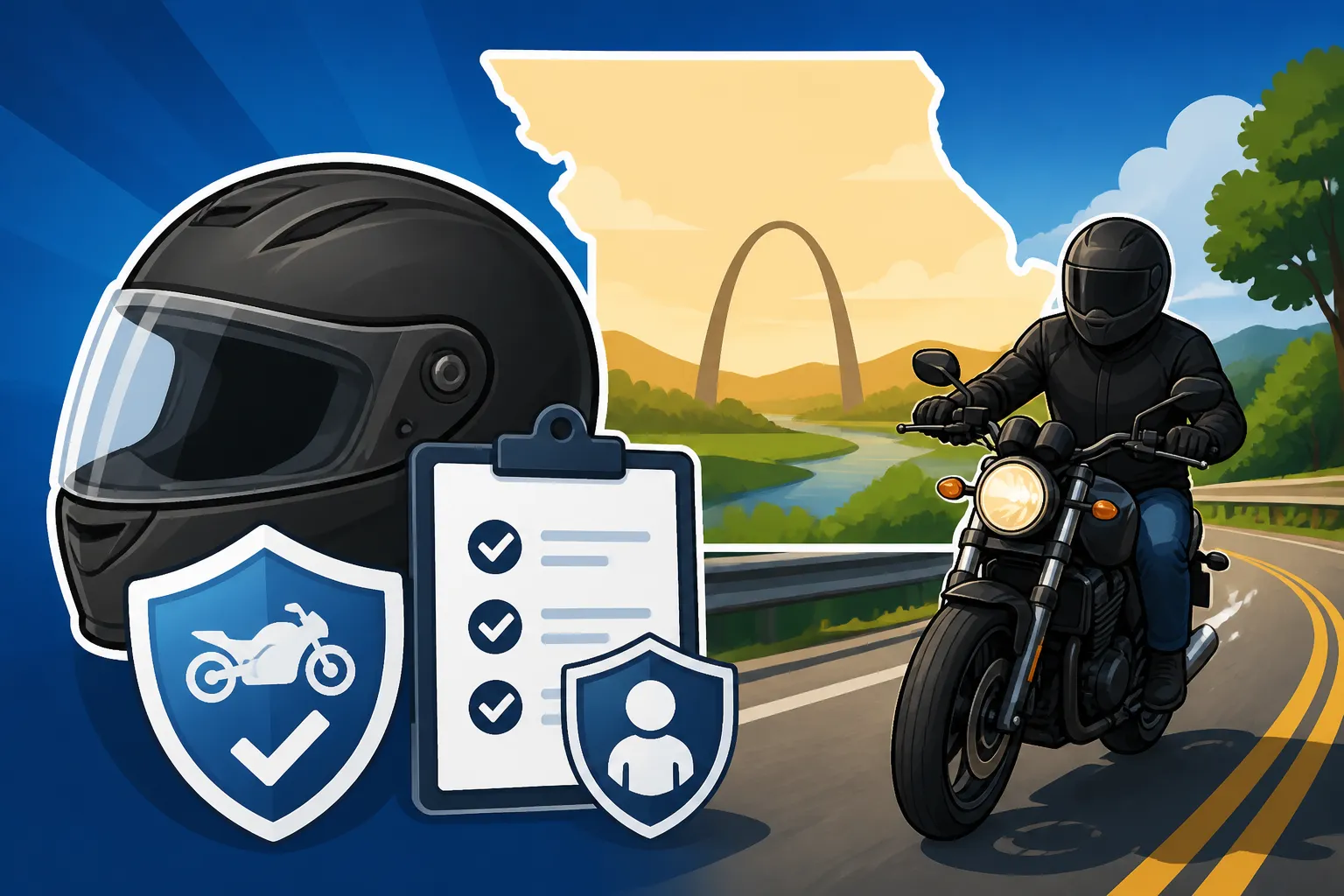
Riders navigating the rolling hills of the Ozarks or the busy streets of St. Louis often find themselves caught in a web of confusion regarding the local rules of the road. For decades, Missouri maintained a strict, universal mandate for all motorcyclists, but recent legislative shifts have completely transformed how we ride in the Show-Me State. This guide breaks down the nuances of the current law to ensure you stay legal and protected.
Understanding the Current Missouri Helmet Mandate
If you have been riding for a while, you probably remember when Missouri was one of those "always wear a lid" states. However, as of August 2020, the landscape changed significantly with the passage of House Bill 1963. The law shifted Missouri from a universal helmet state to a partial requirement state, but the criteria are more specific than many riders realize. It is not just about your age; it is about your financial standing and how you prove you can cover your own medical bills if things go south on the highway.
To ride without a helmet in Missouri today, you must meet two primary criteria. First, you must be at least 26 years of age. This age limit is slightly higher than in some neighboring states, which often set the bar at 21. Second, you must be able to prove that you possess a health insurance policy or another form of insurance that provides medical benefits for injuries sustained in a motorcycle accident. This is a critical distinction that trips up many out-of-state visitors who assume their basic liability policy is enough. For those curious about how this compares to our neighbors, you might want to look at Motorcycle Helmet Laws by State to see how Missouri’s age 26 rule stands out in the Midwest.
The transition from a universal law to this conditional freedom was met with a lot of debate in Jefferson City. Proponents of the change argued for personal liberty and the potential for increased tourism, while safety advocates pointed toward the inevitable rise in traumatic brain injuries. As a rider, understanding the "why" behind the law helps you navigate the "how" of staying compliant. If you are under 26, there are no exceptions; you must wear a helmet that meets Department of Transportation (DOT) standards. This applies to both operators and passengers. If you are over 26 but cannot prove you have the required medical coverage, you are also legally bound to wear that helmet.
The Age and Health Insurance Factor
The "26 and older" rule was a compromise designed to ensure that younger, statistically higher-risk riders remained protected. If you are 25 and 364 days old, you are still legally required to wear a helmet. Law enforcement officers in Missouri are well aware of this threshold. If you are riding through a high-traffic area like the Power and Light District in Kansas City without a helmet, you should be prepared to provide proof of your age and your insurance coverage.
The insurance requirement is where things get truly complicated. The law specifies that you must have "health insurance or other form of insurance which provides medical benefits." This does not mean your standard motorcycle liability policy. Liability insurance covers damage you do to others, not necessarily your own medical bills. When you are looking at Is Motorcycle Insurance Required in Missouri?, remember that the state's minimum requirements for a policy do not automatically grant you the right to ride lidless. You need specific medical coverage, often referred to as MedPay or a separate health insurance card from your employer or a private provider.
Proof of Financial Responsibility
Imagine you are enjoying a sunny afternoon ride near Branson and get pulled over for a routine check or a minor traffic violation. If you aren't wearing a helmet, the officer will likely ask for your "proof of financial responsibility." This goes beyond the typical insurance card you keep in your wallet. While the law is somewhat vague on what constitutes "proof," carrying a copy of your health insurance card or a declaration page from your motorcycle policy showing medical payment coverage is the safest bet.
Failure to provide this proof can result in a fine, even if you are over 26. This creates a secondary layer of enforcement that catches many riders off guard. It is also important to note that your Motorcycle License, Endorsement & Insurance status must be active and valid. Riding without the proper "M" endorsement on your license is a separate issue that can lead to your bike being impounded, regardless of whether you are wearing a helmet or not.
| Rider Category | Helmet Requirement | Proof Needed |
|---|---|---|
| Under 26 Years Old | Mandatory | Valid License/Endorsement |
| 26+ with Health Insurance | Optional | Age ID & Health Insurance Card |
| 26+ without Health Insurance | Mandatory | Valid License/Endorsement |
| Passengers under 26 | Mandatory | Age ID |
| Passengers 26+ | Optional (if insured) | Age ID & Proof of Medical Benefits |
How Helmet Use Impacts Your Insurance and Legal Rights
While the law says you can ride without a helmet if you meet certain criteria, it does not mean your insurance company will be thrilled about it. There is a massive difference between what is legal under criminal law and what is relevant in civil court. If you are involved in an accident while not wearing a helmet, the legal ramifications can extend far beyond a simple ticket. Missouri operates under a system that looks at the big picture of an accident, and your choice to go lidless can directly impact your wallet.
In the event of a crash where another driver is at fault, their insurance company will look for any reason to reduce the payout they owe you. They might argue that while they caused the accident, your head injuries would have been significantly less severe—or non-existent—if you had been wearing a helmet. This is a common tactic in personal injury cases. Even though you were legally allowed to ride without a helmet, a jury might still see your choice as a contributing factor to the extent of your injuries. This is why understanding Helmet Law & Insurance: Does Not Wearing One Affect Claims? is so vital for anyone choosing to exercise their right to ride without a helmet.
The Comparative Fault Rule in Missouri
Missouri follows a "pure comparative fault" rule. This means that in a lawsuit, a judge or jury determines the percentage of fault for each party involved. If you are found to be partially responsible for the severity of your injuries because you skipped the helmet, your total compensation will be reduced by that percentage. For example, if you are awarded $100,000 in damages but are found to be 40% responsible for the head trauma because you weren't wearing a helmet, you will only receive $60,000.
This financial risk is often much greater than the cost of a traffic ticket. It is a harsh reality that many riders do not consider until they are sitting in a hospital room talking to a lawyer. Even if you are over 26 and have the best health insurance in the world, the civil legal system can still penalize you for not wearing safety gear. This is particularly true when dealing with Minimum Liability Insurance Explained (The Three Numbers), as those limits often barely cover basic medical costs, leaving you to fight for the rest through litigation.
Medical Payments and Personal Injury Protection
Because Missouri requires "medical benefits" for lidless riders, many motorcyclists opt to add Medical Payments (MedPay) coverage to their specialized motorcycle policies. Unlike health insurance, which may have high deductibles or specific provider networks, MedPay is designed to pay out quickly for immediate medical expenses regardless of who was at fault for the accident.
When you are looking into How Much Is Motorcycle Insurance in Missouri?, you will see that adding $10,000 or $25,000 in MedPay coverage can raise your premiums. However, for those who prefer the freedom of riding without a helmet, this coverage is essentially your "get out of jail free" card when proving financial responsibility to an officer. It also provides a much-needed buffer if you are hit by someone with poor insurance, a situation discussed in depth when reviewing What Happens If You Ride Without Insurance? and the consequences of being on the other side of that equation.
Law Enforcement and Penalties for Non-Compliance
In Missouri, helmet laws are subject to primary enforcement. This means a police officer can pull you over solely because they suspect you are violating the helmet law. They do not need to wait for you to speed or fail to signal. If you look like you are under 26 and you are cruising down I-70 without a helmet, you are essentially inviting a traffic stop. This makes Missouri different from states with secondary enforcement, where they can only ticket you for a helmet violation if they stopped you for something else first.
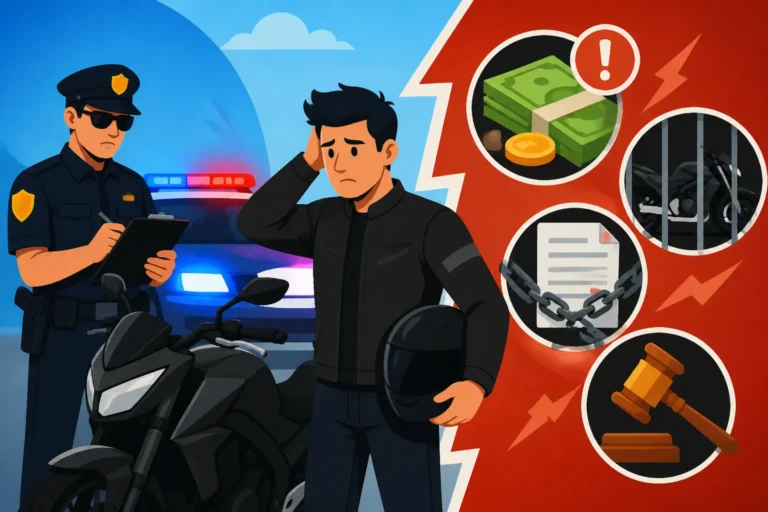
The actual fine for not wearing a helmet when you are required to do so is relatively low—usually around $25. However, as any veteran rider knows, the "fine" is never the whole story. Once you add in court costs, administrative fees, and the potential for increased insurance rates, that $25 ticket can easily turn into a $200 headache. Furthermore, if you are stopped and cannot show Proof of Insurance & Registration for Motorcycles, the penalties escalate quickly, leading to points on your license or even a suspension.
Primary vs. Secondary Enforcement
The primary enforcement nature of the law means that officers in high-tourist areas, like the St. Louis Arch grounds or the Lake of the Ozarks, are often very vigilant. They are trained to look for DOT stickers on helmets and to verify the age of riders who appear young. If you are an out-of-state rider, you aren't exempt from these local rules. You must follow the laws of the state you are currently in, not the state where your bike is registered.
For those Riding Across State Lines: Insurance & Helmet Rules is a must-read. If you are coming from Illinois, where there is no helmet law, and you cross the bridge into St. Louis, you are suddenly subject to Missouri's 26+ and insurance rules. Many riders forget this and end up with a "welcome to Missouri" ticket within minutes of crossing the border.
Fines and Secondary Penalties
While the monetary fine is small, the secondary consequences of a helmet violation can be annoying. In Missouri, traffic violations are reported to the Department of Revenue. Accumulating points on your license can lead to higher insurance premiums for years to come. Moreover, if you are caught riding without a helmet and you also lack a motorcycle endorsement, the officer may choose not to let you ride the bike home.
There is also the issue of the "financial responsibility" proof. If you are over 26 but simply forgot your health insurance card at home, you might still get a ticket. You would then have to spend a day in court showing the judge that you were, in fact, insured at the time of the stop to get the ticket dismissed. Most of us would rather spend that day on our bikes than in a courthouse. This is why many experienced riders suggest keeping a digital copy of your insurance on your phone, though you should check if the local jurisdiction accepts digital Proof of Insurance: Digital vs Paper for Riders.
Practical Tips for Riding in the Show-Me State
Regardless of the law, the decision to wear a helmet is a personal one for those over 26. However, even if you choose to go lidless on the backroads, it is often wise to keep a helmet strapped to your bike. Missouri weather is notoriously unpredictable. A beautiful sunny day in Columbia can turn into a torrential downpour or a hailstorm in minutes. Having a helmet available for those situations isn't just about the law; it is about basic comfort and safety when the environment turns hostile.
Another practical tip is to consider the "Show-Me State" culture. Missourians are generally friendly, but law enforcement in rural counties can be very strict about technicalities. If you are riding a custom chopper or a vintage bike, you might already be attracting attention. Ensuring your Financial Responsibility Laws for Riders requirements are met and your paperwork is in order will make any roadside interaction much smoother.
Finally, always be aware of the specific requirements for passengers. If you are 30 but your passenger is 24, they must wear a helmet. As the operator, you can actually be held responsible for their non-compliance in some jurisdictions. It is always better to have an extra lid handy so you don't have to turn away a friend who wants a ride because they don't have the proper gear. If you are looking for ways to save on your overall costs while staying legal, checking out States That Don't Require Motorcycle Insurance can provide context on why Missouri’s specific insurance-for-helmets trade-off is such a unique middle-ground approach.
Disclaimer
This guide is intended for informational purposes only and does not constitute legal or professional insurance advice. Laws and regulations regarding motorcycle helmets and insurance requirements are subject to change. While we strive to provide the most accurate and up-to-date information, you should always verify local statutes with the Missouri Department of Revenue or a qualified legal professional before riding. Your specific insurance coverage needs may vary based on your individual circumstances and the type of motorcycle you operate.