Is Comprehensive Worth It on a Cheap Motorcycle?
Riding a motorcycle, especially an older or more budget-friendly one, brings a unique set of questions, and one that often pops up is whether it's truly worth splurging on comprehensive insurance. It feels a bit backward, right? You've got this awesome, affordable bike, and the idea of spending a significant chunk of its value on coverage that only kicks in for non-collision issues can be a real head-scratcher. Many riders find themselves agonizing over this, wondering if they're throwing money away or being dangerously underinsured.
Deciphering Comprehensive Motorcycle Coverage
Let's cut through the jargon and really get down to what comprehensive motorcycle insurance actually means for you, the rider. It's not just a fancy term; it's a specific type of protection designed to cover your bike from a whole slew of misfortunes that have absolutely nothing to do with a fender bender on the highway. Think of it as your bike's personal bodyguard against the unexpected, the random, and the sometimes downright bizarre.
What Comprehensive Actually Covers
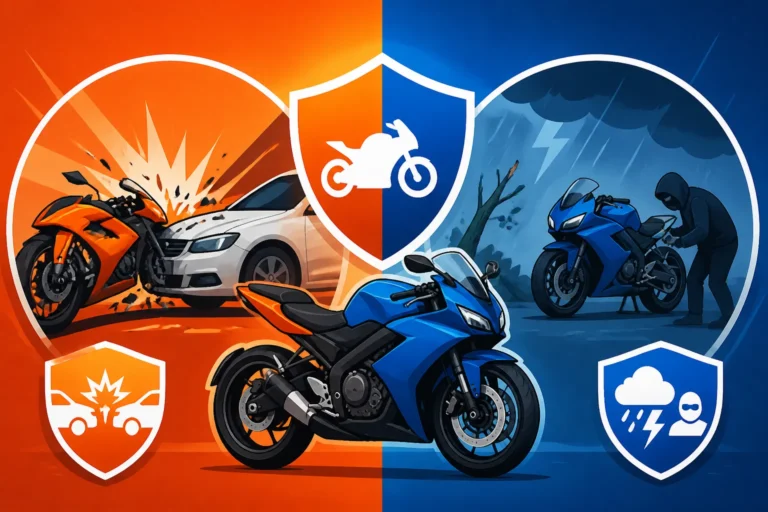
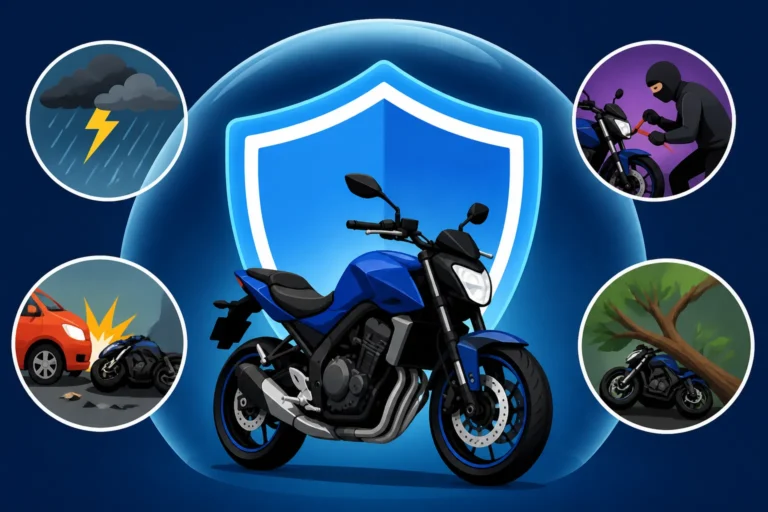
When we talk about comprehensive coverage, we're really talking about protection for your motorcycle against damages that aren't caused by a collision with another vehicle or object. It's often called "other than collision" coverage, and it's broad. Imagine you've parked your beloved ride outside your favorite coffee shop, only to return and find it's been vandalized or, worse, stolen outright. Comprehensive is your saving grace in those gut-wrenching moments.
It steps in for things like theft, which is a very real concern for many riders, especially if you live in a city or have a popular model. Vandalism, too, is covered, whether it's a scratched tank or a slashed tire. Then there are the acts of nature: hail storms that can dimple your chrome, floods that submerge your engine, or wildfires that creep too close to your garage. Even something as seemingly benign as a falling tree branch in a strong wind can cause significant damage, and comprehensive insurance is there to pick up the tab. And let's not forget the wildlife – an unexpected encounter with a deer on a backroad, for example, would typically fall under comprehensive, not collision. It’s all about protecting your investment from life's curveballs.
How Comprehensive Differs from Liability and Collision
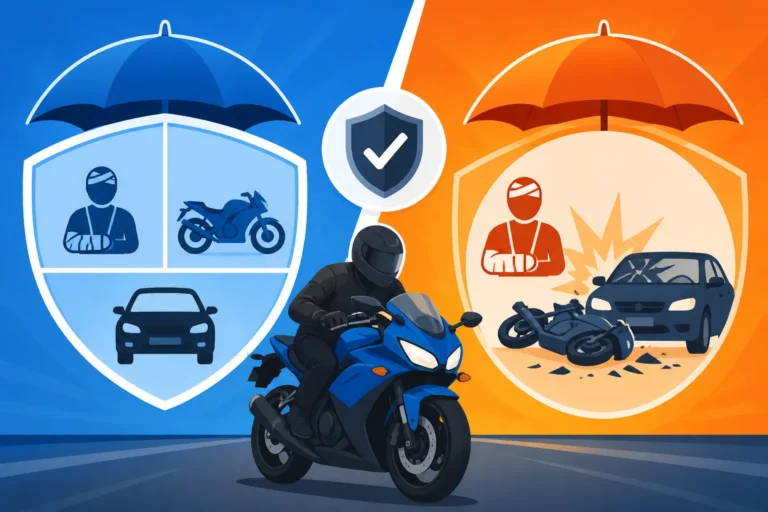
Understanding comprehensive means also understanding what it isn't. It's often confused with liability and collision coverage, but these are distinct pillars of your motorcycle insurance policy. Think of them as different layers of an onion, each offering a unique kind of protection.
Liability coverage is the bedrock, the legal minimum in most states, and what many "cheap motorcycle" owners might opt for exclusively. It covers damages and injuries you cause to other people and their property if you're at fault in an accident. So, if you accidentally clip another car, your liability insurance pays for their car repairs and medical bills, not yours. It doesn't do a thing for your bike or your own injuries. You can learn more about specific requirements in a guide like Minimum Liability Insurance Explained The Three Numbers.
Collision coverage, on the other hand, does cover your bike, but only when it's damaged in a collision with another vehicle or object, or if you roll it over. If you hit a guardrail, another car, or even just drop your bike while moving, that’s where collision coverage steps in to pay for repairs or replacement, minus your deductible. It's your protection for direct, impact-related damage to your motorcycle. Many states require this if you have a financed bike, regardless of its value. For a deeper dive, check out Collision vs Comprehensive Motorcycle Coverage.
Comprehensive, as we’ve discussed, fills the gaps left by these two. It’s for everything else that can go wrong with your bike – the non-accident, often unforeseen events. It's a layer of protection that often feels like a luxury for a cheap bike but can prove incredibly valuable when disaster strikes from an unexpected direction.
The "Cheap Motorcycle" Conundrum: Weighing Value vs. Risk
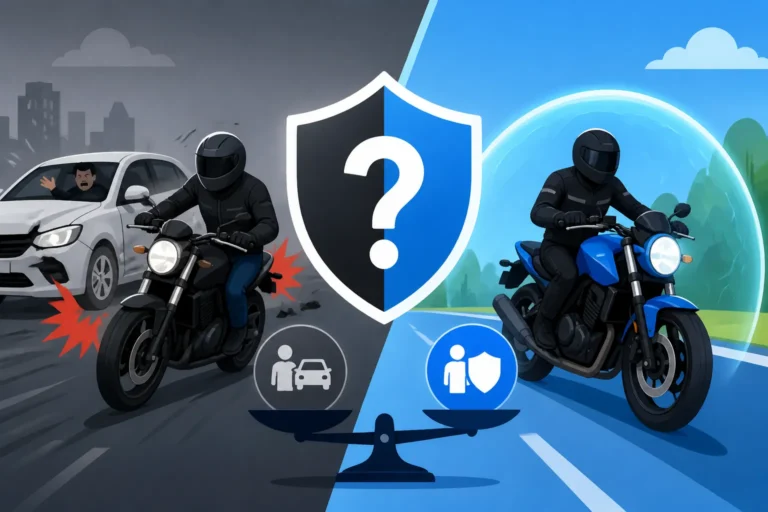
This is where the real debate begins for many riders: "Is comprehensive worth it on a cheap motorcycle?" It's a valid question, rooted in practical economics. You've got a bike that might be worth a few thousand dollars, or even less, and the thought of paying premiums for coverage that might only offer a marginal payout can be frustrating. Let's break down this financial tightrope walk.
When Your Bike's Value is Low
The primary factor driving this conundrum is your motorcycle's actual cash value (ACV). Insurance policies generally reimburse you for the ACV of your bike at the time of a loss, which accounts for depreciation. This isn't the price you paid for it years ago, nor is it the cost of a brand-new equivalent. It’s what the market says your bike is currently worth, considering its age, mileage, condition, and modifications.
For a cheap motorcycle, say a classic Honda Rebel from the 90s or a well-loved Suzuki Boulevard that’s seen many miles, that ACV might be pretty low – perhaps $2,000, $1,500, or even less. Now, let’s factor in your comprehensive deductible. If your deductible is $500, and your bike is totaled due to a comprehensive claim (like theft or a fire), your actual payout would be the ACV minus that deductible. If your bike's ACV is $1,500 and your deductible is $500, you're only looking at a $1,000 check. Compare that to your annual premium for comprehensive coverage. If it costs you $150-$200 a year, it would take many years of paying those premiums to equal that $1,000 payout. This is why many riders question the value; it feels like you're potentially paying a lot for a relatively small return. It's a classic example of Agreed Value vs Stated Value vs Actual Cash Value in action, where ACV almost always applies to older bikes.
Evaluating Your Personal Risk Factors
However, it's not purely a numbers game based on ACV alone. Your personal circumstances and local environment play a huge role in determining your risk exposure, and thus, the true value of comprehensive coverage. Where you live, where you typically park your bike, and even the local weather patterns can significantly alter the equation.
Consider theft: if you live in a high-crime urban area like Los Angeles or Miami, or your bike is a particularly desirable model (even an older one can be a target for parts), the risk of it being stolen is higher. Parking a motorcycle on the street overnight in a busy neighborhood inherently carries more risk than storing it in a locked garage in a quiet rural town. If you consistently park in public spaces, vulnerable to vandalism or accidental damage from passersby, comprehensive starts to look more appealing. Similarly, if you reside in a region prone to severe weather events – think Texas with its hailstorms, Florida with its hurricanes, or states in the Rockies with heavy snowfall – your motorcycle is at a higher risk of weather-related damage that only comprehensive insurance would cover. For example, a severe hailstorm can easily cause thousands of dollars in damage to bodywork, chrome, and electronics, regardless of the bike's age or initial value. These aren't just hypotheticals; they're real risks that can instantly turn your "cheap bike" into a financial burden if you're not properly covered.
Scenarios Where Comprehensive Might Still Be Worth It
Despite the low actual cash value of an older or cheaper motorcycle, there are very real-world scenarios where having comprehensive coverage can save you from significant financial headaches and provide invaluable peace of mind. It’s not always about the big payout; sometimes, it’s about avoiding an unexpected major expense.
Protecting Against Theft and Vandalism
Let's face it, even a beat-up old motorcycle is still a target. Thieves aren't always looking for the latest Harley-Davidson or Ducati; often, they're after easily accessible bikes, or specific parts that can be sold. Your cheap commuter bike, while not flashy, might be relatively easy to hotwire or simply disappear from a parking lot. Imagine relying on your affordable bike for daily transport to work or school. If it's stolen, and you only have liability insurance, you're not only out your motorcycle but also facing the immediate cost of finding alternative transportation and eventually replacing the bike entirely out of pocket. That unexpected burden can be far more disruptive than the annual premium for comprehensive coverage.
Similarly, vandalism is an unpredictable and infuriating event. Someone scratches your paint, slashes a tire, or breaks off a mirror. These aren't collision damages, and liability won't cover them. The repair costs, even for a "cheap" bike, can quickly add up to hundreds, if not a thousand dollars or more. While your bike might only be worth $2,000, replacing a damaged fuel tank, repainting panels, or replacing specialty parts can eat into a significant portion of that value. Comprehensive coverage would step in here, paying for the repairs minus your deductible, saving you from having to pay for someone else’s destructive behavior. This is exactly why knowing Does Motorcycle Insurance Cover Theft is so important.
Peace of Mind for Unpredictable Events
Beyond theft and vandalism, the world is full of random, destructive forces that have no regard for your bike's market value. Hitting an animal, like a deer on a rural highway or even a stray dog in town, can cause substantial damage to your front end, forks, and fairings. These are typically covered under comprehensive because they are not collisions with another vehicle or stationary object, but rather an impact with a living creature. The repair bill for such an incident can easily exceed the value of a cheap motorcycle, leading to a total loss scenario. Without comprehensive, you're left to cover the entire cost yourself.
Consider natural disasters too. A powerful hailstorm in Colorado could dent every panel, or a sudden flood in Houston could ruin your engine and electrical system. A falling tree branch during a gusty storm could crush your tank and seat. These events are completely out of your control, and their impact can be devastating, financially speaking. For many riders, the small annual cost of comprehensive coverage offers an immense psychological benefit, knowing that if one of these wild cards gets played, they won't be left holding the entire bill. It allows you to enjoy your ride without constantly worrying about what unforeseen event might be lurking around the corner. If you're wondering Do You Need Insurance to Store a Motorcycle, comprehensive can cover these kinds of incidents even when the bike is tucked away.
Lender Requirements (Even for Financed Bikes)
This is a critical point that often gets overlooked, even for bikes that are considered "cheap." If you financed your motorcycle, regardless of its purchase price or current market value, your lender will almost certainly require you to carry full coverage insurance. This isn't just liability; it means you'll need both collision and comprehensive coverage for the entire duration of your loan. The lender needs to protect their investment, and your bike serves as collateral. If it gets stolen, vandalized, or totaled by a natural disaster, they want to ensure they can recover their money.
Even if you found a great deal on an older, more affordable bike, but you took out a small loan to buy it, you're bound by these insurance requirements. Trying to skirt around them could lead to your lender imposing "force-placed" insurance, which is often far more expensive than a policy you'd purchase yourself, and it only protects the lender, not necessarily your interests. So, for anyone with a lien on their title, the question isn't whether comprehensive is "worth it" for a cheap motorcycle – it's a non-negotiable part of your financial agreement.
Crunching the Numbers: Calculating the Cost vs. Benefit
Ultimately, making an informed decision about comprehensive coverage on a cheap motorcycle boils down to a bit of math and an honest assessment of your financial comfort level. It’s about understanding what you could get versus what you are paying, and how that balances against your tolerance for unexpected expenses.
Estimating Your Potential Payout
Before you can decide if comprehensive is worth it, you need a realistic idea of what you’d actually get if you filed a claim. As mentioned, most standard policies use Actual Cash Value (ACV). You can get a rough estimate of your bike's ACV by checking online valuation guides like the NADAguides or Kelley Blue Book for motorcycles, or by looking at comparable bikes for sale in your area.
Let's say your 2010 Kawasaki Ninja 250R, a common choice for an affordable beginner bike, has an ACV of about $2,500. If your comprehensive deductible is $500, the maximum payout you’d receive if it were totaled by a covered event (like theft) would be $2,000. Now, if your annual comprehensive premium is $150, it would take you 13.3 years ($2000 / $150) of paying premiums to "break even" on that one potential payout. If you've got a bike with an ACV of only $1,000 and the same $500 deductible, your max payout is $500. At $150 a year for comprehensive, you'd "break even" in just over 3 years. This calculation really highlights the diminishing returns as your bike's value drops.
Comparing Premiums and Deductibles
The next step is to get actual quotes. Many providers, like Progressive, Geico, and Dairyland, offer specific motorcycle policies that let you customize coverage. This is where a comparison tool like The Zebra can be incredibly helpful. Instead of visiting multiple insurer websites one by one, you can enter your information once and see quotes from several companies side-by-side.
Get quotes for your policy both with and without comprehensive coverage. Pay close attention to the difference in the annual or monthly premium. For a cheap motorcycle, the comprehensive portion of your premium might be relatively small compared to the liability and collision components. However, even an extra $100-$200 a year adds up over time. Also, consider the deductible. A higher deductible (e.g., $1,000 instead of $500) will lower your premium, but it also means you'll pay more out-of-pocket if you do file a claim. If your bike is only worth $2,000 and you have a $1,000 deductible, you're only looking at a $1,000 payout, which might not feel worth the ongoing cost. For more details on factors affecting costs, see What Affects Your Motorcycle Insurance Rate.
Here's a simplified example of how the numbers might look:
| Scenario | Bike ACV | Comprehensive Premium (Annual) | Deductible | Max Payout (ACV – Deductible) | Years to "Break Even" |
|---|---|---|---|---|---|
| Low Value, Low Deductible | $1,500 | $120 | $250 | $1,250 | 10.4 years |
| Low Value, High Deductible | $1,500 | $80 | $500 | $1,000 | 12.5 years |
| Mid Value, Low Deductible | $3,000 | $180 | $250 | $2,750 | 15.3 years |
| Mid Value, High Deductible | $3,000 | $120 | $500 | $2,500 | 20.8 years |
This table illustrates that while a higher deductible lowers your premium, it might mean it takes even longer to see a financial return on your investment in comprehensive coverage if you only ever make one claim.
Considering Alternatives or Compromises
If the numbers just aren't adding up, and you still feel uneasy about being completely without comprehensive coverage, there are a few alternatives or compromises to consider. One common strategy is to self-insure for minor damages. If you can comfortably cover a few hundred dollars out-of-pocket for small vandalism repairs or hail dents, you might opt for a very high deductible on your comprehensive policy to significantly lower the premium. This means you’re essentially agreeing to cover the first $750 or $1,000 of any comprehensive claim yourself, but your annual cost for the coverage might drop to a minimal amount.
Another approach, especially for older, very low-value bikes, is to simply accept the risk. If your bike is only worth $800 and comprehensive costs you $100 a year, it might be more financially prudent to put that $100 into a savings account for potential repairs or replacement. Over a few years, you'd have enough saved to potentially buy another similar bike if yours were stolen or totaled. This only works if you’re financially stable enough to absorb the total loss of your motorcycle without it causing significant hardship.
Ultimately, the decision comes down to your personal risk tolerance and financial situation. For some, the peace of mind offered by comprehensive coverage is worth every penny, even on a cheap motorcycle, especially if the bike is sentimental or a primary mode of transport. For others, the math simply doesn't justify the expense, and they'd rather take their chances. Whatever you choose, ensure you understand the implications fully. Using a tool like The Zebra to compare different policies and pricing from various providers can help you make an informed choice tailored to your specific needs and budget, regardless of the price tag on your bike. You might find that How to Get Cheap Motorcycle Insurance isn't just about cutting coverage, but finding the right balance.
Disclaimer
This article is for general informational purposes only and does not constitute professional advice. Laws, prices and regulations vary by location and change over time. Consult a qualified professional for guidance on your specific situation.