How Much Does Insurance Pay for a Stolen Motorcycle?
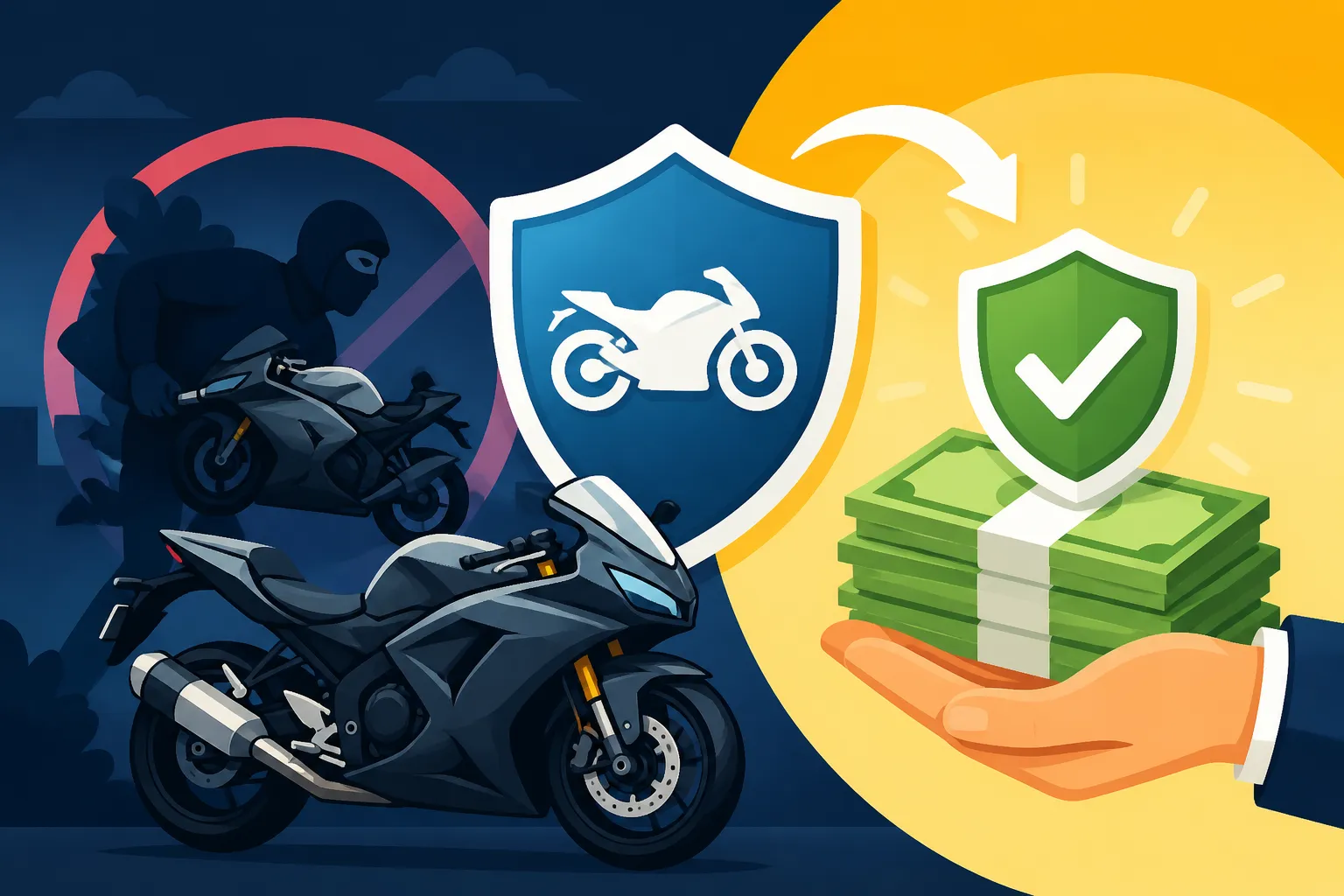
Discovering your beloved motorcycle has been stolen is a gut-wrenching experience, leaving you reeling with frustration and a million questions, especially about how your insurance is going to handle it. It's a moment of pure dread, wondering if you'll ever see your ride again and, if not, how much your policy will actually cover. This comprehensive guide will walk you through exactly how motorcycle insurance typically pays out for a stolen bike, helping you understand the process, what to expect, and how to navigate a theft claim.
Your Motorcycle Theft Claim Starts with Comprehensive Coverage
The most critical piece of your motorcycle insurance puzzle when it comes to theft is comprehensive coverage. Without it, you’re often out of luck, and that’s a tough pill to swallow for any rider who's just lost their bike. Unlike liability insurance, which covers damages you cause to others, or collision coverage, which handles impacts with other vehicles or objects, comprehensive steps in when your motorcycle is damaged by events other than a collision or rolls away in someone else's hands.
What Comprehensive Coverage Actually Covers
Think of comprehensive coverage as your safeguard against the unpredictable. It's designed to protect your motorcycle from a laundry list of non-collision events, and theft is right at the top. This means if your motorcycle vanishes from your garage, gets hotwired from a parking lot, or is taken while you’re just running into a store, your comprehensive policy is what you’ll be leaning on. It doesn’t just cover the bike itself; often, it can extend to damage caused during the theft attempt (like a broken ignition or cut wires) or even vandalism that occurs if your bike is recovered but damaged. It's important to understand that Types of Motorcycle Insurance Coverage Explained often detail this, but comprehensive is distinct for non-collision incidents.
However, comprehensive coverage isn't a magic wand. It typically won't cover things like mechanical breakdown, normal wear and tear, or items that aren't permanently attached to your motorcycle unless you have specific endorsements. For instance, if your helmet and jacket were stolen off the bike but not with the bike, you might need personal belongings coverage. Always check your policy's specifics. Many riders don't realize the nuances until they're in a stressful situation, which only adds to the frustration.
The Role of Your Deductible
Just like with other types of insurance claims, comprehensive coverage comes with a deductible. This is the amount you're responsible for paying out-of-pocket before your insurance company steps in to cover the rest. So, if your motorcycle is stolen and your policy has a $500 deductible, the insurance company will subtract $500 from the assessed value of your stolen bike before cutting you a check. Choosing a higher deductible often lowers your premium, but it means you'll pay more upfront in the event of a claim. It’s a balancing act many riders grapple with when first setting up their policy or considering changes. For a full picture of what "full coverage" entails, it's worth checking out What Does Full Coverage Motorcycle Insurance Mean?
For example, if your 2020 Honda Rebel 500 is valued at $5,000 at the time of theft, and you have a $500 deductible, your payout would be $4,500 (minus any depreciation, which we'll discuss next). It’s crucial to select a deductible you're comfortable paying if the worst happens, as this significantly impacts your immediate financial burden.
How Your Stolen Motorcycle's Value is Determined
Once you've reported your motorcycle stolen and your insurance company has begun the claims process, one of the biggest questions on your mind will be, "How much will they actually pay?" The answer hinges heavily on how your motorcycle's value is determined, and this can vary depending on your specific policy and the type of bike you own. This is where many riders feel caught off guard, expecting one thing and receiving another.
Understanding Valuation Methods: Actual Cash Value vs. Agreed Value vs. Stated Value
Insurance companies use different methods to determine your motorcycle’s worth at the time of theft. These aren’t just fancy terms; they directly impact your payout.
-
Actual Cash Value (ACV): This is the most common valuation method. ACV pays you the cost to replace your stolen motorcycle with a similar one (same make, model, year, and condition), minus depreciation. Depreciation accounts for the wear and tear and general decrease in value over time. So, if your motorcycle was pristine two years ago but now has 20,000 miles and a few minor scuffs, its ACV will be less than what you originally paid for it. This can be a huge disappointment, especially if you’ve meticulously maintained your bike. Most standard policies default to ACV, and many major insurers like Progressive offer this.
-
Agreed Value: This is often considered the gold standard for custom bikes, rare models, or vintage motorcycles. With an agreed value policy, you and the insurance company agree on a specific value for your motorcycle when you purchase the policy. In the event of a total loss (like theft), the insurer pays you that agreed-upon amount, no questions asked about depreciation. This provides peace of mind, as you know exactly what you'll receive. However, these policies typically come with higher premiums. You'll usually need an appraisal to establish the agreed value.
-
Stated Value: This method is sometimes confused with agreed value, but there's a critical difference. With stated value, you declare a maximum value for your motorcycle, and the insurance company will pay up to that amount or the actual cash value (ACV) at the time of loss, whichever is less. So, if you state your custom chopper is worth $20,000, but the insurer assesses its ACV at only $15,000 after theft, you'll only receive $15,000 (minus your deductible). This can lead to significant frustration and misunderstanding, as many riders mistakenly believe stated value guarantees the declared amount.
Here’s a quick comparison of these valuation methods:
| Valuation Method | Description | Impact on Payout | Best For |
|---|---|---|---|
| Actual Cash Value (ACV) | Current market value minus depreciation. Most common. | Lower payout for older bikes; reflects real-world depreciated value. | Standard bikes, older bikes without significant mods. |
| Agreed Value | Insurer and owner agree on value at policy inception. | Guaranteed payout amount, regardless of depreciation at time of loss. | Classic, custom, high-value, rare bikes. |
| Stated Value | Insurer will pay up to this amount or ACV, whichever is less. Often confused with Agreed Value. | Can result in lower payout than you expect if ACV drops below stated value. | Bikes where owner wants to declare a maximum, but insurer wants ACV protection. |
For detailed insights into these nuances, check out Agreed Value vs Stated Value vs Actual Cash Value to ensure you pick the right one for your prized possession.
Covering Your Custom Parts and Accessories
Many riders pour thousands into customizing their motorcycles, adding aftermarket exhausts, custom paint jobs, upgraded electronics, or specialized touring equipment. Standard comprehensive coverage often includes a basic amount for accessories, perhaps $1,000-$3,000, but if your modifications exceed this, you’ll need an additional endorsement for Accessories & Custom Parts Coverage Explained.
Without this extra coverage, the insurance company will only pay for the stock value of your motorcycle, leaving you to absorb the cost of all those expensive upgrades yourself. Imagine losing your Harley-Davidson and all the custom chrome, exhaust, and saddlebags you've added over the years, only to find your policy only covers the base model. That’s a common and extremely upsetting scenario that can be avoided by simply adding the right endorsement. When comparing policies, perhaps through a platform like The Zebra, make sure you clearly discuss your custom parts to get appropriate quotes.
The Payout Process and Waiting Game
Losing your motorcycle to theft is agonizing, and the insurance claim process can feel like another layer of frustration. It’s not an instant payout; there’s a structured process the insurance company follows to investigate, verify, and eventually issue a settlement. Understanding this timeline can help manage your expectations during a highly stressful period. The initial steps are crucial, and skipping them can complicate your claim significantly.
Initial Steps After Reporting Theft
The very first thing you need to do, after the immediate shock, is to report the theft to the police. This isn't just a suggestion; it's a mandatory step for any insurance claim involving theft. You'll need an official police report and a case number. This report verifies the incident and helps law enforcement search for your bike. Then, contact your insurance company immediately. The sooner you report it, the better. They'll open a claim, assign an adjuster, and guide you through their specific requirements. For a broader understanding of how claims work, reading How to File a Motorcycle Insurance Claim can be very helpful.
You'll need to provide details about your motorcycle, including the make, model, year, VIN (Vehicle Identification Number), mileage, and any distinguishing features or customizations. Be prepared to share any photos you have and details about where and when the theft occurred, as well as any security measures you had in place (e.g., alarms, disc locks, GPS trackers). This initial information gathering helps your adjuster build a comprehensive picture of your loss.
The Investigation Period and Waiting Game
Once the claim is filed, the waiting game begins. Insurance companies typically have a waiting period, often 30 days, before they'll declare your motorcycle a total loss and process a payout for theft. This period allows law enforcement time to potentially recover your bike. It also gives the insurance company time to investigate the claim thoroughly, verifying the theft report and checking for any red flags. This can feel like an eternity when you're without your ride, but it's a standard part of the process.
During this time, your insurance company might also initiate a search using their own resources, or check salvage yards and impound lots. If your motorcycle is recovered during this period, your claim might shift from theft to vandalism or damage repair, depending on its condition. If it's recovered severely damaged, your insurer might declare it a total loss, similar to what happens when your motorcycle is totaled. Knowing what happens in those scenarios, like in What Happens When Your Motorcycle Is Totaled?, can provide some context.
The Payout Calculation and Settlement Offer
After the waiting period expires and if your motorcycle isn't recovered, your insurer will proceed with calculating your payout. As discussed, this calculation will be based on your policy's valuation method (ACV, agreed value, or stated value), minus your deductible and any applicable depreciation for ACV policies. The adjuster will use market data, recent sales of similar motorcycles, and possibly NADAguides or Kelley Blue Book values for motorcycles to determine a fair market value.
They will then present you with a settlement offer. This offer should detail how the value was determined, including any deductions. It's crucial to review this offer carefully. If you believe the value is too low, you have the right to negotiate. This might involve providing your own evidence of value, such as receipts for recent maintenance, upgrades, or comparable listings for motorcycles in better condition than the one the adjuster used for comparison. Don't be afraid to push back if you feel the offer is unfair.
Maximizing Your Claim and Avoiding Pitfalls
Dealing with a stolen motorcycle is stressful enough without the added worry of a complicated insurance claim. While the process can feel overwhelming, there are proactive steps you can take to ensure a smoother experience and potentially maximize your payout. Riders often make mistakes that could have been avoided with a little foresight.
Gathering Documentation and Proof
The more evidence you have of your motorcycle's value and condition before it was stolen, the stronger your claim will be. This is especially true if you have an ACV policy or extensive custom parts.
- Keep meticulous records: This includes your purchase receipt, title, registration, and all maintenance records. These prove ownership and demonstrate the care you put into your bike, potentially mitigating depreciation claims.
- Document customizations: For any aftermarket parts, upgrades, or custom paint jobs, keep receipts, invoices, and detailed photographs. These are vital for Accessories & Custom Parts Coverage Explained. Without proof of purchase and installation, it's much harder to justify their value to the insurer.
- Photographs and videos: Have a comprehensive set of photos and videos of your motorcycle from all angles, showing its condition and any modifications. Date-stamped photos are even better.
- Security measures: Document any security devices you installed (alarms, GPS trackers, heavy-duty locks). This not only strengthens your case but might also have earned you a discount on your premium. Some insurers, like Progressive, specifically ask about these features because they demonstrate responsible ownership and potentially reduce the risk of theft.
Being organized will save you a lot of headaches later. Think of it as building a dossier for your bike, just in case.
Negotiating with the Adjuster
When you receive a settlement offer, it’s not always the final word. If you feel the offer is too low, don't just accept it immediately. You have the right to negotiate, and often, with proper documentation, you can secure a better outcome. The adjuster's initial offer is based on their valuation, but there might be factors they've overlooked or undervalued. If you’re struggling with this, remember that similar negotiation tactics can be found in resources like How to Negotiate a Motorcycle Total Loss Settlement.
- Research comparable sales: Look for recently sold motorcycles of the same make, model, year, and condition in your area. Websites like eBay Motors, Cycle Trader, or local dealership listings can provide valuable data. Present this research to your adjuster.
- Highlight unique features: If your bike had low mileage for its age, was exceptionally well-maintained, or had rare modifications, emphasize these points.
- Review depreciation calculations: If your policy is ACV, challenge the depreciation calculation if you believe it's excessive. Show your maintenance records to demonstrate your bike was in above-average condition.
- Be polite but firm: Maintain a professional and respectful tone, but don't back down if you have solid evidence supporting a higher valuation. Explain your reasoning clearly and provide all your supporting documents. If you hit a wall, you can ask to speak to a supervisor.
Remember, the adjuster's job is to settle the claim, but it's also your right to ensure you receive fair compensation.
Avoiding Common Mistakes That Can Hurt Your Claim
A few missteps can seriously jeopardize your claim or reduce your payout. Be vigilant to avoid these common pitfalls.
- Delaying reporting: Waiting to report the theft to the police or your insurance company can raise suspicion and complicate the investigation.
- Inaccurate information: Always be truthful and accurate when providing information. Any misrepresentation, even unintentional, could lead to your claim being denied.
- Lack of proof: As mentioned, insufficient documentation for your bike’s value or customizations can significantly limit your payout.
- Neglecting security: If your policy required certain security devices (like a GPS tracker or alarm) and you didn't have them active or installed, your claim could be denied or reduced.
- Lapses in coverage: Ensure your policy is active and paid up. A lapse in coverage means no payout. This is why understanding topics like Motorcycle Insurance Grace Period When Buying is so important.
- Not checking policy details: Before a theft even happens, it's wise to review your policy annually. Platforms like The Zebra can help you understand and compare options, ensuring your coverage aligns with your bike's value and your specific needs. What affects your rate also affects your coverage.
By being prepared and understanding your policy, you can navigate the difficult process of a stolen motorcycle claim with greater confidence and secure the payout you deserve.
Disclaimer
Please remember that insurance policies and state laws can vary significantly. The information provided in this guide is for general informational purposes only and does not constitute professional insurance advice. Always consult with your insurance provider or a qualified agent to understand the specifics of your policy and how it applies to your unique situation.