What Does Motorcycle Liability Insurance Cover?
It's a common misconception that motorcycle insurance is all about protecting your bike, but the truth is, the most fundamental part of any policy, the one that’s legally required in almost every state, is actually there to protect others from you. This can be a confusing topic, especially when you're trying to figure out what coverage you truly need. This comprehensive guide will break down exactly what motorcycle liability insurance covers, why it’s so crucial, and how it impacts you as a rider.
Understanding the Core Concept of Liability for Riders
When we talk about liability insurance in the world of motorcycles, we're really diving into the question of who is financially responsible when something goes wrong. It's the bedrock of your policy, the part that steps up when you're deemed at fault for an accident and someone else gets hurt or their property is damaged. Without a solid understanding of this, you could find yourself in a world of financial hurt after a mishap on the road.
What "At-Fault" Really Means on Two Wheels
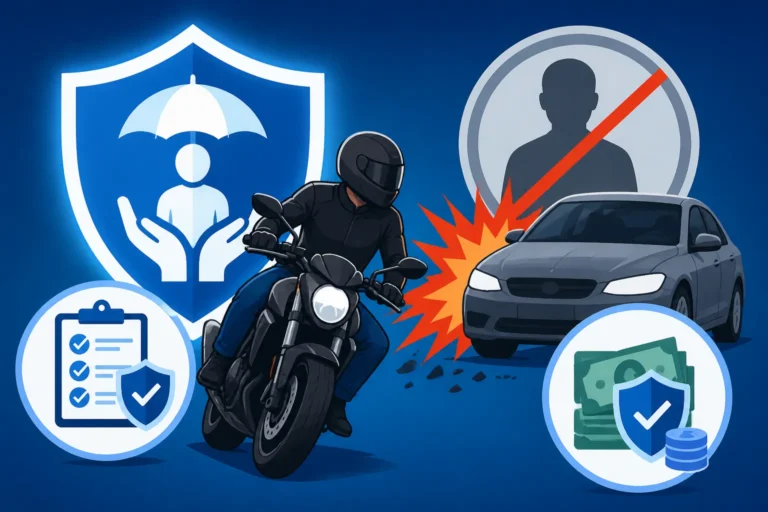
The concept of "at-fault" can feel like a blame game, and in many ways, it is, especially when you're the one on a motorcycle. In an accident, determining who is at fault is critical because that person's liability insurance is generally responsible for covering the damages and injuries sustained by the other party. For a motorcyclist, this could mean anything from misjudging a turn and clipping a car, to rear-ending another vehicle at a stoplight, or even accidentally swerving and causing another driver to crash. It’s not about whether you meant to cause an accident; it's about whose actions led to the incident.
Different states operate under various fault systems, which can complicate matters. Most states follow an "at-fault" system, meaning the person who caused the accident is financially responsible. However, some states are "no-fault" states, where your own insurance generally pays for your medical expenses regardless of who caused the accident. Even in no-fault states, liability coverage is still essential because it protects you from claims made by other drivers for property damage and often for severe injuries that exceed no-fault thresholds. Understanding the specific rules in your area is key to grasping your coverage needs.
Ultimately, if you're determined to be at fault, your liability coverage is your first line of defense against potentially catastrophic financial demands. It’s important to remember that this coverage is designed exclusively for the other party's losses. It provides no protection for damage to your own motorcycle, nor does it cover your own medical bills, which can be a stark reality for riders who only carry minimum liability.
The Fundamental Purpose of Liability Insurance
At its heart, motorcycle liability insurance serves a dual purpose: it protects your personal assets and ensures that victims of accidents you cause receive compensation. Imagine a scenario where you're riding your beloved Harley-Davidson Fat Bob through the winding roads of the Pacific Coast Highway and, due to a momentary lapse in judgment, you swerve and collide with a new SUV. Without liability insurance, you would be personally responsible for the repair costs of that SUV, any medical bills for its occupants, and potentially their lost wages or pain and suffering. These costs can quickly skyrocket into tens or even hundreds of thousands of dollars, easily bankrupting an individual.
Because of this immense financial exposure, almost every state mandates some form of liability insurance for all registered vehicles, including motorcycles. This isn't just a regulatory hurdle; it's a societal safeguard. It ensures that if you cause an accident, the injured parties aren't left holding the bag financially. It's a way to spread the risk among all insured drivers, providing a safety net for everyone on the road. You can dive deeper into these requirements by checking out our guide on Motorcycle Insurance Requirements by State (2026 Guide).
However, it’s crucial to distinguish liability insurance from other types of coverage. While it's indispensable for protecting you from claims made by others, it offers absolutely no protection for your own motorcycle. If your bike is damaged in an accident you cause, or if it's stolen, or if you simply drop it in your driveway, liability insurance won't pay for repairs or replacement. This is a common point of confusion for new riders, who often assume that "insurance" covers everything. Liability is specifically for the damage and injuries you inflict on others.
Key Components of Motorcycle Liability Coverage
When you look at your motorcycle insurance policy, you'll see liability coverage broken down into two main parts: bodily injury liability and property damage liability. These components work hand-in-hand to protect you financially from the repercussions of an at-fault accident. It's not just a single lump sum; it's a carefully structured set of limits designed to address specific types of harm.
Bodily Injury Liability BI
Bodily Injury (BI) liability is the part of your policy that comes into play when you injure another person in an accident that is deemed your fault. This is arguably the most critical component, as personal injury claims can quickly become incredibly expensive. BI coverage pays for a wide range of expenses for the injured party, including their medical bills (hospital stays, doctor visits, physical therapy, prescription drugs), lost wages due to their inability to work, and even non-economic damages like pain and suffering.
BI limits are typically expressed in a "split limit" format, which can look a bit like a secret code: two numbers separated by a slash, for example, 25/50. The first number ($25,000 in this example) represents the maximum amount your insurance will pay for each individual person injured in the accident. The second number ($50,000) is the maximum total amount your insurance will pay for all bodily injuries in a single accident, regardless of how many people are hurt. So, if you have 25/50 coverage and injure three people, one might get up to $25,000, but the total payout for all three cannot exceed $50,000. If their combined injuries exceed $50,000, you're personally on the hook for the rest.
Consider a real-life scenario: you're riding in traffic and accidentally swerve, hitting a car carrying a family of four. The driver and two passengers sustain moderate injuries requiring medical attention and some time off work. Even if each person's individual medical bills and lost wages are well within the per-person limit, the total cost for all three could easily surpass the per-accident limit of your BI coverage. If your policy has minimum limits, say 25/50, and the total damages for the three injured parties come to $75,000, your insurance will pay $50,000, leaving you responsible for the remaining $25,000 out of your own pocket. This is why understanding Minimum Liability Insurance Explained (The Three Numbers) is so important.
Property Damage Liability PD
Property Damage (PD) liability is the second crucial element of your liability coverage. While BI covers injuries to people, PD covers damage to other people's property that you cause in an at-fault accident. This most commonly refers to other vehicles, but it can also extend to a wide array of other items. Think about running off the road and hitting a homeowner's fence, a mailbox, a lamppost, or even damaging a storefront. All these scenarios would fall under your PD coverage.
Unlike bodily injury, which has per-person and per-accident limits, property damage liability typically has a single limit per accident. This means there's one maximum amount your insurance company will pay out for all property damage caused in a single incident. For example, if your policy includes a $25,000 property damage limit, that's the absolute most your insurer will pay to repair or replace all damaged property from an accident you caused, no matter how many vehicles or objects were involved.
Let's imagine you're maneuvering your Honda Gold Wing out of a tight parking spot and misjudge your distance, scraping the side of a brand new luxury sedan and also knocking over a nearby bicycle rack. Your property damage liability would cover the repairs to the luxury sedan and the cost to replace the damaged bicycle rack, up to your policy's limit. If the total cost of these damages exceeds your PD limit, once again, you would be responsible for the difference. Modern vehicles, especially luxury models or specialized equipment, can be incredibly expensive to repair or replace, making adequate property damage coverage more important than ever.
How Liability Limits Work in the Real World
Understanding the terminology is one thing, but seeing how liability limits play out in actual accident scenarios is another. The numbers on your policy aren't just arbitrary figures; they represent the ceiling of your insurance company's financial responsibility, and everything beyond that ceiling falls squarely on your shoulders. This distinction is critical for every rider.
Deciphering the "Split Limits" (e.g., 25/50/25)
When you look at your declarations page, you'll often see liability limits expressed as three numbers, like 25/50/25. This "split limit" format is standard across the industry and breaks down your coverage as follows:
- First number (25): This is the maximum amount, in thousands of dollars, that your insurance will pay for bodily injury to one person in an accident you cause. So, $25,000 per person.
- Second number (50): This is the maximum total amount, in thousands of dollars, that your insurance will pay for bodily injury to all people injured in a single accident you cause. So, $50,000 per accident.
- Third number (25): This is the maximum amount, in thousands of dollars, that your insurance will pay for all property damage in a single accident you cause. So, $25,000 for property damage.
Let's use a hypothetical situation: You're riding your Kawasaki Ninja a bit too fast on a crowded city street and cause a multi-vehicle accident. Three people in another car are injured, and their vehicle is totaled. Suppose the first person's medical bills and lost wages amount to $30,000, the second person's to $15,000, and the third person's to $10,000. The car they were in was worth $40,000. With 25/50/25 limits:
- For the first person, your insurance would pay only $25,000 (the per-person limit), leaving you to pay the additional $5,000.
- For the second and third persons, your insurance would cover their full $15,000 and $10,000, respectively.
- However, the total bodily injury payout for all three would be $25,000 + $15,000 + $10,000 = $50,000, which exactly hits your per-accident bodily injury limit.
- For the totaled car, your insurance would pay $25,000 (the property damage limit), leaving you responsible for the remaining $15,000 of the car's value.
In this single, not-uncommon accident, you'd be personally liable for $5,000 (BI overage) + $15,000 (PD overage) = $20,000 out of your own pocket, even with insurance. This clearly illustrates the financial ramifications of carrying inadequate liability limits.
The Critical Role of Your Chosen Coverage Amounts
The state-mandated minimum liability coverage levels are often incredibly low, designed primarily to ensure some financial recourse for accident victims, not necessarily to fully protect your assets. For instance, in California, the minimum liability is 15/30/5, which means $15,000 for one person's bodily injury, $30,000 total for all bodily injuries, and $5,000 for property damage. Imagine totaling a new pickup truck, which alone could easily be $40,000-$50,000, and causing serious injuries to its occupants. Your $5,000 in property damage and $30,000 in bodily injury wouldn't even scratch the surface of the total costs.
Choosing higher liability limits is one of the smartest financial decisions you can make as a rider. It acts as a robust shield, protecting your hard-earned assets – your home, savings, investments, and future earnings – from being seized to satisfy a judgment in a lawsuit. A serious accident could easily lead to a claim far exceeding minimum limits, and without adequate coverage, a court could order your assets liquidated to pay the difference.
While higher limits do mean a slightly higher premium, the increase is often surprisingly small compared to the exponential increase in protection. When shopping for insurance, don't just look for the cheapest option. Utilize comparison tools, like those offered by The Zebra, to see how different liability levels impact your quotes. You might find that increasing your bodily injury limits from 25/50 to 100/300, and your property damage from 25 to 50, only adds a few dollars a month to your premium, but it provides significantly more peace of mind. Investing a little more in your coverage today can save you from financial ruin tomorrow.
Why Liability-Only Might Not Be Enough for Riders
It’s tempting to opt for the cheapest insurance available, and often that means choosing only the state-mandated liability coverage. For some very specific situations, like storing a bike you don't ride often or a very old, low-value motorcycle, it might seem sufficient. However, for the vast majority of active riders, relying solely on liability insurance is a gamble that could lead to severe financial distress.
The Personal Cost of an At-Fault Accident
The stark reality of liability-only coverage is this: if you cause an accident, your policy pays for the other guy's stuff and injuries, but it pays absolutely nothing for your own. Imagine you're riding your beloved custom Indian Scout and you mistakenly take a turn too wide, hitting a guardrail. Your bike slides and sustains significant damage – a bent frame, shattered fairings, and engine casing cracks. With only liability insurance, the cost of repairing or replacing your Indian Scout comes entirely out of your pocket. There's no coverage to help you get back on two wheels.
This can be an incredibly painful and stressful realization. For many riders, their motorcycle is more than just transportation; it's a passion, an investment, and a source of freedom. To see it damaged and know that you bear the full financial burden of its repair or replacement can be devastating. This is especially true if you're riding a new or expensive bike, where repair costs can easily run into thousands or even tens of thousands of dollars.
Beyond the bike itself, there's the equally critical issue of your own well-being. If you are injured in an accident that is your fault, and you only have liability coverage, your medical bills are your responsibility. This could mean extensive hospital stays, surgery, rehabilitation, and long-term care costs that quickly accumulate to astronomical sums. This is why many riders also opt for coverages like Medical Payments (MedPay) or Personal Injury Protection (PIP) in addition to liability, to ensure their own injuries are covered regardless of fault. Without them, even a seemingly minor accident can lead to a mountain of debt.
When You Need More Than Just Liability
While liability coverage is non-negotiable for legal riding, there are many scenarios where it simply doesn't offer enough protection. The most common situation is if your motorcycle is financed. Lenders almost always require you to carry "full coverage," which includes collision and comprehensive insurance, to protect their investment. If you only carry liability and your financed bike is totaled, you're still on the hook for the loan payments, even though you no longer have a bike, which is where Do You Need Gap Insurance on a Motorcycle? can become essential.
Even if your bike is paid off, if it's a newer model, a high-value motorcycle like a touring bike, or a custom build with expensive aftermarket parts, relying solely on liability is a huge risk. Collision coverage protects your bike if it's damaged in an accident (whether you're at fault or not), and comprehensive coverage protects against non-collision incidents like theft, vandalism, fire, or natural disasters. Without these, a stolen Yamaha R1 would leave you with nothing but a police report and a story. You can explore what full coverage motorcycle insurance means to understand how these pieces fit together for comprehensive protection.
Consider also the risk of uninsured or underinsured drivers. Sadly, not everyone on the road carries adequate insurance, or any insurance at all. If you're hit by such a driver and they are at fault, your liability coverage won't help you with your bike's damage or your own injuries. This is where Uninsured/Underinsured Motorist (UM/UIM) coverage becomes incredibly valuable, stepping in to cover your losses when the other driver can't or won't. Understanding these additional coverages is vital because while liability protects others from you, these coverages protect you from the uncertainties of the road.
State-Specific Liability Requirements and Nuances
Navigating the world of motorcycle insurance would be simple if it were one-size-fits-all, but alas, it's not. Each state sets its own rules and minimum requirements for liability insurance, and what's perfectly legal in one place could leave you in serious trouble just a few miles down the road. This patchwork of regulations adds a layer of complexity for riders, especially those who enjoy taking their bikes across state lines.
Understanding Your State's Minimums
The reality is, almost every state in the U.S. mandates that motorcyclists carry a minimum amount of liability insurance. However, what constitutes "minimum" can vary wildly. For example, Arizona requires 25/50/15, while Massachusetts has higher requirements at 20/40/5, and New Hampshire is one of the few states that doesn't require insurance, though financial responsibility laws still apply. This diversity means a rider needs to be acutely aware of the specific laws in their home state. These minimums are often expressed in the split limit format we discussed, covering bodily injury per person, bodily injury per accident, and property damage per accident.
The problem with these state minimums is that they are frequently inadequate for the real costs of a serious accident. They are designed to be a baseline, not a comprehensive safety net. A simple fender bender with a late-model SUV could easily exceed a $5,000 property damage limit, and a single emergency room visit for even minor injuries can blow past a $15,000 bodily injury limit. Sticking to these bare minimums puts your personal assets at significant risk, exposing you to lawsuits for any costs that exceed your policy's limits. It’s a common pitfall for new riders looking to save a few bucks on premiums.
Beyond the financial risk, riding without at least the state-mandated liability insurance carries severe penalties. These can range from hefty fines, points on your driving record, and suspension of your driver's license and motorcycle registration, to even vehicle impoundment. In states like Texas, the penalty for a first offense can be a fine of up to $260 and potential surcharges. Repeated offenses only escalate these consequences. So, while you might think you're saving money by skirting insurance, the Penalties for Riding Without Insurance can be far more costly and disruptive to your life as a rider.
No-Fault vs. At-Fault State Differences
The structure of auto insurance, and by extension motorcycle insurance, differs significantly between "at-fault" (or tort) states and "no-fault" states. In at-fault states, the driver who caused the accident is held responsible for the damages and injuries of the other parties. This means if you cause an accident in an at-fault state, your liability insurance pays the other party's medical bills, lost wages, and property damage. Most states operate under this system.
In no-fault states, your own insurance typically pays for your medical expenses and a portion of your lost wages, regardless of who was at fault for the accident. The intention is to streamline the claims process and reduce litigation for minor injuries. However, even in no-fault states, liability coverage is still critically important. While your own medical bills might be covered by your PIP (Personal Injury Protection) or MedPay, your liability insurance is still necessary to cover property damage you inflict on others and to compensate others for severe injuries that exceed the no-fault thresholds, allowing them to sue you for additional damages.
Michigan is a prime example of a state with a complex no-fault system that has unique implications for motorcyclists. While Michigan drivers have unlimited medical benefits under their no-fault car insurance, motorcyclists are often treated differently, and their medical care might initially be covered by the car insurance of any involved vehicle or their own motorcycle policy, depending on the specifics. Despite these differences, the need for robust liability coverage for property damage and significant bodily injury claims against you remains paramount. Riders in all states must understand their Financial Responsibility Laws for Riders to ensure they are adequately protected and legally compliant.
Comparing Liability with Other Essential Coverages
Understanding what motorcycle liability insurance covers is a fantastic start, but it's only one piece of the puzzle. To truly protect yourself and your ride, you need to understand how liability interacts with, and differs from, other common types of motorcycle insurance coverage. Many riders mistakenly believe that having "insurance" means they're covered for everything, but that's rarely the case with just liability. For a broader overview, take a look at our article on Types of Motorcycle Insurance Coverage Explained.
Liability vs. Collision Coverage
This is one of the most common areas of confusion for motorcyclists. Let's make it crystal clear:
- Liability Coverage: As we've detailed, this pays for damages and injuries you cause to others if you are at fault for an accident. It protects your assets from their claims.
- Collision Coverage: This pays for damage to your own motorcycle if it collides with another vehicle or object (like a guardrail, tree, or pothole), regardless of who is at fault. It protects your investment in your bike.
Think of it this way: You're riding your Triumph Bonneville and you swerve to avoid a deer, hitting a parked car.
- Your liability coverage would pay for the damages to the parked car.
- Your collision coverage would pay for the repairs to your Triumph Bonneville.
If you only had liability, you'd be footing the bill for your bike's repairs yourself. This is a crucial distinction, especially for newer, more expensive, or financed motorcycles. Without collision coverage, any accident where your bike is damaged, even if you were completely at fault, means a potentially huge out-of-pocket expense for you. For many riders, the peace of mind that comes with knowing their bike can be fixed or replaced is well worth the added cost of collision coverage. For more details on this, our guide on Collision vs Comprehensive Motorcycle Coverage is a great resource.
Liability vs. Comprehensive Coverage
The other major component often bundled with collision to create "full coverage" is comprehensive. Again, it's vital to differentiate:
- Liability Coverage: Protects others from you when you're at fault.
- Comprehensive Coverage: Protects your own motorcycle from non-collision-related incidents.
Comprehensive coverage steps in for damages that aren't caused by a collision with another vehicle or object. This includes a wide array of perils such as theft, vandalism, fire, explosions, falling objects, natural disasters (like hail, flood, or windstorms), and even hitting an animal (like that deer you tried to avoid).
Consider these scenarios:
- You wake up one morning to find your BMW GS has been stolen from your garage. Your comprehensive coverage would pay to replace it (minus your deductible).
- A severe hailstorm unexpectedly rolls through, leaving dents and cracks all over your bike's fairings and fuel tank while it's parked. Your comprehensive coverage would pay for the repairs.
- You hit a deer on a back road, causing significant damage to your front end. Your comprehensive coverage would pay for the repairs.
Without comprehensive coverage, any of these events would be a total loss or a costly repair bill that you'd have to cover yourself. While liability protects against what you might do to others, comprehensive provides a vital layer of protection against the unpredictable and often unavoidable forces of the world around you.
The Role of Uninsured/Underinsured Motorist Coverage
While your liability coverage is all about protecting others from you, Uninsured/Underinsured Motorist (UM/UIM) coverage is about protecting you from others. This is a critical coverage, especially for motorcyclists, given the higher risk of severe injury in an accident and the unfortunate reality that many drivers on the road lack adequate insurance.
- Uninsured Motorist (UM) Coverage: This steps in when you are hit by a driver who has no insurance at all, or a hit-and-run driver who cannot be identified. It covers your medical bills, and sometimes even damage to your motorcycle, if the at-fault driver has no way to pay.
- Underinsured Motorist (UIM) Coverage: This applies when you are hit by an at-fault driver who does have insurance, but their liability limits are too low to cover all your medical bills and damages. UIM will cover the gap between their insufficient coverage and your actual losses, up to your UIM policy limits.
Imagine you're cruising on your Yamaha MT-07 and are T-boned by a driver who blows a stop sign. You suffer a broken leg and extensive road rash, requiring multiple surgeries and months of physical therapy. Your medical bills climb to $100,000. The at-fault driver only carries the state minimum liability of 25/50/25. Their insurance pays the $25,000 maximum for your injuries. If you have UM/UIM coverage with limits of, say, $75,000, it would then pay the remaining $75,000 of your medical bills, protecting you from a massive financial burden. Without UM/UIM, you'd be stuck suing the at-fault driver (who likely has no assets) or paying out of pocket. For a deeper dive into this vital protection, check out Uninsured & Underinsured Motorist Coverage (UM/UIM).
How to Choose the Right Liability Limits
Deciding on the "right" amount of liability insurance isn't a one-size-fits-all answer. It's a personal decision that should be carefully considered, taking into account your individual circumstances, assets, and risk tolerance. Skimping on liability can be a false economy, costing you far more in the long run than any premium savings.
Assessing Your Personal Risk and Assets
The primary reason to carry higher liability limits is to protect your financial future. Think about what you own: your home, savings accounts, investments, and even your future earnings. In the event of a serious accident where you are found at fault and the damages exceed your insurance limits, you could be personally sued for the difference. A court judgment against you could lead to wage garnishment, liens on your property, or even forced liquidation of assets. If you have significant assets, you need liability coverage that matches or exceeds their value to shield them from potential lawsuits.
Consider your riding habits and experience as well. Are you a new rider still learning the ropes on a Honda Rebel? Do you commute daily in heavy traffic? Do you frequently ride with passengers or participate in group rides? More time on the road, especially in congested areas or challenging conditions, increases your exposure to potential accidents. While no one ever intends to cause an accident, statistics show that experience levels, road conditions, and mileage all play a role in accident frequency. A seasoned rider with a spotless record might feel comfortable with slightly lower limits than a brand-new rider in a busy urban environment, though both should strive for coverage beyond the state minimums.
It's also worth considering the potential for long-term impact. A catastrophic injury to another party could result in a lawsuit for millions of dollars, covering not just immediate medical care but also long-term care, rehabilitation, and permanent loss of earning capacity. Even if you don't have millions in assets today, a judgment could follow you for decades, impacting your ability to save, buy a home, or retire comfortably. Protecting your future financial stability should be a top priority when selecting your liability limits.
Leveraging Quotes and Expert Advice
The best way to determine the right liability limits for you is to actively shop around and compare quotes from multiple providers. Don't just accept the first quote you get, or automatically opt for the minimums. Use online comparison tools, like those provided by The Zebra, to get a clear picture of how different coverage levels affect your premium. These platforms allow you to input your information once and receive multiple quotes, making it easy to see the cost difference between, say, 25/50/25 liability and 100/300/100. You might be surprised to find that a significant increase in protection only adds a modest amount to your monthly payment.
Beyond online tools, don't underestimate the value of talking to a knowledgeable insurance agent. An independent agent, in particular, works with multiple insurance companies and can offer unbiased advice tailored to your specific needs as a motorcyclist. They can help you understand the nuances of coverage in your state, identify potential risks, and recommend limits that truly protect your assets. They can also explain various discounts you might be eligible for, which could offset the cost of higher liability coverage. For a comprehensive guide on this process, refer to How to Compare Motorcycle Insurance Quotes.
Finally, remember that your insurance needs aren't static. Life changes – you might buy a house, get a promotion, or simply gain more riding experience. It's a good practice to review your motorcycle insurance policy annually or whenever a major life event occurs. Adjusting your liability limits upwards as your net worth grows is a smart financial strategy, ensuring your hard-earned assets remain protected. Don't hesitate to ask your agent or use comparison tools to get fresh quotes and re-evaluate your coverage needs periodically.
| Coverage Type | What It Covers (When You Are At-Fault) | What It Does NOT Cover | Key Benefit |
|---|---|---|---|
| Bodily Injury Liability (BI) | Medical expenses, lost wages, pain/suffering for others you injure. | Your own medical bills or injuries. Damage to your own motorcycle. | Protects your assets from lawsuits by injured third parties. |
| Property Damage Liability (PD) | Damage to other people's property (vehicles, fences, etc.). | Damage to your own motorcycle. | Protects your assets from lawsuits for damage to third-party property. |
| Collision | Damage to your own motorcycle from hitting another vehicle or object (regardless of fault). | Damage/injuries to others. Non-collision events. | Pays for repairs/replacement of your bike after an accident. |
| Comprehensive | Damage to your own motorcycle from non-collision events (theft, fire, vandalism, natural disasters, hitting an animal). | Damage/injuries to others. Collision with another vehicle/object. | Protects your bike from a wide range of non-accident perils. |
| Uninsured/Underinsured Motorist (UM/UIM) | Your medical bills/damages if hit by a driver with no or insufficient insurance. | Damages you cause to others. Non-accident damages to your bike. | Protects you and your bike from financially irresponsible drivers. |
Disclaimer
This article is for general informational purposes only and does not constitute professional advice. Laws, prices and regulations vary by location and change over time. Consult a qualified professional for guidance on your specific situation.